
Butterflies and Moths
Order Lepidoptera
The Butterflies and Moths (Order Lepidoptera) includes 11,813 species across 112 families and 2,787 genera in our directory.
About Butterflies and Moths
Lepidoptera includes approximately 180,000 described species of butterflies and moths. Moths outnumber butterflies roughly 10:1. The monarch butterfly's eastern population has declined by more than 80% since the mid-1990s, and the western population by over 95% since the 1980s. The IUCN lists the migratory monarch as Vulnerable.
Economic Impact
Lepidoptera are critical pollinators. In Europe, grassland butterfly species have declined by almost 50% since the early 1990s. In the UK, three-quarters of butterflies are in decline. In the U.S., five butterfly species have gone extinct since 1950, with 29 listed as endangered.
Ecological Role
Butterflies and moths are essential indicators of ecosystem health. As caterpillars, they are a primary food source for birds - a single nest of blue tit chicks requires ~10,000 caterpillars. Adult moths pollinate many night-blooming plants.
Families in Lepidoptera (112)
Species in Lepidoptera (11,813)
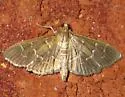
Scraped Pilocrocis - Hodges#5281
Pilocrocis ramentalis
Identification: Adult: forewing grayish-brown with slightly irregular white AM line and sinuous white PM line edged in black; PM line has squarish convex lobe near middle; reniform spot a small white arc, edged basally in black; hindwing grayish-brow
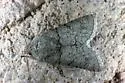
Scribbled Sallow - Hodges#10154
Sympistis perscripta
Identification: Adult: forewing dark gray with distinct black lines and black-outlined spots; AM line heaviest marking, zigzag; PM line double, sinuate; claviform spot oval, larger than round orbicular spot; reniform spot semicircular or slightly cur
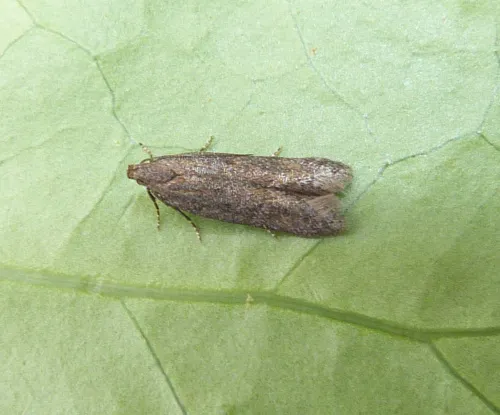
Scrobipalpa acuminatella
Scrobipalpa acuminatella
A variable moth with an overall brown appearance but this colour is flecked with chestnut and darker specks. This species occupies rough and open ground where thistles abound. Generally there are two generations, with adults on the wing in April to J
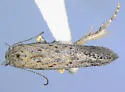
Scrobipalpa artemisiella - Hodges#2025.1
Scrobipalpa artemisiella
Identification: Genitalia: According to Vazrick Nazari, " Scrobipalpa artemisiella " is actually a complex of species that has yet to be worked out taxonomically.
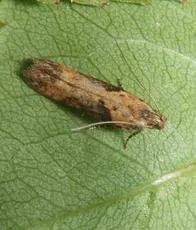
Scrobipalpa costella
Scrobipalpa costella
The colouration of this species varies a great deal but there is often a darker (sometimes triangular) mark midway along each wing. The larva mines the leaves of Bittersweet, starting in the midrib and then causing dark blotches in the leaf blade bes
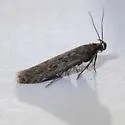
Scrobipalpa obsoletella - Hodges#2029
Scrobipalpa obsoletella
Scrobipalpa obsoletella is a European species that was first reported in Washington in 1932 and has spread throughout the western states.
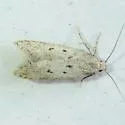
Scrobipalpopsis petrella - Hodges#2045
Scrobipalpopsis petrella
Identification: Busck (1915) original description as Gnorimoschema petrella is available in the print references.
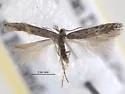
Scrobipalpula lycii - Hodges#2017.1
Scrobipalpula lycii
Identification: "A small, uniformly gray species lacking any distinctive forewing pattern" . For full description, see Powell & Povolný .
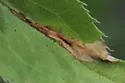
Scrobipalpula sacculicola - Hodges#2022
Scrobipalpula sacculicola
Identification: Specimen identified by DNA analysis (BOLD).
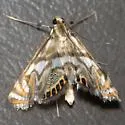
Scrollwork Pyralid Moth - Hodges#4743
Neocataclysta magnificalis
Identification: Hindwing has a yellow band along the outer margin with six black spots. Five of the spots have a blue center dot. ( 3 )
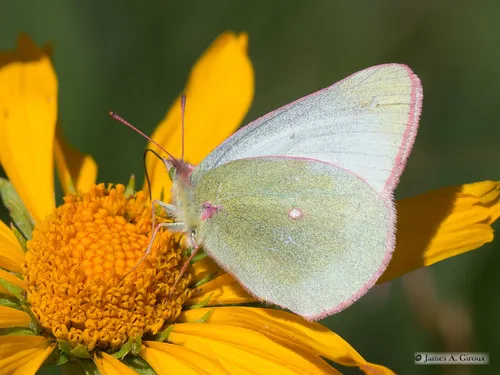
Scudder's Sulphur - Hodges#4223
Colias scudderii
Identification: Fairly easily identified by rounded wing shape, yellow color (not orange, but sometimes white in females), usually relatively wide and bold dark borders of male (weak to absent borders on females). Underside usually less greenish tha
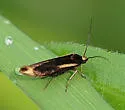
Scythris basilaris - Hodges#1652
Scythris basilaris
Identification: See Butalis flavifrontella Clemens, 1860 ( 169 , 126 ) Genitalia:
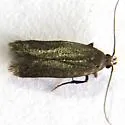
Scythris eboracensis - Hodges#1655
Scythris eboracensis
Identification: Clemens described the sheen as yellowish. Forewings are black and tinged with violet.
Scythris inornatella - Hodges#1397
Scythris inornatella
Identification: "... Face very light brown with light metallic reflection, whitish around eyes and at occiput... Labial palpus white, relatively short, apex not extended to vertex. Haustellum base covered with white scales. Antenna buff, extended to
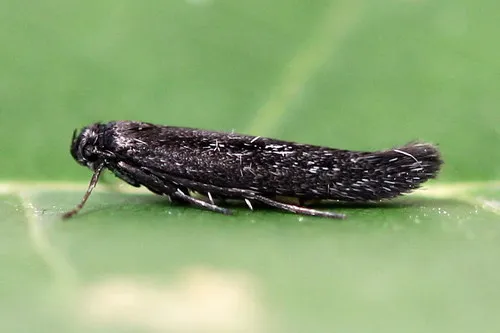
Scythris inspersella
Scythris inspersella
Wingspan about 14 mm. A blackish brown moth with scattered white scales. Areas where the larval foodplants occur. The adult moths fly during the day, especially in sunshine, visiting flowers of the foodplant. They are on the wing in July and August.
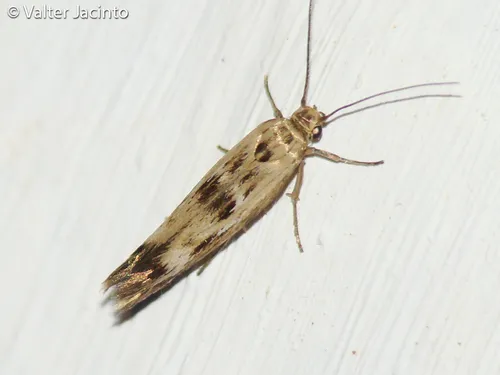
Scythris limbella
Scythris limbella
The moths fly between June and September, possibly in two generations. In May-June and July-August, the larvae feed amongst the shoots and flowers of Goosefoot (Chenopodium) or Orache (Atriplex), in a slight web. Distributed in south-east and souther
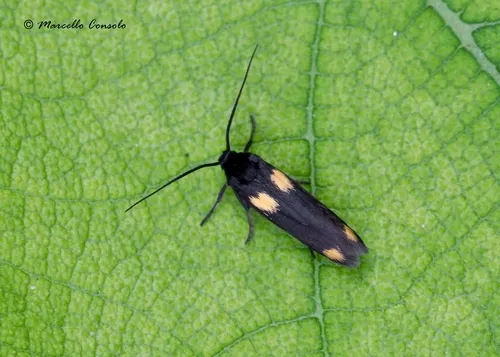
Scythris sinensis - Hodges#1651.1
Scythris sinensis
Scythris sinensis is a moth of the Scythrididae family. It is found in eastern Asia, Europe, central Russia, southern Siberia and North America (Pennsylvania).
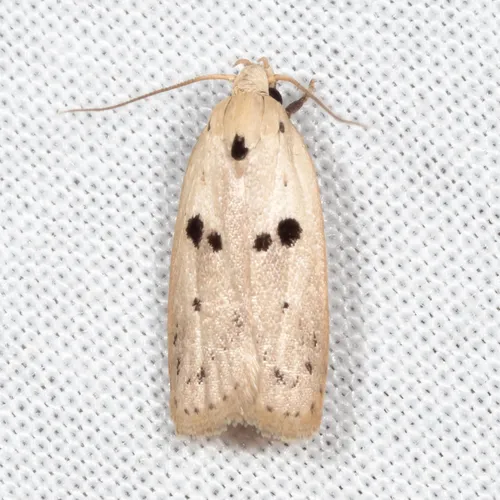
Scythropiodes issikii - Hodges#1066.1
Scythropiodes issikii
Identification: Genitalia: Family assignment of this species is based on the Gelechioidea phylogeny of Heikkilä et al. , in which the congeneric Scythropiodes malivora was placed in Depressariidae. This placement is supported by Sohn et al. . Wang &
Sea-heath Plume Moth - Hodges#6089
Agdistis americana
Identification: The genus is distinctive among American Plume Moths (Pterophoridae) in having both fore-wings and hind-wings entire (i.e. lacking the irregularly-cleft "fringes" along the trailing edges of the wings, typical of other plume moths). In
Seagrape Spanworm Moth - Hodges#6259
Ametris nitocris
Seagrape Spanworm Moth - Hodges#6259 (Ametris nitocris) is a species in the family Geometridae, commonly known as geometrid moths, belonging to the order Lepidoptera (Butterflies and Moths). It is classified within the subfamily Ennominae, tribe Also
Seaside Goldenrod Borer - Hodges#9465
Papaipema duovata
Identification: A dusky brown Papaipema with white reniform, orbicular, and claviform spots and dull yellow basal spots. According to Dale Schweitzer, this species can be abundant in southern New Jersey salt marshes during its relatively short flight
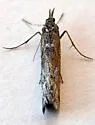
Seeboldia incanella - Hodges#5868
Seeboldia incanella
Identification: Adult : FW slender, heavily speckled with black, white, gray, and some brownish scales • Indistinct blackish spot in AM area near inner margin, preceded by diffuse, white crescent • two indistinct blackish spots, near middle of dist
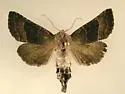
Selicanis Moth - Hodges#9430
Selicanis cinereola
Identification: Adult: forewing medium brown, dusted with pale gray scales; median area dark brown, bordered by thin grayish-white lines; slightly paler color outside PM line, shading to dark brown in terminal area; subterminal line indistinct; hindw
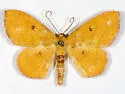
Semaeopus ella - Hodges#7141
Semaeopus ella
Identification: Highly variable. See plates at Moths of Southeastern Arizona
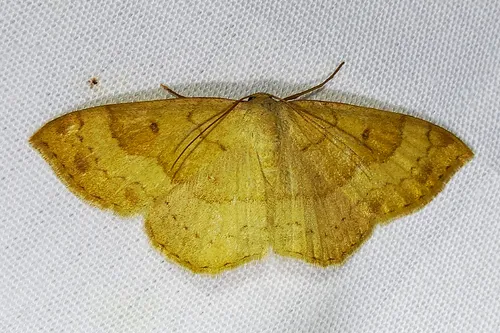
Semaeopus gracilata - Hodges#7142
Semaeopus gracilata
Semaeopus gracilata - Hodges#7142 (Semaeopus gracilata) is a species in the family Geometridae, commonly known as geometrid moths, belonging to the order Lepidoptera (Butterflies and Moths). It is classified within the subfamily Sterrhinae, tribe Cos
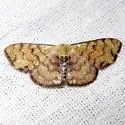
Semaeopus marginata - Hodges#7145
Semaeopus marginata
Identification: Similar to Semaeopus ella , but generally plainer yellow, more mottled, and with a collapsed forewing discal spot. Females have a distinct dark wing margin.
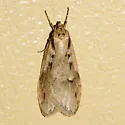
Semioscopis mcdunnoughi - Hodges#0917
Semioscopis mcdunnoughi
Identification: Clarke original description is available online and in PDF. Determined by dissection of this specimen by Greg Pohl. Genitalia:
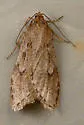
Semioscopis megamicrella - Hodges#0915
Semioscopis megamicrella
Identification: Adult: forewing variably pale brown to dark grayish-brown with fine speckling; subterminal and terminal lines composed of several black spots; reniform spot a small black arc, with dark shading immediately beyond it; two or three dark
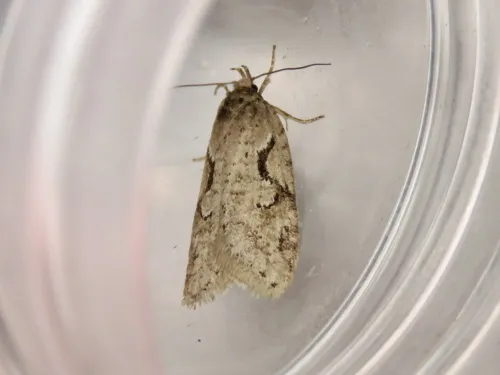
Semioscopis steinkellneriana
Semioscopis steinkellneriana
Wingspan 22 mm. The distinctive wing markings make this one of the easier species to identify. This species flies very early in the morning, around sunrise. The adults are on the wing during April. The larvae feed on Blackthorn and Hawthorn. Widely b
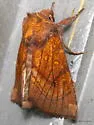
Sensitive Fern Borer - Hodges#9483
Papaipema inquaesita
Identification: Adult: forewing orange with dull orangish-brown shading beyond PM line except at apex, and sharply-angled median band (a distinctive feature); veins outlined with dark purplish-brown; spots inconspicuous, orange or whitish; PM line do
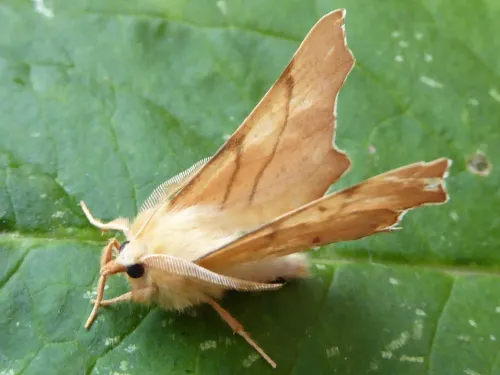
September Thorn
Ennomos erosaria
Wingspan 30 to 35mm. Pale yellow with dark cross lines. Although superficially similar to several other of the autumn-feeding 'Thorns', this species is generally much plainer in appearance. It is very similar to the August Thorn. Perhaps the easiest
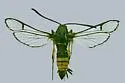
Sequoia Pitch Moth - Hodges#2586
Synanthedon sequoiae
Identification: See Duckworth & Eichlin in Print References.
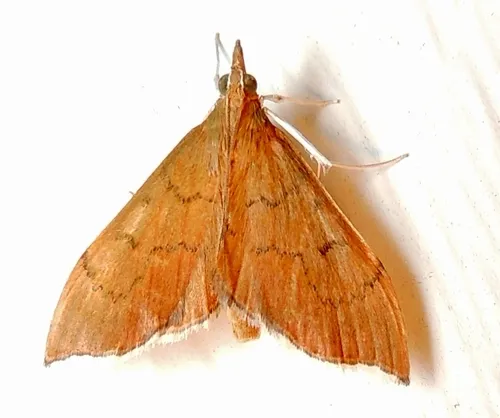
Sericoplaga externalis - Hodges#4991
Sericoplaga externalis
Identification: Fore wings reddish ochreous, glossy, dusted with fuscous, the costa greyish at the base; lines dark grey, first line denticulated, oblique, approaching second on the inner margin, second line also denticulated, starting from the costa
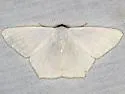
Sericoptera virginaria - Hodges#6994
Sericoptera virginaria
Identification: The original description as Ripula virginaria Hulst and a later description as Sericoptera insularis Warren are both available online in the print references below.
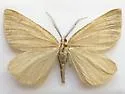
Sericosema immaculata - Hodges#6673
Sericosema immaculata
Identification: Barnes & McDunnough original description as Euemera immaculata is available online in the print references. Specimen identified by DNA analysis (BOLD).
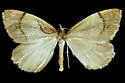
Sericosema wilsonensis - Hodges#6674
Sericosema wilsonensis
Identification: Cassino & Swett original description is online in the print references. Specimen determined by DNA analysis (BOLD).
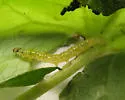
Serpentine Webworm - Hodges#5280
Herpetogramma aeglealis
Identification: Adults are sexually dimorphic. The HW of the males are dirty white with dark-grey shading on the discal spot, wing veins, subterminal area and an irregular but contrasting PM. Females have a golden hue. There are two forms, the typica
Sesia spartani - Hodges#2543.1
Sesia spartani
Identification: Adult - see Eichlin & Taft in Print References.
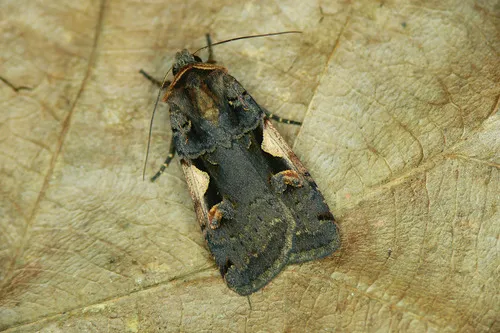
Setaceous Hebrew Character
Xestia c-nigrum
Wingspan 35-42 mm. A distinctive species which should not be difficult to identify. Gardens, woodland, heathland and marshes. In the southern half of its range, there are two broods, flying in small numbers in May and June, but far more commonly in A
Setagrotis pallidicollis - Hodges#10975
Setagrotis pallidicollis
Identification: The forewings are grey with a reddish-brown wash in the lower portion of the median area and in the subterminal area. The reddish cast is more pronounced in the species as one goes south into California. The antennae of males are mode
Setagrotis vocalis - Hodges#10975.1
Setagrotis vocalis
Identification: Forewing with thin black basal streak and thin black lines nearly outlining the orbicular spot which fills the space between the orbicular and reniform spot. Outer veins often with black streaking. Hindwings are shiny white.
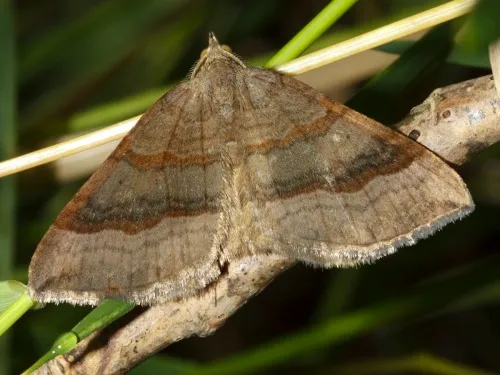
Shaded Broad-bar
Scotopteryx chenopodiata
Wingspan 25-30 mm. Variable in colour but fairly easily identified. Grassland, acid heathland, woodland rides, roadside verges, sand-dunes and gardens. The species has one generation, the adults flying in July and August. Widespread and fairly common
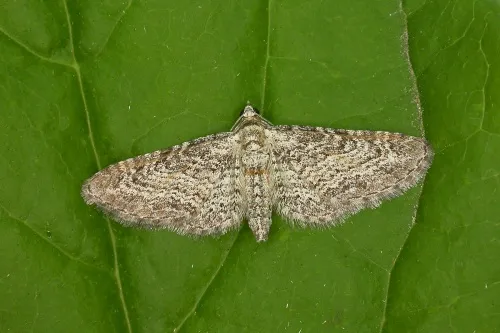
Shaded Pug
Eupithecia subumbrata
Wingspan 16 to 20 mm. This is a pale greyish member of the genus. Inhabiting damp grassy places, salt marshes and similar habitats. A single generation flies in June and July, from dusk onwards, but is infrequent at light. It is more readily disturbe
Shadowy Arches - Hodges#8636
Drasteria adumbrata
Identification: Adult: forewing mottled light and dark brown; basal area, median band, reniform spot, and subterminal area paler; AM line curves toward base near inner margin; hindwing creamy yellow to orange with black marginal and PM bands, the lat
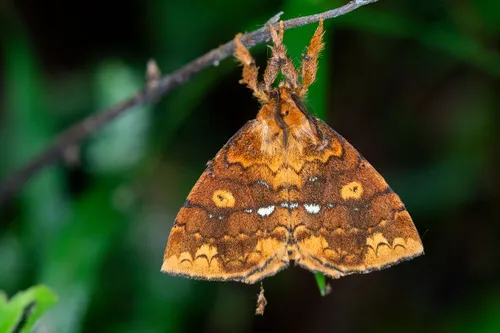
Shag Carpet Caterpillar Moth
Prothysana felderi
Prothysana felderi is a moth in the family Bombycidae, whose larvae are known as Shag-carpet caterpillars. It is found from Mexico, south to Panama and into South America, at least to Ecuador.
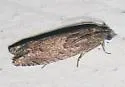
Shagbark Hickory Leafroller - Hodges#3246
Pseudexentera cressoniana
Identification: Adult - forewing brownish-gray with slightly darker patch covering basal third of wing; several short oblique dashes along costa; overall color is more uniform than in other species of Pseudexentera ; hindwing light grayish-brown, wit
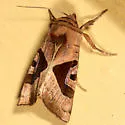
Sharp Angle Shades - Hodges#9548
Conservula anodonta
Identification: Adult: forewing medium brown in basal area, lighter brown in subterminal area, and large dark brown boomerang-shaped patch in median area; a blunt-tipped projection extends from the costa into the sinus of the "boomerang"; subterminal
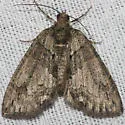
Sharp Green Hydriomena Moth - Hodges#7239
Hydriomena pluviata
Identification: Specimens identified by DNA analysis:
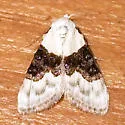
Sharp-blotched Nola Moth - Hodges#8989
Nola pustulata
Identification: The original description as Erastria pustulata Walker, is available online in the print references below.
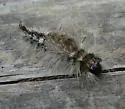
Sharp-lined Tussock - Hodges#8293
Dasychira dorsipennata
Identification: Barnes & McDunnough original description as Olene dorsipennata is available online. Adult: Paler than obliquata , with less of the brown shading in the basal and postmedial areas of the forewing, and a less dentate AM line. It is also
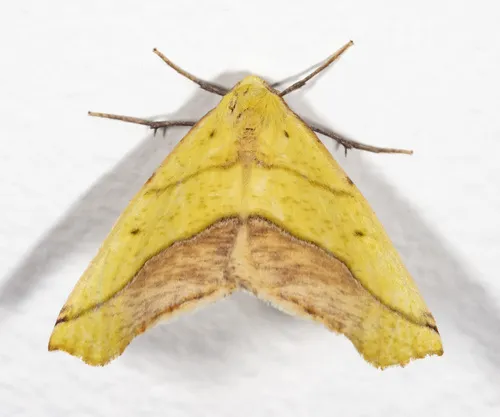
Sharp-lined Yellow - Hodges#6912
Sicya macularia
Identification: Adult: forewing yellow with distinctive broad pinkish border, although the intensity of the pink margin varies considerably; female slightly larger than male, with coarser dark speckling; hindwing with similar pattern but paler colors
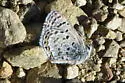
Shasta Blue - Hodges#4379
Plebejus shasta
includes the federally endangered Mount Charleston blue butterfly ( Icaricia shasta charlestonensis )
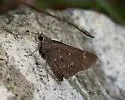
Sheep Skipper - Hodges#4088
Atrytonopsis edwardsi
Identification: Brown skipper with checkered edges. Forewing has large clear spots. Hindwing has small postmedian spots that are not aligned and underside has grey scales.
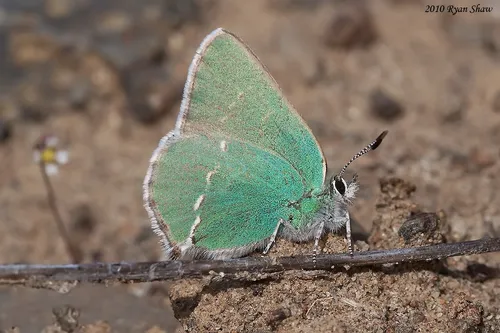
Sheridan's Hairstreak - Hodges#4307
Callophrys sheridanii
Identification: The small size, lack of a tail, and green underside are distinctive within its range to the "Bramble Hairstreak" complex ( C. affinis, dumetorum, perplexa, sheridanii , etc.). In the south there are other small green hairstreaks, but
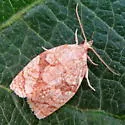
Shimmering Gold Adoxophyes - Hodges#3691
Adoxophyes negundana
Identification: Adult - forewing yellow with fine netlike pattern of dark lines, thick dark diagonal stripe from costa to anal angle, and thin dark diagonal stripe across apex; thick stripe has distinct kink or jog near middle; hindwing white.
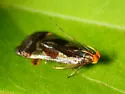
Shining Dichomeris - Hodges#2289
Dichomeris ochripalpella
Identification: Adult - easily recognized by its light orange labial palps.
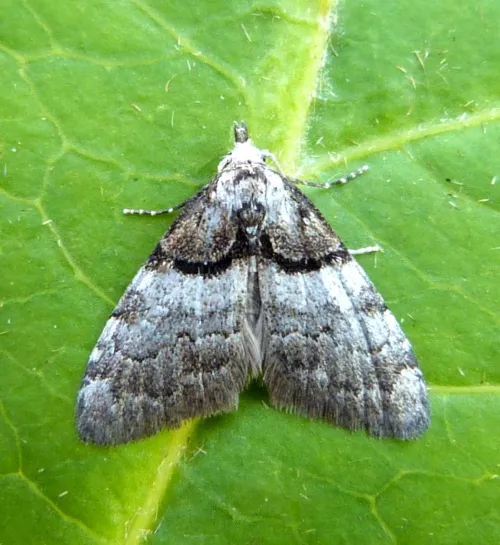
Short-cloaked Moth
Nola cucullatella
Wingspan 16-18 mm. A small but attractive and distinctive moth. Inhabits woodland, suburban gardens and similar bushy habitats. The single generation flies in June and July and the species is readily attracted to light. The small, hairy caterpillars
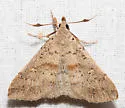
Short-snout Renia - Hodges#8378
Renia salusalis
Identification: Refer to the guide on the info page for the genus. In males, "Palpi short, third segment short and blunt, a plume on inner dorsal side of second segment" Renia salusalis (Walker, 1859) currently is known to range throughout the southe
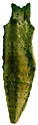
Short-tailed Swallowtail - Hodges#4163
Papilio brevicauda
Identification: Adult: wings rounded, black, crossed by double row of yellow spots, often with an orange wash; hindwing has red-orange eye-spot with black center; tails generally quite short Larva: early instars brown with white saddle, resembling a
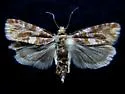
Shortleaf Pinecone Borer Moth - Hodges#3072
Eucopina cocana
Identification: Heinrich (1923) revised description in PDF. ( 4 ) Larger than other cone-feeding Eucosma species in the East ( 5 )
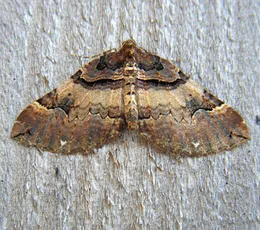
Shoulder Stripe
Earophila badiata
Wingspan 25-30 mm. It shows a variety of colour forms, but all have the same basic pattern. It inhabits woodland, scrubland and other open areas. An early Spring species, flying in March and April. This moth is fairly common in England and Wales and
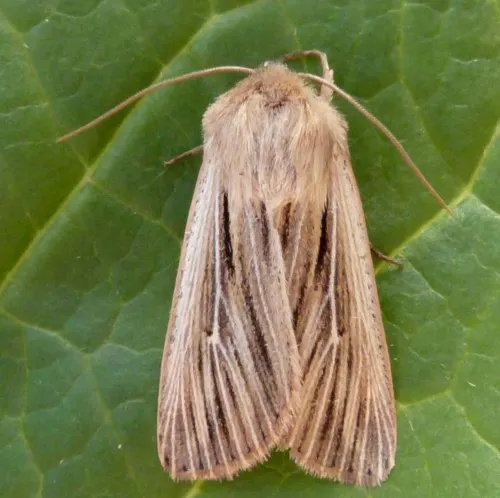
Shoulder-striped Wainscot
Leucania comma
Wingspan 32 to 37 mm. One of the more strongly marked Wainscots. The single generation flies in June and July, and is attracted to light. The caterpillar feeds by night on various grasses, especially Cock's-foot. This is a fairly common moth througho
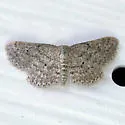
Showy Wave - Hodges#7121
Idaea ostentaria
Identification: Adult: wings white with dense dark speckling, prominent black discal spot, and toothed PM line; AM and median lines variably distinct to indistinct; terminal line a series of black dashes; fringe scales of variable length and somewhat
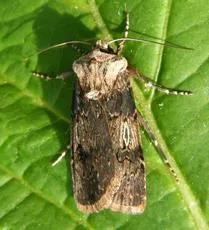
Shuttle-shaped Dart
Agrotis puta
Wingspan 30-32 mm. A sexually dimorphic species, the males having brownish variegated forewings and white hindwings, the females have fairly plain dark brown forewings and buffish hindwings. Gardens, farmland, grassland, heathland and open woodland.
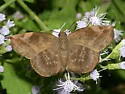
Sickle-winged Skipper - Hodges#3939
Eantis tamenund
Identification: BAMONA description. FW is pointed, with a shallow indentation below the apex. Dorsal side of male is dark brown with a purple sheen and pale brown spots; female is brown with bands of square blue-gray or olive-gray spots. Type Localit
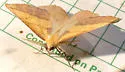
Sicya crocearia - Hodges#6911
Sicya crocearia
Identification: Specimen identified by DNA analysis:
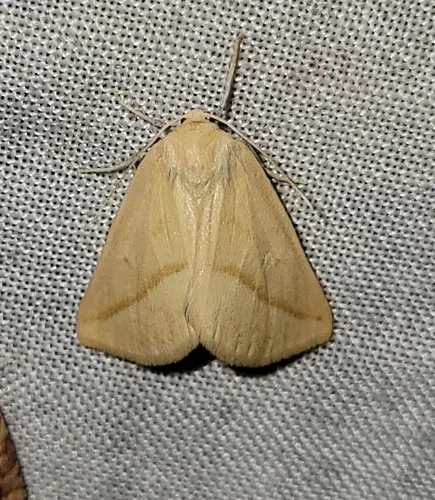
Sicyopsis blanchardata - Hodges#6916.1
Sicyopsis blanchardata
Identification: Ferguson states this moth seems to have no close relatives Head: Pale, tawny-yellow. Eyes large, slightly smaller on female. Antenna: Simple, slightly thicker on male. Thorax: Pale tawny-yellow, long hairs (scales). Wings: Pale tawny-
Sideridis artesta - Hodges#10263
Sideridis artesta
Identification: The Smith and Hampson descriptions are available in the print references below. Determined by Chuck Harp. Listed on the Ohio's Endangered Species list.
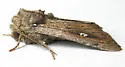
Sideridis uscripta - Hodges#10261
Sideridis uscripta
Sideridis uscripta - Hodges#10261 (Sideridis uscripta) is a species in the family Noctuidae, commonly known as owlet moths, belonging to the order Lepidoptera (Butterflies and Moths). It is classified within the subfamily Noctuinae, tribe Hadenini, s
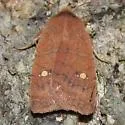
Sidus Sallow Moth - Hodges#9933.1
Eupsilia sidus
Identification: From Paul Dennehy: showing the scaling on the forewing to differentiate E. sidus from E. vinulenta .
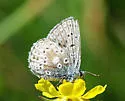
Sierra Blue - Hodges#4384.1
Plebejus podarce
Identification: This is a Sierran representative of Plebejus glandon and distinction of the two is difficult if not impossible from photographs alone. P. podarce tends to have more white on the underside. Species distinction seems dubious, but it is
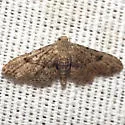
Sigela brauneata - Hodges#8432
Sigela brauneata
Identification: Description by Pogue, 2012. (PDF) The original description as Eois brauneata Swett, is available online in the print references below.
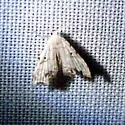
Sigela incisa - Hodges#9081
Sigela incisa
Previously misidentified as Araeopteron vilhelmina (Dyar, 1916), known from Central America. Troubridge transferred vilhelmina to Sigela and described the Florida taxon as a new species, Sigela incisa . Generic placement is provisional.
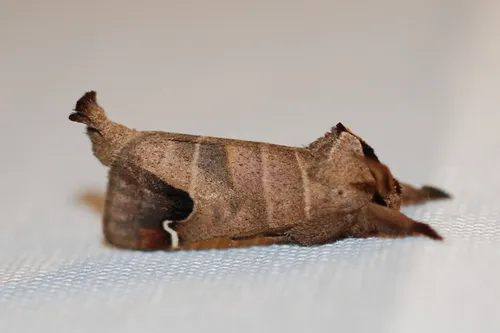
Sigmoid Prominent
Clostera albosigma
Clostera albosigma, the sigmoid prominent, is a moth of the family Notodontidae. It is found from Newfoundland west to Vancouver Island, north to the Great Slave Lake and the Northwest Territories and south to at least Missouri.
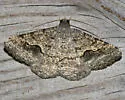
Signate Looper Moth - Hodges#6414
Rindgea s-signata
Identification: Adult: forewing off-white to pale yellowish or buff with strongly curved S-shaped black PM line; discal spot small or absent; AM line faint or sometimes absent; median line faint or absent; PM line interrupted by short space near cost
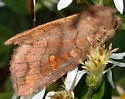
Signate Quaker - Hodges#10627
Tricholita signata
Identification: Adult: forewing dark orange or brown crossed by 3 or 4 darker lines; reniform spot mostly white (some individuals show no white); ST line wavy, stops short of apex; diffuse pale patch usually present at apex hindwing dark brownish-gra
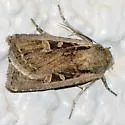
Silent Dart - Hodges#10751
Euxoa silens
Identification: Adult: forewing light grayish-brown with paler costa; usually has thin black basal streak expanding into poorly defined dark median streak incorporating claviform spot and running through orbicular and reniform spots; orbicular spot s
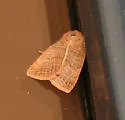
Silky Sallow - Hodges#9950
Chaetaglaea sericea
Identification: Resembles Waxed Sallow, but darker FW is marked with distinct whitish veins. A wide yellow streak extends along inner margin.
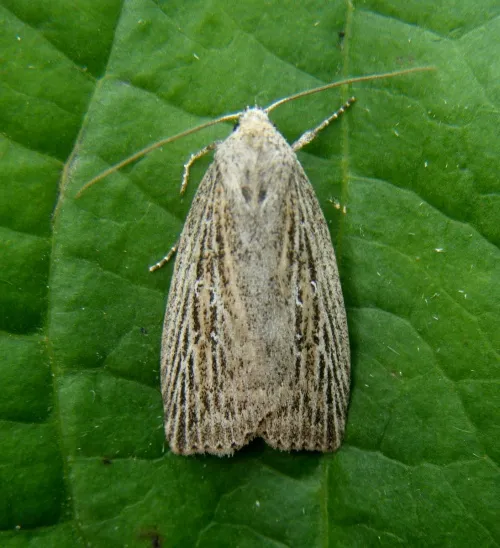
Silky Wainscot
Chilodes maritima
Wingspan 29 to 36 mm. A rather unusual species, which has a number of distinctive forms, and can resemble some of the Pyralidae. It may be found in reedbeds containing Common Reed. It is readily attracted to light and flies from June to August. The l
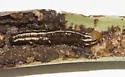
Silphius borer moth - Hodges#9498
Papaipema silphii
Identification: Bird (1915) original description is online and linked in the print references. Bird (1915) described the larvae pinkish with a large, brown head, and maturing to a length of 50 mm or more.
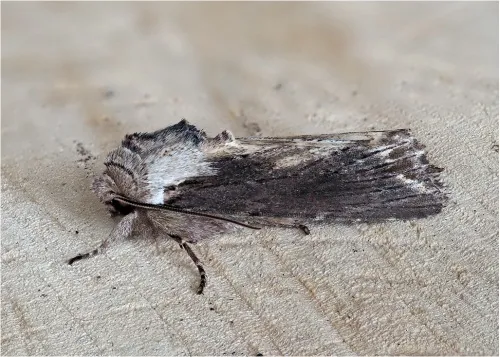
Silver Cloud
Egira conspicillaris
In view of the rarity of this species in our area a photograph is required to support records. A very local species, occurring mainly around the Severn Valley in the south-west of England. In a recent survey to determine the status of all macro moths
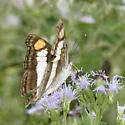
Silver Emperor - Hodges#4567
Doxocopa laure
Identification: Sexually dimorphic upperwing patterns. Females have a diagonal white slash across both wings, and a yellow spot near the forewing apex; extremely similar to female Pavon Emperor but this species has a broader white stripe with a round
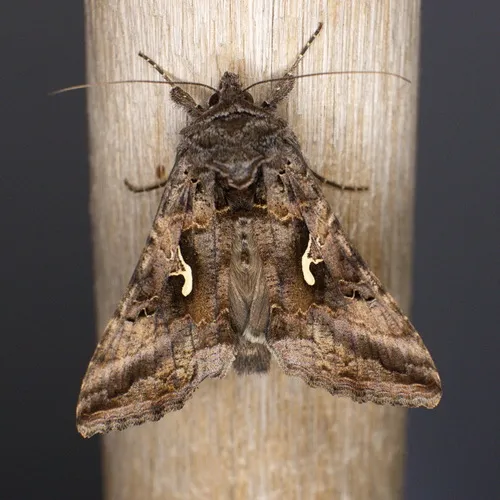
Silver Y
Autographa gamma
Wingspan 35-40 mm. It has a distinctive unbroken metallic silver 'Y' mark on the brown and grey marbled forewing, which sometimes has a purple tinge. The adults can be found from spring through till late autumn, and can be seen by day as well as at n
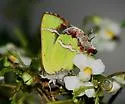
Silver-Banded Hairstreak - Hodges#4273
Chlorostrymon simaethis
Identification: Underwing is green (ranging from bright lime-green to dull greenish-brown) with straight white postmedian band. Wide maroon/brown trailing edge of HW. Dorsal, male is dark purple, female gray.
Silver-bordered Aethes - Hodges#3754.2
Aethes argentilimitana
Identification: Specimens identified by DNA analysis (BOLD). ( 5 ) Genitalia:
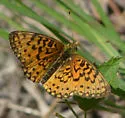
Silver-bordered Fritillary - Hodges#4464
Boloria selene
Identification: Dorsal, orange with black markings, consistant with other lesser fritillaries. Ventral, silver border along both outer wing margins, and HW basal spot is white with a black center spot. Populations have been declining in most areas, b
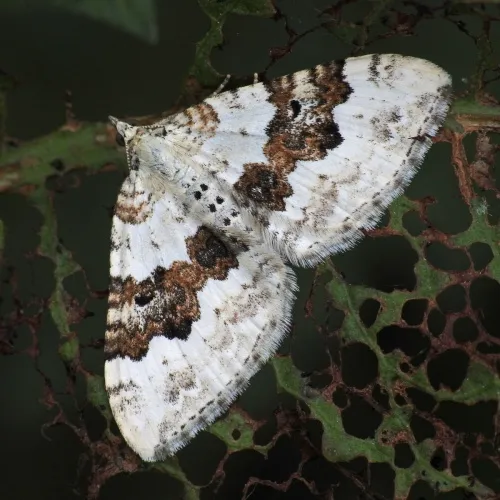
Silver-ground Carpet
Xanthorhoe montanata
Wingspan 24-28 mm. Displaying a wide range of differing depths of colour, although all forms have the distinctive whitish ground colour. In woodlands, clearings and similar habitats. The adults fly from May into July and it can often be disturbed dur
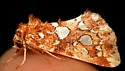
Silver-spotted Fern Moth - Hodges#9633
Callopistria cordata
Identification: forewing orange or reddish-brown, mottled with yellow, and having two large silvery-white spots near the middle or the wing, plus a line of several smaller spots in the subterminal area; small yellowish patch at apex hindwing pale gra
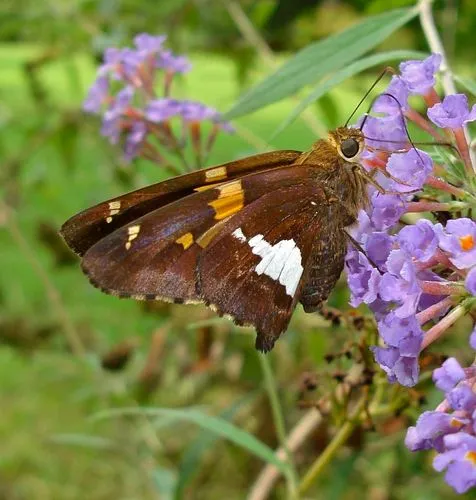
Silver-spotted Skipper
Epargyreus clarus
Epargyreus clarus, the silver-spotted skipper, is a butterfly of the family Hesperiidae. It is claimed to be the most recognized skipper in North America. E. clarus occurs in fields, gardens, and at forest edges and ranges from southern Canada throug
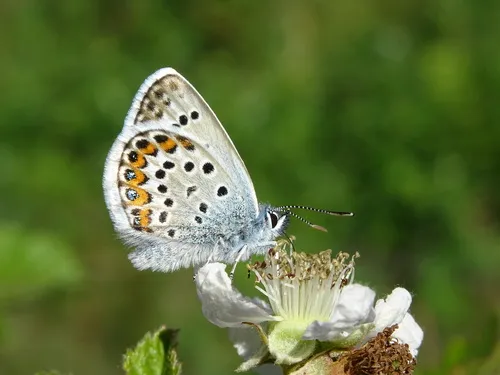
Silver-studded Blue
Plebejus argus
The silver-studded blue (Plebejus argus) is a butterfly in the family Lycaenidae. It has bright blue wings rimmed in black with white edges and silver spots on its hindwings, lending it its name. P. argus can be found across Europe and east across th
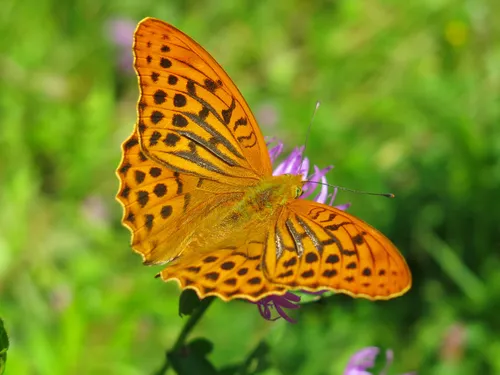
Silver-washed Fritillary
Argynnis paphia
The female is slightly less colourful than the male which has more curved wings, is brighter orange and has dark bands across its forewings, actually scent marks. Woodland clearings, especially where violets are present in numbers. Like many other si
Silvered Haimbachia moth - Hodges#5488
Haimbachia albescens
Identification: Capps description of adult including notes on genitalia in PDF. The adults are similar to the smaller Haimbachia floridalis and can be separated by the range. The forewing fringe appears metallic. Genitalia:
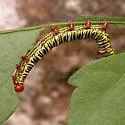
Silvered Prominent - Hodges#7961
Didugua argentilinea
Identification: Caterpillar is brilliantly colored and difficult to mistake for anything else that overlaps in range and host plants. The adult moth has two distinctive white markings on the leading margin of each forewing, shaped like the dorsal fin
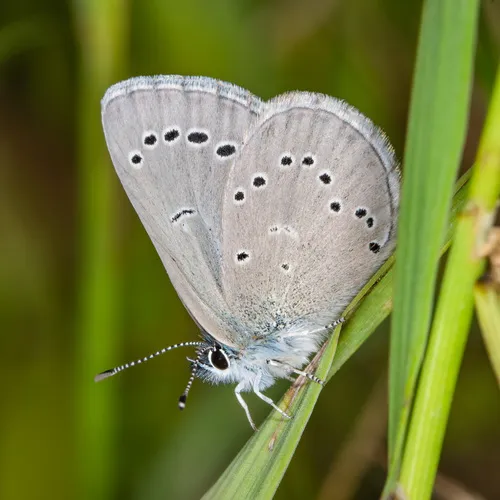
Silvery Blue
Glaucopsyche lygdamus
Glaucopsyche lygdamus, the silvery blue, is a small butterfly native to North America. Its upperside is a light blue in males and a dull grayish blue in females. The underside is gray with a single row of round spots of differing sizes depending upon
Silvery Phrygionis - Hodges#6671
Phrygionis paradoxata
Florida records (including all BugGuide posts) belong to the species P. paradoxata , not P. argentata. P. argentata is currently considered to be restricted to Jamaica, Puerto Rico, and St. Thomas (USVI). (Brou, 2010)
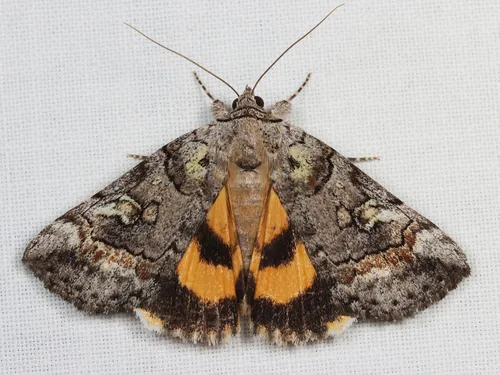
Similar Underwing - Hodges#8873
Catocala similis
Identification: Adult - pale triangular patch from the PM along the costa, pointed at the apex and the light-colored, tear-shaped reniform spot distinguish this species. ( 12 )
Simple Wave - Hodges#7164
Scopula junctaria
Identification: wings variable in color and shape, from white with faint lines and rounded margins, to pale yellowish with bold lines and angular margins ( compare images of both forms); AM, PM, and median lines present; forewings and hindwings simil
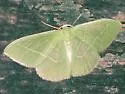
Single-lined Emerald - Hodges#7018
Nemoria unitaria
Identification: Adult: the largest emerald, its distinguishing feature is on the hindwing, where the AM and PM lines join to form a single U-shaped loop; however, in many northern specimens, the line may be so weak that a loop is not distinguishable,
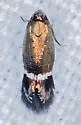
Siskiwitia alticolans - Hodges#1587
Siskiwitia alticolans
Identification: " Alticolans is unique among the Chrysopeleiinae in having the dark brown forewing overlaid with shining yellow to gold scales and in having a transverse white band at 2/3 the length."
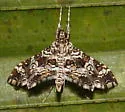
Sisyracera inabsconsalis - Hodges#5194.02
Sisyracera inabsconsalis
Landry synonymized Sisyracera contortilinealis (Hampson, 1895) with S. inabsconsalis (Möschler, 1890) . Sisyracera contortilinealis was first identified in the United States from Florida by Hayden (pers. comm.) based on a 2012 specimen from Monroe Co