
Eastern Panthea - Hodges#9182
Panthea furcilla
This record describes Panthea furcilla (species). Recorded family: Noctuidae. Recorded order: Lepidoptera.
Identification and Appearance
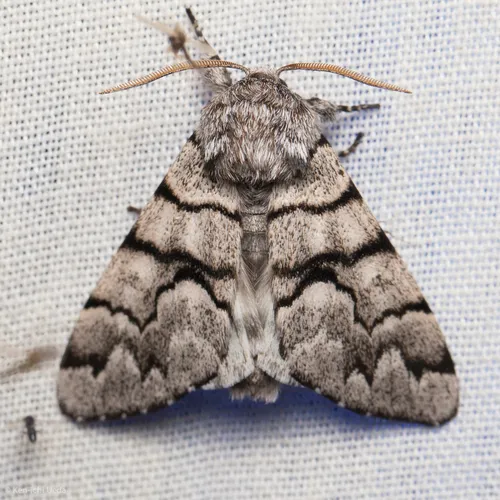
Adult : forewing variably whitish to medium gray with heavy black AM, median, and PM lines; AM and median lines almost straight; PM line curves inward to touch median line near inner margin, then separates again before reaching inner margin; ST line jagged, highly irregular; melanic specimens have obscure pattern and almost black forewing; hindwing mostly brownish-gray with whitish patch or strip along outer margin. Larva : Body red, brown, or black with variable pattern; first 2 thoracic, and first and eighth abdominal segments with black (sometimes white) lashes; longer hairs in lashes broadening to tips; other hairs in white, rusty, or black tufts borne on low warts; whitish abdominal spiracles often in charcoal patches bordered below by broad, oblique creamy spots that may form wavy subspiracular band [description adapted from Caterpillars of Eastern Forests]
Classification
- Kingdom
- Animalia
- Phylum
- Arthropoda
- Class
- Insecta
- Order
- Lepidoptera (Butterflies and Moths)
- Superfamily
- Noctuoidea
- Family
- Noctuidae (Owlet Moths)
- Subfamily
- Pantheinae
- Genus
- Panthea
Imported taxonomy record. Source availability varies; see the source references and editorial policy below.
Habitat and Range
Habitat
mixed and coniferous forests; adults are nocturnal and come to light
Geographic Range
eastern United States: Maine to Florida, west to Texas, north to Indiana and Ohio may also extend to Colorado and Wisconsin, but the U. of Colorado and U. of Wisconsin lists do not indicate whether specimens were collected locally (in contrast, Oregon State U. states that the specimens of P. furcilla in their collection were NOT collected in Oregon) has not been recorded in Canada, according to CBIF
Seasonal Activity
adults fly from May to August (2 broods) larvae present from May to October
Diet and Behavior
Diet: Larvae feed on conifers such as pine ( Pinus spp.), spruce ( Picea spp.), and Tamarack ( Larix laricina ).
Life History
two generations per year Larva; adult
About Butterflies and Moths: the wider group
Order-level background for Lepidoptera, the group containing Panthea furcilla. Species-specific details appear above.
Group overview
Lepidoptera includes approximately 180,000 described species of butterflies and moths. Moths outnumber butterflies roughly 10:1. The monarch butterfly's eastern population has declined by more than 80% since the mid-1990s, and the western population by over 95% since the 1980s. The IUCN lists the migratory monarch as Vulnerable.
Ecological role of the group
Butterflies and moths are essential indicators of ecosystem health. As caterpillars, they are a primary food source for birds - a single nest of blue tit chicks requires ~10,000 caterpillars. Adult moths pollinate many night-blooming plants.
Economic and practical significance of the group
Lepidoptera are critical pollinators. In Europe, grassland butterfly species have declined by almost 50% since the early 1990s. In the UK, three-quarters of butterflies are in decline. In the U.S., five butterfly species have gone extinct since 1950, with 29 listed as endangered.
Recorded sources for this group: IUCN Red List, Xerces Society, USFWS, PNAS, WWF. Imported estimates may describe particular regions or reporting periods.
Photos of Eastern Panthea - Hodges#9182 (2)
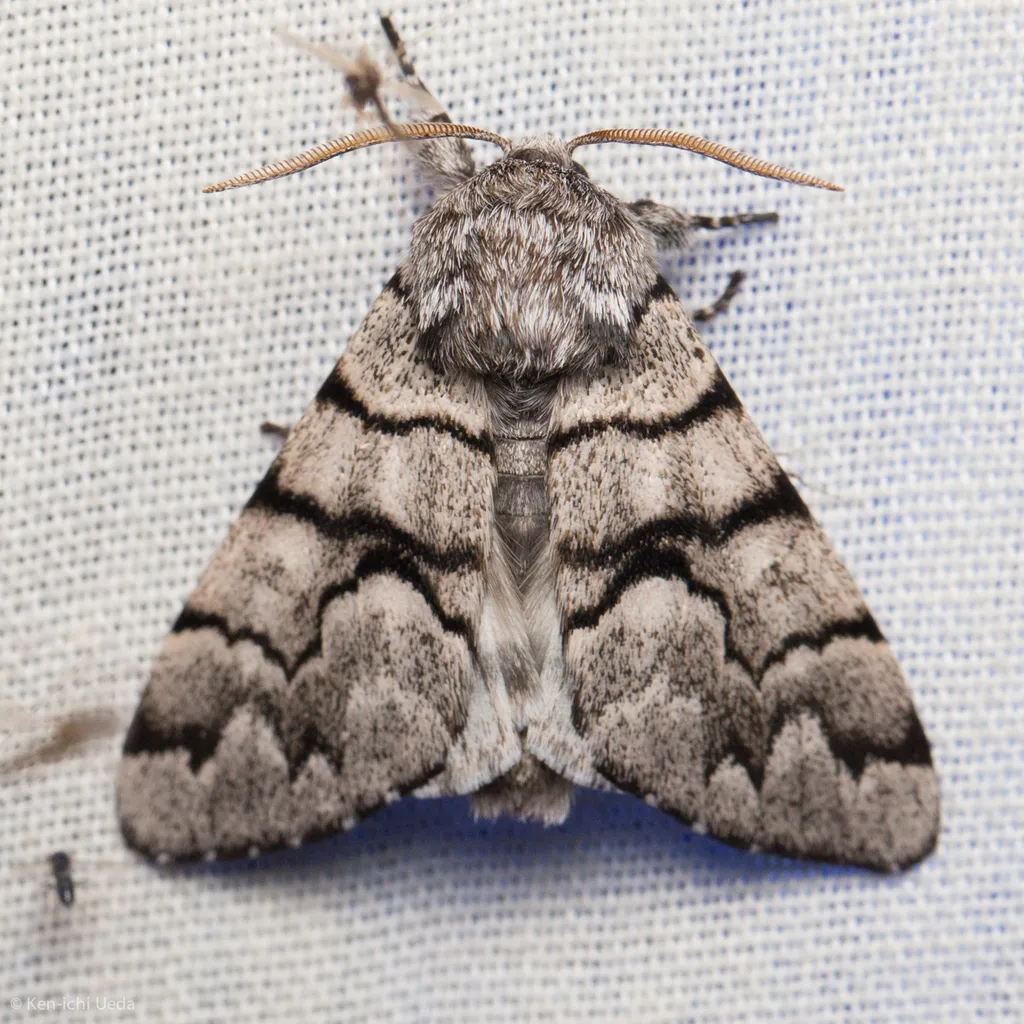
Photo credits: Contributed by Cotinis; Additional contributions by Robin McLeod , Tony-2 , Chris Grinter , marcie oconnor , Randy Hardy , Steve Morris
Frequently Asked Questions About Eastern Panthea - Hodges#9182
What is Eastern Panthea - Hodges#9182?
Eastern Panthea - Hodges#9182 (Panthea furcilla) is a species in the family Noctuidae, within the order Lepidoptera.
How big is Eastern Panthea - Hodges#9182?
wingspan 33-50 mm
How do you identify Eastern Panthea - Hodges#9182?
Adult : forewing variably whitish to medium gray with heavy black AM, median, and PM lines; AM and median lines almost straight; PM line curves inward to touch median line near inner margin, then separates again before reaching inner margin; ST line jagged, highly irregular; melanic specimens have obscure pattern and almost black forewing; hindwing mostly brownish-gray with whitish patch or strip along outer margin. Larva : Body red, brown, or black with variable pattern; first 2 thoracic, and first and eighth abdominal segments with black (sometimes white) lashes; longer hairs in lashes broadening to tips; other hairs in white, rusty, or black tufts borne on low warts; whitish abdominal spiracles often in charcoal patches bordered below by broad, oblique creamy spots that may form wavy subspiracular band [description adapted from Caterpillars of Eastern Forests]
Where is Eastern Panthea - Hodges#9182 found?
| Feature | Details |
|---|---|
| Habitat | mixed and coniferous forests; adults are nocturnal and come to light |
| Range | eastern United States: Maine to Florida, west to Texas, north to Indiana and Ohio may also extend to Colorado and Wisconsin, but the U. of Colorado and U. of Wisconsin lists do not indicate whether specimens were collected locally (in contrast, Oregon State U. states that the specimens of P. furcilla in their collection were NOT collected in Oregon) has not been recorded in Canada, according to CBIF |
What does Eastern Panthea - Hodges#9182 eat?
The diet of the Eastern Panthea - Hodges#9182 includes Larvae feed on conifers such as pine ( Pinus spp.), spruce ( Picea spp.), and Tamarack ( Larix laricina )..
When is Eastern Panthea - Hodges#9182 active?
Eastern Panthea - Hodges#9182: seasonal activity - adults fly from May to August (2 broods) larvae present from May to October.
What is the life cycle of a Eastern Panthea - Hodges#9182?
two generations per year Larva; adult