
Eido trimaculella - Hodges#1068
Eido trimaculella
This record describes Eido trimaculella (species). Recorded family: Oecophoridae. Recorded order: Lepidoptera.
Identification and Appearance
| Feature | Details |
|---|---|
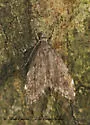
| Head | Grayish-brown, a few rough scales, but face smooth. Palpi thick, curved up over head; gray with a wide black stripe. Some white on 2nd segment, with a large tuft on last segment. Antenna: Slender, about 2/3 as long as wing: Gray-brown with white rings. |
| Thorax | Grayish-brown. Wings: Wide, sharp pointed tips. Grayish-brown to silvery-gray, dusted with white. Three yellowish-white marks along costa edge from mid-wing to tip (thus Triple-spotted). A row of yellowish-white dashes along wing tip margin, forming an overall V-shape. White dusting along the inner side of the V-shape pattern. Fringe unevenly checkered. Hindwings dark gray-brown. Fringe has brown line through it. |
| Legs | Each segment grayish-brown with a white tip. Underside silvery-white. |
| Abdomen | Grayish-brown on top, silvery-white on underside. Female has protruding, rough scaled ovipositor of 3 telescoping sections – half as long as abdomen. Genitalia: Types: Holotype as Choerochilus trimaculella by Fitch, 1856. Locality: New York State. In the United States National Museum, Smithsonian. Fitch's type in good condition and with his own large label attached. Holotype as Venilia albapalpella by Chambers, 1872. Locality: Kentucky. Museum unknown. Holotype as Anarsia albapulvella by Chambers, 1875. Locality: Canada. Museum unknown. Holotype as Ypsolophus trimaculellus by Chambers, 1878. Locality: Canada. In Quebec Museum, Parliament Buildings, Quebec City as part of the Belanger Collection, Universite Laval. Now in the U.S. National Museum, Smithsonian and #5768. Syntypes as Chimabacche haustellata by Walsingham, 1882. Locality: Orono, Maine. In U.S. National Museum, Smithsonian. Secured from Professor Fernald collection, identical with the type per Busck, 1902. |
Classification
- Kingdom
- Animalia
- Phylum
- Arthropoda
- Class
- Insecta
- Order
- Lepidoptera (Butterflies and Moths)
- Superfamily
- Gelechioidea
- Family
- Oecophoridae (Concealer Moths)
- Subfamily
- Oecophorinae
- Tribe
- Oecophorini
- Genus
- Eido
Imported taxonomy record. Source availability varies; see the source references and editorial policy below.
Habitat and Range
Habitat
Deciduous forests. Moths can be found around hollow trees, walking with their wings elevated.
Geographic Range
Eastern U.S., North Dakota; Canada.
Seasonal Activity
Early June through July in north. May to August in south.
Diet and Behavior
Diet: Larvae feed on fungus, including Piptoporus betulinus and Fomes fomentarius . ( 3 )
Life History
Females deposit eggs on bracket fungus Tinder Polypore Fomes fomentarius and Birch Polypore Piptoporus betulinus . Larva feed under a silken web.
Additional species information
Species notes from the sources
Etymology: Specific name trimaculella is Latin meaning "three-spotted."
About Butterflies and Moths: the wider group
Order-level background for Lepidoptera, the group containing Eido trimaculella. Species-specific details appear above.
Group overview
Lepidoptera includes approximately 180,000 described species of butterflies and moths. Moths outnumber butterflies roughly 10:1. The monarch butterfly's eastern population has declined by more than 80% since the mid-1990s, and the western population by over 95% since the 1980s. The IUCN lists the migratory monarch as Vulnerable.
Ecological role of the group
Butterflies and moths are essential indicators of ecosystem health. As caterpillars, they are a primary food source for birds - a single nest of blue tit chicks requires ~10,000 caterpillars. Adult moths pollinate many night-blooming plants.
Economic and practical significance of the group
Lepidoptera are critical pollinators. In Europe, grassland butterfly species have declined by almost 50% since the early 1990s. In the UK, three-quarters of butterflies are in decline. In the U.S., five butterfly species have gone extinct since 1950, with 29 listed as endangered.
Recorded sources for this group: IUCN Red List, Xerces Society, USFWS, PNAS, WWF. Imported estimates may describe particular regions or reporting periods.
Photos of Eido trimaculella - Hodges#1068 (5)
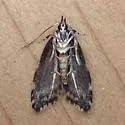
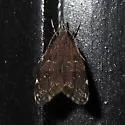
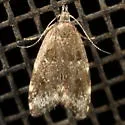
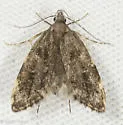
Photo credits: Contributed by Charley Eiseman; Additional contributions by Randy Hardy , lee_penner , Robert H. Biagi
Frequently Asked Questions About Eido trimaculella - Hodges#1068
What is Eido trimaculella - Hodges#1068?
Eido trimaculella - Hodges#1068 (Eido trimaculella) is a species in the family Oecophoridae, within the order Lepidoptera.
How big is Eido trimaculella - Hodges#1068?
6 to 7 mm long. Wingspan 15-18 mm.
How do you identify Eido trimaculella - Hodges#1068?
| Feature | Details |
|---|---|
| Head | Grayish-brown, a few rough scales, but face smooth. Palpi thick, curved up over head; gray with a wide black stripe. Some white on 2nd segment, with a large tuft on last segment. Antenna: Slender, about 2/3 as long as wing: Gray-brown with white rings. |
| Thorax | Grayish-brown. Wings: Wide, sharp pointed tips. Grayish-brown to silvery-gray, dusted with white. Three yellowish-white marks along costa edge from mid-wing to tip (thus Triple-spotted). A row of yellowish-white dashes along wing tip margin, forming an overall V-shape. White dusting along the inner side of the V-shape pattern. Fringe unevenly checkered. Hindwings dark gray-brown. Fringe has brown line through it. |
| Legs | Each segment grayish-brown with a white tip. Underside silvery-white. |
| Abdomen | Grayish-brown on top, silvery-white on underside. Female has protruding, rough scaled ovipositor of 3 telescoping sections – half as long as abdomen. Genitalia: |
Where is Eido trimaculella - Hodges#1068 found?
| Feature | Details |
|---|---|
| Habitat | Deciduous forests. Moths can be found around hollow trees, walking with their wings elevated. |
| Range | Eastern U.S., North Dakota; Canada. |
What does Eido trimaculella - Hodges#1068 eat?
The diet of the Eido trimaculella - Hodges#1068 includes Larvae feed on fungus, including Piptoporus betulinus and Fomes fomentarius . ( 3 ).
When is Eido trimaculella - Hodges#1068 active?
Eido trimaculella - Hodges#1068: seasonal activity - Early June through July in north. May to August in south..
What is the life cycle of a Eido trimaculella - Hodges#1068?
Females deposit eggs on bracket fungus Tinder Polypore Fomes fomentarius and Birch Polypore Piptoporus betulinus . Larva feed under a silken web.