
Eastern Pine Seedworm Moth - Hodges#3486
Cydia toreuta
This record describes Cydia toreuta (species). Recorded family: Tortricidae. Recorded order: Lepidoptera.
Identification and Appearance
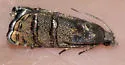
To separate from the similar Cydia ingens: In Cydia toreuta the PM band is usually unbroken. There are two short bars on the costa between the PM band and ST band, with the one nearest the PM band the shortest. The forewing shows a small gap present between the black terminal line and ST band. A braconid parasite, Phanerotoma sp., may destroy a high percentrage of the full-grown larvae. ( 4 )
Classification
- Kingdom
- Animalia
- Phylum
- Arthropoda
- Class
- Insecta
- Order
- Lepidoptera (Butterflies and Moths)
- Superfamily
- Tortricoidea
- Family
- Tortricidae (Tortricid Moths)
- Subfamily
- Olethreutinae
- Tribe
- Grapholitini
- Genus
- Cydia
Imported taxonomy record. Source availability varies; see the source references and editorial policy below.
Habitat and Range
Geographic Range
Records from the eastern United States and southeastern Canada. ( 3 )
Seasonal Activity
Adults emerge late May and early June ( 4 )
Diet and Behavior
Diet: Larvae feed on the seeds of Pinus resinosa , Pinus virginiana and Pinus banksiana . ( 5 )
Life History
Eggs are deposited over the cone surface. Young larvae bore into the upper part of the 2nd-year cones and enter the seeds to feed. Older larvae bore around the cone through the bases of scales, feeding on available seeds. Pupation occurs in spring. ( 4 ) Overwinter as full-grown larva in the woody axis of the cone. ( 4 )
About Butterflies and Moths: the wider group
Order-level background for Lepidoptera, the group containing Cydia toreuta. Species-specific details appear above.
Group overview
Lepidoptera includes approximately 180,000 described species of butterflies and moths. Moths outnumber butterflies roughly 10:1. The monarch butterfly's eastern population has declined by more than 80% since the mid-1990s, and the western population by over 95% since the 1980s. The IUCN lists the migratory monarch as Vulnerable.
Ecological role of the group
Butterflies and moths are essential indicators of ecosystem health. As caterpillars, they are a primary food source for birds - a single nest of blue tit chicks requires ~10,000 caterpillars. Adult moths pollinate many night-blooming plants.
Economic and practical significance of the group
Lepidoptera are critical pollinators. In Europe, grassland butterfly species have declined by almost 50% since the early 1990s. In the UK, three-quarters of butterflies are in decline. In the U.S., five butterfly species have gone extinct since 1950, with 29 listed as endangered.
Recorded sources for this group: IUCN Red List, Xerces Society, USFWS, PNAS, WWF. Imported estimates may describe particular regions or reporting periods.
Photos of Eastern Pine Seedworm Moth - Hodges#3486 (5)
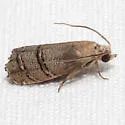
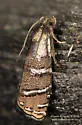
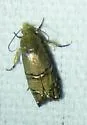
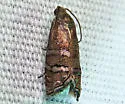
Photo credits: Contributed by Eric R. Eaton; Additional contributions by Steve Nanz , JohnMaxwell22 , Randy Hardy , John Morgan , Marci Hess
Frequently Asked Questions About Eastern Pine Seedworm Moth - Hodges#3486
What is Eastern Pine Seedworm Moth - Hodges#3486?
Eastern Pine Seedworm Moth - Hodges#3486 (Cydia toreuta) is a species in the family Tortricidae, within the order Lepidoptera.
How big is Eastern Pine Seedworm Moth - Hodges#3486?
Wingspan about 13-15 mm.
How do you identify Eastern Pine Seedworm Moth - Hodges#3486?
To separate from the similar Cydia ingens: In Cydia toreuta the PM band is usually unbroken. There are two short bars on the costa between the PM band and ST band, with the one nearest the PM band the shortest. The forewing shows a small gap present between the black terminal line and ST band.
Where is Eastern Pine Seedworm Moth - Hodges#3486 found?
Range: Records from the eastern United States and southeastern Canada. ( 3 )
What does Eastern Pine Seedworm Moth - Hodges#3486 eat?
The diet of the Eastern Pine Seedworm Moth - Hodges#3486 includes Larvae feed on the seeds of Pinus resinosa , Pinus virginiana and Pinus banksiana . ( 5 ).
When is Eastern Pine Seedworm Moth - Hodges#3486 active?
Eastern Pine Seedworm Moth - Hodges#3486: seasonal activity - Adults emerge late May and early June ( 4 ).
What is the life cycle of a Eastern Pine Seedworm Moth - Hodges#3486?
Eggs are deposited over the cone surface. Young larvae bore into the upper part of the 2nd-year cones and enter the seeds to feed. Older larvae bore around the cone through the bases of scales, feeding on available seeds. Pupation occurs in spring. ( 4 ) Overwinter as full-grown larva in the woody axis of the cone. ( 4 )