
Butterflies and Moths
Order Lepidoptera
The Butterflies and Moths (Order Lepidoptera) includes 11,813 species across 112 families and 2,787 genera in our directory.
About Butterflies and Moths
Lepidoptera includes approximately 180,000 described species of butterflies and moths. Moths outnumber butterflies roughly 10:1. The monarch butterfly's eastern population has declined by more than 80% since the mid-1990s, and the western population by over 95% since the 1980s. The IUCN lists the migratory monarch as Vulnerable.
Economic Impact
Lepidoptera are critical pollinators. In Europe, grassland butterfly species have declined by almost 50% since the early 1990s. In the UK, three-quarters of butterflies are in decline. In the U.S., five butterfly species have gone extinct since 1950, with 29 listed as endangered.
Ecological Role
Butterflies and moths are essential indicators of ecosystem health. As caterpillars, they are a primary food source for birds - a single nest of blue tit chicks requires ~10,000 caterpillars. Adult moths pollinate many night-blooming plants.
Families in Lepidoptera (112)
Species in Lepidoptera (11,813)
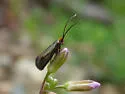
Cauchas simpliciella - Hodges#0216
Cauchas simpliciella
Identification: The original description as Adela simpliciella Walsingham, is available online in the print references below. Forewing dark bronze to bright purplish with orange head. Diurnal
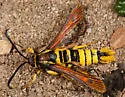
Ceanothus Borer - Hodges#2580
Synanthedon mellinipennis
Identification: Adult - see Duckworth & Eichlin in Print References.
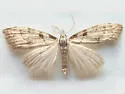
Ceanothus Nola Moth - Hodges#8993
Nola minna
Identification: Adult: forewing light gray with black spot near middle of AM line and black basal strip along costa; PM and subterminal lines jagged, indistinct; darker gray shading beyond subterminal line; hindwing dirty white with light gray shadin
Cecrita cubana - Hodges#7984
Cecrita cubana
Identification: See Miller et al. (2021) ( 3 ) The original description is online in the print references below. Determined by Bob Patterson.
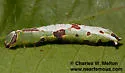
Cecrita incongrua - Hodges#7989
Cecrita incongrua
Identification: See Miller et al. . "Antennae brownish-yellow. Head and thorax mottled olivaceous and black. Abdomen light yellowish-brown above, overlaid by some grey, tufts black; below, cream, colored. Primaries: ground color olivaceous, strongly
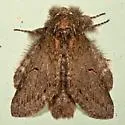
Cecrita lunata - Hodges#7993
Cecrita lunata
Identification: See Miller et al. (2021) ( 4 ) . Edwards (1884) original description of Heterocampa lunata is available online in the print references. Determined by Noel McFarland.
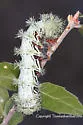
Cecrops eyed Silkmoth - Hodges#7748
Automeris cecrops
Identification: In adults, the line running from the tip of the front wing to the middle of the hind margin will separate it from A. io , which has a line or division in the pattern that is parallel to the outer margin instead, not extending from the
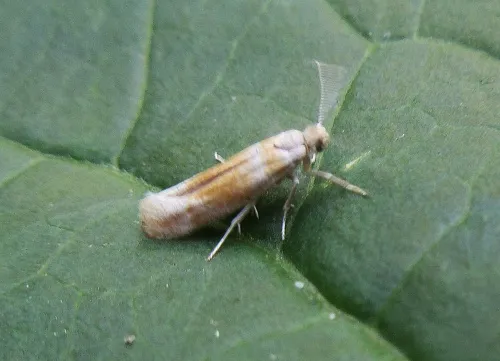
Cedestis gysseleniella
Cedestis gysseleniella
The adults fly in June and July, when they can be attracted to light. The larva feeds in spring internally in a needle of pine ( Pinus sylvestris ), working its way from the base to the tip. It may then feed externally in a slight web. A widespread b
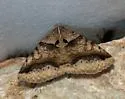
Celiptera valina - Hodges#8748
Celiptera valina
Identification: The Hampson (1913) revised description of Celiptera valina is available online in the print references below.
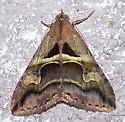
Cellar Melipotis - Hodges#8601
Melipotis cellaris
Identification: male female Variable forewing pattern Species was described by Achille Guenée (1809-1880), a French lawyer and entomologist.
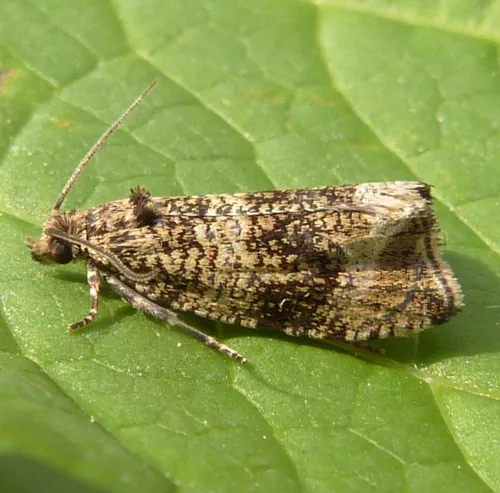
Celypha lacunana
Celypha lacunana
Wingspan 14-18 mm. Although extremely variable, this species can usually be distinguished from its near relatives by the strong indentation or lacuna in the median fascia above the middle and in dark forms this indentation tends to become obscure but
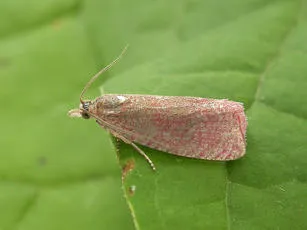
Celypha rosaceana
Celypha rosaceana
Wingspan 15 to19 mm. When freshly emerged, this species can have a distinctly rosy or purplish tinge, which gives rise to the scientific name. However this can fade quite quickly to a dull buff colour. Frequents rough pasture and similar habitats. Ju
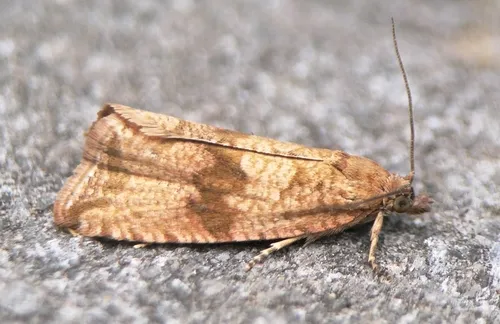
Celypha striana
Celypha striana
Wingspan 16-22 mm. Distinguished from other Celypha sp. by the strongly developed median fascia in the forewing. Flies from dusk between June and August, being attracted to light. The larvae feed on Dandelion ( Taraxacum officinale ), boring into the

Cenopis eulongicosta - Hodges#3721.1
Cenopis eulongicosta
Identification: Distinguished from other similar species by its large size and elongate male antennal sensillae (3/4 times width of flagellomere vs. 1/4).
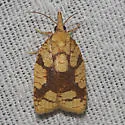
Cenopis ferreana - Hodges#3720.1
Cenopis ferreana
Identification: Busck original description as Sparganothis ferreana is available online in the print preferences.
Cenopis karacana - Hodges#3718
Cenopis karacana
Identification: Adult - see original description in Print References.
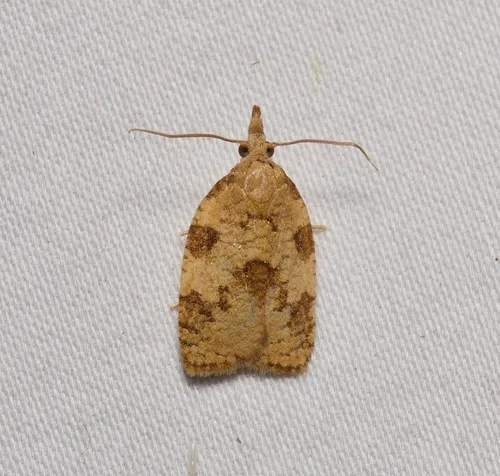
Cenopis saracana - Hodges#3724
Cenopis saracana
Identification: Adult - see original description in Print References.
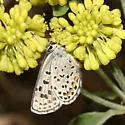
Central Blue - Hodges#4366.2
Euphilotes centralis
Identification: Distinguished by where found. Separated in recent literature as a distinct species. A debatable arrangement that may not stand the test of time.
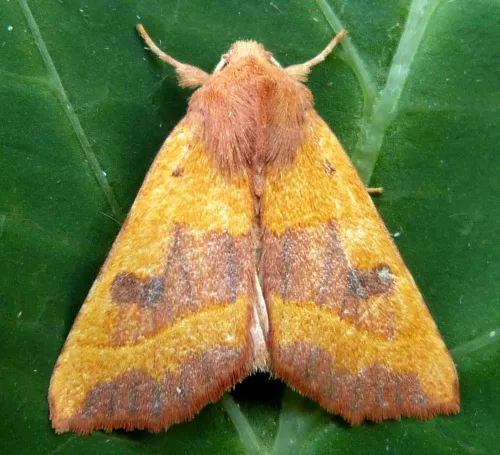
Centre-barred Sallow
Atethmia centrago
Wingspan 32-36 mm. Striking in appearance and unlikely to be confused with anything else. The main habitats are woodland and hedgerows. The moths are on the wing during August and September. The caterpillars feed on Ash, burrowing into the buds when
Cephalospargeta elongata - Hodges#9837
Cephalospargeta elongata
Identification: Hampson (1909) description online: 224 .
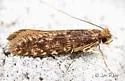
Cephimallota obscurostrigella - Hodges#0324
Cephimallota obscurostrigella
Cephimallota obscurostrigella - Hodges#0324 (Cephimallota obscurostrigella) is a species in the family Tineidae, commonly known as clothes moths, belonging to the order Lepidoptera (Butterflies and Moths). It is classified within the subfamily Myrmec
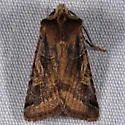
Cerastis cornuta - Hodges#10995
Cerastis cornuta
Identification: Adult distinguished from the very similar Cerastis robertsoni by differences in genitalia: in males of cornuta , the vesica is straight beyond the basal turn; in females of cornuta , the corpus bursae is constricted posteriorly, the a
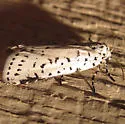
Cerathosia tricolor - Hodges#9064
Cerathosia tricolor
Identification: The fore wings are pure white, spotted with black, the hind wings are pale yellow. uncommon and local
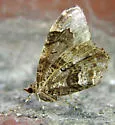
Ceratodalia gueneata - Hodges#7221
Ceratodalia gueneata
Identification: Adult: forewing brownish-gray, paler along costa and outer margin; PM line triple but not visible in all specimens; AM line double; ST line with 3 or 4 large dark teeth near costa; fringe pale except for dark scaling at veins, giving
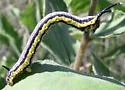
Ceratonyx arizonensis - Hodges#6778
Ceratonyx arizonensis
Identification: Adult - See Capps and Rindge descriptions in Print References. Larva & Pupa - See Franclemont description in Print References.
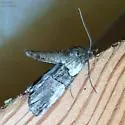
Ceratonyx satanaria - Hodges#6780
Ceratonyx satanaria
Identification: Larvae - similar in form to that of arizonensis , with a very long pair of prothoracic filaments, but has three small projections on the second abdominal segment and only a stump of the filament on the eighth abdominal segment. The bo
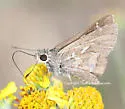
Cestus Skipper - Hodges#4087
Atrytonopsis cestus
Identification: Fringes are checkered. Upperside is dark brown; forewing has large clear spots, hindwing has a short row of 4 spots that are not in line. Underside is lighter brown with upperside spots repeated. All populations and their habitats sho
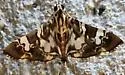
Chabula acamasalis - Hodges#5199.3
Chabula acamasalis
Chabula acamasalis Walker, 1859, a non-native species, is tentatively recognized within the North American fauna; two photo records from Florida in 2020 and 2022; no specimens collected. (Steve Nanz, 4/23/2022).
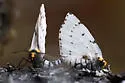
Chain-dotted Geometer - Hodges#6898
Cingilia catenaria
Identification: Adult: wings white to pale brown or grayish; AM, PM, and terminal lines composed of black dots (AM and PM lines may be continuous in some individuals); top of head and "shoulders" yellow, with remainder of thorax and abdomen whitish t
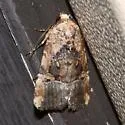
Chalcedony Midget - Hodges#9679
Elaphria chalcedonia
Identification: Adult: forewing color a mixture of white, dark gray/blackish, and dull yellow or orangish; basal and upper median areas dull yellowish to orangish; white edging along PM line varies from broad and conspicuous to thin and patchy; dark
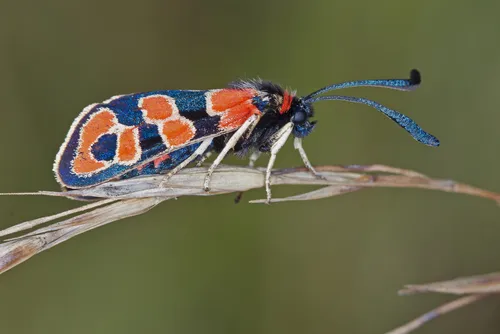
Chalk Burnet
Zygaena fausta
Zygaena fausta is a member of the family Zygaenidae, the day-flying burnet moths. Its bright aposematic colours of red, white and black on the wings indicate to possible predators such as birds that it is foul tasting or poisonous. In flight, the bri
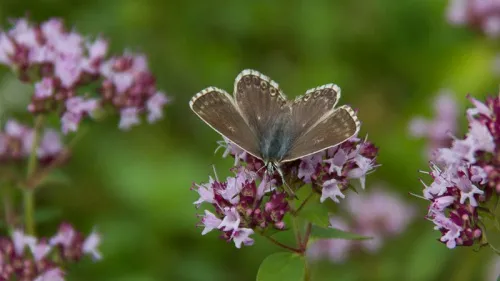
Chalk Hill Blue
Polyommatus coridon
The sexes are strongly dimorphic; the males being a pale sky blue, and the females being a chocolate brown. Chalk and limestone grassland. This species lives in discrete colonies where its foodplant, Horseshoe Vetch, is found in abundance. It is also
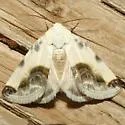
Chalky Bird Dropping Moth - Hodges#9161
Acontia cretata
Identification: Adult: forewing mostly white basally, and dark green to blackish beyond PM line; amount of pearl-gray shading in basal half varies from almost none to almost complete; reniform spot either white or dark, bordered by pale yellowish-gre
Chalky Inga - Hodges#1035
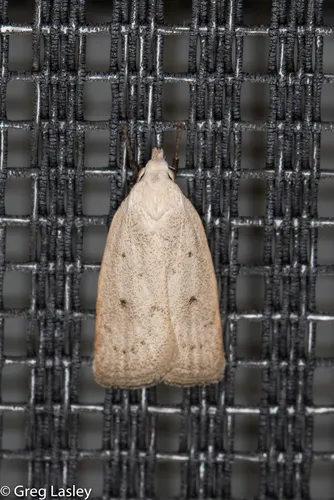
Inga cretacea
Fossil records of this species have been dated from the Upper Cretaceous period. (p. 223)
Chambers' Sack-bearer Moth - Hodges#7662.1
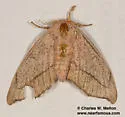
Cicinnus chambersi
Identification: The only Cicinnus known to occur in southern Arizona, but can be distinguished from the other Cicinnus found in the USA, C. melsheimeri, by the acuter angle of the postmedial line near the apex of the wing, the usually more sharply ho
Chamomile Shark
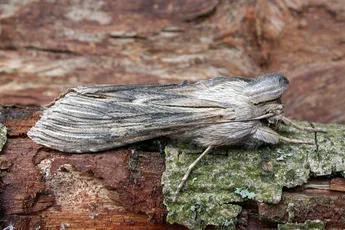
Cucullia chamomillae
Wingspan 40 to 42 mm. Very similar to The Shark ( C. umbratica ), it can be told apart by the fringe of the hindwing, which has a darker central line running through the centre, forming a triple-banded effect. In umbratica , the fringe is all pale wi
Chang Borer Moth - Hodges#9433
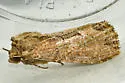
Xylomoia chagnoni
Identification: Barnes & McDunnough original description is available online in the print references below.
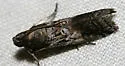
Chararica hystriculella - Hodges#5713
Chararica hystriculella
Identification: Adult: forewing whitish except for brownish basal patch and brownish shading beyond line running from apex to middle of inner margin; AM line dark, thin, irregular; discal spot a hollow oval; subterminal line toothed, almost straight;
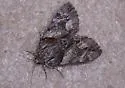
Charming Underwing - Hodges#8867
Catocala blandula
Identification: Adult - AM and PM lines meet near inner margin. Brown basal shade, and black border of HW usually not broken. It appears there may not be any current diagnostic criteria for reliably and consistently separating blandula/mira/crataegi
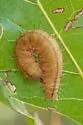
Charred Dagger - Hodges#9255
Acronicta brumosa
Identification: Adult: forewing a patchy mixture of black, gray, and white, with no sharply-defined markings; basal, anal, orbicular-reniform, and subterminal dashes present but diffuse and indistinct, showing little contrast against dark ground colo
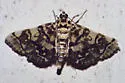
Checkered Apogeshna - Hodges#5177
Apogeshna stenialis
Identification: Adult: forewing variably bright to pale yellow (mostly along costa) and brown (mostly along inner margin and beyond PM line); hollow oval spot in median area, and another descending from AM line; AM, PM, and median lines fairly straig

Chemsak's Desert Moth - Hodges#4815
Eremanthe chemsaki
Identification: Munroe original description is in MONA. Determined by Ed Knudson (Texas Lepidoptera Survey). Diurnal .

Chequered Fruit-tree Tortrix
Pandemis corylana
Wingspan 18-21 mm. The reticulations on the forewing of this species give rise to its English name, although the intensity of these varies somewhat. The larvae feed on a wide variety of deciduous trees, rolling the leaves in a manner characteristic o
Cherokeea attakullakulla - Hodges#9454.7
Cherokeea attakullakulla
Identification: See original description in print references below. Rarely comes to lights.
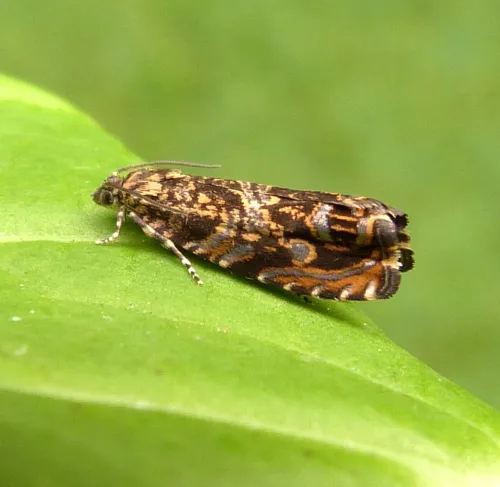
Cherry Bark Tortrix
Enarmonia formosana
Wingspan 15 to 19 mm. At first glance this looks to be a rather dull moth, but closer investigation reveals a complex combination of browns, white and metallic blue markings. The species occurs in gardens, parks and orchards where the larval foodplan
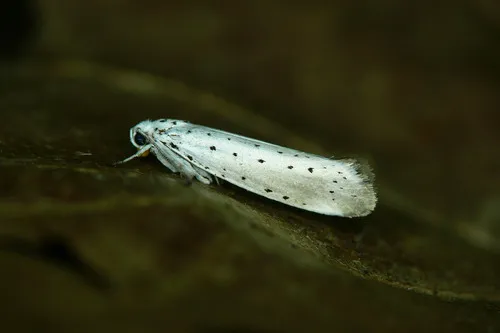
Cherry Ermine
Yponomeuta padella
The orchard ermine (Yponomeuta padella) is a lepidoptera from the family Yponomeutidae, the ermine moths. The wingspan ranges from 19 to 22 mm. It is also known as the cherry ermine.
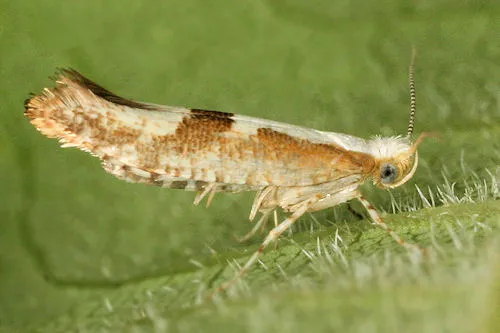
Cherry Fruit Moth
Argyresthia pruniella
Wingspan 10 to 13 mm. A small brown and white species that is similar to many others in the genus. Cherry orchards and around cherry trees. If you look closely at a cherry tree on a calm evening in July, you may find a number of these moths flitting
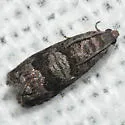
Cherry Fruitworm Moth - Hodges#3428
Aspila packardi
Identification: Adult : range in color from light to dark. Light individuals have silvery striae and darker contrasting fasciae, while dark individuals lack a well-defined FW pattern. Males have a conspicuous patch of dark sex scales on the dorsal su
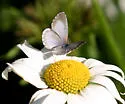
Cherry Gall Azure - Hodges#4363.6
Celastrina serotina
Identification: One of the Azure species that has pale wing surfaces on the underside. Perhaps best separated by its size, distribution, and time of flight. 2 images to date (22 Jan 06) in the Guide: #16426 ventral male, #34126 dorsal female Pavulaan
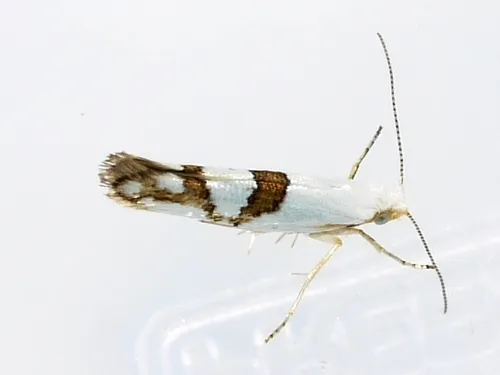
Cherry Shoot Borer Moth
Argyresthia oreasella
The Cherry Shoot Borer Moth (Argyresthia oreasella) is a moth of the Yponomeutidae family. It is found in North America, including New York, Michigan, Idaho, Missouri, Colorado, New Mexico, California, Quebec, Alberta and Saskatchewan.
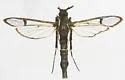
Chestnut Borer - Hodges#2577
Synanthedon castaneae
Identification: Larva - body white with brown head and light brown thoracic shield and spriracles. ( 3 ) Re-discovered in the 1980's in Connecticut using pheromone lures and has since been collected all along the east coast to Florida. This specimen
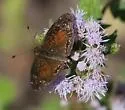
Chestnut Crescent - Hodges#4478.2
Anthanassa argentea
Identification: Males are a very dark black and chestnut above, females are similar to several other crescents. First U.S. Record: Relampago, Hidalgo Co., Texas - 1970 (Bordelon & Knudson 2000)
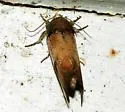
Chestnut Schizura - Hodges#8006
Schizura badia
Identification: Adult: thorax blackish; forewing gray, variously shaded with red; lines fine, blackish if present; whitish patch at apex; black reniform spot a vertical dash with triangular blackish shade beyond it, widening toward outer margin hindw
Chihuahuan Desert Plume Moth - Hodges#6154.1
Pselnophorus chihuahuaensis
Identification: The four Pselnophorus species occurring north of Mexico are treated in .
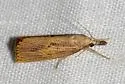
Chilo erianthalis - Hodges#5471
Chilo erianthalis
Identification: Original description is online: (31) Forewing gray with slight reddish tint. The dark shaded veins are limited to the outer half of the wing. Dark chevron shaped patch of scales in the median area. Terminal line is a series of black d
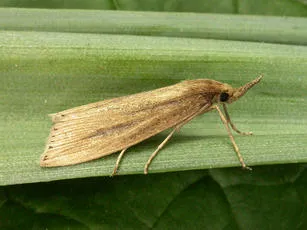
Chilo phragmitella
Chilo phragmitella
Wingspan 24 to 40 mm. A sexually dimorphic species, with the females paler in colour and generally larger than the males. Both sexes have distinctively long labial palps. It occupies fens and other wet places where large reedbeds occur. The whitish c
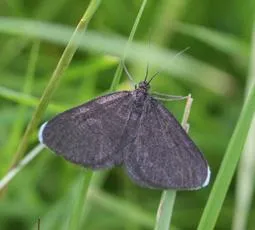
Chimney Sweeper
Odezia atrata
Wingspan 23-27 mm. It is completely black except for the white fringes at the tips of the forewings. It inhabits grassy meadows, dry chalky and limestone districts. This unusual species flies in the daytime and prefers bright sunshine. The single gen
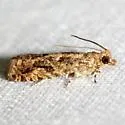
Chimoptesis gerulae - Hodges#3272
Chimoptesis gerulae
Identification: Original description online: [Adapted from original description]: White patch along the middle of inner margin. Beginning near the middle of the costa is a band of black scales curving into the wing and ending at the apex. There is a
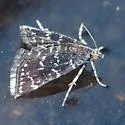
China Mark Moth - Hodges#4753
Nymphuliella daeckealis
Identification: The original description as Nymphula broweri Heinrich, is available in the print references below.
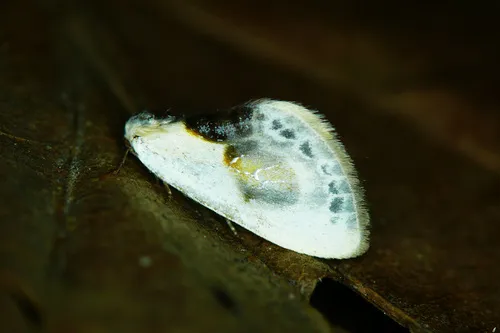
Chinese Character
Cilix glaucata
Wingspan 18-22 mm. This unusual-looking moth combines its wing-pattern and resting posture to give the appearance of a bird-dropping, thus avoiding the attention of hungry birds. Found in hedgerows, gardens and woodland. It has two generations in the
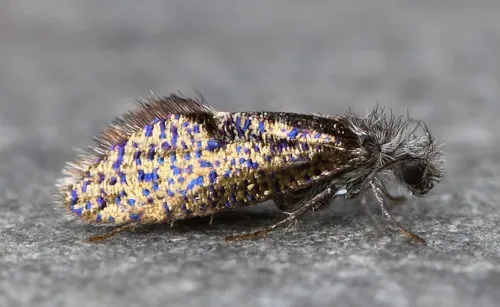
Chinquapin Leaf-miner Moth - Hodges#0003
Dyseriocrania griseocapitella
Identification: Genitalia: Larva - head pale brown to yellow, thorax dark brown, abdomen whitish except for a pair of minute, longitudinal, brownish spots on the anal segment
Chionodes abdominella - Hodges#2054
Chionodes abdominella
Identification: Detailed description available in MONA Fascicle 7.6 at link in citations below.
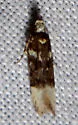
Chionodes abella - Hodges#2055
Chionodes abella
Identification: Description can be found in MONA Fascicle 7-6 at link in citations below. In June, larvae feed in the newly developing foliage of Abies concolor and Pseudotsuga menziesii .
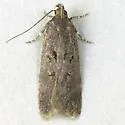
Chionodes abitus - Hodges#2061.2
Chionodes abitus
"Three specimens from Ottawa, Ontario area are excluded from the type series because they are highly disjunct from other populations... The pattern of dark spots on the forewing is reduced but present." This statement seems to imply that the Northeas
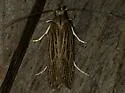
Chionodes arenella - Hodges#2060
Chionodes arenella
Identification: From Forbes's description: "Clay color…. Fore wing with darker grayish shading between the veins, leaving the veins contrastingly pale."
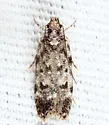
Chionodes bicostomaculella - Hodges#2064
Chionodes bicostomaculella
Identification: In the East, this species can be separated from other members of the C. formosella complex by the lack of yellow scaling. This species has a slate-gray appearance, with no yellow or orange. Note that according to Hodges' fascicle, gen
Chionodes chrysopyla - Hodges#2068
Chionodes chrysopyla
Identification: Description can be found in MONA Fascicle 7-6 at the link in citations below.
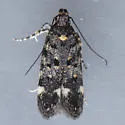
Chionodes emptor - Hodges#2072.3
Chionodes emptor
Identification: Adult : Usually the scales on the head are tipped with dark gray/black and the transition is relatively abrupt. Males of have sex scales on the dorsolateral surface of HW.
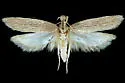
Chionodes figurella - Hodges#2073
Chionodes figurella
Identification: Specimen determined by DNA analysis (BOLD).
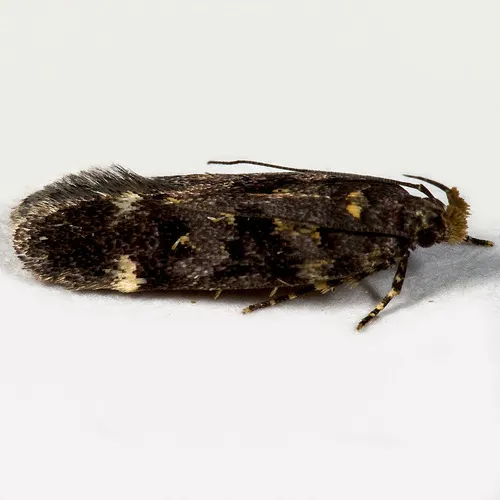
Chionodes formosella - Hodges#2077
Chionodes formosella
Identification: Chionodes formosella and Chionodes fuscomaculella can be distinguished from Chionodes bicostomaculella by the presence of yellow scaling ( Chionodes bicostomaculella is entirely grayscale). Chionodes formosella and Chionodes fuscomacu
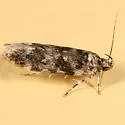
Chionodes fuscomaculella - Hodges#2079
Chionodes fuscomaculella
Identification: Chionodes formosella and Chionodes fuscomaculella can be distinguished from Chionodes bicostomaculella by the presence of yellow scaling ( Chionodes bicostomaculella is entirely grayscale). Chionodes formosella and Chionodes fuscomacu
Chionodes gilvomaculella - Hodges#2080
Chionodes gilvomaculella
Identification: The forewings are dark brownish, with an indistinct yellowish spot on the costa near the base of the wing and one of the same color on the middle of the costa, extended indistinctly or diffusely to the fold, where there is a blackish-
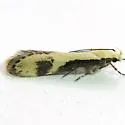
Chionodes kincaidella - Hodges#2086
Chionodes kincaidella
Identification: A highly variable species . See original description in the print references below. "The wide distribution and variation in FW color, from dark chocolate brown to rust and pattern especially in the extent of the ochreous, to nearly ob
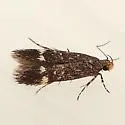
Chionodes lactans - Hodges#2095.6
Chionodes lactans
Identification: Dark-gray/gray-brown forewings with pair of whitish spots at 3/4 wing length, one on anterior margin and one on posterior margin; is some specimens the spots fuse to form fascia bar. More detailed description found in MONA Fascicle 7.
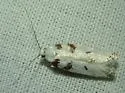
Chionodes lictor - Hodges#2094.4
Chionodes lictor
Identification: "One of the few externally distinct species of Chionodes : the forewings are nearly shining white with black/dark-gray marks extending posteriorly from the costa just beyond base, at 1/3 length, at 2/3 length, and on the outer margin"
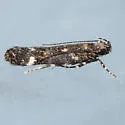
Chionodes lophosella - Hodges#2089
Chionodes lophosella
Chionodes lophosella - Hodges#2089 (Chionodes lophosella) is a species in the family Gelechiidae, commonly known as twirler moths, belonging to the order Lepidoptera (Butterflies and Moths). It is classified within the subfamily Gelechiinae, tribe Ge
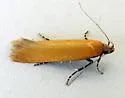
Chionodes luror - Hodges#2112.2
Chionodes luror
Identification: The only Chionodes with a clear yellow forewing.
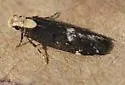
Chionodes mariona - Hodges#2092
Chionodes mariona
Identification: Adult - forewings glossy black with two conspicuous cream-colored spots; one, a short triangular dash on outer third of costa; the other, an irregular spot of about the same size on dorsum just beyond middle. Larva - long; slender bo
Chionodes meddix - Hodges#2095.5
Chionodes meddix
Identification: Dark-gray/gray-brown forewings whitish spots at 3/4 wing length, typically only single spots on each wing near the costal margin. More detailed description found in MONA Fascicle 7.
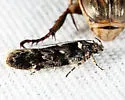
Chionodes near-bicostomaculella - Hodges#2064.1
Chionodes near-bicostomaculella
Identification: This undescribed species of the Northeast looks like a contrastingly black-and-white variation of Chionodes bicostomaculella . Images can be see on iNaturalist
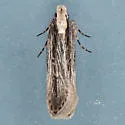
Chionodes notandella - Hodges#2098
Chionodes notandella
Identification: Busck description "Second joint of labial palpi with large divided brush, which become gradually shorter towards apex; white strongly mottled with black and brown scales; terminal joint white with black apex. Face light fuscous, iride
Chionodes occlusa - Hodges#2101
Chionodes occlusa
Some females in the lugubrella -group have slightly more narrow wings than do males. Sattler (1991: 268) notes ". . . some Chionodes species ... , slight sexual differences in wing shape are observed, with the females having distally narrower fore wi
Chionodes oecus - Hodges#2086.2
Chionodes oecus
Identification: Detailed description available from MONA Fascicle 7-6 linked in citations below.
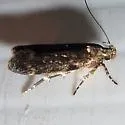
Chionodes pereyra - Hodges#2104
Chionodes pereyra
Identification: The original description is available online in the print references below. Specimen determined by DNA analysis (BOLD) Genitalia:
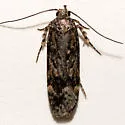
Chionodes petalumensis - Hodges#2107
Chionodes petalumensis
Identification: Detailed description can be found in MONA Fascicle 7-6 which can be accessed at the link below under citations. Genitalia:
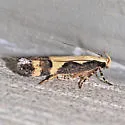
Chionodes pinguicula - Hodges#2109
Chionodes pinguicula
Identification: Detailed description can be found in MONA Fascicle 7-6 at the link in citations below.
Chionodes plutor - Hodges#2109.2
Chionodes plutor
Identification: Detailed description available in MONA Fascicle 7-6 at link in citations below.
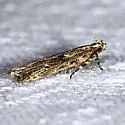
Chionodes rabula - Hodges#2111.1
Chionodes rabula
Identification: " Chionodes rabula can be recognized by the combination of small size and vaguely striate forewing color pattern, particularly the faint, oblique gray fascia at 1/3 the wing length immediately preceded by a pale-yellow area" .
Chionodes rector - Hodges#2118.1
Chionodes rector
Identification: Description can be found in MONA Fascicle 7-6 at link in citations below.
Chionodes repertor - Hodges#2086.3
Chionodes repertor
Identification: Detailed description in MONA Fascicle 7-6 found at link in citations below.
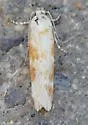
Chionodes retiniella - Hodges#2112
Chionodes retiniella
Identification: "Differs from all other gelechiine species in North America by having pale rust orange FW crossed by four evenly-spaced white bands, a convergence in pattern to conifer-feeding Tortricidae" .
Chionodes salicella - Hodges#2114
Chionodes salicella
Identification: Description can be found in MONA Fascicle 7-6 at link in citations below.
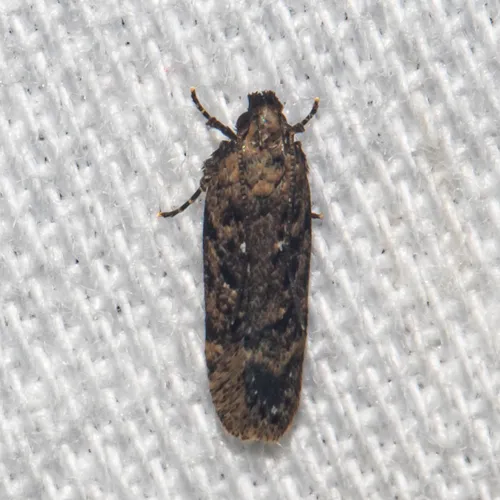
Chionodes thoraceochrella - Hodges#2119
Chionodes thoraceochrella
Chionodes thoraceochrella is a moth in the family Gelechiidae. It is found in North America, where it has been recorded from Nova Scotia and southern Quebec to Georgia, North Dakota, Mississippi, Texas and Washington, east to California, Utah and Ari
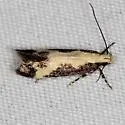
Chionodes thyotes - Hodges#2071.2
Chionodes thyotes
Identification: The color pattern of the forewing (plate 2, figure 1) of thyotes is distinctive within the sistrella -complex: the posterior margin is pale yellow from the base to 3/5 the length, then extended obliquely to the anterior margin at 4/5
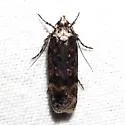
Chionodes trichostola - Hodges#2120
Chionodes trichostola
Identification: See Meyrick Hodge places this species in the trichostola complex with C. parens and C. sevir .
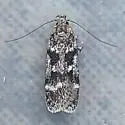
Chionodes trophella - Hodges#2121
Chionodes trophella
Identification: Description can be found in MONA Fascicle 7-6 at link in citations below.
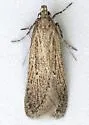
Chionodes whitmanella - Hodges#2124
Chionodes whitmanella
Identification: Forewings with pale yellowish scales along veins and darker scales between the veins, often with fuscous coloration in the distal portion of the forewings. Some specimens with three dark spots around the cell.
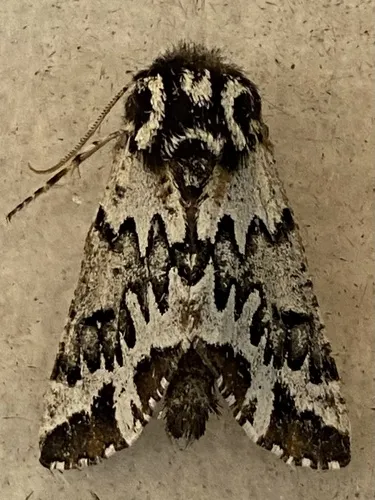
Chiricahua multidentata - Hodges#6641
Chiricahua multidentata
Identification: Adult - Generally, white with a broad, gray median area with irregular margins, and with a grayish black terminal area. More specifically, Forewings white, with scattered grayish brown and blackish brown scales on both sides of dark m
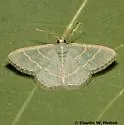
Chlorochlamys appellaria - Hodges#7073
Chlorochlamys appellaria
Identification: Original description online: 206 Adults - usually green, but may also be brown, rust, or, rarely cream. ( 3 ) Larvae - yellow green with vague lighter lines and a yellow head. ( 3 )
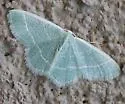
Chlorochlamys triangularis - Hodges#7072
Chlorochlamys triangularis
Identification: Adult: Green-gray except when faded. A rare cream form exists in southeast Califronia and Nevada. No discal spots. No antemedial line on the hindwing. Usually has a pale line the length of the abdomen on the dorsal surface (no spots o