
Charming Underwing - Hodges#8867
Catocala blandula
This record describes Catocala blandula (species). Recorded family: Erebidae. Recorded order: Lepidoptera.
Identification and Appearance
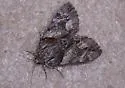
Adult - AM and PM lines meet near inner margin. Brown basal shade, and black border of HW usually not broken. It appears there may not be any current diagnostic criteria for reliably and consistently separating blandula/mira/crataegi and maybe even pretiosa . As an example, here are the *expected* appearance and differences between blandula , mira and crataegi respectively, as the written descriptions would place them: (images courtesy of MPG, copyright Jim Vargo) C. blandula C. mira C. crataegi Now, here are three different images (all courtesy of BOLD Systems) of each of those species, showing the variation that will often preclude any reliable distinction based on the accepted descriptions. C. blandula : C. mira : C. crataegi : It seems C. pretiosa may be more likely to be distinguished in many cases due to it's strongly contrasting pale median area, but even specimens of that species can often blend right in with the others, such as the two specimens below: Since these species share range, food, and season, the best approach to identifying and placing them here on BugGuide (where dissection and/or DNA sequencing has not been done) is probably a combined species complex page (i.e., a blandula-mira-crataegi species page). Until that is decided and created, individual specimens are likely to be placed to the page of whichever species they most look like per the old descriptions.
Classification
- Kingdom
- Animalia
- Phylum
- Arthropoda
- Class
- Insecta
- Order
- Lepidoptera (Butterflies and Moths)
- Superfamily
- Noctuoidea
- Family
- Erebidae
- Subfamily
- Erebinae
- Tribe
- Catocalini
- Genus
- Catocala (Underwings)
Imported taxonomy record. Source availability varies; see the source references and editorial policy below.
Habitat and Range
Geographic Range
Nova Scotia west to central Alberta, south to Pennsylvania and Wisconsin. ( 4 )
Seasonal Activity
July to August.
Diet and Behavior
Diet: Larval hosts are apple, serviceberry and hawthorn. ( 5 )
Additional species information
Species notes from the sources
Etymology: Specific epithet from Latin meaning "charming, pleasant."
About Butterflies and Moths: the wider group
Order-level background for Lepidoptera, the group containing Catocala blandula. Species-specific details appear above.
Group overview
Lepidoptera includes approximately 180,000 described species of butterflies and moths. Moths outnumber butterflies roughly 10:1. The monarch butterfly's eastern population has declined by more than 80% since the mid-1990s, and the western population by over 95% since the 1980s. The IUCN lists the migratory monarch as Vulnerable.
Ecological role of the group
Butterflies and moths are essential indicators of ecosystem health. As caterpillars, they are a primary food source for birds - a single nest of blue tit chicks requires ~10,000 caterpillars. Adult moths pollinate many night-blooming plants.
Economic and practical significance of the group
Lepidoptera are critical pollinators. In Europe, grassland butterfly species have declined by almost 50% since the early 1990s. In the UK, three-quarters of butterflies are in decline. In the U.S., five butterfly species have gone extinct since 1950, with 29 listed as endangered.
Recorded sources for this group: IUCN Red List, Xerces Society, USFWS, PNAS, WWF. Imported estimates may describe particular regions or reporting periods.
Photos of Charming Underwing - Hodges#8867 (5)
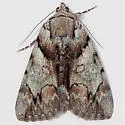
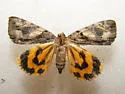
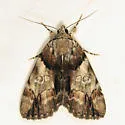
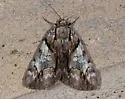
Photo credits: Contributed by tom murray; Additional contributions by Tony-2 , Jason D. Roberts , marcie oconnor , Randy Hardy
Frequently Asked Questions About Charming Underwing - Hodges#8867
What is Charming Underwing - Hodges#8867?
Charming Underwing - Hodges#8867 (Catocala blandula) is a species in the family Erebidae, within the order Lepidoptera.
How big is Charming Underwing - Hodges#8867?
Wingspan 42-50 mm. ( 4 )
How do you identify Charming Underwing - Hodges#8867?
Adult - AM and PM lines meet near inner margin. Brown basal shade, and black border of HW usually not broken.
Where is Charming Underwing - Hodges#8867 found?
Range: Nova Scotia west to central Alberta, south to Pennsylvania and Wisconsin. ( 4 )
What does Charming Underwing - Hodges#8867 eat?
The diet of the Charming Underwing - Hodges#8867 includes Larval hosts are apple, serviceberry and hawthorn. ( 5 ).
When is Charming Underwing - Hodges#8867 active?
Charming Underwing - Hodges#8867: seasonal activity - July to August..