
Butterflies and Moths
Order Lepidoptera
The Butterflies and Moths (Order Lepidoptera) includes 11,813 species across 112 families and 2,787 genera in our directory.
About Butterflies and Moths
Lepidoptera includes approximately 180,000 described species of butterflies and moths. Moths outnumber butterflies roughly 10:1. The monarch butterfly's eastern population has declined by more than 80% since the mid-1990s, and the western population by over 95% since the 1980s. The IUCN lists the migratory monarch as Vulnerable.
Economic Impact
Lepidoptera are critical pollinators. In Europe, grassland butterfly species have declined by almost 50% since the early 1990s. In the UK, three-quarters of butterflies are in decline. In the U.S., five butterfly species have gone extinct since 1950, with 29 listed as endangered.
Ecological Role
Butterflies and moths are essential indicators of ecosystem health. As caterpillars, they are a primary food source for birds - a single nest of blue tit chicks requires ~10,000 caterpillars. Adult moths pollinate many night-blooming plants.
Families in Lepidoptera (112)
Species in Lepidoptera (11,813)
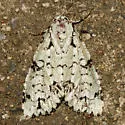
Chloronycta tybo - Hodges#9283
Chloronycta tybo
Identification: Powell & Opler (2009) stated the reniform and orbicular spots both are outlined in black. ( 3 )
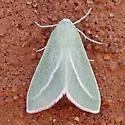
Chlorosea margaretaria - Hodges#7014
Chlorosea margaretaria
Identification: Ferguson (1985) stated the species is "slightly smaller and paler than nevadaria or banksaria , often of a more bluish-green coloring, with a narrower, more pointed forewing and, most significantly, with a very oblique postmedial line
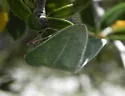
Chlorosea nevadaria - Hodges#7012
Chlorosea nevadaria
Identification: The postmedial line of the forewing is nearly parallel to the outer margin. The abdomen has no markings.
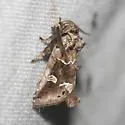
Chocolate Moth - Hodges#9636
Acherdoa ferraria
Identification: Adult: forewing chocolate to reddish-brown with purplish-gray in terminal area; lower AM and PM lines white; most of reniform spot edged with white; hindwing brownish-black; antennae broadly pectinate in male, simple in female [descri
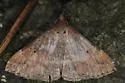
Chocolate Renia Moth - Hodges#8380
Renia nemoralis
Identification: Refer to the guide on the info page for the genus.
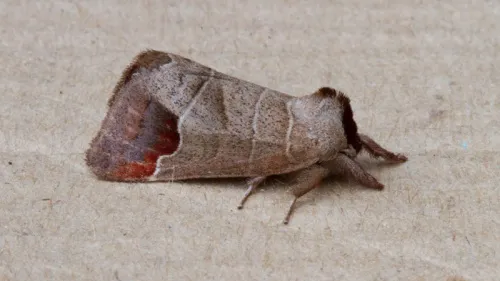
Chocolate-tip
Clostera curtula
Wingspan 27-35 mm. An unmistakable species with the red-brown 'chocolate' wing tips, as well as a similar coloured stripe on the crown of the head and red-brown feet. The English population has two generations, with adults at large in April and May,
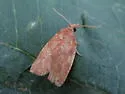
Chokecherry Leafroller - Hodges#3722
Cenopis directana
Identification: Adult: forewing dull orange with dull reddish diagonal AM and PM lines and diffuse/stippled reddish shading beyond PM line (forming a triangular patch across apex); very little contrast between red and orange color, and no net-like re
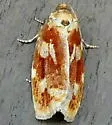
Choristoneura carnana - Hodges#3645
Choristoneura carnana
Identification: Adult - both sexes with rust crossed by a broad, pale antemedial band blending to white in the tornal area. Larva - rust-colored.
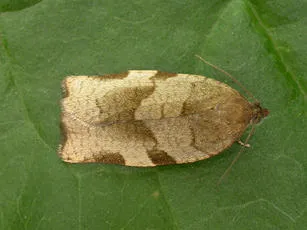
Choristoneura hebenstreitella
Choristoneura hebenstreitella
Wingspan.20 to 30 mm. This rather large Tortrix is fairly distinctive. There is slight sexual dimorphism, females being generally larger than males. June and July is the flight period for the adult moths, which are on the wing around dusk. The larvae
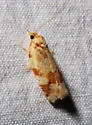
Choristoneura lambertiana - Hodges#3644
Choristoneura lambertiana
Identification: Adult - geographically variable. Typical form from southern Oregon to western Montana that feed on sugar pine and ponderosa pine tend to have rust forewings with white bands. Populations in the eastern Sierra Nevadas that feed on lodg
Choristoneura retiniana - Hodges#3639
Choristoneura retiniana
Identification: Adult - slender forewings either tan or rust-orange with dark lines. Also see Obraztsov. Larva - all green, including the head. Even the pupa is greenish.
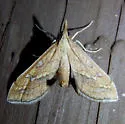
Choristostigma disputalis - Hodges#5133
Choristostigma disputalis
Identification: See original description in "Print References."
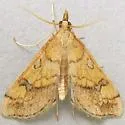
Choristostigma elegantalis - Hodges#5132
Choristostigma elegantalis
Identification: The original description as Choristostigma elegantalis Warren, is available online in the print references below.
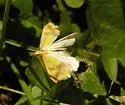
Choristostigma plumbosignalis - Hodges#5128
Choristostigma plumbosignalis
Identification: The original description as Botis plumbosignalis Fernald, is available online in the print references below. Adult: forewing yellow with broad purplish-gray or silvery-gray (lead-colored) PM line shaped like a Y, with the top of the "
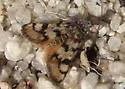
Chrismania pictipennalis - Hodges#4820
Chrismania pictipennalis
Identification: The original description is available online in the print references below.
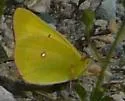
Christina Sulphur - Hodges#4211.1
Colias christina
Identification: Very similar to C. alexandra , and sometimes considered a subspecies of it. Front wings pointed looking. Orange above (some females white), males with narrow black borders and females with hint of border on front wing. Below yellow
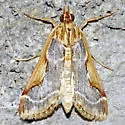
Christmas-berry webworm moth - Hodges#4994
Loxostege floridalis
The four specimens from FL and three from TX and NM in the BOLD BIN for this species ( BOLD:AAH5264 ) form two narrowly divergent clades (~0.5%). The one specimen from NM was identified by Munroe.
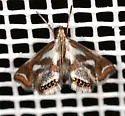
Chrysendeton imitabilis - Hodges#4746
Chrysendeton imitabilis
Identification: Adult: FW dark brown with large basal and median white patches and orangish terminal band bordered by white; basal white patch reaches base of wing, and its upper side is parallel to costa but does not come close to touching costa; po
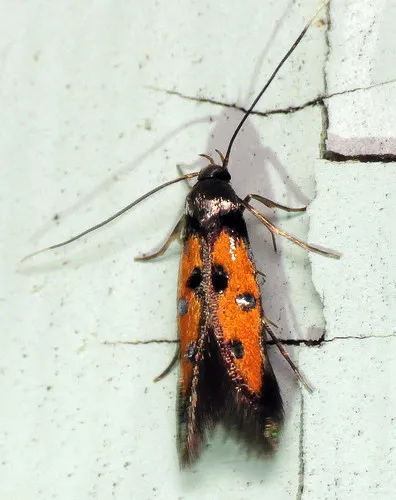
Chrysoclista linneella
Chrysoclista linneella
Wingspan about 12mm. An attractive species, sporting metallic leaden blotches against a bright orange ground colour. There is an extended emergence period for the adults, being on the wing from May to September. The larvae feed under the bark of Lime
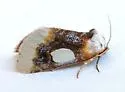
Chrysoecia gladiola - Hodges#9763
Chrysoecia gladiola
Identification: Forewing, at base, beyond subterminal line and a large oval patch in the center below costa, creamy-white. Remainder of wing dark olive green -brown, with an admixture of violet and paler olive green and yellow scales. Ordinary lines
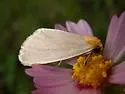
Chrysoecia thoracica - Hodges#9774
Chrysoecia thoracica
Identification: The original description as Eulithosia thoracica Edwards, is available online using the link in the print preferences below.
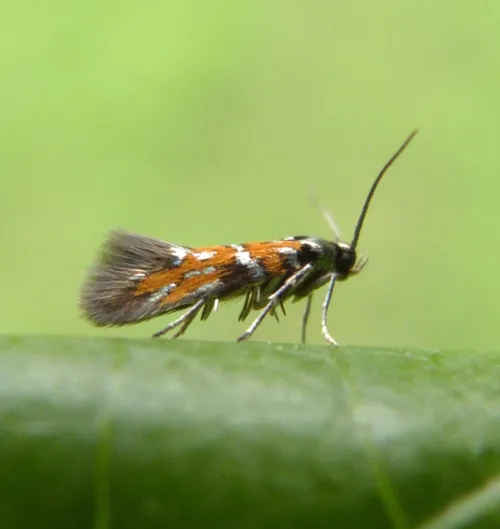
Chrysoesthia drurella
Chrysoesthia drurella
Wingspan 8 to 9 mm. A small but brightly coloured species. The larva mines the leaves of Goosefoot ( Chenopodium ) and Orache ( Atriplex ) and others in this family, forming a contorted gallery, usually with intestine-like loops. Several species of f
Chrysoesthia lingulacella - Hodges#1718
Chrysoesthia lingulacella
Nearly indistinguishable from Chrysoesthia drurella by appearance, but Chrysoesthia lingulacella is a native species in the western US, while C. drurella is known only as an introduced species in the eastern US (particularly NE). C. drurella is not b
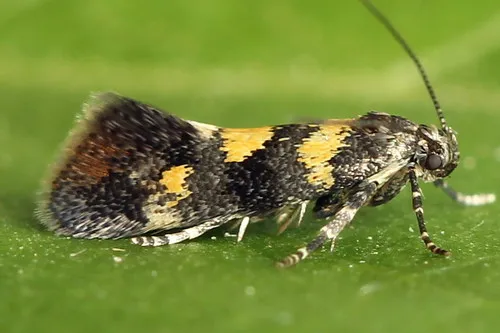
Chrysoesthia sexguttella
Chrysoesthia sexguttella
Wingspan 8 to 10 mm. The larva mines the leaves of Goosefoot ( Chenopodium ) and Orache ( Atriplex ) and other plants in this family, creating a clear blotch mine with black frass in large lumps Some species of fly also mine Chenopodiaceae, and mines
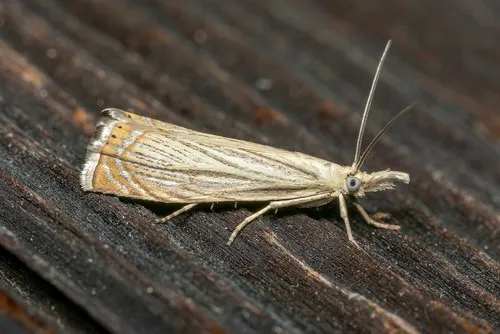
Chrysoteuchia culmella
Chrysoteuchia culmella
Wingspan around 20 mm. It is easily distinguished with its one or two angled cross-lines and metallic golden fringe to the forewings. This species flies in June and July. Its normal flight time is at night, when it is attracted to light. By day it re
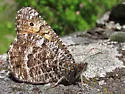
Chryxus Arctic - Hodges#4606
Oeneis chryxus
Identification: Variable--see guide photos and print references for details.
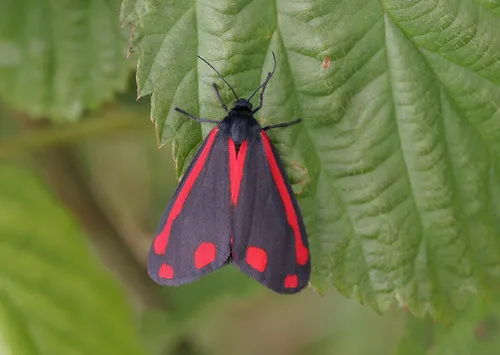
Cinnabar
Tyria jacobaeae
Wingspan 32-42 mm. Resembling no other British species, except perhaps the Burnets ( Zygaenidae ). The forewings are black with a red bar and the hind wings are all red. The caterpillars of the Cinnabar moth feed on the leaves and flowers of Common R
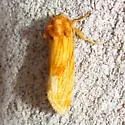
Cirrhophanus pretiosa - Hodges#9766.1
Cirrhophanus pretiosa
Cirrhophanus pretiosa - Hodges#9766.1 (Cirrhophanus pretiosa) is a species in the family Noctuidae, commonly known as owlet moths, belonging to the order Lepidoptera (Butterflies and Moths). It is classified within the subfamily Stiriinae, tribe Stir
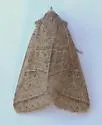
Cissusa mucronata - Hodges#8593
Cissusa mucronata
Identification: Adult - see original description in Print References.
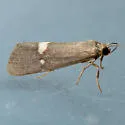
Cisthene dorsimacula - Hodges#8065
Cisthene dorsimacula
Identification: Cisthene dorsimacula is dimorphic with the hindwing color of light pink or yellow. ( 3 )
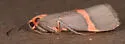
Cisthene perrosea - Hodges#8069
Cisthene perrosea
Identification: Pale color on the thorax and forewings is typically pink-orange but may be yellow-orange. The thoracic disk has a distinctive pattern with the pink-orange of the tegulae "bleeding" onto the disk, with the disk being about 50-50 gray
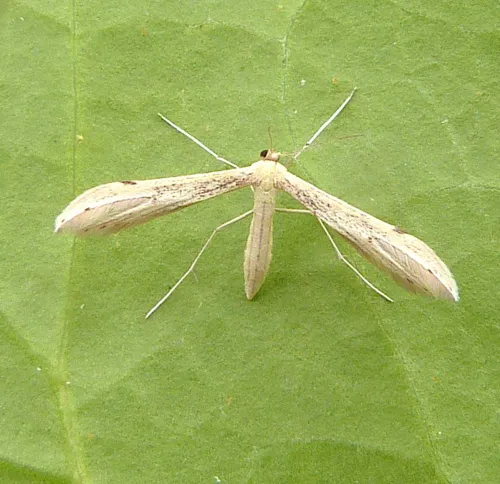
Citron Plume
Hellinsia carphodactyla
Frequenting chalk and limestone habitats. There are two generations, flying in June, and again in August and September. The larvae feed on the crowns and flowerheads of Ploughman's Spikenard (Inula conyzae), the second brood overwintering in the larv
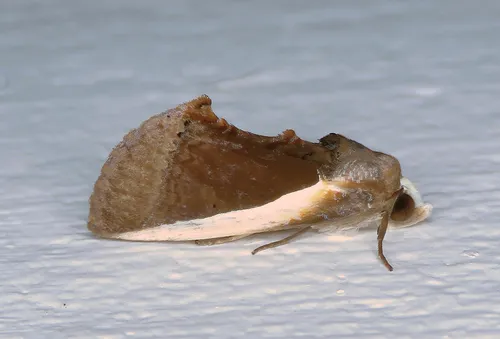
Citrus Fruit-piercer - Hodges#8540
Gonodonta nutrix
Identification: Adult: forewing basal two-thirds dark brown or dark gray to blackish except for broad white or pale yellow strip along costa to apex (the strip is displaced by a black triangular patch at base of costa); distal third of wing medium br
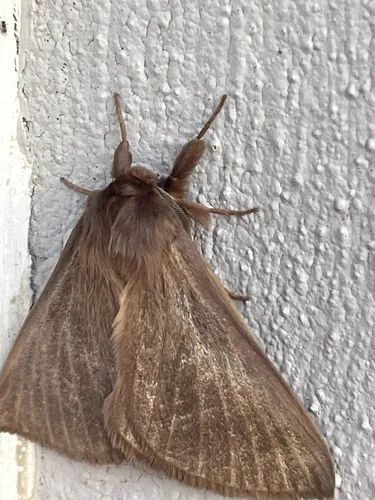
Clay Monkey
Phyllalia patens
Phyllalia patens is a moth in the family Eupterotidae. It was described by Jean Baptiste Boisduval in 1847. It is found in Lesotho and KwaZulu-Natal and Mpumalanga in South Africa.
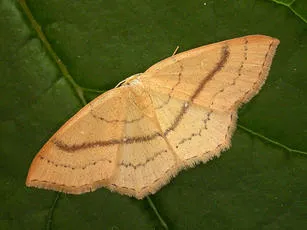
Clay Triple-lines
Cyclophora linearia
Wingspan 26 to33 mm. The second brood individuals are often different to those of the first and closely resemble Maiden's Blush. Well wooded areas especially those containing Beech. Moths fly from May to July, and sometimes again in the autumn. Occur
Clear Dagger Moth - Hodges#9246
Acronicta clarescens
Identification: The adult of Acronicta spinigera looks very similar. One way to tell the difference is that A. clarescens has a tuft of tan brown on the midthorax. (from Chris Schmidt)
Clematis Borer - Hodges#2622
Alcathoe carolinensis
Males respond to (E,Z)-3,13-ODDA and blended (E,Z)-3,13-ODDA/(Z,Z)-3,13-ODDA sex attractants. ,
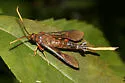
Clematis Clearwing Moth - Hodges#2623 - Hodges#2623
Alcathoe caudata
Identification: Adult - variable, with 4 different appearances. Males have a long slender appendage extending from the eigth abdominal segment. Larvae are parasitized by the Ichneumon wasp Bracon sanninoideae . ( 4 )
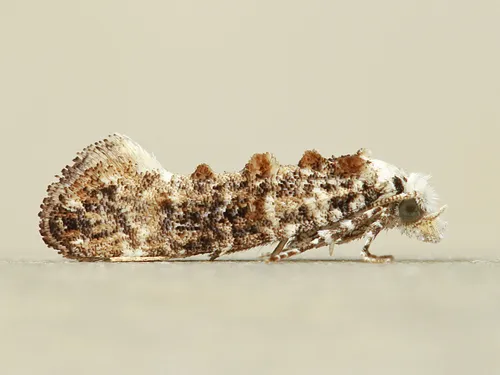
Clemens' Bark Moth
Xylesthia pruniramiella
Xylesthia pruniramiella, Clemens' bark moth, is a moth of the Tineidae family. It is found in North America, where it has been recorded from New Hampshire to Florida and from Illinois to Texas.
Clemens' False Skeletonizer - Hodges#4629
Acoloithus falsarius
Identification: Adult small and all black except for incomplete orange collar, broken dorsally by black; abdomen relatively short and broad, lacking tufts of hair Larva has whitish or yellowish head capsule (larva of Grapeleaf Skeletonizer has dark h
Clemens' Sphinx - Hodges#7811
Sphinx luscitiosa
Identification: Adult: forewing mostly yellowish-gray in male; pale gray with slight yellow tint in female; black shading beyond PM line widens toward inner margin in both sexes; hindwing deep yellow in male, pale yellow in female; outer border black
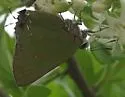
Clench's Greenstreak - Hodges#4308
Cyanophrys miserabilis
Identification: The only greenstreak in the US with a brown frons (forehead).

Clepsis listerana - Hodges#3679
Clepsis listerana
Identification: Adult - see original description in Print References. Very rare in collections.
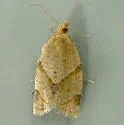
Clepsis penetralis - Hodges#3688.1
Clepsis penetralis
Kruse & Powell 2014 mention subtle differences is wing pattern which tend to separate C. penetralis from C. peritana , however, the distinction does not seem to apply with respect to the California population on C. peritana . Compare BOLD:ABZ6564 (Ca
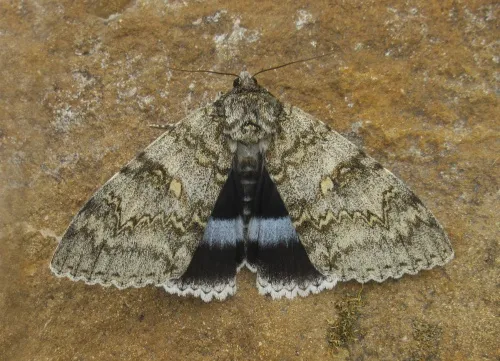
Clifden Nonpareil
Catocala fraxini
Wingspan 75 to 95 mm. A very large species, superficially similar to some other Erebinae species, but the blue underwing colouration is unmistakable. Unless identified by a recognised expert, a photo is required. A former rare immigrant species, with
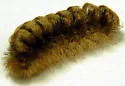
Clio Tiger Moth - Hodges#8249
Ectypia clio
Identification: Adult - all white except for black lines along veins of forewing and three longitudinal black lines on top of thorax.
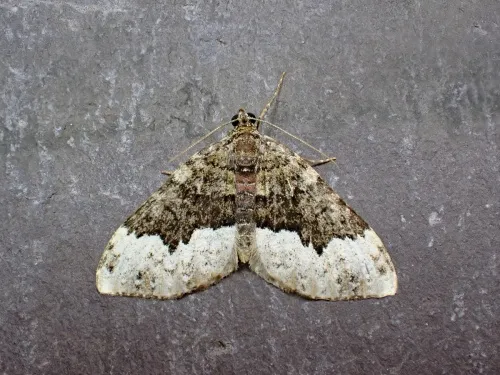
Cloaked Carpet
Euphyia biangulata
The wingspan is 25 to 30 mm. The forewings show a contrast between the dark brown midfield cross-band and the paler brown basal field with the distal cream band. There are two projections of the dark brown midfield cross-band into the cream band. The
Cloaked Marvel - Hodges#9556
Chytonix palliatricula
Identification: Two forms, one with the large white patch covering most of the forewing, and the other without it. The form with the large white patch is less common. Specimen identified by DNA analysis: The form without the large white patch is ver
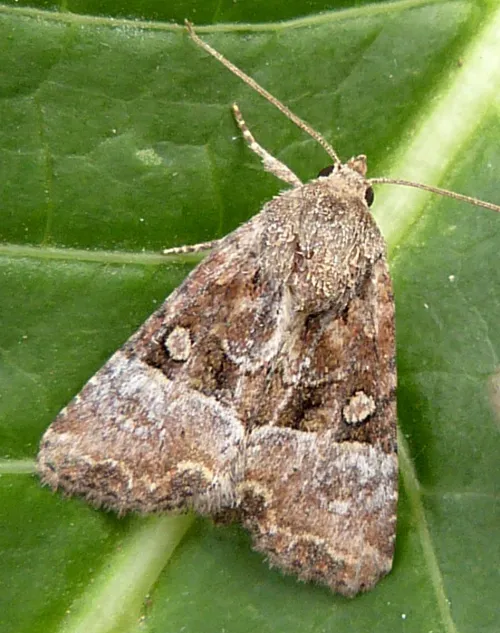
Cloaked Minor
Mesoligia furuncula
Wingspan 22-28 mm. A very variable species with a wide range of colour forms and patterns, the typical form as the forewing sharply demarcated between pale and rufous. It is commonest around sand-dunes, grassy seaside slopes and other coastal habitat
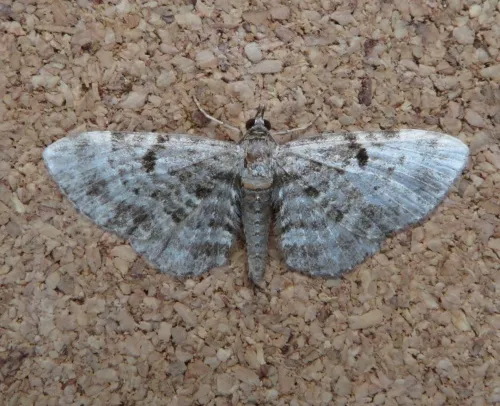
Cloaked Pug
Eupithecia abietaria
The larvae feed internally in the cones of Norway Spruce, Sitka Spruce and Noble Fir. A scarce species, once resident in a range of scattered locations throughout Britain, but apparently dying out in the early part of the 20th century. Since then it
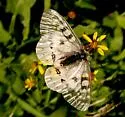
Clodius Parnassian - Hodges#4154
Parnassius clodius
Identification: The Clodius Parnassian is the only parnassian whose distribution is restricted to North America [ depending on recognition of American P. smintheus & P. behrii as full species or as part of P. phoebus ] . P. clodius is very similar to
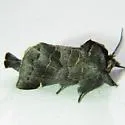
Clostera brucei - Hodges#7900
Clostera brucei
Identification: Forewing antemedial and median lines do not touch. (a key feature) Id confirmed by Chuck Harp. Wide range but seldom collected.
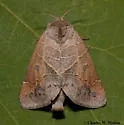
Clostera inornata - Hodges#7897
Clostera inornata
Identification: Determined by Bob Patterson. - Specimen identified by DNA analysis (BOLD). ( 3 )
Clostera paraphora - Hodges#7899
Clostera paraphora
Identification: Adult: forewing more-or-less uniformly bluish-gray; PM line pale, wavy/meandering throughout its length; subterminal line an irregular series of black dashes or blotches; AM and median lines faint but usually distinguishable; hindwing
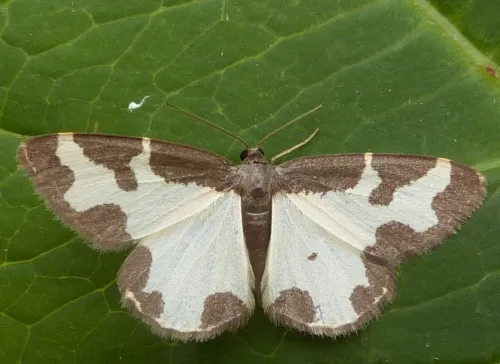
Clouded Border
Lomaspilis marginata
Wingspan 30-38 mm. A delicate little moth. The black and white markings show considerable variation. Flies between May and July. It can be disturbed from undergrowth during the day, but its natural flight time is at night. The larvae feed on Willows
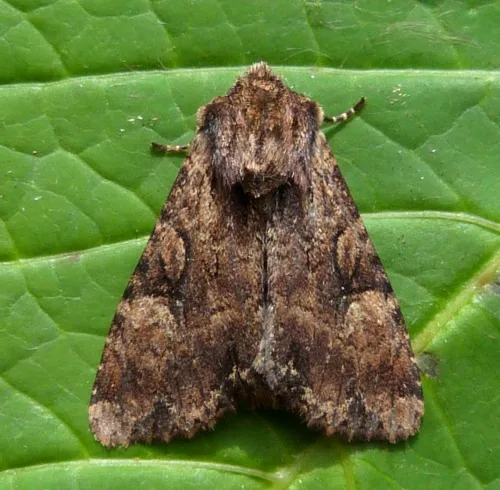
Clouded Brindle
Apamea epomidion
Wingspan 40 to 46 mm. A variable moth that is similar to Clouded-bordered Brindle but the markings are usually more distinct. There is just one brood, flying in May to July. The species frequently visits sugar, less frequently light. The overwinterin
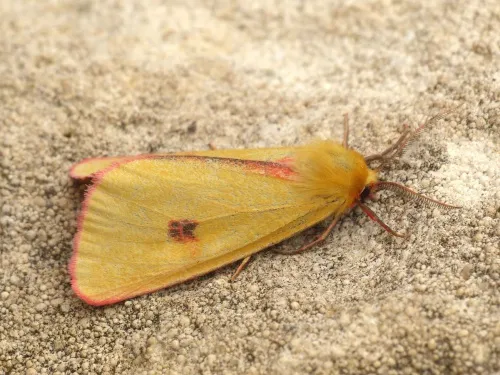
Clouded Buff
Diacrisia sannio
Wingspan 35 to 50 mm. The males are larger and more brightly coloured than the females. Although this species is fairly distinctive it is quite rare at present in our area. We therefore ask you to submit photographs to support any record and, if poss
Clouded Crimson - Hodges#11168
Schinia gaurae
Identification: Adult: forewing has diagonal crimson streak running from costa near apex toward center of wing; remainder of wing pale yellow or cream-colored, with pink shading mostly in basal and terminal areas; hindwing white with pink shading at
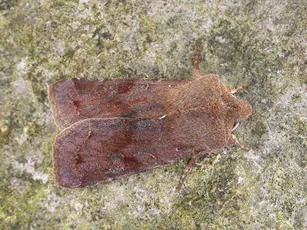
Clouded Drab
Orthosia incerta
Wingspan 35-40 mm. Exceptionally variable throughout its range, this species varies from relatively plain dark forms to well-marked buff and orange individuals. In the darker forms especially, there is usually a distinctive paler fringe to the forewi
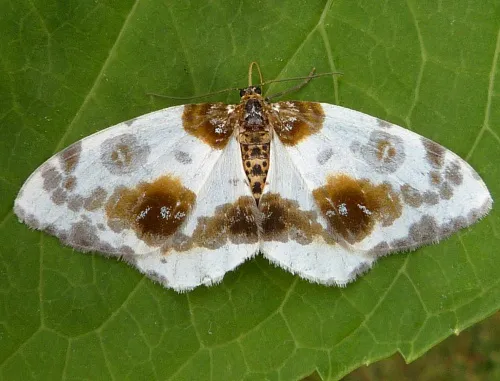
Clouded Magpie
Abraxas sylvata
Inhabits woodland, parks and similar habitats. The adults fly between May and July, when they can be attracted to light. The foodplants are Wych Elm and English Elm and the caterpillars are rather distinctive, being marked with longitudinal black and
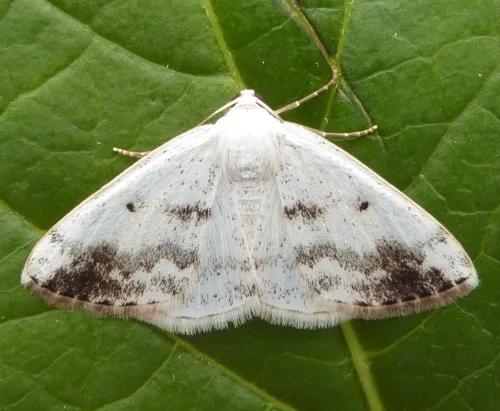
Clouded Silver
Lomographa temerata
Wingspan 22-26 mm. Largely white with smudgy black markings. It frequents woodland, suburban habitats and other bushy areas. The single brood flies in May and June, with some adults on the wing in autumn, usually in the south, considered to be migran
Clouded Veneer - Hodges#5333
Prionapteryx nebulifera
There is a published account of the caterpillars in the pine barrens of NJ living in underground retreats and building tubes of sand and silk up to the leaves of the host plants, which crawl through at night to feed. They are also said to produce a s
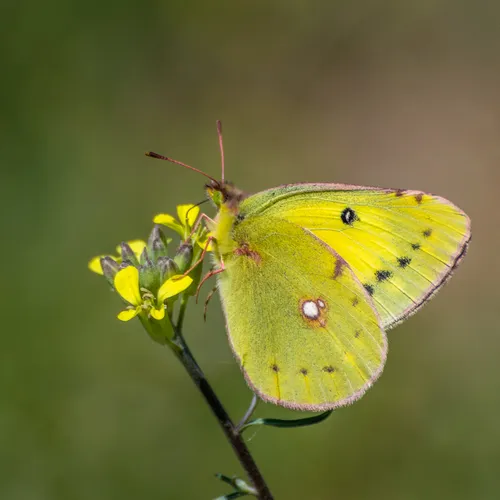
Clouded Yellow
Colias crocea
Colias croceus is a small butterfly of the Pieridae family, that is, the yellows and whites. In India and nearby regions it is known as the dark clouded yellow or common clouded yellow to distinguish it from the other species of clouded yellows occur
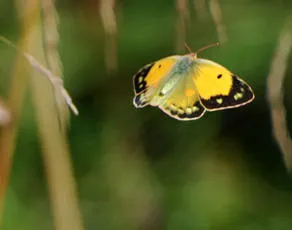
Clouded Yellow
Colias croceus
This strong-flying and mainly immigrant butterfly always settles with its wings closed and so the dark borders on the upper sides of the wings are only visible when in flight. This species is sometimes mistaken in flight for one of the commoner 'whit
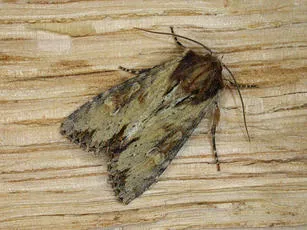
Clouded-bordered Brindle
Apamea crenata
Wingspan 36-44 mm. There is a frequent brownish or melanic variant, ab. combusta , in addition to the well-marked typical form. The single generation flies in June and July, sometimes earlier, and is frequent at light. The caterpillars feed on variou
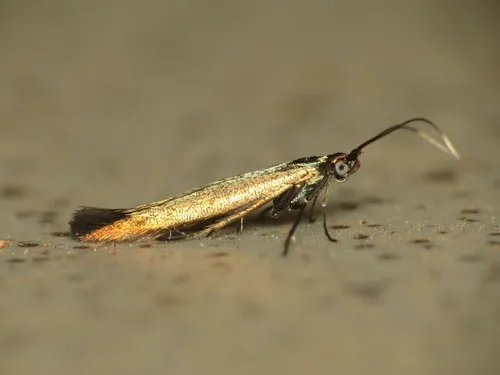
Clover Case-bearer
Coleophora alcyonipennella
Wingspan around 12 mm. The species bears a close resemblance to other members of the genus. In sunlight he wings have a purple-red metallic sheen and the antennae whiten slightly towards the tips. It frequents rough grassy habitats where the main foo
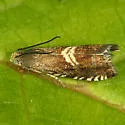
Clover Head Caterpillar Moth - Hodges#3439
Grapholita interstinctana
Identification: Adult : FW dark brown with a single pair of white dorsal strigulae per wing. ( 5 ) Larva : Late instar larvae are approximately 5-6 mm in length with a pale abdomen. The head and prothoracic shield are yellowish brown. An anal comb is
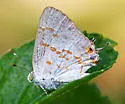
Clytie Ministreak - Hodges#4290
Ministrymon clytie
Identification: Underwing is light gray with reddish/orange markings.
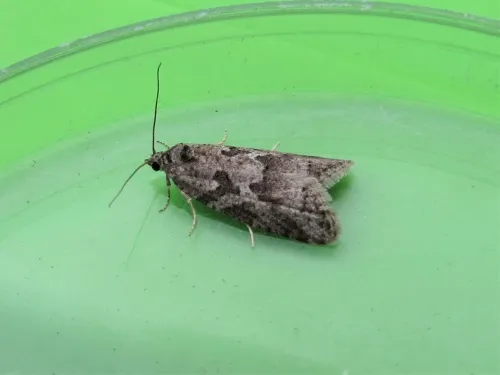
Cnephasia communana
Cnephasia communana
The wingspan is 18 to 22 mm. Many of the Cnephasia species are externally very similar, and gen det is required for species identification. Where gen det has not been carried out the records should be added as Cnephasia sp. Gen det is required for sp
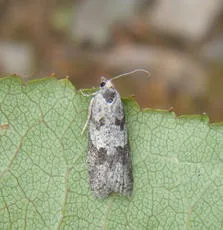
Cnephasia genitalana
Cnephasia genitalana
Wingspan 15 to 22 mm. It is one of the least well-marked of the Cnephasia species, though some individuals are more strongly marked. The moth frequents chalk downland and rough grassland. The larvae feed in spun flowers or leaves of a range of herbac
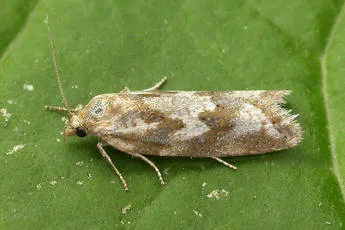
Cnephasia longana
Cnephasia longana
Wingspan 15 to 22mm. This species is sexually dimorphic: male adults have a uniform white to yellowish-brown unmarked forewing while female adults are variably marked with light to dark brown. Some females have a strong banded pattern. Males lack a c
Coastal Pelochrista - Hodges#3116.2
Pelochrista oraria
Identification: Similar to Pelochrista dorsisignatana and Pelochrista similiana , dark mark in median area of forewing is separated from dark subbasal facia but reaches apex.
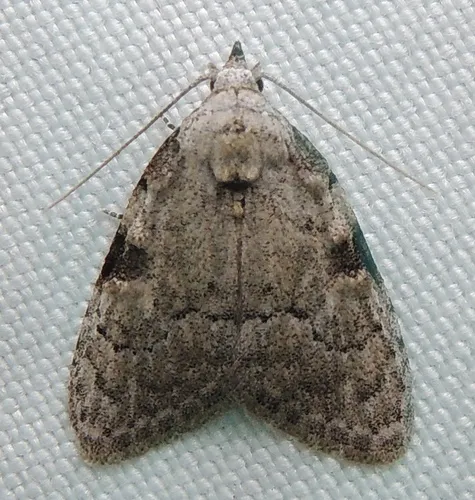
Coastal Plain Meganola Moth
Meganola phylla
Meganola phylla, the coastal plain meganola moth, is a moth of the Nolidae family. It is found in North America, where it has been recorded from Alabama, Florida, Georgia, Illinois, Indiana, Maine, Maryland, Mississippi, New Jersey, North Carolina, O
Cobalos angelicus - Hodges#9423
Cobalos angelicus
Cobalos angelicus - Hodges#9423 (Cobalos angelicus) is a species in the family Noctuidae, commonly known as owlet moths, belonging to the order Lepidoptera (Butterflies and Moths). It is classified within the subfamily Noctuinae, tribe Apameini, supe
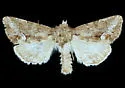
Cobalos franciscanus - Hodges#9424
Cobalos franciscanus
Identification: Specimen determined by DNA analysis (BOLD). ( 3 )
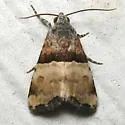
Cobubatha dividua - Hodges#9018
Cobubatha dividua
Identification: Adult: forewing mostly dark in basal third, mostly pale tan in distal two-thirds; AM line dark grayish-brown, its distal margin fairly straight, it's basal margin irregular/jagged; fringe black; hindwing uniformly brownish-gray.
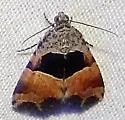
Cobubatha megaplaga - Hodges#9019.2
Cobubatha megaplaga
Identification: The original description as Eustrotia megaplaga , Dyar, is available online using the link in the print preferences below. - Hindwing is a powdery gray-brown with darker veins. Fringe and and terminal line are darker. (Dyar)
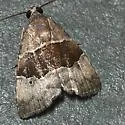
Cobubatha nr. hippotes - Hodges#9019
Cobubatha nr-hippotes
"931278 Cobubatha hippotes – This species was described from Guatemala in 1889. It was reported as C. hippotes in the Noctuidae MONA check list (Franclemont and Todd 1983), but the species recorded in Texas is now known to be an undescribed species r
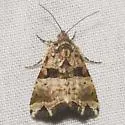
Cobubatha numa - Hodges#9013
Cobubatha numa
Identification: Species page created based on this image determined by Ed Knudson, Texas Lepidoptera Survey, Houston:
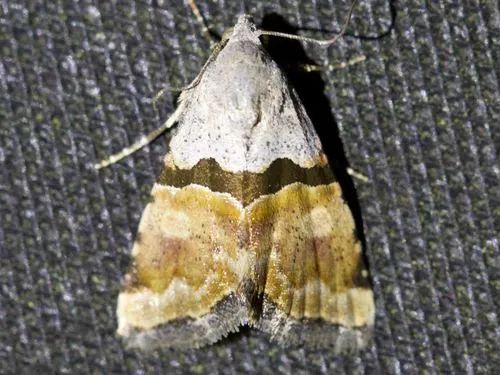
Cobubatha orthozona - Hodges#9017
Cobubatha orthozona
This is the most common species of the genus in Texas. ( 3 )
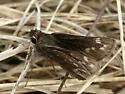
Cobweb Skipper - Hodges#4027
Hesperia metea
Identification: Ventral HW and FW are variably marked with white veins and a white V shaped chevron, forming a cobweb appearance. Dorsal male mostly brown with a wrist bracelet and 2 spots near the outer FW margin. Female FW with a series of jagged F
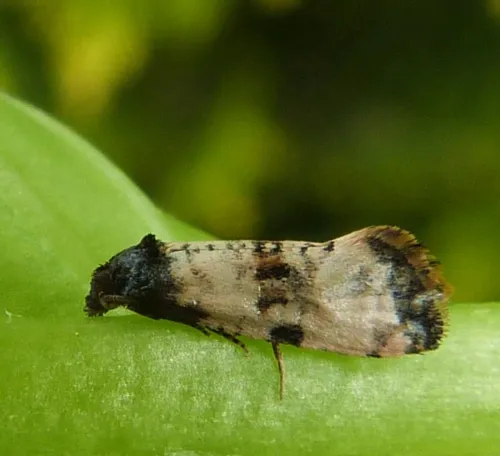
Cochylichroa atricapitana
Cochylichroa atricapitana
Wingspan 12-16 mm. It differs from similar species by its dark head and thorax. Areas containing Ragwort and other composite flowers. The adults fly in two generations, in May and June and again around August. The larvae feed on Common Ragwort. Early
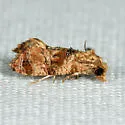
Cochylichroa aurorana - Hodges#3767
Cochylichroa aurorana
Identification: Adult - see original description in Print References. ( 3 )
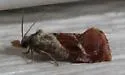
Cochylichroa viscana - Hodges#3783
Cochylichroa viscana
Identification: Adult - see original description in Print References. Genitalia:
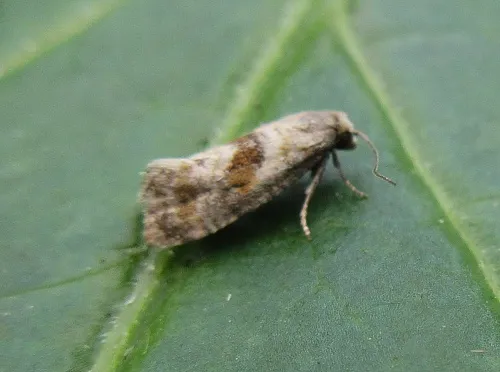
Cochylidia heydeniana
Cochylidia heydeniana
Unless identified by a recognised expert, a photo is required. In view of the rarity of this species in our area the moth should be retained as determination by genitalia examination (gen. det.) may be required to confirm records to full species. The
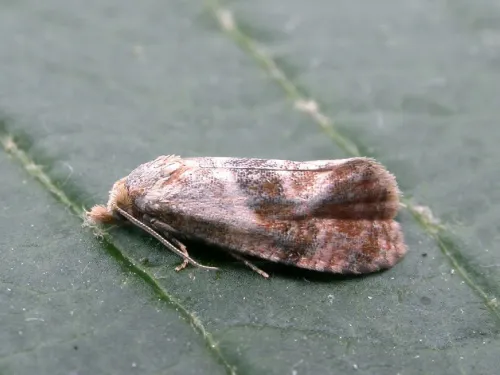
Cochylidia rupicola
Cochylidia rupicola
Can be found in a wide range of habitats, especially where the larval food plant is present. Flying in June and July, the moths can be found at large on warm sunny afternoons, but typically fly from dusk onwards. The larval foodplant is Hemp Agrimony
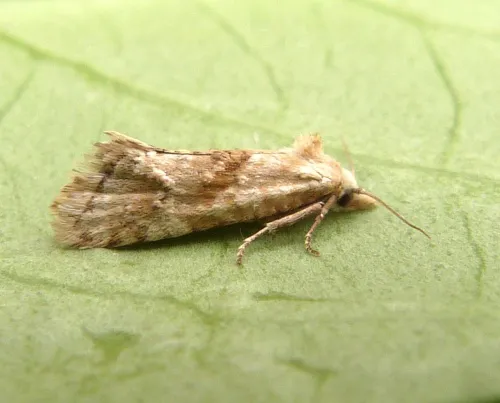
Cochylimorpha straminea
Cochylimorpha straminea
Wingspan 10-16 mm. A fairly plain buff coloured moth, with a pale, rust coloured band forming a 'V' pattern on its back. There is just the hint of a darker band at the wing tips but none of its markings are particularly pronounced. Occurring in any s
Cochylina-unplaced glaucofuscana - Hodges#3859
Cochylina-unplaced glaucofuscana
Identification: See original description in print references below (in German) . Unplaced as to genus .
Cochylis bucera - Hodges#3769
Cochylis bucera
Identification: Adult - orange with silver-studded brown median band. Genitalia:
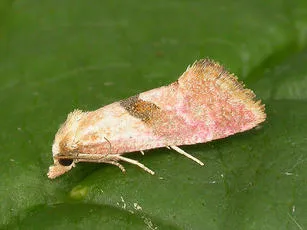
Cochylis roseana
Cochylis roseana
Wingspan 10 to17 mm. The pink suffusion on the forewing varies in intensity, and can be inconspicuous. On sites where Teasel grows plentifully. The larva lives August - May in a silk tunnel bored through the sides of several teasel seeds, on which it
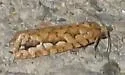
Cockerell's Moth - Hodges#3630
Diedra cockerellana
Identification: Adult - forewing yellowish-brown covered by series of connected semicircular loops; two loops near middle of wing have black margin and white filling.
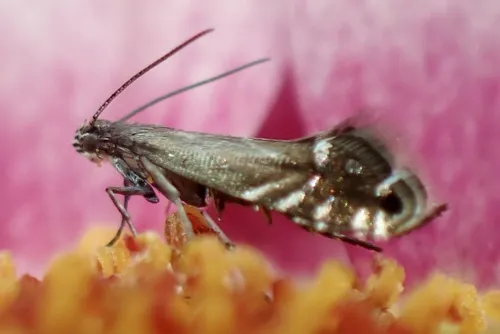
Cocksfoot Moth
Glyphipterix simpliciella
Wingspan 6-9 mm. The moths are tiny (3 or 4 mm long) and are easily overlooked but when inspected closely can be seen slowly 'pumping' their wings slightly open and closed. Flower meadows, especially those rich with Buttercups. It can be found in goo
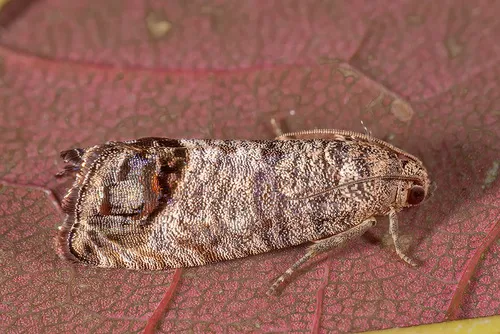
Codling Moth
Cydia pomonella
Wingspan 14-22 mm. A fairly distinctive greyish ' Tortrix ' with a darker, often coppery-brown, roundish patch towards the rear of the wing. The adults occur mainly in July and August and sometimes with a second generation in September and October. T
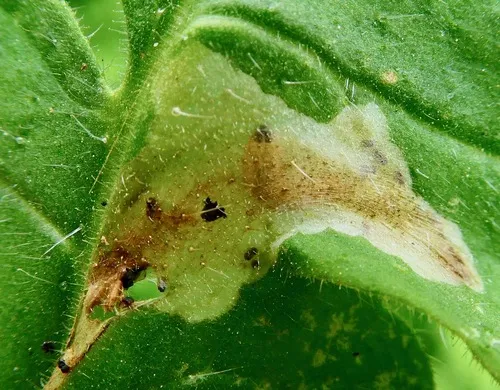
Coelopoeta phaceliae - Hodges#1076.1
Coelopoeta phaceliae
Coelopoeta phaceliae - Hodges#1076.1 (Coelopoeta phaceliae) is a species in the family Pterolonchidae, belonging to the order Lepidoptera (Butterflies and Moths). It is classified within the superfamily Gelechioidea. This species belongs to the genus
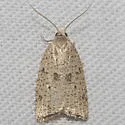
Coelostathma placidana - Hodges#3747.1
Coelostathma placidana
Formerly listed on BugGuide as "undescribed Florida species." Remarks from the deleted page: "I expect this will be given a name in the next year when a MONA fascicle for Spargothine tortricids is published. I saw specimens in the USNM from SC and FL
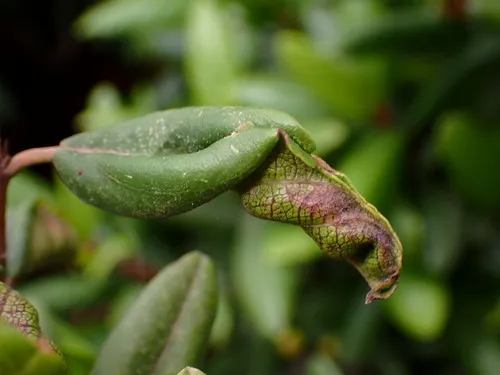
Coffeeberry Midrib Gall Moth
Sorhagenia nimbosus
Sorhagenia nimbosus, the midrib gall moth, is a moth in the family Cosmopterigidae. It was described by Annette Frances Braun in 1915. It is found in North America, where it has been recorded from British Columbia, Washington and California.
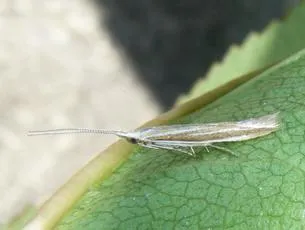
Coleophora albicosta
Coleophora albicosta
Wingspan about 14 mm. The scientific name of this species is derived from the whitish streak along the costa, or forewing edge. Flying by day, but also sometimes coming to light at night, the adults are on the wing from May to July. The larva feeds o
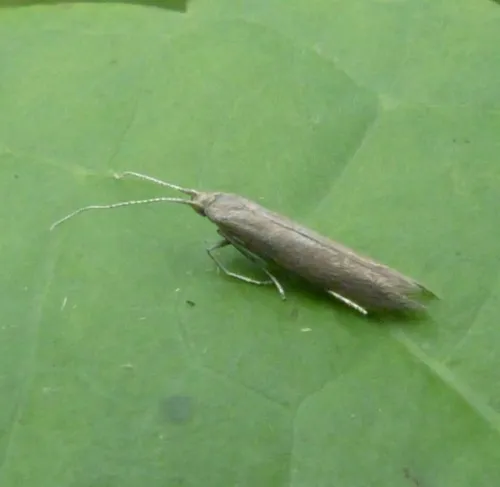
Coleophora albitarsella
Coleophora albitarsella
Wingspan 10 to 13 mm. This grey winged moth resembles several others in the genus Coleophora, but the white tarsus on each leg (hind two pairs only on female) is conspicuous on live specimens. More reliable identification depends on examination of th
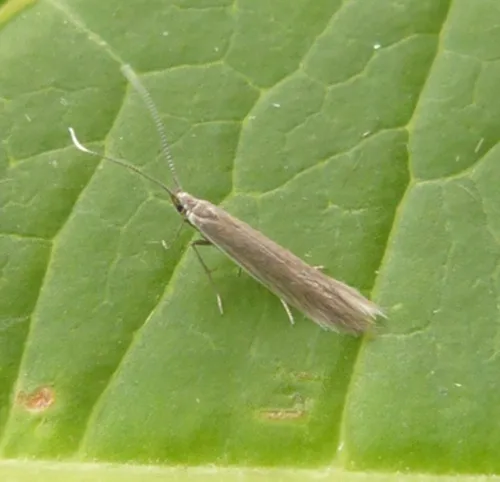
Coleophora alticolella
Coleophora alticolella
Wingspan 10 to 12 mm. The adults resemble several other Coleophora species, dissection required to confirm ID. The larva feeds on Juncus rush species including Soft-rush, Hard Rush and Compact Rush. Occurring wherever Juncus rush species grow and see
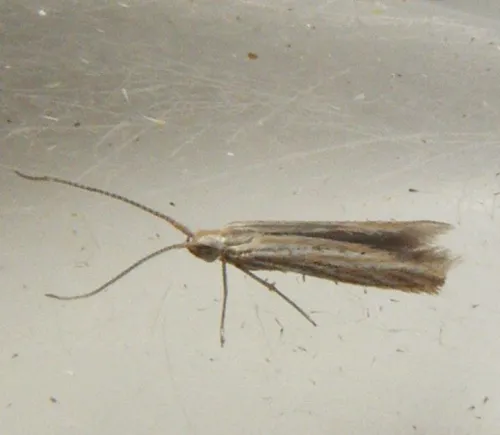
Coleophora argentula
Coleophora argentula
Wingspan 9.5 to 13 mm. This moth is similar to some other Coleophora species and gen det is necessary for identification. The larva feeds in the flowers of Yarrow or Sneezewort. Photograph the cased larva on the flower head; note host species in comm