
Cecrops eyed Silkmoth - Hodges#7748
Automeris cecrops
This record describes Automeris cecrops (species). Recorded family: Saturniidae. Recorded order: Lepidoptera.
Identification and Appearance
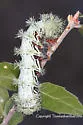
In adults, the line running from the tip of the front wing to the middle of the hind margin will separate it from A. io , which has a line or division in the pattern that is parallel to the outer margin instead, not extending from the tip of the wing. Young larvae of A. io (mostly found on Willow) usually have a less contrasting pattern of slightly more parallel stripes. Older larvae of A. cecrops (usually found on Oak) have a gray-green (almost bluish) contrasted with black stripes, and are deep red-brown/black below; while older larvae of A. io are usually yellowish to bright green with a reddish & white stripe along each side, not deep red-brown/black below. A. zephyria occurs a bit further east and probably never in the same places (??). The adults differ primarily in the brighter and more contrasting color pattern. The young larvae are very similar and best distinguished by where found (east of the Rio Grande). Older larvae of A. zephyria have a slightly different pattern, and are a bright yellow-green instead of dull gray-green.
Classification
- Kingdom
- Animalia
- Phylum
- Arthropoda
- Class
- Insecta
- Order
- Lepidoptera (Butterflies and Moths)
- Superfamily
- Bombycoidea
- Family
- Saturniidae (Giant Silkworm and Royal Moths)
- Subfamily
- Hemileucinae
- Tribe
- Hemileucini
- Genus
- Automeris
Imported taxonomy record. Source availability varies; see the source references and editorial policy below.
Habitat and Range
Geographic Range
Mostly in mountains from central Arizona to north central New Mexico, and south into Mexico. Not known from east of the Rio Grande, where it is replaced by closely related A. zephyria .
Diet and Behavior
Diet: Larvae: Fendler ceanothus (Ceanothus fendleri), catclaw mimosa (Mimosa biuncifera), mountain mahogany (Cercocarpus parvifolius), and oaks (Quercus). Adults do not feed. Additional wild host plant observations in Jemez Mountains, New Mexico by David J. Ferguson: Salix interior (= exigua); Rosa sp. , Robinia neomexicana, Ceanothus fendleri, Populus tremuloides; Prunus virginiana; Cercocarpus montanus & ledifolius ; however, primarily on Oaks - Quercus gambelii, grisea, & untulata/pungens . [ Q. undulata & Q. pungens are not well differentiated in New Mexico, plants will key out to both.] The larvae will accept many other woody dicot species as food when being reared.
About Butterflies and Moths: the wider group
Order-level background for Lepidoptera, the group containing Automeris cecrops. Species-specific details appear above.
Group overview
Lepidoptera includes approximately 180,000 described species of butterflies and moths. Moths outnumber butterflies roughly 10:1. The monarch butterfly's eastern population has declined by more than 80% since the mid-1990s, and the western population by over 95% since the 1980s. The IUCN lists the migratory monarch as Vulnerable.
Ecological role of the group
Butterflies and moths are essential indicators of ecosystem health. As caterpillars, they are a primary food source for birds - a single nest of blue tit chicks requires ~10,000 caterpillars. Adult moths pollinate many night-blooming plants.
Economic and practical significance of the group
Lepidoptera are critical pollinators. In Europe, grassland butterfly species have declined by almost 50% since the early 1990s. In the UK, three-quarters of butterflies are in decline. In the U.S., five butterfly species have gone extinct since 1950, with 29 listed as endangered.
Recorded sources for this group: IUCN Red List, Xerces Society, USFWS, PNAS, WWF. Imported estimates may describe particular regions or reporting periods.
Photos of Cecrops eyed Silkmoth - Hodges#7748 (5)
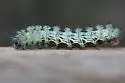
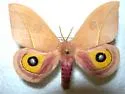
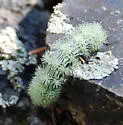
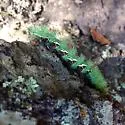
Photo credits: Contributed by Ethan Kistler; Additional contributions by Chuck Entz , Maury Heiman , David Ferguson
Frequently Asked Questions About Cecrops eyed Silkmoth - Hodges#7748
What is Cecrops eyed Silkmoth - Hodges#7748?
Cecrops eyed Silkmoth - Hodges#7748 (Automeris cecrops) is a species in the family Saturniidae, within the order Lepidoptera.
How big is Cecrops eyed Silkmoth - Hodges#7748?
Adult wingspan: 8 - 10.6 cm
How do you identify Cecrops eyed Silkmoth - Hodges#7748?
In adults, the line running from the tip of the front wing to the middle of the hind margin will separate it from A. io , which has a line or division in the pattern that is parallel to the outer margin instead, not extending from the tip of the wing. Young larvae of A. io (mostly found on Willow) usually have a less contrasting pattern of slightly more parallel stripes. Older larvae of A. cecrops (usually found on Oak) have a gray-green (almost bluish) contrasted with black stripes, and are deep red-brown/black below; while older larvae of A. io are usually yellowish to bright green with a reddish & white stripe along each side, not deep red-brown/black below. A. zephyria occurs a bit further east and probably never in the same places (??). The adults differ primarily in the brighter and more contrasting color pattern. The young larvae are very similar and best distinguished by where found (east of the Rio Grande). Older larvae of A. zephyria have a slightly different pattern, and are a bright yellow-green instead of dull gray-green.
Where is Cecrops eyed Silkmoth - Hodges#7748 found?
Range: Mostly in mountains from central Arizona to north central New Mexico, and south into Mexico. Not known from east of the Rio Grande, where it is replaced by closely related A. zephyria .
What does Cecrops eyed Silkmoth - Hodges#7748 eat?
The diet of the Cecrops eyed Silkmoth - Hodges#7748 includes Larvae: Fendler ceanothus (Ceanothus fendleri), catclaw mimosa (Mimosa biuncifera), mountain mahogany (Cercocarpus parvifolius), and oaks (Quercus). Adults do not feed. Additional wild host plant observations in Jemez Mountains, New Mexico by David J. Ferguson: Salix interior (= exigua); Rosa sp. , Robinia neomexicana, Ceanothus fendleri, Populus tremuloides; Prunus virginiana; Cercocarpus montanus & ledifolius ; however, primarily on Oaks - Quercus gambelii, grisea, & untulata/pungens . [ Q. undulata & Q. pungens are not well differentiated in New Mexico, plants will key out to both.] The larvae will accept many other woody dicot species as food when being reared..