
Flies
Order Diptera
The Flies (Order Diptera) includes 6,350 species across 141 families and 1,800 genera in our directory.
About Flies
Diptera includes over 150,000 described species of flies, mosquitoes, and midges. Mosquitoes are the deadliest animal on Earth (CDC). Malaria alone causes ~249 million cases and over 608,000 deaths annually, mostly children under 5 (WHO). Vector-borne diseases account for over 17% of all infectious diseases, causing 700,000+ deaths per year.
Economic Impact
In the U.S., vector-borne disease cases tripled between 2004-2016, with over 640,000 cases reported in that period (CDC). Tickborne diseases doubled from 22,000 to 48,000 annual reports. Globally, mosquito-borne diseases cost billions in healthcare and lost productivity.
Ecological Role
Despite their disease impact, flies are critical decomposers and pollinators. Hoverflies alone pollinate hundreds of crop and wildflower species. Flies are also the primary food source for many birds, bats, and fish. Forensic entomology relies heavily on fly species for crime scene analysis.
Families in Diptera (141)
Species in Diptera (6,350)
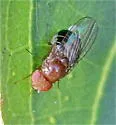
Drosophila (Drosophila) cardini
Drosophila cardini
Identification: The shining abdomen has a distinctive banding pattern.
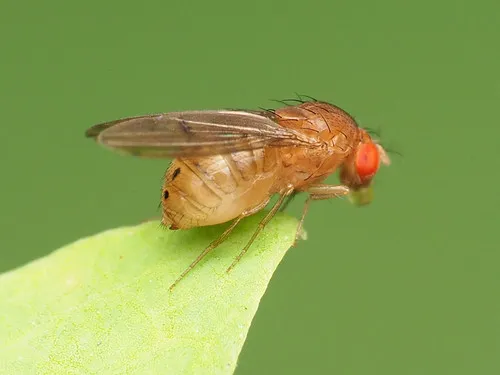
Drosophila (Drosophila) tripunctata
Drosophila tripunctata
Identification: First two tergites with dark posterior band, remaining tergites with central dark spot.
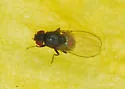
Drosophila (Phloridosa) lutzii
Drosophila lutzii
The only member of subgenus Phloridosa north of Mexico. Often found in flowers, unlike most Drosophila .
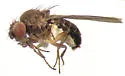
Drosophila affinis
Drosophila affinis
Identification: Difficult to ID without microscopic examination. Male fore tarsal comb with one comb having 4-6 teeth; 1st fore tarsomere subequal or shorter than second; females cannot be separated from other species in this group
Drosophila athabasca
Drosophila athabasca
Identification: Males need to be dissected to separate from the similar D. narragansett. Females of this species group are indistinguishable.
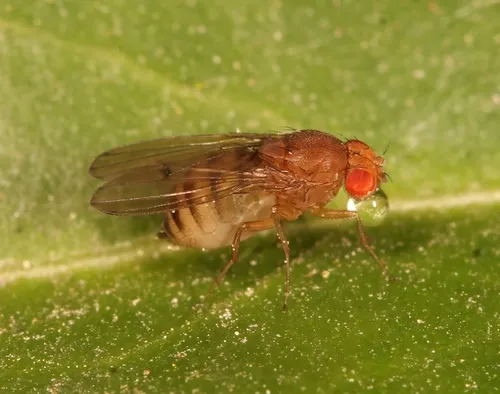
Drosophila immigrans
Drosophila immigrans
Size about 5 mm. This is an orange-brown and red-eyed fly with black broken bands along the base of each abdominal tergite. The front femur has a row of small black spines on the anterior side - a feature which is unique to this species. Unless ident
Drymeia flavinervis
Drymeia flavinervis
Identification: Mostly shining black (male) to entirely shining black (female), with many bristles on hind tibia, black halteres, and yellow wings.
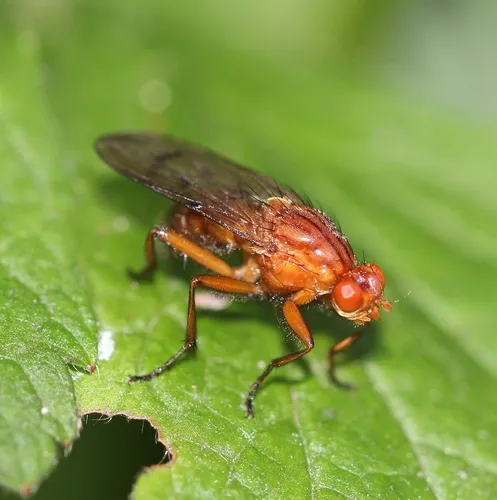
Dryomyza anilis
Dryomyza anilis
One of just three UK species in the Dryomyzidae family. Length about 12mm. A striking orange fly with large red eyes, infuscated crossveins on the wings and dark orange 'tramlines' on the thorax. It can be distinguished from the other two species in
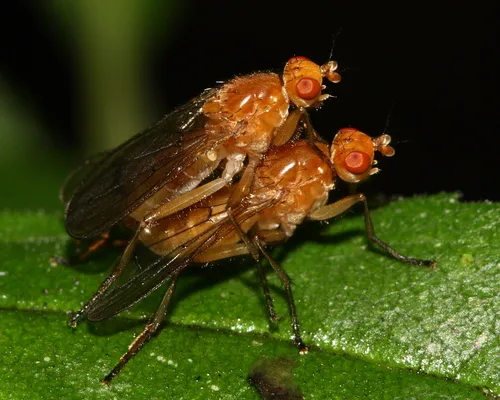
Dryomyza simplex
Dryomyza simplex
Identification: Distinguished from all other eastern dryomyzids in lacking prescutellar acrostichal setae. Lunule not covered by anterior margin of frons, wing markings faint or absent.
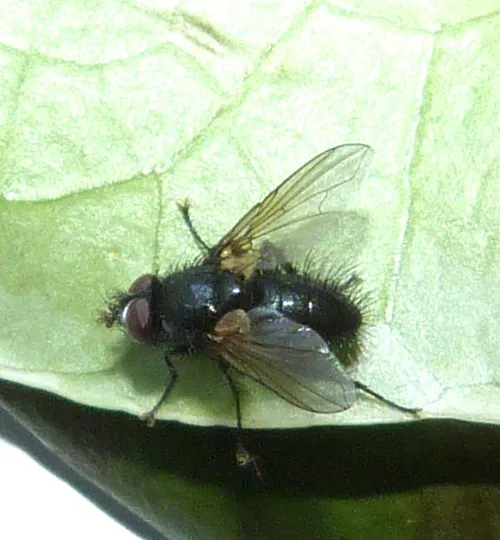
Dufouria chalybeata
Dufouria chalybeata
Body length about 6 mm. A rather small, very bristly, and often slightly shiny black Tachinid. This species cannot be identified from photographs - detailed examination necessary. The larvae of Dufouria chalybeata are parasitoids of tortoise beetles
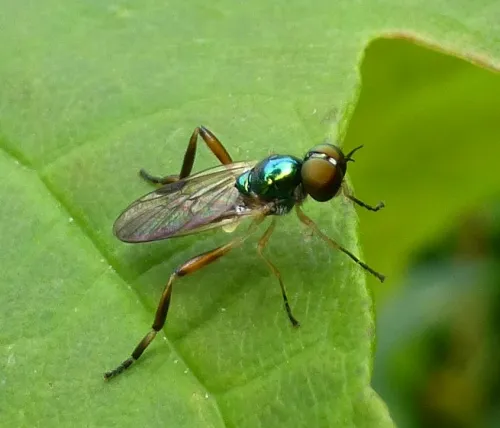
Dull Four-spined Legionnaire
Chorisops tibialis
Size 3 to 4 mm. A small, slender fly with a metallic green thorax, and black and tan banded legs. Unless identified by a recognised expert, a photo is required. If the photo doesn't show the key ID features then in the comments box describe the size
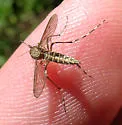
Eastern Saltmarsh Mosquito
Ochlerotatus sollicitans
Identification: - pale band across middle of proboscis - FMEL - sides of thorax covered with many white scales - FMEL - legs banded - FEML Florida Medical Entomology Laboratory - FMEL (adult female) Proboscis is dark-scaled and with white band near m
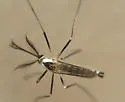
Eastern Treehole Mosquito
Ochlerotatus triseriatus
Identification: - top of scutum dark - FMEL - patch of white scales along edge of scutum; legs dark - FMEL Florida Medical Entomology Lab - FMEL Adult Female: - Legs, wings and proboscis are completely darkscaled - The abdomen is mainly dark scaled w
Eccoptomera aldrichi
Eccoptomera aldrichi
Identification: Scutellum bare, except for usual 2 pairs of lateral bristles; cheek-eye ratio 0.73‒0.85
Ectecephala laticornis
Ectecephala laticornis
Identification: This species lacks a sulcus on the ocellar triangle and has black palpi.
Egle ciliata
Egle ciliata
Identification: One of two species with four postsutural dorsocentral bristles.
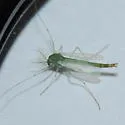
Einfeldia pagana
Einfeldia pagana
Identification: An ordinary-looking green midge with distinctive male genitalia: "The inflated style abruptly constricted near the apex and the broad anal point are distinctive." (Townes 1945)
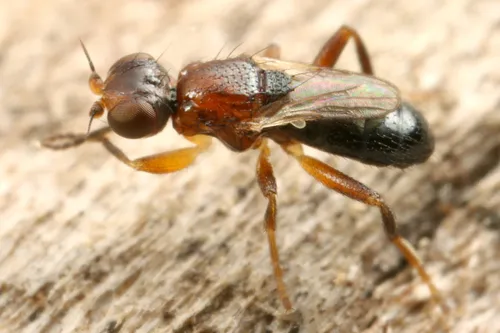
Elachiptera brevipennis
Elachiptera brevipennis
A very small fly with a body length of just 1.5 to 2mm. The wings are shortened, barely reaching the end of the abdomen, or shorter still, only reaching the end of tergite 2. Tergites 1+2 are long, forming half the length of the abdomen. The body is
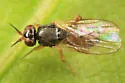
Elachiptera costata
Elachiptera costata
Identification: Scutellum with tubercles larger than other North American species.
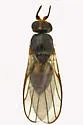
Elachiptera erythropleura
Elachiptera erythropleura
Identification: Similar to E. costata except for the red pleura and paler head.
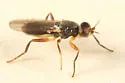
Elachiptera longiventris
Elachiptera longiventris
Identification: First abdominal tergite greatly lengthened, forming a "plate" that covers almost all of the dorsum of the abdomen.
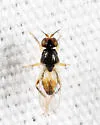
Elachiptera pechumani
Elachiptera pechumani
Identification: Thorax entirely black; scutellum with small tubercles; frontal triangle and ocellar tubercle shining, without pollen; mesonotum shining, without pollen; front:vertex and mesonotum length:width both about 1:1 or less (i.e. not longer t
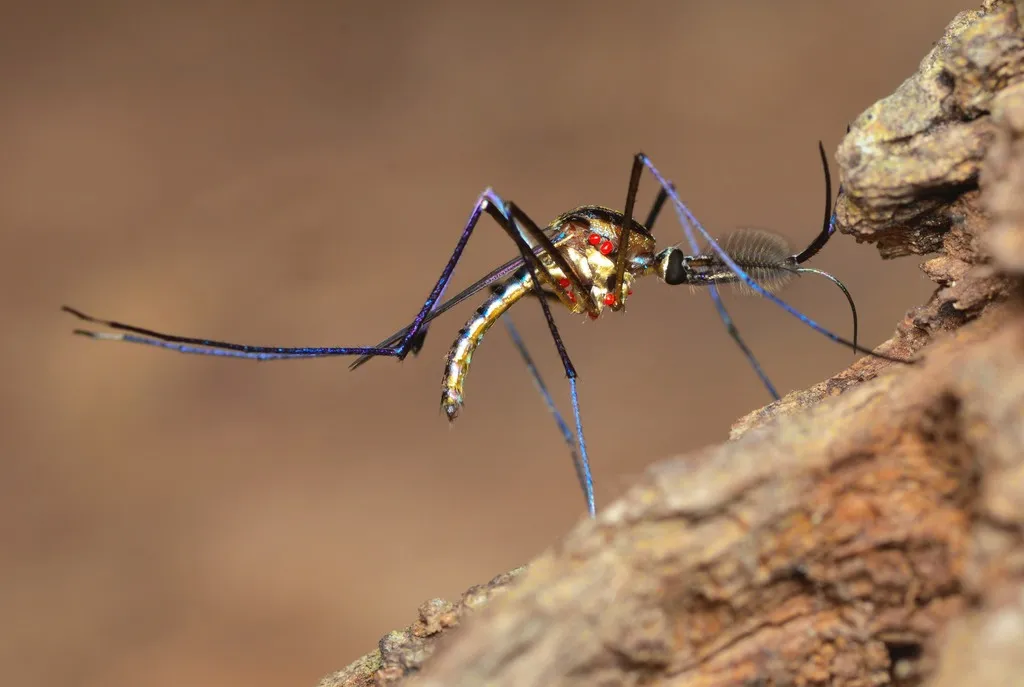
Elephant Mosquito
Toxorhynchites rutilus
Identification: Female and male Florida Medical Entomology Laboratory - FMEL Very large, for a mosquito. Body is covered with shiny metallic blue scales. Proboscis prominent and curved upwards. Attracted to flowers. Predatory mosquitoes in the genus
Elmohardyia atlantica complex
Elmohardyia atlantica-complex
Dayse Marques (the world expert on this genus) feels that E. atlantica is a complex of over a dozen species (comment by Jeff Skevington, 6/23/2018).
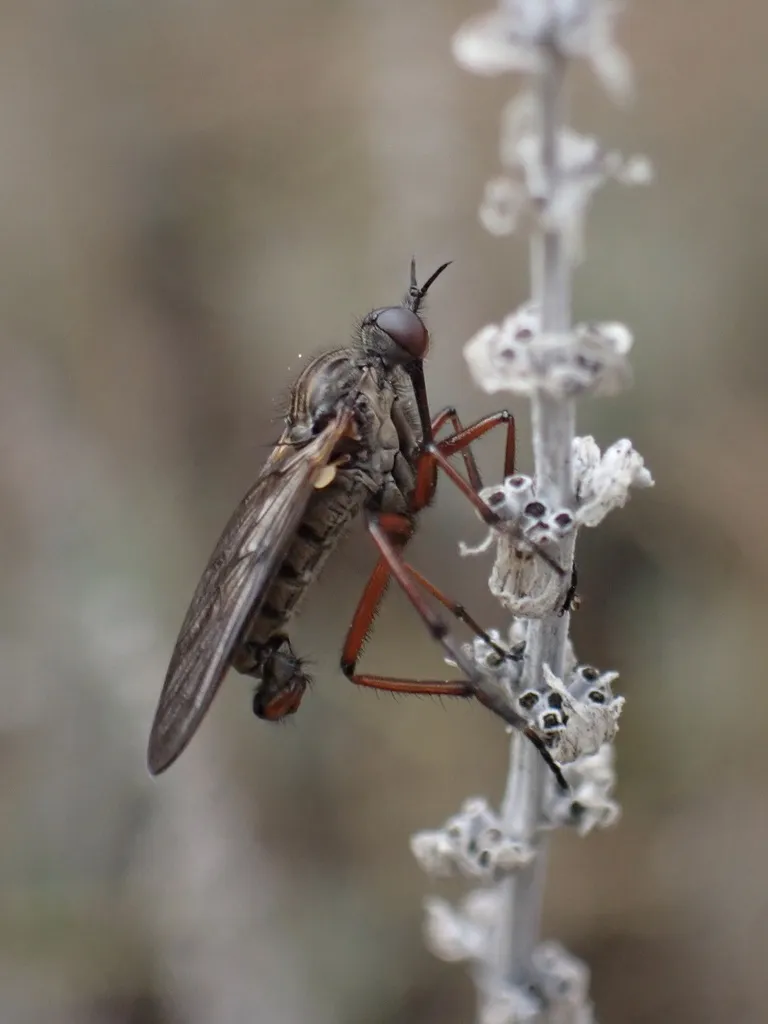
Empis barbatoides
Empis barbatoides
Identification: A large (~9 mm) species with brown wings and no acrostichal bristles.
Empis caeligena
Empis caeligena
Identification: Distinguished from Empis spectabilis by the slender hind femur. Distinguished from an undescribed Anacrostichus by the dark color. Other species of Anacrostichus are found in northern USA and Canada.
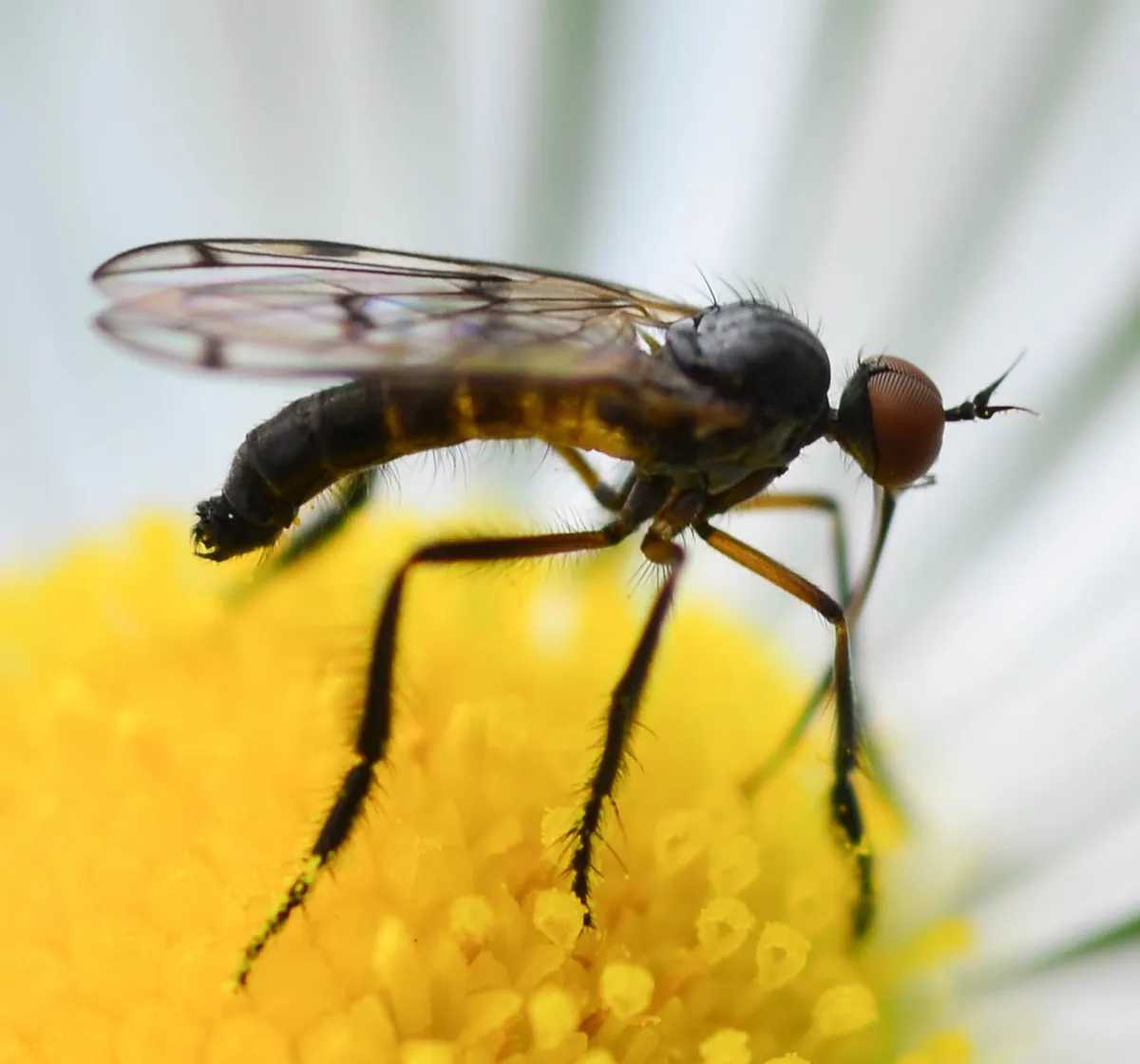
Empis clausa
Empis clausa
Identification: "feathery legs, long proboscis, spots on wing = Empis (Coptophlebia) clausa" -- Isaac Winkler
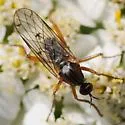
Empis deceptiva
Empis deceptiva
Identification: Differs from Empis tridentata by the more widely separated eyes of the male and lack of a stub vein at the bend in vein R4.
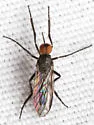
Empis distans
Empis distans
Identification: Males have the first tarsal segments of front and middle legs longer than their respective tibia.
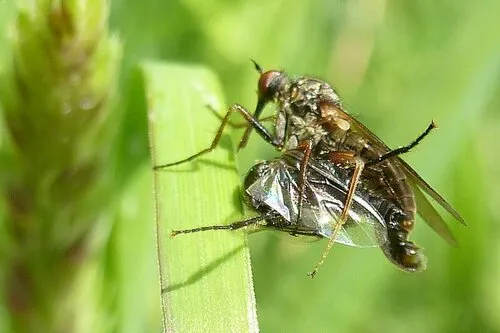
Empis femorata
Empis femorata
This is a small, greyish Dance Fly. The female is quite chubby looking. Widespread but not particularly common in England and Wales, fewer records from Scotland.
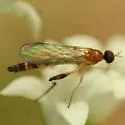
Empis leptogastra
Empis leptogastra
Identification: Yellow-orange, head black, one black stripe on thorax, thin abdomen. There may be similar undescribed species.
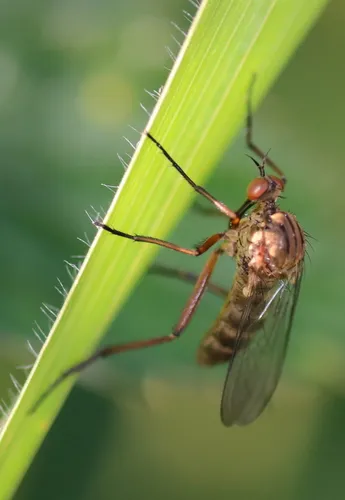
Empis livida
Empis livida
Length about 9 mm. The brown thorax has three dark stripes. The legs are red/orange. Usually found around hedgerows where they nectar on various species as well as taking other insects. The larvae are also carnivorous and live in damp soil and leaf l
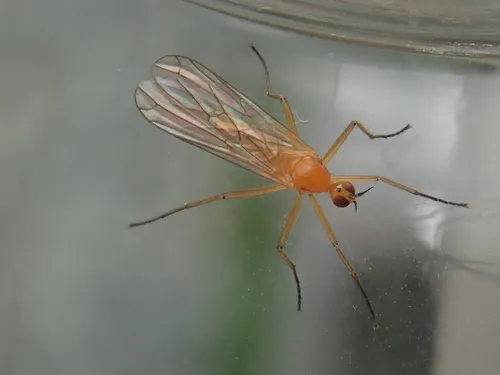
Empis lutea
Empis lutea
c7mm. Bright yellow and without any dark stripes on the thorax. The first antennal segment is much longer than the second. The thorax is glossy - without any dusting to make it dull. The round head is all yellow without any dark markings. Empis conco
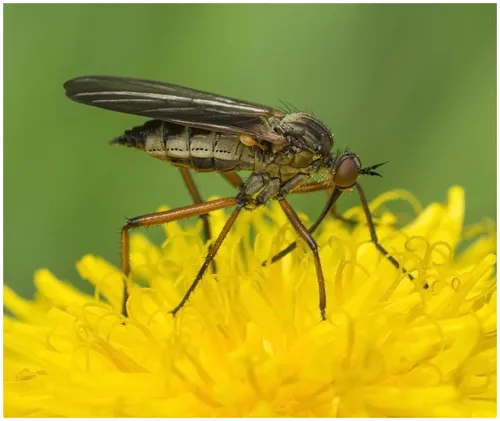
Empis opaca
Empis opaca
Length: Male 6 to 9.5 mm, Female 6.8 to 10 mm. This group of flies, sometimes called Dance flies, are predators of other insects, often tackling large prey, using their long, dagger-like snout. This species is distinguished from the very similar Empi
Empis poeciloptera
Empis poeciloptera
Identification: A yellow species with a crossvein between R2+3 and R4. The tips of the legs and antennae are darkened and there are dark clouds around the crossveins.
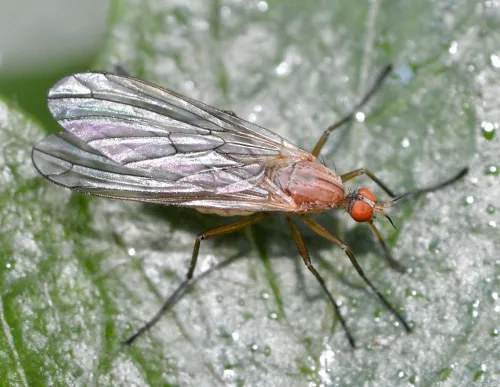
Empis scutellata
Empis scutellata
A small (6 or 7 mm) orange bodied dagger fly. Unless identified by a recognised expert, a photo is required and the specimen should be examined with a microscope. In the comments box, state the key or ID method used and describe the size and identify
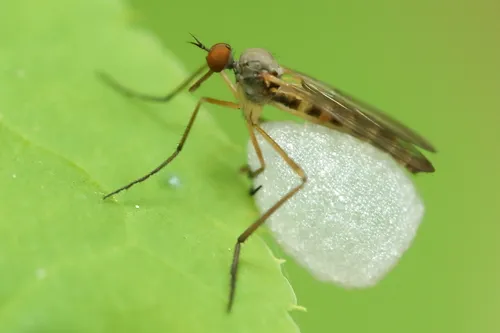
Empis snoddyi
Empis snoddyi
Identification: The only balloon fly in the southern Appalachian mountains. "The mating behavior was reported by Sadowski et al. (1999). Males form swarms of 5-15 individuals beginning at dawn, and interact vigorously within the swarm, chasing each o
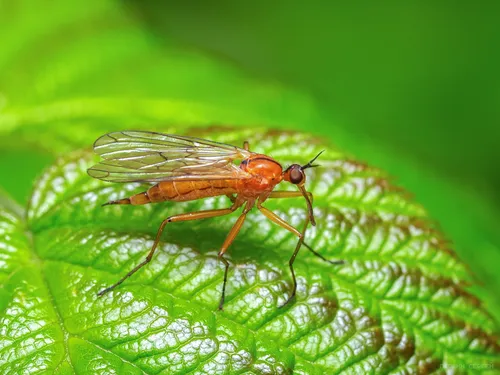
Empis stercorea
Empis stercorea
This species is easily recognised by its pale brown body colour and the black stripe running along the length of its back. The black stripe continues into the orange head and thorax. Empis aemula is rarer but very similar. In this species the fore ti
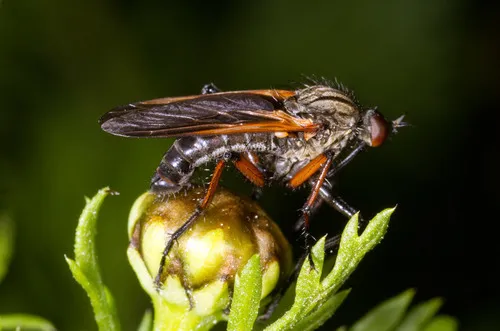
Empis tessellata
Empis tessellata
9-12mm. This is the largest of the genus. It is a bristly fly with brown-tinged wings. It has black femora but the tibia and tarsi may be red/brown. Empis opaca is another large Empis species but this has red femora. It frequents hedges, woodland edg
Empis tridentata
Empis tridentata
Identification: Trident-shaped gray mark, points forward, on yellowish thorax.
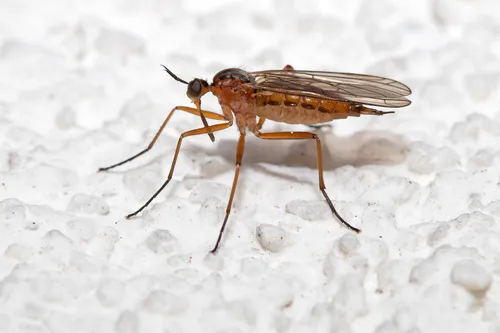
Empis trigramma
Empis trigramma
Empis trigramma is a species of dance or dagger fly. The thorax has three broad dark stripes and yellowish sides. The abdomen is golden yellow and often shiny, with a dark central stripe. The wing has no shaded area and vein R4+5 is forked. The fly's
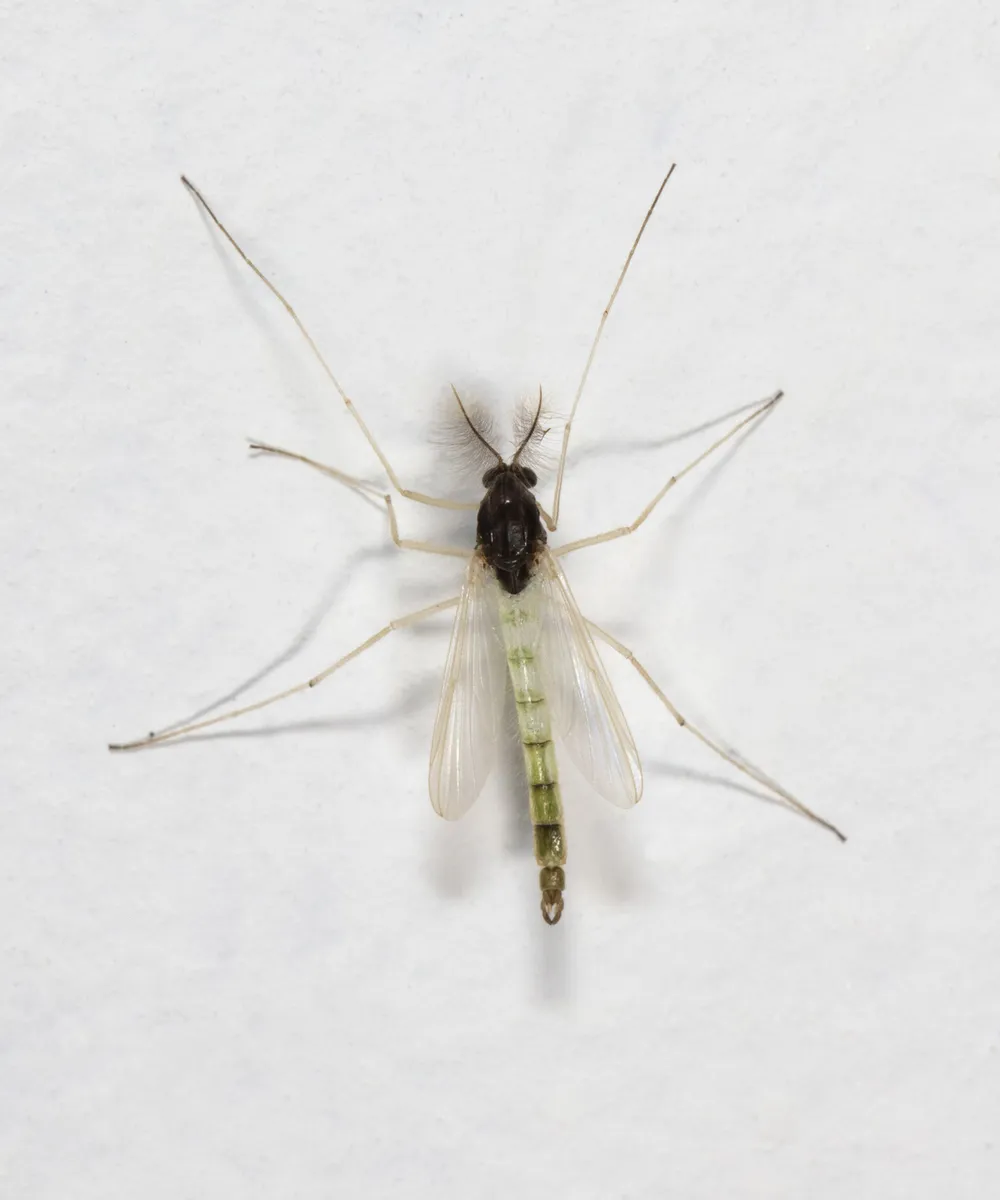
Endochironomus nigricans
Endochironomus nigricans
Identification: Thorax brown to shining black. Male abdomen pale green usually with darker green between segments. Female abdomen darker than male. Legs and wing veins pale. Male antenna 13-segmented (as for all members of genus). Male genital f
Eosalpingogaster cochenillivora
Eosalpingogaster cochenillivora
Identification: Legs dark ( vs reddish in E. nepenthe )
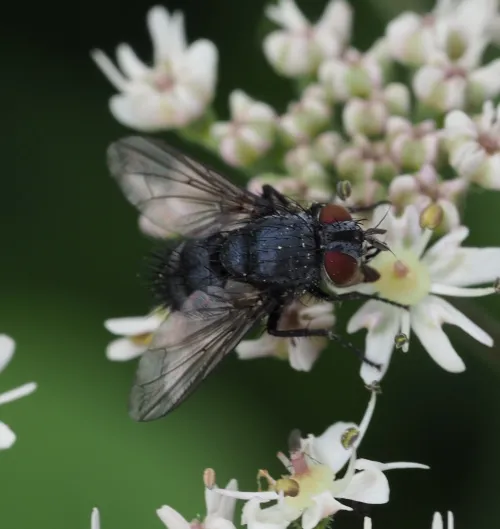
Epicampocera succincta
Epicampocera succincta
A very bristly, black Tachinid fly with black palps and four katepisternal bristles. Unless identified by a recognised expert, a photo is required and the specimen should be examined with a microscope. In the comments box, state the key or ID method
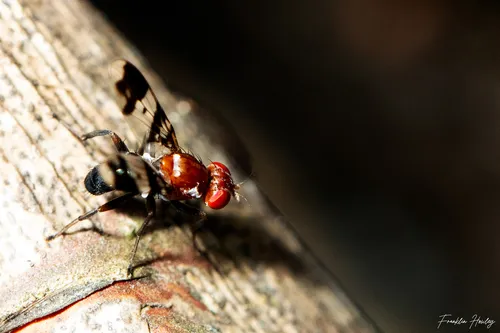
Epiplatea erosa
Epiplatea erosa
Identification: The wing has a small dark spot over r-m, a broad distal band narrowing abruptly behind M, and no trace of dark at wingtip.
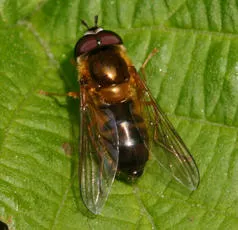
Epistrophe eligans
Epistrophe eligans
This species can be quite variable in the extent of the yellow striping on its abdomen, some specimens, particularly males, being nearly all black; however the overall pattern is usually similar. Hot, sunny woodland edges and hedgerows, favouring Bla
Erioptera furcifer
Erioptera furcifer
Identification: Can only be separated from other chlorophylla group species by the male genitalia. Hypopygium of E. furcifer :
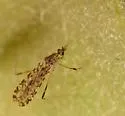
Erioptera knabi
Erioptera knabi
Identification: The wing pattern is concentrated towards the leading edge of the wing; the veins around the fork of R2+3+4 are conspicuously darker than the white spot they are in.

Erioptera needhami
Erioptera needhami
Erioptera (Mesocyphona) serpentina Alexander, 1941 is very similar but rare. The thorax of that species may be less distinctly marked.
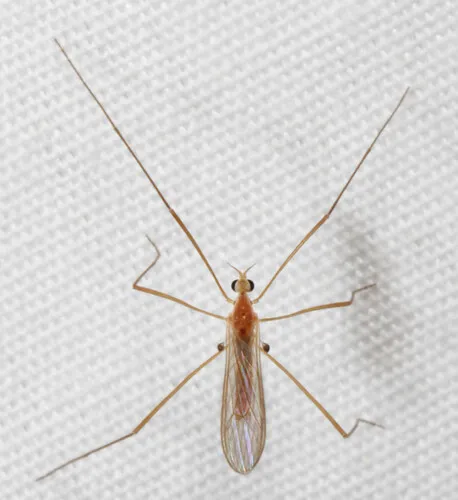
Erioptera septemtrionis
Erioptera septemtrionis
Identification: Distinguished from close relatives by the pale brown color with contrasting dark halteres. Females are attracted to light (Alexander, 1919:882).
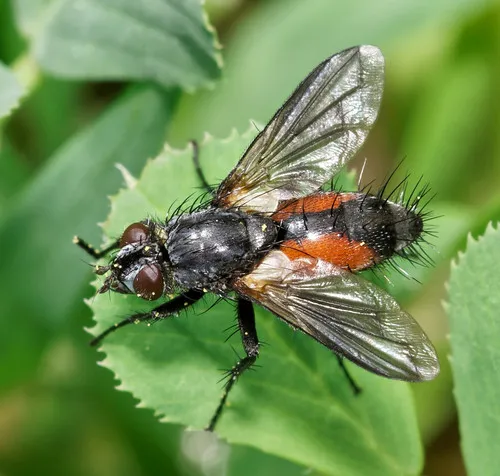
Eriothrix rufomaculata
Eriothrix rufomaculata
This is a very common bristly black fly, with prominent orange patches on the sides of its abdomen. It has a silvery face and a mouth that projects forward. Aphria longirostris also has red abdominal patches but can be separated by its long rigid pro
Eristalinus (Lathyrophthalmus) aeneus
Eristalinus aeneus
Identification: Eyes with numerous small dark spots that tend to coalesce towards the top of eye the only representative of the subgen. Lathyrophthalmus Mik 1897 in our area ( 3 )
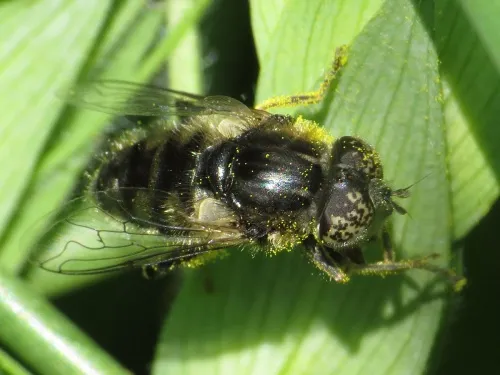
Eristalinus sepulchralis
Eristalinus sepulchralis
The abdomen is shiny black or bronze at the sides and it usually has pale thoracic stripes. Usually seen around ponds and in marshes where there is a large amount of decaying vegetation, or where cattle trampling and dung has resulted in enrichment.
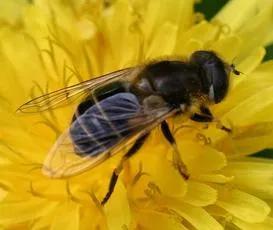
Eristalis abusiva
Eristalis abusiva
This species is very similar to E. arbustorum , sharing the variation in colour and pattern on the abdomen. It can be distinguished by a close look at the arista (the very thin projection from its antennae), which is virtually hairless. Also the mid
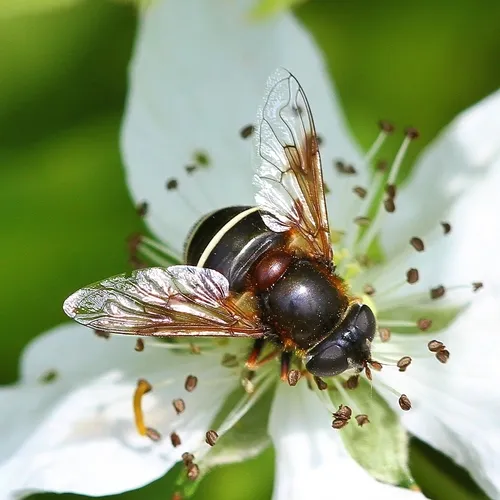
Eristalis cryptarum
Eristalis cryptarum
Identification: Shiny black. Scutellum reddish-brown. Wings have dark, wide streak on outer (costal) edge to about mid-wing. 2nd abdominal segment with orange-brown triangular marks at side edges. Other segments have narrow white line on lower margin
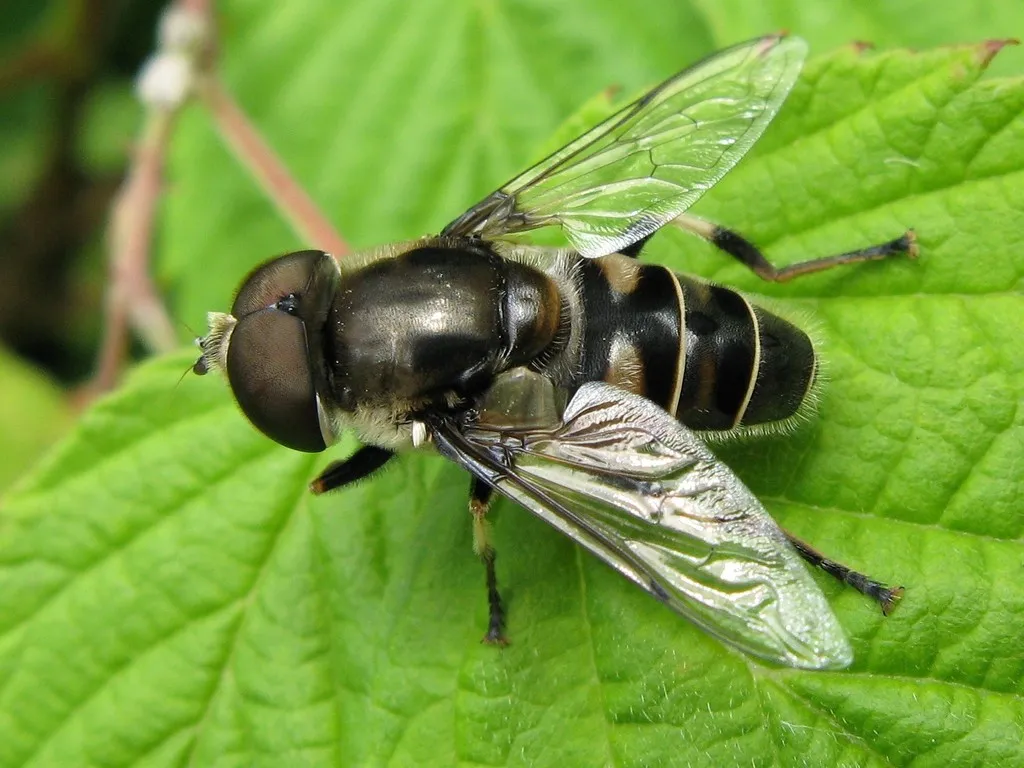
Eristalis dimidiata
Eristalis dimidiata
Identification: Wings clear (or slightly darkened), antennae, thorax, facial stripes and cheeks black. Thorax has dense, short, whitish hairs. Abdomen dark with whitish abdominal rings and often with an incomplete yellow band on tergum 2 and/or 3. Ba
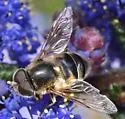
Eristalis hirta
Eristalis hirta
Identification: "In Eristalis interrupta the pterostigma doesn`t reach the tip of the sub-costa, the hind metatarsus is inflated ( not in this specimen ), the face is more produced and the black facial stripe more developed in Eristalis interrupta."
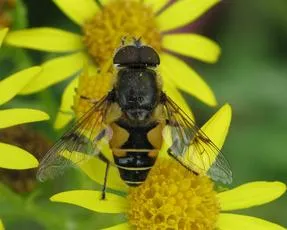
Eristalis horticola
Eristalis horticola
Wing length 8.5 to 11.5 mm. A particularly bright species. It has a shorter and broader abdomen than E. pertinax or E. tenax and has a darkened area across the wing. Well vegetated areas with plenty of bushes or trees. Widespread but never common and
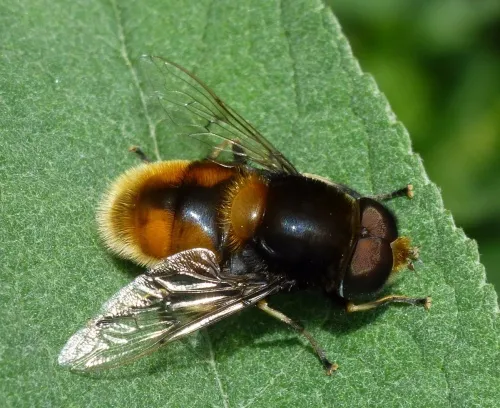
Eristalis intricaria
Eristalis intricaria
This large hoverfly is unlike the other UK Eristalis species in being a furry bumble bee mimic. The males are dark with a reddish-brown tail whilst the female has a white tail and is somewhat larger. This species always has a yellow scutellum. Merodo
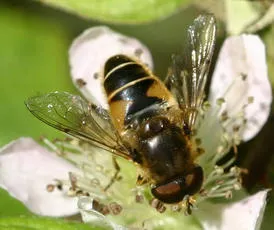
Eristalis nemorum
Eristalis nemorum
A small drone-fly and quite similar to E. arbustorum (the dwarf drone-fly). The small but crisp dark patch on the front edge of the wings (called a stigma) helps to identify this species. It also has a clean and relatively thin black stripe down its
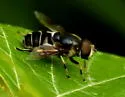
Eristalis saxorum
Eristalis saxorum
Identification: Body variably metallic blue. Pterostigma is a diffuse light brown . Williston ( Synopsis of the North American Syrphidae , 1886) notes: Resembles dimidiatum, but is at once distinguishable by the third segment of the abdomen having an
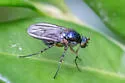
Ethiromyia violacea
Ethiromyia violacea
Identification: Distinguished from similar North American species by the spots on mid and hind legs where major bristles insert.
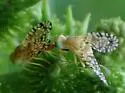
Euaresta aequalis
Euaresta aequalis
Identification: ground color of thorax yellow; wing with distal hyaline spot in cell r4+5 rounded and narrowly isolated from wing margin (this combination of characters is diagnostic)
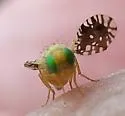
Euaresta bella
Euaresta bella
Identification: ground color of thorax brown; apex of cell r2+3 with 2 marginal hyaline spots
Euaresta bellula
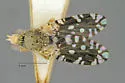
Euaresta bellula
Identification: ground color of thorax dark brown or gray; wing with two marginal hyaline spots in cell r1; if a third, apical spot is present, it is small and does not cross vein R2+3 reduces seed and/or pollen production by its host plants, some of
Euaresta festiva
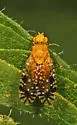
Euaresta festiva
Identification: ground color of thorax yellow; distal hyaline spot in cell r4+5 broadly touches wing margin (see photo linked to in Internet References section below)
Euchaetogyne roederi
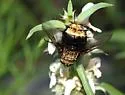
Euchaetogyne roederi
Identification: Female abdomen entirely dark brown.
Eudasyphora cyanella
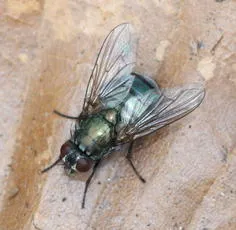
Eudasyphora cyanella
This shiny green fly gradually become bronze as it ages. As with all muscidae flies, the fourth wing vein (M) bends gently (not sharply) forwards. It has hairy eyes and a white 'collar' on the front of the thorax. Superficially this looks like the 'g
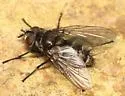
Eulasiona comstocki
Eulasiona comstocki
Identification: Antennae blackish. R-vein with a single bristle basally. Abdominal tergites broadly pollinose basally (Curran 1927).
Eulonchus marialiciae
Eulonchus marialiciae
This is the only Eulonchus species known from the eastern United States. There are 5 other species distributed more widely in the western U.S. (mostly from British Columbia to California, but extending to the Rocky Mountains...see map here ).
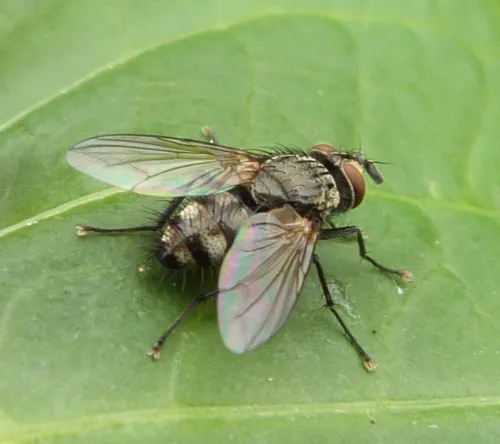
Eumea linearicornis
Eumea linearicornis
Length about 8 mm. This is a fly with a well marked black and buff/grey abdomen. It also has the usual hairy body of the Tachinidae family. May be seen on flowers, trees and shrubs. Larvae are parasites of various micromoth larvae. Fairly frequent in
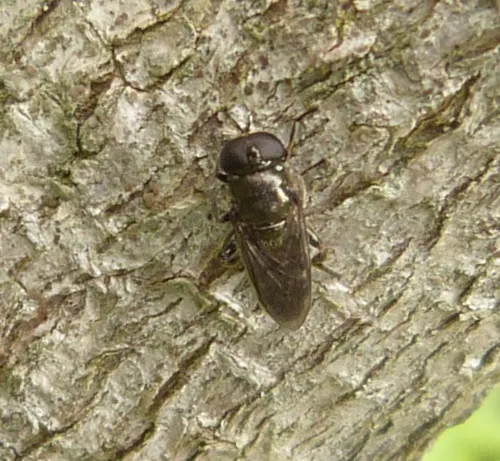
Eumerus funeralis
Eumerus funeralis
A fairly small hoverfly with a black shiny appearance in the field, but with whitish markings when examined in detail. There are other very similar species and detailed examination is needed. Unless identified by a recognised expert, a photo is requi
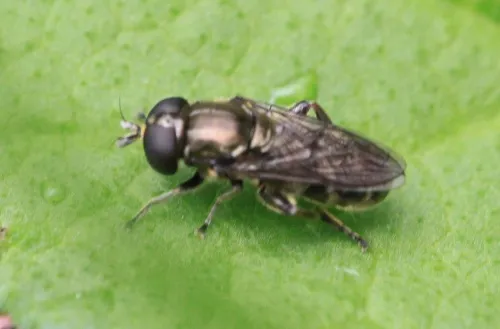
Eumerus strigatus
Eumerus strigatus
There are other very similar species and detailed examination is needed. This species closely resembles the Lesser Bulb-fly Eumerus funeralis which is more strongly associated with gardens. Males can be separated by examining the underside of the hin
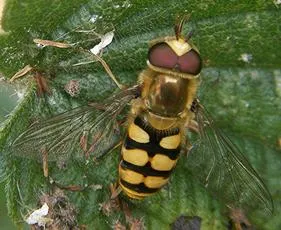
Eupeodes bucculatus
Eupeodes bucculatus
This scarce species is very similar in appearance to other members of the Eupeodes genus, and we must thank Steve Falk who identified the insects in two Sapcote photographs as Eupeodes bucculatus . It is a species where expert confirmation of identif
Eupeodes flukei
Eupeodes flukei
Identification: Similar to E. snowi and E. montivagus , except that tergite 4 is not reddish (unlike in E. snowi ) and tergite spots more curved at the front edge (unlike E. montivagus ).
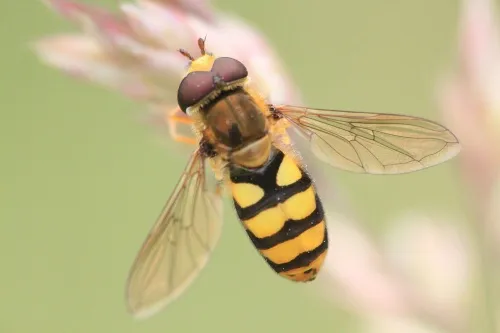
Eupeodes latifasciatus
Eupeodes latifasciatus
A fairly small hoverfly with a wing length of 6.5 to 8.5 mm. The marks on tergites 3 and 4 are usually fused into bands in this species. There is some variation, and males differ from females. The yellow marks on tergites 3 and 4 often fail to reach
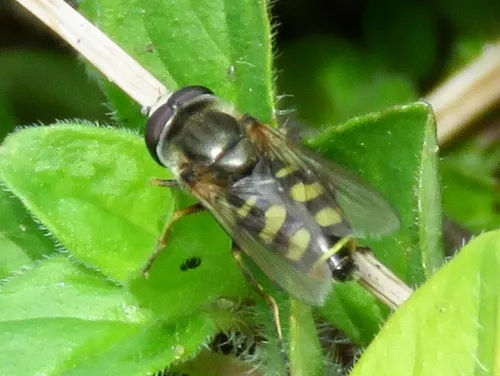
Eupeodes lundbecki
Eupeodes lundbecki
This hoverfly is similar to a number of other species and detailed examination is required. Preferably a specimen should be retained. Detailed examination is required and photographs should be included. Preferably a specimen should be retained. No ad
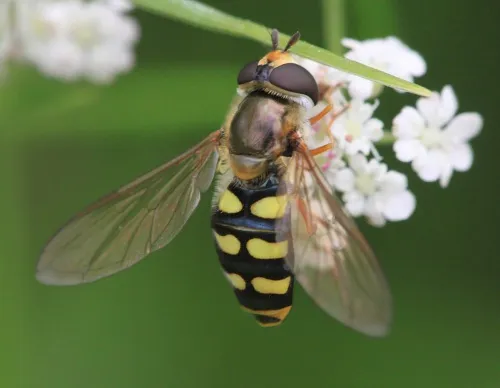
Eupeodes luniger
Eupeodes luniger
The species can be variable in terms of both size and colour with a wing length usually between 6.5 and 10 mm. It has broad yellow lunate markings on tergites 3 and 4 which don't reach the outer edge. Open habitats: patches of flowers in arable field
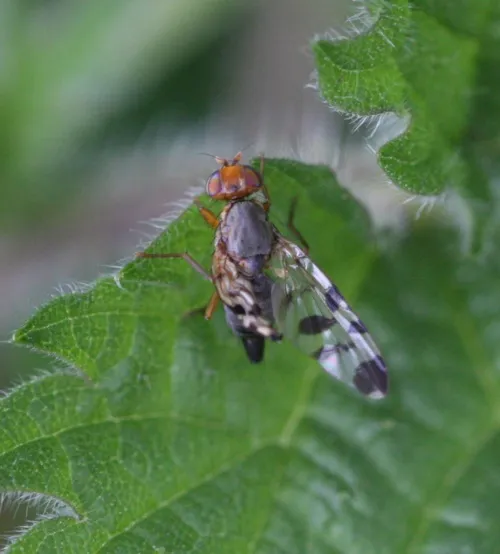
Euphranta toxoneura
Euphranta toxoneura
A small fly with distinctive black wing markings. Associated with various willows and most likely to be encountered where willows are present. The larva lives in a gall of Pontania bridgmanii or Pontania proxima. The host larva is killed and emptied;
Eurimyia stipata
Eurimyia stipata
Lejops species have the eyes separated on both sexes. The main sexual dimorphism is in the color and shape of the abdomen. The females are more blue gray and have an oval shaped abdomen, while the males have a more slender abdomen and are more orange
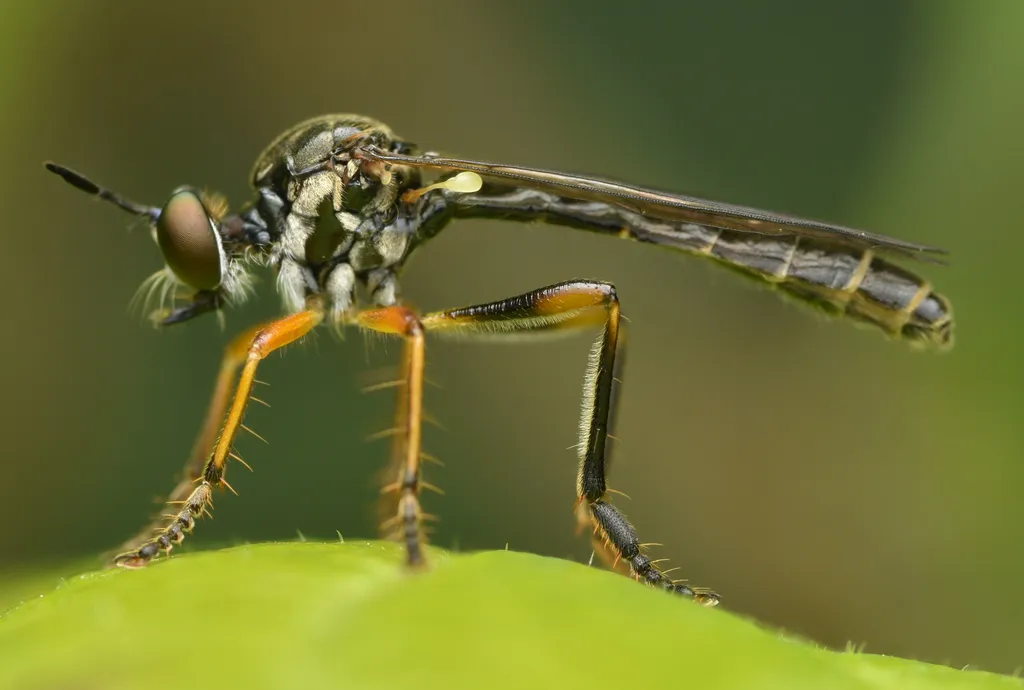
European Longhorn Robber
Dioctria hyalipennis
Identification: delicate build; long slender abdomen is narrower at the base than at the tip; halteres yellow; legs less hairy/spiny than most robber flies, fore and mid legs yellowish with dark streaks on top side, hind legs dark. Abdomen black, shi
Eustalomyia vittipes
Eustalomyia vittipes
Identification: The only species of Eustalomyia with partly yellow legs. Photos on diptera.info: 1 , 2 . "This fly has twice been reared from material collected from the interior of rotten logs in the winter season at Harrisburg, Pa. The insect was
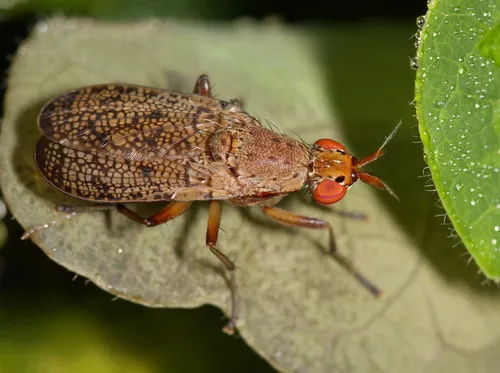
Euthycera flavescens
Euthycera flavescens
Identification: "Very distinctive species with a unique closed-wing shape." --Bill Murphy
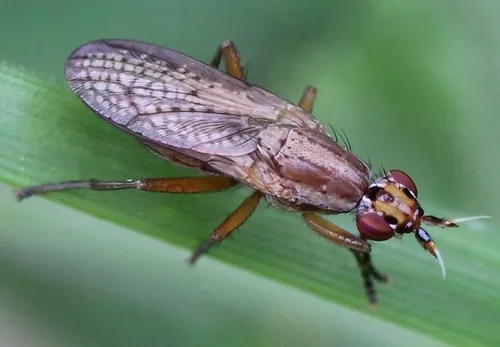
Euthycera fumigata
Euthycera fumigata
Body length 7 to 9 mm. A brown bodied species with a dense pattern of white spots on a brown wing membrane and entirely brown legs. Records must be supported by a photograph. It is typically encountered in fairly tall grassland and well vegetated pla
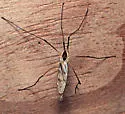
Eutonia phorophragma
Eutonia phorophragma
Identification: Thorax a "deep cinnamon brown" (Alexander, 1944) with a strong crossvein between R5 and M1.
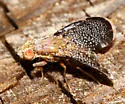
Eutreta novaeboracensis
Eutreta novaeboracensis
The most common northeastern species of Eutreta . Possibly consists of two cryptic species, one bivoltine and forming galls on the host plant's stem, the other univoltine and forming galls on the roots.
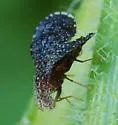
Eutreta rotundipennis
Eutreta rotundipennis
Identification: broken apical hyaline area of the wing and broadly oval wing shape are diagnostic
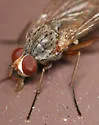
Eutrichota affinis
Eutrichota affinis
Identification: In the Northeast, distinguished from related species by the scutellum with yellow tip continuing as a yellow stripe underneath , neither entirely black nor entirely yellow below. Scutellum dorsally may be yellow at the tip, abdomen fi
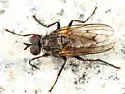
Eutrichota cylindrica
Eutrichota cylindrica
The most common of a group of six Nearctic species with "extreme proliferation of fine thoracic setulae" (Griffiths, 1984) and swollen female fore tarsi.
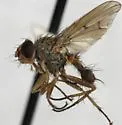
Eutrichota geomyis
Eutrichota geomyis
The long spines on the wing are probably an adaptation to help maneuver in dark pocket gopher burrows.
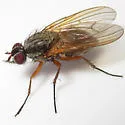
Eutrichota lipsia
Eutrichota lipsia
Identification: Antennal articles 1-2 opaque yellow, thorax finely dusted and shining, mid femora without distal anteroventral setae.
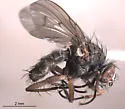
Eutrichota nigrifemur
Eutrichota nigrifemur
Identification: Antennal scape and pedicel infuscated, thorax densely gray-dusted, notopleura not clothed with setulae except for the large 2 setae, prealar long, mid femora without a distal av, fore tibia with or without an apical pd, wings with var
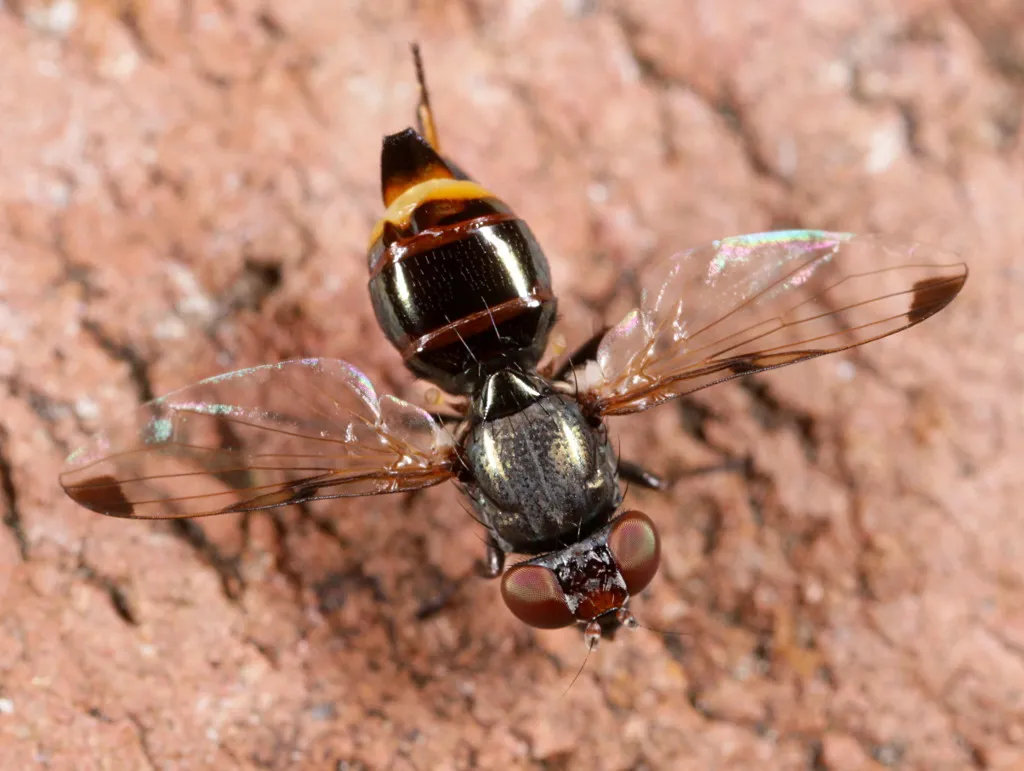
Euxesta notata
Euxesta notata
Identification: Distinguished from other Euxesta by the combination of Apparently cell sc may be slightly darkened, giving the basal band an "L" shape, possibly only in males.
Euxesta pechumani
Euxesta pechumani
Identification: Wing pattern similar to notata , with the basal crossband longer (reaching or crossing R4+5). Abdomen entirely dark (vs. yellow tipped in female notata ).
Euxesta quaternaria
Euxesta quaternaria
Identification: Four short wing bands, the third more or less triangular and usually not reaching vein dm-cu. Female abdomen mostly yellow, black at base.
Exoprosopa agassizii
Exoprosopa agassizii
Identification: Prone to wing venation asymmetry; see Andy Calderwood's comment on photo 75567:
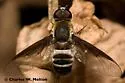
Exoprosopa albifrons
Exoprosopa albifrons
Identification: "Note the dense mat of reflective scales on the front." -- Andy Calderwood on photo 304527
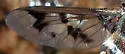
Exoprosopa butleri
Exoprosopa butleri
The R5 cell is closed and stalked, not open to the wing margin. Only a half dozen or so other US species have this feature. The white post-collar strip is the key. (Andy Calderwood)
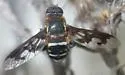
Exoprosopa doris
Exoprosopa doris
Identification: Elmer & Johnson state (at bottom of pg. 70 ) that males have both the 6th & 7th tergites with white tomentum; while females have tomentum of 6th tergite tan and 7th tergite white. A detailed description of E. doris appears on the firs
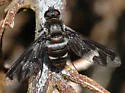
Exoprosopa jonesi
Exoprosopa jonesi
Identification: Brown color stops short of filling out the marginal cell (R1) vs filling the cell in E. dorcadion (info provided by A. Calderwood)