
Eulonchus marialiciae
This record describes Eulonchus marialiciae (species). Recorded family: Acroceridae. Recorded order: Diptera.
Identification and Appearance
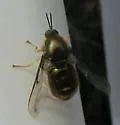
This is the only Eulonchus species known from the eastern United States. There are 5 other species distributed more widely in the western U.S. (mostly from British Columbia to California, but extending to the Rocky Mountains...see map here ).
Classification
- Kingdom
- Animalia
- Phylum
- Arthropoda
- Class
- Insecta
- Order
- Diptera (Flies)
- Superfamily
- Empidoidea
- Family
- Acroceridae (Small-headed Flies)
- Genus
- Eulonchus
Imported taxonomy record. Source availability varies; see the source references and editorial policy below.
Habitat and Range
Habitat
Sightings have be made in cool, humid woodlands at or above an elevation of 1250 m (4100 ft) having a liberal humic layer and dominated by hemlock ( Tsuga canadensis (L.) Carr.), oaks Quercus spp. ), and rhododendron and flame azalea Rhododendron spp. ). [Adler et al(1997)]
Geographic Range
North Carolina: Great Smoky Mountains in Haywood, Jackson, Macon, Swain, and Transylvania Counties [see yellow dots in map from Borkent, Gillung, & Winterton(2016)] Postscript (12/14/19): Through 2016, only a fairly localized range (about 40 miles in diameter) was known for E. marialiciae in the Appalachian Mountains of far-western North Carolina. BugGuide posts provide observations extending the range to Yancey Co., NC (see here ) and Tucker Co., WV (see here )...which are 50 miles and 320 miles, respectively, away from the localized cluster of previously known records (see this map ).
Seasonal Activity
Adults have been found from June-August. Most adult collection records are from June (cf. Adler et al(1997) ). There is also a BugGuide post from 7/15/2019 , and Coyle(1971) reported finding on August 1-2, 1966: 18 adults flying around burrow aggregations of the folding trap door spider Antrodiaetus unicolor , as well as one freshly-emerged adult vibrating its wings within a burrow, and a pupa within a burrow that produced an adult a few hours after being found. Numerous abandoned pupal skins and spider remains were also found amidst the A. unicolor burrow aggregations.
Diet and Behavior
Diet: Larvae are parasitoids of spiders, in particular adults & pupae have be found in aggregations of the myalomorph Antrodiaetus unicolor (see Adler et al(1997) and pp. 281-282 of Coyle(1971) ). Adults have been seen feeding in the afternoon on the flowers of smooth blackberry, Rubus canadensis (plant images & info here & here ).
About Flies: the wider group
Order-level background for Diptera, the group containing Eulonchus marialiciae. Species-specific details appear above.
Group overview
Diptera includes over 150,000 described species of flies, mosquitoes, and midges. Mosquitoes are the deadliest animal on Earth (CDC). Malaria alone causes ~249 million cases and over 608,000 deaths annually, mostly children under 5 (WHO). Vector-borne diseases account for over 17% of all infectious diseases, causing 700,000+ deaths per year.
Ecological role of the group
Despite their disease impact, flies are critical decomposers and pollinators. Hoverflies alone pollinate hundreds of crop and wildflower species. Flies are also the primary food source for many birds, bats, and fish. Forensic entomology relies heavily on fly species for crime scene analysis.
Economic and practical significance of the group
In the U.S., vector-borne disease cases tripled between 2004-2016, with over 640,000 cases reported in that period (CDC). Tickborne diseases doubled from 22,000 to 48,000 annual reports. Globally, mosquito-borne diseases cost billions in healthcare and lost productivity.
Recorded sources for this group: WHO, CDC, PNAS. Imported estimates may describe particular regions or reporting periods.
Photos of Eulonchus marialiciae (4)
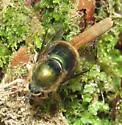
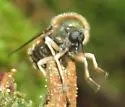
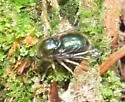
Photo credits: Contributed by Aaron Schusteff
Frequently Asked Questions About Eulonchus marialiciae
What is Eulonchus marialiciae?
Eulonchus marialiciae is a species in the family Acroceridae, within the order Diptera.
Where is Eulonchus marialiciae found?
| Feature | Details |
|---|---|
| Habitat | Sightings have be made in cool, humid woodlands at or above an elevation of 1250 m (4100 ft) having a liberal humic layer and dominated by hemlock ( Tsuga canadensis (L.) Carr.), oaks Quercus spp. ), and rhododendron and flame azalea Rhododendron spp. ). [Adler et al(1997)] |
| Range | North Carolina: Great Smoky Mountains in Haywood, Jackson, Macon, Swain, and Transylvania Counties [see yellow dots in map from Borkent, Gillung, & Winterton(2016)] Postscript (12/14/19): Through 2016, only a fairly localized range (about 40 miles in diameter) was known for E. marialiciae in the Appalachian Mountains of far-western North Carolina. BugGuide posts provide observations extending the range to Yancey Co., NC (see here ) and Tucker Co., WV (see here )...which are 50 miles and 320 miles, respectively, away from the localized cluster of previously known records (see this map ). |
What does Eulonchus marialiciae eat?
The diet of the Eulonchus marialiciae includes Larvae are parasitoids of spiders, in particular adults & pupae have be found in aggregations of the myalomorph Antrodiaetus unicolor (see Adler et al(1997) and pp. 281-282 of Coyle(1971) ). Adults have been seen feeding in the afternoon on the flowers of smooth blackberry, Rubus canadensis (plant images & info here & here )..
When is Eulonchus marialiciae active?
Eulonchus marialiciae: seasonal activity - Adults have been found from June-August. Most adult collection records are from June (cf. Adler et al(1997) ). There is also a BugGuide post from 7/15/2019 , and Coyle(1971) reported finding on August 1-2, 1966: 18 adults flying around burrow aggregations of the folding trap door spider Antrodiaetus unicolor , as well as one freshly-emerged adult vibrating its wings within a burrow, and a pupa within a burrow that produced an adult a few hours after being found. Numerous abandoned pupal skins and spider remains were also found amidst the A. unicolor burrow aggregations..