
Flies
Order Diptera
The Flies (Order Diptera) includes 6,350 species across 141 families and 1,800 genera in our directory.
About Flies
Diptera includes over 150,000 described species of flies, mosquitoes, and midges. Mosquitoes are the deadliest animal on Earth (CDC). Malaria alone causes ~249 million cases and over 608,000 deaths annually, mostly children under 5 (WHO). Vector-borne diseases account for over 17% of all infectious diseases, causing 700,000+ deaths per year.
Economic Impact
In the U.S., vector-borne disease cases tripled between 2004-2016, with over 640,000 cases reported in that period (CDC). Tickborne diseases doubled from 22,000 to 48,000 annual reports. Globally, mosquito-borne diseases cost billions in healthcare and lost productivity.
Ecological Role
Despite their disease impact, flies are critical decomposers and pollinators. Hoverflies alone pollinate hundreds of crop and wildflower species. Flies are also the primary food source for many birds, bats, and fish. Forensic entomology relies heavily on fly species for crime scene analysis.
Families in Diptera (141)
Species in Diptera (6,350)
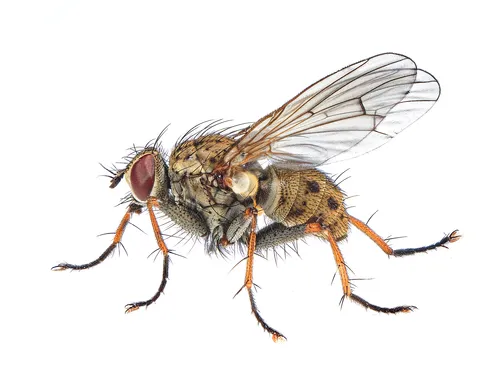
Coenosia tigrina
Coenosia tigrina
All flies in this genus are predators - hunting other insects on the wing. 6 - 7 mm, buff-grey with dark spots on the abdomen and several rows of spots on the thorax. Normally with red tibia and tips of the femora. Distinguished from other Coenosia b
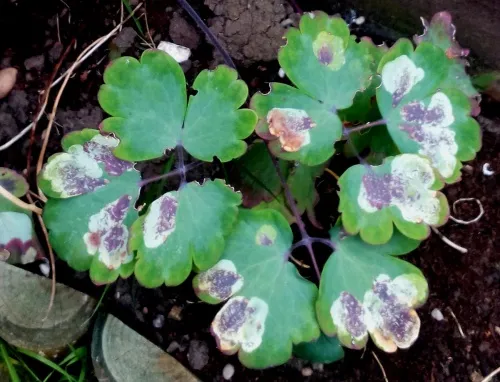
Columbine Leaf Miner
Phytomyza aquilegiae
Phytomyza aquilegiae is a fly whose larvae mine the leaves of Columbine ( Aquilegia vulgaris ) and some related species. The mine is a large blotch on the upper surface of the leaf, sometimes occupied by several larvae. Frass is scattered throughout
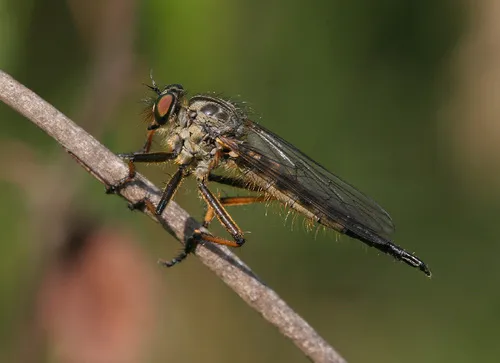
Common Awl Robberfly
Neoitamus cyanurus
12 to17mm. The Awl Robberflies are named for the distinctive long ovipositor of the female. The last segments of the abdomen are glossy black - part of the genitalia. Femora are black and the tibiae are bright orange with black tips. Males are easier
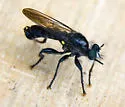
Common Black Laphria
Laphria canis
Identification: L. canis is difficult (sometimes impossible) to distinguish from several similar species from photos. Please place photos that are not conclusively identified under the canis complex page. Antennae help distinguish from the plumper At
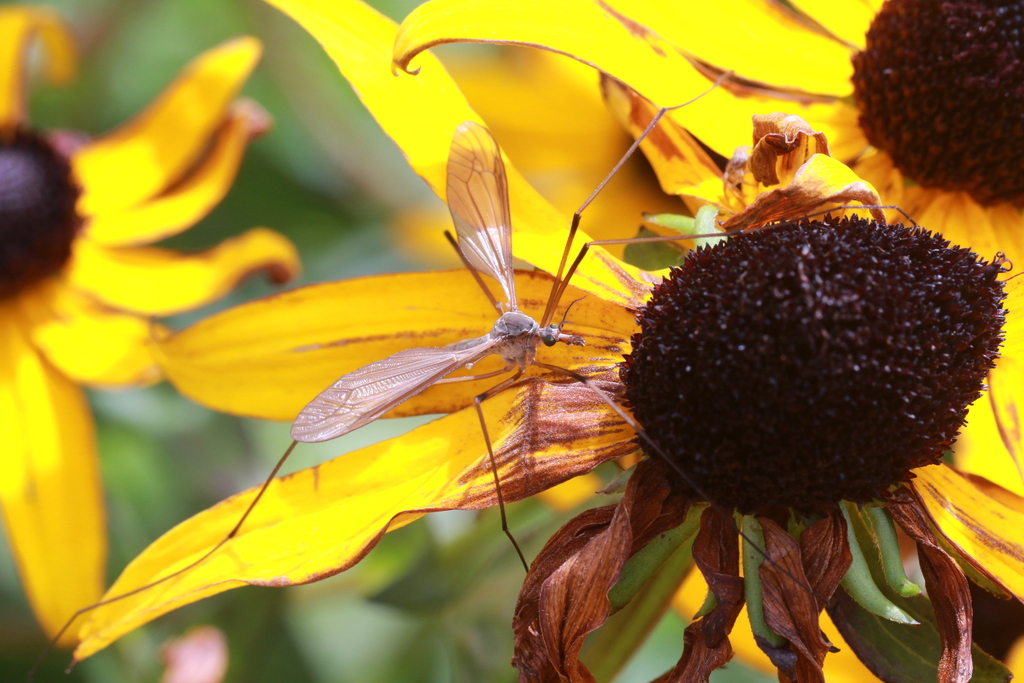
Common European Crane Fly
Tipula paludosa
(c) Barry Cottam, some rights reserved (CC BY)Identification: Antennae 14 segments; space between the eyes on ventral surface of the head wide; in females wings do not reach the tip of abdomen. The Crane Flies (Diptera:Tipulidae) of Pennsylvania Non native. Introduced from Europe before 1955
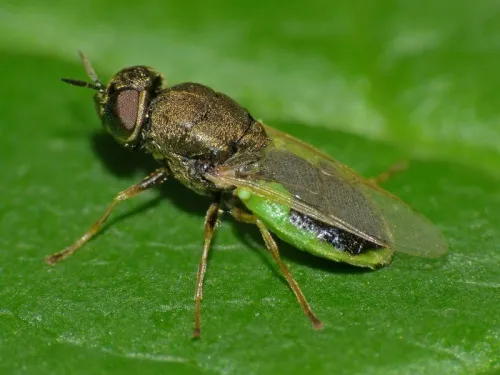
Common Green Colonel
Oplodontha viridula
The Soldier Fly Oplodontha viridula is a variable species, but can often be quite striking in appearance. The colour of the abdomen may vary from lime green to white or orange, but always with a broad black central band. Unless identified by a recogn
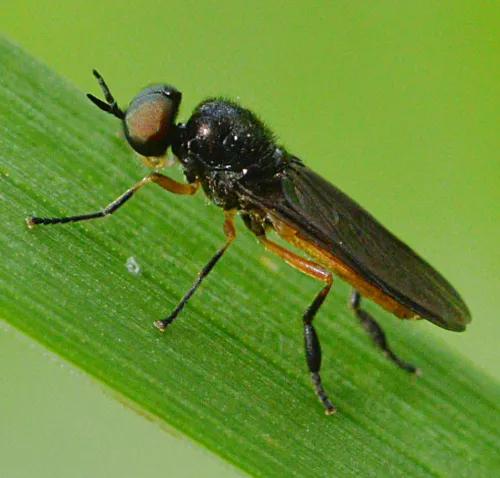
Common Orange Legionnaire
Beris vallata
Length 5-6 mm. The Beris genus is typified by having six spines along the base of the scutellum. B. vallata has a mainly orange abdomen. The male's wings are dark but the female's are fairly clear. This species can be distinguished from the similar B
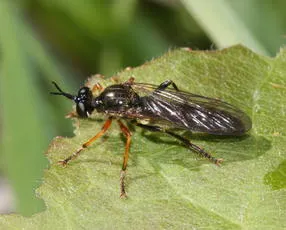
Common Red-legged Robberfly
Dioctria rufipes
Size approx 15 mm. The front 2 pairs of legs are usually completely orange-red and the hind legs almost wholly black, though variants do occur (see image below). All Dioctria species have shiny patches on the side of thorax which in good light show a
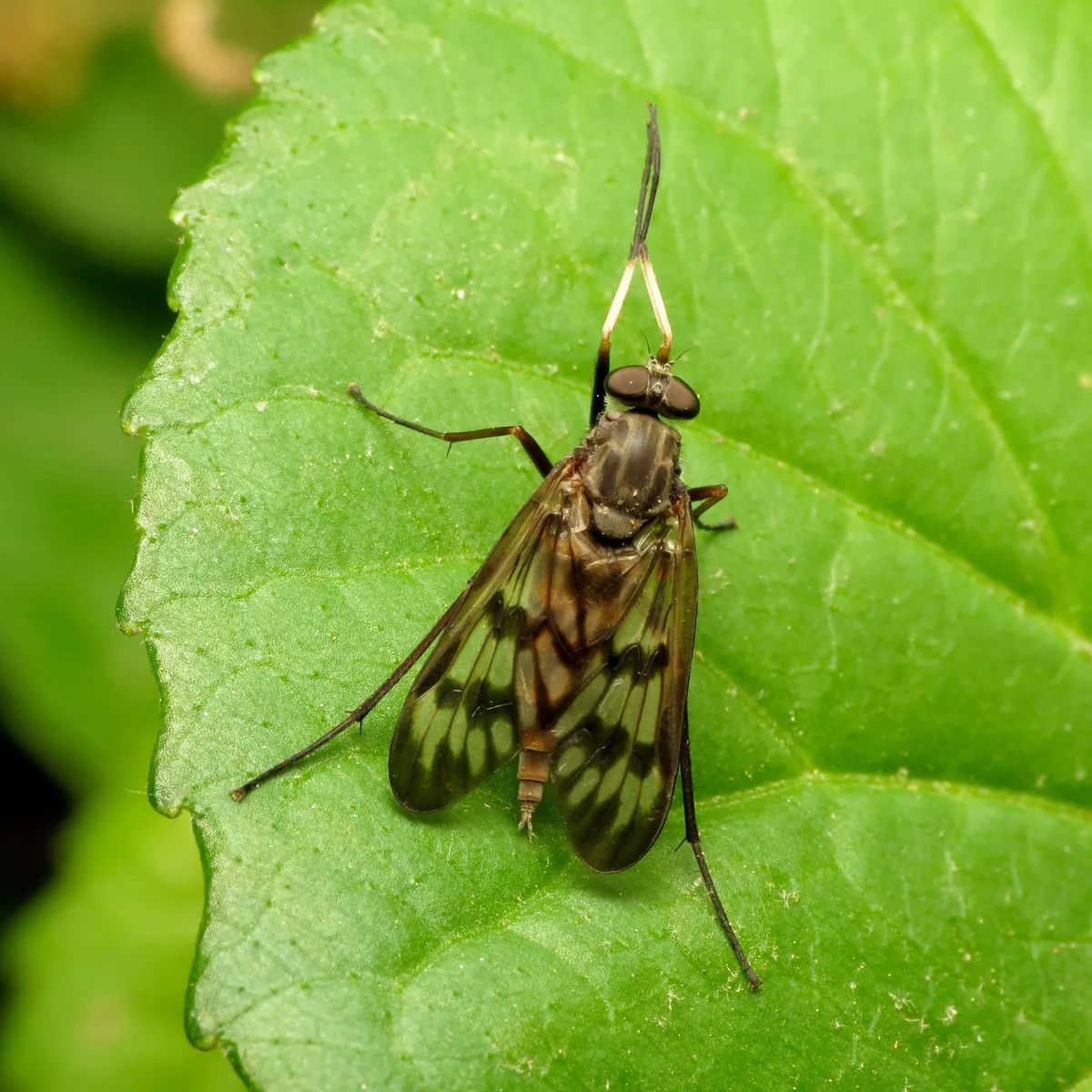
Common Snipe Fly
Rhagio mystaceus
Identification: ♂ ♀ This species is commonly attacked by the fungus Furia ithacensis :
Compsilura concinnata
Compsilura concinnata
Identification: Four deep black stripes on the thorax and lots of bristles. Introduced from Europe to combat the spongy moth ( Lymantria dispar ) around 1906. Since then it has spread to attack many native species, including some threatened ones. ( E
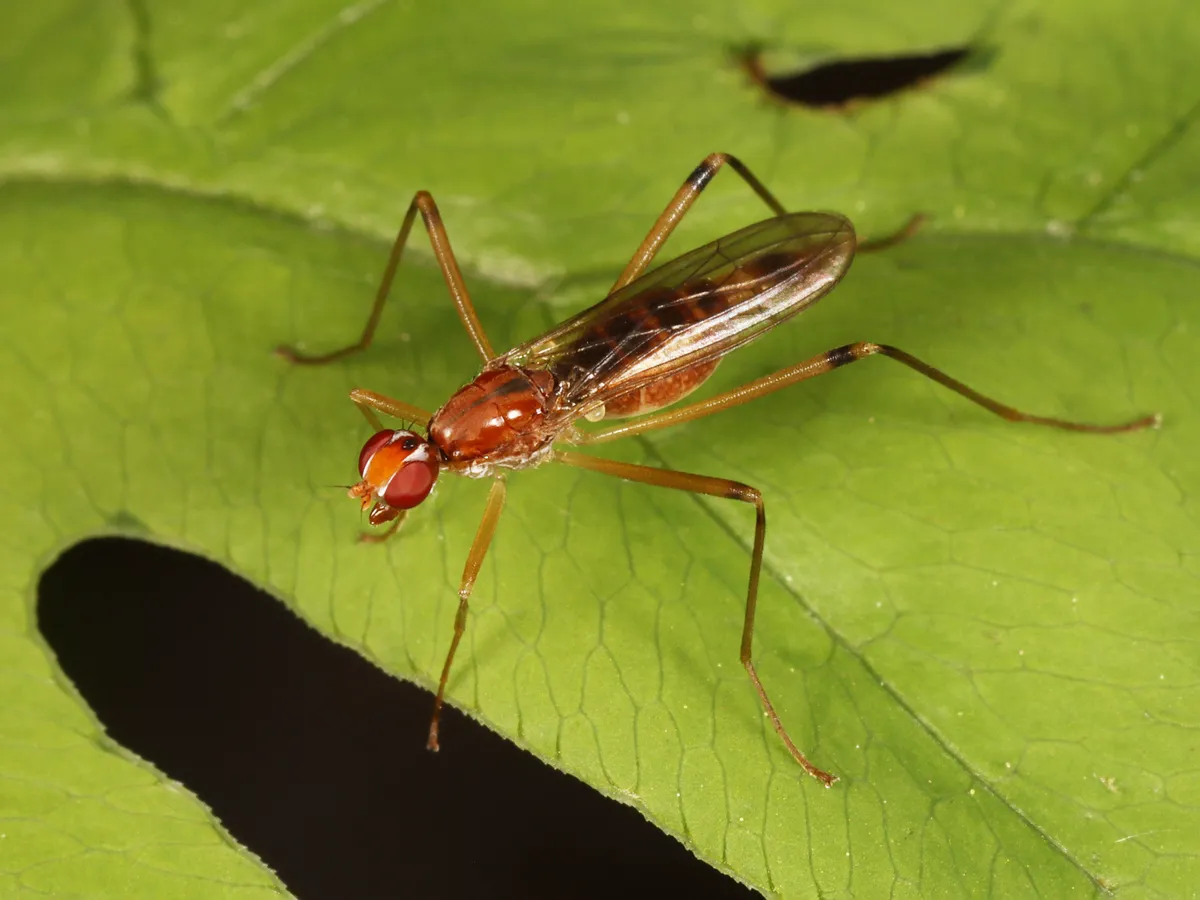
Compsobata univitta
Compsobata univitta
Identification: The only orange Compsobata in the east.
Condylostylus calcaratus
Condylostylus calcaratus
Identification: Distinguished from related species by the mid basitarsus with only straight hairs (not curved), and long bristle at tip of mid tibia.
Condylostylus coloradensis
Condylostylus coloradensis
Identification: Similar to other black-legged Condylostylus with marked wings, but without distinctive bristles on the male fore basitarsus.
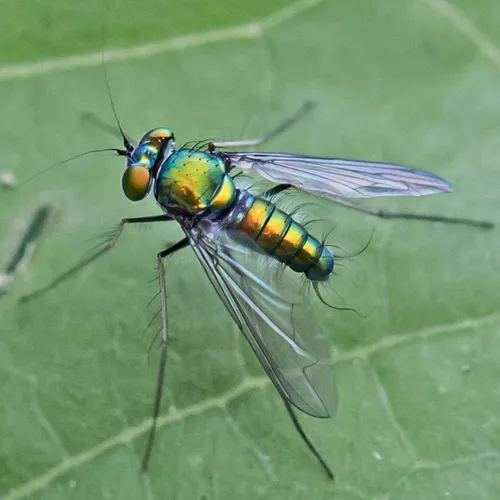
Condylostylus comatus
Condylostylus comatus
Identification: There is one other similar Eastern species of Condylostylus . Females are indistinguishable. Males of C. comatus differ by having a row of hairs on the mid metatarsus and pale genital appendages. C. crinitus has an all-dark hypopygi
Condylostylus connectans
Condylostylus connectans
Identification: Like caudatus except the last hind tarsomere of the male is widened and there is only one pair of long tail hairs instead of two rows of long hairs.
Condylostylus crinitus
Condylostylus crinitus
Identification: There is one other similar Eastern species of Condylostylus . Females are indistinguishable. Males of C. comatus differ by having a row of hairs on the mid metatarsus and pale genital appendages. C. crinitus has an all-dark hypopygi
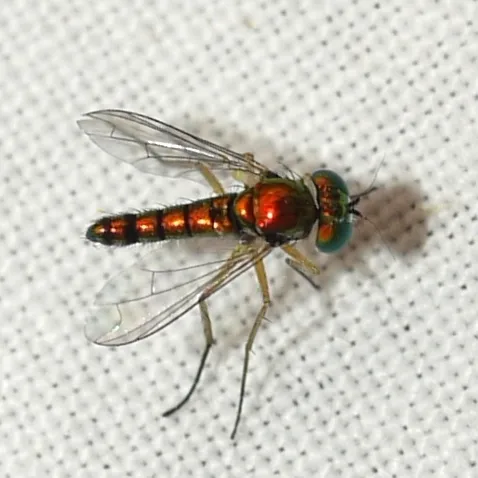
Condylostylus flavipes
Condylostylus flavipes
Identification: Legs mostly yellow and without bristles, mid basitarsus lacking bristles unlike other members of the group, distal segment of hind tarsus enlarged, distal segment of fore and mid tarsi black, abdomen lacking long hairs at the tip. Ver
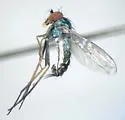
Condylostylus graenicheri
Condylostylus graenicheri
Identification: Distinguished from other North American members of the Condylostylus caudatus group (in the broad sense used here) by long hairs at tip of abdomen and enlarged segments 4 and 5 of hind tarsi. According to Curran 1934, "The Diptera of
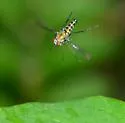
Condylostylus leonardi
Condylostylus leonardi
Identification: Characters shared with C. quadricolor but unlike all other species: Unlike C. quadricolor :
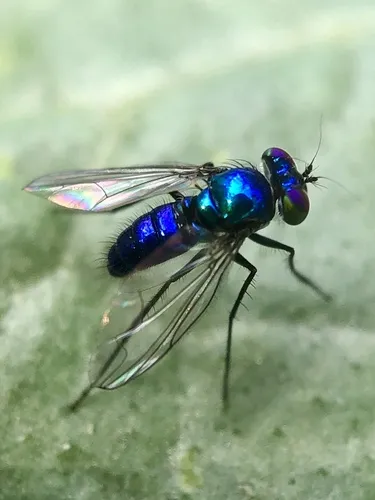
Condylostylus mundus
Condylostylus mundus
Identification: Wings unmarked, legs dark. Males: Females: Females are very similar to the unidentified species A, but can be distinguished by the leg color and chaetotaxy.
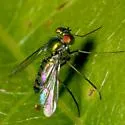
Condylostylus nigrofemoratus
Condylostylus nigrofemoratus
Identification: Distinguished from other members of the Condylostylus caudatus group by the combination: dense row of curved bristles on mid basitarsus; tarsi not otherwise modified (hind tarsi not swolled, mid tarsi not elongated); tail hairs not es
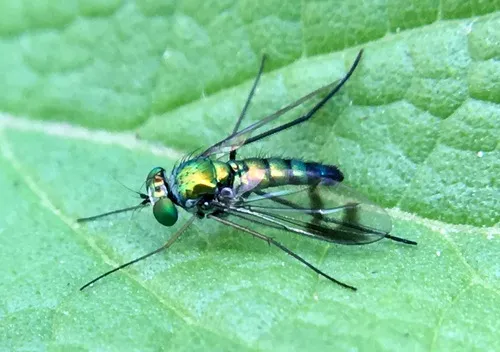
Condylostylus quadricolor
Condylostylus quadricolor
Identification: Characters shared with C. leonardi but unlike all other species: Unlike C. leonardi :
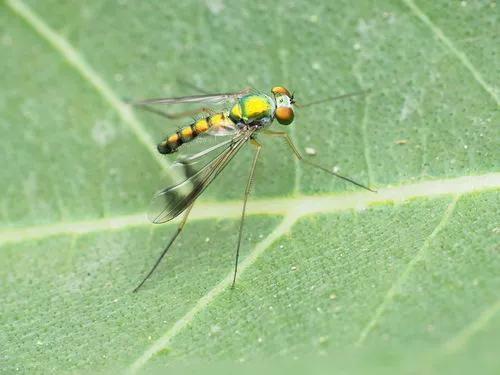
Condylostylus scaber
Condylostylus scaber
Identification: See species group page for identification information.
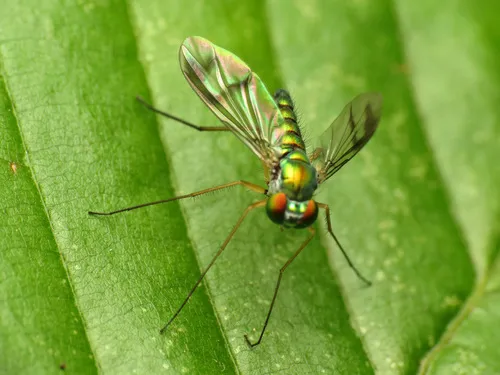
Condylostylus sipho
Condylostylus sipho
Identification: See species group page for identification information.
Condylostylus tonsus
Condylostylus tonsus
Identification: Wings similar to caudatus group (unmarked and with rounded M1), face bare, tarsi unornamented, fore basitarsus less than three times as long as second segment, femora and tibiae yellow except tip of hind femur may be darkened. Most si
Condylostylus villosus
Condylostylus villosus
Identification: Distinguished from C. crinitus by long, wrinkled hairs near tip of abdomen. Distinguished from C. comatus by lack of row of long setae on mid basitarsus and two long hairs rather than three on mid tibia.
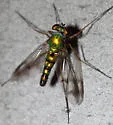
Condylostylus viridicoxa
Condylostylus viridicoxa
Identification: See species group page for identification information.
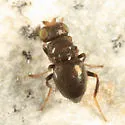
Conioscinella zetterstedti
Conioscinella zetterstedti
Identification: Wings reduced or absent. Identification according to Manual of Nearctic Diptera : "Wing absent, or brachypterous with intdeterminate venation (recognized as Chloropidae by large ocellar triangle, carinate propleuron, and reduced brist
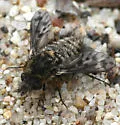
Conophorus collini
Conophorus collini
Identification: has shiny, sulcate scutellum, and is smaller than the closely related to C. fenestratus (both species have patterned wings and elongated antennomere II
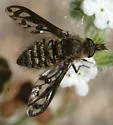
Conophorus fenestratus
Conophorus fenestratus
Identification: Closely related to Conophorus collini , but generally larger, and has a non-sulcate scutellum (convex, without median groove or gap). Males have fine teeth on the costal edge of their wings , which are lacking on females.
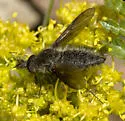
Conophorus melanoceratus
Conophorus melanoceratus
Identification: The following characters for C. melanoceratus are gleaned from the keys and descriptions in Priddy and Hall & Evenhuis: Metapleura bare (on area just ventral to squamae and anterior to base of halter); first antennal segment usually l
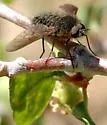
Conophorus obesulus
Conophorus obesulus
Identification: adult male all dark: thorax dark brown to blackish, hairy laterally, smoother dorsally; abdomen black with mix of dark and pale hairs, sparse enough to allow ground color to show through; wings dark brown to blackish and translucent,
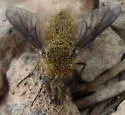
Conophorus sackenii
Conophorus sackenii
Identification: Tuft of metapleural hair; rather long first antennal segment (half the length of antenna or longer); halter knob usually black, opaque (rather than shiny) scutellum. Note: there's considerable variation in the amount and extent of bla
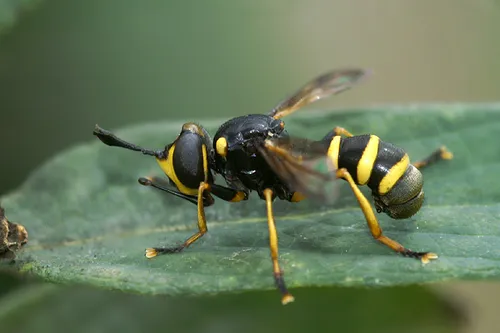
Conops flavipes
Conops flavipes
Length 9 to 11 mm. Proboscis length 4.5 mm. A wasp mimic with a black abdomen that has narrow bands of yellow. Hind femora of this species have a prominent dark band around the middle. Larvae are internal parasites of bumblebees.
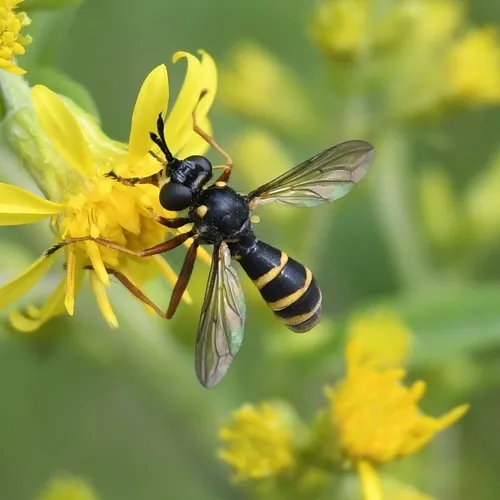
Conops quadrifasciatus
Conops quadrifasciatus
A long proboscis and a long pointed anal cell near the hind edge of the wing are features that characterise this family. Hind femora of this species are yellowish brown, and the female has a small yellowish pouch under the 5th abdominal segment. On u
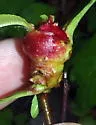
Contarinia cerasiserotinae
Contarinia cerasiserotinae
Larvae develop gregariously in swollen terminal buds on black cherry ( Prunus serotina ), dropping to the ground when full-grown. Parasitoid:
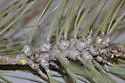
Contarinia coloradensis
Contarinia coloradensis
The orange larvae form chambers at the bases of ponderosa pine ( Pinus resinosa ) needles, then drop to the soil in late summer or early fall. Adults emerge in spring.
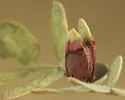
Contarinia undescribed-species-on-acacia
Contarinia undescribed-species-on-acacia
Larvae develop singly between joined pairs of leaflets, which have swollen bases.
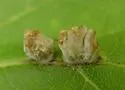
Contarinia undescribed-species-on-boxelder
Contarinia undescribed-species-on-boxelder
Forms globular pouch galls, appearing in June, on the upper side of veins of fully expanded boxelder leaflets. There is just one larva in each gall. Adults have not been reared.
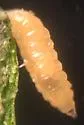
Contarinia undescribed-species-on-milkweed
Contarinia undescribed-species-on-milkweed
Larvae develop in distorted milkweed leaves. The gall was described as a swollen midrib fold in Felt but as a rolled leaf in Felt's unpublished notebook .
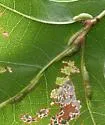
Contarinia undescribed-species-on-oak
Contarinia undescribed-species-on-oak
Causes tapered, striate galls, usually about 5 mm long, along veins of oak leaves. Larvae drop to the soil in summer and presumably remain there until the following spring.
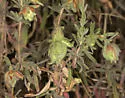
Contarinia zauschneriae
Contarinia zauschneriae
For more detailed discussion of this gall & gall inducer...see remarks & comments under the posts below:
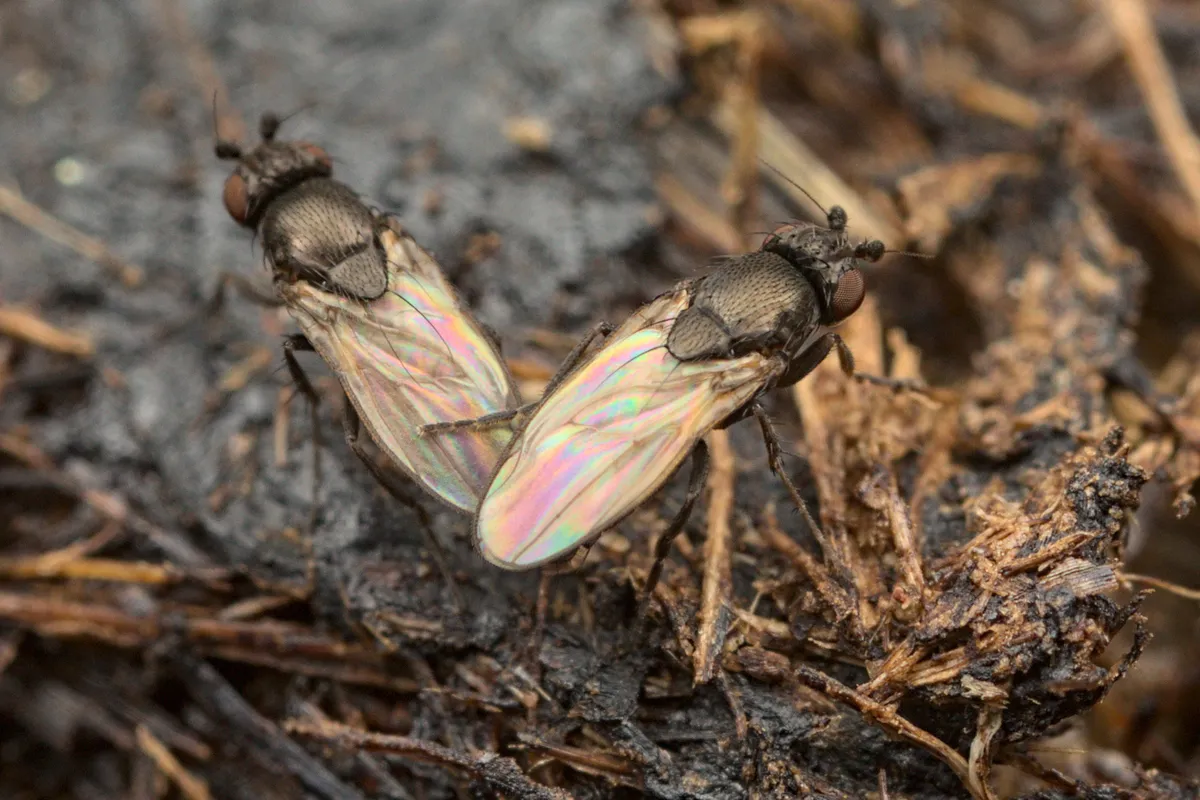
Coproica acutangula
Coproica acutangula
Identification: Males are identified by curling of the hind wing margin near the tip (see photo). The modified male wing is used to hold the female wing during mating. (See discussion on diptera.info .)
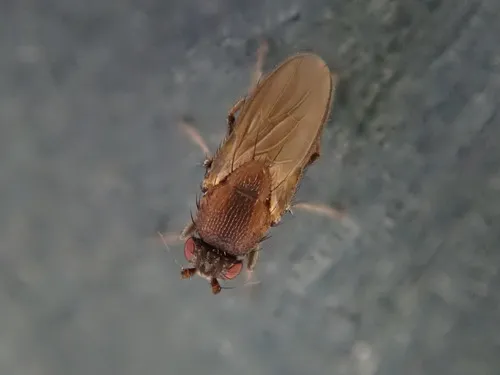
Coproica ferruginata
Coproica ferruginata
Identification: Second costal section (R1 to R2+3) longer than third (R2+3 to R4+5); mid tibia with 3 anterodorsal and posterodorsal bristles; thorax rusty red with a darker central stripe. (Along with C. vagans ) "They are probably the most abundant
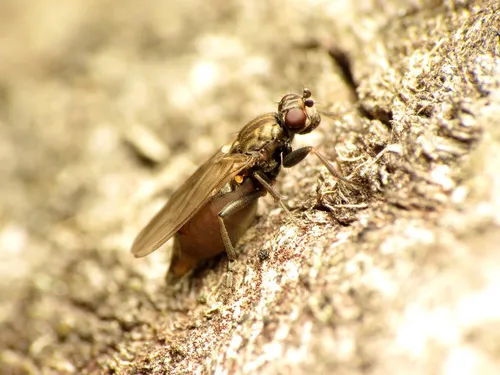
Copromyza equina
Copromyza equina
Length 3.5 to 5mm. The lesser dung fly Copromyza equina is one of several similar species in this family. Detailed examination is required. All year round, but peaking spring to autumn. It appears to be widespread in Britain but true status is not ea
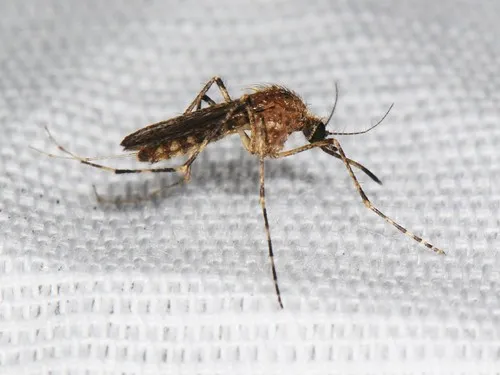
Coquillettidia perturbans
Coquillettidia perturbans
Identification: Banded legs and wide pale band around base of proboscis - FMEL Florida Medical Entomology Laboratory - FMEL Larvae: - Distal end of siphon with sharp tooth - Head wider than long - Complete saddle Adult Female: - Proboscis dark scaled
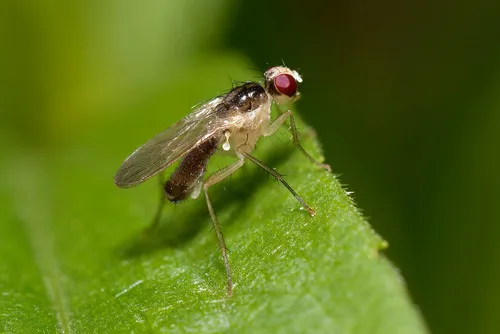
Cordilura albipes
Cordilura albipes
Wing length 3.6 - 5.2mm. A small, distinctive fly with the shiny black thoracic dorsum contrasting with the pale yellow legs, sides of thorax and abdomen. Damp grassland, marshes and fens. Also damp woodlands and trees near water. Widespread in Engla
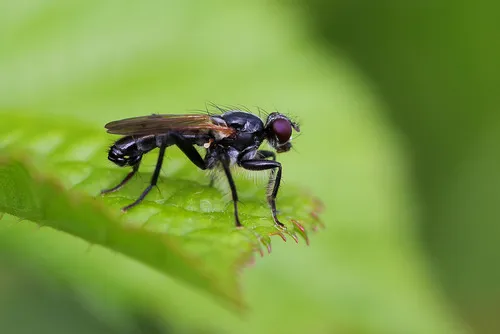
Cordilura ciliata
Cordilura ciliata
A large black species with wing length 6 - 8mm. The thorax and abdomen are shining black, and all femora and tibia are also black. This contrasts strongly with areas of silvery dusting on the face including the lower margin and hind corner of the eye
Cordilura confusa
Cordilura confusa
Identification: Apical scutellar bristles almost as long as the lateral scutellars, palpi yellow, face not receding, antenna almost entirely black. James suggested that " C. confusa is very closely related to, possibly only a subspecies of, what has
Cordilura deceptiva 0
Cordilura deceptiva
Identification: Almost identical to Cordilura varipes, but with two small postocellar bristles. "Malloch erected the genus Achaetella to include 1 species, Lissa varipes Walker. This species lacks postvertical bristles, and the 6th wing vein is disti
Cordilura emarginata
Cordilura emarginata
Identification: Mesonotum black on either side with pale central stripe, pleura pale (rarely thorax mostly blackened). Notopleuron with 2 bristles. Crossveins and apex of wing infuscated. Male without black bristles ventrally on mid and hind femora.
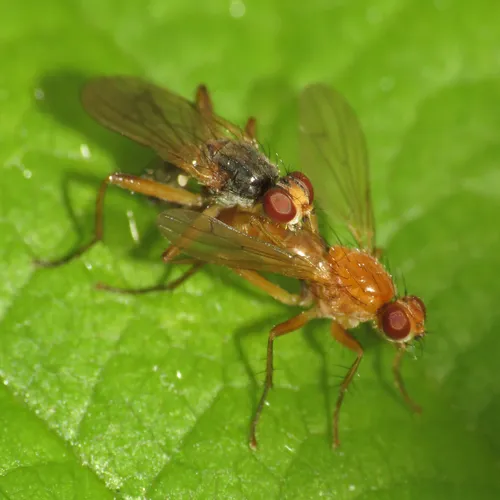
Cordilura fuscipes
Cordilura fuscipes
James (1955) wrote, treating this species as Cordilura vittipes Loew: "This is an extremely variable species; it is little wonder that it has been described under six different names. Loew described vittipes from a male and lutea from a female, both
Cordilura glabra
Cordilura glabra
Identification: Thorax usually mostly yellow, sometimes with two narrow linear brown vittae on the mesonotum (rarely the mesonotum almost entirely blackish). Apex and crossveins of wings infuscated. A1 vein tapered off, approaching wing margin but st
Cordilura intermedia
Cordilura intermedia
Identification: Face strongly recessed, dorsal scutellar bristles much stronger than apical scutellar bristles, apical scutellars about 2/3 as long as dorsal scutellars. Fore femur and basal half of middle and hind femora black, rest of the legs yell
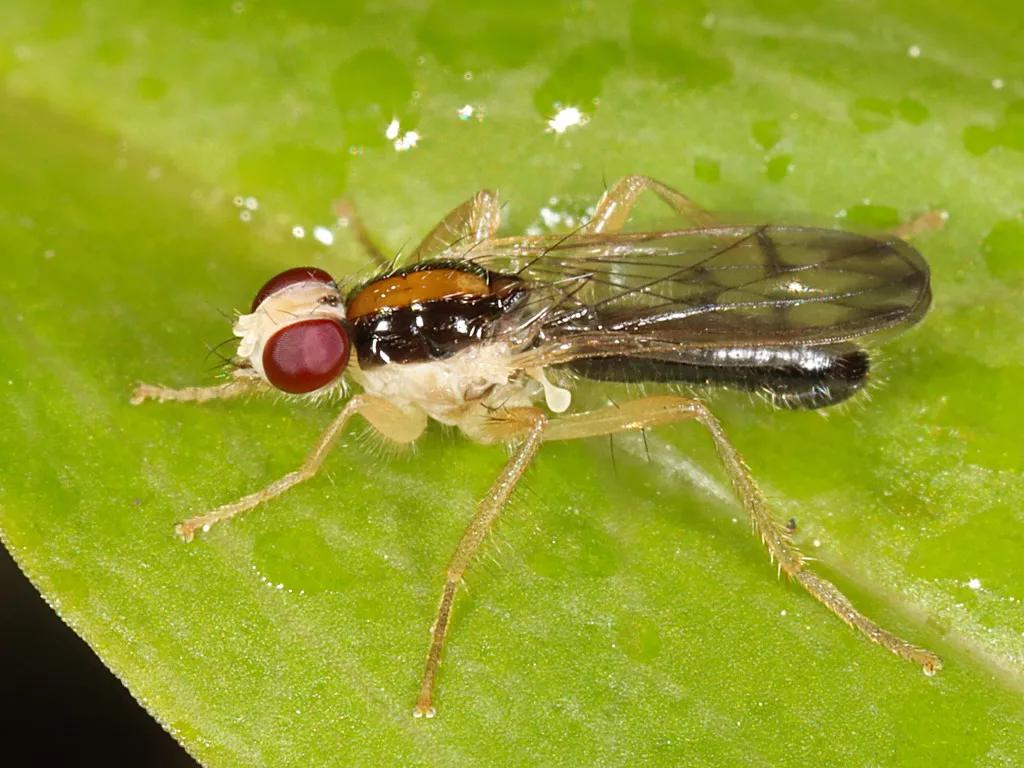
Cordilura munda
Cordilura munda
Identification: Mesonotum either entirely black or with pale stripe in the center. Pleura pale. Notopleuron with only one bristle, the posterior bristle absent. Wing strongly infuscated. Male with black bristles ventrally on mid and hind femora.
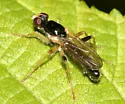
Cordilura pleuritica
Cordilura pleuritica
Identification: Mesonotum entirely black, postpronotal lobes black. Pleura with black longitudinal stripe or broadly blackened. Wing with strong infuscations. Hind femur often darkened in both sexes. Male without black ventral bristles on mid and hin
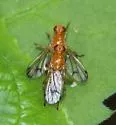
Cordilura praeusta
Cordilura praeusta
Identification: Yellow species with dark wing infuscations and the legs and antennae yellow. Presutural acrostichal hairs absent.
Cordilura proboscidea 0
Cordilura proboscidea
Identification: Apical scutellar bristles strong. Palpi blackish. Arista pubescent. Dorsal apex of first flagellomere pointed. Presutural dorsocentrals often apparently 3 or more.
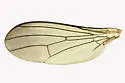
Cordilura scapularis
Cordilura scapularis
Identification: Crossveins not infuscated. A1 vein not reaching the wing margin. Pleura entirely pale yellow. Females lacking ventral bristles on hind femur and on the apical half of the fore femur.
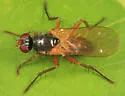
Cordilura setosa
Cordilura setosa
Identification: A black species with yellow to red legs and antenna, very short apical scutellar bristles (apparently only one, lateral pair), 2+2 dorsocentrals, 2 posterior preapical bristles on mid femur.
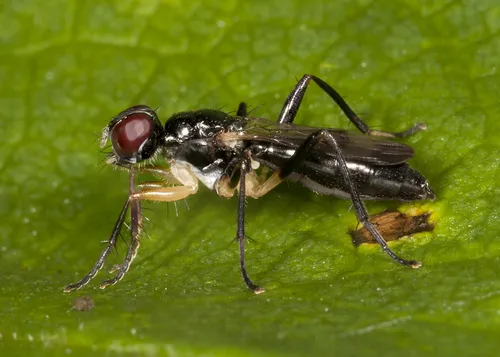
Cordilura varipes
Cordilura varipes
Identification: Distinctive black and yellow patterned legs, and wing with darkened tip and dm-cu crossvein. Thoracic bristles reduced. Postocellar bristles absent. C. deceptiva is almost identical, but possesses small postocellar bristles (Neff & Wa
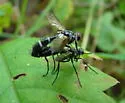
Cordyligaster septentrionalis
Cordyligaster septentrionalis
Identification: Apparently, fairly distinctive, as the only member of its genus. Note the elongated abdomen and the bold silver stripes.
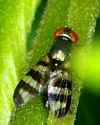
Cornsilk Fly
Euxesta annonae
This is the form traditionally known as Euxesta annonae . The name has been misused. The type specimen of annonae is not the same as the traditional concept of the species. (It is the same as eluta Loew.) Specimens under this name in museum colle
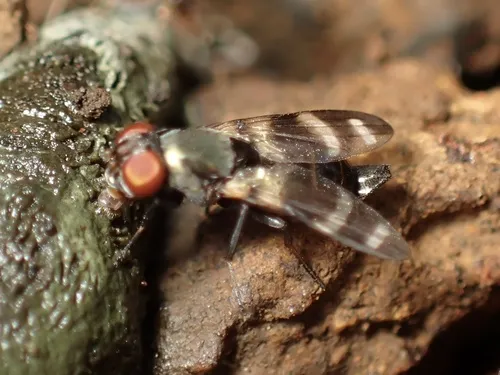
Cornsilk fly
Euxesta stigmatias
· Internet References Representative Images Classification Kingdom Animalia (Animals) Phylum Arthropoda (Arthropods) Subphylum Hexapoda (Hexapods) Class Insecta (Insects) Order Diptera (Flies) No Taxon ("Acalyptratae")
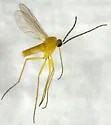
Corynoptera mellea
Corynoptera mellea
Identification: Johannsen's brief description says this species is "honey yellow". There are other species of Sciarids that are also yellowish.
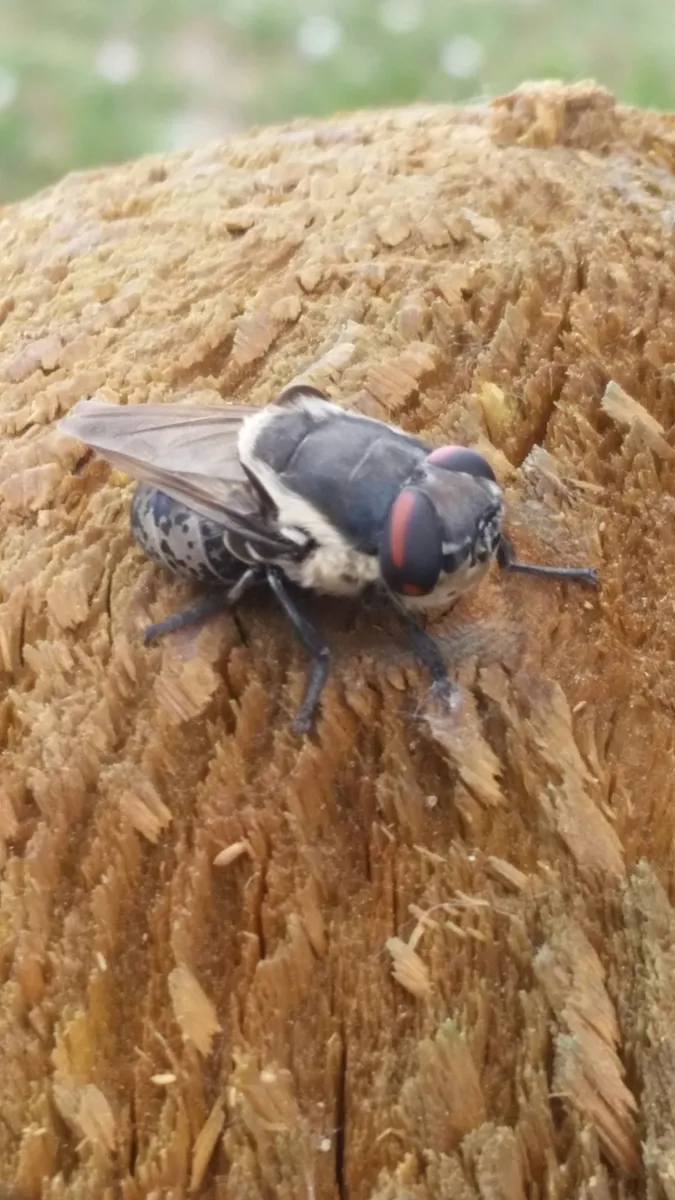
Cottontail Rabbit Botfly
Cuterebra lepusculi
Identification: Only the rabbit bots have red spots in their eyes; for live specimens this is a big ID help, but shortly after death the spots disappear. This species is similar to C. buccata (see BugGuide for pics), but the key is the U shaped white
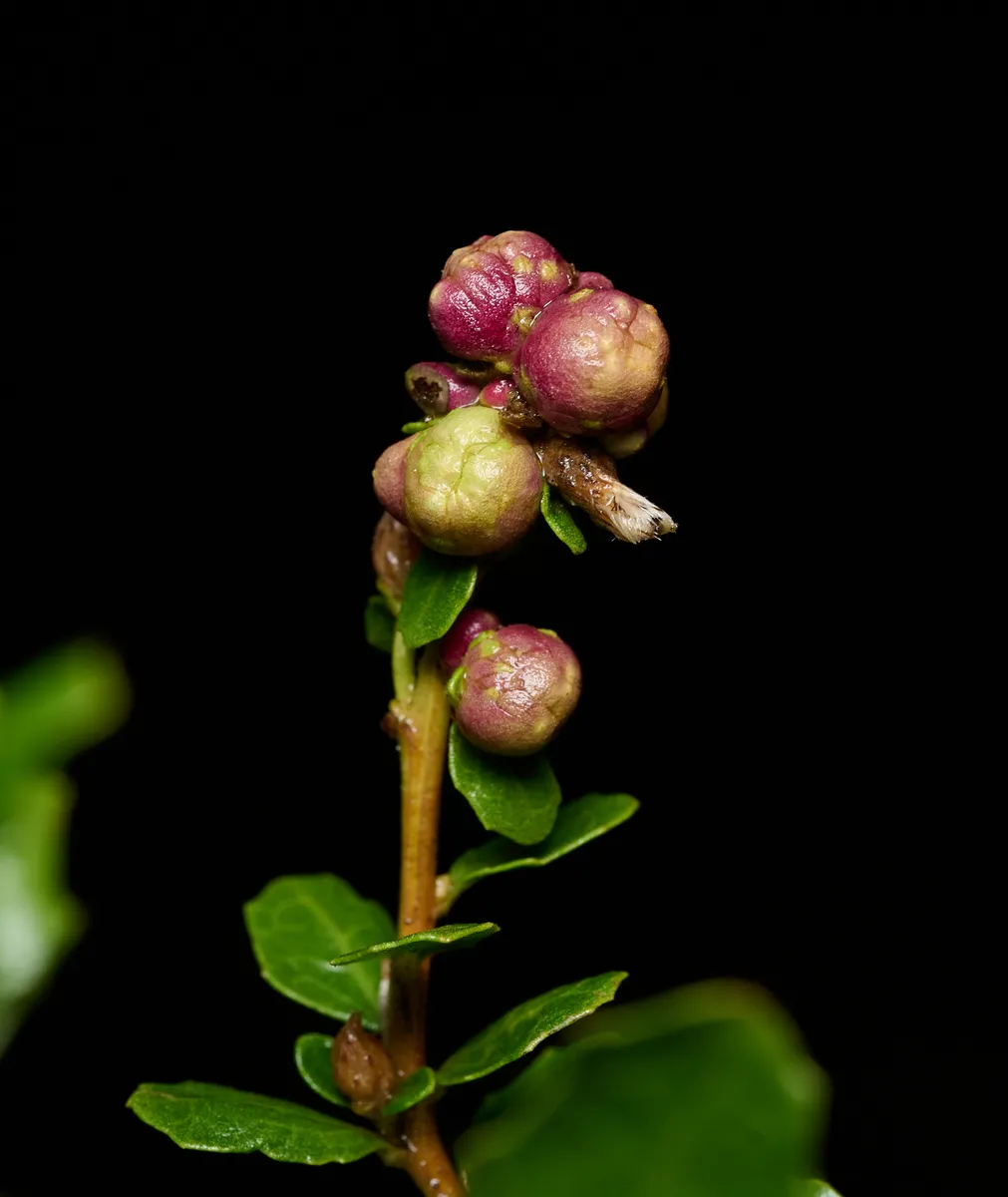
Coyote Brush Bud Gall Midge
Rhopalomyia californica
Adults emerge, mate, lay their eggs, and die, all within a 24-hour period (on warm days, as little as a 5- to 6-hour period. Portrait of an Ephemeral Adult Stage: Egg Maturation, Oviposition, and Longevity of the Gall Midge Rhopalomyia californica (D
Coyote Brush Twisted Stem Gall Midge
Rhopalomyia baccharis
Identification: Adults are indistinguishable from adults of R. californica but the pupa and galls are different.
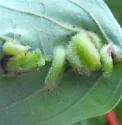
Craneiobia tuba
Craneiobia tuba
Forms galls on dogwood ( Cornus ) leaves that are tubular on one side of the leaf and hemispherical on the other. Larvae are orange; adults have not been reared.
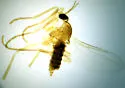
Cratotocha ampliata
Cratotocha ampliata
Identification: Bright yellow thorax with brown abdomen. Vein R5 short. Fork of M longer than stem, narrow, with both branches straight. Males of this species are unknown.
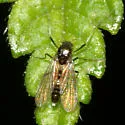
Cricotopus bicinctus
Cricotopus bicinctus
More pollution tolerant than other Cricotopus and more common in inhabited areas. (Boesel, 1983)
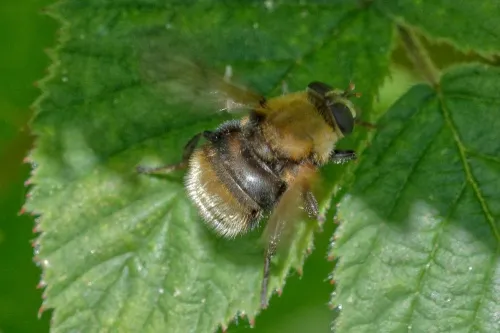
Criorhina berberina
Criorhina berberina
Two very different colour forms exist - the 'type' form with a white tail and broad yellow collar (a superb mimic of the Tree Bumblebee, Bombus hypnorum) and the all-buff form 'oxycanthae' (a mimic of carder bumblebees like B. pascuorum). The latter
Criorhina floccosa
Criorhina floccosa
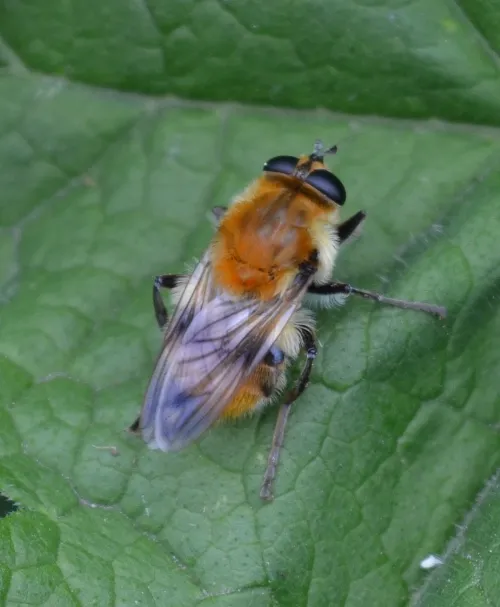
A large Criorhina with a long orange pile on the thorax but a rather broad, flattened abdomen with only inconspicuous pilosity and a buff-dusted apex (especially obvious when viewed from behind). This species has tufts of pale hair at the sides of th
Criorhina verbosa
Criorhina verbosa
Identification: Reddish tibiae with black band in their middle area; hind tibiae with an odd spur-like projection
Criorhina villosa
Criorhina villosa
Very poorly known. If you see this fly keep EXACT locality information so we know where to look in the future. 95% of records are around 100 years old.
Crocinosoma cornuale
Crocinosoma cornuale
Identification: A yellow species (including most of antenna) except much of the thorax is gray. Differs from Leskia by its larger antennae with curved top edge and base near top of head and more concave face. Vein R1 is bare as is R4+5 except for a
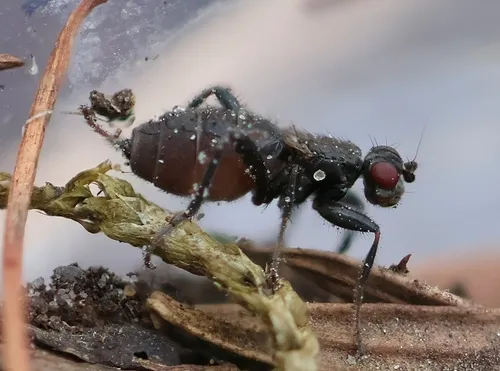
Crumomyia pedestris
Crumomyia pedestris
A small black fly (3 or 4 mm) often with greatly reduced wings and appearing wingless, although fully winged forms do occur. Unless identified by a recognised expert, a photo is required. If the photo doesn't show the key ID features then in the comm
Cryptomeigenia demylus
Cryptomeigenia demylus
Identification: The form of the ovipositor is distinctive. Also, there are only two presutural acrostichal bristles; most species of the genus have three.
Cryptomeigenia illinoiensis
Cryptomeigenia illinoiensis
Identification: Pleura and scutellum yellowish (black in other species).
Ctenodactylomyia watsoni
Ctenodactylomyia watsoni
Larvae form circular, slightly nippled blister galls on leaves. Pupation takes place within the galls .
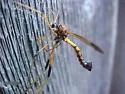
Ctenophora apicata
Ctenophora apicata
Identification: bold striking colors: red, orange, yellow, black - apparently a wasp mimic
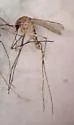
Culex coronator
Culex coronator
Identification: One of a few Culex with banded legs. In the original description Dyar and Knab wrote, "This is a most inoffensive mosquito. Although breeding in myriads in all roadside puddles it seems not to bite and does not enter houses."
Culex salinarius
Culex salinarius
Identification: - reddish mosquito - FMEL - pale-tipped abdomen - FMEL Florida Medical Entomology Laboratory - FMEL
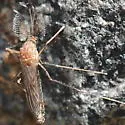
Culex territans
Culex territans
Identification: Adult female: Scutum with middorsal acrostichal setae, occiput with narrow apressed scales, Abdominal tergites II-VII with apical bands or patches of whitish scales, extending basally across 1/2 of tergum on lateral sides of terga IV-
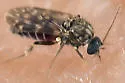
Culicoides villosipennis
Culicoides villosipennis
Identification: More information in (Slide 150-152)
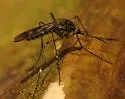
Culiseta incidens
Culiseta incidens
Identification: Adult female: Large mosquito, proboscis usually with slight downward curve, proboscis and palps mostly dark-scaled, bare hypostigmal area, tarsomeres 2+3 with indistinct narrow rings of pale scales apically and basally, extensive wing
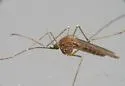
Culiseta inornata
Culiseta inornata
Identification: Larvae: - antennal seta 1-A multiple, attached near the middle of the shaft - head hairs 5 and 6 multibranched - comb scale rounded apically - siphon with an even row of single setae attached distally to pecten teeth - saddle complete
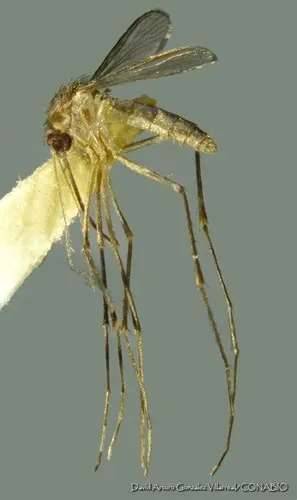
Culiseta melanura
Culiseta melanura
Identification: Larva: - antennal seta 1-A multibranched and extends beyond tip of the shaft - head hair 5 multiple, smooth and head hair 6 single - siphon six to seven times as long as wide as it is at the base - anal saddle complete Adult: - probos
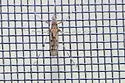
Culiseta particeps
Culiseta particeps
Identification: Tarsal banding more broad than Culiseta incidens (comments by Liam Wolff)
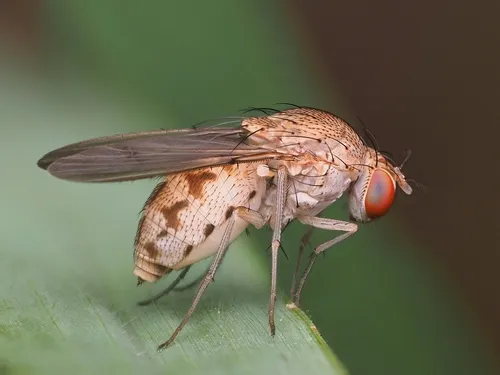
Curtonotum helvum
Curtonotum helvum
Identification: The last two couplets in Arnett's key to fly families state "C with distinct humeral break in addition to subcostal break. Arista broadly plumose; C extensively and strongly spinose; all tibiae with strong preapical dorsal bristle; me
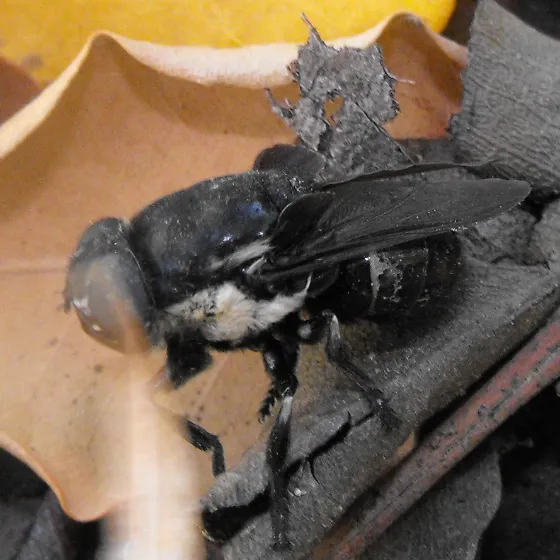
Cuterebra approximata
Cuterebra approximata
Identification: Female is nearly all black. This is a rodent bot, host: Peromyscus maniculatus ‒George "Jeff" Boettner, 2.viii.2011
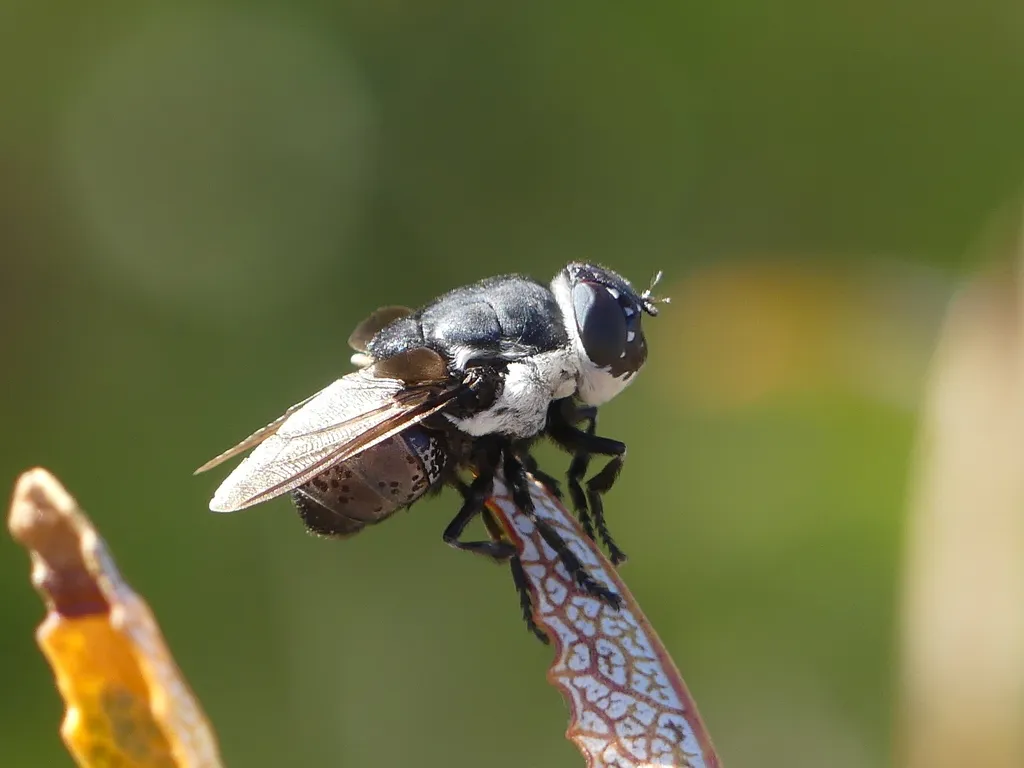
Cuterebra latifrons
Cuterebra latifrons
Well studied by Catts in the 1960s. The face spots on this species can be highly variable so that makes this species a bit harder than some, but the side white section without a prominent black spot leads me to C. latifrons , as well that this specie
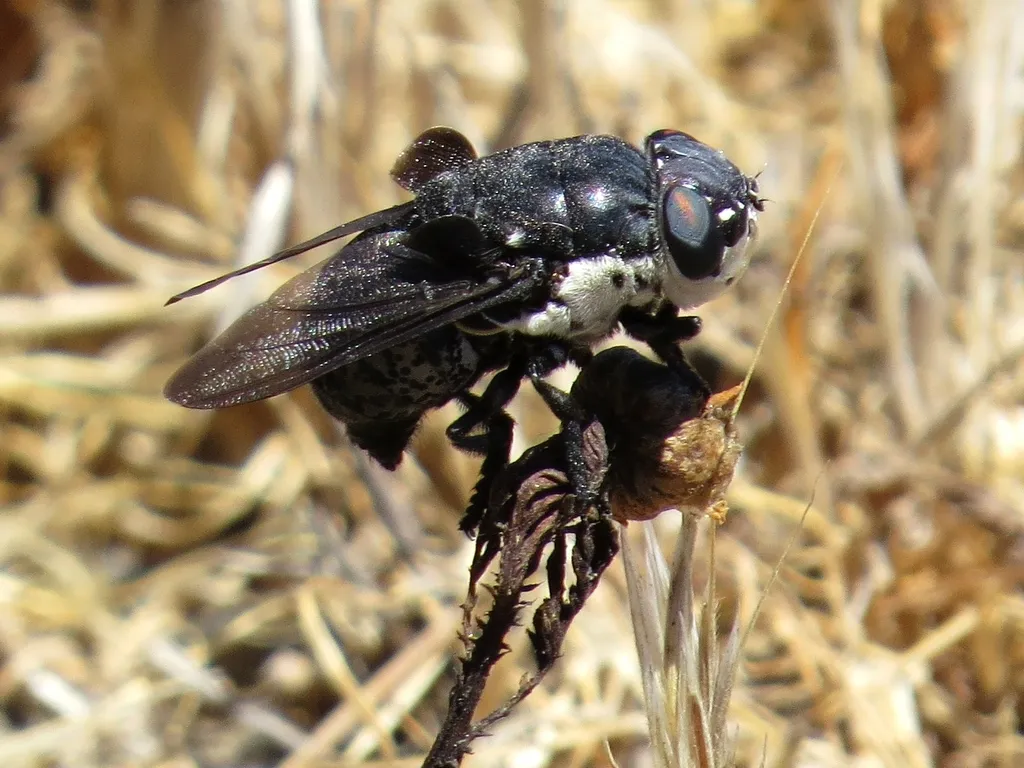
Cuterebra lepivora
Cuterebra lepivora
Identification: white hair tuft spot near the wing is among distinguishing characters; can look a lot like C. jellisoni info based on George "Jeff" Boettner's comments
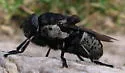
Cuterebra neomexicana
Cuterebra neomexicana
The crescent shaped mark under the eye along with the dark lower sides suggests only this species, in which case it may be a new AZ record. Only recently described; biology unknown. ‒George "Jeff" Boettner here )
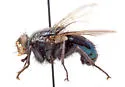
Cyanus elongata
Cyanus elongata
Identification: Differs from Calliphora in having both calypters white, an orange basicosta, and an elongate abdomen (longer than thorax) rare in collections
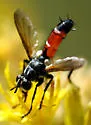
Cylindromyia intermedia
Cylindromyia intermedia
On average the reddest North American Cylindromyia . Color-based ID should be confirmed by other characters; C. nana is also very red.
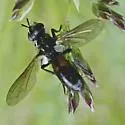
Cylindromyia interrupta
Cylindromyia interrupta
Identification: The only eastern species of Cylindromyia with discal bristles on intermediate tergites. The western C. compressa usually has discals and can be distinguished by a second, small pair of bristles near tip of scutellum. (Both of these
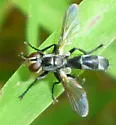
Cylindromyia propusilla
Cylindromyia propusilla
Identification: The only northern species with abdomen mostly black, with curved white bands but no trace of red. Its range overlaps in the south with atra , which also lacks red markings.
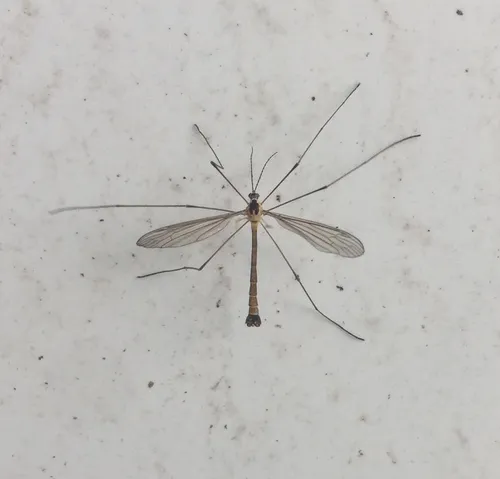
Cylindrotoma distinctissima
Cylindrotoma distinctissima
Identification: Yellow with dark stripes, discal cell with four veins to wing margin, tarsi without contrasting pale segments.
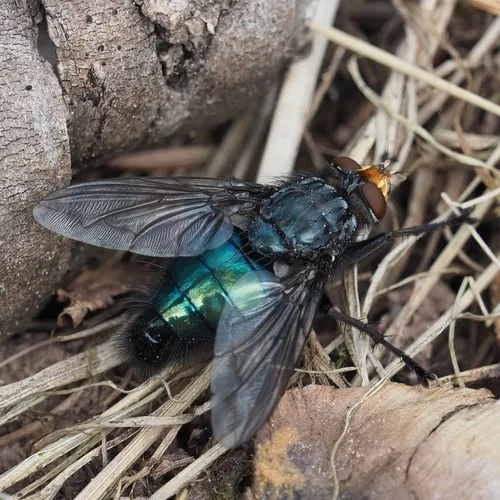
Cynomya mortuorum
Cynomya mortuorum
Body length of 8 to 15 mm. It is a deep blue-green shining metallic fly with a yellowish face and jowls which help to identify it. Lives on woodland edges, meadows, and other places with flowers. It lays its eggs on carrion, which provides food for t