
Compsilura concinnata
This record describes Compsilura concinnata (species). Recorded family: Tachinidae. Recorded order: Diptera.
Identification and Appearance
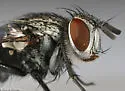
Four deep black stripes on the thorax and lots of bristles. Introduced from Europe to combat the spongy moth ( Lymantria dispar ) around 1906. Since then it has spread to attack many native species, including some threatened ones. ( Elkinton & Boettner 2004 ) Organophosphates are very toxic to Compsilura but remain tolerant to synthetic insecticides like carbaryl and permethrin.
Classification
- Kingdom
- Animalia
- Phylum
- Arthropoda
- Class
- Insecta
- Order
- Diptera (Flies)
- Superfamily
- Oestroidea
- Family
- Tachinidae (Parasitic Flies)
- Subfamily
- Exoristinae
- Tribe
- Blondeliini
- Genus
- Compsilura
Imported taxonomy record. Source availability varies; see the source references and editorial policy below.
Habitat and Range
Geographic Range
native to the Palaearctic; introduced and established in ne. US and se. Canada (west to MB-MN-IL, south to VA) and along the Pacific Coast (BC-CA)
Diet and Behavior
Diet: hosts: over 200 spp. in dozens of families in Lepidoptera, Hymenoptera, and Coleoptera It attacks some pest species such as forest tent caterpillar ( Malacosoma disstria ), satin moth ( Leucoma salicis ) and brown-tail moth ( Euproctis chrysorrhoea ) in addition to the spongy moth. But it also feeds on other moths and butterflies, particularly in the families Nymphalidae and Saturniidae.
Life History
Female injects a single larva into the host's midgut or body cavity. She produces about 100 larvae, sometimes lays several eggs in one host. Larvae remain in this stage until host pupates, then emerge from host and pupate. Life cycle is flexible, this enables it to parasitize many different kinds of hosts. 3–4 generations year. It overwinters in the immature stage of the host.
Additional species information
Species notes from the sources
Etymology: Compsilura concinnata (Meigen 1824)
About Flies: the wider group
Order-level background for Diptera, the group containing Compsilura concinnata. Species-specific details appear above.
Group overview
Diptera includes over 150,000 described species of flies, mosquitoes, and midges. Mosquitoes are the deadliest animal on Earth (CDC). Malaria alone causes ~249 million cases and over 608,000 deaths annually, mostly children under 5 (WHO). Vector-borne diseases account for over 17% of all infectious diseases, causing 700,000+ deaths per year.
Ecological role of the group
Despite their disease impact, flies are critical decomposers and pollinators. Hoverflies alone pollinate hundreds of crop and wildflower species. Flies are also the primary food source for many birds, bats, and fish. Forensic entomology relies heavily on fly species for crime scene analysis.
Economic and practical significance of the group
In the U.S., vector-borne disease cases tripled between 2004-2016, with over 640,000 cases reported in that period (CDC). Tickborne diseases doubled from 22,000 to 48,000 annual reports. Globally, mosquito-borne diseases cost billions in healthcare and lost productivity.
Recorded sources for this group: WHO, CDC, PNAS. Imported estimates may describe particular regions or reporting periods.
Photos of Compsilura concinnata (5)
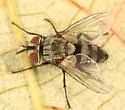
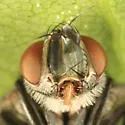
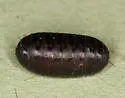
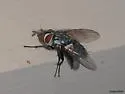
Photo credits: Contributed by v belov; Additional contributions by Beatriz Moisset , PaleoJon
Frequently Asked Questions About Compsilura concinnata
What is Compsilura concinnata?
Compsilura concinnata is a species in the family Tachinidae, within the order Diptera.
How big is Compsilura concinnata?
Pupa 6.5 mm long. Adult 7.5 mm long.
How do you identify Compsilura concinnata?
Four deep black stripes on the thorax and lots of bristles.
Where is Compsilura concinnata found?
Range: native to the Palaearctic; introduced and established in ne. US and se. Canada (west to MB-MN-IL, south to VA) and along the Pacific Coast (BC-CA)
What does Compsilura concinnata eat?
The diet of the Compsilura concinnata includes hosts: over 200 spp. in dozens of families in Lepidoptera, Hymenoptera, and Coleoptera It attacks some pest species such as forest tent caterpillar ( Malacosoma disstria ), satin moth ( Leucoma salicis ) and brown-tail moth ( Euproctis chrysorrhoea ) in addition to the spongy moth. But it also feeds on other moths and butterflies, particularly in the families Nymphalidae and Saturniidae..
What is the life cycle of a Compsilura concinnata?
Female injects a single larva into the host's midgut or body cavity. She produces about 100 larvae, sometimes lays several eggs in one host. Larvae remain in this stage until host pupates, then emerge from host and pupate. Life cycle is flexible, this enables it to parasitize many different kinds of hosts. 3–4 generations year. It overwinters in the immature stage of the host.