
Culiseta incidens
This record describes Culiseta incidens (species). Recorded family: Culicidae. Recorded order: Diptera.
Identification and Appearance
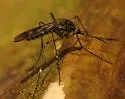
Adult female: Large mosquito, proboscis usually with slight downward curve, proboscis and palps mostly dark-scaled, bare hypostigmal area, tarsomeres 2+3 with indistinct narrow rings of pale scales apically and basally, extensive wing spotting from aggregations of dark scales, pale scales only on distal portion of costa. 4th Instar Larva: Antenna mostly smooth, with some small spicules, Seta 5-C with 5 or more branches, shorter than 6-C which is 2-4 branched, seta 1-P multiple, 3-P 4-branched, saddle pierced by 2 or more precratal setae, seta 1-X fine and shorter than saddle. The most common peridomestic mosquito on the West Coast, especially in urban areas, favoring container habitats. Large and easy to identify due to spotting on wings. Sometimes diapausing females enter homes to overwinter.
Classification
Habitat and Range
Habitat
Shaded pools, slow streams, ditches, containers, polluted waters, coastal rock pools.
Geographic Range
Western Canada and US from Pacific Coast (Mexican border to Alaskan Panhandle) east to Saskatchewan south to northwestern Texas.
Seasonal Activity
On coast from April-November, overwinters as adult
Diet and Behavior
Life History
Multivoltine, several generations per year on coast. Females lay egg rafts on surface of water, late season larvae develop into diapausing adults that mate and overwinter in sheltered locations such as rock slides, caves, mines and burrows.
About Flies: the wider group
Order-level background for Diptera, the group containing Culiseta incidens. Species-specific details appear above.
Group overview
Diptera includes over 150,000 described species of flies, mosquitoes, and midges. Mosquitoes are the deadliest animal on Earth (CDC). Malaria alone causes ~249 million cases and over 608,000 deaths annually, mostly children under 5 (WHO). Vector-borne diseases account for over 17% of all infectious diseases, causing 700,000+ deaths per year.
Ecological role of the group
Despite their disease impact, flies are critical decomposers and pollinators. Hoverflies alone pollinate hundreds of crop and wildflower species. Flies are also the primary food source for many birds, bats, and fish. Forensic entomology relies heavily on fly species for crime scene analysis.
Economic and practical significance of the group
In the U.S., vector-borne disease cases tripled between 2004-2016, with over 640,000 cases reported in that period (CDC). Tickborne diseases doubled from 22,000 to 48,000 annual reports. Globally, mosquito-borne diseases cost billions in healthcare and lost productivity.
Recorded sources for this group: WHO, CDC, PNAS. Imported estimates may describe particular regions or reporting periods.
Photos of Culiseta incidens (5)
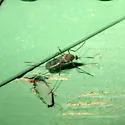
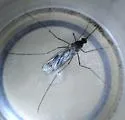
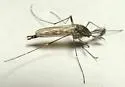
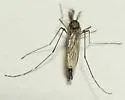
Photo credits: Contributed by john and jane balaban; Additional contributions by smccann27
Frequently Asked Questions About Culiseta incidens
What is Culiseta incidens?
Culiseta incidens is a species in the family Culicidae, within the order Diptera.
How do you identify Culiseta incidens?
Adult female: Large mosquito, proboscis usually with slight downward curve, proboscis and palps mostly dark-scaled, bare hypostigmal area, tarsomeres 2+3 with indistinct narrow rings of pale scales apically and basally, extensive wing spotting from aggregations of dark scales, pale scales only on distal portion of costa. 4th Instar Larva: Antenna mostly smooth, with some small spicules, Seta 5-C with 5 or more branches, shorter than 6-C which is 2-4 branched, seta 1-P multiple, 3-P 4-branched, saddle pierced by 2 or more precratal setae, seta 1-X fine and shorter than saddle.
Where is Culiseta incidens found?
| Feature | Details |
|---|---|
| Habitat | Shaded pools, slow streams, ditches, containers, polluted waters, coastal rock pools. |
| Range | Western Canada and US from Pacific Coast (Mexican border to Alaskan Panhandle) east to Saskatchewan south to northwestern Texas. |
When is Culiseta incidens active?
Culiseta incidens: seasonal activity - On coast from April-November, overwinters as adult.
What is the life cycle of a Culiseta incidens?
Multivoltine, several generations per year on coast. Females lay egg rafts on surface of water, late season larvae develop into diapausing adults that mate and overwinter in sheltered locations such as rock slides, caves, mines and burrows.