
Flies
Order Diptera
The Flies (Order Diptera) includes 6,350 species across 141 families and 1,800 genera in our directory.
About Flies
Diptera includes over 150,000 described species of flies, mosquitoes, and midges. Mosquitoes are the deadliest animal on Earth (CDC). Malaria alone causes ~249 million cases and over 608,000 deaths annually, mostly children under 5 (WHO). Vector-borne diseases account for over 17% of all infectious diseases, causing 700,000+ deaths per year.
Economic Impact
In the U.S., vector-borne disease cases tripled between 2004-2016, with over 640,000 cases reported in that period (CDC). Tickborne diseases doubled from 22,000 to 48,000 annual reports. Globally, mosquito-borne diseases cost billions in healthcare and lost productivity.
Ecological Role
Despite their disease impact, flies are critical decomposers and pollinators. Hoverflies alone pollinate hundreds of crop and wildflower species. Flies are also the primary food source for many birds, bats, and fish. Forensic entomology relies heavily on fly species for crime scene analysis.
Families in Diptera (141)
Species in Diptera (6,350)
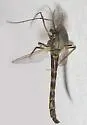
Chironomus melanescens
Chironomus melanescens
A species described based on cytology. Adults may not be morphologically distinguishable from related species.
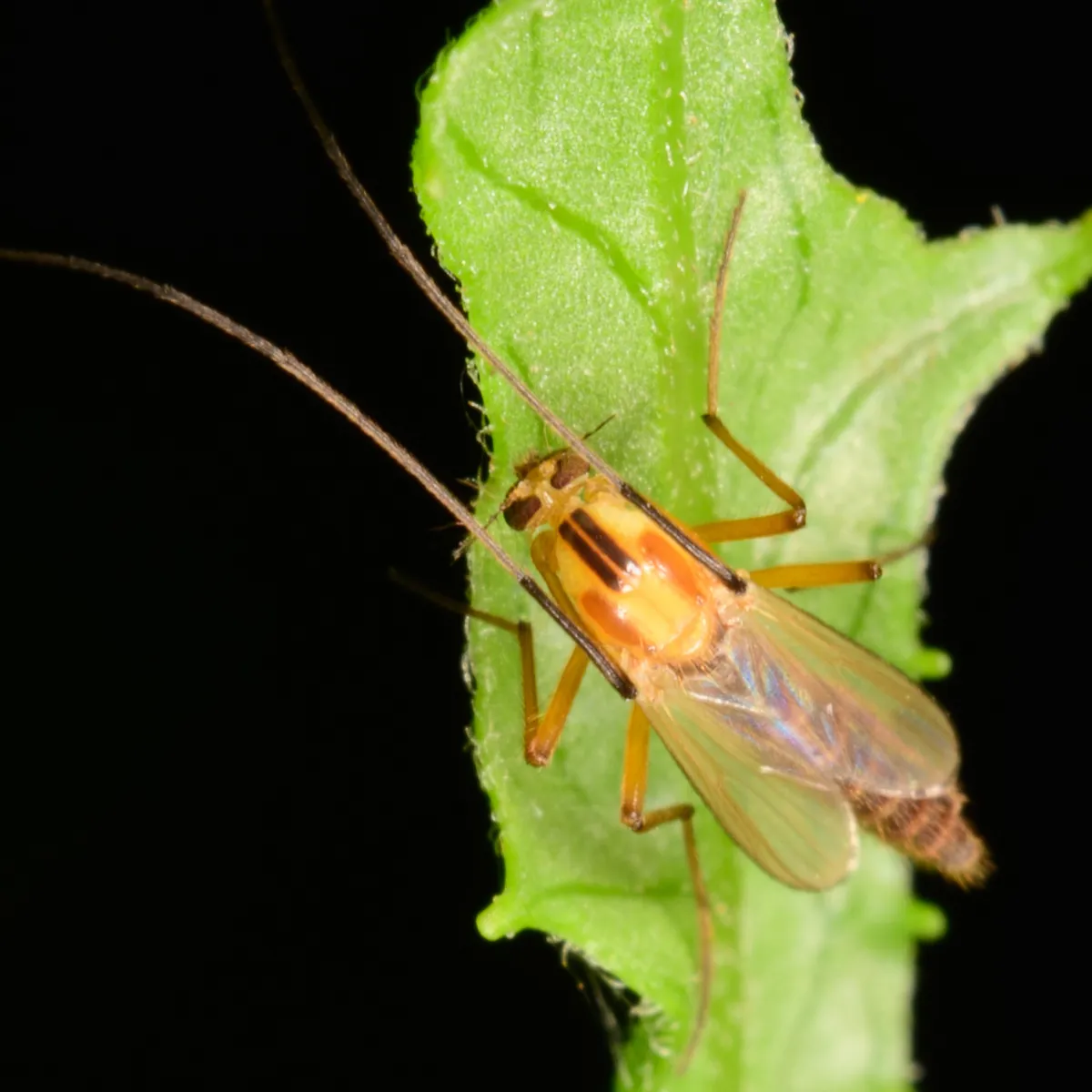
Chironomus ochreatus
Chironomus ochreatus
Identification: Shining. Thorax bright yellow to dark green with reddish stripes, the middle stripe of the female divided longitudinally. Abdomen dark, often with pale rings. Femora yellowish, fore tibiae dark. Superior volsella blunt ended with
Chironomus plumosus
Chironomus plumosus
Type species of Chironomus . These flies received wide publicity in 2007 when the Lake Erie population swarmed an important baseball game in Cleveland (see reference below).
Chironomus staegeri
Chironomus staegeri
Identification: "The short beard, all on the outer side of the tarsus, is distinctive." -- H. K. Townes, "The Nearctic Species of Tendipedini" Probably a complex of morphologically indisginguishable species
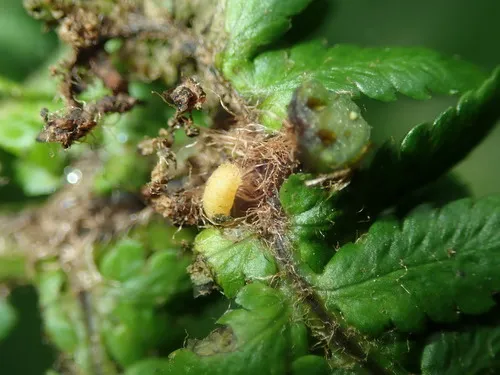
Chirosia betuleti
Chirosia betuleti
Chirosia betuleti is a small grey fly resembling a small house fly. Its larvae cause galls to form on ferns, and in particular on Male-fern, Lady-fern and Buckler-ferns. Eggs are laid in the tip of the fronds, and the resulting larvae tunnel into the
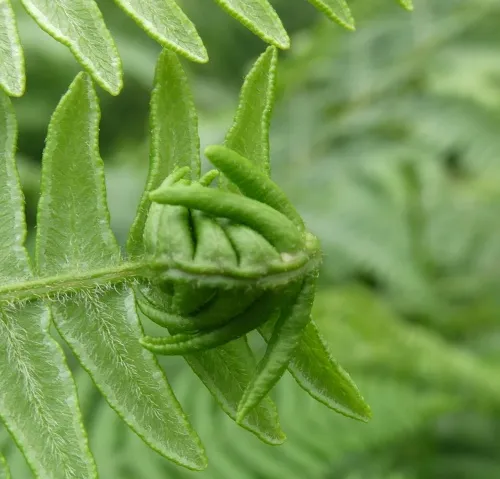
Chirosia grossicauda
Chirosia grossicauda
The larva of the fly Chirosia grossicauda causes galls to form on Bracken fronds. The tip of the pinnule (involving a few pinnules) rolls downwards and may discolour, inside a white maggot mines along the main vein. Widespread and fairly frequent in
Chlorops certimus
Chlorops certimus
Identification: "The variation in a long series of this common and widely distributed species is considerable. It may usually be identified by a single, oval, shining black spot on the mesopleura, and by two black spots, one about the ocelli and one
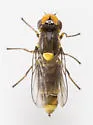
Chlorops crocota
Chlorops crocota
Identification: A yellow species with many dark markings: antennae dark and first flagellomere black; palps with black tips; clypeus narrowly black; four or five black spots on side of thorax, abdomen with dark bands, legs with some dark markings but
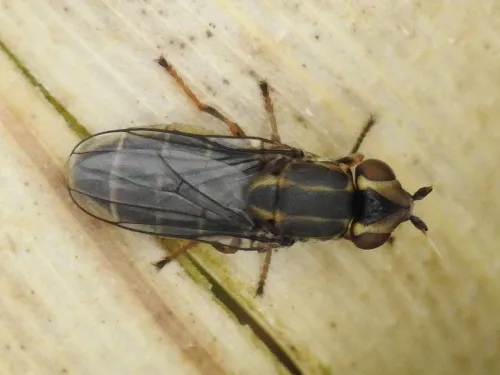
Chlorops frontosus
Chlorops frontosus
Two pale lateral abdominal stripes. Scutellum widely rounded. Femora yellowish with dark spots/striations. 3rd antennal segment black, base of arista yellowish-brown. Chlorops strigulus. Close examination is required to separate these species. Unless
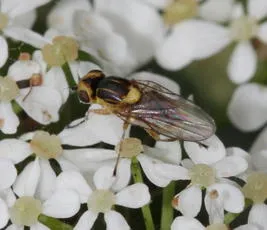
Chlorops pumilionis
Chlorops pumilionis
A very tiny (2 - 4 mm) yellow fly with three dark stripes on the thorax, and a dark triangular patch on the head. There are many other very similar flies in the family so microscopic examination is necessary to identify the species. See ID guidance b
Chlorops rufescens
Chlorops rufescens
Identification: Ocellar triangle large, reddish with three black spots; front outside of triangle hairy; palps black; first flagellomere mostly red; thorax red with red stripes; pleura unmarked.
Chlorops sulphureus
Chlorops sulphureus
Identification: A pale yellow species with contrasting black first flagellomere and black stripes on thorax. Frontal triangle marked with black but yellow along sides.
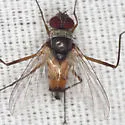
Cholomyia inaequipes
Cholomyia inaequipes
Identification: Quoting and/or paraphrasing from key : Body is sexually dimorphic as well--male has tapered yellowish abodmen: Female has more typical abdomen:
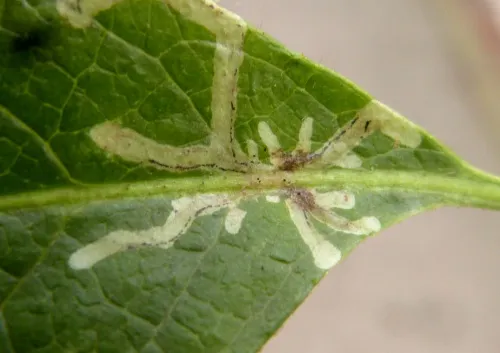
Chromatomyia aprilina
Chromatomyia aprilina
The larvae of Chromatomyia aprilina mine the leaves of Honeysuckle, forming a long corridors which radiate from the midrib on the upper leaf surface. In winter the mine may not be associated with the midrib. Frass occurs in long strips along the edge
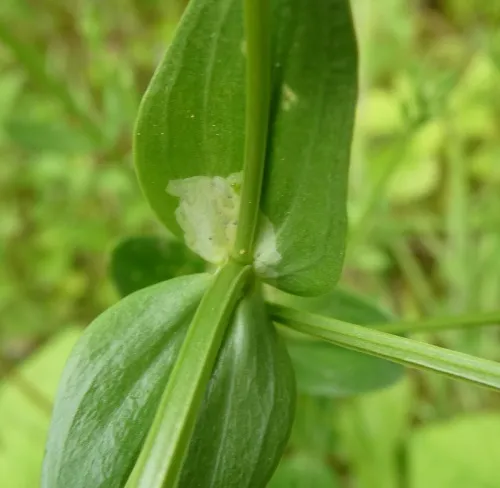
Chromatomyia centaurii
Chromatomyia centaurii
The larva of the Chromatomyia centaurii mine the upper surface leaves of Common Centaury. The mine starts as a gallery, but this is then commonly engulfed by the blotch that then follows. This mine is typically in a basal leaf, near to the ground, bu
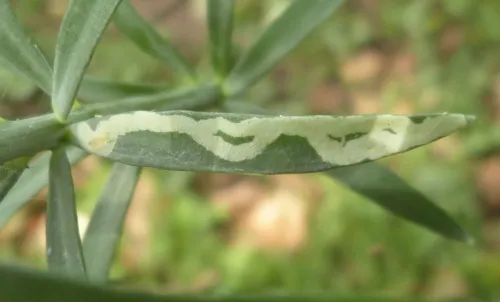
Chromatomyia horticola
Chromatomyia horticola
The larvae of the fly Chromatomyia horticola mine the leaves of various plants, including Purple Toadflax, creating an upper-surface (sometimes lowersurface also) corridor. Frass appears in isolated grains. Pupation takes place within the mine, usual
Chromatomyia horticola/syngenesiae agg.
Chromatomyia horticola/syngenesiae agg.
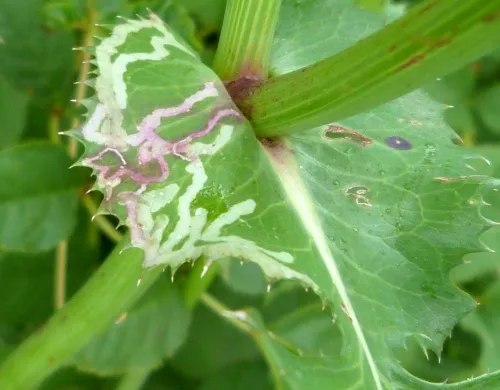
Chromatomyia syngenesiae and Chromatomyia horticola are leaf mining flies which form mines on a large number of plant species, these mines are indistinguishable from each other on certain hosts. They are treated as an aggregate, previously called Chr
Chromatomyia lonicerae
Chromatomyia lonicerae
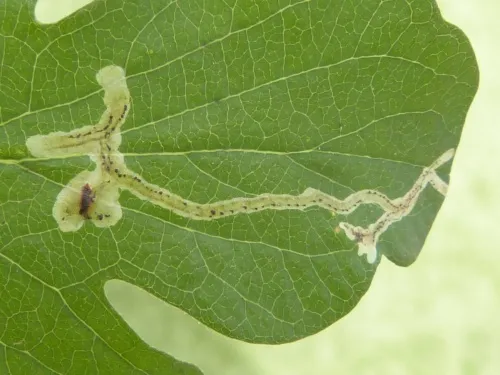
The larvae of the fly Chromatomyia lonicerae mine the leaves of Honeysuckle and Snowberry. The leafmine starts with an irregular star-like blotch with a later linear corridor. Frass is usually visible in pearl-strings. Pupation is internal with the p
Chromatomyia periclymeni
Chromatomyia periclymeni
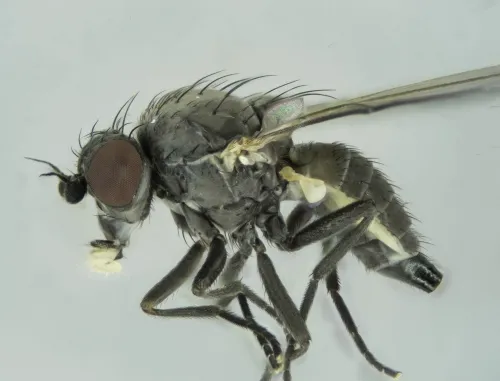
The larvae of the fly Chromatomyia periclymeni mine the leaves of various members of the Honeysuckle family, including Honeysuckle, Himalayan Honeysuckle and Snowberry. It is an upper surface mine and usually blotchy and not associated with the midri
Chromatomyia primulae
Chromatomyia primulae
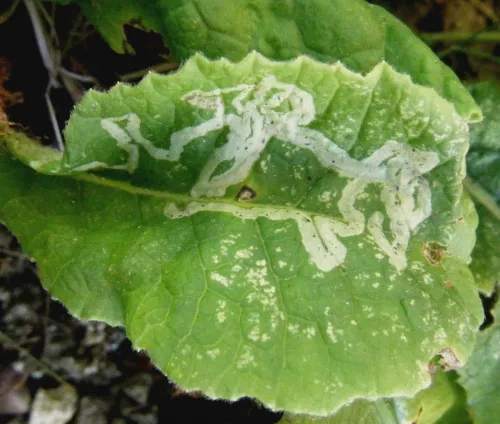
Chromatomyia primulae is a species of fly whose larvae mine the leaves of Primrose and Cowslip. The leafmine is white and in long, narrow corridors. Frass usually appears as large, well-spaced grains. See the National Agromyzidae Recording Scheme web
Chromatomyia ramosa
Chromatomyia ramosa
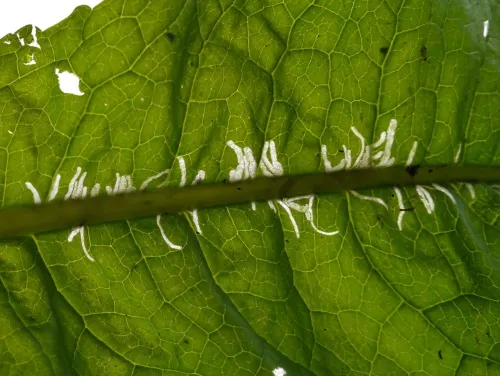
The larvae of the fly Chromatomyia ramosa mine the leaves of Teasel and Scabious species. They feed along the midrib but make short, narrow corridors into the leaf. See the National Agromyzidae Recording Scheme webpage for this species for further de
Chromatomyia scolopendri
Chromatomyia scolopendri
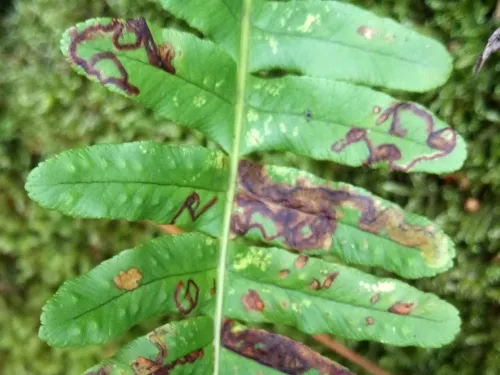
The larvae of the fly Chromatomyia scolopendri mine the leaves of the ferns: Hart's-tongue, Wall-rue and Polypody. They form long, narrow mines (up to 10cms) which often follow a vein. The mines are normally greenish and upper surface. Pupation is us
Chromatomyia syngenesiae
Chromatomyia syngenesiae
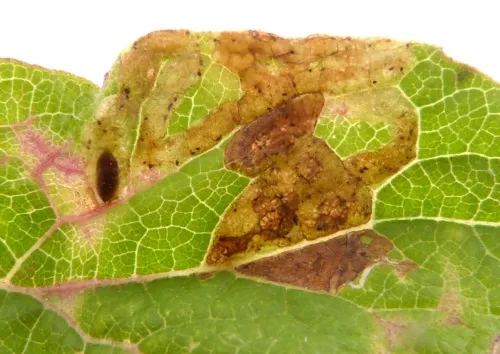
The larvae mine the leaves of various plants creating an upper-surface (sometimes lower surface also) corridor. Frass appears in isolated grains. Pupation takes place within the mine, usually in a lower-surface, puparial chamber. The larvae of Chroma
Chrysanthemum Leafminer
Phytomyza syngenesiae
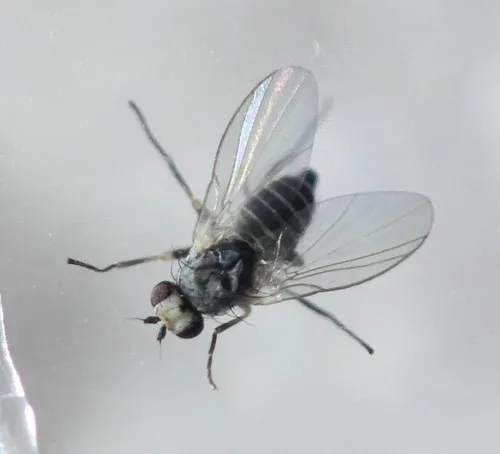
Larvae feed primarily on plants in the aster family, apparently exclusively so in California. Common on sowthistle ( Sonchus ). Larvae form conspicuous white linear mines and pupate in the leaf.
Chrysanthrax lepidotoides
Chrysanthrax lepidotoides
There are very few records of this species, either here or on iNaturalist --as of 28 August 2022, just the same four records from NC and FL.
Chrysoexorista ochracea
Chrysoexorista ochracea
Type localities: Costa Rica (Rio Sucio) and Mexico (Amula, Xucumanatlan and Omilteme in Guerrero, Atoyac in Veracruz, and Teapa in Tabasco).
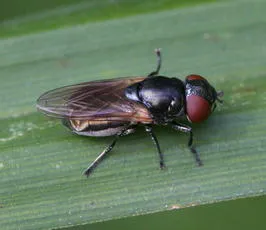
Chrysogaster cemiteriorum
Chrysogaster cemiteriorum
The upper abdomen is black with a paler greyish band beneath on the flank. It is broad bodied and this can help distinguish it from some similar species. Lush meadows and fens, usually near to scrub or wood margins. May to September, peaking in July
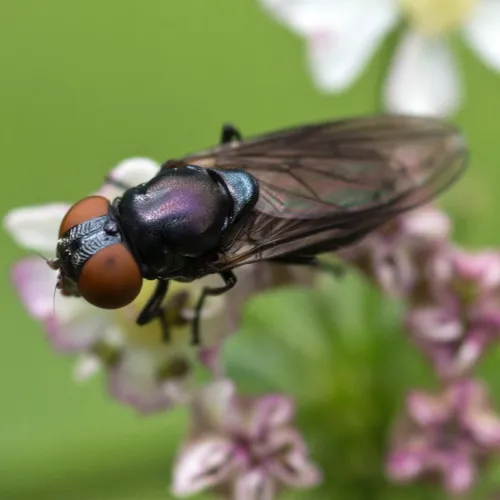
Chrysogaster solstitialis
Chrysogaster solstitialis
This species has particularly dark wings. Though the abdomen is black and unmarked, the thorax of the female has a purple sheen and the scutellum often has a blue-grey dusting. From late May to October, peaking in July and August. The larvae live in
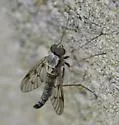
Chrysopilus andersoni
Chrysopilus andersoni
Identification: Excerpts from Leonard (1931): C. andersoni can be distinguished from foedus by its somewhat larger size, the paler wing markings and the somewhat darker hind femora. It also has a more Eastern distribution. Related to C. foedus Lw., b
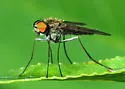
Chrysopilus arctiventris
Chrysopilus arctiventris
Identification: Palps covered with white hairs. First segment of antenna with white hairs below. Femora of male mostly dark, of female mostly yellow.
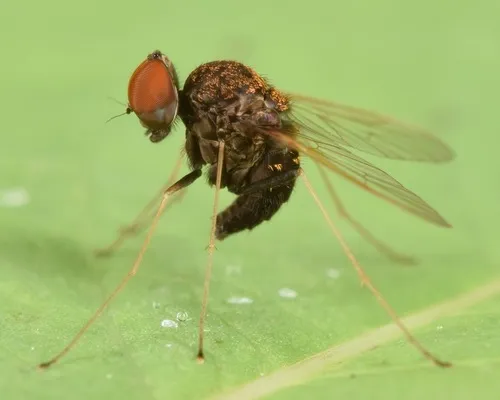
Chrysopilus basilaris
Chrysopilus basilaris
Identification: Unique among North American Chrysopilus in having a small patch at the base of the wing black and the rest clear. Tail-between-legs posture is also a good pointer to this species.
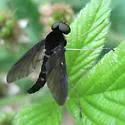
Chrysopilus connexus
Chrysopilus connexus
Identification: Wings brown usually with darker streaks along veins. Thorax black. Abdomen with two rows of silver spots.
Chrysopilus cristatus
Chrysopilus cristatus
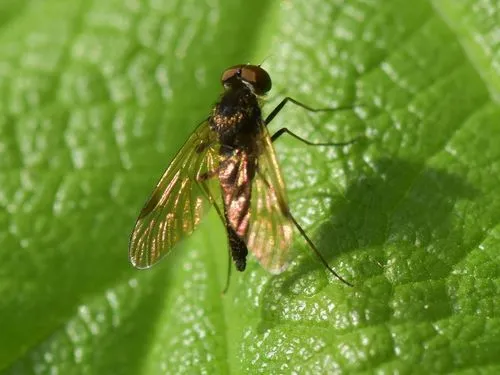
This is a snipe fly with a dark 'shade' on the outside of each wing. The female is plumper than the male and has a creamy hairy abdomen. The slimmer males have a hairy brown abdomen, but in both sexes the abdomen hairs can be worn off with age. The t
Chrysopilus davisi
Chrysopilus davisi
Identification: Black except for golden thorax. Looks like Chrysopilus thoracicus with the silver bands worn off. Quoting the original description (Johnson, 1911) Chrysopila davisi sp. nov. Female. Head velvety black; antennae black. Thorax black, c
Chrysopilus foedus
Chrysopilus foedus
Identification: Wings with strong dark markings along veins and crossveins, clear between veins, abdomen with apical pale bands across tergites.
Chrysopilus modestus
Chrysopilus modestus
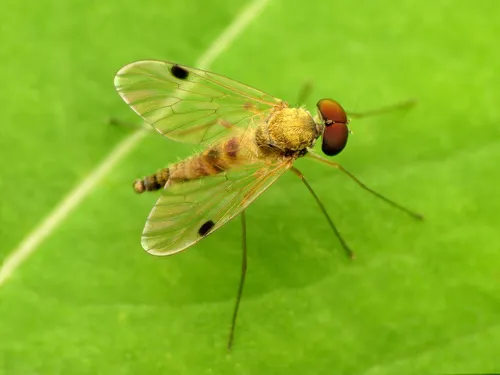
Identification: Dark stigma strongly contrasting with clear wing; femora yellow except tip of hind femur; abdomen mostly black but with yellow bands near base; lacking unusual hairs on antennae.
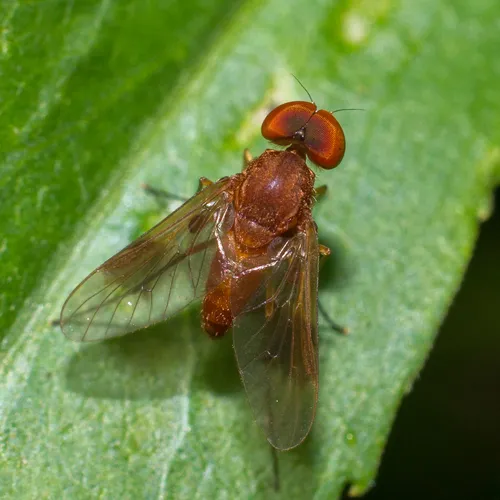
Chrysopilus quadratus
Chrysopilus quadratus
Identification: Adult: thorax and abdomen variably black to brown to orangish; wings clear except for large square or rectangular dark patch midway along costa, and small round dark spot near base; eyes dark gray to reddish, very large, occupying alm
Chrysopilus rotundipennis
Chrysopilus rotundipennis
Identification: A yellow species with wings broad and clear except for a brown stigmal spot. The male eyes are narrowly separated instead of touching; female eyes are more closely spaced than usual in the genus.
Chrysopilus testaceipes
Chrysopilus testaceipes
Identification: A golden-haired species with yellow legs (except for coxae) and a pale stigma.
Chrysopilus velutinus
Chrysopilus velutinus
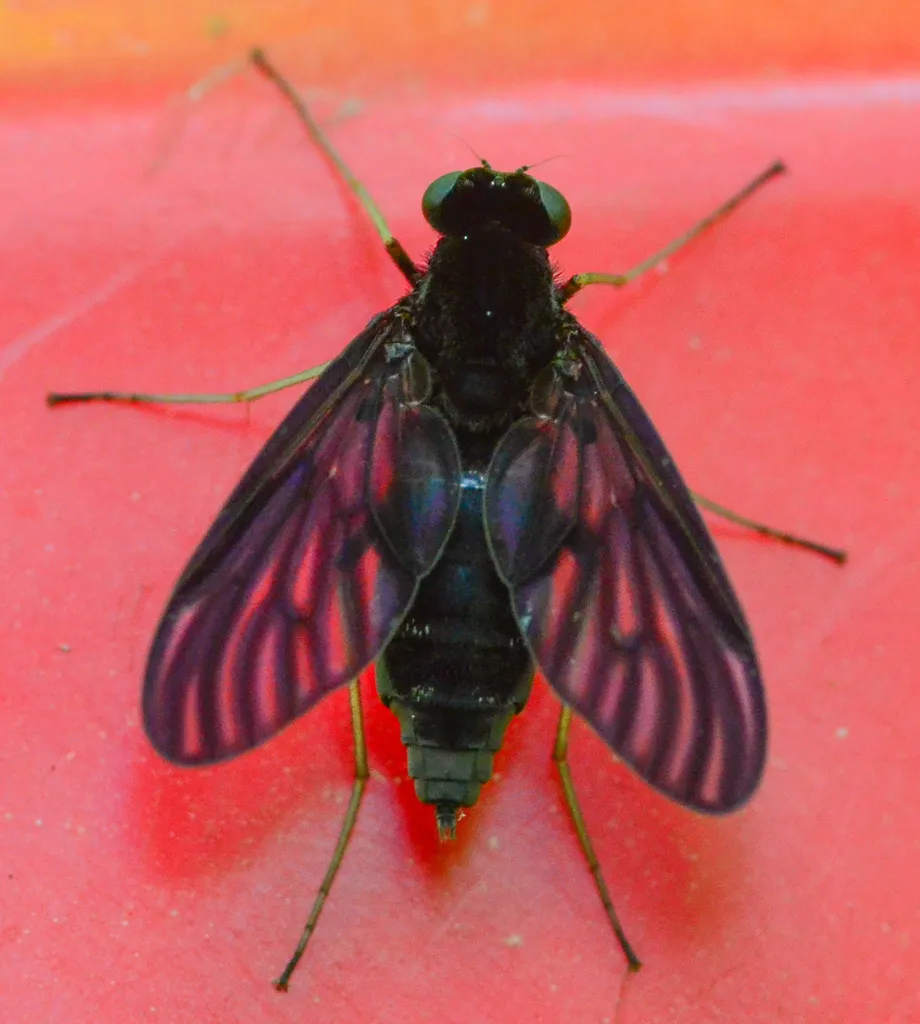
Identification: Completely black except for white tibia.
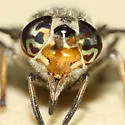
Chrysops aestuans
Chrysops aestuans
Identification: Markings on thorax grayish yellow instead of bright yellow. Apical wing spot reduced to a narrow crescent along the wing margin. Useful key for Canadian Chrysops
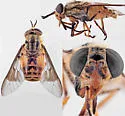
Chrysops bishoppi
Chrysops bishoppi
"In Oregon, C. bishoppi is a persistent biter that attacks livestock anywhere on the body but seldom attacks man." ( 3 )
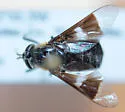
Chrysops carbonarius
Chrysops carbonarius
Identification: Female: A black deer fly. Abdomen black but perhaps with an indefinite pattern of grayish pruinose areas. Area of wing beyond the crossband hyaline. Crossband relatively straight and reaching hind margin of wing. Wing cell cua1 with d
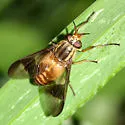
Chrysops celatus
Chrysops celatus
Identification: Among similar species, thorax greenish-gray with fuscous stripes; outer margin of dark wing crossband usually sinuous
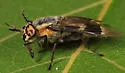
Chrysops cincticornis
Chrysops cincticornis
Identification: Black species with bright orange hair on sides of thorax. With known pathogenic transmission of California encephalitis virus. This disease does affect humans.
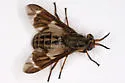
Chrysops clavicornis
Chrysops clavicornis
Identification: Within its range, distinguished by base of antennae swollen (probably the source of the species name), apical spot extending into cell r5, and basal callus not entirely black.
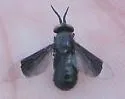
Chrysops divisus
Chrysops divisus
Identification: The wing pattern, basal 2/3 infuscated (black) with the distal 1/3 hyaline (clear) and black body are diagnostic. serious pest of man in FL
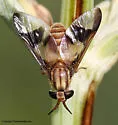
Chrysops flavidus
Chrysops flavidus
described as pestiferous to humans, generally attacking the head and neck; considered one of the worst "stock pests" in the genus With known pathogenic transmission of Equine infectious anemia virus, a disease of only equid mammals.
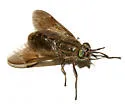
Chrysops fuliginosus
Chrysops fuliginosus
Specimens collected away from the coast with patches of orange on the abdomen belong to an undescribed species. See Thomas et al. (2024).
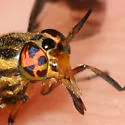
Chrysops geminatus
Chrysops geminatus
Identification: " Chrysops geminatus is one of the smallest species of the genus and is also distinctive by the apical spot of the wing being moderately widened apically and almost separated from the crossband and usually by an inverted V-shaped blac
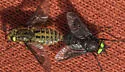
Chrysops hirsuticallus
Chrysops hirsuticallus
Identification: Female: "Peculiar greenish-gray central California species with very reduced eye pattern in life; face and fron unusually hairy including sides of laterally attenuated frontal callosity; wing pattern unusual with strong halo along out
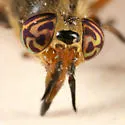
Chrysops indus
Chrysops indus
Identification: Orange face, apical spot filling half of cell r4, unstriped abdomen, and dark scutellum
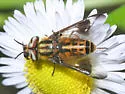
Chrysops lateralis
Chrysops lateralis
Identification: Both basal cells mostly hyaline; apical spot expanded, nearly separated from crossband by hyaline triangle; abdomen with median yellow stripe; face without pruinose stripe. "Often abundant and pestiferous."
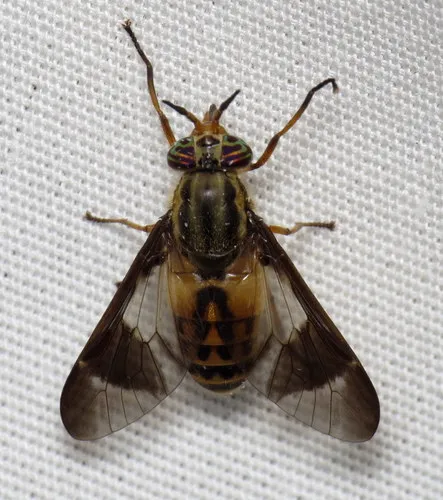
Chrysops montanus
Chrysops montanus
Identification: Female abdominal pattern and size and shape of wing apical spot subject to considerable variation; possibility of a couple of sibling species (AWT). With known pathogenic transmission of Vesicular stomatitis virus, a pathogen of anima
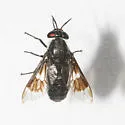
Chrysops noctifer
Chrysops noctifer
Identification: "the only western [Canadian] deer fly having a dilute apical spot isolated from the wing crossband. Some specimens of the eastern species C. sordidus resemble C. noctifer but have a more dilute and restricted apical spot and the pigme
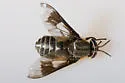
Chrysops sordidus
Chrysops sordidus
"This is a northern species reaching its southern limit in northern Maine, northern Vermont, New Hampshire, the Adirondacks and Tug Hill Plateau in New York. It rarely is abundant enough to be considered a pest. This species is sometimes very abundan
Chrysops surdus
Chrysops surdus
Identification: Distinguished from furcatus and proclivis by a smaller apical spot on wing. See Teskey for other characters.
Chrysops variegatus
Chrysops variegatus
Identification: A yellowish species. Discal cell with clear spot, apical band large with hyaline triangle approaching costa, basal cells mostly clear, thorax with three darker stripes, abdomen with pair of black stripes anteriorly, antennae long and
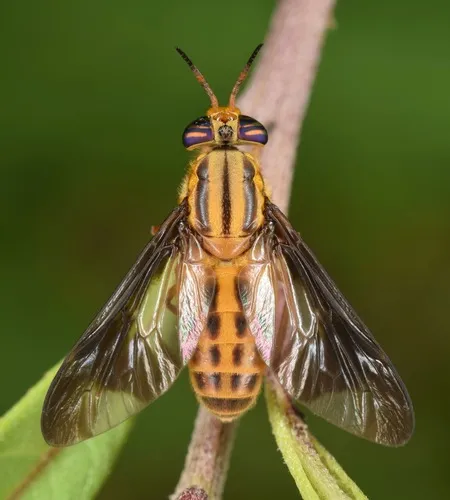
Chrysops vittatus
Chrysops vittatus
Identification: Yellow abdomen with 4 brownish stripes; a nearly fully infuscated cell Br, yellow scutellum, yellow frontal callus, and an infuscated cell CuA1 can be diagnostic. All these except for the abdominal pattern are also shared by C. florid
Chrysotachina longipennis
Chrysotachina longipennis
Identification: The wing is longer than C. alcedo . The parafacial and fronto-orbital plates are yellowish instead of white. Other characters considered by O'Hara to be more reliable are unlikely to be visible in photos.
Chrysotimus delicatus
Chrysotimus delicatus
Identification: Thorax and abdomen green except the second and third segments of the female abdomen. Palps yellow.
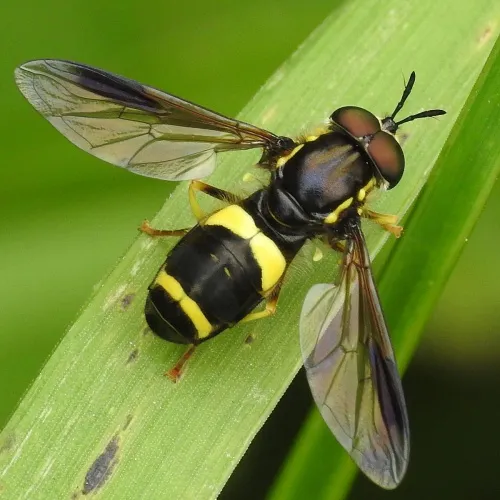
Chrysotoxum bicinctum
Chrysotoxum bicinctum
This is a very distinctive species with its two yellow bands, the chocolate wing patches and the long, forward pointing antennae. It is found in grassy habitats, usually sheltered near to shrubs and trees. It flies from May to September but peaks fro
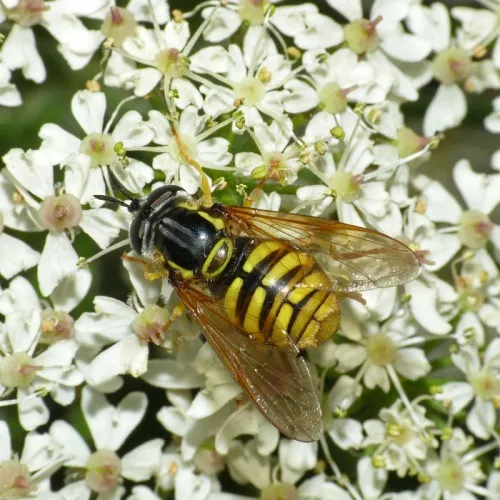
Chrysotoxum cautum
Chrysotoxum cautum
Wing length 10 to 13mm. The abdominal pattern has very straight black bars which are interrupted well short of the edge. In both sexes the first antennal segment is shorter than the second and females have long dense hairs on the thoracic dorsum (as
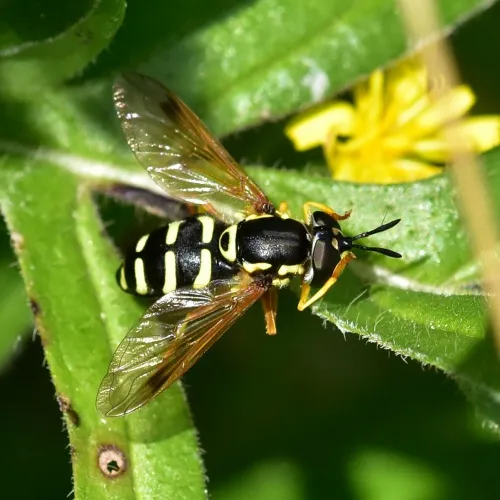
Chrysotoxum festivum
Chrysotoxum festivum
A very boldly marked, medium-sized hoverfly. It is always worth checking this species for the dark form of the much rarer C.elegans or the even rarer C. vernale. There is also a very rare species of southern heathland, C. vernale, which resembles a s
Chrysotoxum verralli
Chrysotoxum verralli
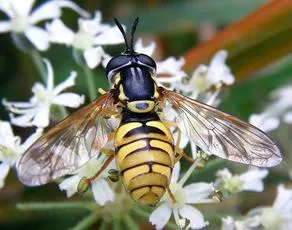
This hoverfly is a wasp mimic, and very wasp-like in appearance. The genus is easy to recognise because it has long antennae that project forward. There are several other similar Chrysotoxum species which require careful examination of the black bar
Chrysotus affinis
Chrysotus affinis
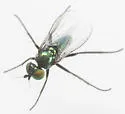
Identification: Halteres pale; third segment of male antenna short, pointed; arista nearly apical and not in a notch; legs almost entirely dark; face of male narrowed below.
Chrysotus arkansensis
Chrysotus arkansensis
Identification: Fore femur yellow, halter black, mid and hind femur black except at tips.
Chrysotus bellus
Chrysotus bellus
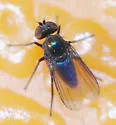
Identification: Violet abdomen, black legs, pale halteres
Chrysotus blepharosceles
Chrysotus blepharosceles
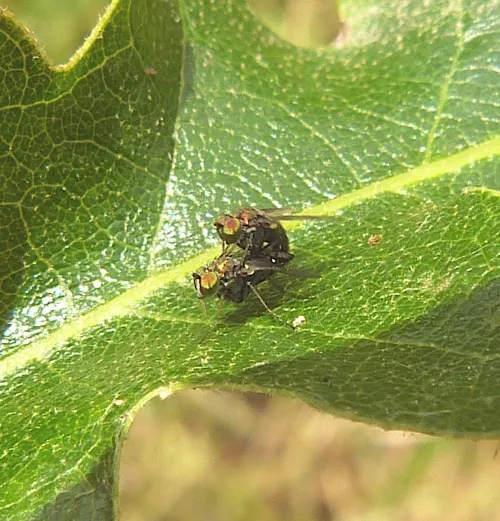
2.5 to 3mm. This species is sexually dimorphic. Chrysotus blepharosceles is very similar to other members of the Dolichopodidae and detailed examination is necessary. It may only be possible to identify males with confidence. Detailed examination of
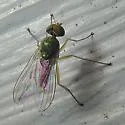
Chrysotus mundus
Chrysotus mundus
Identification: Eyes of male joined broadly on top of head. Legs mostly yellow. Male with enlarged pulvilli on fore and mid legs.
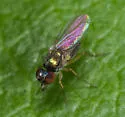
Chrysotus neopicticornis
Chrysotus neopicticornis
Identification: Like C. picticornis except the hind femur lacks a black spot at tip and has fewer than 4 preapical anteroventral bristles.
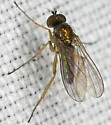
Chrysotus pallipes
Chrysotus pallipes
Identification: Legs yellow, except tips of tarsi and most of mid and hind coxae, front somewhat shining green, male face narrowed below, third segment of antenna small without apical notch.
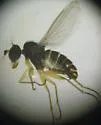
Chrysotus picticornis
Chrysotus picticornis
Identification: Pale legs, base of antenna yellow, hind femur with brown tip and four or more black bristles below (possibly only in male).
Chrysotus simulans
Chrysotus simulans
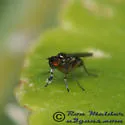
Identification: Femora pale, fore tarsi of male ornamented, fore tibia with black ring.
Chrysotus tarsalis
Chrysotus tarsalis
Published records of Chrysotus tarsalis are from the Southeast. BugGuide photos extend the range to the Northeast (or show a related undescribed specices).
Chymomyza amoena
Chymomyza amoena
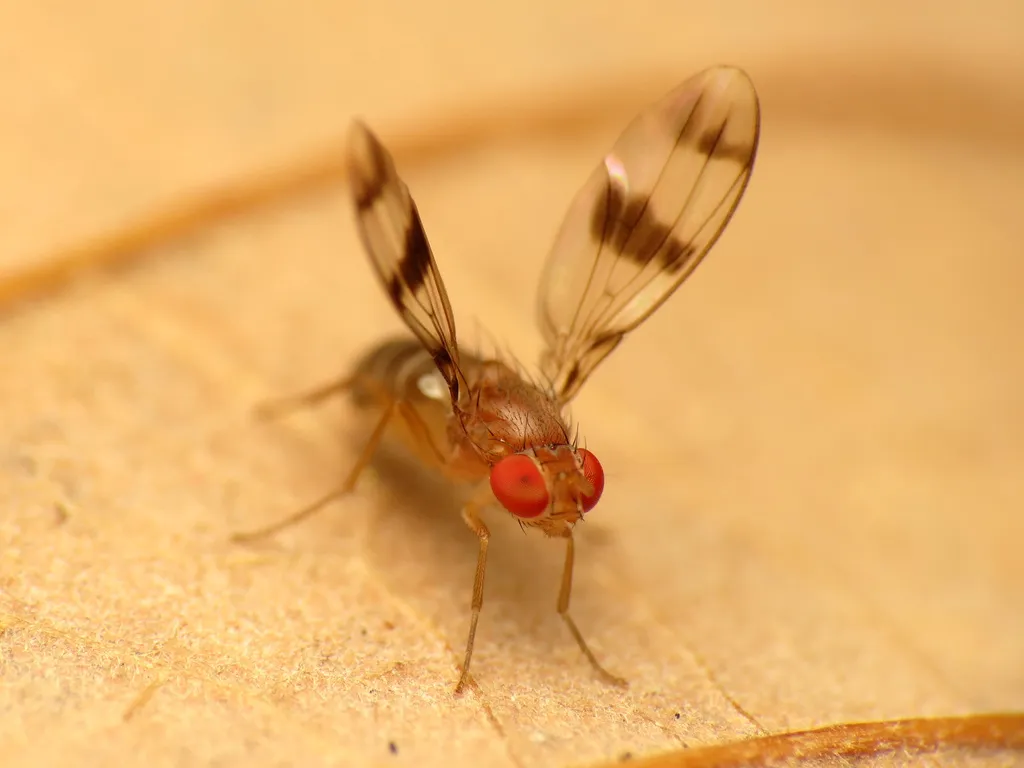
Identification: Legs yellow, wings with three dark spots (at end of R1, over m-cu, and after R2+3) and white tip.
Chyromya oppidana
Chyromya oppidana
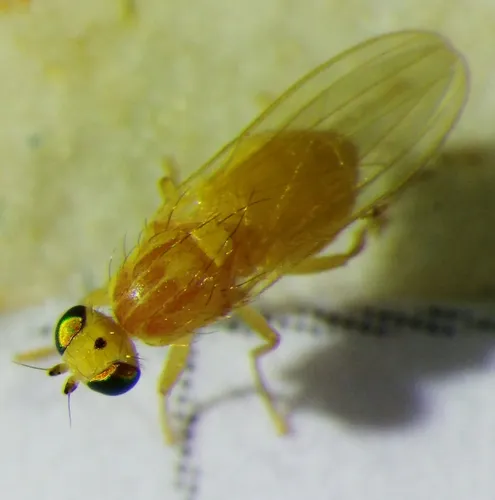
Identification: Martin Ebejer (pers. comm., B Barnd Jan 2025) says this species is only known from female specimens and may just be a color variant of C. flava. Molecular work needs to be done to resolve the issue. Also see key and comments in Gibbs
Cinderella lampra
Cinderella lampra
Identification: This species can be identified by the combination of incomplete subcosta, subcostal and humeral breaks, cell cup present, shiny black color, and tubercle on face. Also: row of reclinate fronto-orbital bristles increasing in size towa
Cirrula austrina
Cirrula austrina
Identification: Two fronto-orbital bristles present, one presutural dorsocentral bristle present, one pair of cruciate interfrontal bristles present, arista longer in length than antennal segments 1-3 combined, prescutellar acrostichal bristles reduc
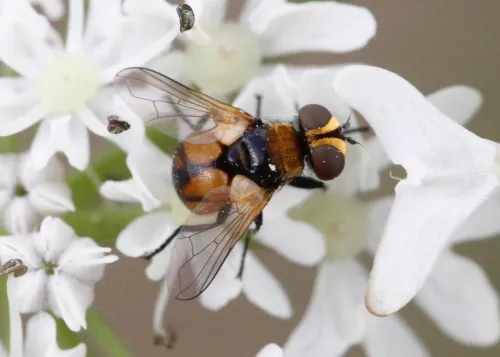
Cistogaster globosa
Cistogaster globosa
A small fly (about 5 mm). The female abdomen is mainly black, but the males, although variable, have much more orange in their markings. Unless identified by a recognised expert, a photo is required. If the photo doesn't show the key ID features then
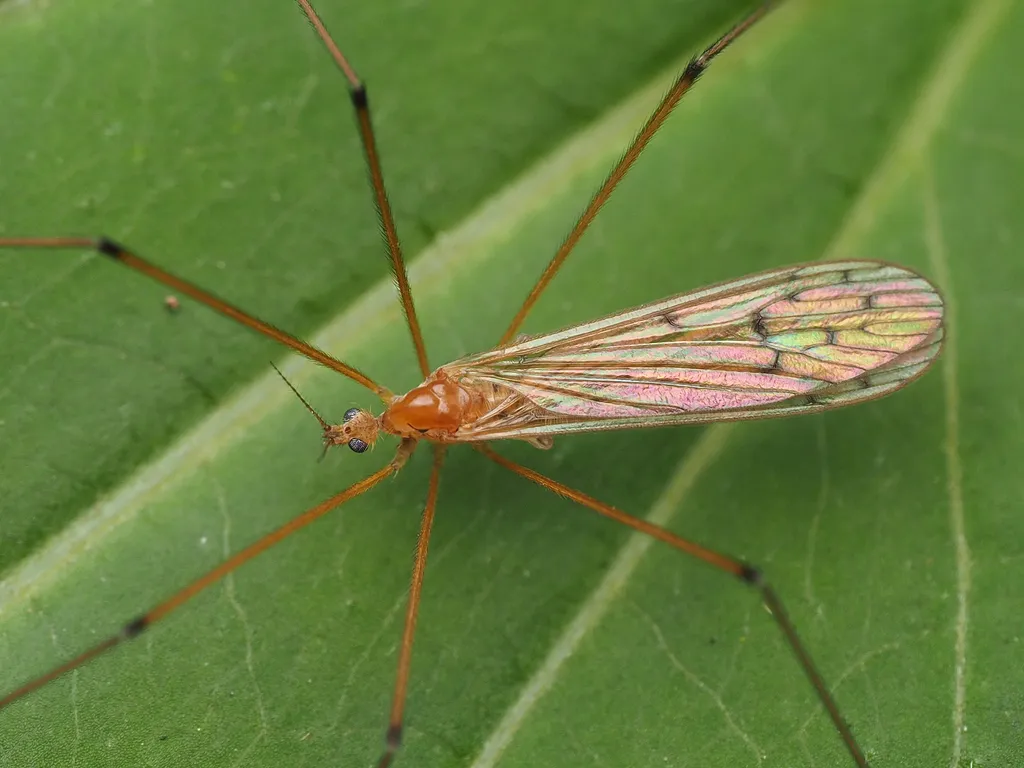
Cladura flavoferruginea
Cladura flavoferruginea
Identification: Adult: body orangish-yellow in preserved specimens (more brownish-orange in live individuals) with brown bands across dorsal surface of abdomen; ventral surface of abdomen pale yellowish; wings transparent with brown dots along cross-
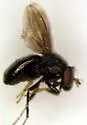
Clanoneurum americanum
Clanoneurum americanum
Identification: Vein R2+3 very close to R1 and C, dm-cu with sharp angle in middle.
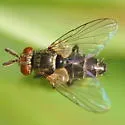
Clausicella floridensis
Clausicella floridensis
Identification: Typical specimens have 3 postsutural dorsocentrals evenly spaced with none notably weak, no median marginals on T3, proboscis shorter than head, and a black abdomen with narrow basal white bands.
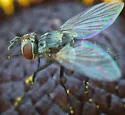
Clausicella geniculata
Clausicella geniculata
Four postsutural dorsocentrals but first two very weak; abdomen with weak median marginals on T4 (not forming complete row as in most species), abdomen without sharply defined even bands of white on base, proboscis distinctly longer than head and usu
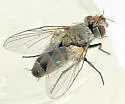
Clausicella opaca
Clausicella opaca
Identification: Distinguished from other Clausicella by the combination of long, nearly straight proboscis, abdomen without distinct paler bands, 3 postsutural dorsocentrals, and row of bristles along hind margin of tergite 4.
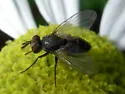
Clausicella setigera
Clausicella setigera
Identification: Distinguished from other species of Clausicella by the relatively long last section of vein Cu, distance from m-cu to wing margin being about half length of previous section of Cu. The abdomen is black with narrow basal white bands,
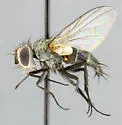
Clausicella turmalis
Clausicella turmalis
Identification: Rigid part of proboscis longer than head height, three postsutural dorsocentrals, parafrontals dull white (as normal in genus), abdomen with contrasting pale bands (as normal in genus).
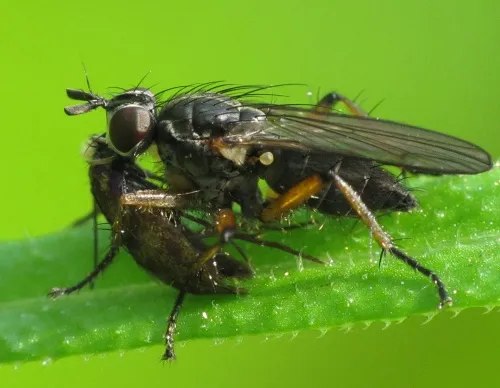
Cleigastra apicalis
Cleigastra apicalis
Unless identified by a recognised expert, a photo is required and the specimen should be examined with a microscope. In the comments box, state the key or ID method used and describe the size and identifying characters. Damp areas near the larval foo
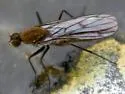
Clinocera binotata
Clinocera binotata
Identification: Crossvein between R2+3 and R4; fore femur with stout basal setae below; knees orange
Clinohelea bimaculata
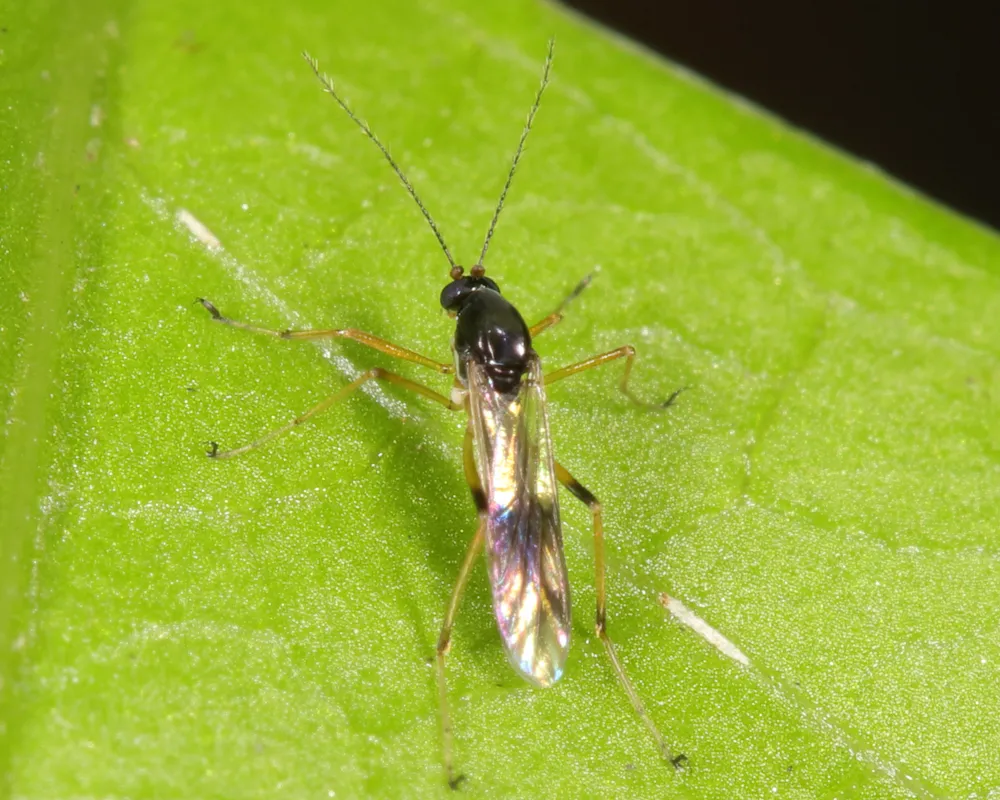
Clinohelea bimaculata
Identification: "Distinguished from all other Nearctic Clinohelea by the following combination of characters: legs mainly yellow with a dark subapical band on the hind femur, two-spotted wings, and antennal pedicel yellow." -- Grogan and Wirth 1976 (
Clinohelea curriei
Clinohelea curriei
Identification: "Distinguished from all other Nearctic Clinohelea by the following combination of characters: fore 5th tarsomere with pale band longer than width of 5th tarsomere; wing with infuscation centered over 1st radial cell or entirely infusc
Clusia tigrina
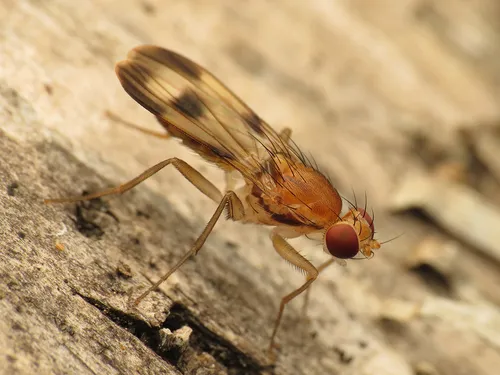
Clusia tigrina
Clusia tigrina has dark markings on the wings around the subcostal vein, surrounding cross vein dm-cu and on the wing tip. Palloptera trimacula has a similar wing pattern.
Clusiodes albimanus
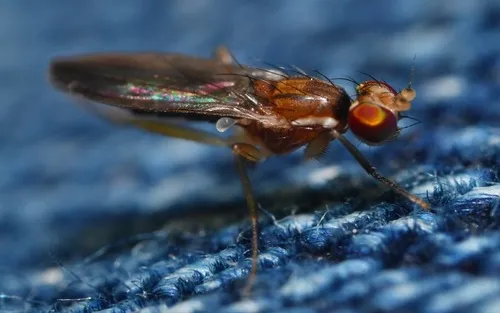
Clusiodes albimanus
A fairly small fly (5 or 6 mm) with a chestnut red thorax and black abdomen. The wing is partly infuscated (dark shading). Larvae live under the bark of rotten wood. Fairly frequent in the southern half of Britain. No additional images available for
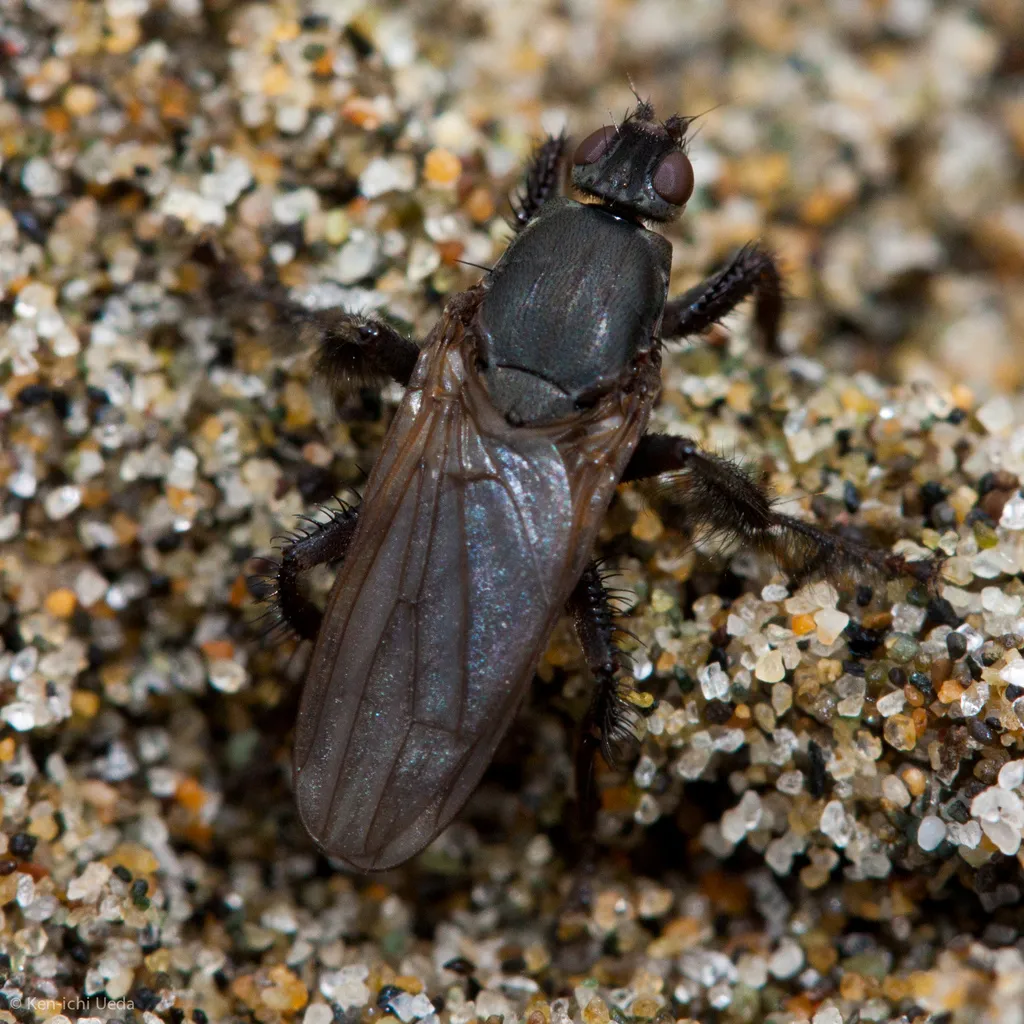
Coelopa vanduzeei
Coelopa vanduzeei
Identification: Male mid tibia long haired contrasting with spiny fore and hind tibiae. Apical part of vein R1 with hairs. Pacific species.
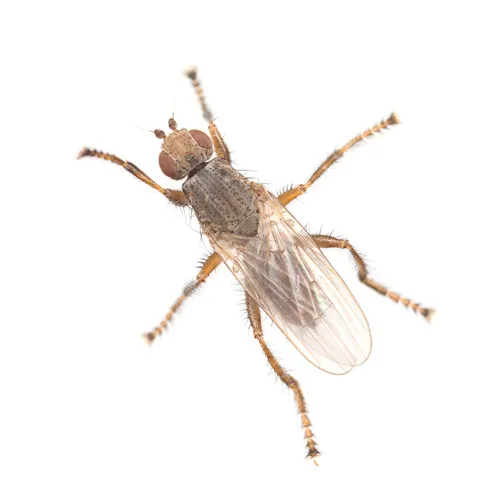
Coelopina anomala
Coelopina anomala
Identification: Compared to Coelopa the thorax is less flattened and the acrostichal hairs less numerous.
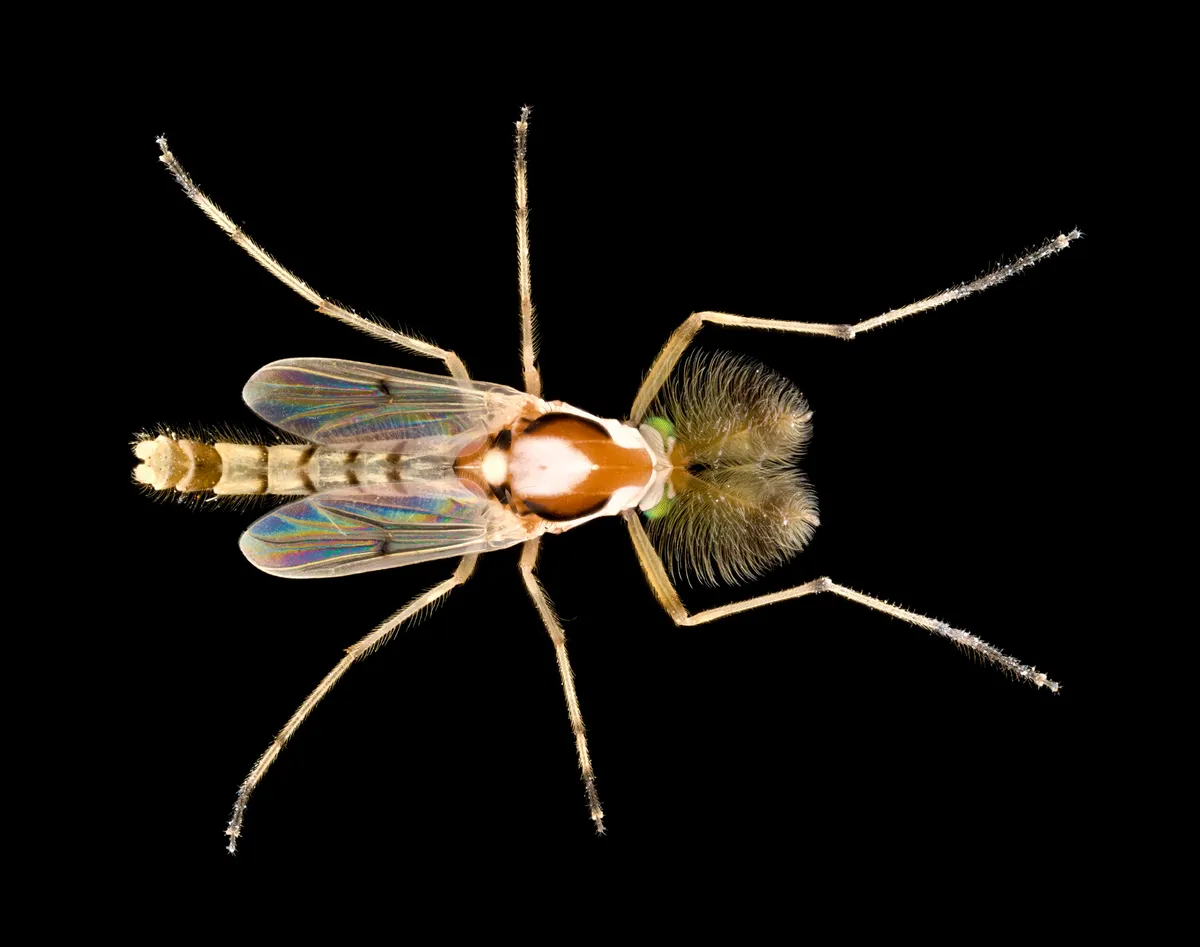
Coelotanypus concinnus
Coelotanypus concinnus
Identification: "Adults of this species are particularly striking, with the body largely pale yellow to cream, with rich brown thoracic vittae margined with black, and abdominal segments narrowly margined with brown. In life the eyes are brilliant gr
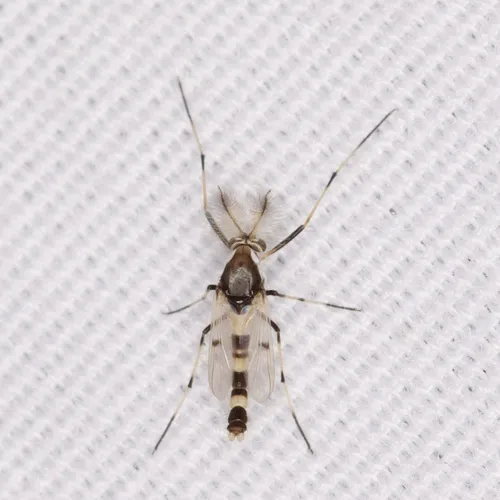
Coelotanypus scapularis
Coelotanypus scapularis
Identification: Colors are variable and sexually dimorphic. This is the most common species of Coelotanypus . Males are distinguished from close relatives by light genitalia, black thorax (except for white patches on sides), and second tarsomere of
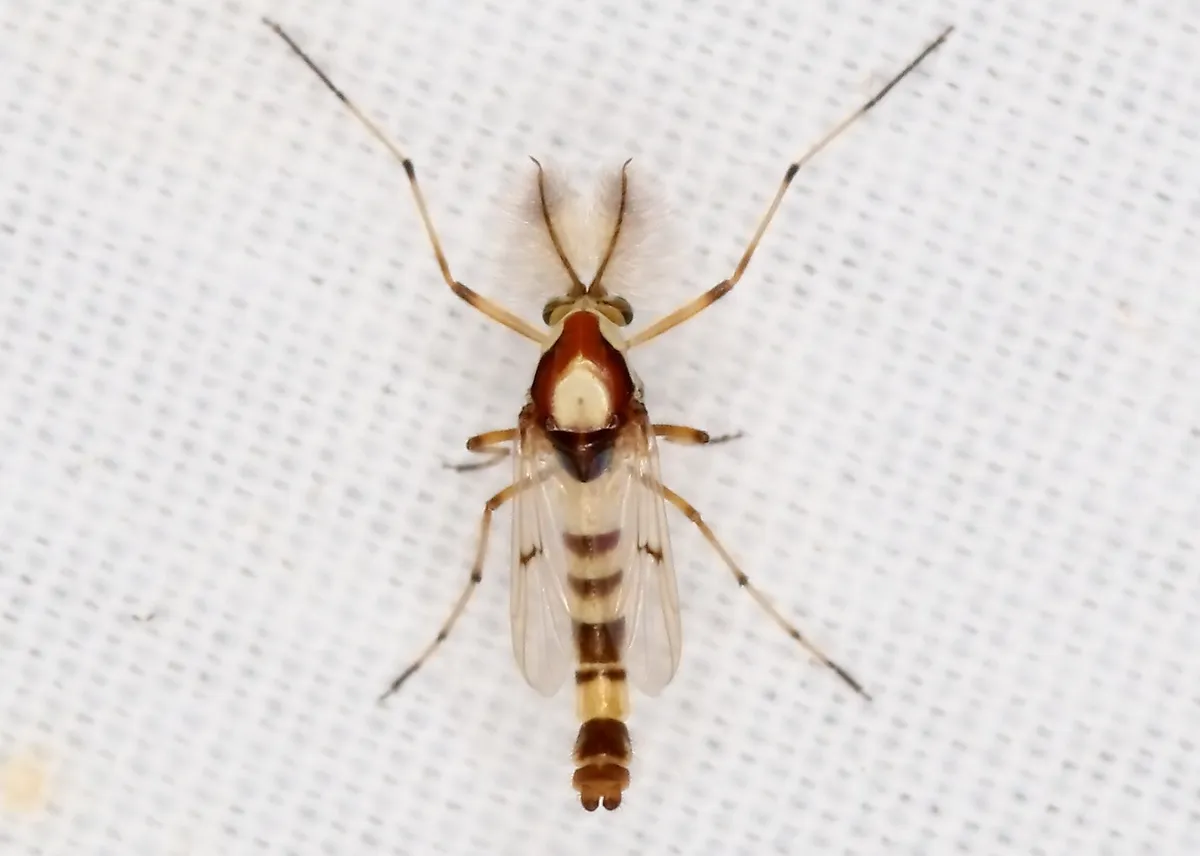
Coelotanypus tricolor
Coelotanypus tricolor
Identification: Distinguished from other members of genus by
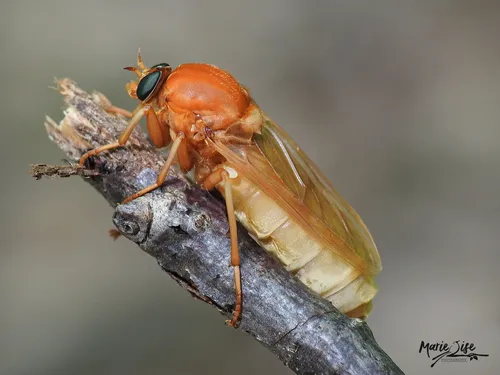
Coenomyia ferruginea
Coenomyia ferruginea
Identification: How to tell males from females (Thanks to Bob Biagi ) 1) Overall Body coloring: Dark brown with some lighter (lateral) abdominal bands = ♂ Shiny orange with light-orange abdomen, almost white = ♀ 2) Leg colors: Hind legs darker = ♂ Al
Coenosia modesta
Coenosia modesta
Similar to C. semivitta, which it differs from in the form of the mesonotum and length of the costal vein.