
Flies
Order Diptera
The Flies (Order Diptera) includes 6,350 species across 141 families and 1,800 genera in our directory.
About Flies
Diptera includes over 150,000 described species of flies, mosquitoes, and midges. Mosquitoes are the deadliest animal on Earth (CDC). Malaria alone causes ~249 million cases and over 608,000 deaths annually, mostly children under 5 (WHO). Vector-borne diseases account for over 17% of all infectious diseases, causing 700,000+ deaths per year.
Economic Impact
In the U.S., vector-borne disease cases tripled between 2004-2016, with over 640,000 cases reported in that period (CDC). Tickborne diseases doubled from 22,000 to 48,000 annual reports. Globally, mosquito-borne diseases cost billions in healthcare and lost productivity.
Ecological Role
Despite their disease impact, flies are critical decomposers and pollinators. Hoverflies alone pollinate hundreds of crop and wildflower species. Flies are also the primary food source for many birds, bats, and fish. Forensic entomology relies heavily on fly species for crime scene analysis.
Families in Diptera (141)
Species in Diptera (6,350)
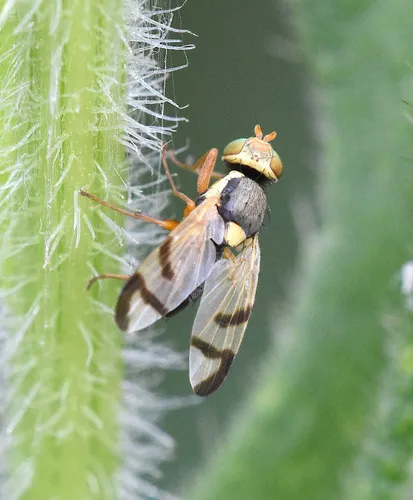
Urophora stylata
Urophora stylata
A distinctive species with a unique wing pattern. The scutellum and sides of the thorax are pale cream and the eyes have an orange-green reflection. The fly produces galls in the flower heads of thistles, usually Spear Thistle, Cirsium vulgare. Part
Valentibulla steyskali
Valentibulla steyskali
Identification: At least posterior half of scutum shining black, R2+3 bent sharply forward.
Vegetable Leaf Miner
Liriomyza sativae
Identification: Adults principally yellow and black. Highly polyphagous. Considered a pest of some cultivated plants. Considered invasive in this country. (Capinera, John L. North American Vegetable Pests. The Pattern of Invasion. American Entomologi
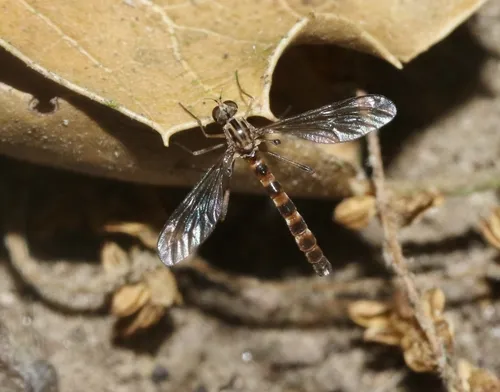
Vermileo opacus
Vermileo opacus
Identification: Wings nearly hyaline (vs. tinged brownish in our other species, V. comstocki ). A detailed description of the male appears in Leonard(1930) ; while the female was described in Pechuman(1938) . The original description by Coquillett
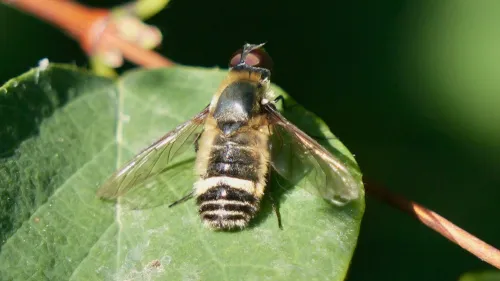
Villa cingulata
Villa cingulata
Distinct pale bands across the abdomen, but the leading edge of the wing only is narrowly brownish (the subcostal cell) without any darkening extending to cross vein r-m as in V. venusta . Males are easily identified by the conspicuous silvery-white
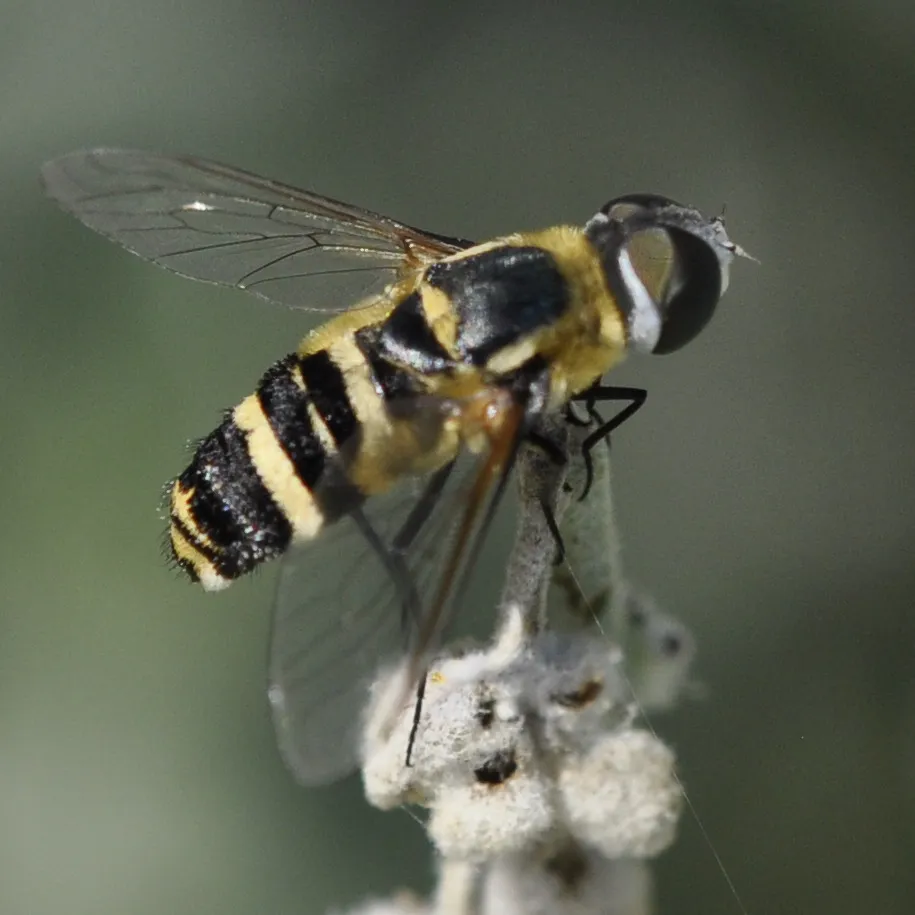
Villa lateralis
Villa lateralis
Identification: hyaline-winged. It occurs in two forms. The smaller one is more common in the spring. For a complete description see: Discover Life This variable species has in the Eastern United States two well marked variations which cause consider
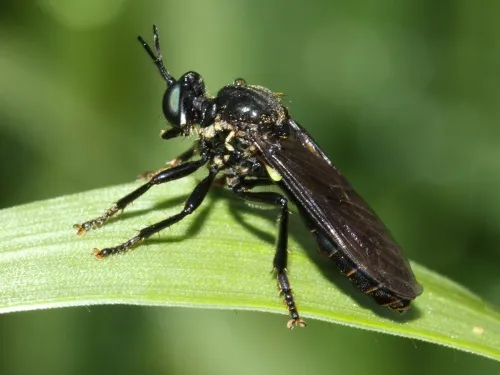
Violet Black-legged Robber Fly
Dioctria atricapilla
Length: 10-12mm. This is an all blue-black robberfly with bright yellow halteres. It is the only Doctria species with all black legs. Males have prussian blue eyes. The wings are darkened towards the base, particularly in the male. The female has a g
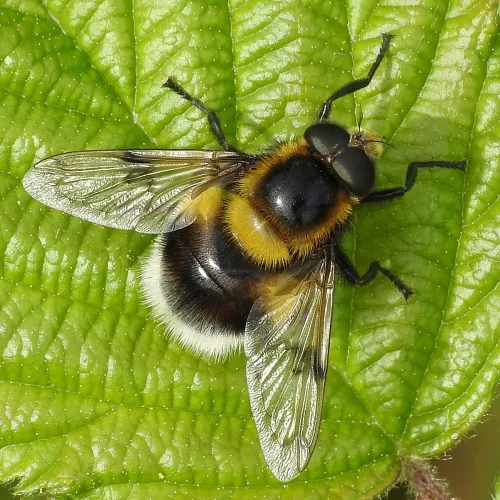
Volucella bombylans
Volucella bombylans
This hoverfly is an excellent mimic of a bumblebee and is found throughout most of the UK. There are two main varieties which mimic different species of bumblebee, one with an orange-red tail ( V . bombylans ) and the other with a white tail ( V. plu
Volucella evecta
Volucella evecta
Identification: Black face beneath black or black-and-yellow hair, yellow haired thorax.
Volucella facialis
Volucella facialis
Identification: Yellow face beneath yellow hair, yellow haired thorax. Abdomen is usually black in the East and orange in the West, possibly correlated with variation in color of bumblebees.
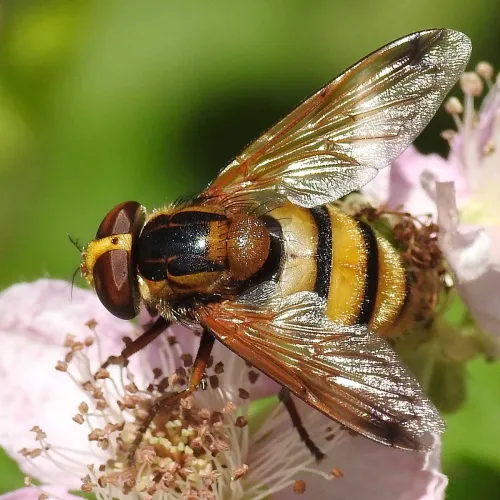
Volucella inanis
Volucella inanis
Somewhat smaller than the similiar V. zonaria and with yellow rather than chestnut markings on tergite (segment) 2 and more extensive yellow on the underside of the abdomen. It looks more wasp-like than hornet-like. Flower meadows, roadside verges an
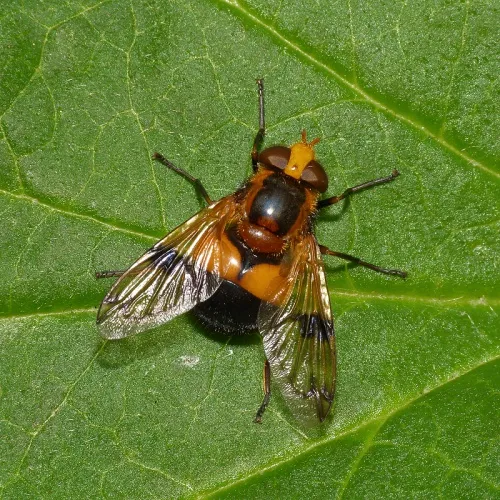
Volucella inflata
Volucella inflata
There is a strong resemblance to the more common species V. pellucens except that the markings on tergite 2 are deep orange, as is the thorax. Heavily wooded areas and mainly restricted to ancient semi-natural woodland. May to September peaking in Ju
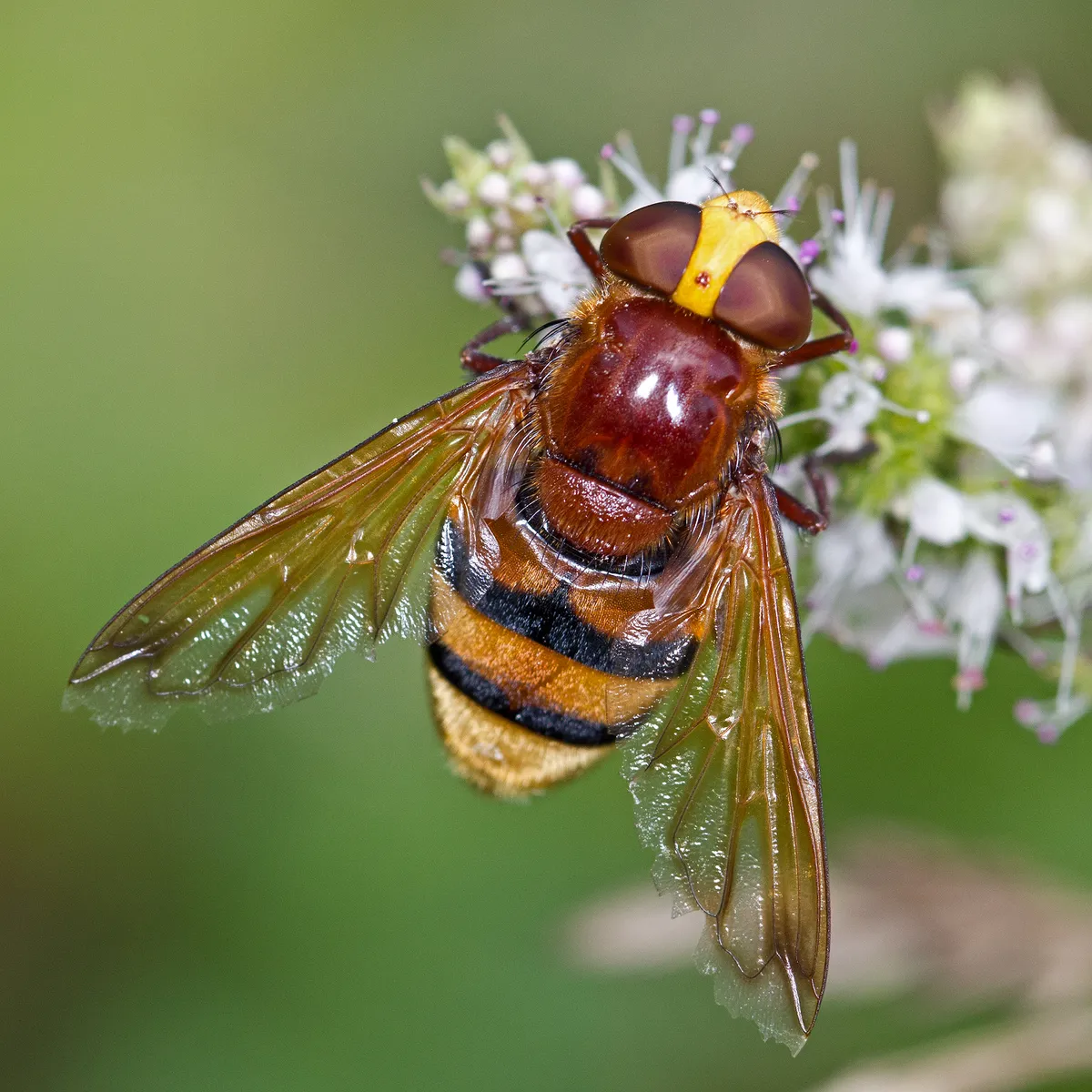
Volucella zonaria
Volucella zonaria
This is a hornet mimic and is one of our largest and most spectacular hoverflies which can be recognised by its yellow and black banded abdomen. It is chestnut on tergite 2 and also on the scutellum and much of the thorasic dorsum. The only similar s
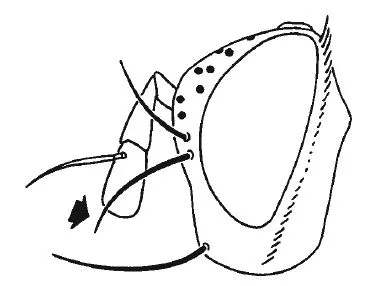
Voria ruralis
Voria ruralis
A mainly black species well covered with long bristly hairs. Head profile of Voria ruralis with strong, down-turned bristle on the parafacialia. Various habitats, flower meadows, scrub, waste ground etc. Late June to early October, peaking in late Au
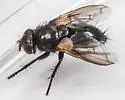
Wagneria vernata
Wagneria vernata
Identification: Distinguished from other Wagneria and Periscepsia by the bright orange-yellow arista and second antenna segment.
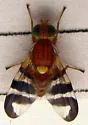
Walnut Husk Fly
Rhagoletis completa
Identification: Yellow spot just below the areas where the wings are attached; iridescent, greenish eyes; wings with three prominent dark bands. Female larger than male and with pointy abdomen. Damages walnuts, serious pest of walnut orchards
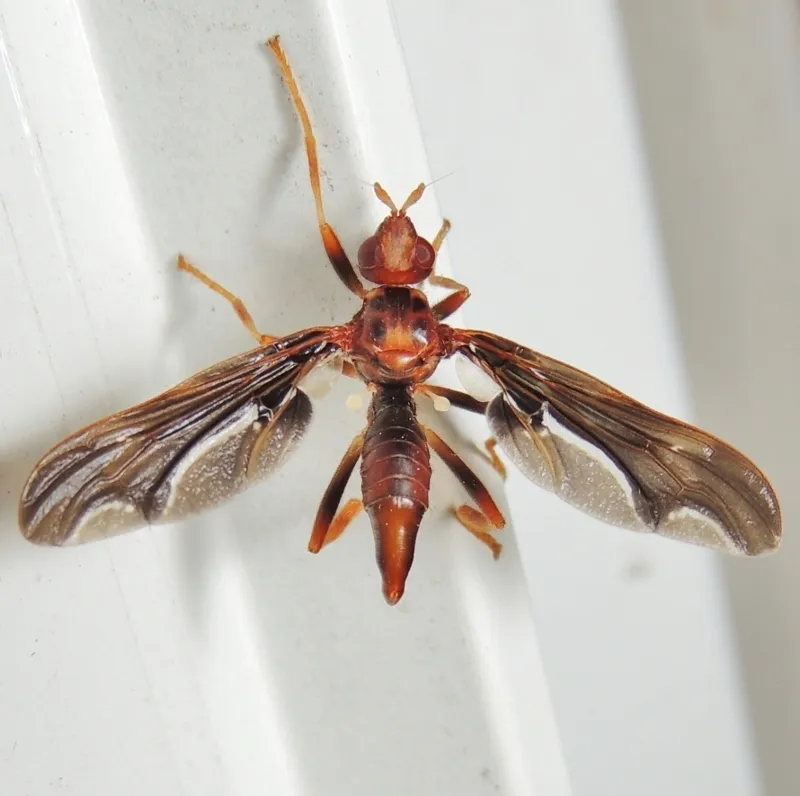
Waved Light Fly
Pyrgota undata
Identification: Most widespread eastern member of this genus. Large (18 mm), dark, waved edge to forewing.
Western Cherry Fruit Fly
Rhagoletis indifferens
It used to be considered a subspecies of R. cingulata
Western Encephalitis Mosquito
Culex tarsalis
Identification: < note banded hind legs and proboscis Adult Female: Scutum with middorsal acrostichal setae, hindtarsomeres with distinct apical and basal bands of pale scales, proboscis with complete distinct ring of pale scales, anterior of forefem
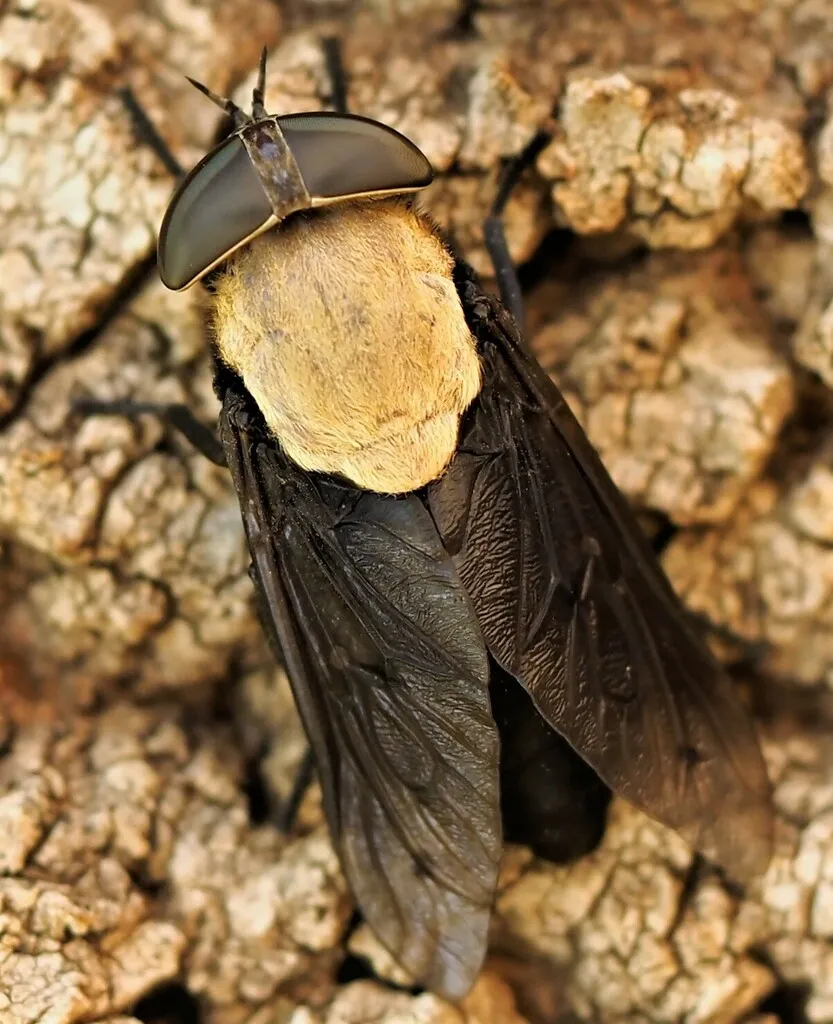
Western Horse Fly
Tabanus punctifer
Identification: Female: mesonotum covered with creamy hair over a dark reddish background: remainder of thorax dark brown, with concolorous hair: wings brown, paler posteriorly, the cross-veins and furcation distinctly margined with brown; legs black
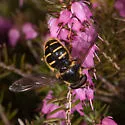
Western Pond Fly
Sericomyia chalcopyga
Identification: similar to S. chrysotoxoides : both have three yellow bands separated in the middle (not broadened at tips) and bristles along edge of thorax opposite wing base that are extensively black; the yellow bands are straight in S. chalcopyg
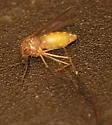
White-dotted Mosquito
Culex restuans
Identification: - scutum copper-colored, sometimes with 2 pale spots (as seen here) - thorax sides have patches of pale scales - abdomen has white basal bands, legs dark Florida Medical Entomology Laboratory Larva: Siphon with three or more long, sin
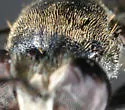
White-faced Micropanther
Cerotainia albipilosa
Identification: Area between eyes (frons) and top of head (vertex) very wide. Upper face and top of head has silvery-white pile. Eyes greenish. Types: Holotype as Cerotainia albipilosa male by Curran, 1930. Type Locality: North Carolina. In American
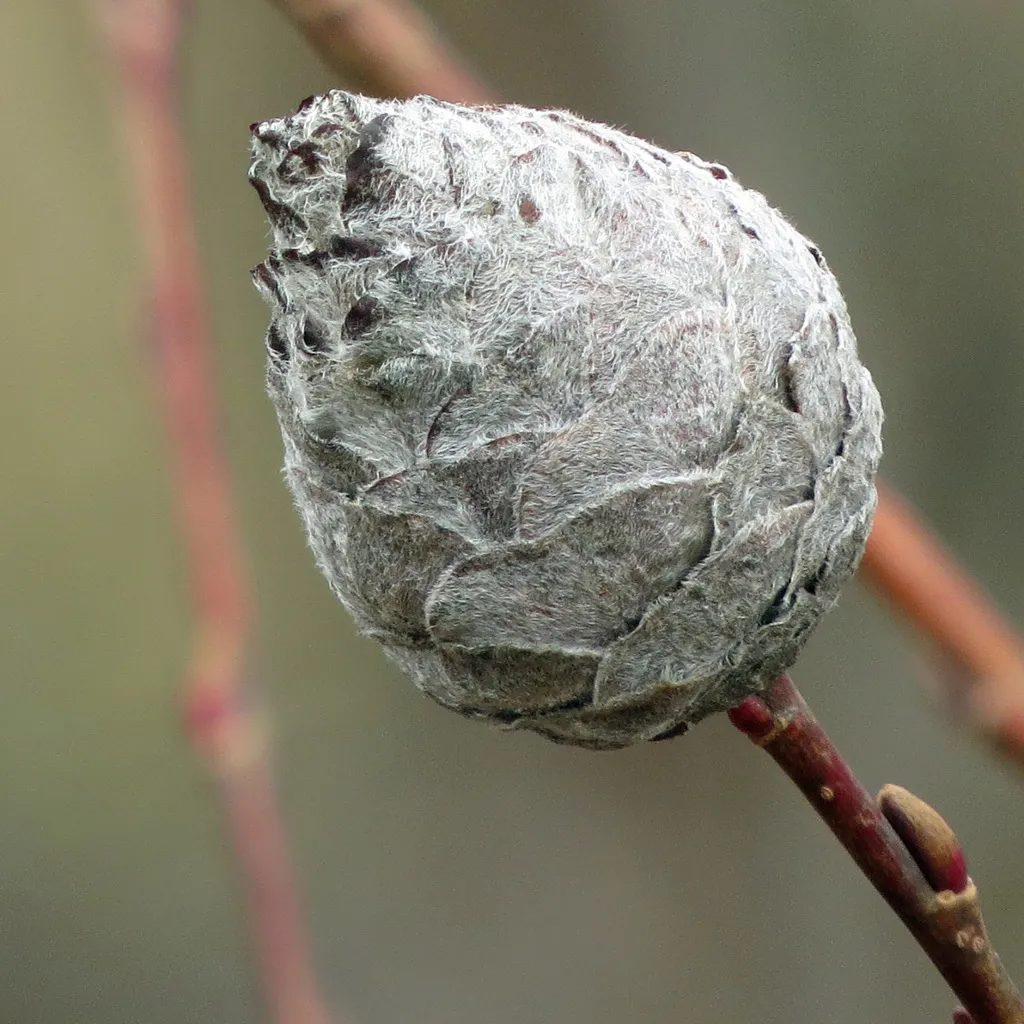
Willow Pinecone Gall Midge
Rabdophaga strobiloides
It forms galls in the apical buds of growing willow's twigs.
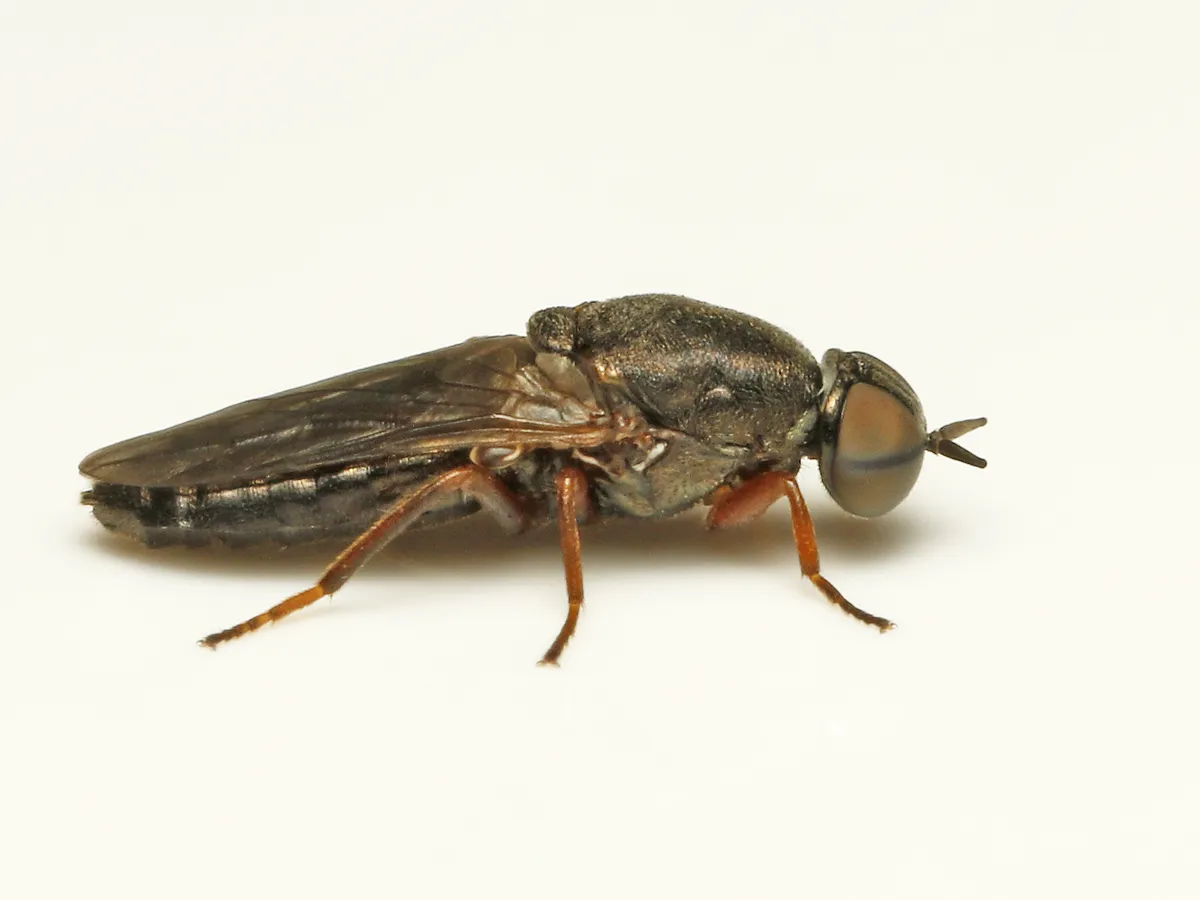
Window Fly
Scenopinus fenestralis
Identification: Similar to the other cosmopolitain species in this group, S. glabifrons Meigen. S. fenestralis has a rugose frons, while S. glabifrons has a smooth, shining frons.
Winnemana Laphria
Laphria winnemana
Identification: Nearly impossible to distinguish from several other similar species from photographs. Photos that are not conclusively identified should be placed in the Laphria canis complex here .
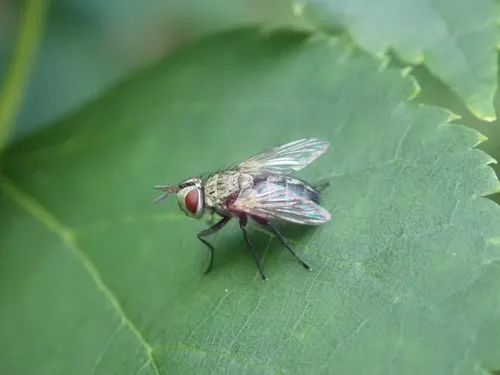
Winsome Fly
Istocheta aldrichi
Introduced from Japan in 1922 to combat the Japanese Beetle
Winthemia rufopicta
Winthemia rufopicta
Identification: "The males are distinguished from those of all the other species by the greatly narrowed front and by having the hind tibia thickly and evenly ciliate, rarely with a longer bristle in the row." (Guimarães 1972) Parasitoids of large c
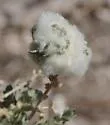
Woolly Stem Gall Midge
Asphondylia floccosa
Identification: This species can be most readily identified from its gall being a large, woolly stem gall not covered with small leaf clusters on Atriplex polycarpa , based on the key of Gagné 1989 . From this reference, "Masses of galls are 0.5-1.5
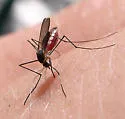
Wyeomyia mitchellii
Wyeomyia mitchellii
Identification: Adult: wings, legs, proboscis, and palps dark; palps very short; hindlegs held high over body and curving forward over head as though mimicking antennae; abdomen dark above, light below, with sharp dividing line along the side; tarsi
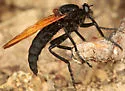
Wyliea mydas
Wyliea mydas
This species was originally described (in German) as Asilus mydas by Brauer in 1885. Figures 1 and 1a showing habitus and wing venation appear at the end of the paper here . In 1975 C. H. Martin gave his description of the new genus Wyliea and made t
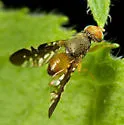
Xanthaciura tetraspina
Xanthaciura tetraspina
Identification: Scutellum with four bristles (apical pair short) instead of two in other species from the United States.
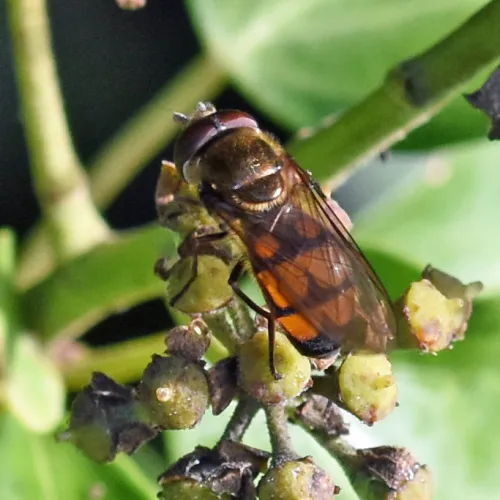
Xanthandrus comtus
Xanthandrus comtus
Abdomen segment T2 has round spots and segments T3 and T4 have semi-circular spots tht may join in the middle. Males are considerably more colourful than females which have darker, greyer markings on the abdomen. It usually occurs in woodland edge (d
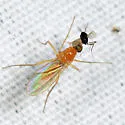
Xanthochlorus helvinus
Xanthochlorus helvinus
Identification: Distinguished from other North American Dolichopodidae by the combination of uniformly yellow color, no preapical bristles on mid and hind femora, acrostichals absent, and posterior third of scutum flattened.
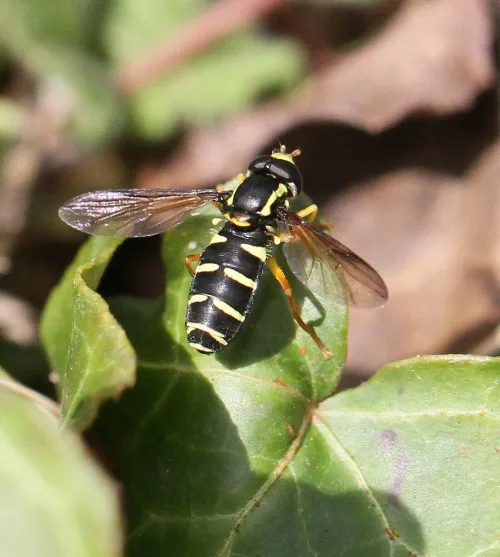
Xanthogramma citrofasciatum
Xanthogramma citrofasciatum
Wing length 6.5 to 10.5 mm. This species is black with lemon markings. It is similar to the more common Xanthogramma pedissequum but the sharply defined narrow triangular marking on T2 and the predominantly orange legs help to distinguish this specie
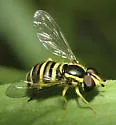
Xanthogramma flavipes
Xanthogramma flavipes
Identification: face, margins on thorax, and transverse bands on abdomen all bright yellow; female may have brown bands between the yellow abdominal bands
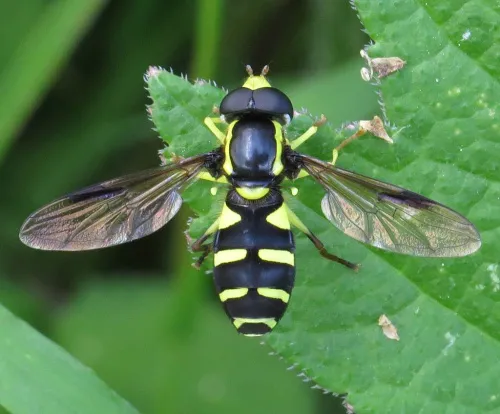
Xanthogramma pedissequum sensu lato
Xanthogramma pedissequum sensu lato
Quite a distinctive hoverfly, Xanthogramma pedissequum is best distinguished from the similar X. citrofasciatum by the dumpy appearance of the yellow triangles on tergite 2. However the very similar Xanthogramma stackelbergi was added to the British
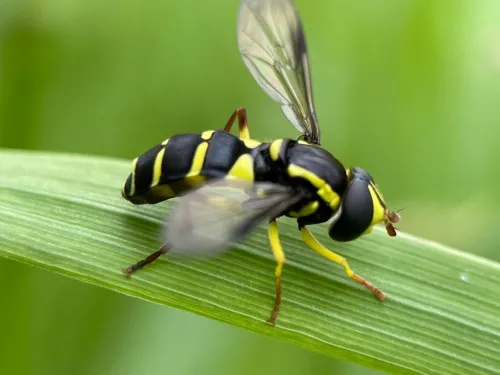
Xanthogramma pedissequum sensu stricto
Xanthogramma pedissequum sensu stricto
Xanthogramma pedissequum is best distinguished from the similar X. citrofasciatum by the dumpy appearance of the yellow triangles on tergite 2. However the very similar X. stackelbergi was added to the British list in 2012 (see Similar Species below)
Xenox xylocopae
Xenox xylocopae
Identification: Unlike X. tigrinus , this species is without the extensive white areas on the sides of the first tergite of the abdomen.
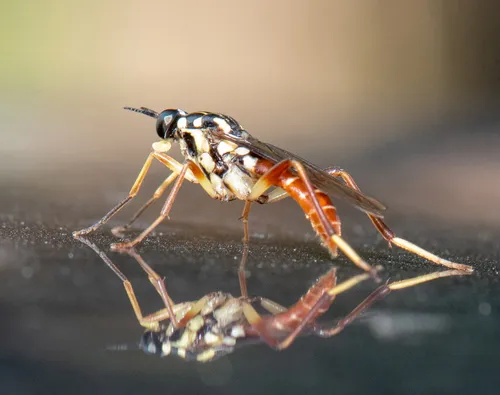
Xylomya americana
Xylomya americana
Identification: only species with two longitudinal yellow stripes on thorax. --Martin Hauser, 8.vi.2010
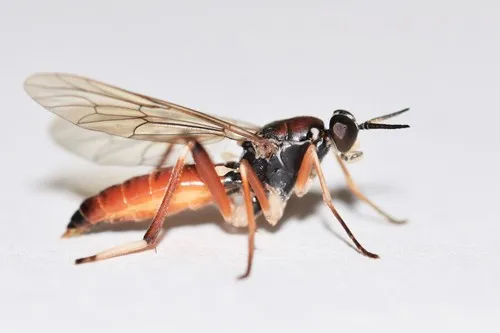
Xylomya pallidifemur
Xylomya pallidifemur
Identification: legs red with hind basitarsus white --Martin Hauser, 8.vi.2010
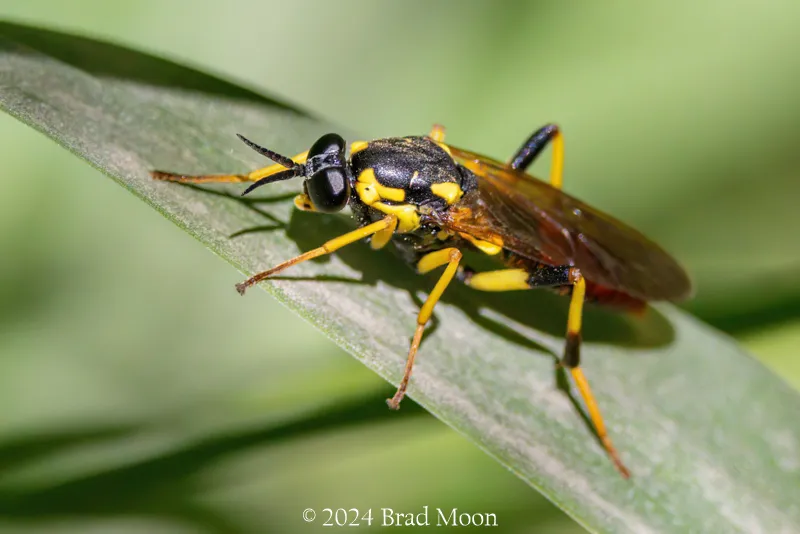
Xylomya parens
Xylomya parens
Identification: only species in the west and only species with black scutellum --Martin Hauser, 8.vi.2010
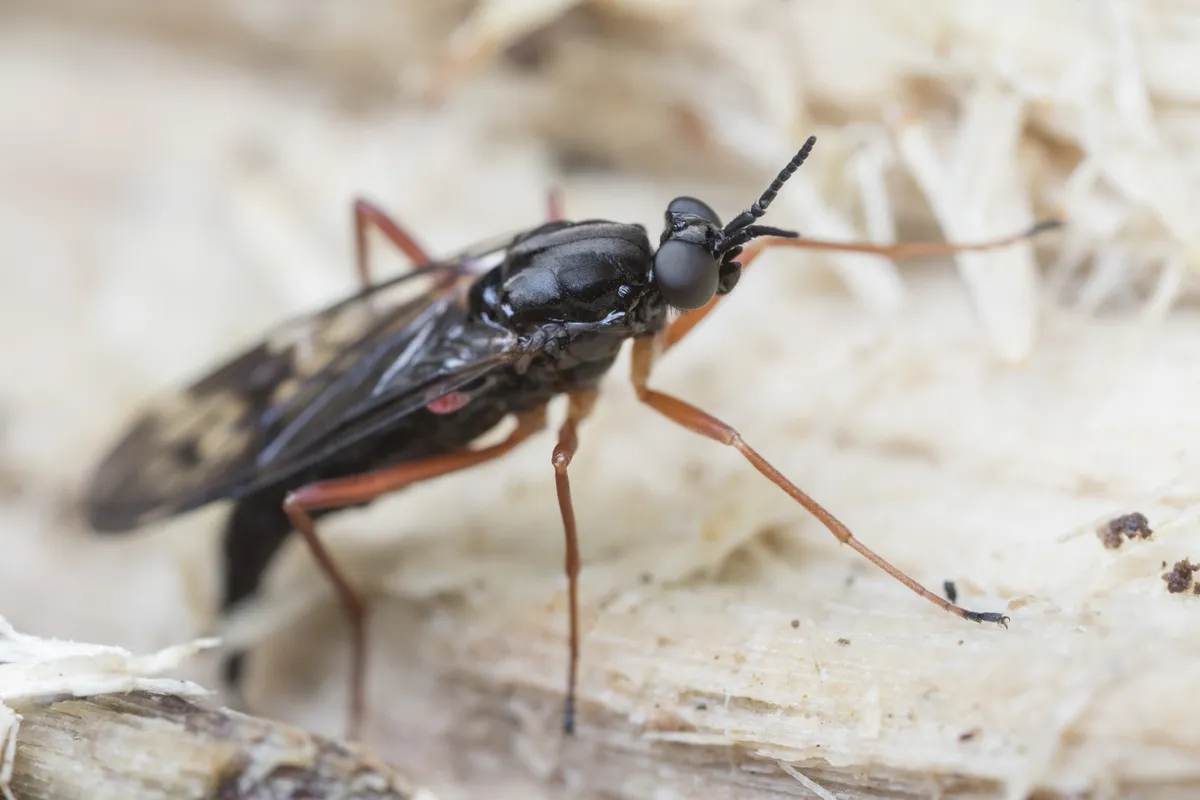
Xylophagus decorus
Xylophagus decorus
Identification: Easily identified in Xylophagus ( Archimyia ) by the entirely pruinose frons, whereas the other two species have either partly pruinose and partly glossy, or entirely glossy frons.
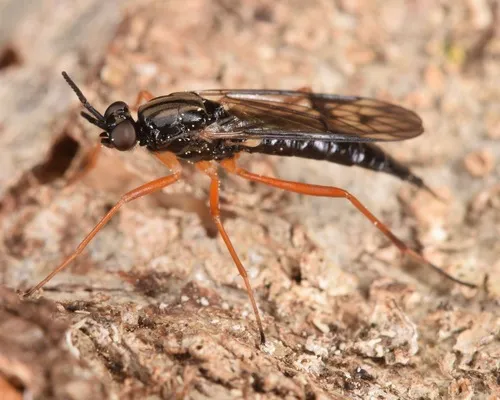
Xylophagus reflectens
Xylophagus reflectens
Identification: In Xylophagus ( Archimyia ), there is only one other species in the East, X. fulgidus . X. reflectans is easily distinguished from fulgidus by its pruinose and matte frons, whereas X. fulgidus has entirely glossy frons.
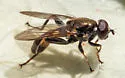
Xylota annulifera
Xylota annulifera
Identification: Tergites 2-3 with yellow-orange spots; metatrochanter with long spine; frontal triangle usually entirely pollinose; tarsi with apical three tarsomeres black; female pro- and mesotibiae dark apically.
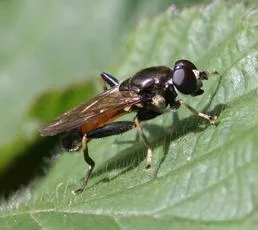
Xylota segnis
Xylota segnis
Identification: The broad orange belt across the abdomen of this species is distinctive, but not always obvious under the wings when at rest.
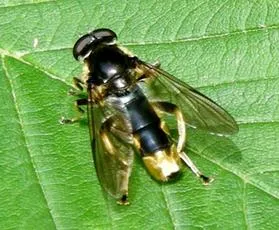
Xylota sylvarum
Xylota sylvarum
This species has golden hair on the bottom of its abdomen and often a further golden band above this. It can be seen from May to October with a peak in late June and July. Larvae have been found in wet decaying roots of Beech stumps, but where Beech
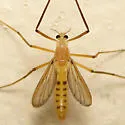
Xylotopus par
Xylotopus par
Identification: Within the Brillia group the bold yellow and black pattern and large size identify the species.
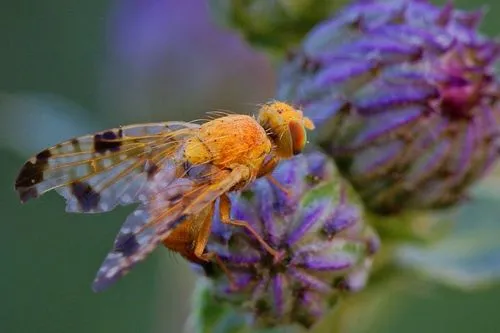
Xyphosia miliaria
Xyphosia miliaria
Length: 4-6 mm. This fruit fly is mostly orange with black patterned wings, typical of this family. Found on thistles where it causes galls to form on the host plant. Common and widespread over much of Britain.
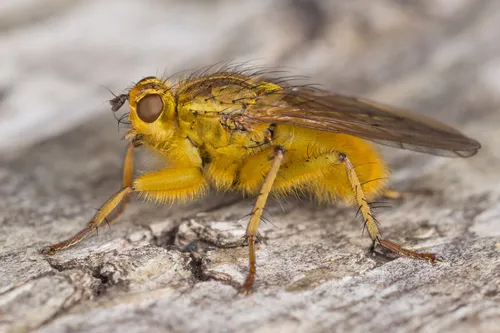
Yellow Dung Fly
Scathophaga stercoraria
One of the most common and widely distributed flies in Britain. The males are golden yellow and furry, whilst females are green/grey and bristly. It is very common in cattle farming areas where it breeds in cow dung but it can be found anywhere. It w
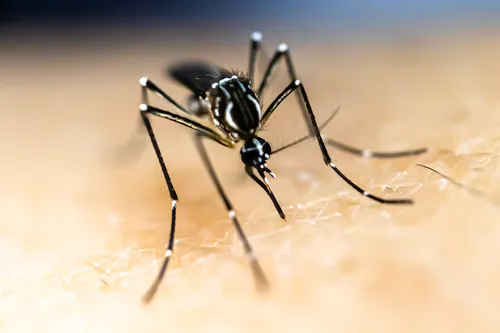
Yellow Fever Mosquito
Aedes aegypti
Identification: Medium-sized blackish mosquito easily recognized by a silvery-white "lyre-shaped" pattern of scales on its scutum. Segments 1 to 4 of the hind tarsi possess broad basal white rings, segment 5 is white. The coloration of both sexes is
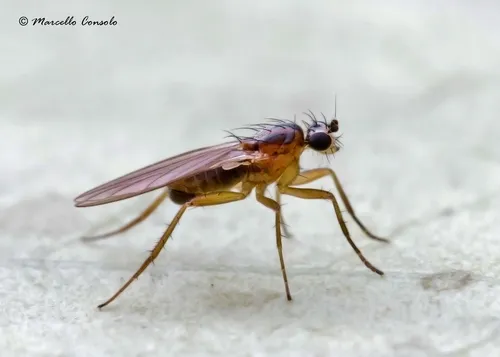
Yellow Spear-winged Fly
Lonchoptera lutea
Adults vary a great deal in colour, from yellow to dark brown. Scutellum brown to yellow. The antennal segments are all dark. The pointed wings have no central cross vein. Unlike most of these genera, Lonchoptera lutea shows a marked preference for u
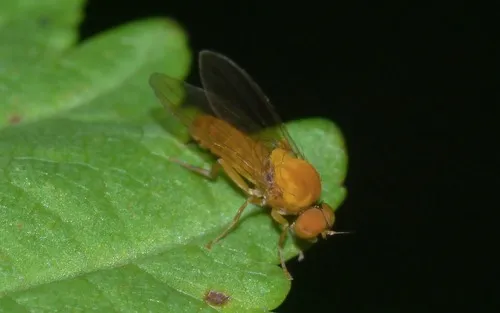
Yellow flat-footed fly
Agathomyia wankowiczii
Misleadingly called the Yellow flat-footed fly it is in fact vivid orange and the only totally orange member of its family in Britain. Agathomyia wankowiczii is also the only invertebrate in Britain known to cause a gall on a fungus, and a very speci
Yellow-bearded Hammertail
Efferia pogonias
Identification: Body and wings dark, mystax (beard) yellowish Females oviposit in soil.
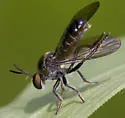
Yellow-faced Micropanther
Cerotainia macrocera
Identification: Area between eyes (frons) and top of head (vertex) very wide and covered with brown-yellow hairs. Eyes brown.
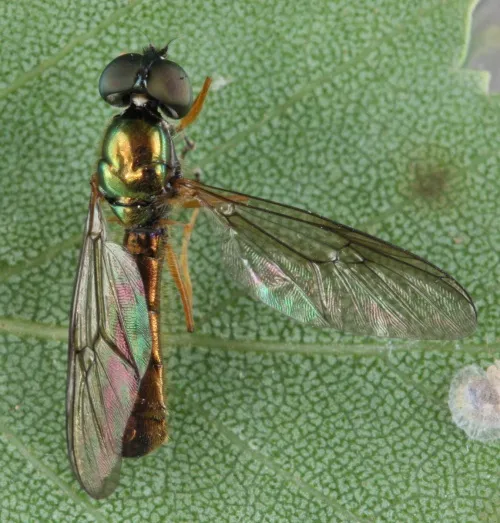
Yellow-legged Centurion
Sargus flavipes
Body length: 7-9 mm. Most specimens have yellow legs, though some are darker. It is smaller than S. bipunctatus , the only other similar species with yellow legs. Males have a green abdomen and thorax, whilst females have a black abdomen often with s
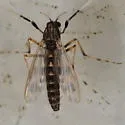
Zavreliella marmorata
Zavreliella marmorata
Identification: The combination of wing markings, leg markings, color, and expanded front femur is sufficient to identify this midge. Wing markings may be very faint. Some European populations are parthenogenic.
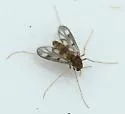
Zavrelimyia fragilis
Zavrelimyia fragilis
Identification: The wing markings of the adult, formed by dark hairs, are distinctive. The larva has not been described.
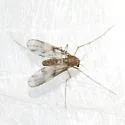
Zavrelimyia sinuosa
Zavrelimyia sinuosa
Identification: Wing pattern is unique in the family.
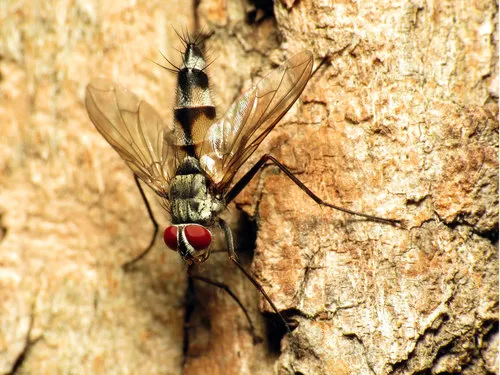
Zelia vertebrata
Zelia vertebrata
Identification: In the Northeast probably distinguishable from other species by the abdominal pattern combined with absence of strong bristles on the first two segments of the abdomen. Z. vertebrata has been defined as with the face also either longe
Zelia zonata
Zelia zonata
Identification: Distinguished from other eastern Zelia by the combination of 3 postsutural dorsocentrals, abdomen without a contrasting black median stripe, and median marginal bristles on tergite 3 (second visible).
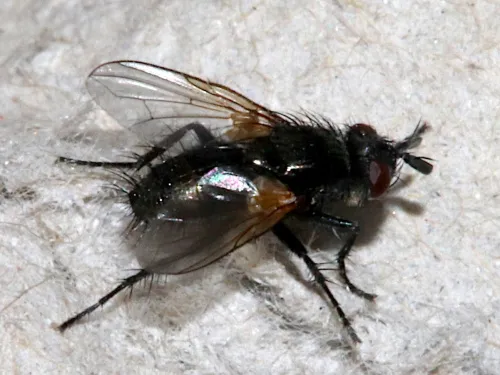
Zophomyia temula
Zophomyia temula
8-10.5 mm. Jet black and glossy but with yellow wing bases. Legs all black. The eyes are bare. Wing cell R4+5 is narrowly open at the wing margin. Tachina grossa is much larger and more stocky. Mesembrina meridiana (Noon Fly) lacks the bristles. No a
Zygoneura flavicoxa
Zygoneura flavicoxa
Identification: Strongly asymmetric fork of M combined with long necks of male flagellomeres.
marmoratus species group
Archytas marmoratus
Ravlin and Stehr considered this mostly tropical group to be represented by only one species in the United States.
undescribed sp. 1
Palpada undescribed-species-near-furcata
This page is for observations of the possibly undescribed species near Palpada furcata
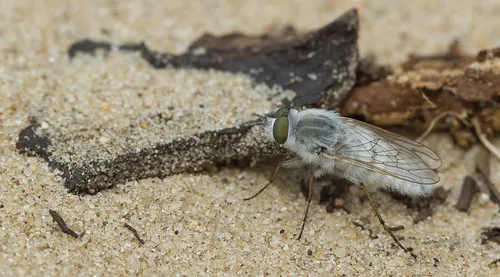
Acrosathe annulata
Acrosathe annulata
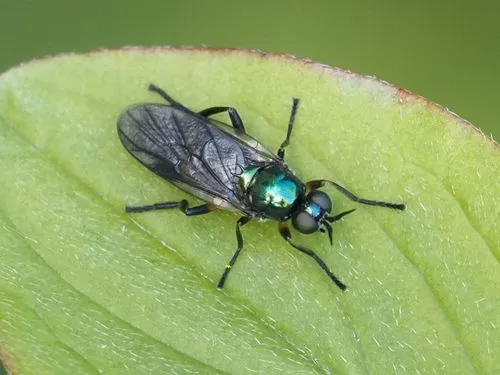
Actina chalybea
Actina chalybea
Afrocamilla armata
Afrocamilla armata
Afrocamilla artopenna
Afrocamilla artopenna
Afrocamilla carolae
Afrocamilla carolae
Afrocamilla confusa
Afrocamilla confusa
Afrocamilla danielssoni
Afrocamilla danielssoni
Afrocamilla elongata
Afrocamilla elongata
Afrocamilla malgasensis
Afrocamilla malgasensis
Afrocamilla sineseta
Afrocamilla sineseta
Afrocamilla stuckenbergi
Afrocamilla stuckenbergi
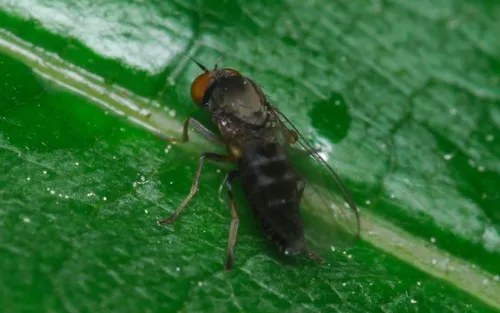
Agathomyia antennata
Agathomyia antennata
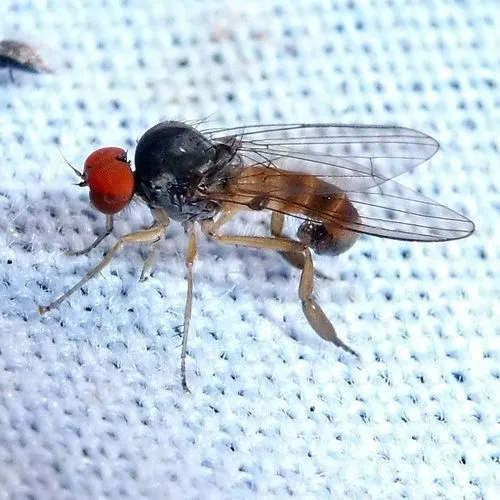
Agathomyia falleni
Agathomyia falleni
Agathon arizonicus
Agathon arizonicus
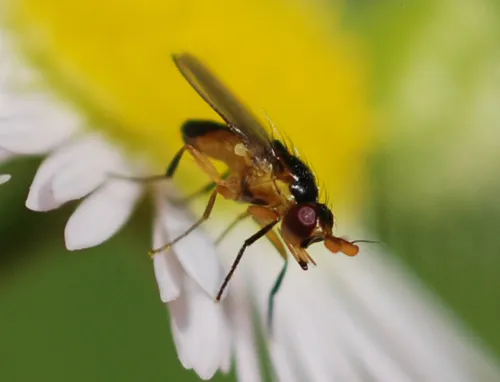
Aldrichiomyza elephas
Aldrichiomyza elephas
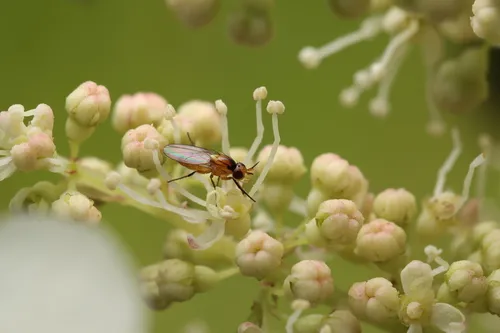
Aldrichiomyza koreana
Aldrichiomyza koreana
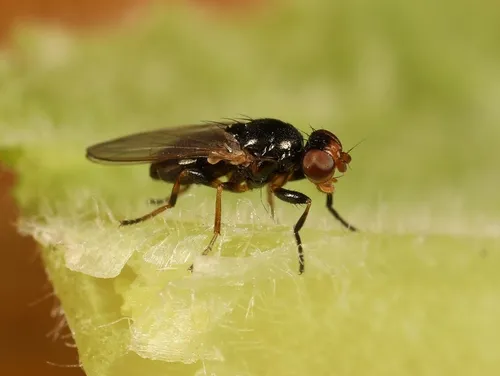
Allopiophila vulgaris
Allopiophila vulgaris
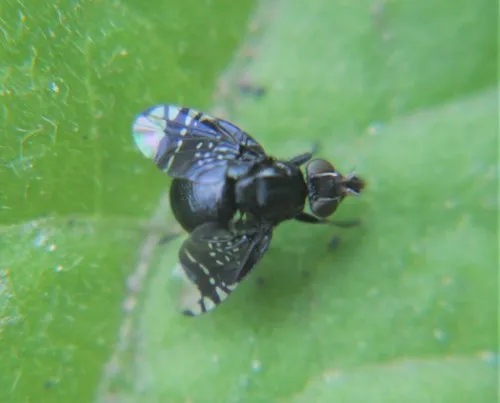
Amphicnephes stellatus
Amphicnephes stellatus
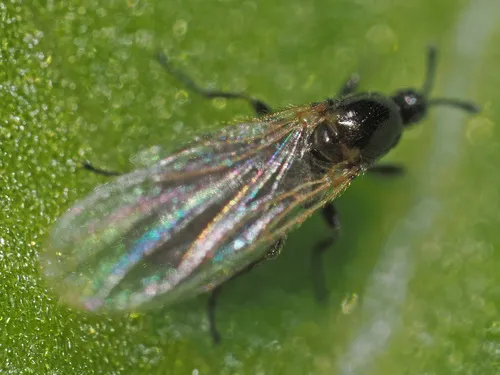
Anapausis inermis
Anapausis inermis
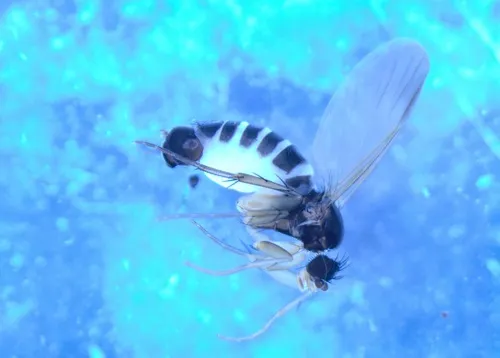
Anevrina thoracica
Anevrina thoracica
Anevrina urbana
Anevrina urbana
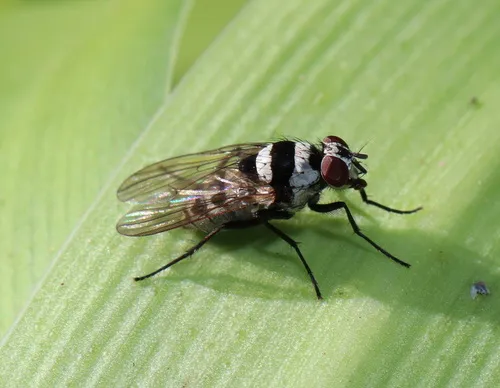
Anthomyia medialis
Anthomyia medialis
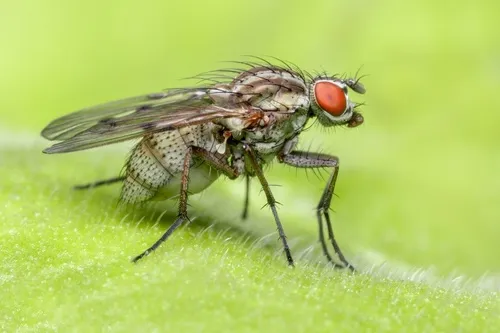
Anthomyia punctipennis
Anthomyia punctipennis
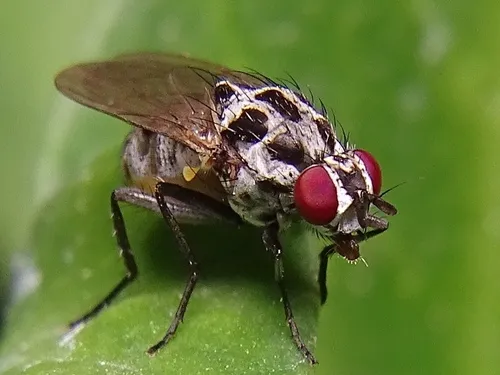
Anthomyia quinquemaculata
Anthomyia quinquemaculata
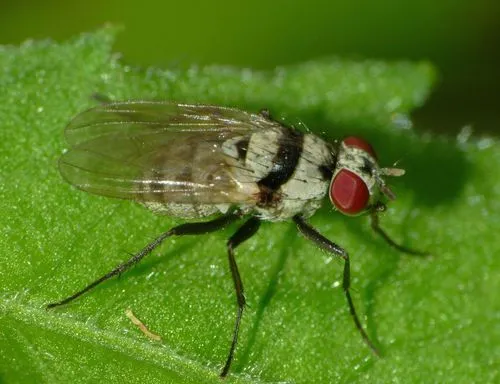
Anthomyia silvestris
Anthomyia silvestris
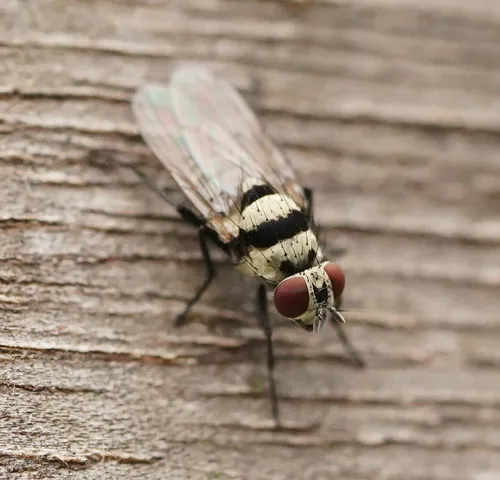
Anthomyia vicarians
Anthomyia vicarians
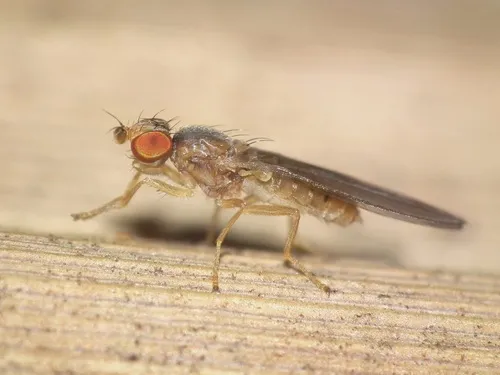
Anthomyza collini
Anthomyza collini
Anthomyza gracilis
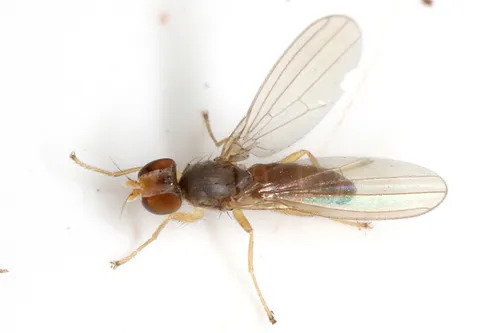
Anthomyza gracilis
Anthomyza neglecta
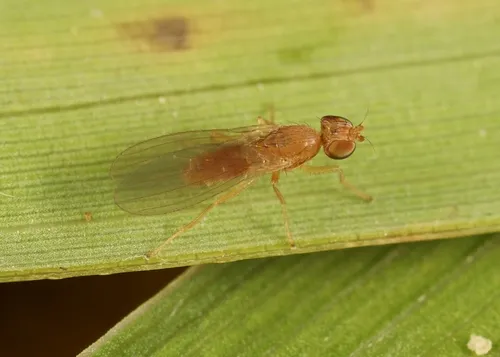
Anthomyza neglecta
Anthomyza trifurca
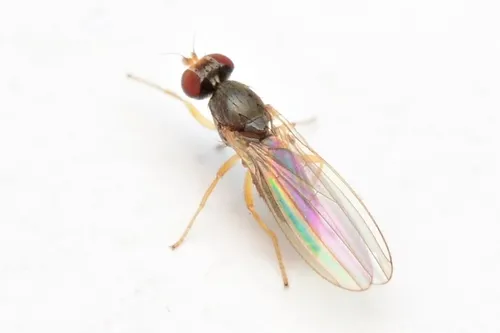
Anthomyza trifurca
Aphaniosoma arenicolum
Aphaniosoma arenicolum
Aphaniosoma falciferum
Aphaniosoma falciferum
Aphaniosoma galamarillum
Aphaniosoma galamarillum
Aphaniosoma rabida
Aphaniosoma rabida
Apiloscatopse filamentosa
Apiloscatopse filamentosa