
Yellow Fever Mosquito
Aedes aegypti
This record describes Aedes aegypti (species). Recorded family: Culicidae. Recorded order: Diptera.
Identification and Appearance
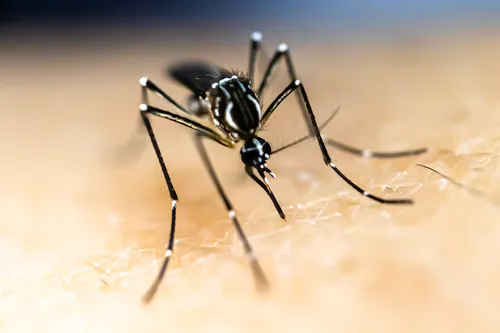
Medium-sized blackish mosquito easily recognized by a silvery-white lyre-shaped pattern of scales on its scutum. Segments 1 to 4 of the hind tarsi possess broad basal white rings, segment 5 is white. The coloration of both sexes is similar. Florida Medical Entomology Laboratory Aedes aegypti is the most competent vector of dengue virus. Ae. aegypti , the most important and efficient epidemic vector of dengue viruses, has been in the United States for over 200 years and was responsible for transmitting major epidemics in the southern states in the 19th and early 20th centuries The female mosquitoes are very nervous feeders, disrupting the feeding process at the slightest movement, only to return to the same or a different person to continue feeding moments later. Because of this behavior, A. aegypti females will often feed on several persons during a single blood meal and, if infective, may transmit dengue virus to multiple persons in a short time, even if they only probe without taking blood. It is not uncommon to see several members of the same household become ill with dengue fever within a 24- to 36-h time frame, suggesting that all of them were infected by a single infective mosquito. It is this behavior that makes A. aegypti such an efficient epidemic vector. Inhabitants of dwellings in the tropics are rarely aware of the presence of this mosquito, making its control difficult. In 1951, Max Theiler won a Nobel Prize for his YF vaccine, which is the only Nobel Prize given for a vaccine to date (Norrby 2007).
Wikipedia reference for Aedes aegypti: https://en.wikipedia.org/wiki/Aedes_aegypti.
Classification
Habitat and Range
Habitat
Densities are greatest in the Gulf Coastal states - Dr. Womack, 2013 Aedes aegypti comes in three polytypic forms: domestic, sylvan, and peridomestic.
Geographic Range
current range along Gulf coast from so. FL to so. TX , AZ*, CA , - 2013 U.S. Ae. aegypti distribution map historical range: e. US to AZ (AZ-FL-NY-KS) / throughout most of the tropical and subtropical regions of the world *Note, major declines in the abundance of Ae. aegypti have been associated with the expansion of Ae. albopictus in both urban and rural areas
Seasonal Activity
adults primarily May-Nov ( 9 )
Diet and Behavior
Diet: Larvae feed on the aquatic microbiota that develops in artificial containers. adults only feed on people (and other primates) ( 8 )
Life History
Under laboratory temperatures of 10–40°C, the duration of development from egg eclosion (hatching of the first instar) to adult was inversely related to temperature, ranging from 7.2 ± 0.2 days at 35°C to 39.7 ± 2.3 days at 15°C. The minimum temperature threshold for development (t) was determined as 8.3 ± 3.6°C and the thermal constant (K) was 181.2 ± 36.1 day-degrees above the threshold. Maximum survival rates of 88–93% were obtained between 20 and 30°C. The sex ratio (♀:♂) was 1 : 1 at all temperatures tested (15, 20, 25 and 35°C) except 30°C (4 : 3). ( 10 ) The adult mosquitoes prefer to rest indoors, are unobtrusive, and prefer to feed on humans during daylight hours. There are two peaks of biting activity, early morning for 2 to 3 h after daybreak and in the afternoon for several hours before dark. However, these mosquitoes will feed all day indoors and on overcast days. ( 11 )
About Flies: the wider group
Order-level background for Diptera, the group containing Aedes aegypti. Species-specific details appear above.
Group overview
Diptera includes over 150,000 described species of flies, mosquitoes, and midges. Mosquitoes are the deadliest animal on Earth (CDC). Malaria alone causes ~249 million cases and over 608,000 deaths annually, mostly children under 5 (WHO). Vector-borne diseases account for over 17% of all infectious diseases, causing 700,000+ deaths per year.
Ecological role of the group
Despite their disease impact, flies are critical decomposers and pollinators. Hoverflies alone pollinate hundreds of crop and wildflower species. Flies are also the primary food source for many birds, bats, and fish. Forensic entomology relies heavily on fly species for crime scene analysis.
Economic and practical significance of the group
In the U.S., vector-borne disease cases tripled between 2004-2016, with over 640,000 cases reported in that period (CDC). Tickborne diseases doubled from 22,000 to 48,000 annual reports. Globally, mosquito-borne diseases cost billions in healthcare and lost productivity.
Recorded sources for this group: WHO, CDC, PNAS. Imported estimates may describe particular regions or reporting periods.
Photos of Yellow Fever Mosquito (3)
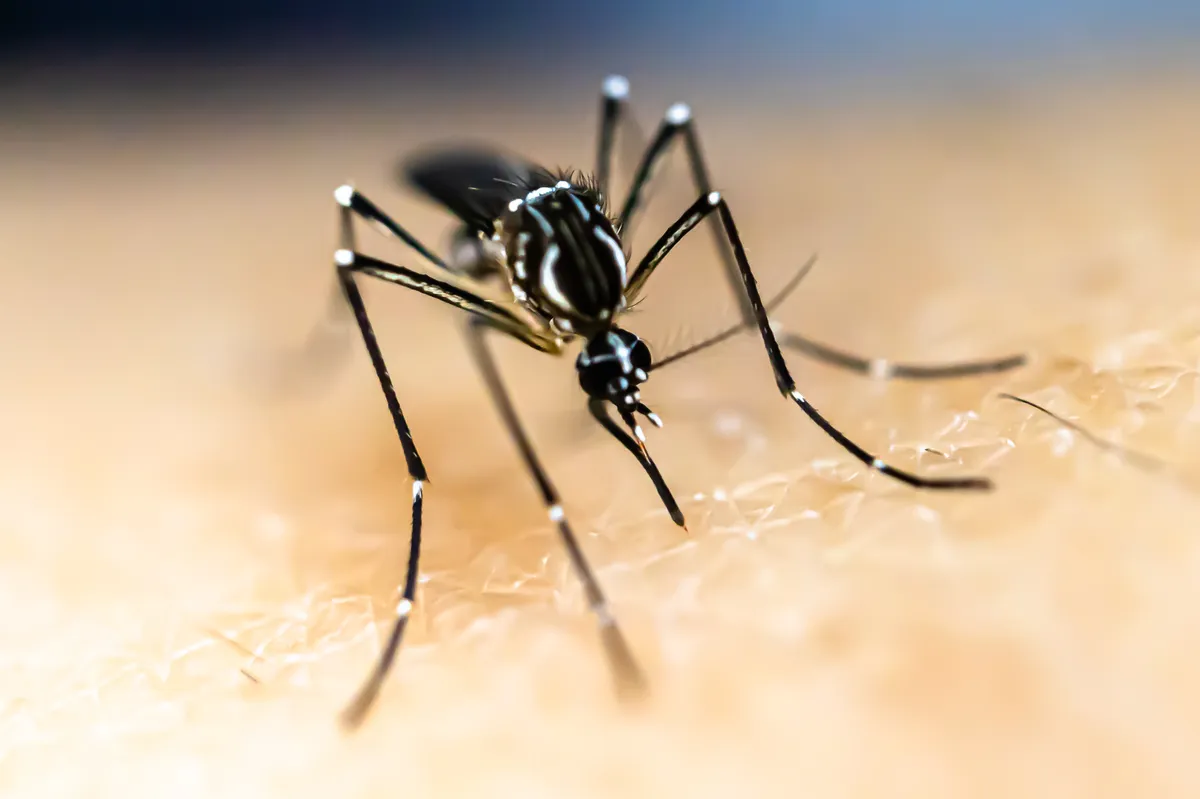
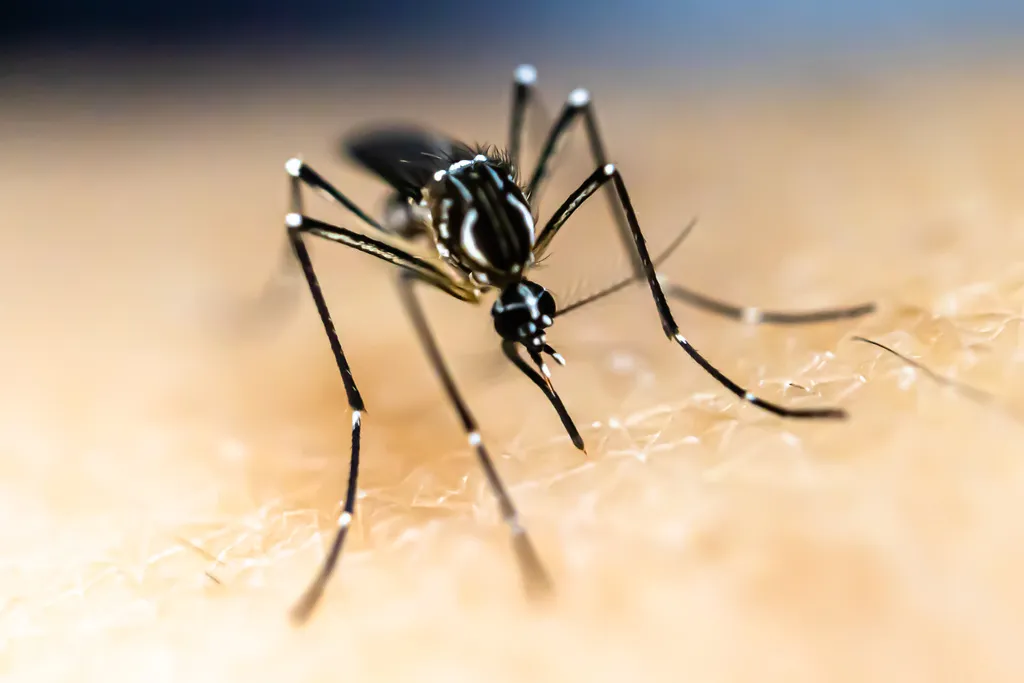
Photo credits: Contributed by Beatriz Moisset; Additional contributions by Omar Fahmy , Mike Quinn
Frequently Asked Questions About Yellow Fever Mosquito
What is Yellow Fever Mosquito?
Yellow Fever Mosquito (Aedes aegypti) is a species in the family Culicidae, within the order Diptera.
How do you identify Yellow Fever Mosquito?
Medium-sized blackish mosquito easily recognized by a silvery-white lyre-shaped pattern of scales on its scutum. Segments 1 to 4 of the hind tarsi possess broad basal white rings, segment 5 is white. The coloration of both sexes is similar. Florida Medical Entomology Laboratory
Where is Yellow Fever Mosquito found?
| Feature | Details |
|---|---|
| Habitat | Densities are greatest in the Gulf Coastal states - Dr. Womack, 2013 Aedes aegypti comes in three polytypic forms: domestic, sylvan, and peridomestic. |
| Range | current range along Gulf coast from so. FL to so. TX , AZ*, CA , - 2013 U.S. Ae. aegypti distribution map historical |
| Range | e. US to AZ (AZ-FL-NY-KS) / throughout most of the tropical and subtropical regions of the world *Note, major declines in the abundance of Ae. aegypti have been associated with the expansion of Ae. albopictus in both urban and rural areas |
What does Yellow Fever Mosquito eat?
The diet of the Yellow Fever Mosquito includes Larvae feed on the aquatic microbiota that develops in artificial containers. adults only feed on people (and other primates) ( 8 ).
When is Yellow Fever Mosquito active?
Yellow Fever Mosquito: seasonal activity - adults primarily May-Nov ( 9 ).
What is the life cycle of a Yellow Fever Mosquito?
Under laboratory temperatures of 10–40°C, the duration of development from egg eclosion (hatching of the first instar) to adult was inversely related to temperature, ranging from 7.2 ± 0.2 days at 35°C to 39.7 ± 2.3 days at 15°C. The minimum temperature threshold for development (t) was determined as 8.3 ± 3.6°C and the thermal constant (K) was 181.2 ± 36.1 day-degrees above the threshold. Maximum survival rates of 88–93% were obtained between 20 and 30°C. The sex ratio (♀:♂) was 1 : 1 at all temperatures tested (15, 20, 25 and 35°C) except 30°C (4 : 3). ( 10 ) The adult mosquitoes prefer to rest indoors, are unobtrusive, and prefer to feed on humans during daylight hours. There are two peaks of biting activity, early morning for 2 to 3 h after daybreak and in the afternoon for several hours before dark. However, these mosquitoes will feed all day indoors and on overcast days. ( 11 )