
Flies
Order Diptera
The Flies (Order Diptera) includes 6,350 species across 141 families and 1,800 genera in our directory.
About Flies
Diptera includes over 150,000 described species of flies, mosquitoes, and midges. Mosquitoes are the deadliest animal on Earth (CDC). Malaria alone causes ~249 million cases and over 608,000 deaths annually, mostly children under 5 (WHO). Vector-borne diseases account for over 17% of all infectious diseases, causing 700,000+ deaths per year.
Economic Impact
In the U.S., vector-borne disease cases tripled between 2004-2016, with over 640,000 cases reported in that period (CDC). Tickborne diseases doubled from 22,000 to 48,000 annual reports. Globally, mosquito-borne diseases cost billions in healthcare and lost productivity.
Ecological Role
Despite their disease impact, flies are critical decomposers and pollinators. Hoverflies alone pollinate hundreds of crop and wildflower species. Flies are also the primary food source for many birds, bats, and fish. Forensic entomology relies heavily on fly species for crime scene analysis.
Families in Diptera (141)
Species in Diptera (6,350)
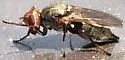
Tetanops luridipennis
Tetanops luridipennis
Identification: Frons with contrasting red central stripe and no black stripes (but with spotted sides), wing without or with very faint dark spots, femora mostly black, front and hind tibiae brown.
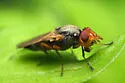
Tetanops magdalanae
Tetanops magdalanae
Identification: Frons entirely red, without spots, wrinkles, or a contrasting central stripe.
Tethina sasakawai
Tethina sasakawai
Identification: One of three strongly bristled Tethina from the Pacific coast. T. thula is very similar but only overlaps in range in Alaska. T. horripilans has a broader gena, about 2/3 eye height.
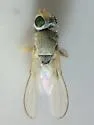
Tethina willistoni
Tethina willistoni
Identification: Examination of male genitalia is required to distinguish from the very similar eastern species Tethina albula (Loew).
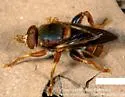
Teuchocnemis bacuntius
Teuchocnemis bacuntius
May be a Batesian mimic of a paper wasp, e.g. Polistes fuscatus . Compare:
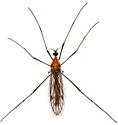
Teucholabis rubescens
Teucholabis rubescens
Identification: Dark except for a strongly contrasting red thorax.
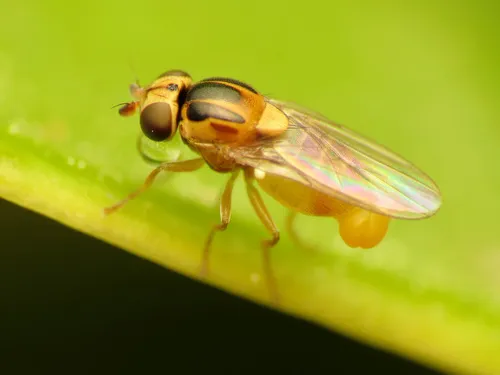
Thaumatomyia notata
Thaumatomyia notata
A tiny (2.5 mm) yellow fly with dark stripes on the thorax. Found in most habitats, most particularly from low bushes, woodland edges and waste ground. Can be common in gardens and may venture indoors when numbers build up later in the summer. There
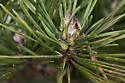
Thecodiplosis brachynteroides
Thecodiplosis brachynteroides
Possibly synonymous with T. pinirigidae on pitch pine; the two species are indistinguishable other than by host plant.
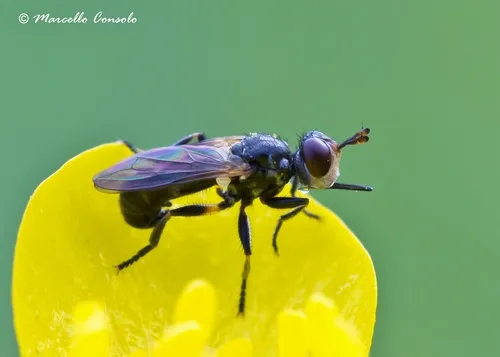
Thecophora atra
Thecophora atra
Thorax and abdomen of this very small conopid is mainly greyish-black. The head is quite large, the snout is elongated with narrow white cheeks, the large eyes are reddish, the second segment of antennae is much longer than the third and femur 1 and
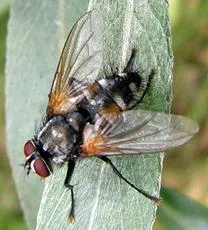
Thelaira nigrina
Thelaira nigrina
This is a long-legged, hairy fly with plumose antennae. The central dark band down the back of the abdomen is bordered by orange and white. Thelaira solivago is very similar and easily confused. This has 3 long anterodorsal bristles on the mid tibia
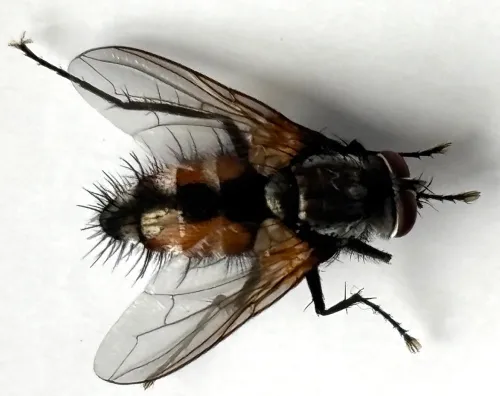
Thelaira solivaga
Thelaira solivago
7.5-12mm. A relatively large tachinid. Males have strong orange sides to the abdomen with a broad, dark medial stripe - about one third the width of the abdomen. Both sexes have 4 strong bristles on the mid tibia (only 2-3 in T. nigrina ). Females la
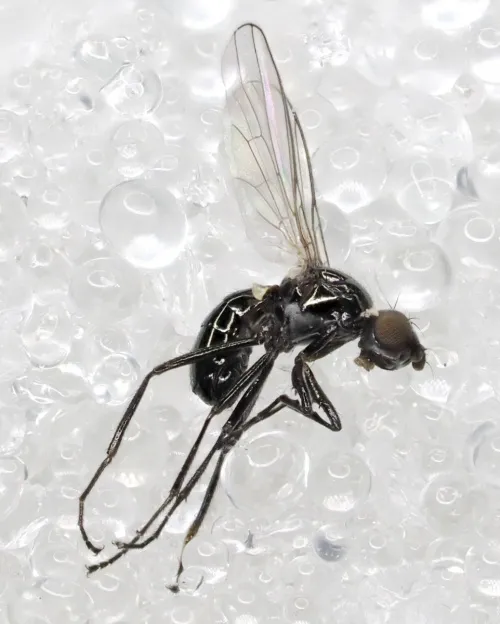
Themira minor
Themira minor
One of several, very similar Sepsidae species. Detailed examination is needed for safe species identification. Unless identified by a recognised expert, a photo is required and the specimen should be examined with a microscope. In the comments box, s
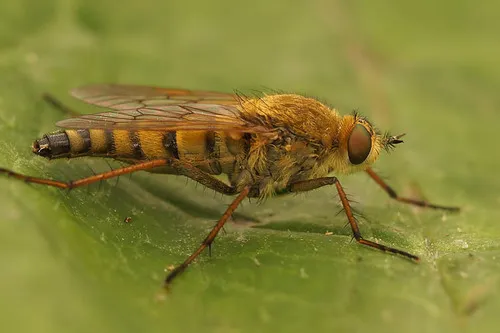
Thereva nobilitata
Thereva nobilitata
This fly has a long hairy body with slender legs. The adults are conspicuous with their golden hairs and banded abdomen. The female abdomen in quite pointed. Unless identified by a recognised expert, a photo is required. If the photo doesn't show the
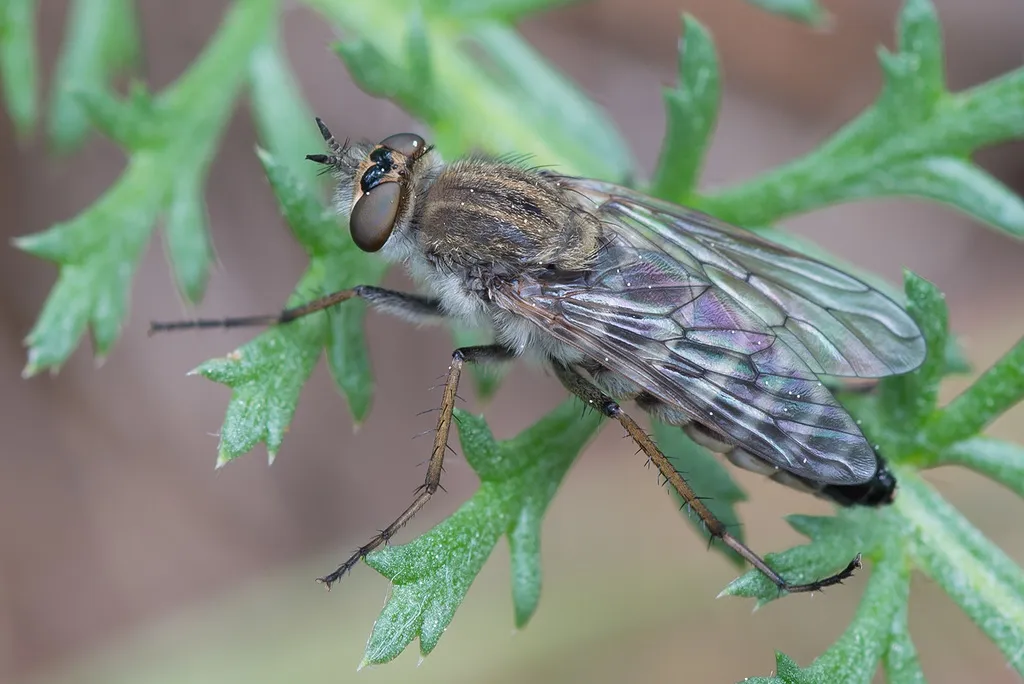
Thereva plebeja
Thereva plebeja
12-14mm. A sturdy-looking fly with a grey and black banded abdomen, particularly so in the female, which is long and conical. The hind femora have two rows of anteroventral bristles (not necessarily neat rows but clearly not one line). The hairs on t
Thevenemyia (Arthroneura) tridentata
Thevenetimyia tridentata
Identification: 3 submarginal cells (unique character; also differentiates this sp. from superficially similar T. affinis and T. sodalis )
Thevenetimyia accedens
Thevenetimyia accedens
Closely resembles T. luctifera . T. accedens can be distinguished from T. luctifera by the black to brown hair on the squama, especially in males, and by the subhyaline anal and axillary cells. (Hall, 1969)
Thevenetimyia affinis
Thevenetimyia affinis
Identification: T. sodalis is similar in wing pattern and in having 2 submarginals, but has denticulate costa (smooth in affinis ) T. affinis wing Superficially similar T. tridentata has 3 submarginal cells
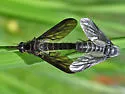
Thevenetimyia celer
Thevenetimyia celer
Identification: Wings infuscated, the middle of almost all cells subhyaline
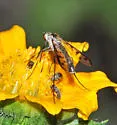
Thevenetimyia culiciformis
Thevenetimyia culiciformis
Some plant records for adults: Baccharis glutinosa , Hymenothrix
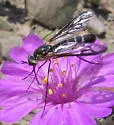
Thevenetimyia maculipennis
Thevenetimyia maculipennis
Identification: With the exception of the costal and marginal cells, the wing markings in this species are confined to the apical part of wing.
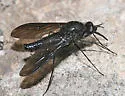
Thevenetimyia muricata
Thevenetimyia muricata
Identification: Both sexes entirely black, large. Wings infuscated with brown, middle of cells subhyaline. Costa strongly denticulate. Abdomen shining black, black pilose, tomentum wanting. Male is very similar to T. notata male (the latter has white
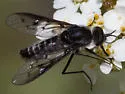
Thevenetimyia sodalis
Thevenetimyia sodalis
Identification: Closely related to T. affinis but differs in the entirely white pilose thorax and narrow, elongate 3rd antennal segment of the female. Male sodalis have a denticulate costa which is smooth in affinis .
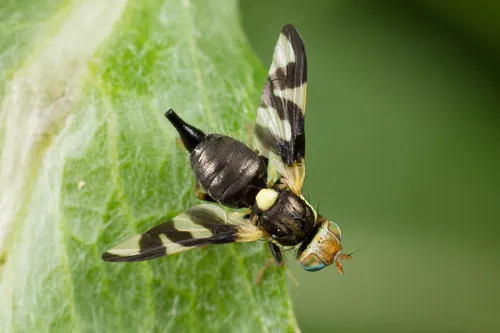
Thistle Gall Fly
Urophora cardui
A small but striking fly. The male's wings have darker markings. The fly causes distinctive swollen stem galls on Creeping Thistle. These are green and fleshy to begin with, and persist on old stems. Several chambers are inside. Adults fly in June, l
Three-banded Robber Fly
Stichopogon trifasciatus
Identification: body slender and relatively hairless; thorax and legs light bluish-gray; abdomen with 3 bands of alternating light and dark color (a distinguishing feature among congeners)
Threticus bicolor
Threticus bicolor
Identification: "...the male has the distinct black and white coloration, as well as longer and wider antennae. The female is more drab, with narrow antennae." (Dr. Curler's comment)
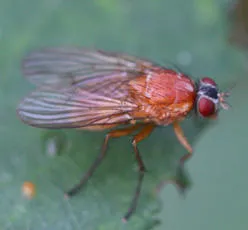
Thricops diaphanus
Thricops diaphanus
This fly is unusual in being almost completely orangey-yellow. Phaonia pallida is a very similar orange muscid. Females can be separated by the frontal vitta (area between eyes) which is orange in P. pallida but dark in T. diaphanus . Males will gene
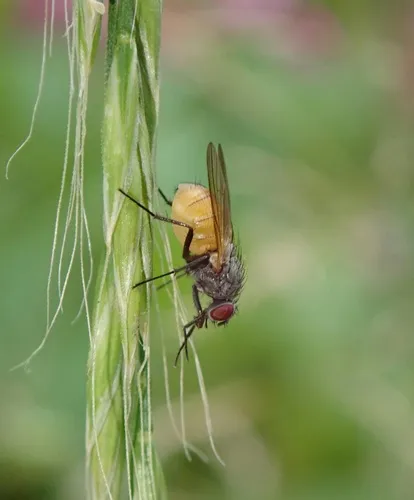
Thricops semicinereus
Thricops semicinereus
This is a hairy fly with an orangey abdomen that is black at the tip. Scattered records from England and Wales. No additional images available for this species.
Tipula apicalis
Tipula apicalis
Identification: Wing cells beyond cord of wing darkened, wing apex narrowly but conspicuously darkened (the most distinct character)
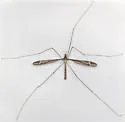
Tipula caloptera
Tipula caloptera
Identification: "They are the largest species of Yamatotipula group that have their wings striped longitudinally with brown and white. Their flagellar segments of antennae are yellow with darkened bases, and are shorter than their thorax. The abdomin
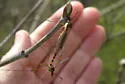
Tipula collaris
Tipula collaris
Identification: Black and yellow color as in Nephrotoma . Crossvein m-cu intersecting the side of the discal cell. Thorax with three matte black stripes. Pleura with grey pruinosity.
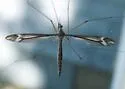
Tipula fraterna
Tipula fraterna
Identification: Wing with a conspicuous white crossband reaching hind margin, wing beyond crossband dark or with a white spot in cell r5 widely separated from crossband.
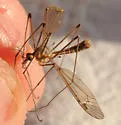
Tipula inusitata
Tipula inusitata
Identification: "Although related to Tipula (Lunatipula) aurantionota Alexander and T. (L.) usitata Doane, the present fly is readily told by the structure of the male hypopygium..." (Alexander, 1949, p.18) This page is based on examination of this m
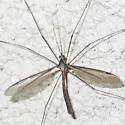
Tipula ludoviciana
Tipula ludoviciana
Identification: " Tipula ludoviciana is allied to, and superficially resembles, T. sayi Alex. ( costalis Say) which has the antennae of the male short, about reaching the base of the abdomen; no dark seam along the vein Cu; the petiole of cell M1 muc
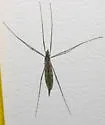
Tipula metacomet
Tipula metacomet
Identification: similar to T. abdominalis , distinguished by the dark brown femur and tibia (no pale subapical band at femur or base of tibia), wing stigma dark brown, wing pattern and abdominal tergite 1 evenly dark brown. (Jon Gelhaus)
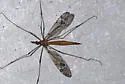
Tipula pubera
Tipula pubera
Identification: Male with long, yellow hair on sternite 8, probably the source of the species name.
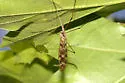
Tipula senega
Tipula senega
Identification: Adults pale yellow, with wings patterned with pale clouds; ovipositor has relatively short and broad cerci
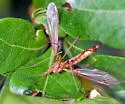
Tipula submaculata
Tipula submaculata
Per comments by Dr. Chen W. Young here Tipula submaculata and mallochi females cannot at present be separated. Although DNA suggests that the two may be the same species, males can be separated based on genitalia structures.
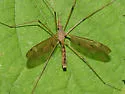
Tipula ultima
Tipula ultima
Identification: Hypopygium of male with large, projecting ventral sternal ridge, without tufts of setae flanking this ridge.
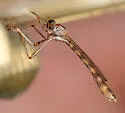
Tipulogaster glabrata
Tipulogaster glabrata
Identification: the shellacked look of the thoracic dorsum distinctive among thin Leptogaster ( Herschel Raney )
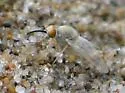
Tmemophlebia coquilletti
Tmemophlebia coquilletti
Identification: face white; top of head pale yellowish; eyes large, brownish-orange; proboscis black, about 2x longer than head, with uniform downward curve; antennae short, spike-like, distal half black, proximal half whitish; top of thorax dome-sha
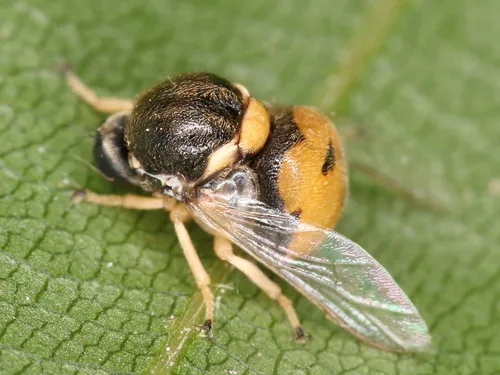
Top-horned Hunchback
Acrocera orbiculus
Acrocera orbiculus is one of three British Acroceridae species. They are small, dumpy flies with a strongly domed thorax, relatively small head and large squamae. Acrocera orbiculus is easily distinguished from the other two acrocerids by the fact th
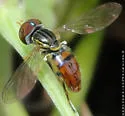
Toxomerus boscii
Toxomerus boscii
Identification: The main characters are: the yellow stripe on the mesonotum is not very thick and the hind femur has a black ring. -- comment by Martin Hauser
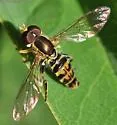
Toxomerus occidentalis
Toxomerus occidentalis
Identification: almost identical to T. geminatus but usually separable by geographic location (ranges overlap only in Texas) -- see[cite:144390]
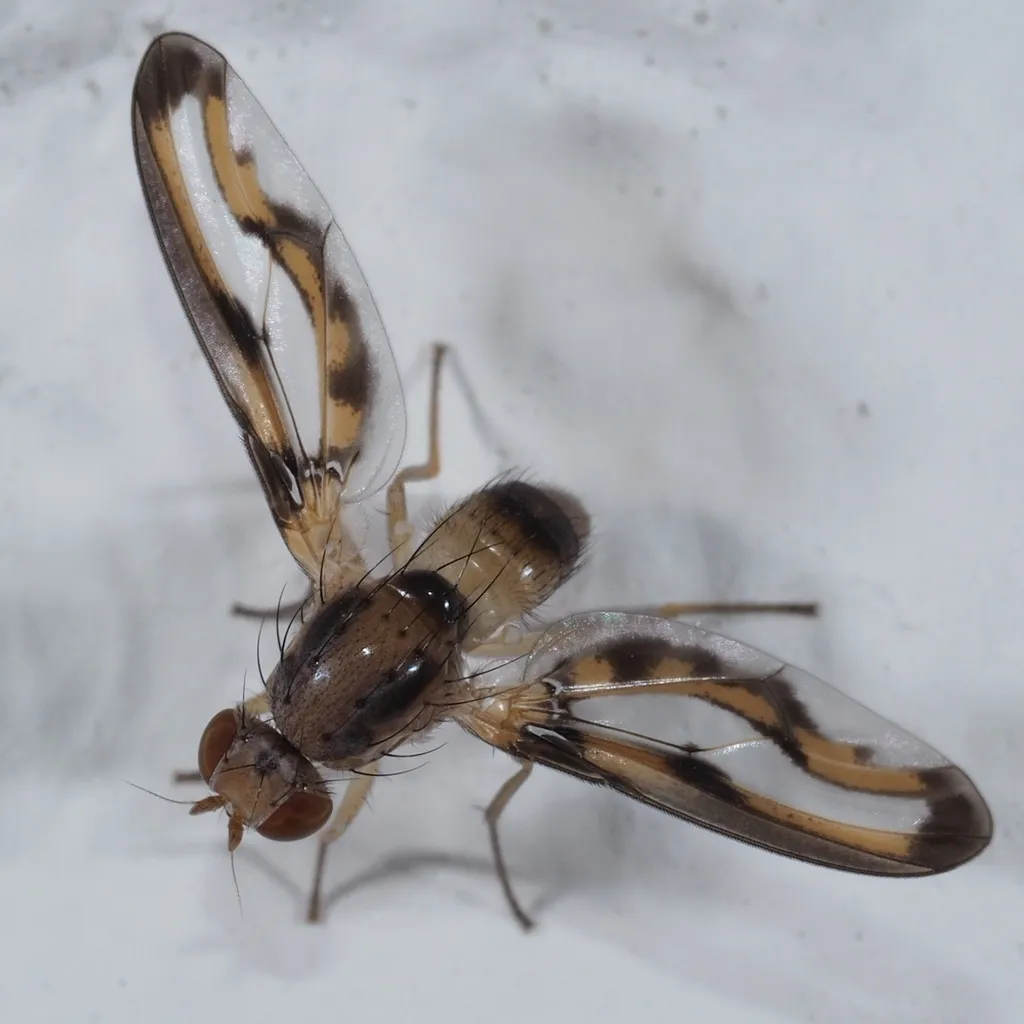
Toxonevra muliebris
Toxonevra muliebris
Identification: The distorted oval wing marking is distinctive.
Toxophora amphitea
Toxophora amphitea
Identification: ♀ Osten Saken gave a description of T. amphitea in his 1877 "Western Diptera" .
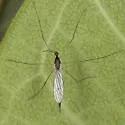
Toxorhina muliebris
Toxorhina muliebris
Identification: Smaller and grayer than T. magna and lacking a discal cell.
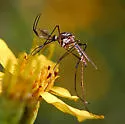
Toxorhynchites moctezuma
Toxorhynchites moctezuma
Identification: Lateral stripes of thorax blue. Fore tarsi with less white than typical T. rutilus . Specifically, the male lacks white bands on the fore tarsi and the female lacks white on the fourth tarsomere of the fore leg. Some southern T. ru
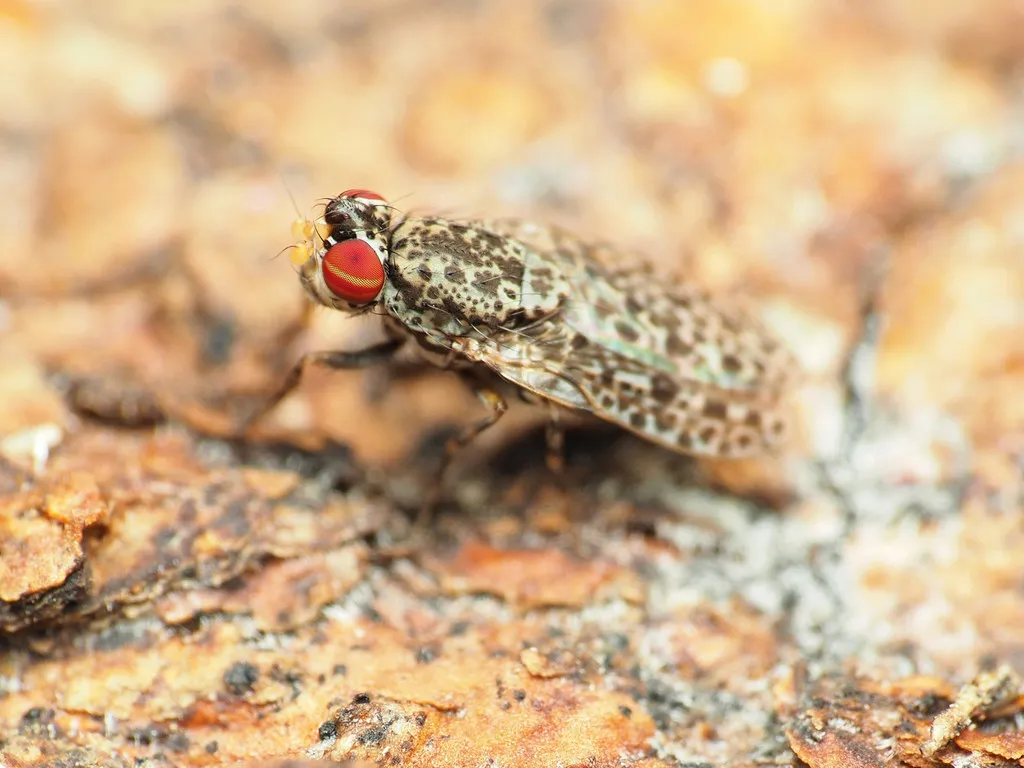
Traginops irroratus
Traginops irroratus
Identification: Distinguished from the other species T. purpurops , by red eyes instead of dark purple, one vibrissa on each side instead of two, and genital features.
Traginops purpurops
Traginops purpurops
Identification: Purple eyes and two pairs of vibrissae.
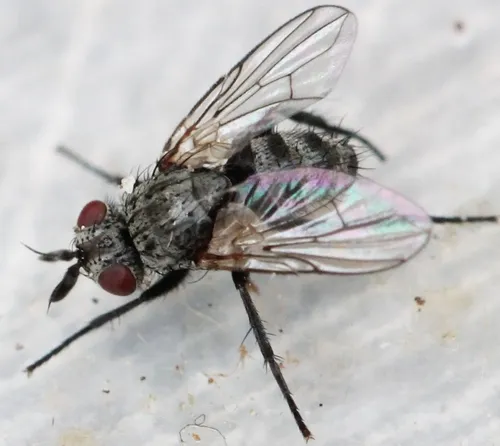
Triarthria setipennis
Triarthria setipennis
Identification: Arista with three nearly equal segments (see Manual of Nearctic Diptera page 1231 figure 132). Face with downcurved bristles well separated from frontal bristles. Vein M with obtuse bend similar to Siphonini. R1 and R4+5 hairy alon
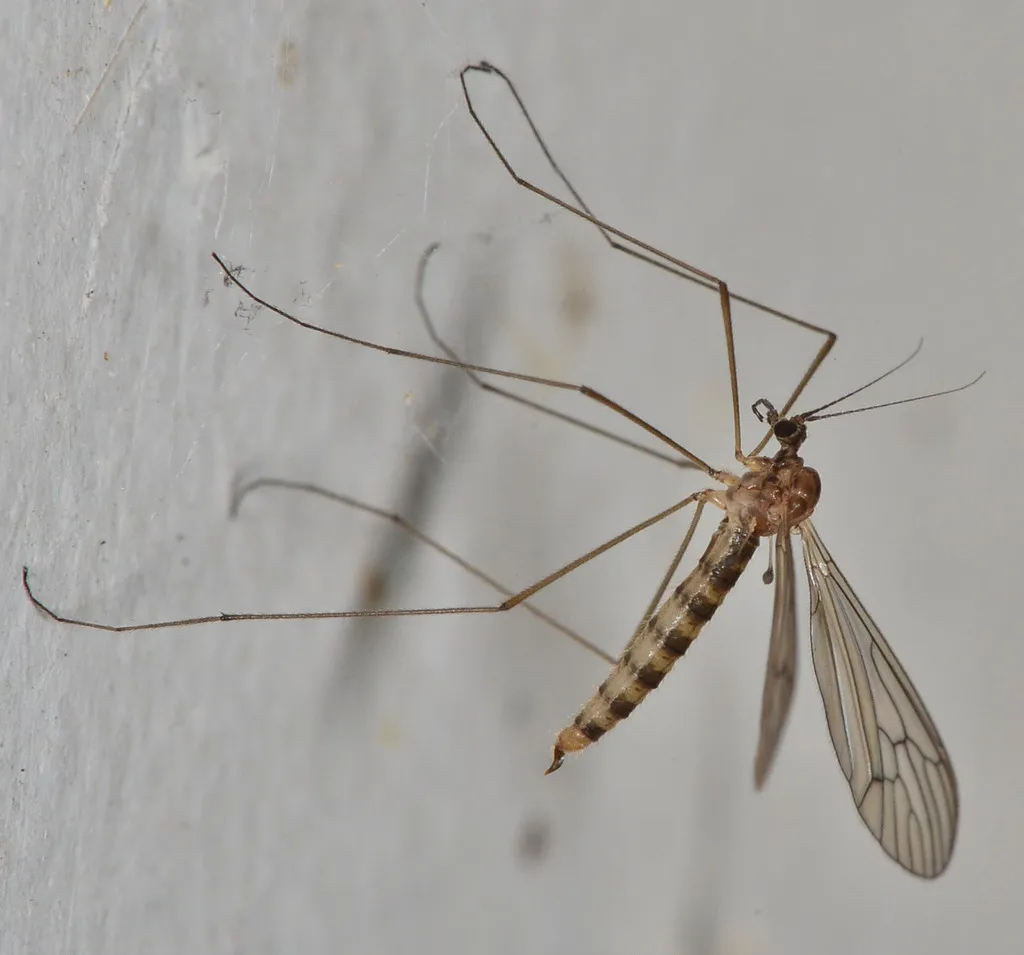
Trichocera annulata
Trichocera annulata
Identification: Gonostyli simple, elongate; abdomen distinctly annulate
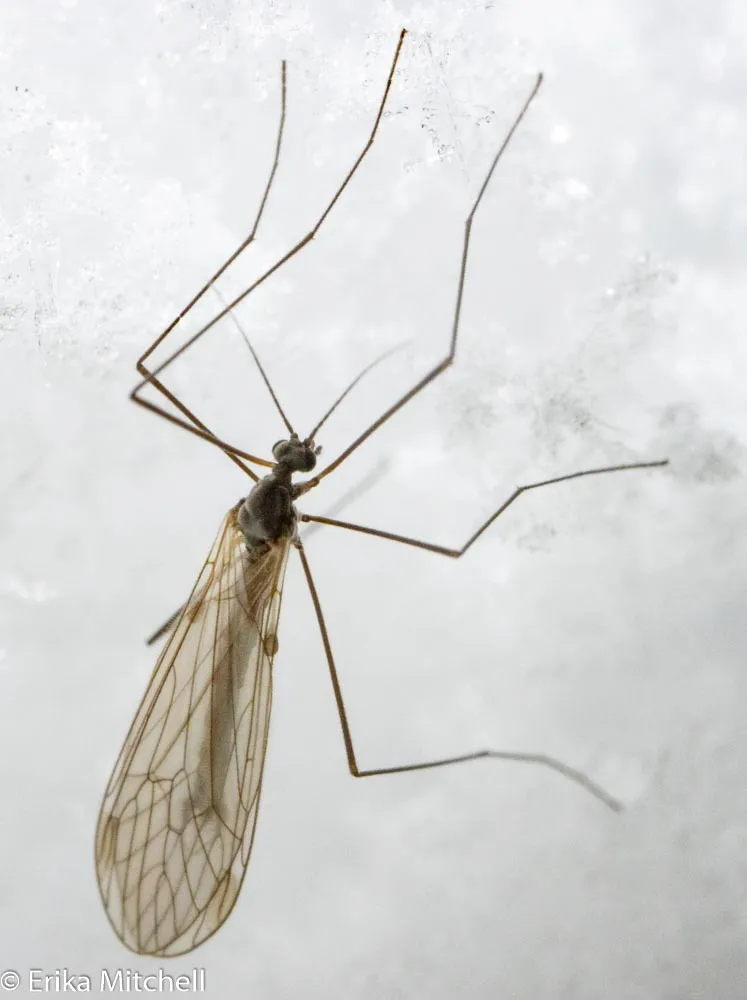
Trichocera salmani
Trichocera salmani
Identification: Gonostyli slender, with additional slender basal lobe.
Trichoclinocera dolicheretma
Trichoclinocera dolicheretma
Identification: Differs in head structure from congeners, and lacks pulvilli.
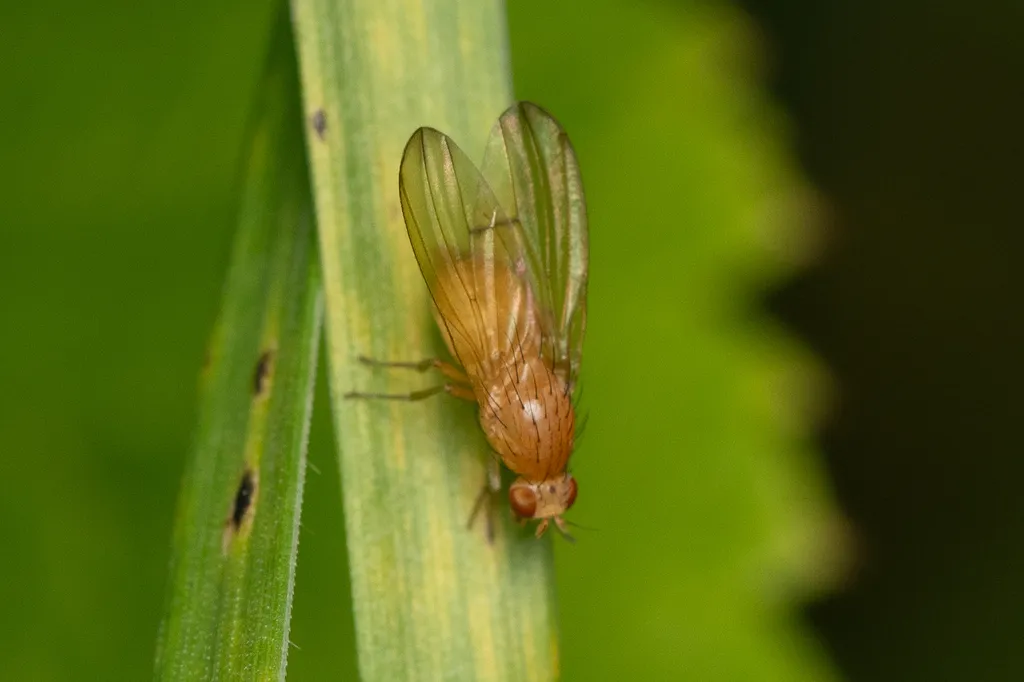
Tricholauxania praeusta
Tricholauxania praeusta
4 mm. Pale orange with a darkened cross-vein and slight shading at the wing tips. See ID guidance below. Unless identified by a recognised expert, a photo is required and the specimen should be examined with a microscope. In the comments box, state t
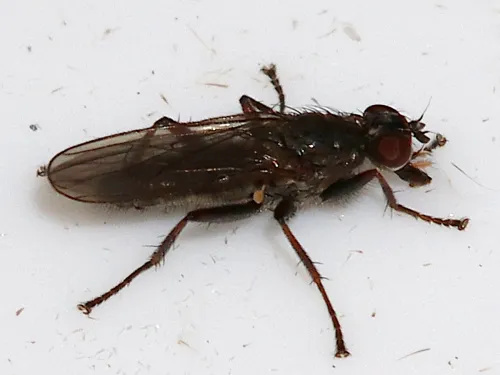
Trichopalpus fraternus
Trichopalpus fraternus
A small greyish species. The femora are dark with yellow at the base and tip. Thorax and abdomen are densely grey-dusted. The front of the frons and sides of the face have a reddish ground colour. The palps are small and brown. It has distinct prople
Trichopoda elongata
Trichopoda elongata
Identification: Face slightly receding (not receding in most Trichopoda ), postpedicel at least twice as long as combined basal segments of antenna (shorter in most Trichopoda ), male abdomen entirely and female abdomen mostly red, crossvein dm-cu ve
Trichopoda plumipes
Trichopoda plumipes
Identification: abdomnal markings dstinctive (pairs of rectangular yellow spots); scutellum yellow, wing with wide well-defined posterior hyaline band. ―Gary J. Steck
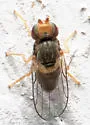
Tricimba trisulcata
Tricimba trisulcata
Identification: Legs mostly yellow, hind femur with black band; thorax mostly dark, humeri and propleura partly yellow, scutellum yellow-tipped; scutellar bristles not on tubercles; notopleurals 1+2.
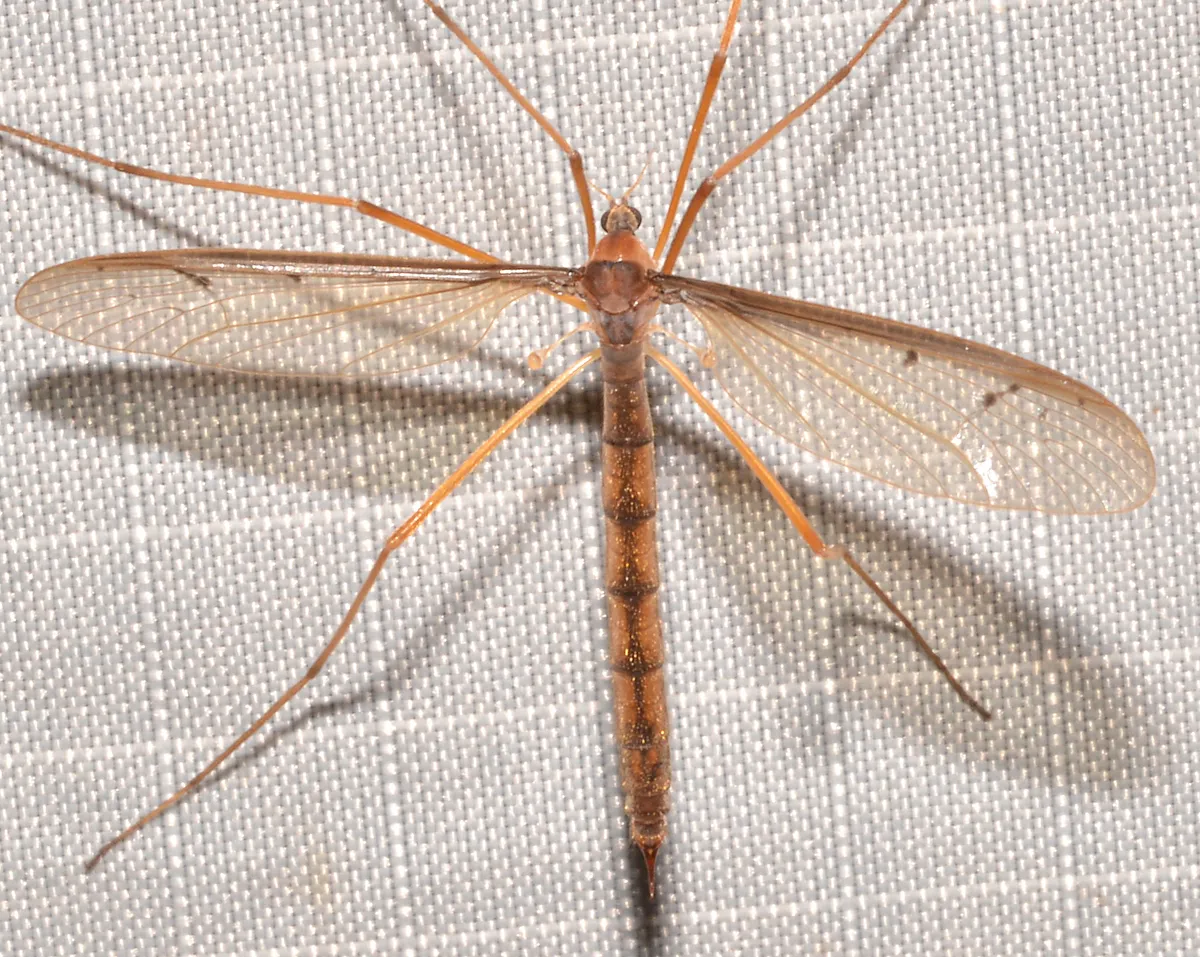
Tricyphona inconstans
Tricyphona inconstans
Identification: Costal cell darkened, r-m meeting Rs before fork, no extra crossveins in cell r4.
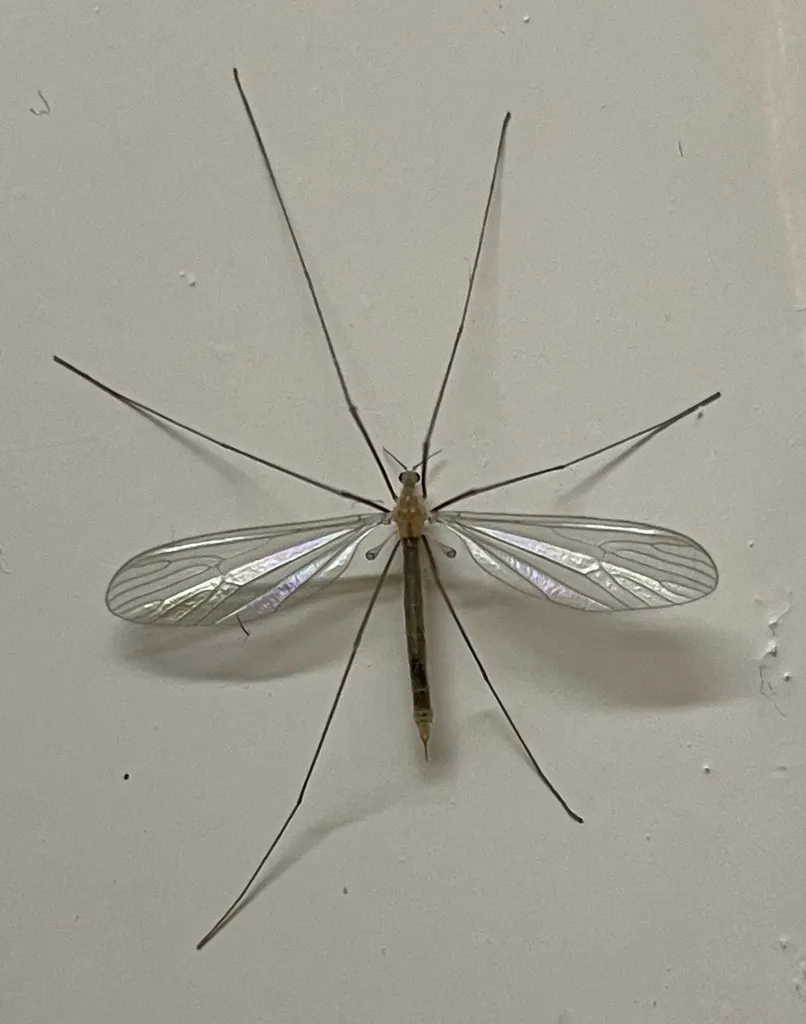
Tricyphona protea
Tricyphona protea
Identification: Vein R2 long, diverging gradually from R3, ending in R1.
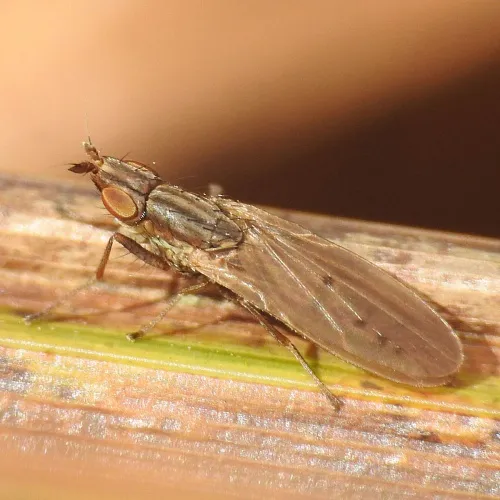
Trigonometopus frontalis
Trigonometopus frontalis
A small brown fly with a wedge-shaped head. The long wings give a narrow shape to the eye. The wings are semi-opaque and have three dark marks. Unless identified by a recognised expert, a photo is required showing the identifying characters. Widespre
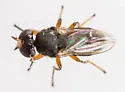
Trimerina madizans
Trimerina madizans
Identification: Sharply margined abdomen, no prescutellar arcostichal setae, lateral vertical setae absent. Similar to some other related Ephydridae (such as Leptopsilopa) but the above characters combined with the foreleg coloration (tibia and tarsi
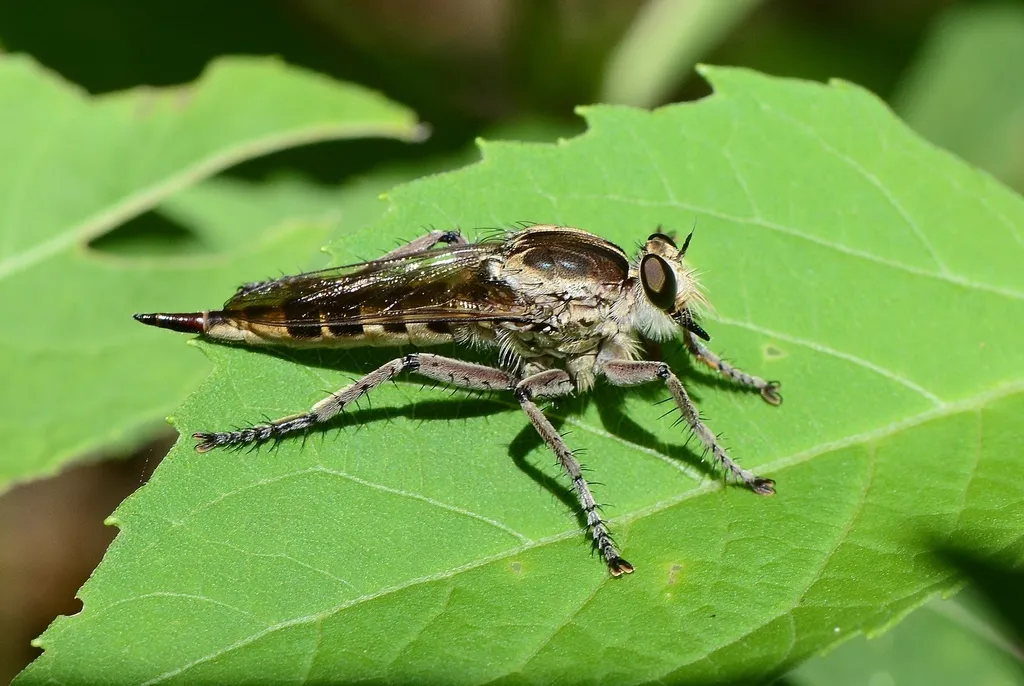
Triorla interrupta
Triorla interrupta
Identification: Large, gray, abdominal pattern of dark dashes on segments is distinctive, at least in e. US. Ovipositor long, somewhat rounded at tip, not pointed.
Trixoscelis albibasis
Trixoscelis albibasis
Identification: "This species can be readily distinguished from T. ornata and T. punctipennis by the light gray band from the fourth pair of dorsocentral setae to the second tergite of the abdomen." (Foster and Mathis 2012)
Trixoscelis buccata
Trixoscelis buccata
Identification: Entire body light brown, wing with costal margin and crossveins infuscated, gena (cheek) tall, 40%-55% the height of the eye.
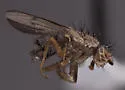
Trixoscelis deserta
Trixoscelis deserta
Identification: Distinguished from other Trixoscelis by the combination of wing distinctly darker along front margin, thorax with stripes, eye large (about 4/5 as tall as head), and vein M dark between the crossveins.
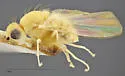
Trixoscelis flava
Trixoscelis flava
Identification: All setae yellow, two rows of acrostichal setulae. Gena very high (gena-eye ratio 0.65-0.85), ocellar triangle yellow, antennae yellow in male and black in female. Abdomen either light gray or yellow.
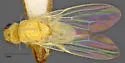
Trixoscelis flavicornis
Trixoscelis flavicornis
Identification: All setae yellow, two rows of acrostichal setulae. Gena moderately high (gena-eye ratio 0.33-0.45), entire body yellow.
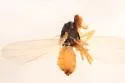
Trixoscelis melanderi
Trixoscelis melanderi
Identification: Tall gena (cheek), about 53% of the height of the eye. Abdomen yellow, contrasting with the gray thorax.
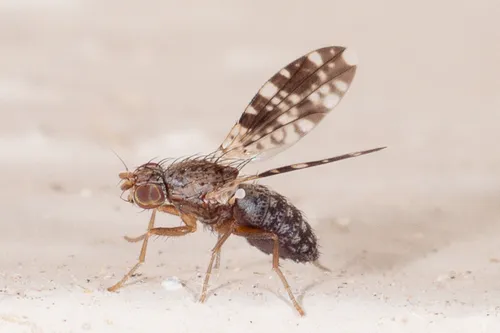
Trixoscelis ornata
Trixoscelis ornata
Identification: "This species exhibits a rather spotted thorax and abdomen and differs from T. polita in having the abdomen gray to brown microtomentose, while T. polita shows a shiny, dark brown abdomen."
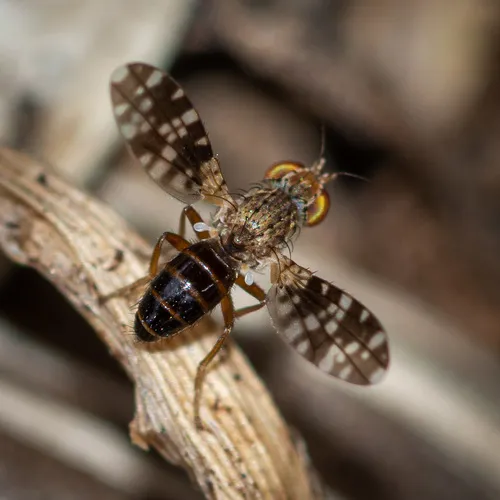
Trixoscelis polita
Trixoscelis polita
Identification: "This species is easily distinguished from the closely related T. ornata by the shiny, dark brown abdomen and the rather uniformly gray thorax." (Foster and Mathis 2012)
Trixoscelis signifera
Trixoscelis signifera
Identification: Two indistinct stripes on top of thorax, stripe along top of side of thorax, antenna yellow, wing brownish along costal margin, vein M dark between crossveins, gena (cheek) very narrow.
Tropidia albistylum
Tropidia albistylum
Identification: Note the reddish base of the hind femur (wholly black in T. quadrata )
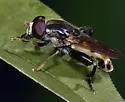
Tropidia quadrata
Tropidia quadrata
Identification: Tip of abdomen is usually downcurved, and there's a large tooth on hind femur. These flies will hover in place, then fly quickly away, then return to the original area, as if on territory.
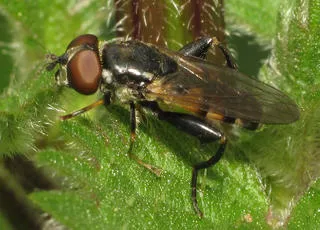
Tropidia scita
Tropidia scita
The key identification feature of this hoverfly is the arched and swollen hind femur with a large triangular projection on its lower surface near the apex. (Visible is several photos below, including an enlargment.) The projection has small black spi
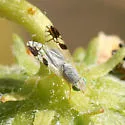
Trupanea bisetosa
Trupanea bisetosa
Identification: Distinguished from congeners by broad band connecting discal dark spot, lack of pigment on posterior veins, broad base of Y-shaped dark markings at wingtip, and light-colored basal flagellomere.
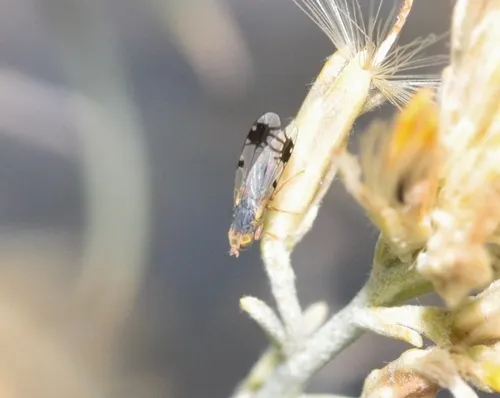
Trupanea jonesi
Trupanea jonesi
Identification: "Among all Trupanea species having a narrow pterostigmal ray, the apex of cell br completely hyaline, the base of cell r4+5 with a distinct hyaline spot, and only one ray in the apical half of cell dm, jonesi can be recognized by the
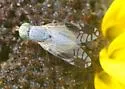
Trupanea nigricornis
Trupanea nigricornis
Identification: The dark "Y"-shaped infuscation at the wing apex has a narrow base in T. nigricornis (i.e. about equal to the widths of the "arms" of the "Y"...as opposed to about twice as wide as those arms in T. bisetosa ). Also, the tip of the an
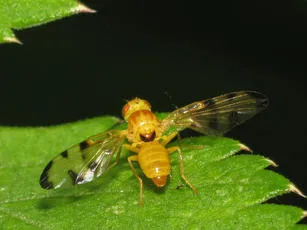
Trypeta artemisiae
Trypeta artemisiae
A distinctive yellowy orange coloured fruit fly with wings that are heavily patterned with dark blotches. Unless identified by a recognised expert, a photo is required. If the photo doesn't show the key ID features then in the comments box describe t
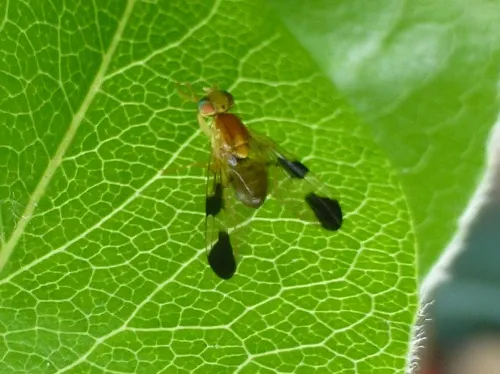
Trypeta zoe
Trypeta zoe
Distinctively marked with two bold black patches on each wing. The larvae mine the leaves of plants such as Artemisia and Asteraceae. Widespread scattered records from around Britain.
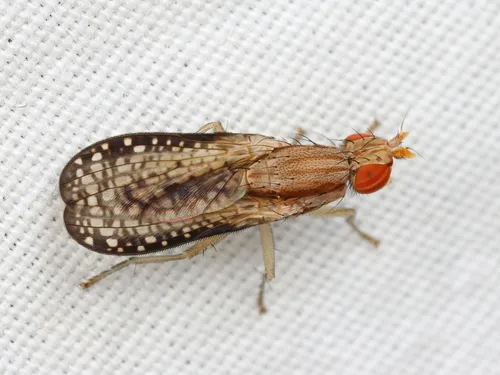
Trypetoptera canadensis
Trypetoptera canadensis
Identification: "The distinctive wing pattern with squarish clear 'windows' on the black leading edge of the wing, along with a rather narrow, waxy vitta running the length of the frons (top of the head), and black arista (not white as in the very si
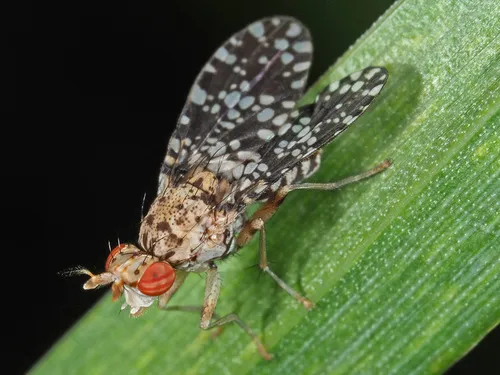
Trypetoptera punctulata
Trypetoptera punctulata
Length: 6-7mm. A beautifully marked fly, belonging to the Scyomizidae family. The wing pattern helps to identify the species. It also has long, forward-pointing antennae, typical of the family. A good field photo is required showing key features. It
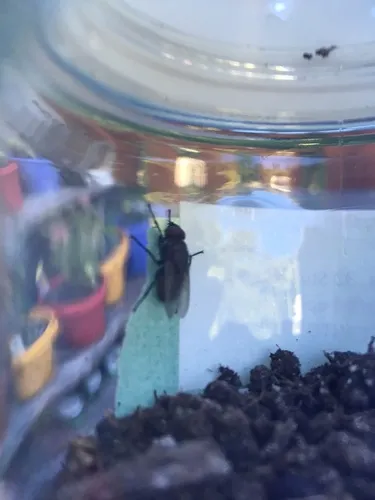
Trypocalliphora braueri
Trypocalliphora braueri
Identification: Superficial similarities to Phormia regina , but anterior thoracic spiracle tends to be more dull orange rather than the bright orange in P. regina . The anterior thoracic spiracle color can be misleading depending on specimen age or
Tsugaea nox
Tsugaea nox
Identification: Distinguished from other Eryciini and Goniini by the combination of hairy eyes and vein M ending in R4+5 very close to wing margin.
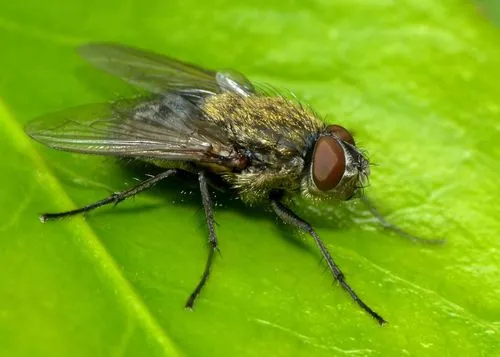
Tufted Clusterfly
Pollenia pediculata
This species is difficult to distinguish from most other Pollenia species in the field but under a microscope it is easily confirmed by the presence of a tuft of pale hairs beneath the wing base close the base of the humeral cross-vein (see images be
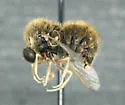
Turbopsebius diligens
Turbopsebius diligens
Identification: Body covered with dense white to orangish pile; female wings infuscated. Detailed description in Figs. from[Cite:1029610] T. diligens has a floating, undulating sort of flight and the habit of buzzing around in circles when it falls o
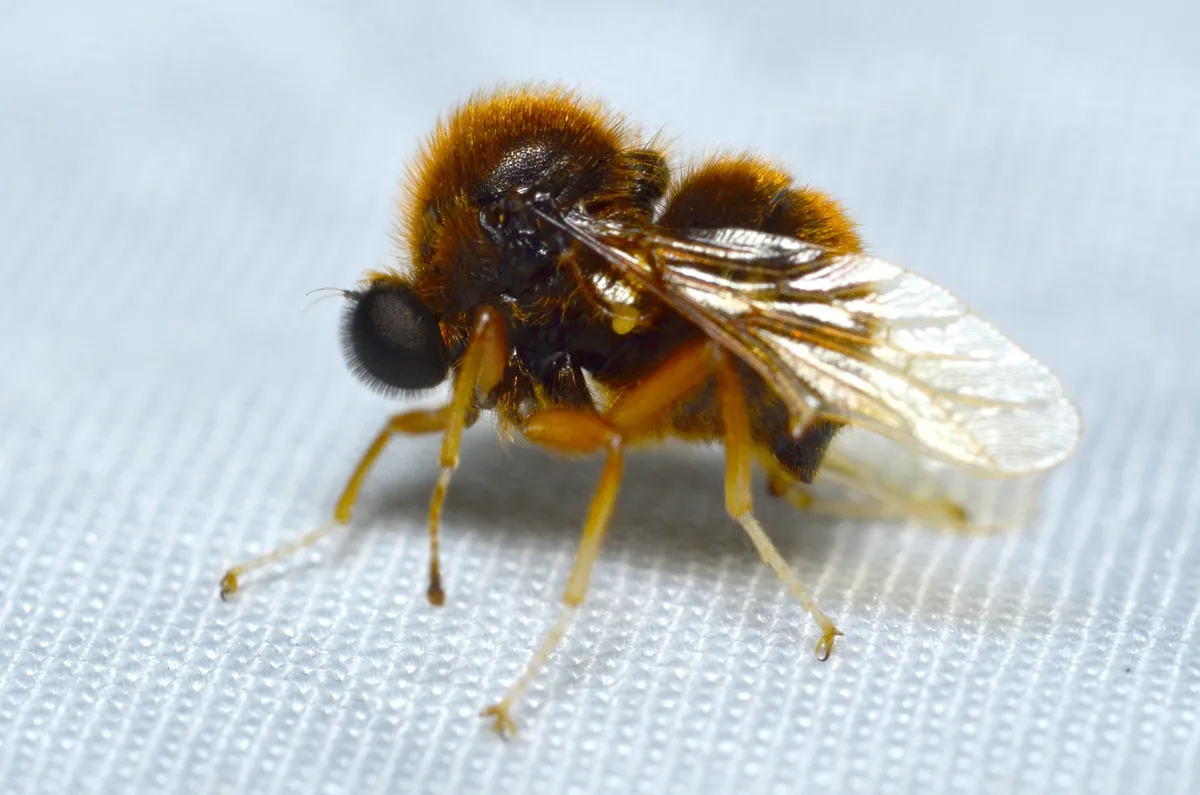
Turbopsebius sulphuripes
Turbopsebius sulphuripes
Identification: Anal vein reaches wing margin, so anal cell widely open ; in T. diligens , anal cell may be open or closed, but anal vein never touches wing margin
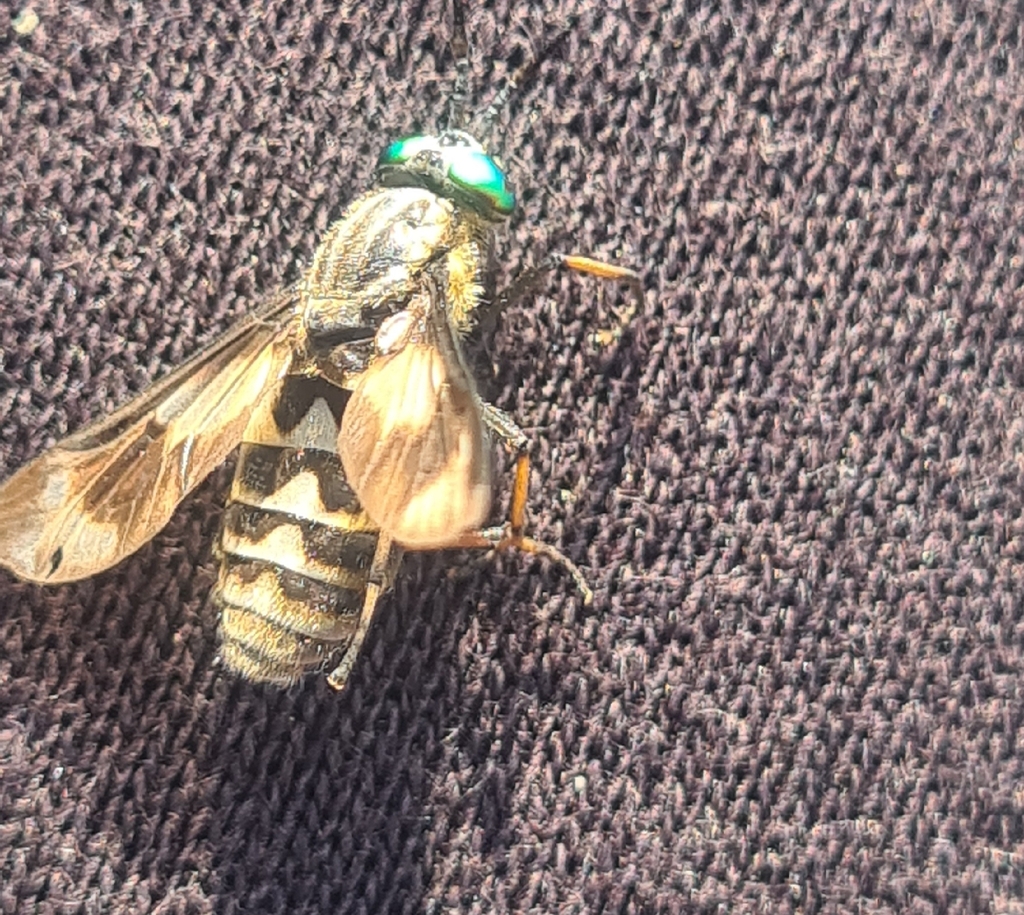
Twin-lobed Deerfly
Chrysops relictus
(c) Tatiana Strus, some rights reserved (CC BY)Length 8 to 10.5 mm. A stoutly-built insect. The patterning may vary slightly but there are always black lobes on the second abdominal segment. There are other similar species and care needs to be taken with identification. It's preferred habitat is
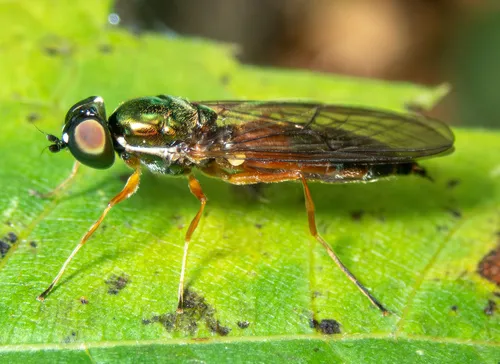
Twin-spot Centurion
Sargus bipunctatus
This is our largest Sargus (wing length to 10mm). Thorax shiny metallic green, scutellum without spines, veins in the wing quite distinct. The male and female of this species differ considerably in appearance, males are very slim with a metallic gree
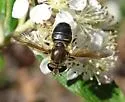
Two-spotted Pond Fly
Sericomyia carolinensis
Identification: A single pair of narrow maculae on the second tergite, yellow hair on the scutellum, no median black vitta on face, basitarsi reddish brown to orange.
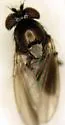
Typopsilopa nigra
Typopsilopa nigra
Identification: The only Typopsilopa with fore tarsi mostly yellow (vs. at most first segment yellow).
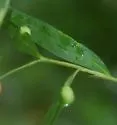
Undescribed Persicaria Leafroller
Clinodiplosis undescribed-species-on-periscaria
"I am usually a little wary about ascribing galls to Clinodiplosis , but in this case with the Clinodiplosis being the sole inhabitant and repeatedly reared from these non-complex galls, I am satisfied that it is the cause." - Raymond J. Gagné to Cha
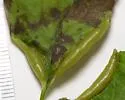
Undescribed species on snowberry
Dasineura undescribed-symphoricarpos
Although these galls were originally attributed to Resseliella californica [= Thomasia californica Felt, 1914], an undescribed Dasineura species is actually responsible for them . The Resseliella is evidently a secondary inhabitant (per Ray Gagné in
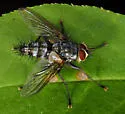
Uramya limacodis
Uramya limacodis
Identification: Wings unmarked, males with narrow frons and no tail, legs black.
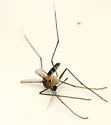
Uranotaenia lowii
Uranotaenia lowii
Identification: adorned with iridescent blue scales adults not know to bite man
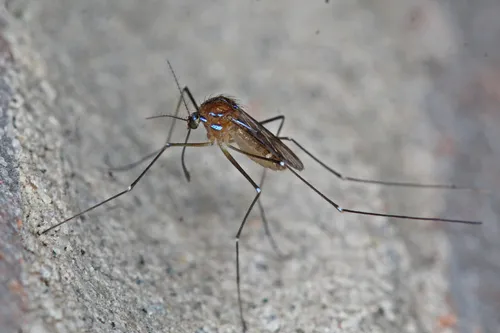
Uranotaenia sapphirina
Uranotaenia sapphirina
Identification: Adult: tiny size; abdomen blunt; proboscis widens distally; scutum and scutellum with median stripe of iridescent blue scales; similar lines of iridescent bluish scales on lateral margin of scutum, anterior pronotal lobe, and mid-part
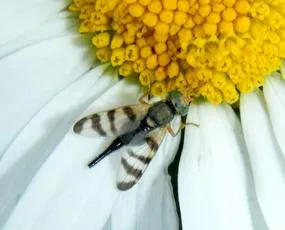
Urophora cuspidata
Urophora cuspidata
A well marked member of the 'fruit fly' family Tephritidae . Many of the members of this genus are confusingly similar and need microscopic examination to determine species. For this reason our image is placed in a red box and is likely to be this sp
Urophora jaceana
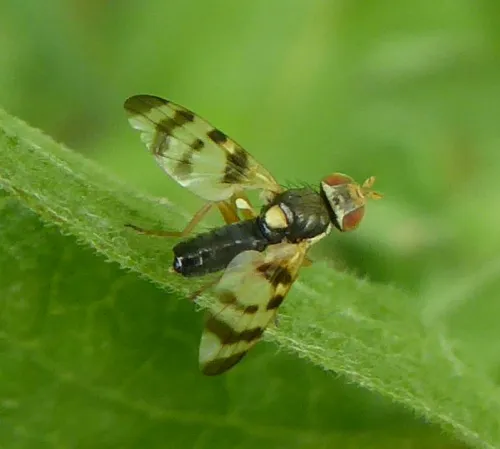
Urophora jaceana
The fly Urophora jaceana has a larva that produces galls on the flower heads of Knapweed (most often, Centaurea nigra agg.) which incorporates the receptacle and achenes. The gall is hard and woody; usually affecting most of the flower head and with
Urophora quadrifasciata
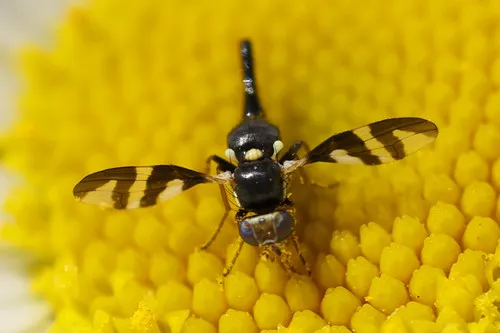
Urophora quadrifasciata
The term ‘quadrifasciata’ in the Scientific Name refers to the dark, four-banded pattern in the wing. The fly produces galls in Knapweed flowers; these are in each achene (not in the receptacle), causing it to become enlarged with woody or papery wal
Urophora solstitialis
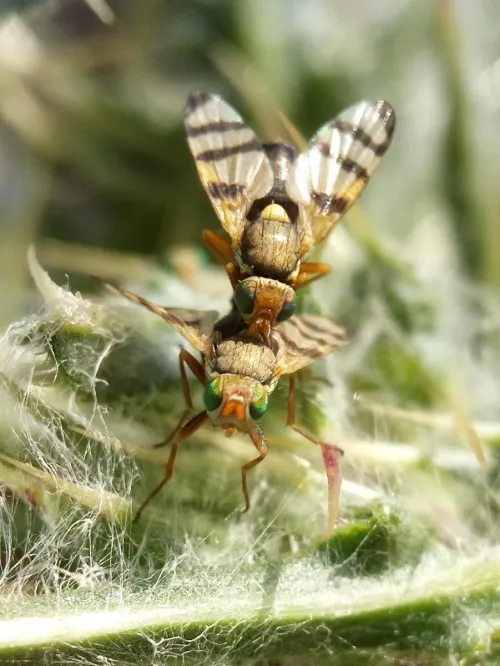
Urophora solstitialis
The gall fly Urophora solstitialis has a striking appearance with well-marked, banded wings, but there are other similar species and care is needed with identification. The larvae gall Musk Thistle ( Carduus nutans ), part or all of the receptacle an