
Flies
Order Diptera
The Flies (Order Diptera) includes 6,350 species across 141 families and 1,800 genera in our directory.
About Flies
Diptera includes over 150,000 described species of flies, mosquitoes, and midges. Mosquitoes are the deadliest animal on Earth (CDC). Malaria alone causes ~249 million cases and over 608,000 deaths annually, mostly children under 5 (WHO). Vector-borne diseases account for over 17% of all infectious diseases, causing 700,000+ deaths per year.
Economic Impact
In the U.S., vector-borne disease cases tripled between 2004-2016, with over 640,000 cases reported in that period (CDC). Tickborne diseases doubled from 22,000 to 48,000 annual reports. Globally, mosquito-borne diseases cost billions in healthcare and lost productivity.
Ecological Role
Despite their disease impact, flies are critical decomposers and pollinators. Hoverflies alone pollinate hundreds of crop and wildflower species. Flies are also the primary food source for many birds, bats, and fish. Forensic entomology relies heavily on fly species for crime scene analysis.
Families in Diptera (141)
Species in Diptera (6,350)
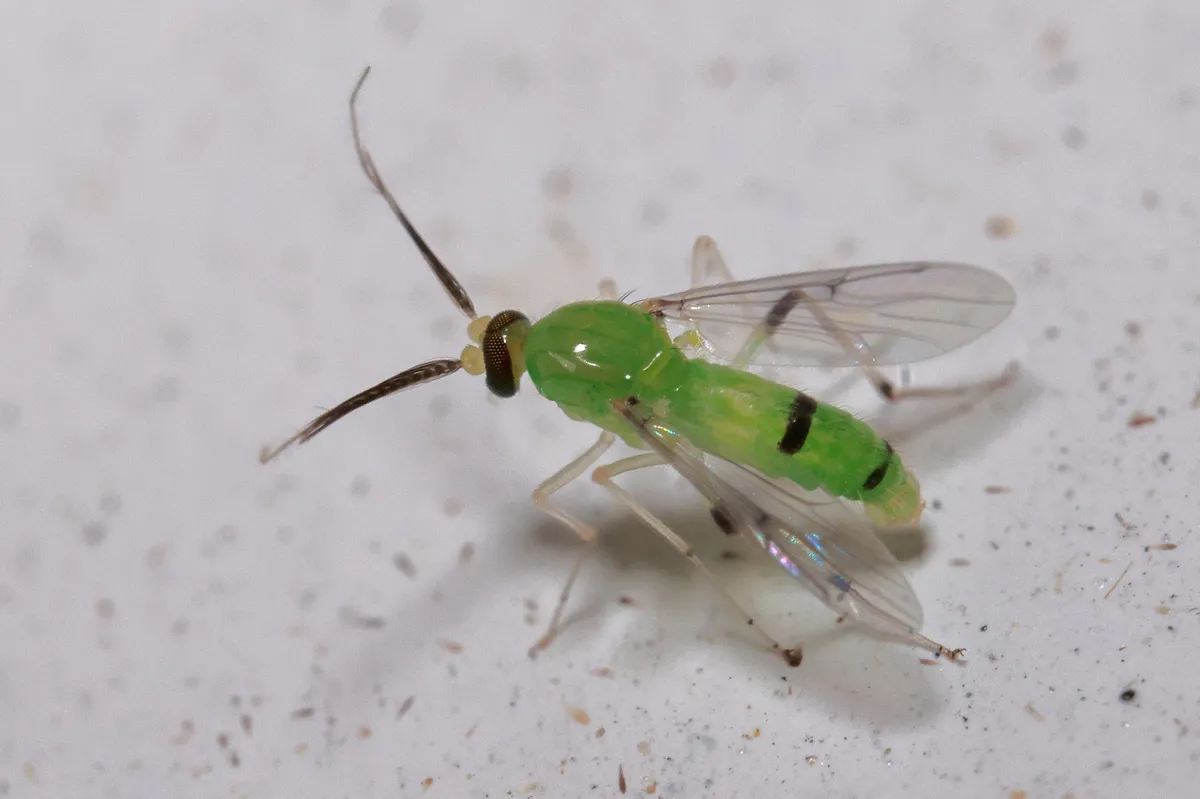
Stilobezzia viridis
Stilobezzia viridis
Identification: Green (hence the name), one large mark near apex of third abdominal segment, two black dots on fifth segment, wings unmarked except for veins, hind femur dark in last 1/4. These characters will distinguish it from other members of th
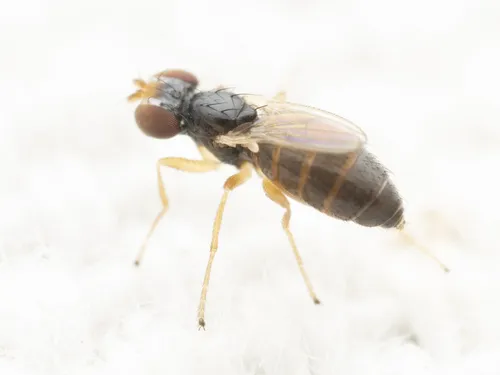
Stiphrosoma sabulosum
Stiphrosoma sabulosum
Unless identified by a recognised expert, a photo is required and the specimen should be examined with a microscope. In the comments box, state the key or ID method used and describe the size and identifying characters. Larvae develop in the leaf she
Strauzia arculata
Strauzia arculata
Identification: Males and females have light yellow color with dark striping on the mesonotum. Wings have dark patterning with two non-intersecting ^ markings at the tip. Strauzia arculata is found on host plant Helianthus grosseserratus .
Strauzia noctipennis
Strauzia noctipennis
Identification: Adults are found on the sawtooth sunflower Helianthus grossesrratus . Males have yellow or yellowish brown bodies with dark spots on the mesonotum near wings. Male wings have a very dark coalesced pattern. Females have yellow bodies a
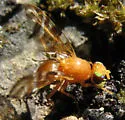
Strauzia perfecta
Strauzia perfecta
Identification: Adults yellow. This is the only Strauzia species without dark markings on the thorax. There may be orange stripes or spots on the thorax. Wings have brownish striping pattern and an F shape marking at the tip.
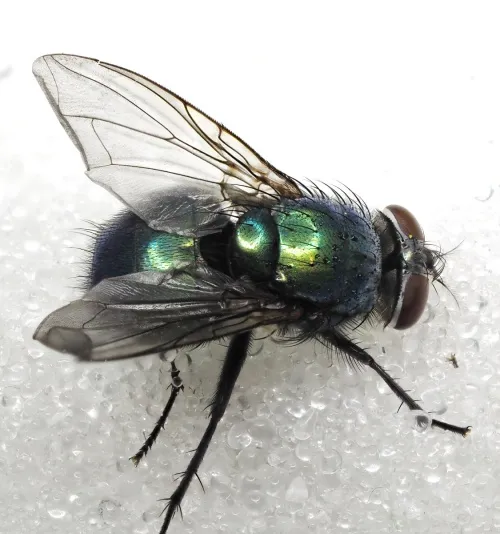
Streakless Greenbottle
Lucilia ampullacea
5-11mm. Metallic green can have a bluish colouration, depending on the light. It is very similar to other Lucilia species and microscopic examination is necessary to identify the species. See ID guidance below. Unless identified by a recognised exper
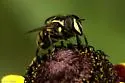
Striped Bromeliad Fly
Copestylum vittatum
Identification: Distinctive among relatives in North America--note yellow face with black median stripe, striped abdomen, and two yellow spots on scutum .
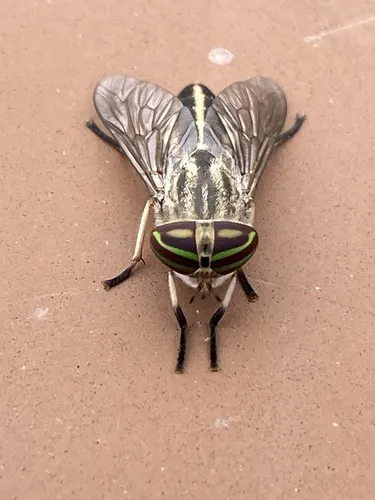
Striped Horse Fly
Tabanus lineola
Identification: Females: pale median stripe on abdomen bordered by dark submedian stripes; eyes with 3 green bands; scutellum concolorous with thorax Males: body pattern similar to females; eyes bare (no hairs) with large upper facets sharply differe
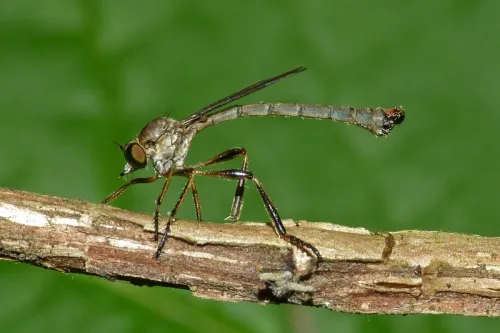
Striped Slender Robberfly
Leptogaster cylindrica
Feet without pads. Hind femur is yellowish. Third antennal segment ends in bristle. Resembles a crane fly in flight. Leptogaster guttiventris is similar but has reddish hind femur. Unless identified by a recognised expert, a photo is required. If the
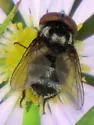
Strongygaster didyma
Strongygaster didyma
Identification: Veins R4+5 and M meet at or close to the wing margin, unlike other species of Strongygaster .
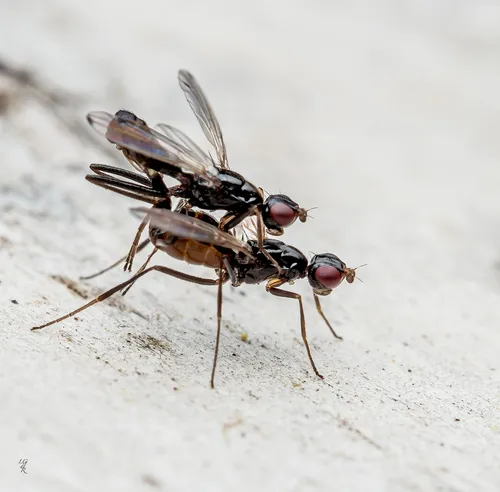
Strongylophthalmyia pengellyi
Strongylophthalmyia pengellyi
Identification: See the genus page for Strongylophthalmyia for identification details.
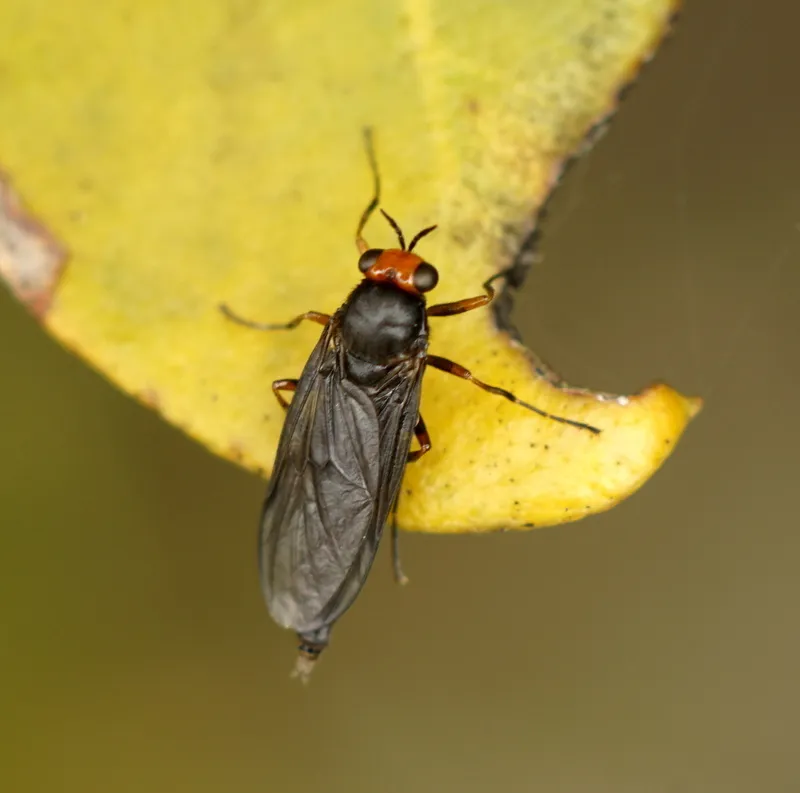
Sugarcane Soldier Fly
Inopus rubriceps
An Australian fly accidentally introduced into the USA (California) over 50 years ago. It was first found in San Francisco, and from there has slowly spread to adjacent counties in the SF Bay area -- where it seems to be restricted to today. This fly
Suillia apicalis
Suillia apicalis
Identification: The only North American species of Suillia with hairs on the mesopleuron (=anepisternum) and with the dorsal hairs of the scutellum restricted to the lateral edges. Also distinguished from the similar-looking S. plumata by the short p
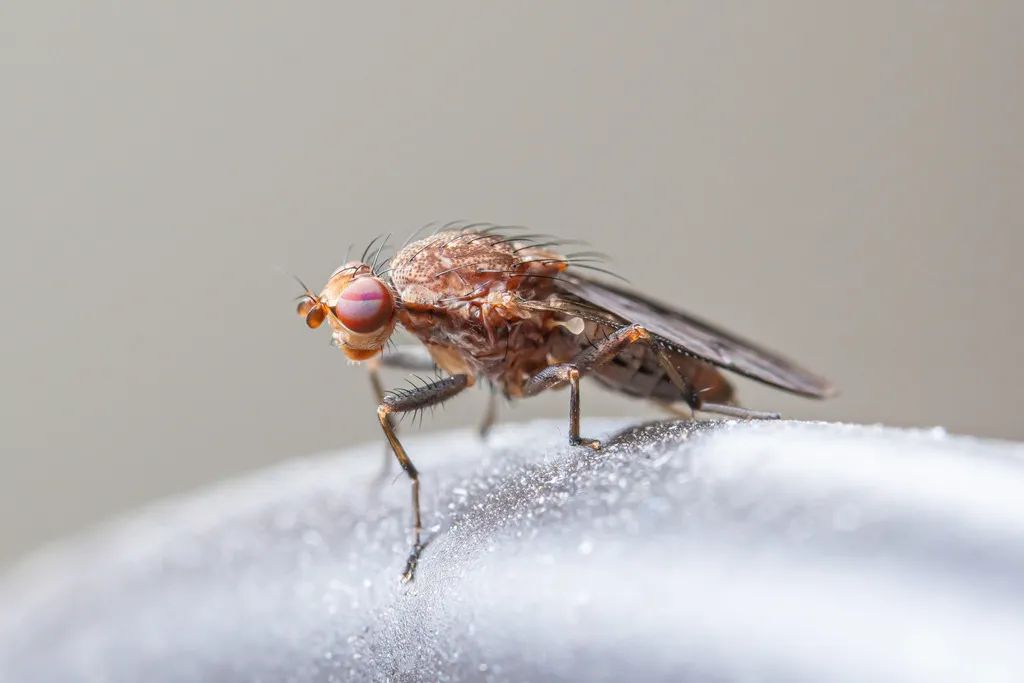
Suillia barberi
Suillia barberi
Identification: " Gill (1962) comments: profemora darkened, almost black; wings strongly infuscated along crossveins and ends of longitudinal veins and along costal margin; abdomen reddish orange to reddish brown. Aldrich (1908) description: a brown
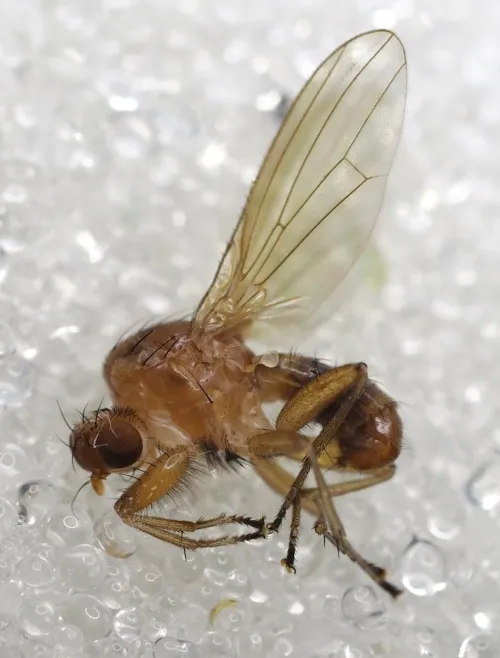
Suillia bicolor
Suillia bicolor
Approximately 5 mm in length. This has an orange-brown thorax and darker brown abdomen. It has clear wings that have costal spines along the leading edge (these spines are characterisitic of the family). Unless identified by a recognised expert, a ph
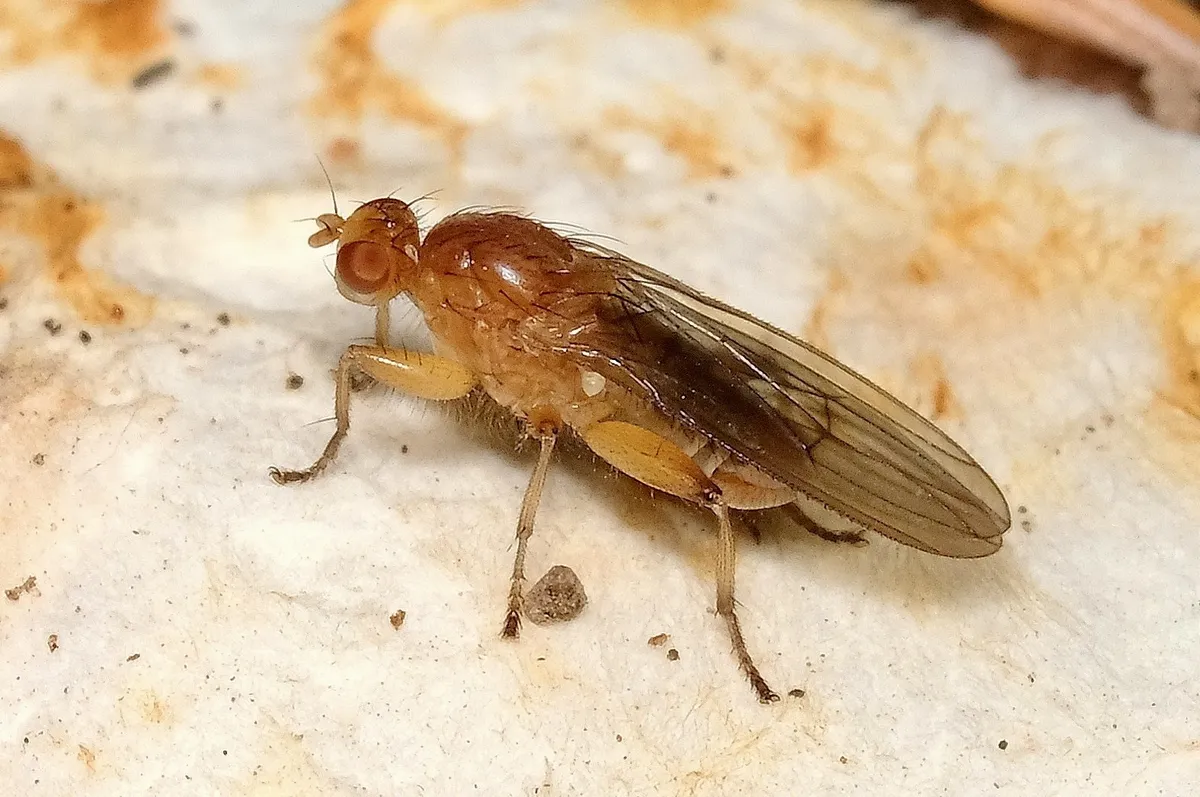
Suillia convergens
Suillia convergens
Identification: "The absence of wing infuscations and of scutellar hairs or setae usually distinguishes this species from others in the genus." (Gill, 1962)
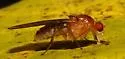
Suillia laevis
Suillia laevis
Identification: Strong humeral bristles, pale antennae.
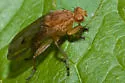
Suillia longipennis
Suillia longipennis
Identification: Male with long hairs on legs. Both sexes with small eye, scutellum nearly covered with small hairs, and anepisternum bare or nearly bare.
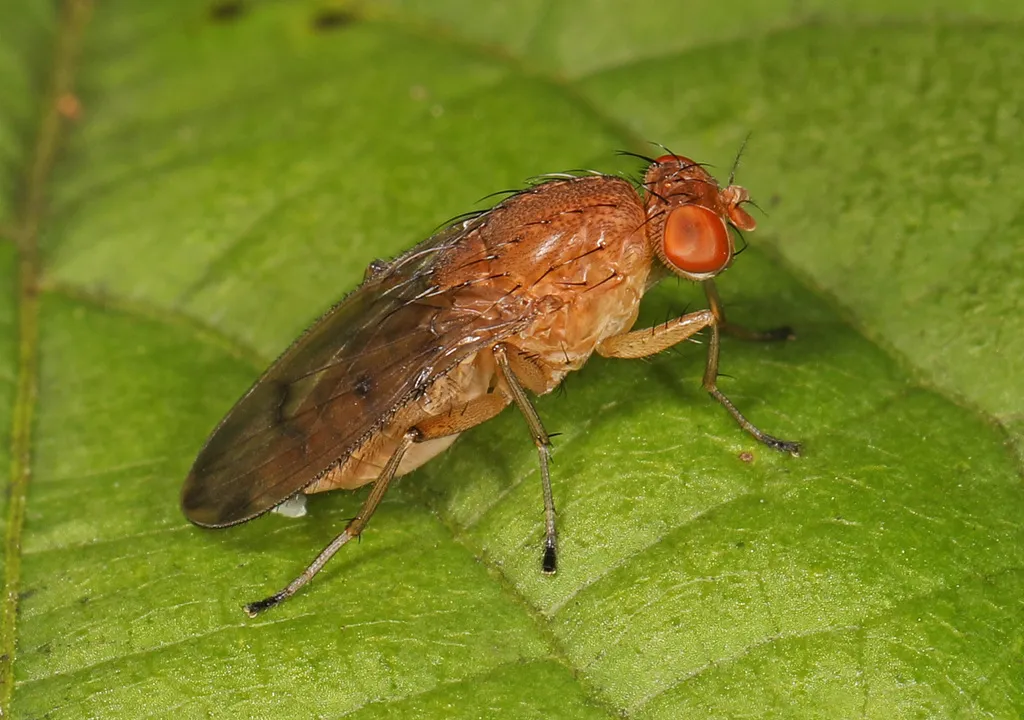
Suillia quinquepunctata
Suillia quinquepunctata
Identification: Wing with five spots, scutellum with hairs over most of dorsal surface, anepisternum bare, gena narrow. Other eastern species can be distinguished: Nemorum has hairs on the anepisternum and ranges only overlap narrowly in the north.
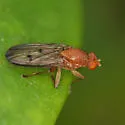
Suillia sororcula
Suillia sororcula
Identification: Scutellum nearly bare; wings with distinct infuscations at the ends of crossveins and along costal margin; cheek narrow.
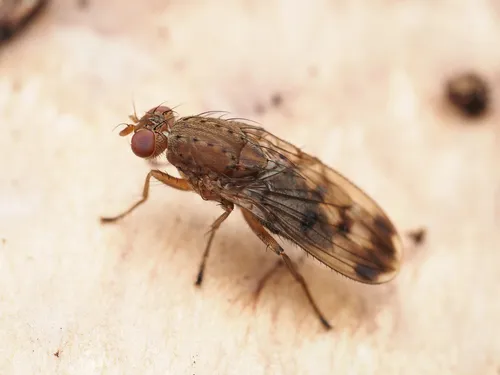
Suillia variegata
Suillia variegata
You can easily tell apart flies of the Heleomyzidae family by the regularly spaced spines on the fore edge of the wings. Suillia variegata has a hairy thorax, and wings with a small pale area on the tip after a darker patch. It is found in various ha
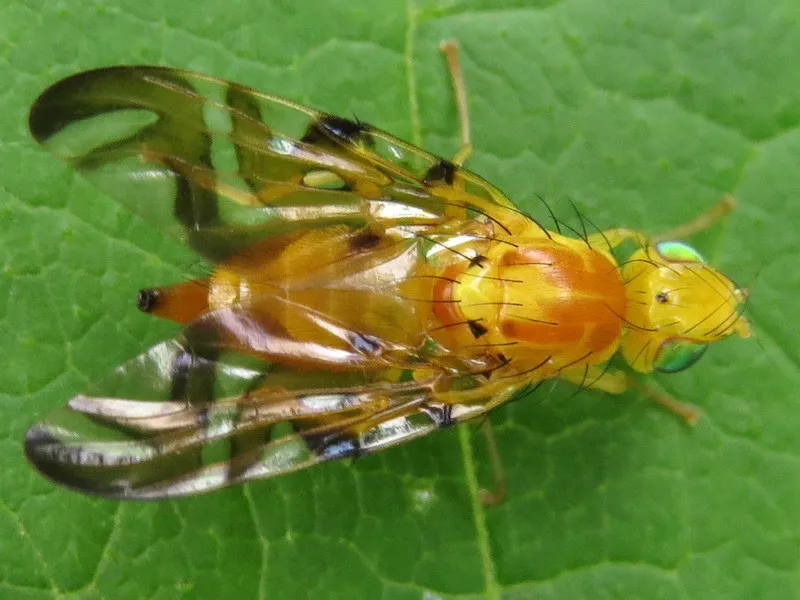
Sunflower Maggot
Strauzia longipennis
Identification: The males show a lot of variation, and the wing can look like a female's or very different (except in this species, Strauzia wings are not sexually dimorphic) --M. Hauser While infestation levels have occasionally reached nearly 100%,
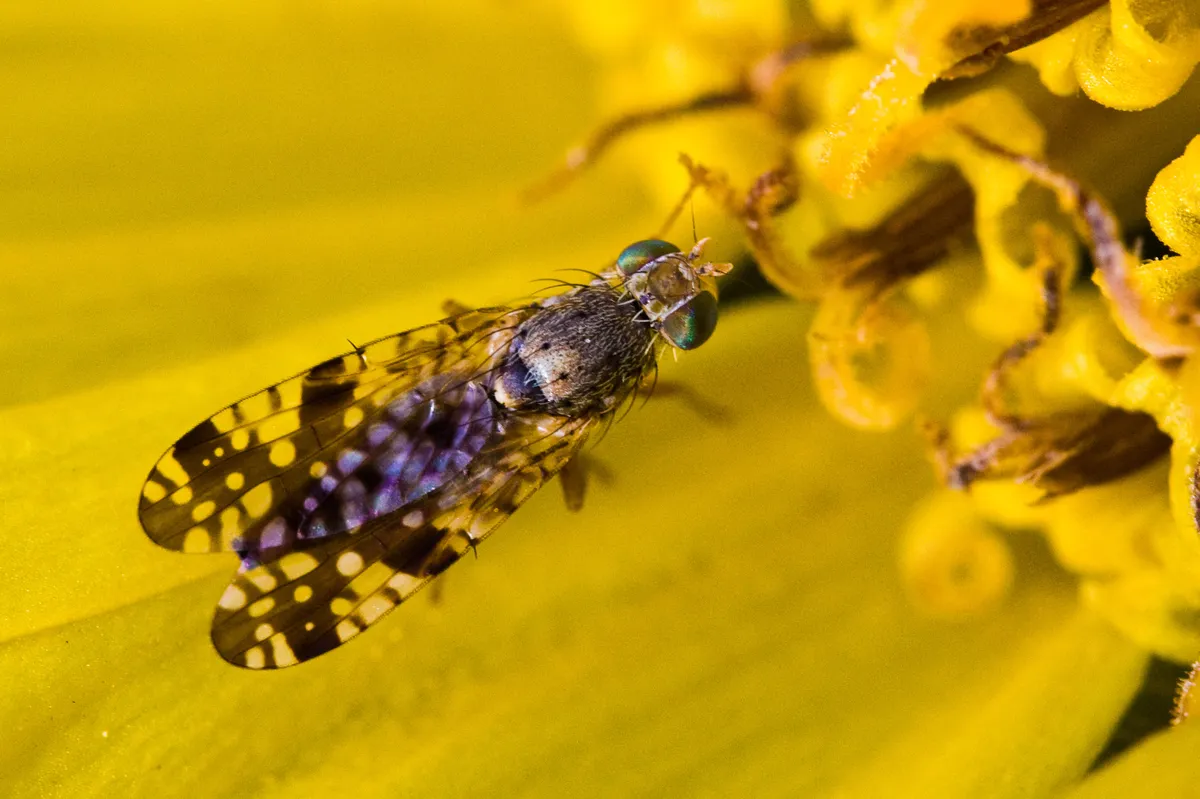
Sunflower Seed Maggot
Neotephritis finalis
Identification: Wings are mostly dark in apical half with six hyaline spots forming a distinct triangle One of the most common tephritids in NA
Switchgrass Gall Midge
Chilophaga virgati
Identification: Distinguished from congeners by leg pattern, hind tarsi white at tip and legs without "horizontal light- and dark-banded scale covering on the legs." Alternatively, "female eighth tergal sclerites no longer than the preceding tergite
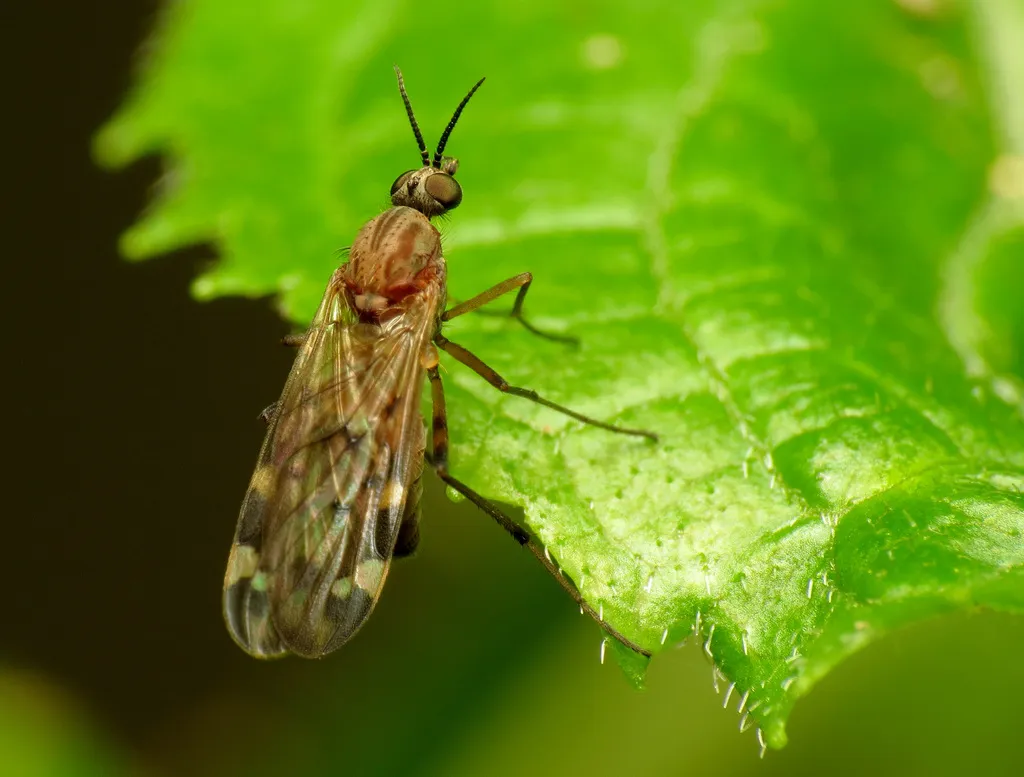
Sylvicola alternatus
Sylvicola alternatus
Identification: Crossvein between M2 and M3 (closing discal cell) distinctly after fork of M1 and M2. Pale spot near wing tip white with sharp boundary. Male holoptic. Median dark stripe on thorax (usually?) divided.
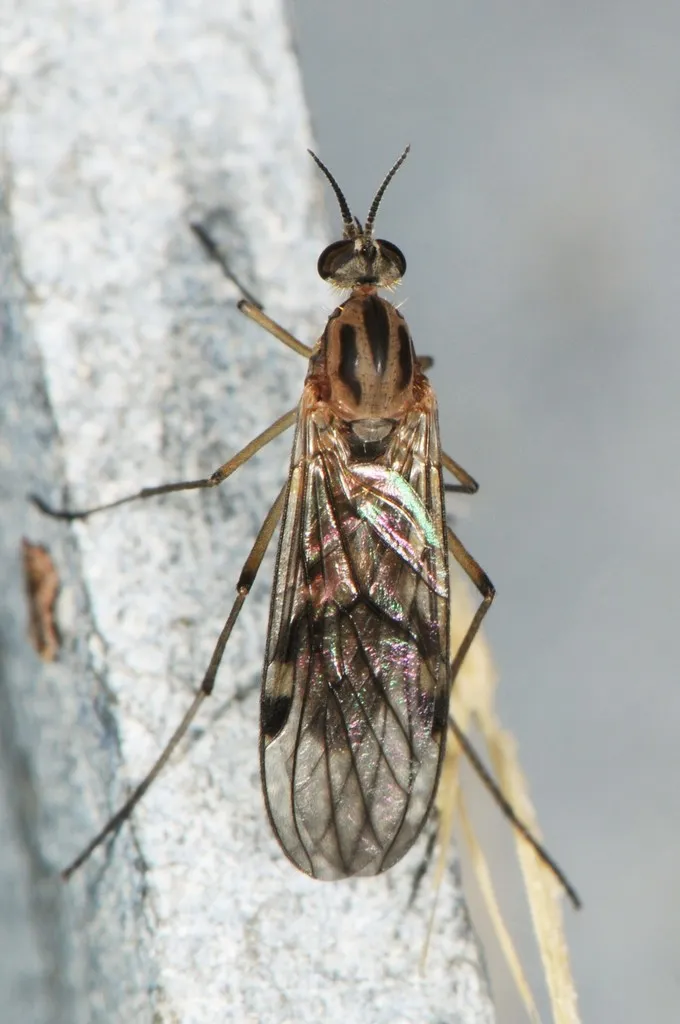
Sylvicola fuscatus
Sylvicola fuscatus
Identification: M-m crossvein meeting M1+2 before or very close to fork. Wing without dark spots below stigma.
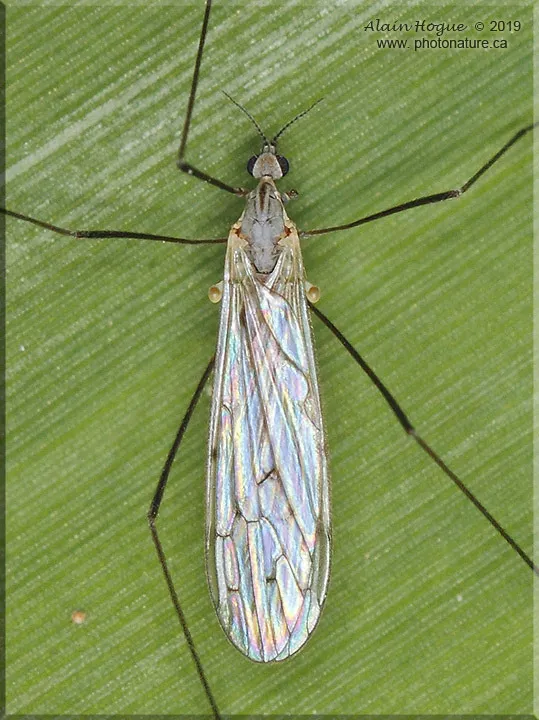
Symplecta cana
Symplecta cana
Identification: head and body medium gray with 3 dark gray stripes on top of thorax; legs long, unbanded, dark gray or blackish; several dark spots scattered across otherwise clear wings; S-shaped vein A2 is characteristic of genus Symplecta The firs
Sympycnus montanus
Sympycnus montanus
Identification: Last two joints of male mid tarsus enlarged and black. Hind tarsus black from tip of first joint.
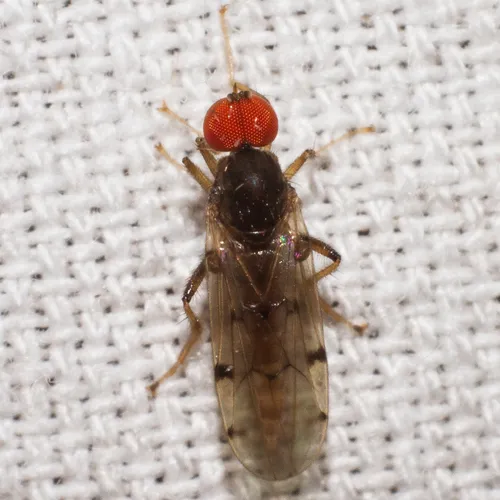
Syneches simplex
Syneches simplex
Identification: The only regional species of Syneches with two spots on each wing, one at the apex of each of the first two long veins.
Synneuron decipiens
Synneuron decipiens
Identification: The wing veins are distinctive. See illustration in Manual of Nearctic Diptera .
Syntormon strataegum
Syntormon strataegum
The most common of a group of species with two strong bristles below a curved hind basitarsus, male secondary sexual character.
Syritta flaviventris
Syritta flaviventris
Identification: Male: Female: Introduced from Europe, 1990's
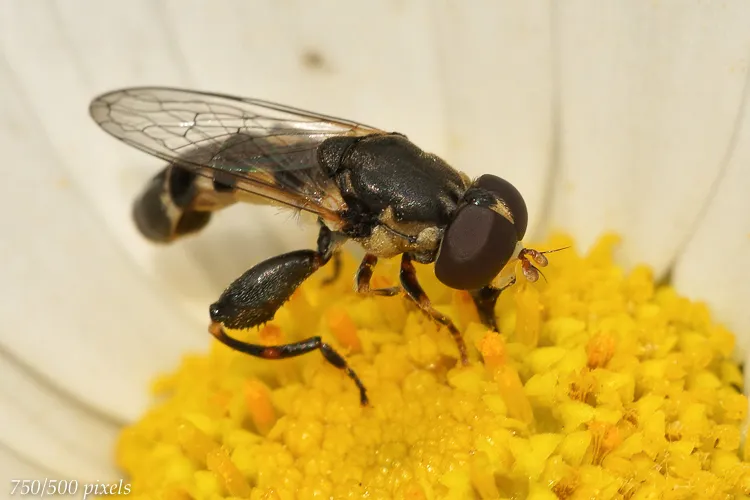
Syritta pipiens
Syritta pipiens
Identification: Male: Female: Introduced from Europe in the 1800s ( Martin Hauser's comment ).
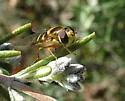
Syrphus opinator
Syrphus opinator
Identification: S. opinator is the common species in central California and has the abdominal fasciae restricted to the sides and isolated from the margins. S. torvus has hairy eyes (more in the male than in the female), is more northern and early sp
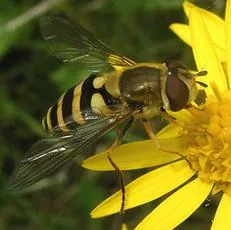
Syrphus vitripennis
Syrphus vitripennis
This species is very hard to distinguish from S. ribesii unless looking at the rear legs of the female: S. ribesii is all yellow whereas S. vitripennis has a black femur (top segment of leg). March to November peaking slightly in May, but most abunda
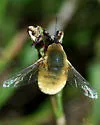
Systoechus solitus
Systoechus solitus
Identification: "This is a southeastern species that can be distinguished from the widespread S. vulgaris by the dark, rather than yellow, spines on the hind leg" -- Joel Kits Face with black hairs or scales and yellow pollen.
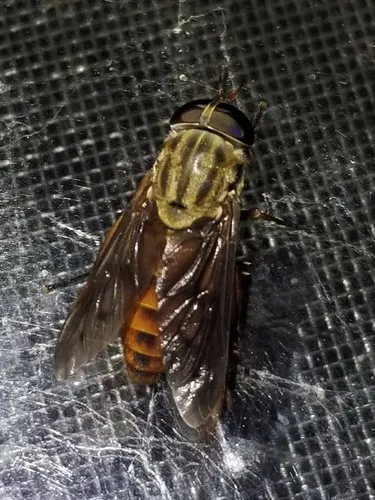
Tabanus abdominalis
Tabanus abdominalis
Specimens of T. abdominalis have proved difficult to identify due mainly to the variation between individuals and the similarity to other variable species, particularly T. limbatinevris and T. sulcifrons but including T. gladiator and T. nefarius . O
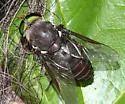
Tabanus americanus
Tabanus americanus
With known pathogenic transmission of Hog cholera virus, a disease that is only pathogenic to pigs and relatives and Anaplasma marginale , a bacteria that affects cattle.
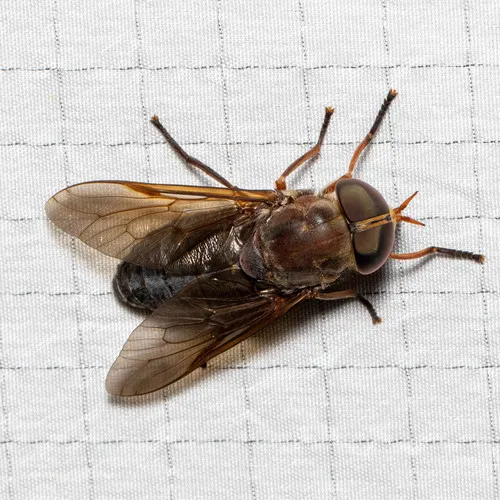
Tabanus calens
Tabanus calens
Identification: Abdomen uniformly dark or with small white patches, eyes uniformly dark, thorax faintly striped, antenna bright orange, wings uniformly brownish
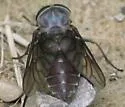
Tabanus catenatus
Tabanus catenatus
Identification: eyes uniformly dark, dull, bare; antennae dark; wings translucent, blackish along heavy raised veins; thorax gray with reddish tint above, light gray and hairy below; abdomen very dark reddish with middorsal line of small but distinct
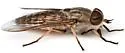
Tabanus erythraeus
Tabanus erythraeus
Identification: Female: abdomen with both distinct median and dorsolateral pale markings or triangles, eyes not densely pilose and abdomen not distinctly pallid dorsally, abdomen with no impression of a stripe formed by median abdominal triangles, wi
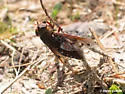
Tabanus fuscopunctatus
Tabanus fuscopunctatus
Identification: Head: Frons parallel sided, about 3x as high as width at base; large triangular shiny patch at vertex; median callus shiny, relatively long; basal callus shiny brown, higher than wide and not touching eyes. Antennae: uniformly orange
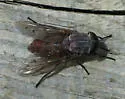
Tabanus gladiator
Tabanus gladiator
Identification: Head: frons very narrow, about 6 times as high as width at base, parallel sided or slightly widened above. Antennae: dark reddish brown, basal portion of 3rd segment with prominent dorsal angle and deep incision. Palps: very long,dark
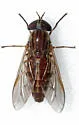
Tabanus gracilis
Tabanus gracilis
Identification: Females can be recognized by the brown color, abdominal pattern, wing veins faintly margined with brown, and the shape of the calli on the face. Females: eyes bare; abdomen with median and sublateral pale spots or triangles; abdomen w
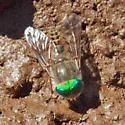
Tabanus laticornis
Tabanus laticornis
In Burger's 1995 Catalog he lists Tabanus laticornis from Arizona and Hybomitra laticornis from Arizona. In a 1974 paper on Arizona tabanids he includes Hybomitra laticornis and in a 1975 paper on Arizona tabanids he does NOT include a Tabanus latico
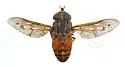
Tabanus limbatinevris
Tabanus limbatinevris
Identification: For females see annotated photos: Since its description by Fabricius in 1805, specimens of T abdominalis have proved difficult to identify due mainly to the variation between individuals and the similarity to other variable species pa
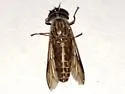
Tabanus longiusculus
Tabanus longiusculus
Identification: Females: abdomen dorsally with both median and sublateral pale spots or triangles, with a median row of triangles not forming a parallel-sided stripe; mesonotum not covered with golden-yellow hair and without longitudinal stripes; fro
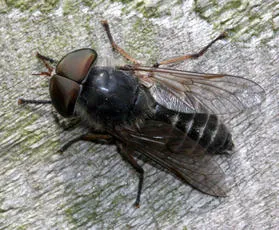
Tabanus maculicornis
Tabanus maculicornis
Length: 12 mm. A rather small, dark species with very narrow alula (flap at base of the wing) and orange antennae. The female has a pattern of grey triangles on the abdomen. Both sexes have one eye band. Like most tabanids , it prefers woodland or wo
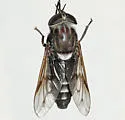
Tabanus mixis
Tabanus mixis
Identification: Burger 1995 (Catolog of Tabanidae (Diptera) of North America north of Mexico" lists Tabanus mixis and Tabanus molestus as distinct species; Zettel Nalen 2015, Florida concurs. T. mixis has been considered a subspecies of T. molestus (
Tabanus moderator
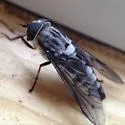
Tabanus moderator
Identification: Abdomen only with median row of pale triangles, fork of vein R4+5 with infuscation, abdomen with contrasting pale median spots or triangles, median spot on tergite 2 distinctly smaller than those on tergites 3 and 4, scutellum with di
Tabanus molestus
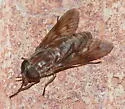
Tabanus molestus
Identification: Burger 1995 (Catolog of Tabanidae (Diptera) of North America north of Mexico" lists Tabanus mixis and Tabanus molestus as distinct species; Zettel Nalen 2015, Florida concurs. T. mixis has been considered a subspecies of T. molestus
Tabanus nefarius
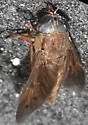
Tabanus nefarius
A rarely collected species. Until the 2024 Florida record, known from only Texas, Louisiana, Mississippi and Alabama.
Tabanus pallidescens
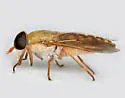
Tabanus pallidescens
With known pathogenic transmission of Anaplasma marginale , a bacteria that affects cattle.
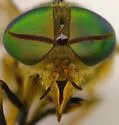
Tabanus quinquevittatus
Tabanus quinquevittatus
With known pathogenic transmission of Hog cholera virus, a disease that is only pathogenic to pigs and relatives; Trypanosoma evansi ; and Trypanosoma theileri .
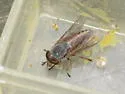
Tabanus sagax
Tabanus sagax
Identification: Females are distinguished from Tabanus sackeni by "the more prominent median pale abdominal stripe, slightly widened posteriorly in each segment, and the wider frons." Possibly crepuscular.
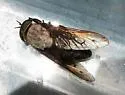
Tabanus stygius
Tabanus stygius
Identification: When fresh the FEMALES are essentially black with contrasting white hairs on the thorax: However, these white hairs wear and rub off with age and the thorax looks a dirty gray. MALES "can scarcely be distinguished from that of nigresc
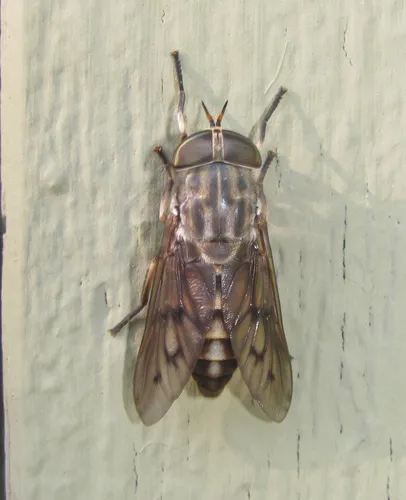
Tabanus sulcifrons
Tabanus sulcifrons
Identification: Tabanus sulcifrons Macquart 1855 Since its description by Fabricius in 1805, specimens of T abdominalis have proved difficult to identify due mainly to the variation between individuals and the similarity to other variable species par
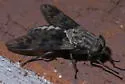
Tabanus venustus
Tabanus venustus
Identification: Very distinctive wing pattern. With known pathogenic transmission of Anaplasma marginale , a bacteria that affects cattle.
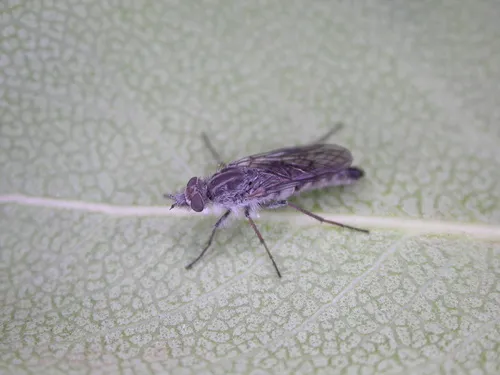
Tabudamima melanophleba
Tabudamima melanophleba
Identification: "Medium-sized flies (6.8-9.3 mm). Tabudamima differs from lncoxoverpa, Tabuda, Dialineura, and Pallicephala in lacking a dark band extending laterally from the antennal socket to the medial margin of the eyes. It differs from lncoxove
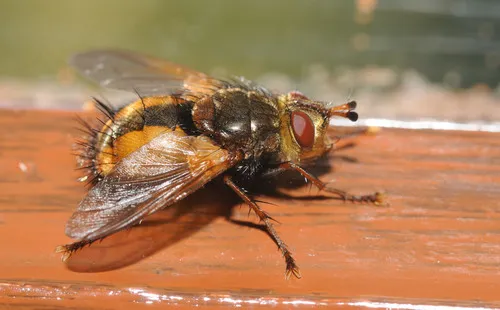
Tachina fera
Tachina fera
Tachina fera is a large (9 to 16 mm) and bristly fly with a prominent broad black stripe down the centre of an otherwise orange abdomen. It has a relatively narrow frons and red-brown front tarsi which helps to distinguish it from the very similar Ta
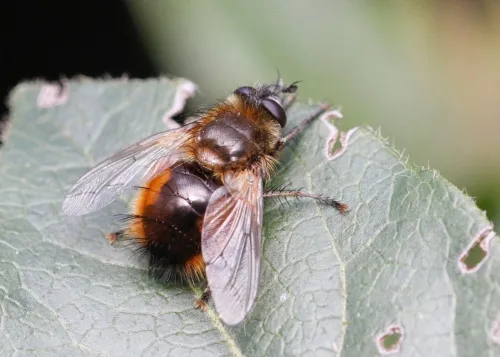
Tachina lurida
Tachina lurida
This species lacks the pale stripes across the posterior edges of each tergite and has bolder orange abdominal side patches than Tachina ursina, the other similar species that may be encountered at the start of April. Unless identified by a recognise
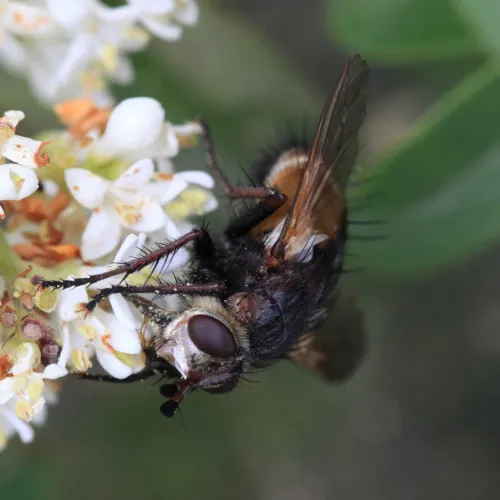
Tachina magnicornis
Tachina magnicornis
Closely resembling T . fera but with the tarsi much darker and a broader frons (male usually more one one-third the head width, female about two-fifths the head width). More information: https://www.flickr.com/photos/63075200@N07/albums/7217772030360
Tachina marklini
Tachina marklini
Identification: Abdomen with orange sides (not as prominent as most Nowickia ), tergite 1+2 with a pair of median marginals, tergite 3 with 3 pairs of median marginals, basicosta contrasting yellow.
Tachina nitida
Tachina nitida
Identification: The male is all black (no bright orange on the abdomen) with enlarged third segment of the antenna, variously described as ax-shaped or boot-shaped in the literature.
Tachypeza nubila
Tachypeza nubila
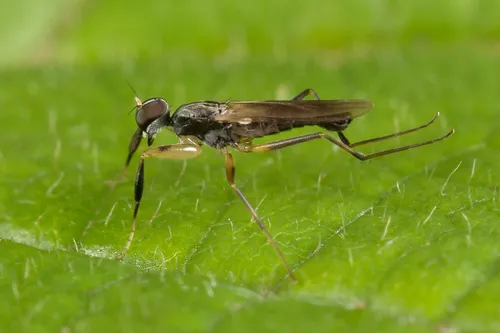
Length 2.5 to 3.5 mm. A small dark brown looking fly. The front legs appear to have swollen thighs and are slightly more yellowy brown. The wings have a dark shading. Usually you will find them on tree trunks (both standing and felled trees) and they
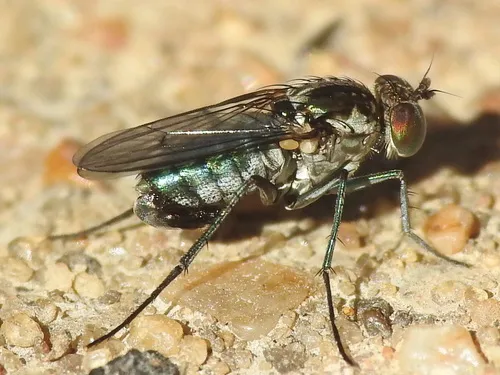
Tachytrechus angustipennis
Tachytrechus angustipennis
Identification: Legs black with greenish reflections; face yellowish, diverging below; costa distinctly thickened near base of wing; wing without apical brown spot.
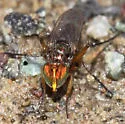
Tachytrechus auratus
Tachytrechus auratus
Identification: Male with large black oval at tip of antennae, arista much longer than head height, fore femur with long hairs below, fore tarsi yellow at base, postocular hairs mostly pale.
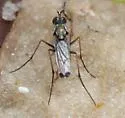
Tachytrechus floridensis
Tachytrechus floridensis
Identification: Male with a large brown spot and no white spot at wing tip.
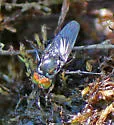
Tachytrechus laticrus
Tachytrechus laticrus
Identification: Both sexes are unique in the pattern of pubescence on the mesonotum. Additionally, the males have the tibiae flattened and widened, paddle-like.
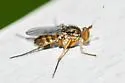
Tachytrechus moechus
Tachytrechus moechus
Identification: The form of the male antenna is distinctive among eastern species.
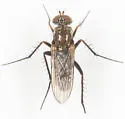
Tachytrechus protervus
Tachytrechus protervus
Identification: Males with distinct flattening of the anterior of the fore tibia. Females similar to T. laticrus but with less yellow on the femora and a narrow costal vein.
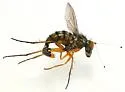
Tachytrechus tenuiseta
Tachytrechus tenuiseta
Identification: The male has yellow femora, black orbital cilia, and a moderately elongate lamella at the tip of the arista, the narrower basal half white.
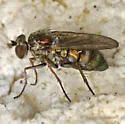
Tachytrechus vorax
Tachytrechus vorax
Identification: Wing of male with brown spot larger than white spot.
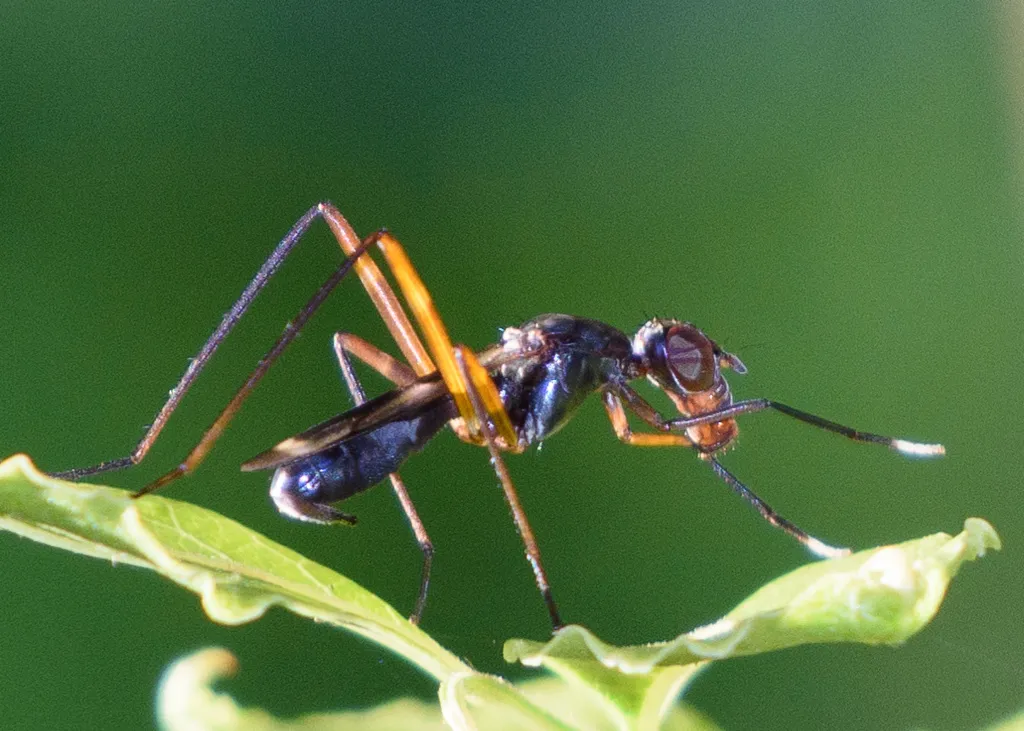
Taeniaptera trivittata
Taeniaptera trivittata
Said to be ant mimics . Missouri Department of Conservation-- Stilt-legged Flies : " Taeniaptera trivittata has a nifty way of mimicking ants: the otherwise clear wings are marked with black dots to resemble an ant's body shape."
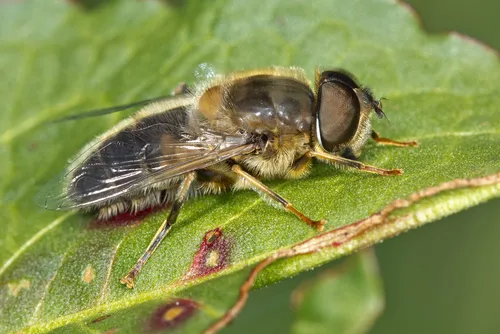
Tapered Drone Fly
Eristalis pertinax
Whilst similar to E. tenax , this species has a more tapering abdomen in the male and it also has pale front legs. The pair of orange markings on tergite 2 of the abdomen are nearly always present, but tend to be brighter in summer specimens. Found b
Tawny-tailed Bee Fly
Villa fulviana
Identification: variable in size in color but lacks transverse bands on abdomen; tawny hairs near tip of abdomen is apparently the basis of the species epithet; lack of black hairs on sides of abdomen distinguishes this species from all other northea
Taxigramma hilarella
Taxigramma hilarella
"Generally associated with fossorial sphecids, but there is one authentic record of it as a parasite of a camel cricket."
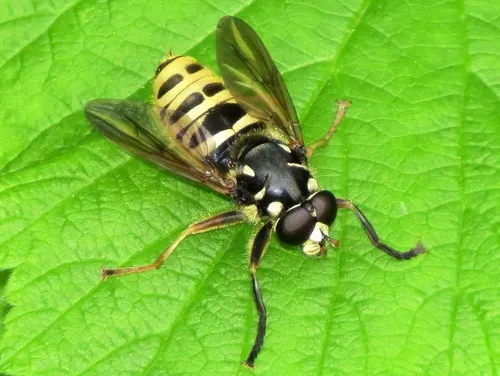
Temnostoma excentrica
Temnostoma excentrica
Identification: The species has two morphs which may prove to be distinct species with genetic analysis. A grey morph which is transcontinental and a yellow morph found in the Appalachian mountains.
Temnostoma trifasciatum
Temnostoma trifasciatum
Identification: Key characters for this species: metasternum hairy, abdominal segments 2-4 with only one yellow stripe, face not tuberculate, middle & hind femora yellowish, last abdominal segment with mostly black hairs beyond the yellow stripe, and
Temnostoma venustum
Temnostoma venustum
Identification: Band on transverse suture broken into two spots. Scutellum black setose. Tergite 4 with single medial black band.
Tephritis araneosa
Tephritis araneosa
Probably a species complex. Host plants are diverse, all but one in Asteraceae. The individual species lumped under this name probably have more narrow host ranges.
Tephritis bardanae
Tephritis bardanae
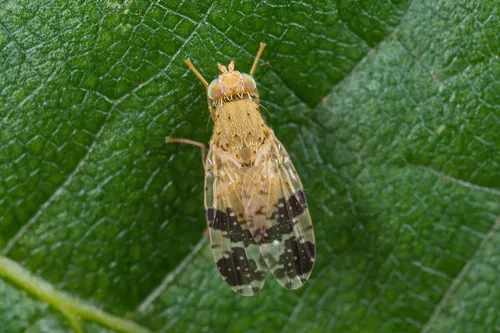
One of many similar fruit flies with heavily patterned wings. It is sometimes possible to identify a species based on the wing patterning but some variation does occur, even within members of the same species. The larvae gall the receptacles, achenes
Tephritis conura
Tephritis conura
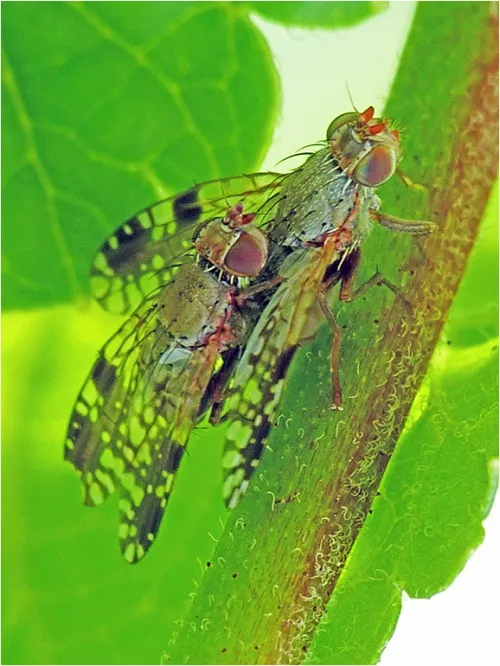
One of many similar fruit flies with heavily patterned wings. It is sometimes possible to identify a species based on the wing patterning but some variation does occur, even within members of the same species. We suggest expert help be sought when id
Tephritis formosa
Tephritis formosa
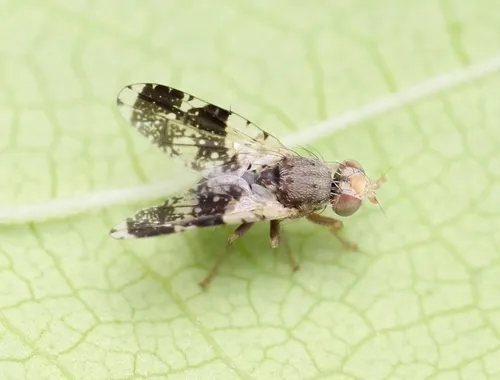
Length males 4 to 5 mm, females 5 to 6 mm. It has light beige wings that are boldly patterned with dark markings, the wing tip is clear with two small dark marks. Unless identified by a recognised expert, a photo is required. If the photo doesn't sho
Tephritis hyoscyami
Tephritis hyoscyami
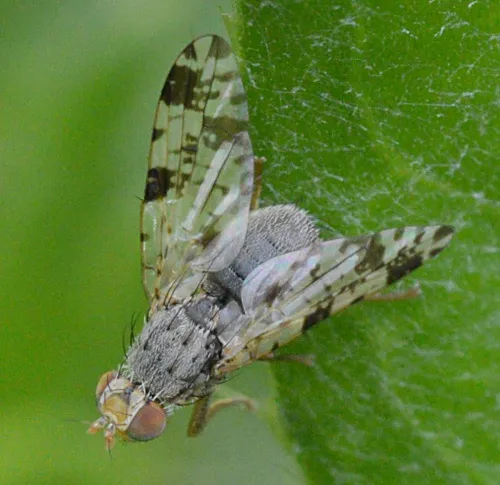
Its wings are boldly patterned with dark markings similar to many other species in this genus. Unless identified by a recognised expert, a photo is required. If the photo doesn't show the key ID features then in the comments box describe the size and
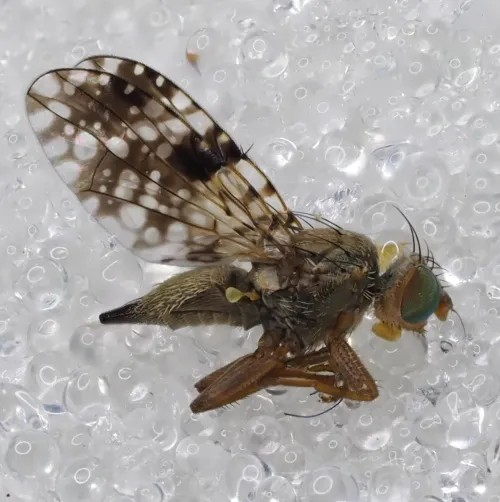
Tephritis matricariae
Tephritis matricariae
5mm. Brown-bodied with highly patterned wings. The female oviscape is hairy at the base and has dull red patches on the sides. A gall-forming fruitfly in the flowerheads of plants in the Asteraceae family, particularly Crepis . Other Tephritis specie
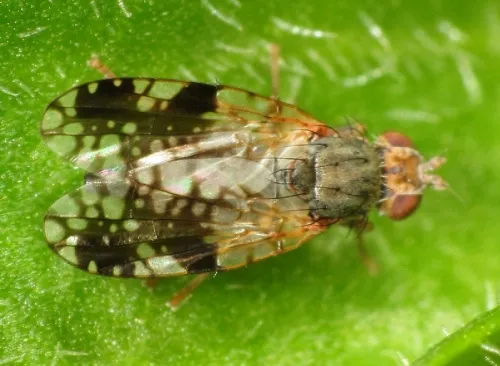
Tephritis neesii
Tephritis neesii
Wing Length 3.5 to 4.5 mm. Black oviscape. Legs orange-brown but with black femora on the male. Wing pattern is used in identification. Unless identified by a recognised expert, a photo is required. If the photo doesn't show the key ID features then
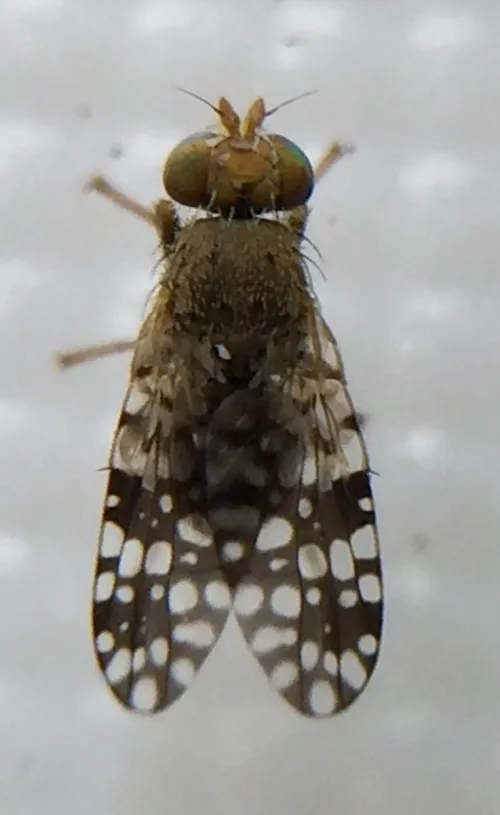
Tephritis praecox
Tephritis praecox
Wing Length 1.8 to 3.2 mm. Black oviscape. Legs orange with black marks on femora. Wing pattern is used in identification. Unless identified by a recognised expert, a photo is required. If the photo doesn't show the key ID features then in the commen
Tephritis rufipennis
Tephritis rufipennis
Identification: wing pattern distinctive: the apex has a hyaline "cresent", and there are two transverse dark bands, each with small scattered hyaline spot... the bands nearly entirely separated by a central hyaline band [see Plate IV:8 , Fig. 87 in
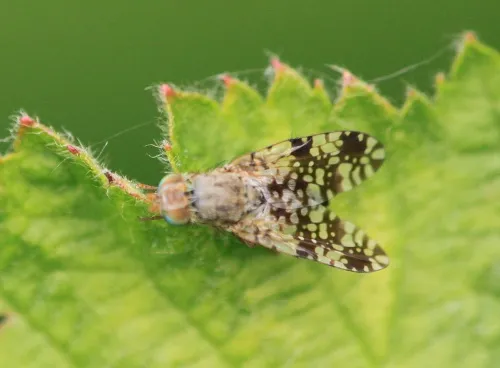
Tephritis ruralis
Tephritis ruralis
One of many similar looking members of the Tephritidae family which have strongly patterned wings. Great care is needed in identifying these species. The larvae cause galls in the receptacles of Pilosella ( Mouse-ear Hawkweed). Widespread but scatter
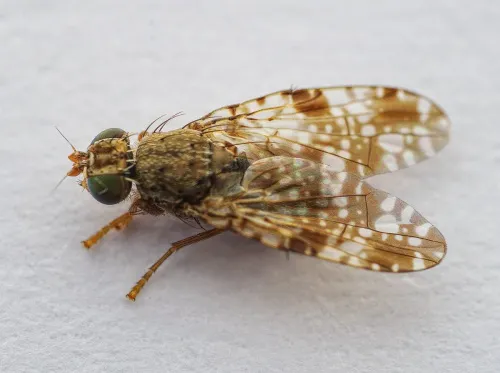
Tephritis vespertina
Tephritis vespertina
Wing Length 3.7 to 4.5 mm. Orange oviscape with black apex and black triangular mark at base. Legs dark orange. Most of body covered in a brown tomentum. Wing pattern is important in identification. Unless identified by a recognised expert, a photo i
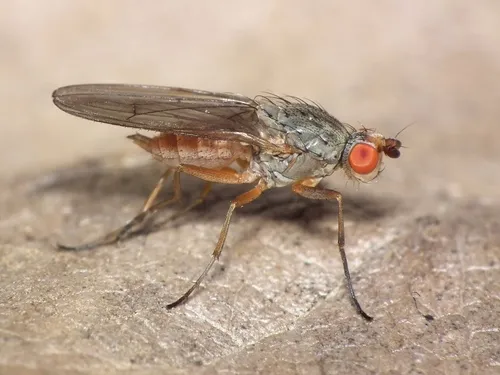
Tephrochlamys rufiventris
Tephrochlamys rufiventris
Detailed examination is necessary to identify to species level.
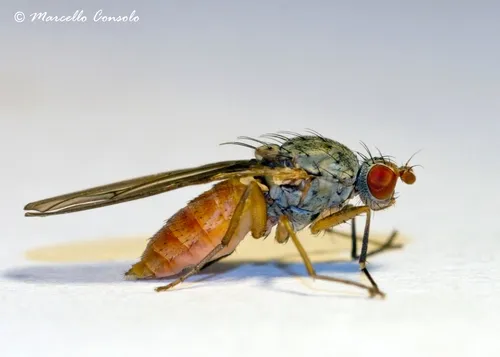
Tephrochlamys tarsalis
Tephrochlamys tarsalis
This small/medium fly is a winter specialist, appearing in December and January. It has a grey thorax and an orange abdomen. See the ID checklist below for a detailed list of the key ID features. Tephrochlamys flavipes is the species most similar but
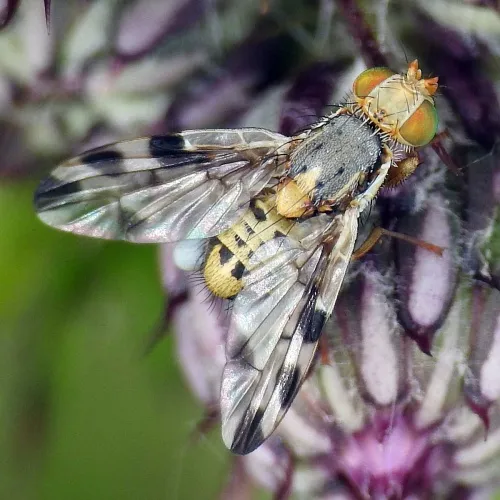
Terellia ruficauda
Terellia ruficauda
This is a well marked gall fly with dark patches on the wings. There are other very similar species in this genus which means that detailed examination of an actual specimen is generally needed to identify the exact species. A red box around the imag
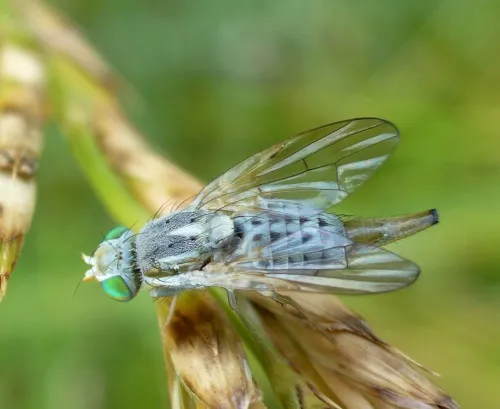
Terellia serratulae
Terellia serratulae
A gall fly that has fairly clear wings and an abdomen with a chequered pattern of beige or pale green and black. Unless identified by a recognised expert, a photo is required. If the photo doesn't show the key ID features then in the comments box des
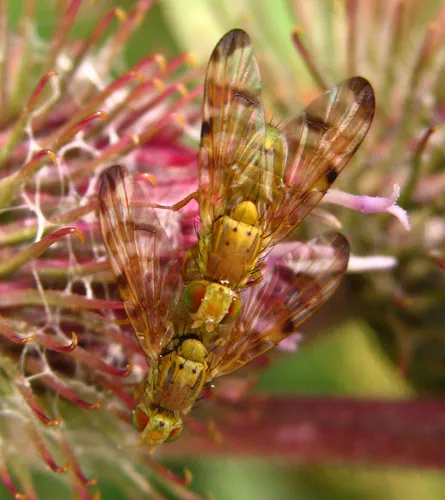
Terellia tussilaginis
Terellia tussilaginis
The gall fly Terellia tussilaginis is mainly pale greeny yellow in colour with distinctive brown banding on its wings. The larva form galls in the achenes of Burdock ( Arctium ) flowerheads; the achene is swollen with a tiny entrance hole near the to
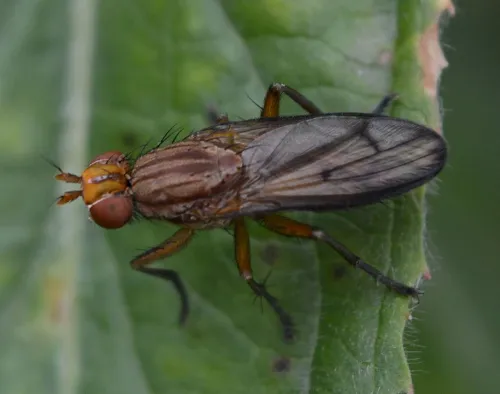
Tetanocera elata
Tetanocera elata
Tetanocera elata has dark shading to the outer edge of the wings and a dark patch on the head behind the ocelli. Unless identified by a recognised expert, a photo is required. If the photo doesn't show the key ID features then in the comments box des
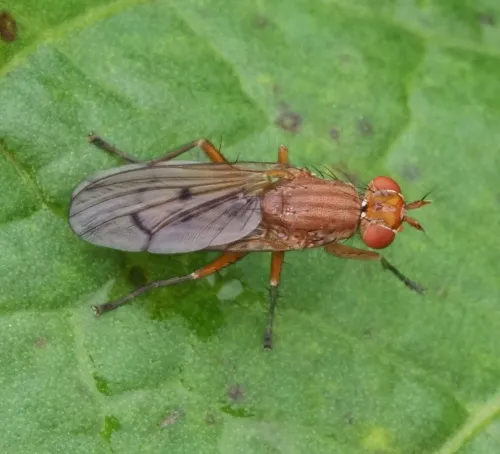
Tetanocera ferruginea
Tetanocera ferruginea
The wings lack a darkened costal area, and the frons is dull with a darkened mid frontal stripe. For further information see link below. Unless identified by a recognised expert, a photo is required, and the specimen should be examined with a microsc
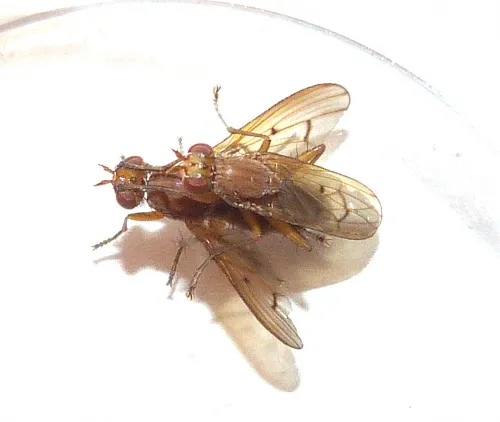
Tetanocera phyllophora
Tetanocera phyllophora
One of three Tetanocera species with the fore margin of the wing distinctly darkened but the only one without a dark mark on the occiput on the back of the head above the 'neck' and typically with a much paler appearance in the field than T. elata or
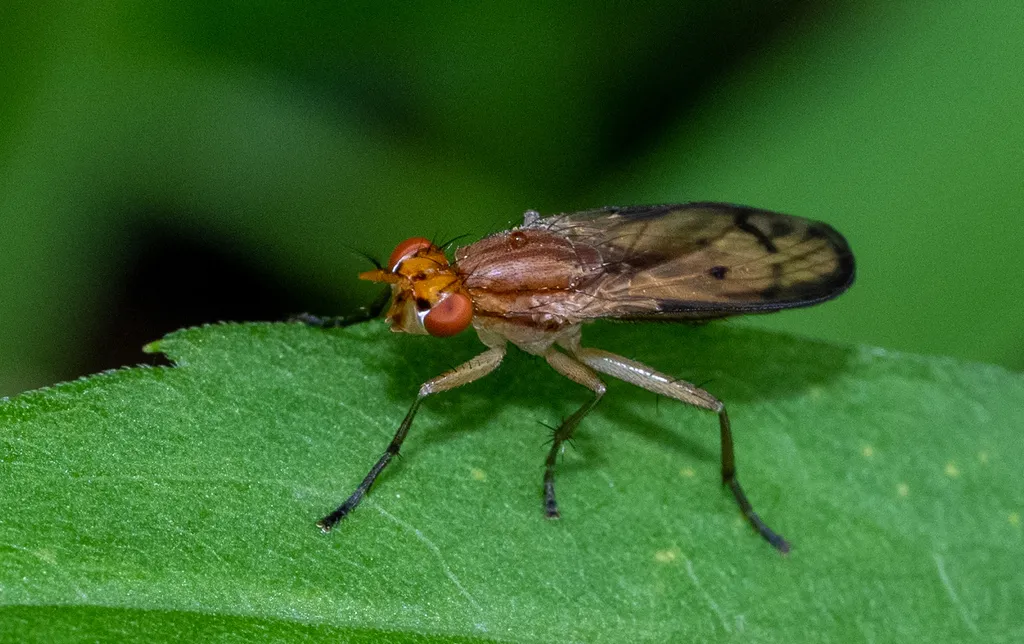
Tetanocera plebeja
Tetanocera plebeja
Identification: "Noting the pattern on the wings is the quickest means of determining this common and widespread species." -- Bill Murphy