
Switchgrass Gall Midge
Chilophaga virgati
This record describes Chilophaga virgati (species). Recorded family: Cecidomyiidae. Recorded order: Diptera.
Identification and Appearance
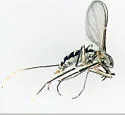
Distinguished from congeners by leg pattern, hind tarsi white at tip and legs without horizontal light- and dark-banded scale covering on the legs. Alternatively, female eighth tergal sclerites no longer than the preceding tergite. A potentially economically signifigant pest of switchgrass. Abstract of Calles Torres 2013: Switchgrass ( Panicum virgatum L.) is considered to be a highly promising bioenergy crop. However, little is known about insect pests that impact its utilization for this purpose. The switchgrass gall midge [ Chilophaga virgati Gagné (Diptera: Cecidomyiidae)], which was first discovered in 2008 at Brookings, SD, USA, is shown to have a negative impact on biomass and seed yields of switchgrass. Our objectives were to increase knowledge of the biology of the midge by describing its life stages and any parasitoids that have biological control potential. Data collections were made during May to December in 2011 and April to late autumn in 2012. The gall midge adult is active from early June to late July. This insect overwinters as a late instar larva, usually in large aggregations, enclosed in the sheath of the flag leaf of dry tillers. The mean number of larvae was 31, with a range of 6 to 85 per tiller. Infested tillers m^-2 varied among three phenologically distinct cultivars. The late flowering cultivar ‘Cave-In-Rock’ was more heavily infested (>2×) than the early flowering ‘Dacotah’. A newly discovered parasitoid, Platygaster chilophagae Buhl (Hymenoptera: Platygastridae) and a species of Quadrastichus sp. (Hymenoptera: Eulophidae) were reared from gall midge larvae. These results will be valuable to entomologists, switchgrass breeders, and agronomists as a guide to the occurrence and activities of the gall midge.
Classification
- Kingdom
- Animalia
- Phylum
- Arthropoda
- Class
- Insecta
- Order
- Diptera (Flies)
- Superfamily
- Sciaroidea
- Family
- Cecidomyiidae (Gall Midges and Wood Midges)
- Subfamily
- Cecidomyiinae
- Tribe
- Alycaulini
- Genus
- Chilophaga
Imported taxonomy record. Source availability varies; see the source references and editorial policy below.
Habitat and Range
Geographic Range
Northern Great Plains
Additional species information
Species notes from the sources
Etymology: From the host plant species Panicum virgatum (switchgrass)
About Flies: the wider group
Order-level background for Diptera, the group containing Chilophaga virgati. Species-specific details appear above.
Group overview
Diptera includes over 150,000 described species of flies, mosquitoes, and midges. Mosquitoes are the deadliest animal on Earth (CDC). Malaria alone causes ~249 million cases and over 608,000 deaths annually, mostly children under 5 (WHO). Vector-borne diseases account for over 17% of all infectious diseases, causing 700,000+ deaths per year.
Ecological role of the group
Despite their disease impact, flies are critical decomposers and pollinators. Hoverflies alone pollinate hundreds of crop and wildflower species. Flies are also the primary food source for many birds, bats, and fish. Forensic entomology relies heavily on fly species for crime scene analysis.
Economic and practical significance of the group
In the U.S., vector-borne disease cases tripled between 2004-2016, with over 640,000 cases reported in that period (CDC). Tickborne diseases doubled from 22,000 to 48,000 annual reports. Globally, mosquito-borne diseases cost billions in healthcare and lost productivity.
Recorded sources for this group: WHO, CDC, PNAS. Imported estimates may describe particular regions or reporting periods.
Photos of Switchgrass Gall Midge (5)
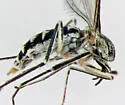
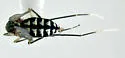
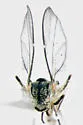
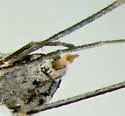
Photo credits: Contributed by John F. Carr
Frequently Asked Questions About Switchgrass Gall Midge
What is Switchgrass Gall Midge?
Switchgrass Gall Midge (Chilophaga virgati) is a species in the family Cecidomyiidae, within the order Diptera.
How big is Switchgrass Gall Midge?
Wing length 1.9-2.4 mm
How do you identify Switchgrass Gall Midge?
Distinguished from congeners by leg pattern, hind tarsi white at tip and legs without horizontal light- and dark-banded scale covering on the legs. Alternatively, female eighth tergal sclerites no longer than the preceding tergite.
Where is Switchgrass Gall Midge found?
Range: Northern Great Plains