
Saussure's Grasshopper
Pardalophora saussurei
This record describes Pardalophora saussurei (species). Recorded family: Acrididae. Recorded order: Orthoptera.
Identification and Appearance
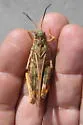
Biologically P. saussurei is a southern subspecies of P. haldemanii , but it is treated as a separate species in publications, and the two have never officially been combined under one species as yet. Attracted to lights at night. There is an attractive but relatively uncommon green form of this species. Orange-winged individuals seem to be more often green than do yellow-winged ones. So, since orange-winged specimens are highly visible when they fly, and are less numerous than yellow-winged, it seems easier to see green individuals if one tracks those with orange wings.
Classification
- Kingdom
- Animalia
- Phylum
- Arthropoda
- Class
- Insecta
- Order
- Orthoptera (Grasshoppers, Crickets, Katydids)
- Suborder
- Caelifera
- Family
- Acrididae (Short-horned Grasshoppers)
- Subfamily
- Oedipodinae
- Tribe
- Hippiscini
- Genus
- Pardalophora
Imported taxonomy record. Source availability varies; see the source references and editorial policy below.
Habitat and Range
Habitat
Grasslands, and large grassy openings in wooded areas. Mostly in sandy areas with plenty of bare ground along with relatively tall grass and perennial forbs. Often also with Sand Sagebrush or Shin Oak. Sometimes common in old fields and broad road right-of-ways.
Geographic Range
Oklahoma, north Texas, south Kansas (becoming rare eastward), se. Colorado, e. New Mexico, perhaps w. Arkansas. Blends into P. haldemanii in se. Colorado and s. Kansas, and specimens that lean toward P. saussurei in characteristics occur among P. haldemanii sporadically north to Nebraska, while occasional specimens that lean toward P. haldemanii occur among P. saussurei south to Texas. Specimens of P. haldemanii from Utah sometimes show some traits leaning toward P. saussurei as well, even though P. saussurei does not occur in that state.
Diet and Behavior
Diet: Mixed feeders, seem to favor grasses, but will eat a variety of herbaceus plants and will scavange dead animal matter. Somewhat cannibalistic if starving and crowded together.
Life History
Overwinter as about half-grown nymphs, with some adults as early as April in south and most common in June; usually thinning out by early July, and totally gone by August.
About Grasshoppers, Crickets, Katydids: the wider group
Order-level background for Orthoptera, the group containing Pardalophora saussurei. Species-specific details appear above.
Group overview
Orthoptera includes ~28,000 described species of grasshoppers, crickets, and katydids. Desert locusts can form swarms covering 460 square miles containing up to 80 million individuals per square kilometer.
Ecological role of the group
Grasshoppers and crickets are a primary food source for birds, reptiles, and small mammals. Cricket farming is a growing industry - crickets require 12× less feed than cattle to produce the same amount of protein, using 2,000× less water.
Economic and practical significance of the group
A single large locust swarm can consume the same amount of food in one day as 35,000 people. The 2019-2021 East Africa locust crisis affected food security for 42 million people across multiple countries. Global crop losses from locusts can reach billions annually.
Recorded sources for this group: FAO, UN World Food Programme, research publications. Imported estimates may describe particular regions or reporting periods.
Photos of Saussure's Grasshopper (5)
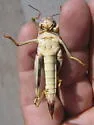
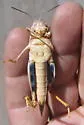
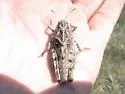
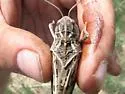
Photo credits: Contributed by David J. Ferguson
Frequently Asked Questions About Saussure's Grasshopper
What is Saussure's Grasshopper?
Saussure's Grasshopper (Pardalophora saussurei) is a species in the family Acrididae, within the order Orthoptera.
Where is Saussure's Grasshopper found?
| Feature | Details |
|---|---|
| Habitat | Grasslands, and large grassy openings in wooded areas. Mostly in sandy areas with plenty of bare ground along with relatively tall grass and perennial forbs. Often also with Sand Sagebrush or Shin Oak. Sometimes common in old fields and broad road right-of-ways. |
| Range | Oklahoma, north Texas, south Kansas (becoming rare eastward), se. Colorado, e. New Mexico, perhaps w. Arkansas. Blends into P. haldemanii in se. Colorado and s. Kansas, and specimens that lean toward P. saussurei in characteristics occur among P. haldemanii sporadically north to Nebraska, while occasional specimens that lean toward P. haldemanii occur among P. saussurei south to Texas. Specimens of P. haldemanii from Utah sometimes show some traits leaning toward P. saussurei as well, even though P. saussurei does not occur in that state. |
What does Saussure's Grasshopper eat?
The diet of the Saussure's Grasshopper includes Mixed feeders, seem to favor grasses, but will eat a variety of herbaceus plants and will scavange dead animal matter. Somewhat cannibalistic if starving and crowded together..
What is the life cycle of a Saussure's Grasshopper?
Overwinter as about half-grown nymphs, with some adults as early as April in south and most common in June; usually thinning out by early July, and totally gone by August.