
Southwestern Dusky Grasshopper
Nebulatettix subgracilis
This record describes Nebulatettix subgracilis (species). Recorded family: Acrididae. Recorded order: Orthoptera.
Identification and Appearance
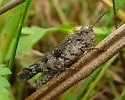
Can be difficult to separate from other Encoptolophus (see discussion under genus for separation from other genera). E. pallidus & robustus replace it westward, and are unlikely to be found with it. E. pallidus is in the Mojave Desert and averages larger with a proportionately larger head (and may be conspecific), while E. robustus is near the Pacific coast and has shorter wings. E. costalis is more stocky of build with a larger head, and with shorter wings. It is less inclined to be in alkaline areas (favoring areas nearer fresh water or lusher in vegetation); however, the two species are not infrequently found together. Shotwellia isleta is larger with the pronotal crest barely indicated and cut more than once, and with the hind tibiae yellowish. It seems to favor non-alkaline areas, and is much more rare and restricted in occurence; however, it is apparently always found with both E. costalis & subgracilis in the United States. It is not uncommon to survey an area in daytime for grasshopper species, and not find this one at all, only to find it coming abundantly to lights at night.
Classification
- Kingdom
- Animalia
- Phylum
- Arthropoda
- Class
- Insecta
- Order
- Orthoptera (Grasshoppers, Crickets, Katydids)
- Suborder
- Caelifera
- Family
- Acrididae (Short-horned Grasshoppers)
- Subfamily
- Oedipodinae
- Tribe
- Chortophagini
- Genus
- Nebulatettix
Imported taxonomy record. Source availability varies; see the source references and editorial policy below.
Habitat and Range
Habitat
Varied; usually low-lying flat areas where water may collect for short times, most often but not always somewhat saline or alkaline., and with short or patchy grass (often Distichlis and/or Sporobolus ).
Geographic Range
Honduras north thru Mexico to e. Texas, s. South Dakota, s. Wyoming, Utah, and se. California.
Diet and Behavior
Diet: Apparently favors grasses.
Life History
in most areas overwinters as eggs, with adults from late spring into autumn, sometimes till frost. In mild winter areas all stages may be present at all seasons, but still usually most abundant as adults in late spring and summer.
About Grasshoppers, Crickets, Katydids: the wider group
Order-level background for Orthoptera, the group containing Nebulatettix subgracilis. Species-specific details appear above.
Group overview
Orthoptera includes ~28,000 described species of grasshoppers, crickets, and katydids. Desert locusts can form swarms covering 460 square miles containing up to 80 million individuals per square kilometer.
Ecological role of the group
Grasshoppers and crickets are a primary food source for birds, reptiles, and small mammals. Cricket farming is a growing industry - crickets require 12× less feed than cattle to produce the same amount of protein, using 2,000× less water.
Economic and practical significance of the group
A single large locust swarm can consume the same amount of food in one day as 35,000 people. The 2019-2021 East Africa locust crisis affected food security for 42 million people across multiple countries. Global crop losses from locusts can reach billions annually.
Recorded sources for this group: FAO, UN World Food Programme, research publications. Imported estimates may describe particular regions or reporting periods.
Photos of Southwestern Dusky Grasshopper (5)
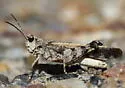
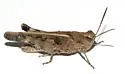
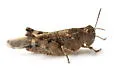
Photo credits: Contributed by Tom Bentley; Additional contributions by David Ferguson
Frequently Asked Questions About Southwestern Dusky Grasshopper
What is Southwestern Dusky Grasshopper?
Southwestern Dusky Grasshopper (Nebulatettix subgracilis) is a species in the family Acrididae, within the order Orthoptera.
How do you identify Southwestern Dusky Grasshopper?
Can be difficult to separate from other Encoptolophus (see discussion under genus for separation from other genera). E. pallidus & robustus replace it westward, and are unlikely to be found with it. E. pallidus is in the Mojave Desert and averages larger with a proportionately larger head (and may be conspecific), while E. robustus is near the Pacific coast and has shorter wings. E. costalis is more stocky of build with a larger head, and with shorter wings. It is less inclined to be in alkaline areas (favoring areas nearer fresh water or lusher in vegetation); however, the two species are not infrequently found together. Shotwellia isleta is larger with the pronotal crest barely indicated and cut more than once, and with the hind tibiae yellowish. It seems to favor non-alkaline areas, and is much more rare and restricted in occurence; however, it is apparently always found with both E. costalis & subgracilis in the United States.
Where is Southwestern Dusky Grasshopper found?
| Feature | Details |
|---|---|
| Habitat | Varied; usually low-lying flat areas where water may collect for short times, most often but not always somewhat saline or alkaline., and with short or patchy grass (often Distichlis and/or Sporobolus ). |
| Range | Honduras north thru Mexico to e. Texas, s. South Dakota, s. Wyoming, Utah, and se. California. |
What does Southwestern Dusky Grasshopper eat?
The diet of the Southwestern Dusky Grasshopper includes Apparently favors grasses..
What is the life cycle of a Southwestern Dusky Grasshopper?
in most areas overwinters as eggs, with adults from late spring into autumn, sometimes till frost. In mild winter areas all stages may be present at all seasons, but still usually most abundant as adults in late spring and summer.