
Seaside Grasshopper
Trimerotropis maritima
This record describes Trimerotropis maritima (species). Recorded family: Acrididae. Recorded order: Orthoptera.
Identification and Appearance
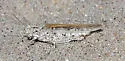
In most areas, a medium-sized speckled grasshopper looking much like the sand it is living on, with reddish hind tibiae and yellow wings crossed by a broad black band is likely to be this species. This species will often crepitate in flight, with the sound being a relatively loud and continuous harsh buzz, a little like running something along the teeth of a comb. Westward on the Great Plains Trimerotropis agrestis takes over, and is very similar. T. maritima is mainly distinguished from that species by usually having the inside of the hind femur yellowish and crossed by black bands, while it is usually red, and often with little or no dark coloring in T. agrestis . T. agrestis has more strongly projecting lower rear angles of the pronotum. The distinctions tend to break down where the two species meet on the Great Plains, and it will be impossible to reliably place some specimens as one or the other. Most other similar looking species living on sand in the same region will have a high pronotal crest cut only once (twice in T. maritima ), will have better defined dark bands across the tegmina (but these are sometimes developed as aggregations of dots in T. maritima ), will be smaller, will have thicker antennae, and/or will have larger dark spots and occur mostly in spring instead of summer/autumn. Along the shores of the Great Lakes and nearby sand areas, and along the Atlantic Coast north from North Carolina, T. maritima usually has yellowish hind tibiae instead of orange or red, but its size, habitat, and appearance should make it easy to recognize. In early literature, there was much confusion between various species of Trimerotropis and Spharagemon with red hind tibiae, and older records for several species are often questionable; many are definitely based on misidentified specimens. This species was often involved.
Classification
- Kingdom
- Animalia
- Phylum
- Arthropoda
- Class
- Insecta
- Order
- Orthoptera (Grasshoppers, Crickets, Katydids)
- Suborder
- Caelifera
- Family
- Acrididae (Short-horned Grasshoppers)
- Subfamily
- Oedipodinae
- Tribe
- Trimerotropini
- Genus
- Trimerotropis
Imported taxonomy record. Source availability varies; see the source references and editorial policy below.
Habitat and Range
Habitat
Sandy areas, mostly on beaches or in dunes, in sandy pine barrens, on riverine sand bars, in dry sandy washes, or sometimes along sandy dirt roads in old fields, and in similar disturbed sandy places. The key word is "sand".
Geographic Range
Atlantic Coast of eastern United States to Minnesota, South Dakota, Nebraska, e. Colorado, and extreme e. Arizona (mostly only sands of river courses in Great Plains and Southwest). Sneaking into Canada in s. Ontario, and into Mexico near the Rio Grande. Also reported from Cuba.
Diet and Behavior
Life History
Varies with latitude, but mostly overwinters as eggs, and adults occur late spring to frost. In some areas eggs may remain under water for some time, and will not hatch until water recedes, and in some seasons the species may not be seen at all, or adults may not mature until autumn. In southern climates all stages may be seen at all seasons, but adults are still most common in summer.
Additional species information
Species notes from the sources
Etymology: maritima (L). "of the sea"
About Grasshoppers, Crickets, Katydids: the wider group
Order-level background for Orthoptera, the group containing Trimerotropis maritima. Species-specific details appear above.
Group overview
Orthoptera includes ~28,000 described species of grasshoppers, crickets, and katydids. Desert locusts can form swarms covering 460 square miles containing up to 80 million individuals per square kilometer.
Ecological role of the group
Grasshoppers and crickets are a primary food source for birds, reptiles, and small mammals. Cricket farming is a growing industry - crickets require 12× less feed than cattle to produce the same amount of protein, using 2,000× less water.
Economic and practical significance of the group
A single large locust swarm can consume the same amount of food in one day as 35,000 people. The 2019-2021 East Africa locust crisis affected food security for 42 million people across multiple countries. Global crop losses from locusts can reach billions annually.
Recorded sources for this group: FAO, UN World Food Programme, research publications. Imported estimates may describe particular regions or reporting periods.
Photos of Seaside Grasshopper (5)
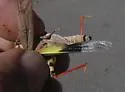
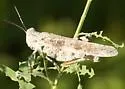
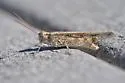
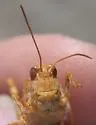
Photo credits: Contributed by Tony DiTerlizzi; Additional contributions by Mike Boone , Phillip Harpootlian , Mike Quinn , David Ferguson , Abigail Parker , metrioptera
Frequently Asked Questions About Seaside Grasshopper
What is Seaside Grasshopper?
Seaside Grasshopper (Trimerotropis maritima) is a species in the family Acrididae, within the order Orthoptera.
How do you identify Seaside Grasshopper?
In most areas, a medium-sized speckled grasshopper looking much like the sand it is living on, with reddish hind tibiae and yellow wings crossed by a broad black band is likely to be this species. This species will often crepitate in flight, with the sound being a relatively loud and continuous harsh buzz, a little like running something along the teeth of a comb. Westward on the Great Plains Trimerotropis agrestis takes over, and is very similar. T. maritima is mainly distinguished from that species by usually having the inside of the hind femur yellowish and crossed by black bands, while it is usually red, and often with little or no dark coloring in T. agrestis . T. agrestis has more strongly projecting lower rear angles of the pronotum. The distinctions tend to break down where the two species meet on the Great Plains, and it will be impossible to reliably place some specimens as one or the other. Most other similar looking species living on sand in the same region will have a high pronotal crest cut only once (twice in T. maritima ), will have better defined dark bands across the tegmina (but these are sometimes developed as aggregations of dots in T. maritima ), will be smaller, will have thicker antennae, and/or will have larger dark spots and occur mostly in spring instead of summer/autumn. Along the shores of the Great Lakes and nearby sand areas, and along the Atlantic Coast north from North Carolina, T. maritima usually has yellowish hind tibiae instead of orange or red, but its size, habitat, and appearance should make it easy to recognize. In early literature, there was much confusion between various species of Trimerotropis and Spharagemon with red hind tibiae, and older records for several species are often questionable; many are definitely based on misidentified specimens. This species was often involved.
Where is Seaside Grasshopper found?
| Feature | Details |
|---|---|
| Habitat | Sandy areas, mostly on beaches or in dunes, in sandy pine barrens, on riverine sand bars, in dry sandy washes, or sometimes along sandy dirt roads in old fields, and in similar disturbed sandy places. The key word is sand. |
| Range | Atlantic Coast of eastern United States to Minnesota, South Dakota, Nebraska, e. Colorado, and extreme e. Arizona (mostly only sands of river courses in Great Plains and Southwest). Sneaking into Canada in s. Ontario, and into Mexico near the Rio Grande. Also reported from Cuba. |
What is the life cycle of a Seaside Grasshopper?
Varies with latitude, but mostly overwinters as eggs, and adults occur late spring to frost. In some areas eggs may remain under water for some time, and will not hatch until water recedes, and in some seasons the species may not be seen at all, or adults may not mature until autumn. In southern climates all stages may be seen at all seasons, but adults are still most common in summer.