
San Rafael Sand-treader Cricket
Utabaenetes tanneri
This record describes Utabaenetes tanneri (species). Recorded family: Rhaphidophoridae. Recorded order: Orthoptera.
Identification and Appearance
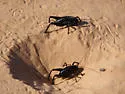
This is likely the only species of Sand-treader found within its area of distribution, However, other known Sand-treader Crickets that might be found in the same region are pale in color with differing spine arrangement on the legs. Nymphs of Utabaenetes may be pale in color also (?), and almost certainly are right after molting. Some Camel Crickets, including at least some of the Sand-treaders fluoresce under UV light at night. It seems probable that this one does as well.
Classification
- Kingdom
- Animalia
- Phylum
- Arthropoda
- Class
- Insecta
- Order
- Orthoptera (Grasshoppers, Crickets, Katydids)
- Suborder
- Ensifera
- Family
- Rhaphidophoridae (Camel Crickets)
- Subfamily
- Ceuthophilinae
- Genus
- Utabaenetes (Sand-treader Crickets)
Imported taxonomy record. Source availability varies; see the source references and editorial policy below.
Habitat and Range
Geographic Range
Sand dunes in central Utah. Should also be looked for in western Colorado and northern Arizona.
Seasonal Activity
Adults have been found from April to June. Probably overwinters as nymphs.
Diet and Behavior
Diet: Unknown, but likely an omnivorous scavenger.
Additional species information
Species notes from the sources
Etymology: Not to be confused with Daihinibaenetes tanneri Tinkham, 1962; another species of Sand-treader Cricket found in dunes near Flowell, Oak City, Delta, & Lynndyll, in Utah.
About Grasshoppers, Crickets, Katydids: the wider group
Order-level background for Orthoptera, the group containing Utabaenetes tanneri. Species-specific details appear above.
Group overview
Orthoptera includes ~28,000 described species of grasshoppers, crickets, and katydids. Desert locusts can form swarms covering 460 square miles containing up to 80 million individuals per square kilometer.
Ecological role of the group
Grasshoppers and crickets are a primary food source for birds, reptiles, and small mammals. Cricket farming is a growing industry - crickets require 12× less feed than cattle to produce the same amount of protein, using 2,000× less water.
Economic and practical significance of the group
A single large locust swarm can consume the same amount of food in one day as 35,000 people. The 2019-2021 East Africa locust crisis affected food security for 42 million people across multiple countries. Global crop losses from locusts can reach billions annually.
Recorded sources for this group: FAO, UN World Food Programme, research publications. Imported estimates may describe particular regions or reporting periods.
Photos of San Rafael Sand-treader Cricket (5)
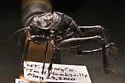
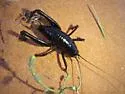
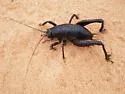
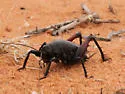
Photo credits: Contributed by David J. Ferguson; Additional contributions by metrioptera
Frequently Asked Questions About San Rafael Sand-treader Cricket
What is San Rafael Sand-treader Cricket?
San Rafael Sand-treader Cricket (Utabaenetes tanneri) is a species in the family Rhaphidophoridae, within the order Orthoptera.
How do you identify San Rafael Sand-treader Cricket?
This is likely the only species of Sand-treader found within its area of distribution, However, other known Sand-treader Crickets that might be found in the same region are pale in color with differing spine arrangement on the legs. Nymphs of Utabaenetes may be pale in color also (?), and almost certainly are right after molting.
Where is San Rafael Sand-treader Cricket found?
Range: Sand dunes in central Utah. Should also be looked for in western Colorado and northern Arizona.
What does San Rafael Sand-treader Cricket eat?
The diet of the San Rafael Sand-treader Cricket includes Unknown, but likely an omnivorous scavenger..
When is San Rafael Sand-treader Cricket active?
San Rafael Sand-treader Cricket: seasonal activity - Adults have been found from April to June. Probably overwinters as nymphs..