
Sand Field Cricket
Gryllus firmus
This record describes Gryllus firmus (species). Recorded family: Gryllidae. Recorded order: Orthoptera.
Identification and Appearance
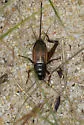
Where found with G. pennsylvanicus north from Virginia, distinguished by longer ovipositor, often more brownish or reddish coloring on wings legs, and ventrally on body and head. Usually the cerci are brownish with a white ring at base, and ovipositor is often brownish or with a pale stripe. The head of the males averages proportionately larger. Found in sand habitats. No single character serves to distinguish the two, and populations of G. pennsylvanicus found further north and inland on sand often look similar, while more southern populations of G. firmus tend to have shorter ovipositors. Where habitats meet, the two often occur together. They tend to remain behaviorally segregated and distinct, but intermediates are often common. More study is needed to properly delimit these species, and it may turn out that yet more sibling races or species are involved. In particular, populations on sand and other distinctive habitats need study everywhere, not just near the coast. Very closely similar to Gryllus pennsylvanicus and basically replacing it near the coast. Perhaps a regional subspecies of that species, since the two hybridize where they meet. Songs and behaviors are similar.
Classification
- Kingdom
- Animalia
- Phylum
- Arthropoda
- Class
- Insecta
- Order
- Orthoptera (Grasshoppers, Crickets, Katydids)
- Suborder
- Ensifera
- Family
- Gryllidae (True Crickets)
- Subfamily
- Gryllinae
- Genus
- Gryllus (Field Crickets)
Imported taxonomy record. Source availability varies; see the source references and editorial policy below.
Habitat and Range
Habitat
Sand areas.
Geographic Range
East Coastal states from Connecticut south to Mexico (but similar populations found on sand inland into the Midwest and north to Maine may be related).
Diet and Behavior
Life History
Overwinters primarily as eggs, with adults from late spring to frost. Some eggs may hatch in late summer or autumn, overwintering as young nymphs, with some adults maturing in spring. In Florida and south Georgia, all stages may be found at all seasons.
About Grasshoppers, Crickets, Katydids: the wider group
Order-level background for Orthoptera, the group containing Gryllus firmus. Species-specific details appear above.
Group overview
Orthoptera includes ~28,000 described species of grasshoppers, crickets, and katydids. Desert locusts can form swarms covering 460 square miles containing up to 80 million individuals per square kilometer.
Ecological role of the group
Grasshoppers and crickets are a primary food source for birds, reptiles, and small mammals. Cricket farming is a growing industry - crickets require 12× less feed than cattle to produce the same amount of protein, using 2,000× less water.
Economic and practical significance of the group
A single large locust swarm can consume the same amount of food in one day as 35,000 people. The 2019-2021 East Africa locust crisis affected food security for 42 million people across multiple countries. Global crop losses from locusts can reach billions annually.
Recorded sources for this group: FAO, UN World Food Programme, research publications. Imported estimates may describe particular regions or reporting periods.
Photos of Sand Field Cricket (5)
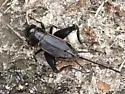
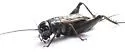
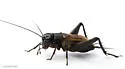
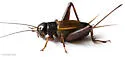
Photo credits: Contributed by Jeff Hollenbeck; Additional contributions by David Ferguson , metrioptera
Frequently Asked Questions About Sand Field Cricket
What is Sand Field Cricket?
Sand Field Cricket (Gryllus firmus) is a species in the family Gryllidae, within the order Orthoptera.
How do you identify Sand Field Cricket?
Where found with G. pennsylvanicus north from Virginia, distinguished by longer ovipositor, often more brownish or reddish coloring on wings legs, and ventrally on body and head. Usually the cerci are brownish with a white ring at base, and ovipositor is often brownish or with a pale stripe. The head of the males averages proportionately larger. Found in sand habitats. No single character serves to distinguish the two, and populations of G. pennsylvanicus found further north and inland on sand often look similar, while more southern populations of G. firmus tend to have shorter ovipositors. Where habitats meet, the two often occur together. They tend to remain behaviorally segregated and distinct, but intermediates are often common. More study is needed to properly delimit these species, and it may turn out that yet more sibling races or species are involved. In particular, populations on sand and other distinctive habitats need study everywhere, not just near the coast.
Where is Sand Field Cricket found?
| Feature | Details |
|---|---|
| Habitat | Sand areas. |
| Range | East Coastal states from Connecticut south to Mexico (but similar populations found on sand inland into the Midwest and north to Maine may be related). |
What is the life cycle of a Sand Field Cricket?
Overwinters primarily as eggs, with adults from late spring to frost. Some eggs may hatch in late summer or autumn, overwintering as young nymphs, with some adults maturing in spring. In Florida and south Georgia, all stages may be found at all seasons.