
Sooty Longwing
Capnobotes fuliginosus
This record describes Capnobotes fuliginosus (species). Recorded family: Tettigoniidae. Recorded order: Orthoptera.
Identification and Appearance
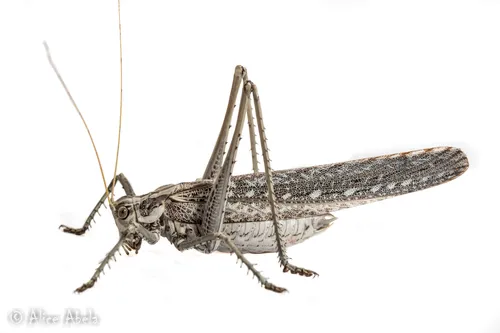
Large Kaydid with long wings. Tegmina narrow, marked with rows of pale rounded spots. Hind wings dark sooty gray to nearly black (sometimes coloring is broken, but wing is still mostly dark). Very similar to C. occidentalis and overlapping ranges northward (mostly in Mojave, southern Great Basin and Colorado Plateus). In that species there are fewer large light spots on the tegmina (usually fewer than 10 in the daigonal series that runs along the middle) and the hind wings are nearly clearly and only somewhat smokey. C. fuliginosus has not been recorded as having a green form, and is (?always?) gray to gray-brown in overall body coloring. The male's calling song is a rapid continuous chirping or trilling, broken at somewhat irregular intervals, not particularly loud nor harsh, but clearly audible. The individual chirps are much closer together than in C. occidentalis , and so sound like an almost continuous pulsing sound. Care in handling is recommended. These are wonderful, basically harmless insects, but they can bite (hard!).
Classification
- Kingdom
- Animalia
- Phylum
- Arthropoda
- Class
- Insecta
- Order
- Orthoptera (Grasshoppers, Crickets, Katydids)
- Suborder
- Ensifera
- Family
- Tettigoniidae (Katydids)
- Subfamily
- Tettigoniinae
- Genus
- Capnobotes
Imported taxonomy record. Source availability varies; see the source references and editorial policy below.
Habitat and Range
Habitat
Mostly in desert, and found in a variety of shrub species.
Geographic Range
Southwestern U.S.; northern limits in Nevada, Utah, and Colorado.
Seasonal Activity
Nymphs appear as early as March or even February (depending on local climate). Adults seem most abundant in spring and early summer, first appearing in late April, May, or June, depending upon climate and seasonal weather; becoming uncommon by August. However, some often survive into autumn or even early winter. In years with extremely dry spring weather, nymphs may not appear until later, in which case adults may not first appear until July or even August, and then are also more likely to survive later into the year.
Diet and Behavior
Diet: Apparently omnivorous, and capable of feeding on a number of plant species and families. However, the species definitely shows carnivorous tendencies, and can be watched hunting in shrubs at night with a flashlight. Both nymphs and adults are attracted to lights and capture and eat other insects that come to the lights.
About Grasshoppers, Crickets, Katydids: the wider group
Order-level background for Orthoptera, the group containing Capnobotes fuliginosus. Species-specific details appear above.
Group overview
Orthoptera includes ~28,000 described species of grasshoppers, crickets, and katydids. Desert locusts can form swarms covering 460 square miles containing up to 80 million individuals per square kilometer.
Ecological role of the group
Grasshoppers and crickets are a primary food source for birds, reptiles, and small mammals. Cricket farming is a growing industry - crickets require 12× less feed than cattle to produce the same amount of protein, using 2,000× less water.
Economic and practical significance of the group
A single large locust swarm can consume the same amount of food in one day as 35,000 people. The 2019-2021 East Africa locust crisis affected food security for 42 million people across multiple countries. Global crop losses from locusts can reach billions annually.
Recorded sources for this group: FAO, UN World Food Programme, research publications. Imported estimates may describe particular regions or reporting periods.
Photos of Sooty Longwing (2)
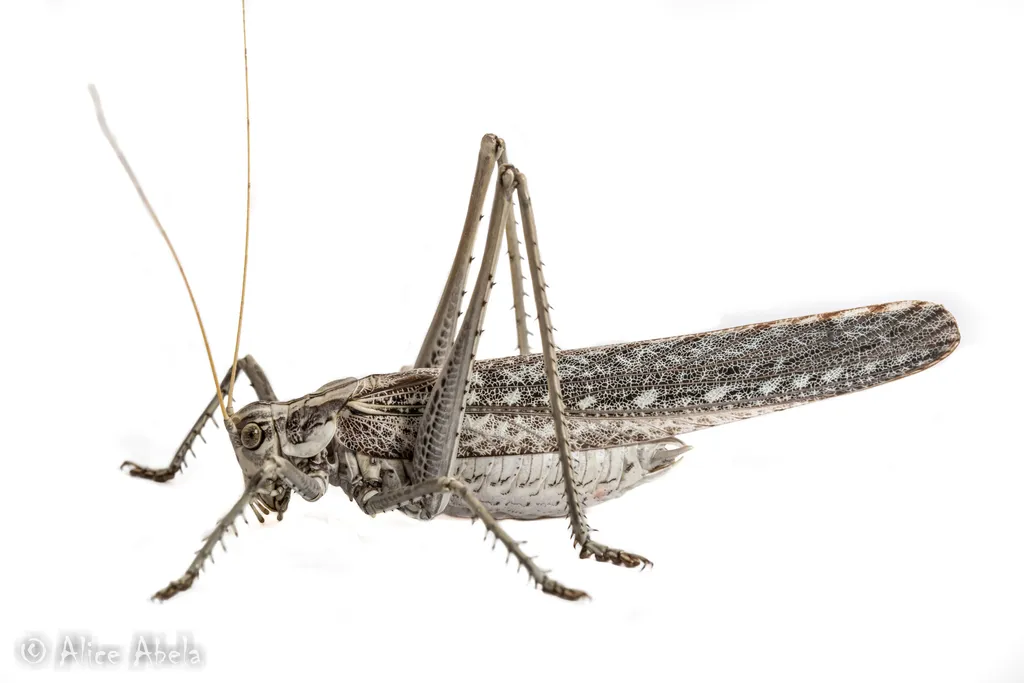
Photo credits: Contributed by Eric R. Eaton; Additional contributions by cotinis , Lynette Elliott , Ethan Kistler , David Ferguson , metrioptera
Frequently Asked Questions About Sooty Longwing
What is Sooty Longwing?
Sooty Longwing (Capnobotes fuliginosus) is a species in the family Tettigoniidae, within the order Orthoptera.
How do you identify Sooty Longwing?
Large Kaydid with long wings. Tegmina narrow, marked with rows of pale rounded spots. Hind wings dark sooty gray to nearly black (sometimes coloring is broken, but wing is still mostly dark). Very similar to C. occidentalis and overlapping ranges northward (mostly in Mojave, southern Great Basin and Colorado Plateus). In that species there are fewer large light spots on the tegmina (usually fewer than 10 in the daigonal series that runs along the middle) and the hind wings are nearly clearly and only somewhat smokey. C. fuliginosus has not been recorded as having a green form, and is (?always?) gray to gray-brown in overall body coloring. The male's calling song is a rapid continuous chirping or trilling, broken at somewhat irregular intervals, not particularly loud nor harsh, but clearly audible. The individual chirps are much closer together than in C. occidentalis , and so sound like an almost continuous pulsing sound.
Where is Sooty Longwing found?
| Feature | Details |
|---|---|
| Habitat | Mostly in desert, and found in a variety of shrub species. |
| Range | Southwestern U.S.; northern limits in Nevada, Utah, and Colorado. |
What does Sooty Longwing eat?
The diet of the Sooty Longwing includes Apparently omnivorous, and capable of feeding on a number of plant species and families. However, the species definitely shows carnivorous tendencies, and can be watched hunting in shrubs at night with a flashlight. Both nymphs and adults are attracted to lights and capture and eat other insects that come to the lights..
When is Sooty Longwing active?
Sooty Longwing: seasonal activity - Nymphs appear as early as March or even February (depending on local climate). Adults seem most abundant in spring and early summer, first appearing in late April, May, or June, depending upon climate and seasonal weather; becoming uncommon by August. However, some often survive into autumn or even early winter. In years with extremely dry spring weather, nymphs may not appear until later, in which case adults may not first appear until July or even August, and then are also more likely to survive later into the year..