
Azalea Sphinx - Hodges#7886
Darapsa choerilus
This record describes Darapsa choerilus (species). Recorded family: Sphingidae. Recorded order: Lepidoptera.
Identification and Appearance
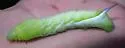
Adult: forewing variably reddish-brown to orange with purplish shading; postmedian line straight or almost so; small discal spot and pale shading in median area; pale wavy-margined semicircular patch along outer margin; hindwing uniformly rusty to yellowish-orange except for pale yellowish strip along inner margin Larva: head and front of thorax slender (body swells greatly at third thoracic segment, as in larvae of Virginia Creeper Sphinx); body green with numerous pale green dots; color changes to light reddish-brown shortly before pupating
Classification
- Kingdom
- Animalia
- Phylum
- Arthropoda
- Class
- Insecta
- Order
- Lepidoptera (Butterflies and Moths)
- Superfamily
- Bombycoidea
- Family
- Sphingidae (Sphinx Moths)
- Subfamily
- Macroglossinae
- Tribe
- Macroglossini
- Genus
- Darapsa
Imported taxonomy record. Source availability varies; see the source references and editorial policy below.
Habitat and Range
Habitat
Deciduous forests and associated areas; adults are nocturnal and attracted to light and bait
Geographic Range
Eastern United States, west to North Dakota and Texas, plus across southern Canada from Nova Scotia to British Columbia
Seasonal Activity
adults fly from June to August in the north (one brood); March to September in the south (two or more broods)
Diet and Behavior
Diet: Larvae feed on leaves of azalea ( Rhododendron spp.), blueberry ( Vaccinium spp.), sour-gum, Tradescantia , Viburnum species and several other families. Hosts Adults take nectar.
Life History
One to several generations per year, depending on latitude. In Louisiana there are as many as eight broods, beginning in March, with emergence peaks at 30-day intervals. Larvae pupate in leaf litter at base of hostplant, binding several leaves together with a few strands of silk to form a loose flimsy cocoon.
Additional species information
Species notes from the sources
Etymology: Pholus was a centaur (half-horse, half-human creature) of Greek mythology. Pholus received the hero Hercules as a guest, and offered him some choice wine. Unfortunately, Pholus was killed by one of Hercules' poison arrows dropped by accident on his foot. Perhaps the association is between grapes--hostplant of this moth, and wine. (Based on Internet searches.) Choerilus was a classical Greek name, including several dramatists/poets. This is apparently the current (2005) name for this species. (Based on Internet searches.)
About Butterflies and Moths: the wider group
Order-level background for Lepidoptera, the group containing Darapsa choerilus. Species-specific details appear above.
Group overview
Lepidoptera includes approximately 180,000 described species of butterflies and moths. Moths outnumber butterflies roughly 10:1. The monarch butterfly's eastern population has declined by more than 80% since the mid-1990s, and the western population by over 95% since the 1980s. The IUCN lists the migratory monarch as Vulnerable.
Ecological role of the group
Butterflies and moths are essential indicators of ecosystem health. As caterpillars, they are a primary food source for birds - a single nest of blue tit chicks requires ~10,000 caterpillars. Adult moths pollinate many night-blooming plants.
Economic and practical significance of the group
Lepidoptera are critical pollinators. In Europe, grassland butterfly species have declined by almost 50% since the early 1990s. In the UK, three-quarters of butterflies are in decline. In the U.S., five butterfly species have gone extinct since 1950, with 29 listed as endangered.
Recorded sources for this group: IUCN Red List, Xerces Society, USFWS, PNAS, WWF. Imported estimates may describe particular regions or reporting periods.
Photos of Azalea Sphinx - Hodges#7886 (5)
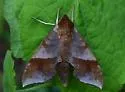
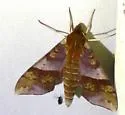
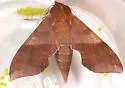
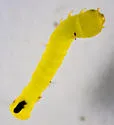
Photo credits: Contributed by Cotinis; Additional contributions by Beatriz Moisset , Robin McLeod , Tony-2 , Chuck Entz , Maury Heiman , marcie oconnor , Randy Hardy , teakh
Frequently Asked Questions About Azalea Sphinx - Hodges#7886
What is Azalea Sphinx - Hodges#7886?
Azalea Sphinx - Hodges#7886 (Darapsa choerilus) is a species in the family Sphingidae, within the order Lepidoptera.
How big is Azalea Sphinx - Hodges#7886?
Wingspan 57-75 mm
How do you identify Azalea Sphinx - Hodges#7886?
Adult: forewing variably reddish-brown to orange with purplish shading; postmedian line straight or almost so; small discal spot and pale shading in median area; pale wavy-margined semicircular patch along outer margin; hindwing uniformly rusty to yellowish-orange except for pale yellowish strip along inner margin Larva: head and front of thorax slender (body swells greatly at third thoracic segment, as in larvae of Virginia Creeper Sphinx); body green with numerous pale green dots; color changes to light reddish-brown shortly before pupating
Where is Azalea Sphinx - Hodges#7886 found?
| Feature | Details |
|---|---|
| Habitat | Deciduous forests and associated areas; adults are nocturnal and attracted to light and bait |
| Range | Eastern United States, west to North Dakota and Texas, plus across southern Canada from Nova Scotia to British Columbia |
What does Azalea Sphinx - Hodges#7886 eat?
The diet of the Azalea Sphinx - Hodges#7886 includes Larvae feed on leaves of azalea ( Rhododendron spp.), blueberry ( Vaccinium spp.), sour-gum, Tradescantia , Viburnum species and several other families. Hosts Adults take nectar..
When is Azalea Sphinx - Hodges#7886 active?
Azalea Sphinx - Hodges#7886: seasonal activity - adults fly from June to August in the north (one brood); March to September in the south (two or more broods).
What is the life cycle of a Azalea Sphinx - Hodges#7886?
One to several generations per year, depending on latitude. In Louisiana there are as many as eight broods, beginning in March, with emergence peaks at 30-day intervals. Larvae pupate in leaf litter at base of hostplant, binding several leaves together with a few strands of silk to form a loose flimsy cocoon.