
Arizona Sister - Hodges#4527.1
Adelpha eulalia
This record describes Adelpha eulalia (species). Recorded family: Nymphalidae. Recorded order: Lepidoptera.
Identification and Appearance
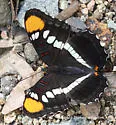
The Weidemeyer's Admiral - Limenitis weidemeyerii is most likely to be confused with the Arizona Sister within the United States, where the two are often found together. Weidemeyer's Admirals average smaller, have no orange near the tip of the front wings, and they are usually associated with Willows and Aspens, and range higher in elevation. They also occur (in most areas) only in one brood that peaks in late spring or early in the summer. Arizona Sisters are usually associated with Oaks, and range into drier and lower areas. California Sister - Adelpha californica is very similar, but occurs further west (probably rarely if ever in the same areas), and differs in details of pattern, particularly in the stripes near the base of the under side of the hind wings. There is a chance this species might be found together with Lorquin's Admiral Limenitis lorquini in Utah or Nevada. For differences between that species and the southwestern Sister's, see under the California Sister.
Classification
- Kingdom
- Animalia
- Phylum
- Arthropoda
- Class
- Insecta
- Order
- Lepidoptera (Butterflies and Moths)
- Superfamily
- Papilionoidea
- Family
- Nymphalidae (Brush-footed Butterflies)
- Subfamily
- Limenitidinae
- Tribe
- Limenitidini
- Genus
- Adelpha (Sisters)
Imported taxonomy record. Source availability varies; see the source references and editorial policy below.
Habitat and Range
Habitat
Associated with Oaks, usually Oak woodlands. Often favoring low areas such as along arroyos and canyon bottoms where there is surface water, and often patrol or perch along roads and paths that are somewhat similar in the way they cut through the woodlands.
Geographic Range
Mostly in mountain areas, from southern Nevada and southeastern California eastward to Colorado and south through much of Mexico. Strays north and east as far as Idaho and Kansas.
Seasonal Activity
Adults mostly from about April or May until frost in probably two or three overlapping broods.
Diet and Behavior
Diet: Adults rarely visit flowers, more often mud, tree sap, carrion, rotting fruit, etc. Larvae use Oaks ( Quercus species.
Additional species information
Species notes from the sources
Etymology: There are 3 closely related populations of Sisters that have until recently been treated as subspecies of one species - Adelpha bredowii . Most now consider these to represent three distinct species, though the question is still debated: Adelpha bredowii (not north of Mexico; sometimes spelled bredowi ) Adelpha californica Adelpha eulalia
About Butterflies and Moths: the wider group
Order-level background for Lepidoptera, the group containing Adelpha eulalia. Species-specific details appear above.
Group overview
Lepidoptera includes approximately 180,000 described species of butterflies and moths. Moths outnumber butterflies roughly 10:1. The monarch butterfly's eastern population has declined by more than 80% since the mid-1990s, and the western population by over 95% since the 1980s. The IUCN lists the migratory monarch as Vulnerable.
Ecological role of the group
Butterflies and moths are essential indicators of ecosystem health. As caterpillars, they are a primary food source for birds - a single nest of blue tit chicks requires ~10,000 caterpillars. Adult moths pollinate many night-blooming plants.
Economic and practical significance of the group
Lepidoptera are critical pollinators. In Europe, grassland butterfly species have declined by almost 50% since the early 1990s. In the UK, three-quarters of butterflies are in decline. In the U.S., five butterfly species have gone extinct since 1950, with 29 listed as endangered.
Recorded sources for this group: IUCN Red List, Xerces Society, USFWS, PNAS, WWF. Imported estimates may describe particular regions or reporting periods.
Photos of Arizona Sister - Hodges#4527.1 (5)
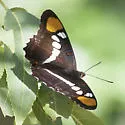
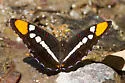
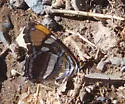
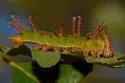
Photo credits: Contributed by David J. Ferguson; Additional contributions by Steve Nanz
Frequently Asked Questions About Arizona Sister - Hodges#4527.1
What is Arizona Sister - Hodges#4527.1?
Arizona Sister - Hodges#4527.1 (Adelpha eulalia) is a species in the family Nymphalidae, within the order Lepidoptera.
How do you identify Arizona Sister - Hodges#4527.1?
The Weidemeyer's Admiral - Limenitis weidemeyerii is most likely to be confused with the Arizona Sister within the United States, where the two are often found together. Weidemeyer's Admirals average smaller, have no orange near the tip of the front wings, and they are usually associated with Willows and Aspens, and range higher in elevation. They also occur (in most areas) only in one brood that peaks in late spring or early in the summer. Arizona Sisters are usually associated with Oaks, and range into drier and lower areas. California Sister - Adelpha californica is very similar, but occurs further west (probably rarely if ever in the same areas), and differs in details of pattern, particularly in the stripes near the base of the under side of the hind wings. There is a chance this species might be found together with Lorquin's Admiral Limenitis lorquini in Utah or Nevada. For differences between that species and the southwestern Sister's, see under the California Sister.
Where is Arizona Sister - Hodges#4527.1 found?
| Feature | Details |
|---|---|
| Habitat | Associated with Oaks, usually Oak woodlands. Often favoring low areas such as along arroyos and canyon bottoms where there is surface water, and often patrol or perch along roads and paths that are somewhat similar in the way they cut through the woodlands. |
| Range | Mostly in mountain areas, from southern Nevada and southeastern California eastward to Colorado and south through much of Mexico. Strays north and east as far as Idaho and Kansas. |
What does Arizona Sister - Hodges#4527.1 eat?
The diet of the Arizona Sister - Hodges#4527.1 includes Adults rarely visit flowers, more often mud, tree sap, carrion, rotting fruit, etc. Larvae use Oaks ( Quercus species..
When is Arizona Sister - Hodges#4527.1 active?
Arizona Sister - Hodges#4527.1: seasonal activity - Adults mostly from about April or May until frost in probably two or three overlapping broods..