
Butterflies and Moths
Order Lepidoptera
The Butterflies and Moths (Order Lepidoptera) includes 11,813 species across 112 families and 2,787 genera in our directory.
About Butterflies and Moths
Lepidoptera includes approximately 180,000 described species of butterflies and moths. Moths outnumber butterflies roughly 10:1. The monarch butterfly's eastern population has declined by more than 80% since the mid-1990s, and the western population by over 95% since the 1980s. The IUCN lists the migratory monarch as Vulnerable.
Economic Impact
Lepidoptera are critical pollinators. In Europe, grassland butterfly species have declined by almost 50% since the early 1990s. In the UK, three-quarters of butterflies are in decline. In the U.S., five butterfly species have gone extinct since 1950, with 29 listed as endangered.
Ecological Role
Butterflies and moths are essential indicators of ecosystem health. As caterpillars, they are a primary food source for birds - a single nest of blue tit chicks requires ~10,000 caterpillars. Adult moths pollinate many night-blooming plants.
Families in Lepidoptera (112)
Species in Lepidoptera (11,813)
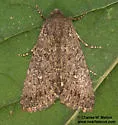
Apamea geminimacula - Hodges#9368
Apamea geminimacula
Identification: Description can be found in MONA Fascicle 26-9 at link in citations below.
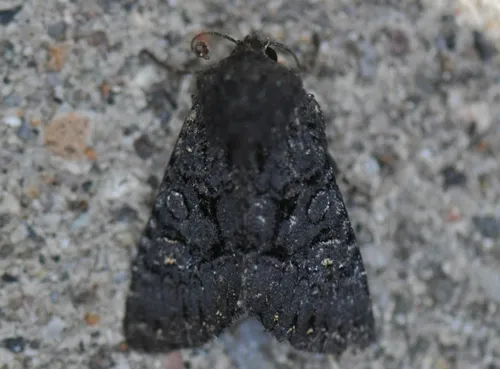
Apamea impulsa - Hodges#9360
Apamea impulsa
Identification: Adult: forewing very dark gray with black lines that contrast only slightly against ground color; AM and PM lines indistinct; center of reniform spot slightly paler than perimeter; orbicular and claviform spots visible as black outlin
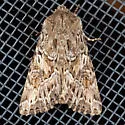
Apamea inordinata - Hodges#9353
Apamea inordinata
Identification: genitalia ct.gov - listed as Species of Concern in Connecticut
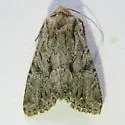
Apamea longula - Hodges#9383
Apamea longula
Identification: Forewing has black basal dash and one in the median area. Hindwing is light grayish tan.
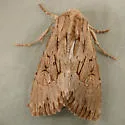
Apamea maxima - Hodges#9337
Apamea maxima
Identification: Adult: forewing light brown to orangish with conspicuous black outlines of reniform, orbicular, and claviform spots; claviform spot long and pointed, reaching to PM line; black basal dash, and several dark slender V-shaped markings al
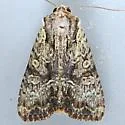
Apamea quinteri - Hodges#9329.1
Apamea quinteri
Identification: The original description in MONA Fascicle 26.9. Specimen identified by DNA analysis (BOLD).
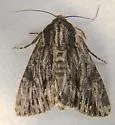
Apamea relicina - Hodges#9380
Apamea relicina
Identification: Photo from Marcie O'Connor identified by Merrill Lynch and conformed by Hugh McGuinness . Listed on the Indiana Endangered, Threatened, and Rare Species (PDF) list.
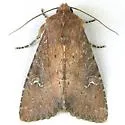
Apamea scoparia - Hodges#9365
Apamea scoparia
Identification: Adult: forewing dull reddish-brown; upper half of reniform spot filled with ground color, lower half dark gray to blackish, and distal edge with pale scales, including two converging small whitish ovals in lower corner of reniform spo
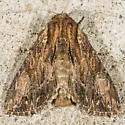
Apamea siskiyou - Hodges#9334.1
Apamea siskiyou
Identification: Description at Moths of the Pacific Northwest Specimen identified by Lars Crabo.
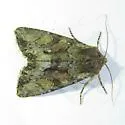
Apamea sora - Hodges#9339.1
Apamea sora
Apamea sora - Hodges#9339.1 (Apamea sora) is a species in the family Noctuidae, commonly known as owlet moths, belonging to the order Lepidoptera (Butterflies and Moths). It is classified within the subfamily Noctuinae, tribe Apameini, superfamily No
Apamea unita - Hodges#9355
Apamea unita
Identification: Description can be found in MONA Fascicle 26-9 at link in citations below.
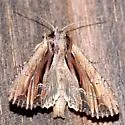
Apamea verbascoides - Hodges#9326
Apamea verbascoides
Identification: Adult: forewing light brown in upper half, dark brown with black steaks in lower half, except for speckled gray strip bordering inner margin; black basal, median, and anal dashes almost join to form a continuous stripe parallel to inn
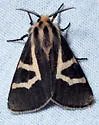
Apantesis f-pallida - Hodges#8189
Apantesis f-pallida
Identification: Very similar to Grammia figurata , and replacing it in the Southwest, west of the Great Plains. Probably not separable except by location (???)
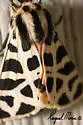
Apantesis incorrupta - Hodges#8180
Apantesis incorrupta
Has a long history of confusion with G. nevadensis , and mostly it has been reported and recorded under that name. A common species in the Southwest, often comming in large numbers to lights. They seem to be the most active between midnight and sunr
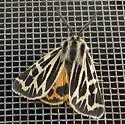
Apantesis obliterata - Hodges#8174
Apantesis obliterata
Identification: Similar to several other Apantesis species with black and white forewings and orange and black hindwings, however it can usually be distinguished by white scaling along the cubital vein distal to the W-shaped ST white line.
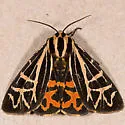
Apantesis ornata - Hodges#8177
Apantesis ornata
Identification: Adult : FW appear black, typically with a net-like pattern of extensive yellowish or rosy off-white transverse lines and thinner pale veins. HW color is variable from yellow-orange, orange, to orange-red, rarely entirely black. HW is
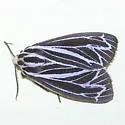
Apantesis speciosa - Hodges#8175.1
Apantesis speciosa
Identification: It is like a smaller, subarctic/day-flying version of virguncula (which does not occur north of Alberta)… Chris Schmidt, 29 October, 2013
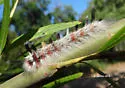
Apatelodes auduboni - Hodges#7664.1
Apatelodes auduboni
Wagner and Knudson (2014) discuss evidence suggesting that the larva's bright coloration and conspicuous diurnal behaviors as well as those of other apatelodid larvae are consistent with the hypothesis that Apatelodes and perhaps other apatelodids ar
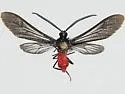
Apeplopoda mecrida - Hodges#8274.1
Apeplopoda mecrida
Identification: Adult description adapted from Druce (1889). The forewings and hindwings are sooty black. The head, tigulae, and base of the thorax are black. The thorax and abdomen are scarlet red. Antennae and legs are black.
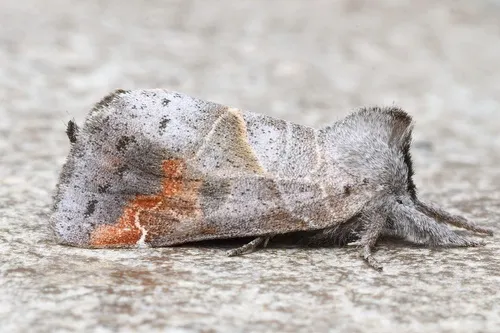
Apical Prominent - Hodges#7901
Clostera apicalis
Identification: Adult: forewing gray with dark reddish/burgandy subapical patch; wings held tight to abdomen when at rest; PM line has white squiggle just below costa; median area crossed by diagonal whitish line from costa to inner margin; hindwing
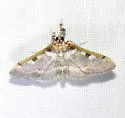
Apilocrocis Moth - Hodges#5113
Apilocrocis pimalis
Identification: Adult: forewing shiny, semitransparent, whitish in AM area and beyond PM line, pale gray median area, and dark brown basal area; pale yellowish strip along costa contains dark mark at PM line; blackish patch in median area near costa;
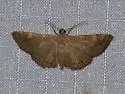
Aplogompha polymygmata - Hodges#6669.1
Aplogompha polymygmata
Identification: The original description of Molybdogompha polymygmata Dyar, is available online in the print references below.
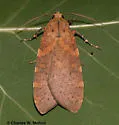
Apocrisias thaumasta - Hodges#8219
Apocrisias thaumasta
Identification: Apocrisias thaumasta Franclemont, original description is available in PDF and online in the print references below. Franclemont also describes the larva.
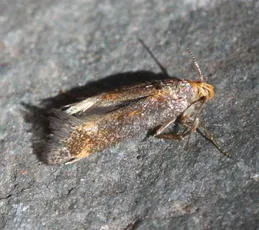
Apodia bifractella
Apodia bifractella
Wingspan 9-12 mm. Mainly brown with a broad orange stripe across the rear of its wings and an orange head. As is typical of the Gelechiidae, it rests with its palps turned back over its head. Secretive but is sometimes found in late afternoon on flow
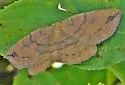
Apodrepanulatrix liberaria - Hodges#6693
Apodrepanulatrix liberaria
Identification: "Although there is variation in the extent of the brown shading, the general color, pointed apex on the forewing, and late-season flight period should be diagnostic" in the eastern United States. Listed as an endangered species in Mas
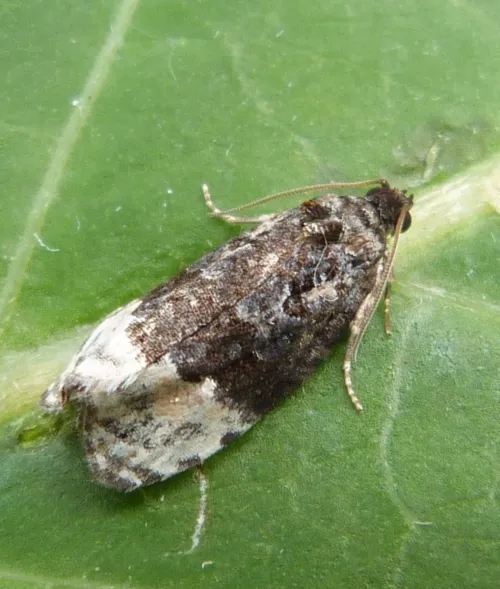
Apotomis betuletana
Apotomis betuletana
Wingspan 16 to 20 mm. This moth is dark from the head for approximately two thirds the length of the wing, then a noticeable change to a band of slightly mottled white for the final third. Woods and woodland margins where birch occurs. The moths are
Apotomis infida - Hodges#2767
Apotomis infida
Identification: Adult - forewing mottled silvery-gray with dark brownish patches at base and mid-way along costa; several black-rimmed irregular spots in lower half of wing; hindwing pale brownish-gray.
Apotomis paludicolana - Hodges#2754
Apotomis paludicolana
Identification: Specimen identified by DNA analysis (BOLD).
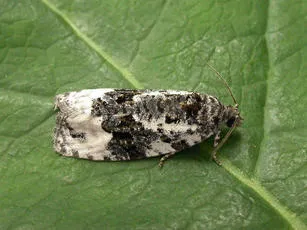
Apotomis turbidana
Apotomis turbidana
Wingspan around 20 mm. This is one of several similar Tortrix moths that have purple-brown marbling with white at at the end, providing camouflage by looking like a bird dropping. This species has more white patches than most - towards the head and o
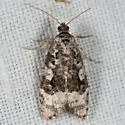
Apotomops wellingtoniana - Hodges#3589
Apotomops wellingtoniana
Apotomops wellingtoniana - Hodges#3589 (Apotomops wellingtoniana) is a species in the family Tortricidae, commonly known as tortricid moths, belonging to the order Lepidoptera (Butterflies and Moths). It is classified within the subfamily Tortricinae
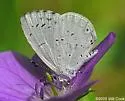
Appalachian Azure - Hodges#4363.4
Celastrina neglectamajor
Identification: Best identified by finding adult ovipositing or larvae feeding on flower buds of hostplant.
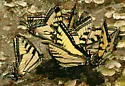
Appalachian Tiger Swallowtail - Hodges#4183.3
Papilio appalachiensis
Identification: Similar in shape to the Canadian Tiger Swallowtail, but much larger. Differences from the Eastern Tiger Swallowtail, which commonly flies at the same time and in the same locations as Appalachian: 1) Noticeably larger than the spring

Apple & Plum Case-bearer
Coleophora spinella
Wingspan 10 to 12 mm. One of the grey Coleophoras. This species can only be definitely separated as an adult by reference to the genitalia, from the very similar C. coracipennella and C. prunifoliae. In areas where the larval food plants occur. The l
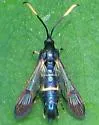
Apple Bark Borer - Hodges#2565
Synanthedon pyri
Identification: Adult - female: antenna pale yellow on apical half; fourth abdominal segment with broad yellow band; anal tuft brushlike with yellow laterally (MONA fascicle 5.1). Larva - creamy white with brown head (head wider than long), covered i
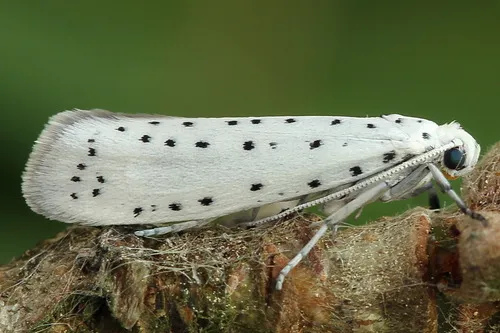
Apple Ermine
Yponomeuta malinellus
This is one of four Ermine moth species, namely Orchard Ermine (Yponomeuta padella), Apple Ermine (Yponomeuta malinellus), Spindle Ermine (Yponomeuta cagnagella) and Willow Ermine ( Yponomeuta rorrella ) which should now be recorded as Yponomeuta agg
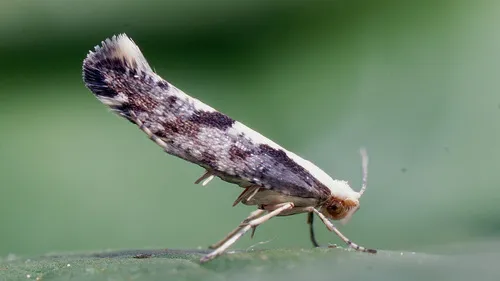
Apple Fruit Moth
Argyresthia conjugella
Wingspan 10-14 mm. One of the larger and more distinctive Argyresthia species, though it can be rather variable. There is a unicolorous brown form ( F. aerariella ) which can be rather confusing. They can be found by day flying around the foodplants
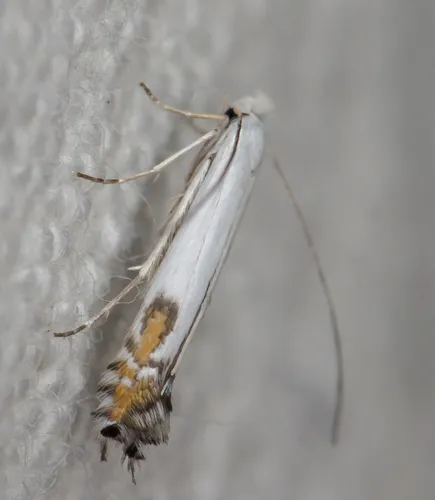
Apple Leaf Miner
Lyonetia clerkella
Lyonetia clerkellais a tiny moth (wingspan 7 to 9 mm) with a silvery appearance but very attractively patterned when seen under magnification. The larva produces a leafmine on a number of species, especially Cherry, Apple, Rowan, Hawthorn, Blackthorn
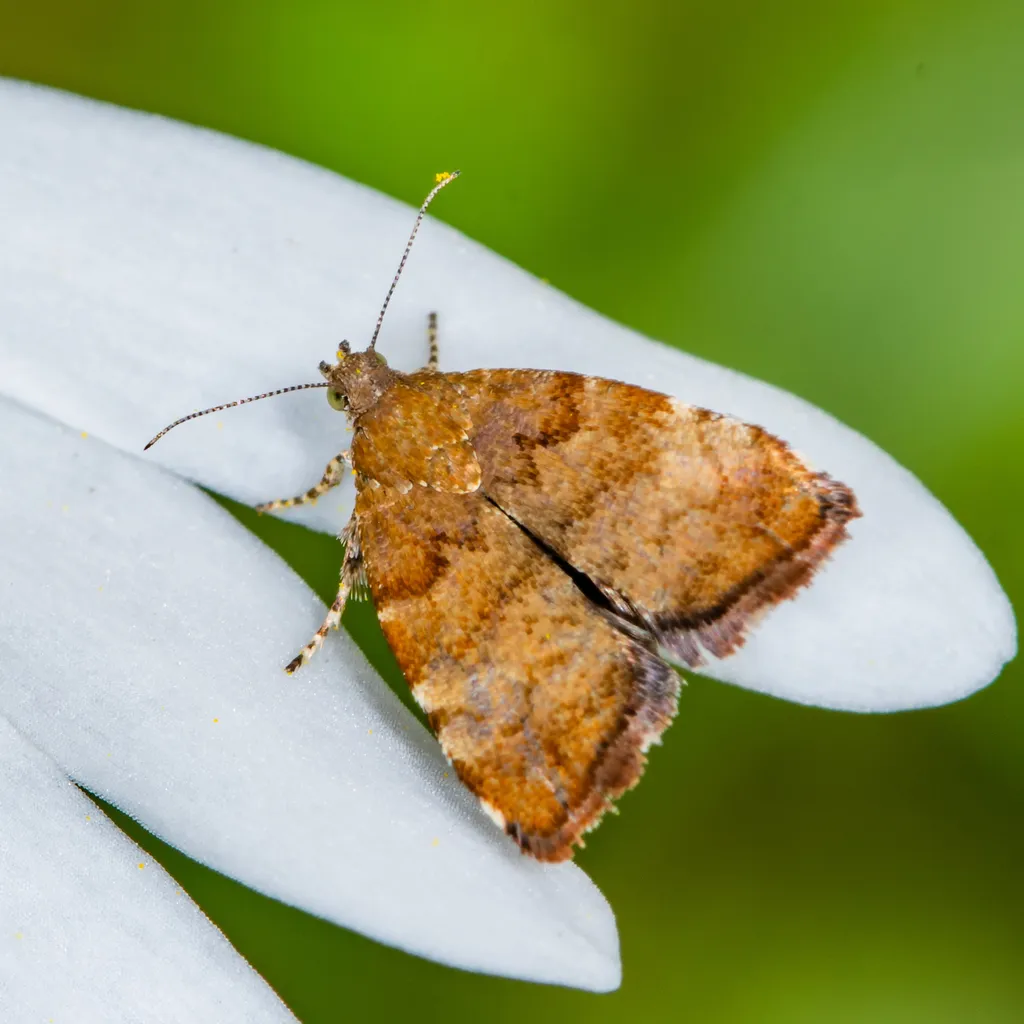
Apple Leaf Skeletonizer
Choreutis pariana
Wingspan 11 to 15 mm. This moth is bright orangey or reddish brown to greyish brown, often with a wavy dark line near the base of the wing and another near the tip. The main chosen foodplant is crab-apple (Malus spp.) but other roseaceous trees are s
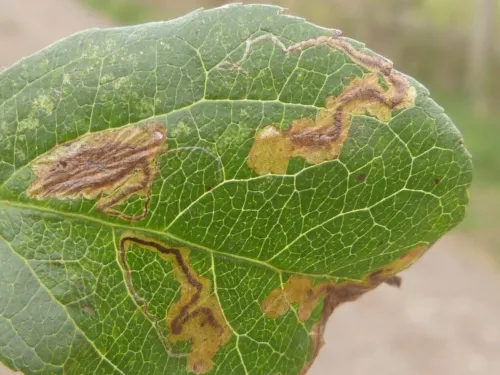
Apple Pigmy
Stigmella malella
The adult has a purple-brown forewing with shining white fascia beyond the middle but identification of adults is very difficult and this species is best recorded from the larval mine. The larvae mine the leaves of Apple species producing a sinuous g
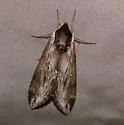
Apple Sphinx - Hodges#7810
Sphinx gordius
Identification: Color and markings are highly variable. Fringes on forewing are mostly black with some white, those on the hindwing are mostly white with a few black patches. Forewing ranges from brown with black borders through brownish gray with pa
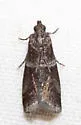
Appleleaf Skeletonizer - Hodges#5931
Psorosina hammondi
Identification: "♂ differs from ♀ in the basal portion of the antennae being curved, and the curve filled with a tuft of scales."
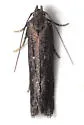
Aproaerema adversa - Hodges#2218
Aproaerema adversa
Identification: Braun (1930) original description is available online from link in print references.
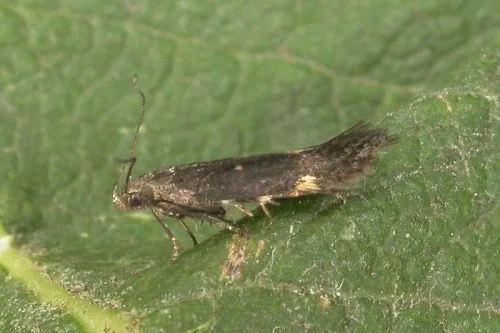
Aproaerema anthyllidella
Aproaerema anthyllidella
Wingspan about 11mm. The intensity and extent of the creamy markings on the forewing can be variable, and they are sometimes absent altogether. This species mainly inhabits dunes, dry grassland and rough pasture where kidney vetch occurs. There are t
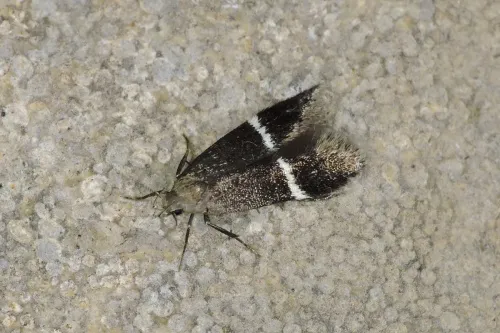
Aproaerema cinctella
Aproaerema cinctella
Wingspan about 13 mm. Very similar to Syncopacma larseniella , from which it can only be reliably distinguished by dissection of the genitalia. Areas that are rich in Birds'-foot-trefoil. Flying in late June and July, the adult moths can be attracted
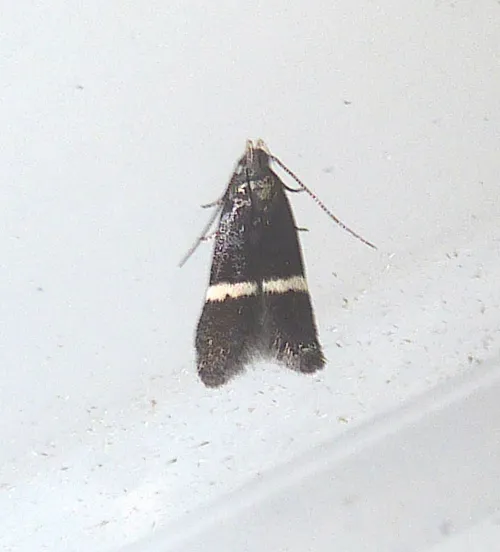
Aproaerema larseniella
Aproaerema larseniella
The genus contains several species which are virtually impossible to distinguish except by genitalia dissection, and Aproaerema larseniella is one of these. Easily confused with Aproaerema cinctella among others. Determination by genitalia examinatio
Aproaerema nigrella - Hodges#2221
Aproaerema nigrella
Identification: The original description as Gelechia nigrella Chambers, is available online in the print references below. Some of the specimens examined lack the white transverse band.
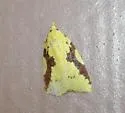
Aproned Cenopis - Hodges#3727
Cenopis niveana
Identification: Adult: forewing dark brown except for light yellow band across base and across wingtip, and yellow semicircular patch mid-way along costa; some individuals have extensive yellow shading along inner margin (resulting in less extensive
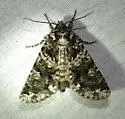
Apsaphida eremna - Hodges#10022
Apsaphida eremna
Identification: Franclemont (1973) described the adult, larva, and genitalia. The description can be viewed online in the print references below.
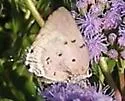
Aquamarine Hairstreak - Hodges#4294
Oenomaus ortygnus
Identification: Upperside iridescent greenish-blue with black borders in males; pale blue in females. Underside gray with an aquamarine band along the trailing edge of the hindwing. Hindwing has 3 or 4 black spots. First US records: Two individuals w
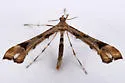
Aquiline Plume Moth - Hodges#6110
Platyptilia percnodactylus
Identification: Fernald description "Head and thorax pale brown; antennae spotted on the upper side with white and brown. Abdomen brownish, paler at the base. Legs whitish, slender, slightly enlarged, and tinged with brownish at the end of the segmen
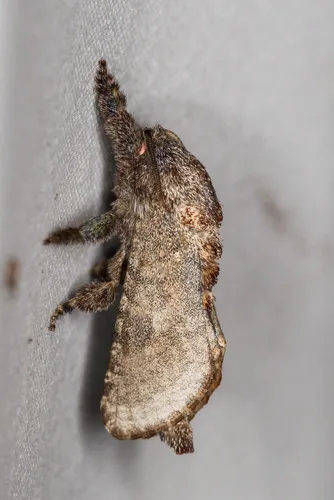
Arbela Carpenterworm Moth
Givira arbeloides
Givira arbeloides is a moth in the Cossidae family. It is found in North America, where it has been recorded from Arizona, Arkansas, Louisiana, Mississippi and Texas.
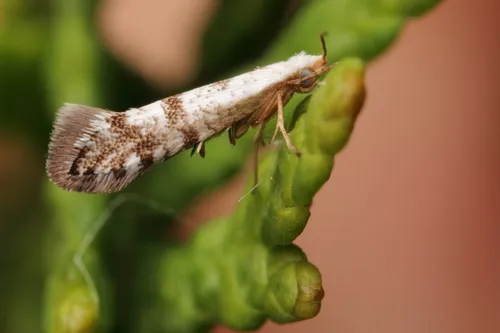
Arborvitae Leafminer
Argyresthia thuiella
The arborvitae leafminer, thuja mining moth or American thuja shoot moth (Argyresthia thuiella) is a moth of the Yponomeutidae family. It is found in southeastern Canada and the northeastern United States to North Carolina, west to Missouri, north to
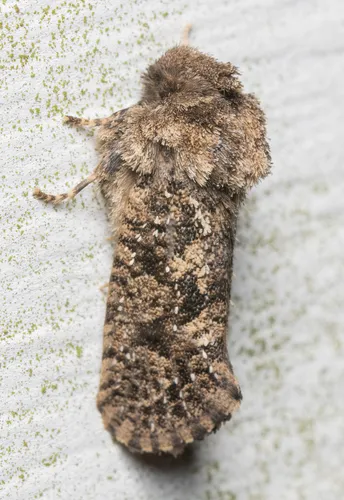
Arcane Grass Tubeworm Moth
Acrolophus arcanella
The Grass Tubeworm Moth (Acrolophus arcanella) is a moth of the Acrolophidae family. It is found in eastern North America.
Archips grisea - Hodges#3660
Archips grisea
Identification: Adult : FW brownish gray, with dark-brown to black markings that are more prominently expressed in the male. HW uniform gray. Males have a FW costal fold. ( 3 ) Genitalia:
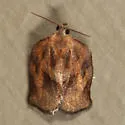
Archips purpurana - Hodges#3658
Archips purpurana
Identification: Adult is easily recognized by the strongly sinuous, "bell-shaped" costal margin. FW is light to dark purplish brown with darker fine brown to reddish brown thin lines and reticulations. The lines in the basal and median areas are more
Arctic Plume Moth - Hodges#6142
Paraplatyptilia petrodactylus
Identification: See the identification key for Platyptiliini . See the species account in Landry as Stenoptilodes petrodactyla and Barnes & Lindsey as Platyptilia petrodactyla .
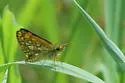
Arctic Skipper - Hodges#3982
Carterocephalus mandan
Identification: Adult: upperside black with squarish orange spots; underside of forewing orange with black spots; underside of hindwing red-orange with cream spots outlined in black Larva: cream-coloured with faint dorsal stripe and yellowish lateral
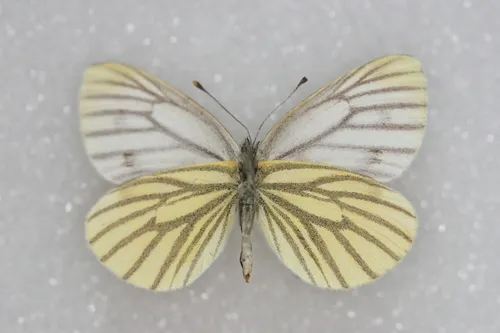
Arctic White - Hodges#4195.5
Pieris angelika
Identification: Distinction from P. marginalis & P. oleracea is based primarily on geography. P. angelika is a more northwestern species. See further notes under P. oleracea .
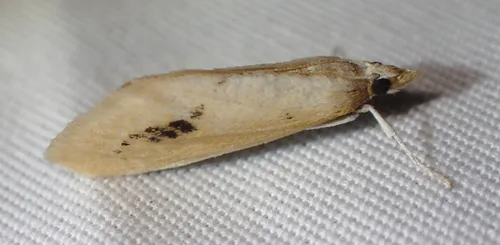
Arenochroa flavalis - Hodges#4988
Arenochroa flavalis
Identification: Head, thorax, and forewings, light ocher yellow. Labial palpi, darker yellow on the outside, white beneath. The outer cross-line is represented by a row of more or less diffuse dark brown dots arising from a little beyond the middle o
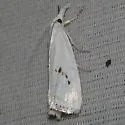
Arequipa turbatella - Hodges#5392
Arequipa turbatella
Identification: Fernald description in print references.
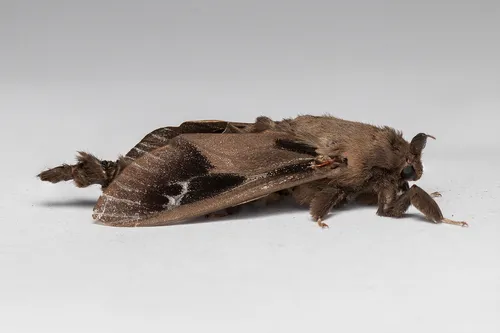
Argentine Bagworm
Oiketicus kirbyi
Oiketicus kirbyi is a moth of the family Psychidae. It is found in lowlands from Argentina to Mexico and on the Caribbean islands.
Argentostiria koebelei - Hodges#9779
Argentostiria koebelei
Identification: Adults are very unique: Larva identified by David Wagner, 2022:
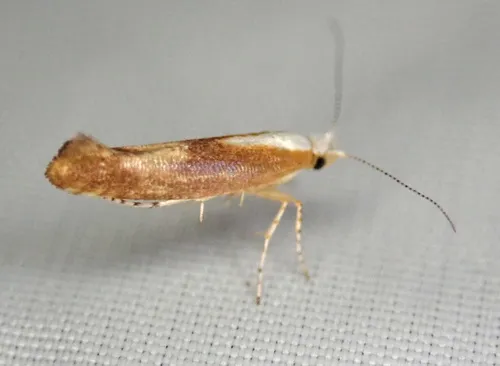
Argyresthia albistria
Argyresthia albistria
Wingspan 9-12 mm. A plainer and less metallic-looking species than many others of the genus, this moth has a chestnut-brown forewing, usually with a creamy-white stripe from the head to about a third the length of the wing. Various habitats, especial
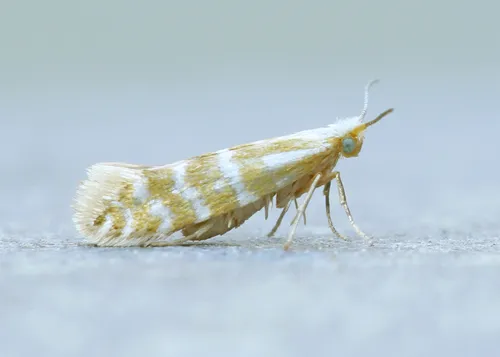
Argyresthia aureoargentella - Hodges#2440
Argyresthia aureoargentella
Argyresthia aureoargentella is a moth of the Yponomeutidae family. It is found in North America, including Ontario and Quebec.
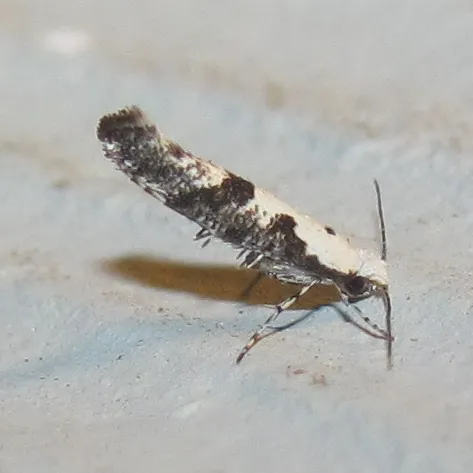
Argyresthia austerella - Hodges#2441
Argyresthia austerella
Argyresthia austerella is a moth of the family Yponomeutidae. It is found in North America, including Florida, Texas, Oklahoma, Ohio, Kentucky, Illinois, Missouri, New Hampshire and Maryland.
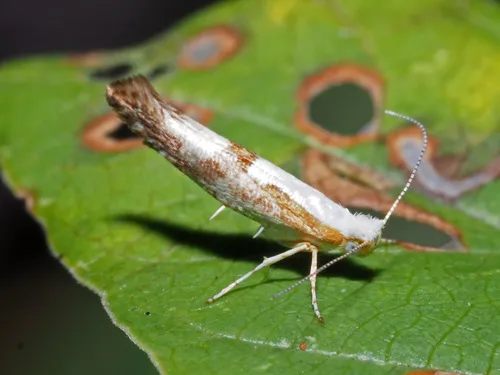
Argyresthia bonnetella
Argyresthia bonnetella
Wingspan 9-11 mm. Very similar to the Cherry Fruit Moth in appearance, this species can be distinguished with care by the angle of the markings on the forewing. Best looked for around Hawthorn hedges and bushes. Common throughout most of mainland Bri
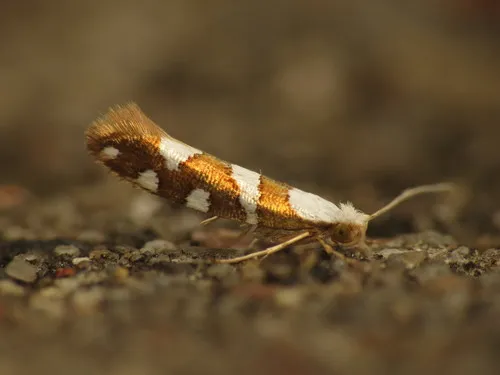
Argyresthia brockeella
Argyresthia brockeella
Wingspan 9-12 mm. One of several similar very small but brightly-coloured moths. Quite distinctive with its metallic bronze and white-spotted appearance but easily overlooked due to its size. Members of this genus rest distinctively 'head-down'. The
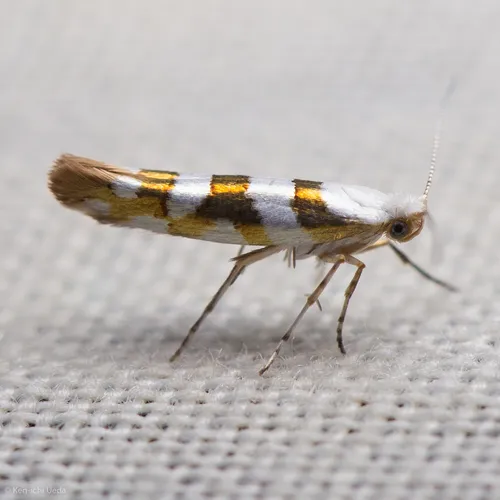
Argyresthia calliphanes - Hodges#2444
Argyresthia calliphanes
Argyresthia calliphanes is a moth of the family Yponomeutidae. It is found in Canada from Ontario to British Columbia and possibly in Alberta, Saskatchewan and Manitoba. In the United States, it ranges from New York to California.
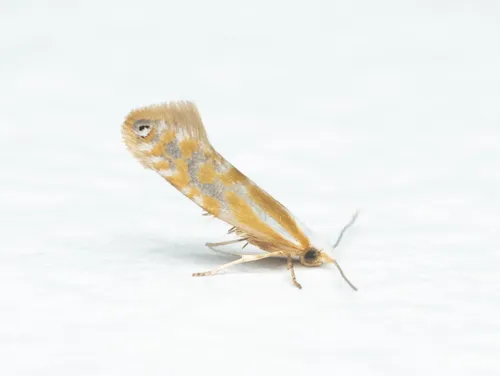
Argyresthia canadensis - Hodges#2445
Argyresthia canadensis
Argyresthia canadensis, the Canadian arborvitae leafminer or cedar leafminer, is a moth of the Yponomeutidae family. It is found in North America.
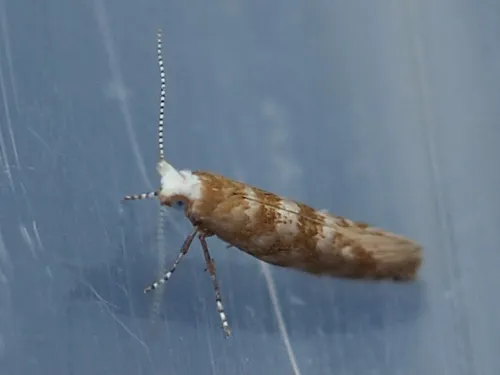
Argyresthia cupressella
Argyresthia cupressella
Wingspan 8 to 9 mm. Avery small moth with a patterning of mottled oranges and white. In Britain the adults are on the wing in June and July. The larvae feed on Cypress and Juniper, feeding internally on the leaves and young shoots. In spring affected
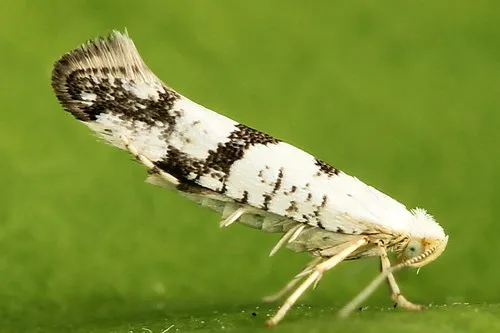
Argyresthia curvella
Argyresthia curvella
The adult flies at night in June and July and is attracted to light. The larva feeds on the flowers of apple trees (Malus), and can be a pest where it is abundant. Widespread and locally frequent in areas of Britain where apple trees are found. In th
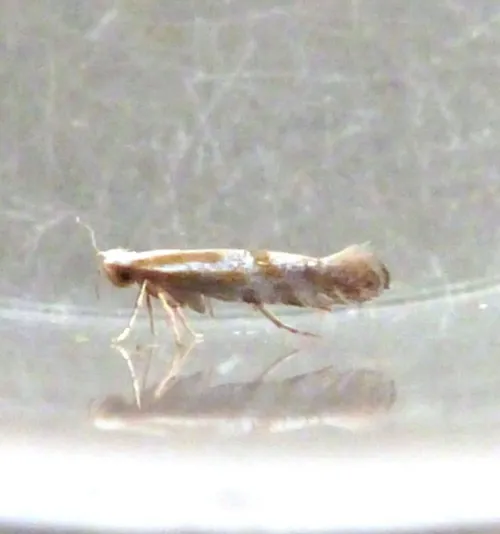
Argyresthia dilectella
Argyresthia dilectella
Gardens and parks where either Juniper or Cypress Fir is present. It flies at night in July and August, and can be attracted to strong light. Larval foodplants are Juniper and Cypress Fir. It is widely distributed in England and Wales, becoming scarc
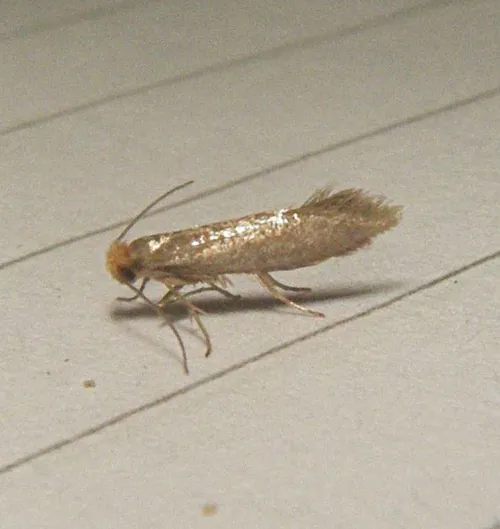
Argyresthia glabratella
Argyresthia glabratella
Wingspan about 10 mm. One of two greyish, unicolourous Argyresthia species, this can be confused with A. laevigatella, although the present species is usually paler grey and slightly smaller, and the two use different foodplants, which be diagnostic,
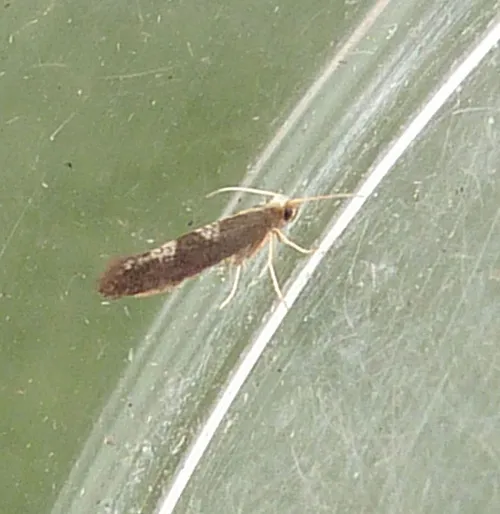
Argyresthia glaucinella
Argyresthia glaucinella
Wingspan about 9 mm. This species often shows more dark (brownish) markings than most other Argyresthia species, but detailed examination of genitallia is recommended when trying to identify it to species level. Determination of species by examinatio
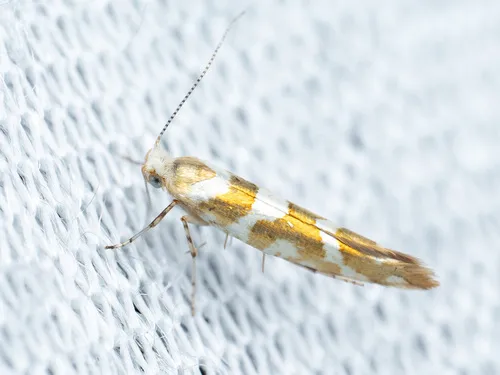
Argyresthia goedartella
Argyresthia goedartella
The typical form with white forewing crossed in the middle by a 'Y' shaped golden-brassy fascia is easily identified Open woodland, heathland, gardens and freshwater margins Flying at night and on sunny afternoons from June to August Larva mines youn
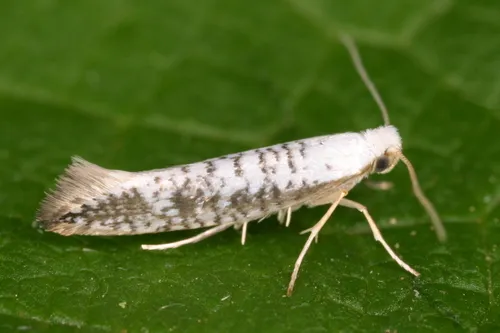
Argyresthia retinella
Argyresthia retinella
Wingspan 9 to 10 mm. This is a white moth with subtle sooty marking. The adults are generally on the wing in June and July, when they can be attracted to light as well as encountered during the day. The foodplant is Birch, the larva feeding internall
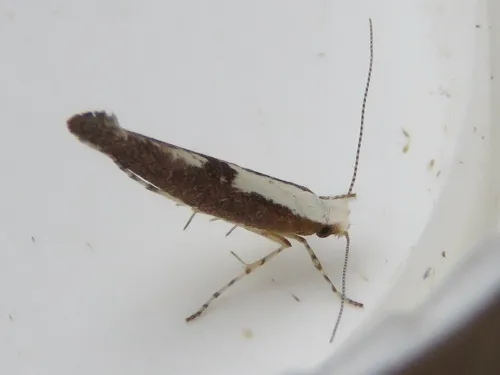
Argyresthia semifusca
Argyresthia semifusca
Wingspan c.12 mm. The adults of this species often show a slight purplish tinge to the brown colour of the forewing. Adult moths fly from June into late August/early September. The larvae feed either on Hawthorn or Rowan in a young shoot during early
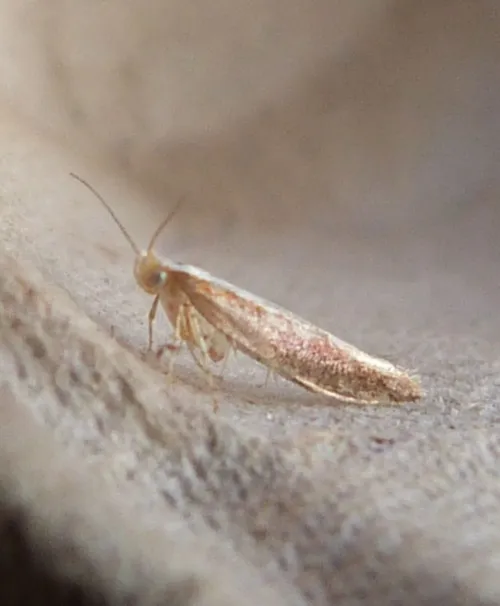
Argyresthia semitestacella
Argyresthia semitestacella
Wingspan 11 to 14mm. One of the larger of the Argyresthia species. It has a relatively plain golden brown forewing with a whitish dorsal streak extending for much of the forewing length. In areas where the larval foodplant, Beech is found. It is quit
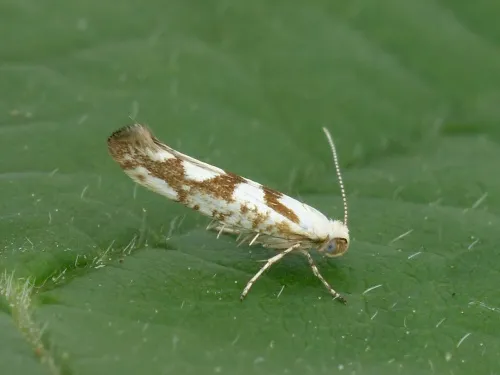
Argyresthia sorbiella
Argyresthia sorbiella
Wingspan about 12mm. Adults are similar to A. curvella , but have a paler, more golden appearance to the brown markings, and are generally larger. Good quality photos are required and the specimen should be retained until the record has been accepted
Argyresthia spinosella
Argyresthia spinosella
Wingspan 9-11 mm. One of several similar species. The adults fly during June and July and are attracted to light. The larvae feed internally in the flowering shoots of Blackthorn. It is distributed widely throughout much of the British Isles except f
Argyresthia thoracella - Hodges#2480
Argyresthia thoracella
Identification: The original description of Argyresthia thoracella Busck, is available online in the print references below. This could be a complex of species.
Argyresthia trifasciata
Argyresthia trifasciata
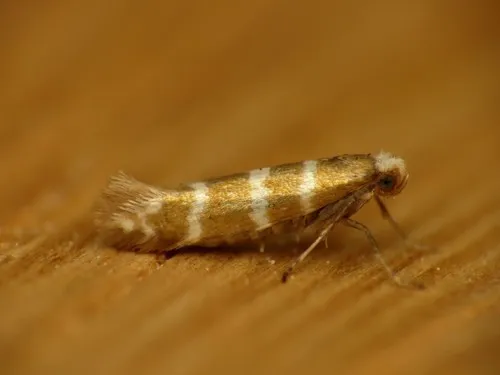
Tiny (6-8 mm wingspan) but quite distinctive with three white hoops around a golden background. It also has a white head. The larva mines the scale leaves of various trees in the Cypress family, entering each leaf through a hole. The mined leaves the
Argyria centrifugens - Hodges#5463.2
Argyria centrifugens
Argyria centrifugens Dyar, 1914 is now recognized within the North American fauna, Florida, in Landry et al. (2023).
Argyria gonogramma - Hodges#5463.1
Argyria gonogramma
Identification: Adult: forewing white with orange fringe (may appear brown or blackish in certain light); medial line faint, consisting mainly of a small dark spot at costa and at inner margin, plus a third dark spot halfway between these two; a four
Argyria nummulalis - Hodges#5460
Argyria nummulalis
Identification: Bob Patterson notes from Richard Brown at Mississippi Entomological Museum. "We have been calling these A. rufisignella in error, just pointed out to me by Richard Brown at Miss. Entomol. Museum. A rufisignella lacks the substantial b
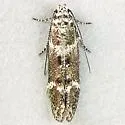
Argyrolacia bifida - Hodges#1779
Argyrolacia bifida
Identification: Specimen determined by DNA analysis (BOLD). ( 3 )
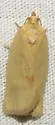
Argyrotaenia dorsalana - Hodges#3618
Argyrotaenia dorsalana
Identification: Adult - pale yellow with variable dark markings. In parts of the Great Basin ground color is rust orange.
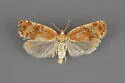
Argyrotaenia graceana - Hodges#3629
Argyrotaenia graceana
Identification: Adult - large, pale species with indistinct brownish or reddish-brown banding on the forewing. Somewhat variable both in distinctness and color, ranging to a form with rather complete and distinct bands.
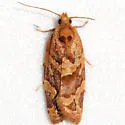
Argyrotaenia hodgesi - Hodges#3598.1
Argyrotaenia hodgesi
Identification: Adult - head and labial palps: orange-brown with buff frons • FW is buff with three irregular orange-brown fasia, all having a fine, dark brown border • Large orange-brown basal patch • Median patch, constricted in the middle, widened
Argyrotaenia lautana - Hodges#3619
Argyrotaenia lautana
Identification: Adult - A large species with broad pale tan forewings marked only by a small outer costal spot of red-brown.
Argyrotaenia martini - Hodges#3628
Argyrotaenia martini
Identification: Adult - A shining golden species having the forewings marked with broad, ochreous-brown spots and bands.
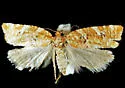
Argyrotaenia niscana - Hodges#3610
Argyrotaenia niscana
Identification: Adult - see original description in Print References. Specimen determined by DNA analysis (BOLD).
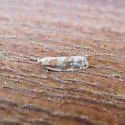
Argyrotaenia paiuteana - Hodges#3616
Argyrotaenia paiuteana
Identification: Adult - shining, pale species, the forewings golden, marked with tan or pale red-brown.
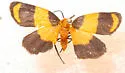
Arid Eudesmia - Hodges#8096
Eudesmia arida
Identification: Adult: forewing dark gray to blackish with broad transverse yellow band in median area, and narrow yellow band in subterminal area; subterminal band does not extend to costa or inner margin; hindwing blackish distally, yellow basally;
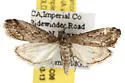
Arispe cestalis - Hodges#5534
Arispe cestalis
Identification: Specimen determined by DNA analysis (BOLD). ( 3 )
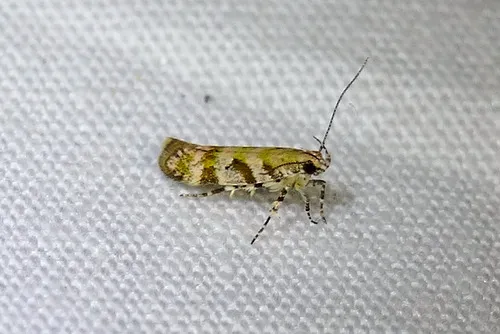
Aristotelia adceanotha - Hodges#1726
Aristotelia adceanotha
Aristotelia adceanotha - Hodges#1726 (Aristotelia adceanotha) is a species in the family Gelechiidae, commonly known as twirler moths, belonging to the order Lepidoptera (Butterflies and Moths). It is classified within the subfamily Anomologinae, sup
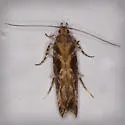
Aristotelia adenostomae - Hodges#1727
Aristotelia adenostomae
Identification: Adult - dark gray to black, dorsal half tinged with dark reddish.
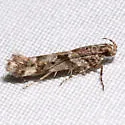
Aristotelia amelanchierella - Hodges#1728
Aristotelia amelanchierella
Identification: Adult : Head brown, pinkish on the face. FW ground color whitish, densely dusted with fuscous. Apical fourth and below the fold, suffused with pink. Markings nearly as in roseosuffusella , with a dark brown oblique acute triangle from
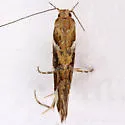
Aristotelia argentifera - Hodges#1730
Aristotelia argentifera
Identification: Original description is online in PDF.
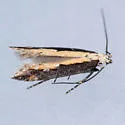
Aristotelia corallina complex - Hodges#1733.1
Aristotelia corallina
Identification: Larva - anterior body ringed in black and white, posterior striped in black and white (Janzen, 1967). These were very common spring visitors (Mar-May) at my lights in Tucson. [Randy Hardy]