
Smerinthus ophthalmica - Hodges#7822.1
Smerinthus ophthalmica
This record describes Smerinthus ophthalmica (species). Recorded family: Sphingidae. Recorded order: Lepidoptera.
Identification and Appearance
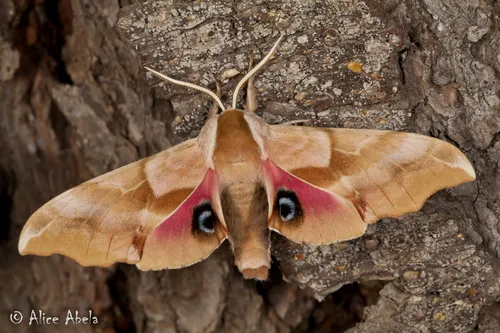
Adult : Very similar to Smerinthus cerisyi , except males of S. ophthalmica have narrower antennal pectinations, smoother FW outer margin, more sharply angled AM, smoother PM, less contrasting paler veins, and a less conspicuous ST. Females cannot be reliably distinguished without DNA sequencing. Larva : The larva is granulose green with yellow subdorsal lines and yellow lateral stripes, a short caudal horn. (a) The most cogent argument for recognizing this species as distinct from the more eastern S. cerisyi was recently put forth by Schmidt & Anweiler (2010), although they note that they were not the first to make this assertion. Their argument is based on observations across a broad zone of contact of these moths in Alberta, noting consistent differences in the superficial appearances of the moths, the presence of brown forms in S. ophthalmica but not in S. cerisyi , slight structural differences in the wing margins and antennae, and a 3.5% difference in the sequence of the cox1 gene of their mitochondrial DNA. (a)
Classification
- Kingdom
- Animalia
- Phylum
- Arthropoda
- Class
- Insecta
- Order
- Lepidoptera (Butterflies and Moths)
- Superfamily
- Bombycoidea
- Family
- Sphingidae (Sphinx Moths)
- Subfamily
- Smerinthinae
- Tribe
- Smerinthini
- Genus
- Smerinthus
Imported taxonomy record. Source availability varies; see the source references and editorial policy below.
Habitat and Range
Geographic Range
Smerinthus ophthalmica occurs from southern British Columbia and southern Alberta south to near the border with Mexico. It is replaced by S. cerisyi to the east and north, and S. saleceti in the southern-most Rocky Mountains and southern Arizona. (a)
Diet and Behavior
Diet: Larvae feed on Salicaceae including willows (Salix spp.), cottonwoods (Populus spp.), and quaking aspen (P. tremuloides). (a)
Additional species information
Species notes from the sources
Etymology: Smerinthus ophthalmica Boisduval, 1855, formerly a synonym of Smerinthus cerisyi, is raised to full species status in Pohl et al. (2010), ZooKeys, 38: 388.
About Butterflies and Moths: the wider group
Order-level background for Lepidoptera, the group containing Smerinthus ophthalmica. Species-specific details appear above.
Group overview
Lepidoptera includes approximately 180,000 described species of butterflies and moths. Moths outnumber butterflies roughly 10:1. The monarch butterfly's eastern population has declined by more than 80% since the mid-1990s, and the western population by over 95% since the 1980s. The IUCN lists the migratory monarch as Vulnerable.
Ecological role of the group
Butterflies and moths are essential indicators of ecosystem health. As caterpillars, they are a primary food source for birds - a single nest of blue tit chicks requires ~10,000 caterpillars. Adult moths pollinate many night-blooming plants.
Economic and practical significance of the group
Lepidoptera are critical pollinators. In Europe, grassland butterfly species have declined by almost 50% since the early 1990s. In the UK, three-quarters of butterflies are in decline. In the U.S., five butterfly species have gone extinct since 1950, with 29 listed as endangered.
Recorded sources for this group: IUCN Red List, Xerces Society, USFWS, PNAS, WWF. Imported estimates may describe particular regions or reporting periods.
Photos of Smerinthus ophthalmica - Hodges#7822.1 (2)
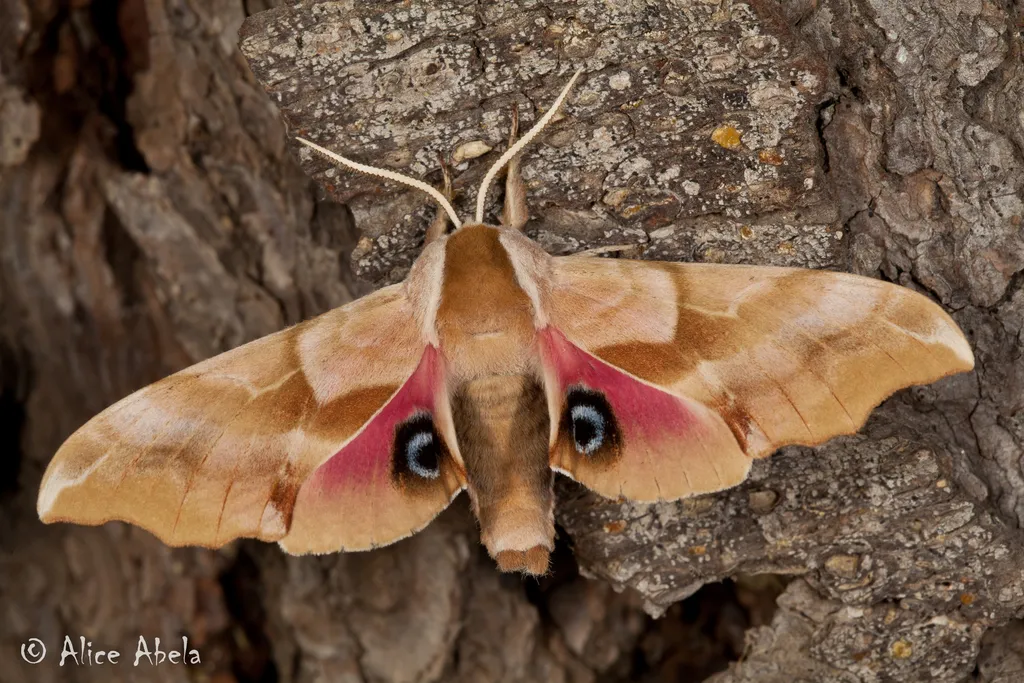
Photo credits: Contributed by Robert Lord Zimlich; Additional contributions by Steve Nanz
Frequently Asked Questions About Smerinthus ophthalmica - Hodges#7822.1
What is Smerinthus ophthalmica - Hodges#7822.1?
Smerinthus ophthalmica - Hodges#7822.1 (Smerinthus ophthalmica) is a species in the family Sphingidae, within the order Lepidoptera.
How big is Smerinthus ophthalmica - Hodges#7822.1?
FWL ≈ 34–47mm (a)
How do you identify Smerinthus ophthalmica - Hodges#7822.1?
Adult : Very similar to Smerinthus cerisyi , except males of S. ophthalmica have narrower antennal pectinations, smoother FW outer margin, more sharply angled AM, smoother PM, less contrasting paler veins, and a less conspicuous ST. Females cannot be reliably distinguished without DNA sequencing. Larva : The larva is granulose green with yellow subdorsal lines and yellow lateral stripes, a short caudal horn. (a)
Where is Smerinthus ophthalmica - Hodges#7822.1 found?
Range: Smerinthus ophthalmica occurs from southern British Columbia and southern Alberta south to near the border with Mexico. It is replaced by S. cerisyi to the east and north, and S. saleceti in the southern-most Rocky Mountains and southern Arizona. (a)
What does Smerinthus ophthalmica - Hodges#7822.1 eat?
The diet of the Smerinthus ophthalmica - Hodges#7822.1 includes Larvae feed on Salicaceae including willows (Salix spp.), cottonwoods (Populus spp.), and quaking aspen (P. tremuloides). (a).