
Sod Webworm - Hodges#5413
Pediasia trisecta
This record describes Pediasia trisecta (species). Recorded family: Crambidae. Recorded order: Lepidoptera.
Identification and Appearance
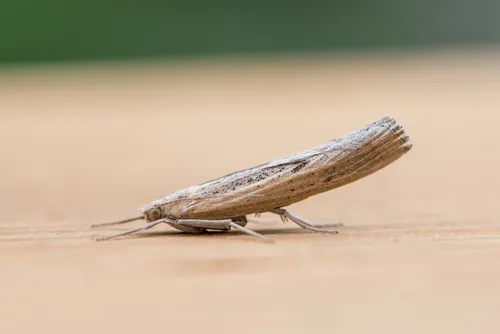
Adult: forewing variably brown to pale yellowish-orange, lighter grayish in lower half (along inner margin); surface sprinkled with dark brown scales; dark gray line from base to middle of wing, plus small dark patch closer to outer margin; faint oblique line from middle of wing to apex; terminal line with 4-5 dark dots; fringe checkered dark gray and white; hindwing broader than forewing, light brown to pale grayish-white; fringe whitish; [see pinned image by C.D. Bird] Specimens identified by DNA analysis: Genitalia: ♀ ♂ Larva: body pinkish-white to yellowish to light brown, often with paired dorsal and lateral spots on each abdominal segment; head yellowish-brown, brown, or black
Classification
- Kingdom
- Animalia
- Phylum
- Arthropoda
- Class
- Insecta
- Order
- Lepidoptera (Butterflies and Moths)
- Superfamily
- Pyraloidea
- Family
- Crambidae (Crambid Snout Moths)
- Subfamily
- Crambinae
- Tribe
- Crambini
- Genus
- Pediasia
Imported taxonomy record. Source availability varies; see the source references and editorial policy below.
Habitat and Range
Habitat
lawns, grassy areas; adults may fly low over lawns during the day, but are primarily nocturnal and attracted to light
Geographic Range
all of United States and southern Canada
Seasonal Activity
adults fly from May to October
Diet and Behavior
Diet: larvae feed on grasses (Poaceae)
Life History
sod webworms overwinter as young larvae a few centimeters below soil line among roots of weeds and grasses in silk-lined tubes; in early spring, larvae feed on upper root systems, stems, and blades of grass; they build protective silken webs, usually on steep slopes and in sunny areas, where they feed and develop; pupation occurs in May in underground cocoons made of silk, bits of plants, and soil; adults emerge about two weeks later, are erratic and weak flyers, live only a few days, and feed solely on dew; they rest in the grass or sometimes fly low over the ground during the day, but are primarily nocturnal, becoming active at dusk. Eggs are deposited indiscriminately over the grass, and hatch in 7-10 days; the most severe damage to turf occurs in July and August when the grass is not growing rapidly; during this hot weather, larvae feed at night or on cloudy days; most species complete 2 or 3 generations per year, with approximately 6 weeks elapsing between egg deposition and adult emergence. [adapted from text by North Carolina State U.]
About Butterflies and Moths: the wider group
Order-level background for Lepidoptera, the group containing Pediasia trisecta. Species-specific details appear above.
Group overview
Lepidoptera includes approximately 180,000 described species of butterflies and moths. Moths outnumber butterflies roughly 10:1. The monarch butterfly's eastern population has declined by more than 80% since the mid-1990s, and the western population by over 95% since the 1980s. The IUCN lists the migratory monarch as Vulnerable.
Ecological role of the group
Butterflies and moths are essential indicators of ecosystem health. As caterpillars, they are a primary food source for birds - a single nest of blue tit chicks requires ~10,000 caterpillars. Adult moths pollinate many night-blooming plants.
Economic and practical significance of the group
Lepidoptera are critical pollinators. In Europe, grassland butterfly species have declined by almost 50% since the early 1990s. In the UK, three-quarters of butterflies are in decline. In the U.S., five butterfly species have gone extinct since 1950, with 29 listed as endangered.
Recorded sources for this group: IUCN Red List, Xerces Society, USFWS, PNAS, WWF. Imported estimates may describe particular regions or reporting periods.
Photos of Sod Webworm - Hodges#5413 (2)
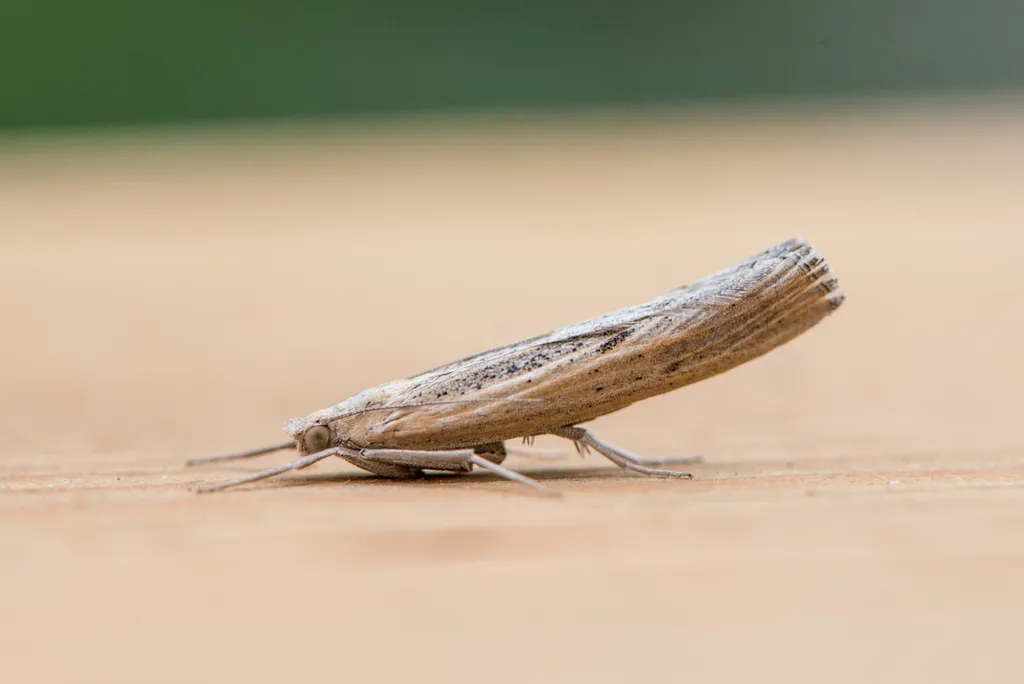
Photo credits: Contributed by Robin McLeod; Additional contributions by Tony-2 , Blocky , Robert H. Biagi
Frequently Asked Questions About Sod Webworm - Hodges#5413
What is Sod Webworm - Hodges#5413?
Sod Webworm - Hodges#5413 (Pediasia trisecta) is a species in the family Crambidae, within the order Lepidoptera.
How big is Sod Webworm - Hodges#5413?
wingspan 23-33 mm larvae to 28 mm
How do you identify Sod Webworm - Hodges#5413?
Adult: forewing variably brown to pale yellowish-orange, lighter grayish in lower half (along inner margin); surface sprinkled with dark brown scales; dark gray line from base to middle of wing, plus small dark patch closer to outer margin; faint oblique line from middle of wing to apex; terminal line with 4-5 dark dots; fringe checkered dark gray and white; hindwing broader than forewing, light brown to pale grayish-white; fringe whitish; [see pinned image by C.D. Bird] Specimens identified by DNA analysis: Genitalia: ♀ ♂ Larva: body pinkish-white to yellowish to light brown, often with paired dorsal and lateral spots on each abdominal segment; head yellowish-brown, brown, or black
Where is Sod Webworm - Hodges#5413 found?
| Feature | Details |
|---|---|
| Habitat | lawns, grassy areas; adults may fly low over lawns during the day, but are primarily nocturnal and attracted to light |
| Range | all of United States and southern Canada |
What does Sod Webworm - Hodges#5413 eat?
The diet of the Sod Webworm - Hodges#5413 includes larvae feed on grasses (Poaceae).
When is Sod Webworm - Hodges#5413 active?
Sod Webworm - Hodges#5413: seasonal activity - adults fly from May to October.
What is the life cycle of a Sod Webworm - Hodges#5413?
sod webworms overwinter as young larvae a few centimeters below soil line among roots of weeds and grasses in silk-lined tubes; in early spring, larvae feed on upper root systems, stems, and blades of grass; they build protective silken webs, usually on steep slopes and in sunny areas, where they feed and develop; pupation occurs in May in underground cocoons made of silk, bits of plants, and soil; adults emerge about two weeks later, are erratic and weak flyers, live only a few days, and feed solely on dew; they rest in the grass or sometimes fly low over the ground during the day, but are primarily nocturnal, becoming active at dusk. Eggs are deposited indiscriminately over the grass, and hatch in 7-10 days; the most severe damage to turf occurs in July and August when the grass is not growing rapidly; during this hot weather, larvae feed at night or on cloudy days; most species complete 2 or 3 generations per year, with approximately 6 weeks elapsing between egg deposition and adult emergence. [adapted from text by North Carolina State U.]