
Butterflies and Moths
Order Lepidoptera
The Butterflies and Moths (Order Lepidoptera) includes 11,813 species across 112 families and 2,787 genera in our directory.
About Butterflies and Moths
Lepidoptera includes approximately 180,000 described species of butterflies and moths. Moths outnumber butterflies roughly 10:1. The monarch butterfly's eastern population has declined by more than 80% since the mid-1990s, and the western population by over 95% since the 1980s. The IUCN lists the migratory monarch as Vulnerable.
Economic Impact
Lepidoptera are critical pollinators. In Europe, grassland butterfly species have declined by almost 50% since the early 1990s. In the UK, three-quarters of butterflies are in decline. In the U.S., five butterfly species have gone extinct since 1950, with 29 listed as endangered.
Ecological Role
Butterflies and moths are essential indicators of ecosystem health. As caterpillars, they are a primary food source for birds - a single nest of blue tit chicks requires ~10,000 caterpillars. Adult moths pollinate many night-blooming plants.
Families in Lepidoptera (112)
Species in Lepidoptera (11,813)
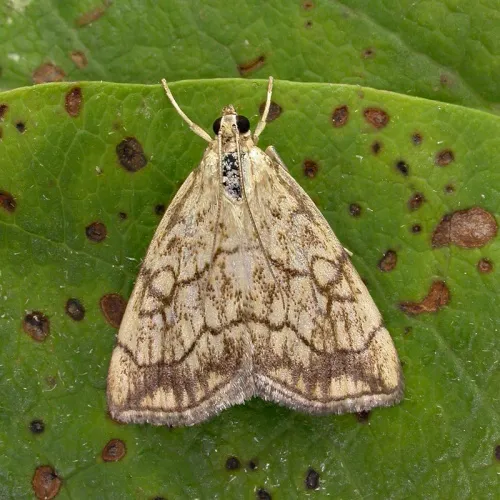
Evergestis pallidata
Evergestis pallidata
Wingspan 24 to 29 mm. A fairly distinctive moth with pale creamy wings laced with dark brown markings. Various habitats including damp open woodland and other damp areas. The moths fly between June and August when they are attracted to light. The lar
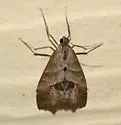
Evergestis triangulalis - Hodges#4914
Evergestis triangulalis
Identification: Original description is online at link below. (Barnes & McDunnough)
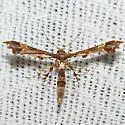
Everglades Plume Moth - Hodges#6090.2
Leptodeuterocopus neales
Identification: The original description as Oxyptilus neales Walsingham, is available online in the print references below. Determined by Debbie Matthews Lott First United States record was collected at UV blacklight by John B. Heppner , 29 April 197
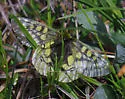
Eversmann's Parnassian - Hodges#4153
Parnassius eversmanni
Identification: Closely related to, and similar to Parnassius clodius , but usually smaller in size and with wings decidedly tinged yellow. Dark markings tend to be better developed in P. eversmanni . Differs from Parnassius smintheus / phoebus in t
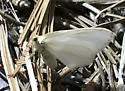
Evita hyalinaria - Hodges#6897
Evita hyalinaria
Identification: The wings, body and legs are an off-white color, usually with some slightly darker (tan) shading. The fore-wings and hind-wings are both simi-transparent and most of the wing-veins may be clearly visible. The subspecies Evita hyalina
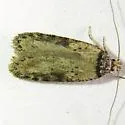
Exaeretia umbraticostella - Hodges#0900
Exaeretia umbraticostella
Identification: Adult - see original description and Clarke re-description. ,
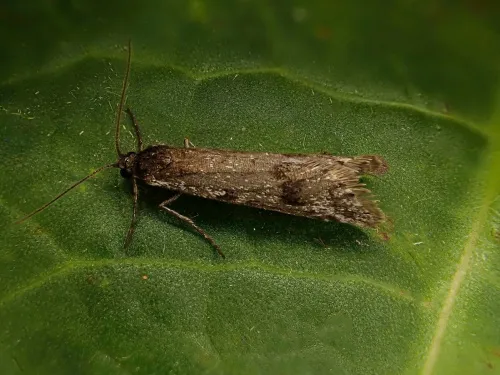
Exapate congelatella
Exapate congelatella
Wingspan 18 to 22 mm. A rather peculiar species, the male with elongated forewings, and the female having much reduced vestigial wings. Please provide a photograph to support your record, and retain the specimen until identification is confirmed. Occ
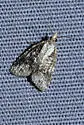
Exasperating Platynota - Hodges#3743
Platynota exasperatana-complex
Identification: Adult - forewing pale gray, shaded with darker gray to blackish in median and basal areas, and marked with traces of black lines; pale blotches may be present along costa in median area; diffuse gray spot usually visible in subtermina
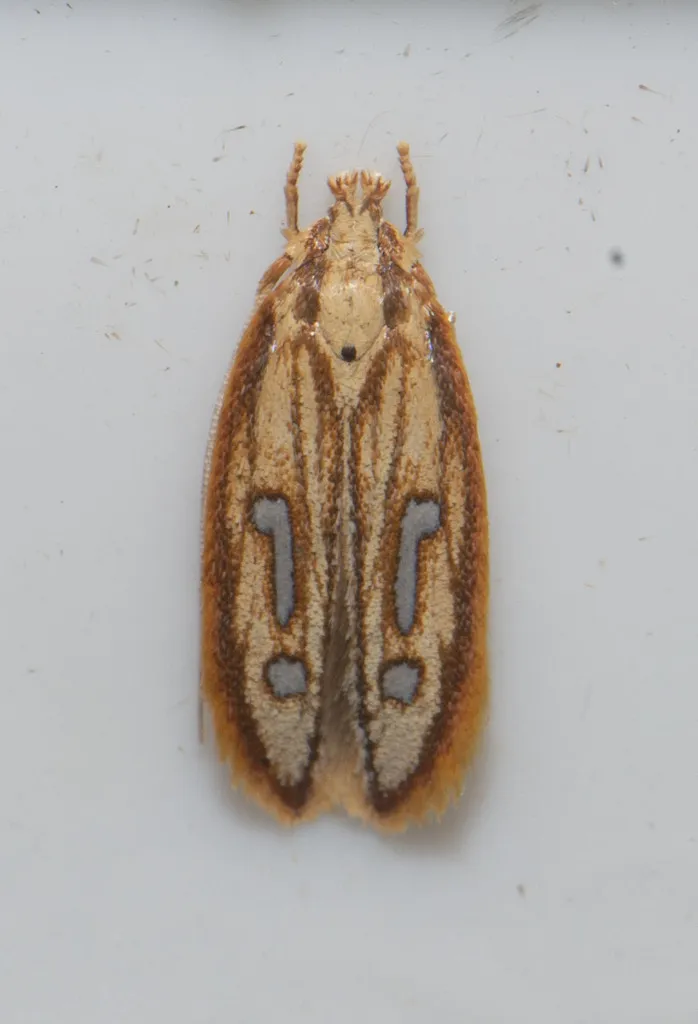
Exclamation Moth - Hodges#1421
Homaledra heptathalama
Identification: Adult - forewing slender, almost parallel-sided for most of length, tapering to a rounded point at apex; pale yellowish-brown except for darker brownish-orange strip along costa, and two white markings in median area that together res
Exclamatory Plume Moth - Hodges#6148
Stenoptilia exclamationis
Identification: See identification key for Platyptiliini .
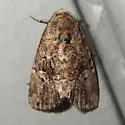
Exesa Midget Moth - Hodges#9682
Elaphria exesa
Identification: See Hampson in print references below. " Elaphria trolia (Dyar, 1914), stat. n., was described and previously treated as a Central American subspecies of Elaphria exesa (Guenée, 1852), but differs from it in barcodes (3.5%) and male g
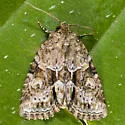
Exhausted Brocade - Hodges#9408
Neoligia exhausta
Identification: The only eastern species of Neoligia with an anal dash (black streak extending from claviform spot to anal angle of forewing) Genitalia: an uncommon species with a restricted range
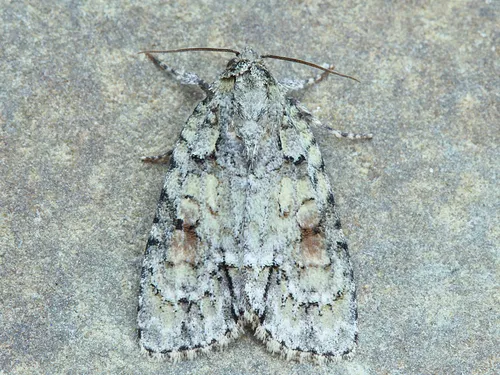
Exiled Dagger Moth - Hodges#9242
Acronicta exilis
Exiled Dagger Moth - Hodges#9242 (Acronicta exilis) is a species in the family Noctuidae, commonly known as owlet moths, belonging to the order Lepidoptera (Butterflies and Moths). It is classified within the subfamily Acronictinae, superfamily Noctu
Exoteleia anomala - Hodges#1840.1
Exoteleia anomala
Exoteleia anomala - Hodges#1840.1 (Exoteleia anomala) is a species in the family Gelechiidae, commonly known as twirler moths, belonging to the order Lepidoptera (Butterflies and Moths). It is classified within the subfamily Gelechiinae, tribe Litini
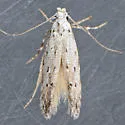
Exoteleia californica - Hodges#1836
Exoteleia californica
Identification: Busck original description as Paralechia californica is online and linked in the print references.
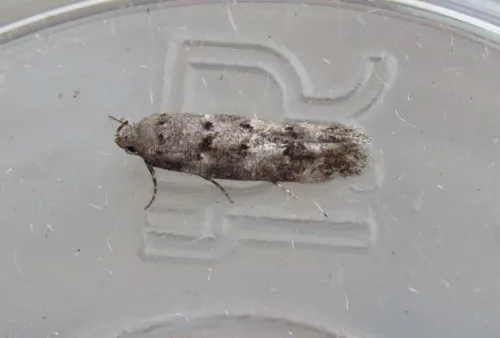
Exoteleia dodecella
Exoteleia dodecella
Wingspan 12 to 15 mm. The larva mines pine needles, entering from a small hole below the leaf tip, which is then sealed with silk. It feeds towards the needle tip, eventally causing a large mine in leaf-tip. The larva is brown with a dark head. sevea
Exotic Leafroller Moth - Hodges#3663.2
Archips fuscocupreanus
Identification: Adult - see original description in Print References.
Exposed Bird Dropping Moth - Hodges#9136
Tarache aprica
Identification: specimen identified by DNA analysis (BOLD) from Mark Dreiling female . . . . . . male
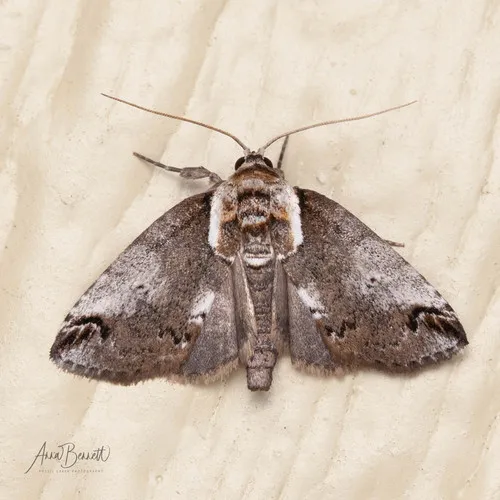
Eyed Baileya Moth
Baileya ophthalmica
Baileya ophthalmica, the eyed baileya, is a species of nolid moth in the family Nolidae. It is found in North America.
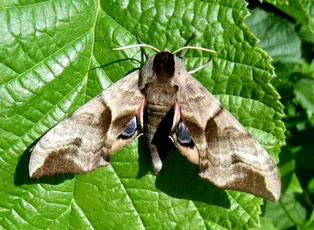
Eyed Hawk-moth
Smerinthus ocellata
Wingspan 70-80 mm. This species has a sombre, camouflaged appearance at rest, but if provoked, flashes the hind wings, which are decorated with intense blue and black 'eyes' on a pinkish background. The green caterpillars resemble those of the Poplar
Eyeringed Chionodes Moth - Hodges#2072
Chionodes discoocellella
Identification: Adult : FW brown, tinged with roseate or purple, and faintly streaked with ocherous within the inner margin, and with a yellowish-white spot containing a black central dot at the end of the disc, a small black spot on the fold, and on
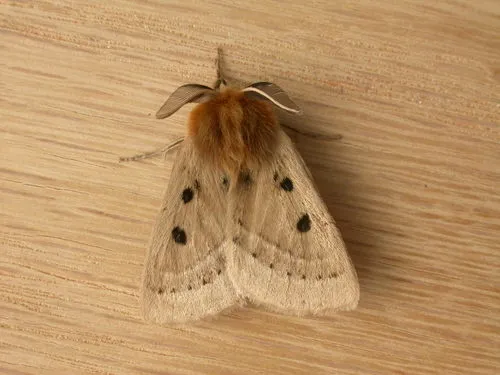
Eyespot Anthelid Moth
Anthela ocellata
Anthela ocellata, the eyespot anthelid, is a species of moth of the family Anthelidae. It is found in Australia, from Bundaberg to Hobart along the Eastcoast.
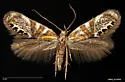
Fabiola quinqueferella - Hodges#1054
Fabiola quinqueferella
Identification: Distinctive forewing has basal yellow streak, alternating radiating bands of chestnut/orange and white in middle, speckled outer 1/3, and a series of 4 black spots along the outer margin. Images of several living individuals can be vi
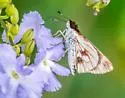
Fabulous Skipper
Troyus fabulosus
Identification: Butterflies of America - BOA Type Locality: Texas, Hidalgo Co., Peñitas
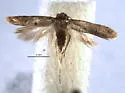
Faculta triangulella - Hodges#2207
Faculta triangulella
Faculta triangulella - Hodges#2207 (Faculta triangulella) is a species in the family Gelechiidae, commonly known as twirler moths, belonging to the order Lepidoptera (Butterflies and Moths). It is classified within the subfamily Gelechiinae, tribe Ge
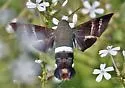
Fadus Sphinx - Hodges#7850
Aellopos fadus
Identification: Brown body with a wide white band across the abdomen. Exhibits two forewing spot bands and the post median spot band transverses wing from trailing to leading edge and has parallel double white spots. Lacks dark spot at end of forewin
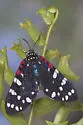
Faithful Beauty - Hodges#8038
Composia fidelissima
Identification: Distinctive day-flying moth found in South Florida. Lovely.
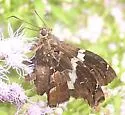
Falcate Skipper - Hodges#3920
Spathilepia clonius
Identification: Dark brown upperwings with a bold white diagonal band across the upper and lower surfaces of the forewing First U.S. Record: Pharr, Hidalgo Co., Texas - 1944 (Freeman, 1945)
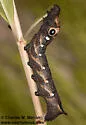
Falcon Sphinx - Hodges#7889
Xylophanes falco
Identification: Adult: forewing slender, pointed, with slightly hooked tip and falcate inner margin; upper half orangish-brown, bordered below by dark brown or blackish longitudinal band from base to apex; 3 or 4 dark lines run parallel to outer marg
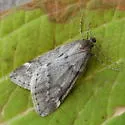
Fall Cankerworm - Hodges#6258
Alsophila pometaria
Identification: Males have an even brownish grey forewing with jagged white and dark PM and AM lines, occasionally with a visible dark discal spot. The hindwings are light grey, with a dark discal spot and a faint pale PM line (AEC): The females are
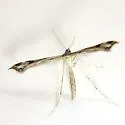
False Foxglove Plume Moth - Hodges#6127
Paraplatyptilia auriga
Identification: See the identification key for Platyptiliini . See the species accounts in Gielis for Paraplatyptilia watkinsi and Barnes & Lindsey for Paraplatyptilia auriga as Platyptilia auriga .
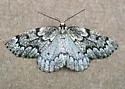
False Hemlock Looper - Hodges#6906
Nepytia canosaria
Identification: Adult: top of head small yellowish spot; forewing ground color usually whitish but sometimes dark grayish-brown; wings speckled with gray or brown; forewing AM and PM lines black, scalloped, and with pointed teeth in PM line; discal s
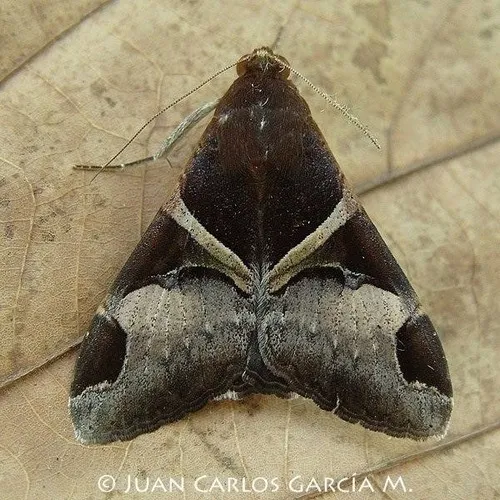
Fasciolated Melipotis - Hodges#8599
Melipotis fasciolaris
Identification: Adult: sexually dimorphic - male has pale whitish to yellowish diagonal band in AM area of forewing; female basal area of forewing entirely light yellowish-brown; remainder of forewing dark brown in both sexes except for slightly ligh
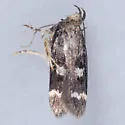
Fascista bimaculella - Hodges#2203
Fascista bimaculella
Identification: Dr. Mark A. Metz pointed out a long standing confusion with the similarly named Filatima biminimaculella , a fairly plain brown moth which looks nothing like Fascista bimaculella . (See syntype of biminimaculella now posted on the spe
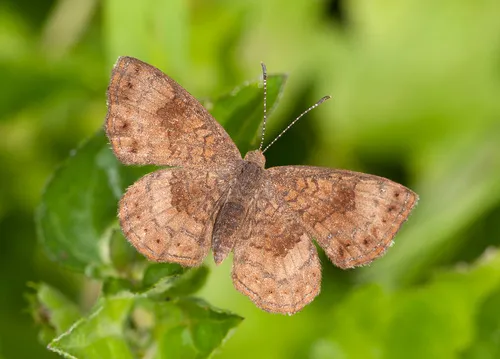
Fatal Metalmark
Calephelis nemesis
Calephelis nemesis (fatal metalmark or dusky metalmark) is a butterfly in the family Riodinidae. It is found in the southern part of the United States and Mexico.
Fawn Brown Dart - Hodges#10727
Euxoa pleuritica
Identification: Adult: forewing mottled coppery brown with areas of dark gray and darker brown; reniform spot has dark gray smudge in lower half; orbicular spot round, dark in center; claviform spot partial or sometimes absent; AM line black, double,
Fawn Sallow - Hodges#10016
Psaphida styracis
Identification: Wagner et al. (2011) ( 4 ) and Wagner (2010) ( 5 ) includes description and photos of larvae. (preview page) Beadle & Leckie (2012) reported the species as uncommon. ( 10 )
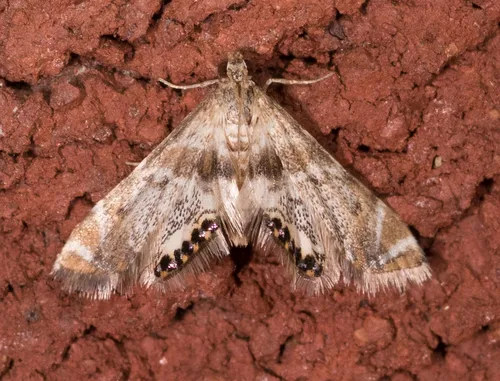
Feather-edged Petrophila - Hodges#4777
Petrophila fulicalis
Identification: Adults - forewing ground color white but mostly obscured by grayish-brown bands and dark speckling; narrow white median band across forewing is jagged near costa; three indistinct dark spots form a triangle in postmedian area; diffuse
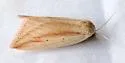
Feeble Grass Moth - Hodges#9818
Amolita fessa
Identification: Forewing whitish to pale brown and sprinkled with brown specks; the reniform and orbicular spots are each represented by a small black dot; a dark brown line runs from the wing base past the dots, then curves gently outward until reac
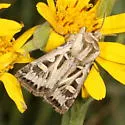
Feltia inyoca - Hodges#10670.1
Feltia inyoca
Identification: "This species and Feltia evanidalis are disjunct Californian relatives of jaculifera. Feltia inyoca is characterized by 1) the shape of the claviform spot, which is longer (4x as long as basal width) than that of evanidalis but shorte
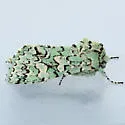
Feralia februalis - Hodges#10009
Feralia februalis
Identification: Grote (1874) original description is in the print references. Crumb (1956) described the larva. ( 4 )
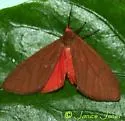
Ferguson's Virbia - Hodges#8118.1
Virbia fergusoni
Identification: Male FW umber with dark fuscous on the crossveins of the discal spot forming a small transverse band. HW peach red, the subterminal region raw umber. Female FW cinnamon, sometimes with a salmon costal margin. HW peach red, the termina
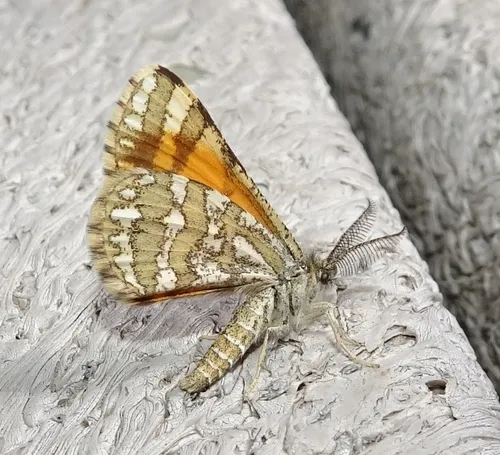
Fernadella stalachtaria - Hodges#6421
Narraga stalachtaria
Identification: Distinction from F. fimetaria is difficult as underside patterns in both vary, and upper sides are rarely photographed; genitalia are apparently similar. Images posted on internet web sites (when just underside is shown) may sometime
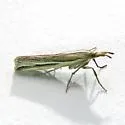
Fernald's Grass-veneer - Hodges#5441
Thaumatopsis fernaldella
Fernald's Grass-veneer - Hodges#5441 (Thaumatopsis fernaldella) is a species in the family Crambidae, commonly known as crambid snout moths, belonging to the order Lepidoptera (Butterflies and Moths). It is classified within the subfamily Crambinae,
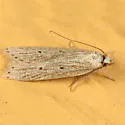
Fernald's Helcystogramma - Hodges#2267
Helcystogramma fernaldella
Identification: Adult - forewing slender with pointed apex; ground color whitish or pale yellowish with several faint and indistinct stripes running length of wing; two dark spots in medial area. Hindwing pale grayish, slightly darker near outermargi
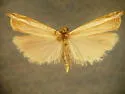
Fernandocrambus harpipterus - Hodges#5389
Fernandocrambus harpipterus
Identification: Distinguished from very similar looking species of Crambus by the striking falcate FW tips.
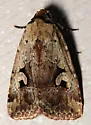
Festive Midget - Hodges#9681
Elaphria festivoides
Identification: Adult: distinct whitish reniform spot interrupts broad black dash in median area of forewing. Lower PM line also whitish. Rest of forewing brown: lighter brown with gray mottling near base and along costa, darker beyond PM line. Hindw
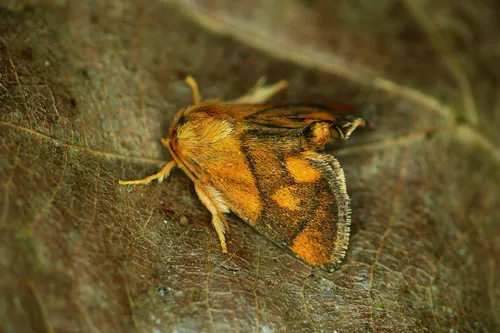
Festoon
Apoda limacodes
Apoda limacodes, the festoon, is a moth of the family Limacodidae. It is found in Europe. The wingspan is 20–30 mm. The moth flies in June and July in Belgium and the Netherlands.
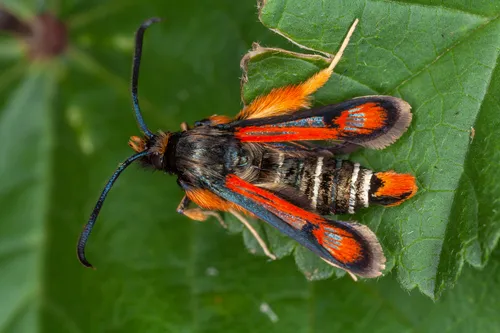
Fiery Clearwing
Pyropteron chrysidiforme
Pyropteron chrysidiforme, the fiery clearwing, is a moth of the Sesiidae family. It is found in Europe, more specifically in Spain, Portugal, Majorca, southern England, Belgium, France, Corsica, Sardinia, Italy and southern Germany.
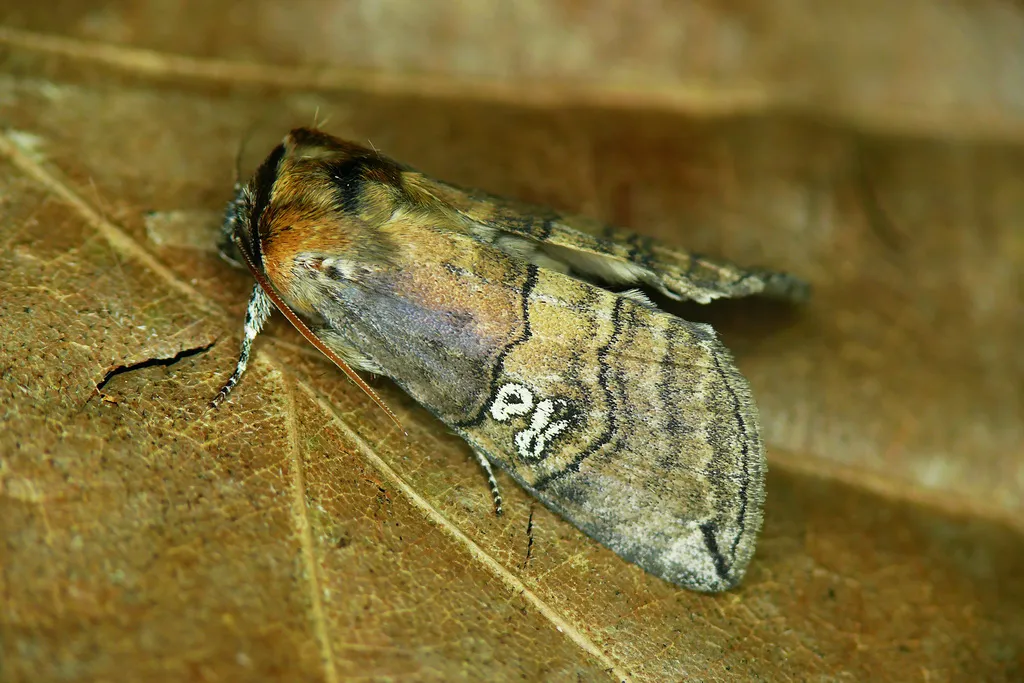
Figure of Eighty
Tethea ocularis
Tethea ocularis, the figure of eighty, is a moth of the family Drepanidae. It is found throughout continental Europe and has a scattered distribution in England and Wales, although it is absent from Scotland and Ireland.
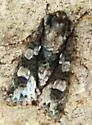
Figure-Eight Sallow - Hodges#10019
Psaphida resumens
Identification: Adult: forewing mottled pale and dark gray; orbicular, reniform, and claviform spots large, pale gray; orbicular and claviform spots usually touch each other, forming a figure-8; black anal dash crosses broad white ST line; hindwing g
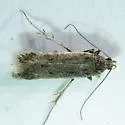
Filatima albicostella - Hodges#2128
Filatima albicostella
Identification: The original description is online. Determined by Sangmi Lee
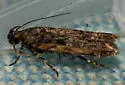
Filatima biminimaculella - Hodges#2136
Filatima biminimaculella
Identification: A brown moth similar to Filatima pseudoacaciella (Chambers, 1872) with "small ochreous spot on each side of the apex of the thorax" as noted above.
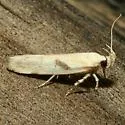
Filatima depuratella - Hodges#2142
Filatima depuratella
Identification: Original description is online as Gelechia depuratella Busck, in PDF.
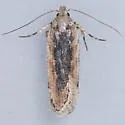
Filatima epulatrix - Hodges#2143
Filatima epulatrix
Identification: Specimen identified by DNA analysis (BOLD).
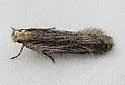
Filatima hemicrossa - Hodges#2149
Filatima hemicrossa
Identification: The original description as Gelechia hemicrossa Meyrick is available online in the print references below.
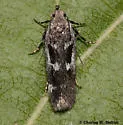
Filatima obidenna - Hodges#2158
Filatima obidenna
Identification: The original description of Filatima obidenna Clarke, is available online in the print references below.
Filatima serotinella - Hodges#2172
Filatima serotinella
Identification: The original description as Gelechia serotinella Busck, is available in PDF and online in the print references below. Genitalia: ♀ ♂
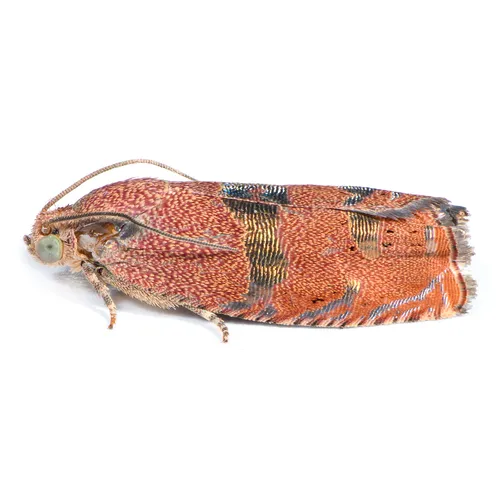
Filbertworm Moth
Cydia latiferreana
Cydia latiferreana, the filbertworm moth, is a moth of the family Tortricidae. It was formerly (and sometimes is still) separated in a monotypic genus Melissopus.
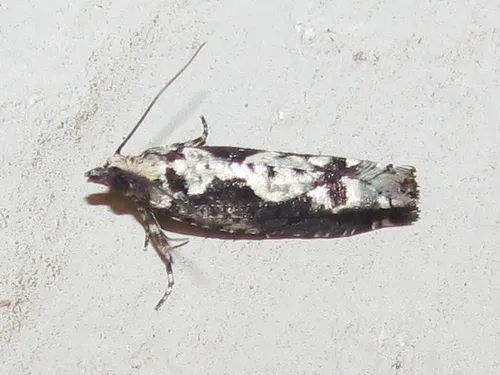
Filigreed Chimoptesis - Hodges#3273
Chimoptesis pennsylvaniana
Identification: Adult - forewing dark gray to blackish with white tri-lobed strip along inner margin, sometimes tinted with green; black V-shaped mark at anal angle; several small white spots along costa; hindwing gray with dark double terminal line
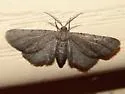
Fine-lined Gray Moth - Hodges#6478
Exelis pyrolaria
See an extended discussion of the problems of Exelis identification in Dave Barker's journal post on iNaturalist and comments on that post.
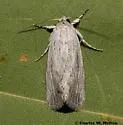
Fine-lined Sallow - Hodges#10033
Catabena lineolata
Identification: Adult: forewing light gray with brownish cast, marked with very fine black and white lengthwise streaks; ends of AM and PM lines generally visible at costa but otherwise obscure; terminal line composed of blackish dashes; fringe dark
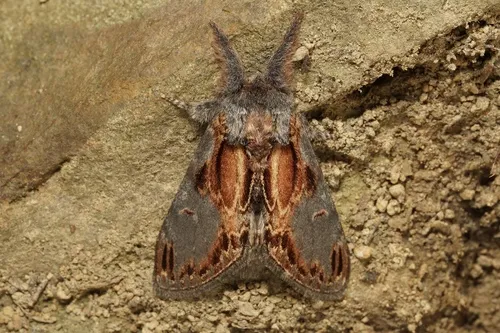
Finned-willow Prominent - Hodges#7926
Notodonta scitipennis
Identification: Adult: forewing bicolored - trailing half and outer edge mostly dark reddish-brown, and leading half mostly gray; orbicular spot indicated by a rusty streak, and reniform spot by a thin vertical rusty line; basal area has two blackish
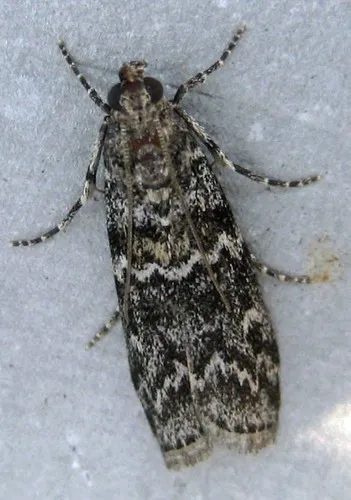
Fir Coneworm - Hodges#5841
Dioryctria abietivorella
Identification: Adult: forewing blackish-gray with black zigzag AM and PM lines, bordered by white; irregular white discal spot in median area; black blotch present inside AM line at costa; hindwing light brownish-gray with pale fringe Genitalia: ♀ ♂
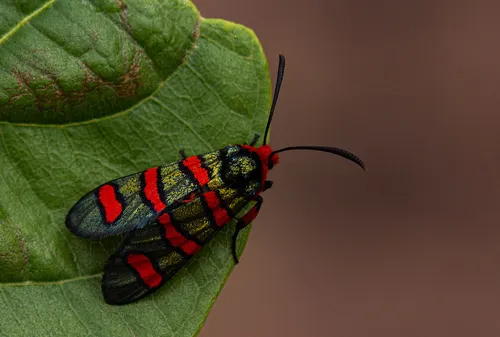
Fire Grid Burnet
Arniocera erythropyga
The fire grid burnet (Arniocera erythropyga) is a day-flying moth of the family Zygaenidae found in Zimbabwe and Malawi to Mozambique and South Africa.
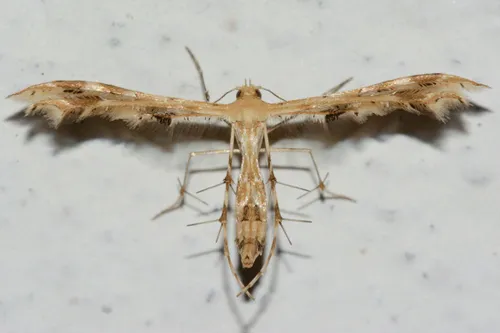
Fire-flag Plume Moth
Sphenarches anisodactylus
The geranium plume moth (Sphenarches anisodactylus) is a moth of the Pterophoridae family. It is found in western Africa, Madagascar, India, Sri Lanka, Thailand, Japan, the New Hebrides and Central and South America, as well as Australia, where it ha
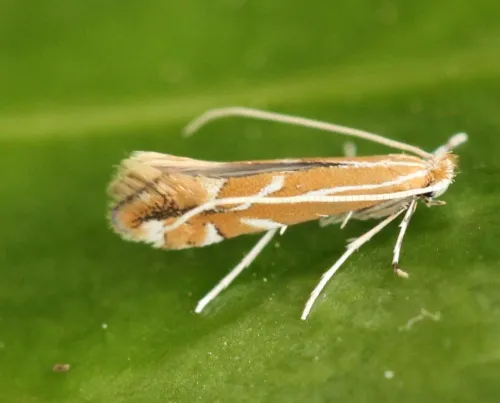
Firethorn Leaf Miner
Phyllonorycter leucographella
Wingspan 7 to 9 mm. Resemble other Phyllonorycter species, with a buff ground colour and whitish chevrons. Often easier to find the leaf mine which can be on Firethorn ( Pyracantha ) plus a number of other plant species including Hawthorn, Apple, Lon
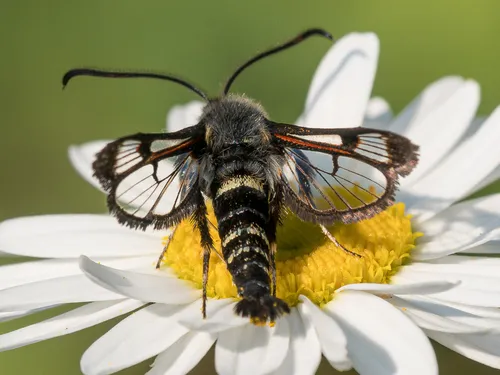
Fireweed Clearwing Moth
Albuna pyramidalis
Albuna pyramidalis, the fireweed clearwing moth, is a species of clearwing moth in the family Sesiidae.
Fish's Dart - Hodges#10997
Cerastis fishii
Identification: Adult: forewing reddish-brown with dark AM and PM lines, and pale subterminal line; reniform and orbicular spots contain contrasting black-and-white markings; prominent black subapical spot along costa just inside subterminal line; te
Fishia connecta - Hodges#9971
Fishia connecta
Identification: The original description as Polia connecta Smith, is available online at the link in the print references below. Forewing is gray and reddish-brown with basal and median dashes. The orbicular spot is round with a lighter filling. Rare
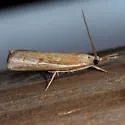
Fissicrambus hemiochrellus - Hodges#5434
Fissicrambus hemiochrellus
Identification: See the cautionary note on the Fissicrambus genus page and in Bleszynski, 1963 . Genitalia: ♀ page creation based on Brian Scholtens' identification of this image , as reported by Bob Patterson via email
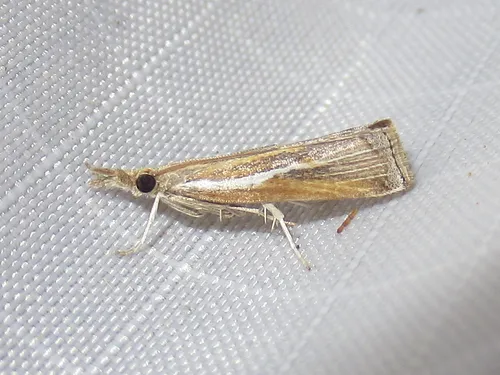
Fissicrambus intermedius - Hodges#5432
Fissicrambus intermedius
Identification: Kearfott's original description as Crambus intermedius is online (see below). Kearfott describes the rich buff-orange color ("dark ochreous") of the FW between the white streak and the costal margin. The white streak widens from the b
Fissicrambus quadrinotellus - Hodges#5385
Fissicrambus quadrinotellus
Identification: See Bleszynski, 1963 Det. E. Knudson, 2009 Specimen identified by DNA analysis: Genitalia:
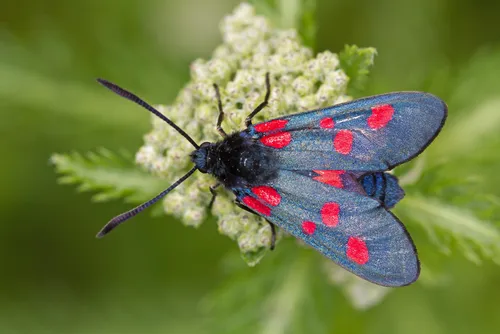
Five-spot Burnet
Zygaena trifolii
Zygaena trifolii, the five-spot burnet, is a moth in the family Zygaenidae. It is found from North Africa, through the western Mediterranean, Great Britain and central Europe to Ukraine. It is not found in Scandinavia.
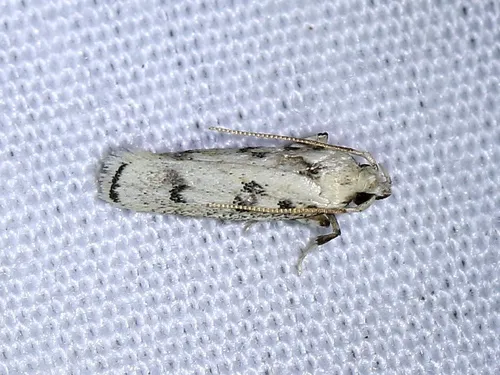
Five-spotted Glyphidocera
Glyphidocera lactiflosella
Glyphidocera lactiflosella, the five-spotted glyphidocera moth, is a moth in the Autostichidae family. It was described by Chambers in 1878. It is found in North America, where it has been recorded from Alabama, Arkansas, Florida, Georgia, Louisiana,
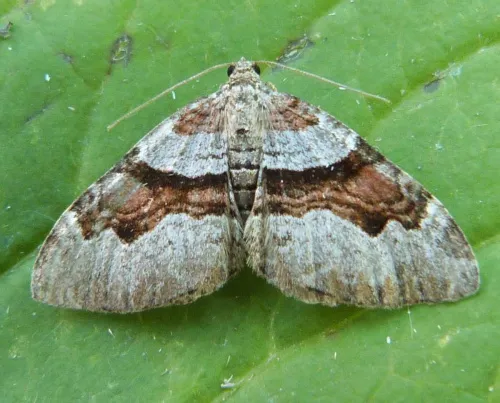
Flame Carpet
Xanthorhoe designata
Wingspan 25-28 mm. The only likely confusion is with the Red Carpet which has a sinuous outer edge to the central cross-band; in Flame Carpet the outer edge of the central cross-band is dentate with two distinct projections. There are two generations
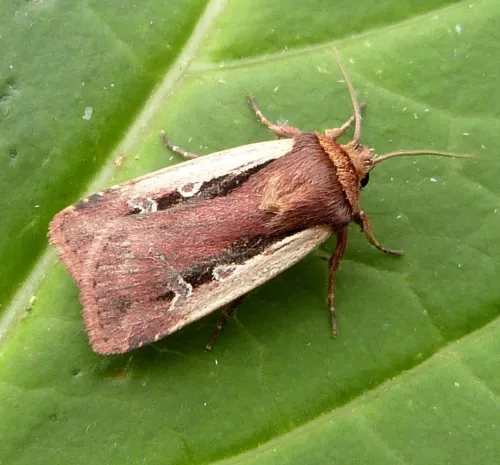
Flame Shoulder
Ochropleura plecta
Wingspan 25-30 mm. Resembles no other British species. The English name refers to a bright straw coloured band running along the leading edge of the forewing, which is further emphasised by the black streak behind it. Woodland fringes, gardens and me
Flame-shouldered Dart - Hodges#10891
Ochropleura implecta
Identification: forewing reddish-brown edged with cream along costa from base to reniform spot; black basal dash and bar extend through gray orbicular and reniform spots hindwing white with yellowish-brown terminal line and shading at apex [descripti
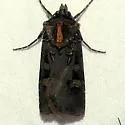
Flat Dart - Hodges#10756
Euxoa campestris
Adults are attracted to sugar based baits and lights.
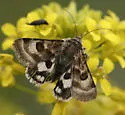
Flax Bollworm Moth - Hodges#11077
Heliothis ononis
Identification: Adult: forewing light brown with darker reddish-brown scaling at base and on shoulders (tegulae); dark brown median band incorporates large black reniform spot; subterminal band dark, narrower in the middle; fringe reddish-brown; hind
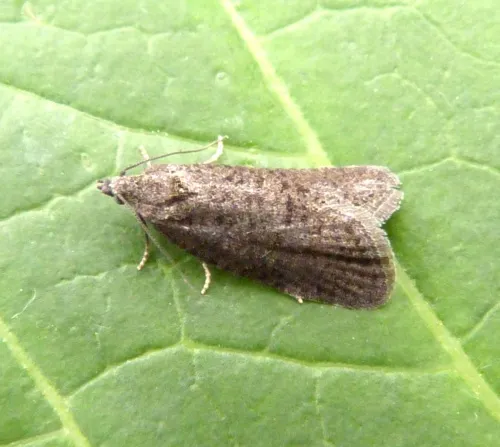
Flax Tortrix
Cnephasia asseclana
Wingspan 15-18 mm. The patterning of the wings can be variable with dark brown bands and spots on a paler brown background. There are other very similar species in this genus which means that detailed examination of an actual specimen is generally ne
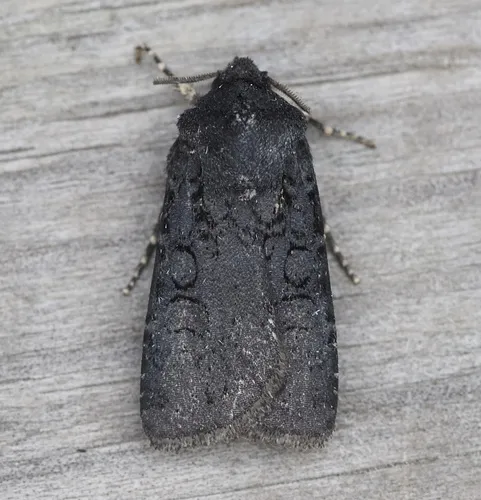
Fleece-winged Dart - Hodges#10803
Euxoa velleripennis
Identification: forewing very dark gray with black AM and PM lnes that show little contrast against ground color; reniform, orbicular, and claviform spots outlined in black; center of reniform spot with obscure paler area; orbicular spot very large (
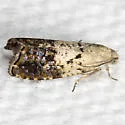
Fletcher's Cydia Moth - Hodges#3472
Cydia fletcherana
Identification: Adult - see original description in Print References.
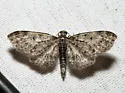
Fletcher's Eupithecia - Hodges#7491
Eupithecia fletcherata
Identification: Adult - see original description in Print References. Larva - pale brown with a dark brown diamond pattern dorsally. Genitalia: ♀ ♂
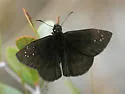
Florida Duskywing - Hodges#3944
Ephyriades brunnea
Identification: Very south Florida only. Semicircular area near tip of forewing is surrounded by white spots. Female has purple sheen.
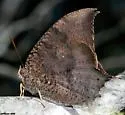
Florida Leafwing - Hodges#4553
Anaea troglodyta
Identification: Adult: forewing margin straight, and tip slightly hooked; hindwing has pointed tail; upperside red with dark outer margins but few other dark markings; forewing has dark bar in cell; underside of hindwing mottled gray and brown, resem
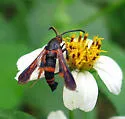
Florida Oakgall Moth - Hodges#2573
Synanthedon sapygaeformis
Identification: Larva - white with brown head and spiracles. ( 3 )
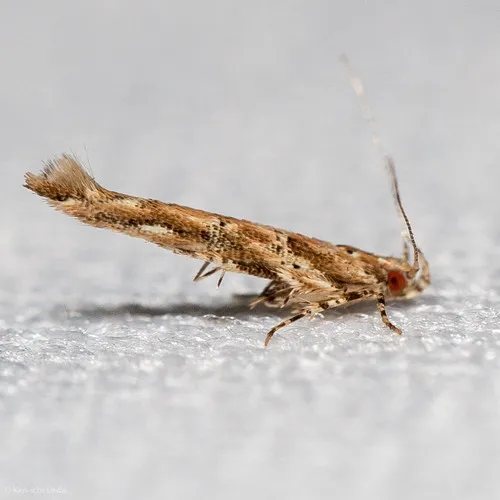
Florida Pink Scavenger
Anatrachyntis badia
The Florida pink scavenger (Anatrachyntis badia) is a species of moth of the Cosmopterigidae family. It is found in the southern United States from Florida to California and as far north as Maryland. It is an introduced species in Europe, where it ha
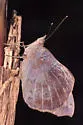
Florida Purplewing - Hodges#4533
Eunica tatila
Identification: Purplish above with white spots on front wing and the tip of the front wing notched. The underside is dull brownish, usually with some grayish to slightly bluish areas, and with row of eye-spots only slightly offset (almost in an eve
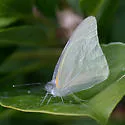
Florida White - Hodges#4190
Glutophrissa drusilla
Identification: Dorsal, male all white with dark forward costal edge. Female is like the male, except she has black on the FW tips. Underwing, white with yellow on basal FW. Antenna clubs are white.
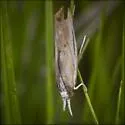
Floridian Grass-veneer Moth - Hodges#5443
Thaumatopsis floridella
Identification: The original description of Thaumatopsis fernaldella Kearfott, is available online in the print references below. The specimen he described from Key West as possibly being a form of fernaldella is believed to be floridella .
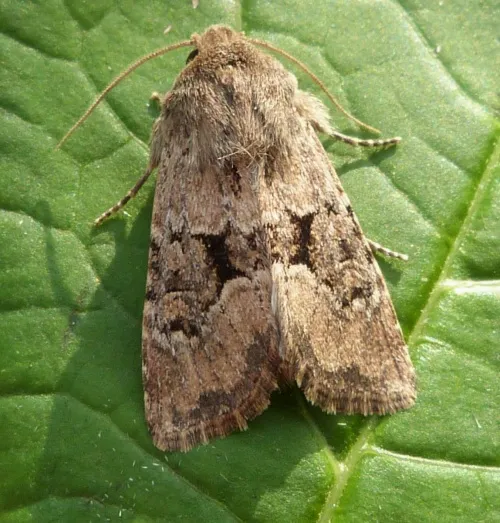
Flounced Rustic
Luperina testacea
Wingspan 30-35 mm. A very variable species both in colour and patterning. There is one generation, flying in August and September, when the species comes to light. The larvae feed underground in the bases of grass stems and amongst the roots. A commo
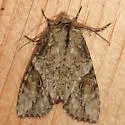
Fluid Arches - Hodges#10291
Morrisonia latex
Identification: forewing gray with dark patches along costa on either side of orbicular spot, black anal dash, and double black dash along outer margin below reniform spot; orbicular spot large, pale whitish, oblong, and extending obliquely to costa;
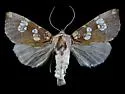
Flypoison Borer - Hodges#9493.1
Papaipema amianthii
This species is apparently abundant in the Poconos in some years and very rare in the same locations in other years.
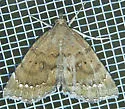
Focillidia texana - Hodges#8730
Focillidia texana
Identification: The original description is available online in the print references listed below.
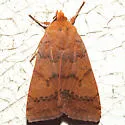
Footpath Sallow Moth - Hodges#9945
Metaxaglaea semitaria
Identification: Franclemont description is in PDF or read online.
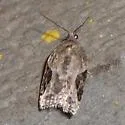
Forbes' Acleris - Hodges#3525
Acleris forbesana
Identification: Adult - forewing whitish with dark gray triangular patch midway along costa, and lighter gray shading in diffuse patches near anal angle, in subterminal area, and in basal area; dark dot (sometimes absent) in AM area near costa, not n
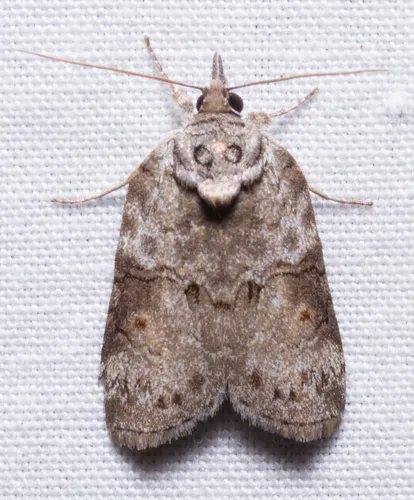
Forgotten Frigid Owlet - Hodges#8978
Nycteola metaspilella
Identification: Adult: based on Internet photos linked to below, forewing light gray with blackish wedge-shaped claviform spot being the most prominent and darkest marking; basal, AM, PM, and subterminal lines jagged or wavy, indistinct and often bro
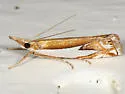
Forked Grass-veneer - Hodges#5342
Crambus bidens
Identification: Adult: forewing yellowish to brownish with very wide white stripe sometimes bisected by brown longitudinal strip; upper edge of stripe almost touches costa, and lower edge has prominent tooth about two-thirds distance from base; obliq
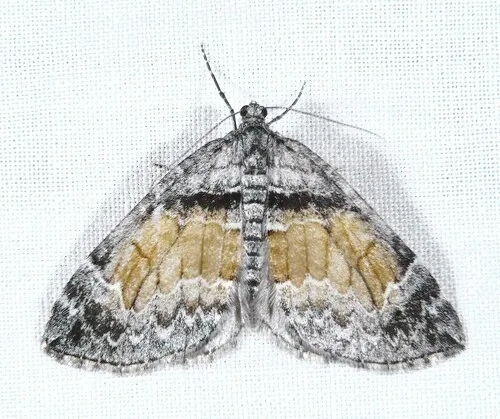
Formosa Carpet - Hodges#7191
Dysstroma formosa
Identification: Adult [gray form]: forewing pale brownish-gray with darker gray median area; basal area with fairly straight dark gray band beginning at inner margin and stopping short of the costa (the band is diffuse and does not extend to the AM l