
Formosa Carpet - Hodges#7191
Dysstroma formosa
This record describes Dysstroma formosa (species). Recorded family: Geometridae. Recorded order: Lepidoptera.
Identification and Appearance
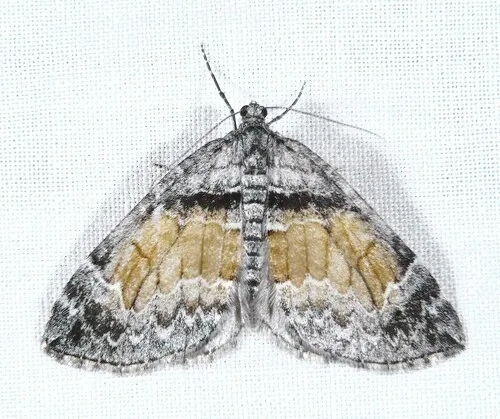
Adult [gray form]: forewing pale brownish-gray with darker gray median area; basal area with fairly straight dark gray band beginning at inner margin and stopping short of the costa (the band is diffuse and does not extend to the AM line); AM and PM lines jagged, irregular; short black streak in median area is slightly closer to PM line than AM line; ST line broken in middle and consisting of a series of arcs filled with gray or brown; short black diagonal streak at apex Adult [orange form]: as above, except median area mostly brownish-orange, dark gray band in basal area edged with orange distally, and PM line with deep V-shaped cleft near costa There is also an intermediate form with a gray median area but brownish basal and subterminal areas hindwing of all forms uniformly-colored but varying from pale yellowish-gray to almost white Larva: light green with whitish tint and white subdorsal longitudinal lines
Classification
- Kingdom
- Animalia
- Phylum
- Arthropoda
- Class
- Insecta
- Order
- Lepidoptera (Butterflies and Moths)
- Superfamily
- Geometroidea
- Family
- Geometridae (Geometrid Moths)
- Subfamily
- Larentiinae
- Tribe
- Hydriomenini
- Genus
- Dysstroma
Imported taxonomy record. Source availability varies; see the source references and editorial policy below.
Habitat and Range
Geographic Range
In Canada, reported from Newfoundland and New Brunswick in the east, and Saskatchwan to BC and Yukon in the west. Presumably occurs in adjacent areas of United States, including Alaska [records were found on the web from New York, Utah, and California]. - Note: There is no BOLD data from eastern NA and Chris Schmidt reports that this strictly a western species - Steve Nanz, 7/24/2020. The similar D. hersiliata occurs coast to coast in southern Canada and presumably northern United States.
Seasonal Activity
adults fly in midsummer larvae in June and July
Diet and Behavior
Diet: larvae feed on leaves of currant and gooseberry ( Ribes spp.)
Additional species information
Species notes from the sources
Etymology: formosus (L). 'graceful, beautiful'
About Butterflies and Moths: the wider group
Order-level background for Lepidoptera, the group containing Dysstroma formosa. Species-specific details appear above.
Group overview
Lepidoptera includes approximately 180,000 described species of butterflies and moths. Moths outnumber butterflies roughly 10:1. The monarch butterfly's eastern population has declined by more than 80% since the mid-1990s, and the western population by over 95% since the 1980s. The IUCN lists the migratory monarch as Vulnerable.
Ecological role of the group
Butterflies and moths are essential indicators of ecosystem health. As caterpillars, they are a primary food source for birds - a single nest of blue tit chicks requires ~10,000 caterpillars. Adult moths pollinate many night-blooming plants.
Economic and practical significance of the group
Lepidoptera are critical pollinators. In Europe, grassland butterfly species have declined by almost 50% since the early 1990s. In the UK, three-quarters of butterflies are in decline. In the U.S., five butterfly species have gone extinct since 1950, with 29 listed as endangered.
Recorded sources for this group: IUCN Red List, Xerces Society, USFWS, PNAS, WWF. Imported estimates may describe particular regions or reporting periods.
Photos of Formosa Carpet - Hodges#7191 (2)
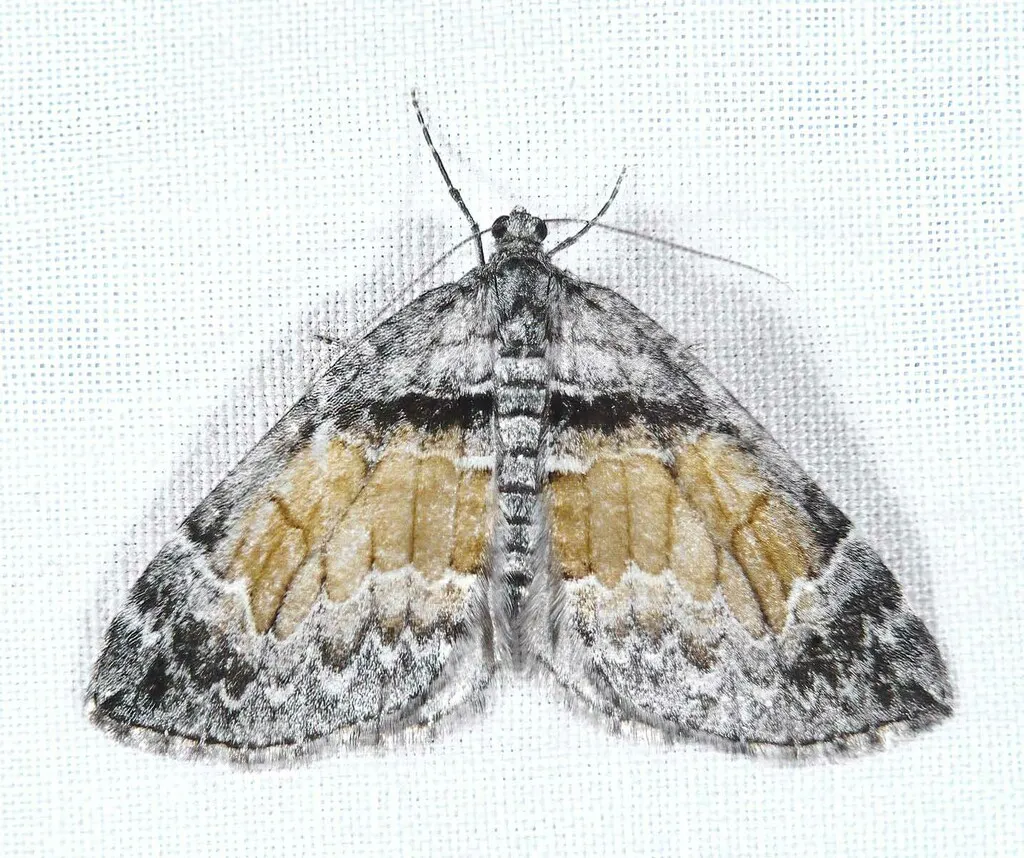
Photo credits: Contributed by Robin McLeod; Additional contributions by Steve Nanz , anitagould , Mike Quinn , Maury Heiman , Vox Sciurorum , marcie oconnor
Frequently Asked Questions About Formosa Carpet - Hodges#7191
What is Formosa Carpet - Hodges#7191?
Formosa Carpet - Hodges#7191 (Dysstroma formosa) is a species in the family Geometridae, within the order Lepidoptera.
How big is Formosa Carpet - Hodges#7191?
Forewing length 15-16 mm.
How do you identify Formosa Carpet - Hodges#7191?
Adult [gray form]: forewing pale brownish-gray with darker gray median area; basal area with fairly straight dark gray band beginning at inner margin and stopping short of the costa (the band is diffuse and does not extend to the AM line); AM and PM lines jagged, irregular; short black streak in median area is slightly closer to PM line than AM line; ST line broken in middle and consisting of a series of arcs filled with gray or brown; short black diagonal streak at apex Adult [orange form]: as above, except median area mostly brownish-orange, dark gray band in basal area edged with orange distally, and PM line with deep V-shaped cleft near costa There is also an intermediate form with a gray median area but brownish basal and subterminal areas hindwing of all forms uniformly-colored but varying from pale yellowish-gray to almost white Larva: light green with whitish tint and white subdorsal longitudinal lines
Where is Formosa Carpet - Hodges#7191 found?
Range: In Canada, reported from Newfoundland and New Brunswick in the east, and Saskatchwan to BC and Yukon in the west. Presumably occurs in adjacent areas of United States, including Alaska [records were found on the web from New York, Utah, and California]. - Note: There is no BOLD data from eastern NA and Chris Schmidt reports that this strictly a western species - Steve Nanz, 7/24/2020. The similar D. hersiliata occurs coast to coast in southern Canada and presumably northern United States.
What does Formosa Carpet - Hodges#7191 eat?
The diet of the Formosa Carpet - Hodges#7191 includes larvae feed on leaves of currant and gooseberry ( Ribes spp.).
When is Formosa Carpet - Hodges#7191 active?
Formosa Carpet - Hodges#7191: seasonal activity - adults fly in midsummer larvae in June and July.