
Fascista bimaculella - Hodges#2203
Fascista bimaculella
This record describes Fascista bimaculella (species). Recorded family: Gelechiidae. Recorded order: Lepidoptera.
Identification and Appearance
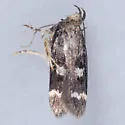
Dr. Mark A. Metz pointed out a long standing confusion with the similarly named Filatima biminimaculella , a fairly plain brown moth which looks nothing like Fascista bimaculella . (See syntype of biminimaculella now posted on the species page on MPG.) The comments below would appear to have resulted from this confusion but are retained struck through pending confirmation from the editor who authored those comments: Possibly mistaken for Filatima biminimaculella (of which see BugGuide photo 364610 for a good example), from which it can be differentiated via the following particulars: in Fascista bimaculella , Ground color of forewing uniformly dark gray (versus darker on either side of the central white spot in Filatima biminimaculella ); White patch near base of forewing absent (versus present); Dorsum of prothorax dark gray (versus contrastingly ochreous); Head dark gray (versus white or whitish). A basal white patch on the forewing is not mentioned in the original description of Fascista bimaculella but it apparently is for its synonyms sylvaecolella and ternariella . Identifications on BugGuide and MPG should be considered tentative. There are some other gelechiids in other genera (e.g., Chionodes) with similar markings, but they would probably need dissected to determine species. - Dr. Mark A. Metz (pers. comm., 5/13/2022).
Classification
- Kingdom
- Animalia
- Phylum
- Arthropoda
- Class
- Insecta
- Order
- Lepidoptera (Butterflies and Moths)
- Superfamily
- Gelechioidea
- Family
- Gelechiidae (Twirler Moths)
- Subfamily
- Gelechiinae
- Tribe
- Gelechiini
- Genus
- Fascista
Imported taxonomy record. Source availability varies; see the source references and editorial policy below.
Habitat and Range
Habitat
Sometimes common in light-trap samples from tallgrass prairie, but also collected at light in other plant communities. Based on its morphological structure, it does appear to be closely related to the redbud leaffolder, Fascista cercerisella , which is a tree feeder. Being a gelechiid, F. bimaculella probably is hostplant specific. Rearing is needed, to assess its biotic affinities. Who among us will be the first to figure out and make known its life history?
Geographic Range
Midwestern USA; common in Illinois and Kentucky; also recorded from Colorado. Type locality ( bimaculella ): Kentucky. Type locality ( sylvaecolella ): Kentucky. Type locality ( ternariella ): Texas.
Seasonal Activity
Records of adults collected at light indicate general summer occurrence.
Diet and Behavior
Diet: Unknown.
About Butterflies and Moths: the wider group
Order-level background for Lepidoptera, the group containing Fascista bimaculella. Species-specific details appear above.
Group overview
Lepidoptera includes approximately 180,000 described species of butterflies and moths. Moths outnumber butterflies roughly 10:1. The monarch butterfly's eastern population has declined by more than 80% since the mid-1990s, and the western population by over 95% since the 1980s. The IUCN lists the migratory monarch as Vulnerable.
Ecological role of the group
Butterflies and moths are essential indicators of ecosystem health. As caterpillars, they are a primary food source for birds - a single nest of blue tit chicks requires ~10,000 caterpillars. Adult moths pollinate many night-blooming plants.
Economic and practical significance of the group
Lepidoptera are critical pollinators. In Europe, grassland butterfly species have declined by almost 50% since the early 1990s. In the UK, three-quarters of butterflies are in decline. In the U.S., five butterfly species have gone extinct since 1950, with 29 listed as endangered.
Recorded sources for this group: IUCN Red List, Xerces Society, USFWS, PNAS, WWF. Imported estimates may describe particular regions or reporting periods.
Photos of Fascista bimaculella - Hodges#2203 (5)
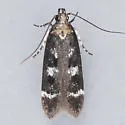
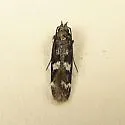
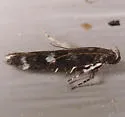
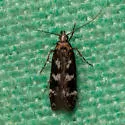
Photo credits: Contributed by Terry Harrison; Additional contributions by Steve Nanz
Frequently Asked Questions About Fascista bimaculella - Hodges#2203
What is Fascista bimaculella - Hodges#2203?
Fascista bimaculella - Hodges#2203 (Fascista bimaculella) is a species in the family Gelechiidae, within the order Lepidoptera.
How do you identify Fascista bimaculella - Hodges#2203?
Dr. Mark A. Metz pointed out a long standing confusion with the similarly named Filatima biminimaculella , a fairly plain brown moth which looks nothing like Fascista bimaculella . (See syntype of biminimaculella now posted on the species page on MPG.) The comments below would appear to have resulted from this confusion but are retained struck through pending confirmation from the editor who authored those comments: Possibly mistaken for Filatima biminimaculella (of which see BugGuide photo 364610 for a good example), from which it can be differentiated via the following particulars: in Fascista bimaculella , Ground color of forewing uniformly dark gray (versus darker on either side of the central white spot in Filatima biminimaculella ); White patch near base of forewing absent (versus present); Dorsum of prothorax dark gray (versus contrastingly ochreous); Head dark gray (versus white or whitish). A basal white patch on the forewing is not mentioned in the original description of Fascista bimaculella but it apparently is for its synonyms sylvaecolella and ternariella . Identifications on BugGuide and MPG should be considered tentative. There are some other gelechiids in other genera (e.g., Chionodes) with similar markings, but they would probably need dissected to determine species. - Dr. Mark A. Metz (pers. comm., 5/13/2022).
Where is Fascista bimaculella - Hodges#2203 found?
| Feature | Details |
|---|---|
| Habitat | Sometimes common in light-trap samples from tallgrass prairie, but also collected at light in other plant communities. Based on its morphological structure, it does appear to be closely related to the redbud leaffolder, Fascista cercerisella , which is a tree feeder. Being a gelechiid, F. bimaculella probably is hostplant specific. Rearing is needed, to assess its biotic affinities. Who among us will be the first to figure out and make known its life history? |
| Range | Midwestern USA; common in Illinois and Kentucky; also recorded from Colorado. Type locality ( bimaculella ): Kentucky. Type locality ( sylvaecolella ): Kentucky. Type locality ( ternariella ): Texas. |
What does Fascista bimaculella - Hodges#2203 eat?
The diet of the Fascista bimaculella - Hodges#2203 includes Unknown..
When is Fascista bimaculella - Hodges#2203 active?
Fascista bimaculella - Hodges#2203: seasonal activity - Records of adults collected at light indicate general summer occurrence..