
Butterflies and Moths
Order Lepidoptera
The Butterflies and Moths (Order Lepidoptera) includes 11,813 species across 112 families and 2,787 genera in our directory.
About Butterflies and Moths
Lepidoptera includes approximately 180,000 described species of butterflies and moths. Moths outnumber butterflies roughly 10:1. The monarch butterfly's eastern population has declined by more than 80% since the mid-1990s, and the western population by over 95% since the 1980s. The IUCN lists the migratory monarch as Vulnerable.
Economic Impact
Lepidoptera are critical pollinators. In Europe, grassland butterfly species have declined by almost 50% since the early 1990s. In the UK, three-quarters of butterflies are in decline. In the U.S., five butterfly species have gone extinct since 1950, with 29 listed as endangered.
Ecological Role
Butterflies and moths are essential indicators of ecosystem health. As caterpillars, they are a primary food source for birds - a single nest of blue tit chicks requires ~10,000 caterpillars. Adult moths pollinate many night-blooming plants.
Families in Lepidoptera (112)
Species in Lepidoptera (11,813)
Eupithecia rindgei - Hodges#7572
Eupithecia rindgei
Identification: Eupithecia rindgei is smaller and less boldly marked than Eupithecia johnstoni .
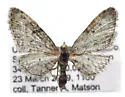
Eupithecia segregata - Hodges#7557
Eupithecia segregata
Identification: Adult maculation is quite variable. Genitalia: ♀ ♂
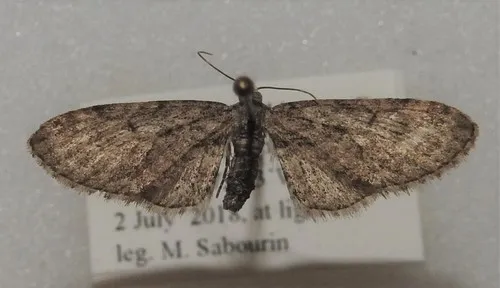
Eupithecia sheppardata - Hodges#7494
Eupithecia sheppardata
Identification: Both male and female genitalia very distinctive; nothing similar in Canada.
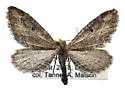
Eupithecia shirleyata - Hodges#7588
Eupithecia shirleyata
Identification: "In spite of the differences noted in the original description as distinguishing the species from subapicata , the only superficial one that seems to hold is the smaller size. There are tendencies towards a duller wing coloration, esp
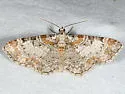
Eupithecia spermaphaga - Hodges#7578
Eupithecia spermaphaga
Identification: Specimens identified by DNA analysis: Genitalia:
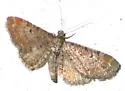
Eupithecia strattonata - Hodges#7523
Eupithecia strattonata
Identification: Adult: forewing dull rusty or reddish-brown beyond PM line and in basal area; median area less so, slightly more grayish; discal spot black, distinct; PM line composed of short dark streaks along veins; subterminal line toothed, faint
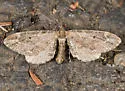
Eupithecia subapicata - Hodges#7587
Eupithecia subapicata
Eupithecia subapicata - Hodges#7587 (Eupithecia subapicata) is a species in the family Geometridae, commonly known as geometrid moths, belonging to the order Lepidoptera (Butterflies and Moths). It is classified within the subfamily Larentiinae, trib
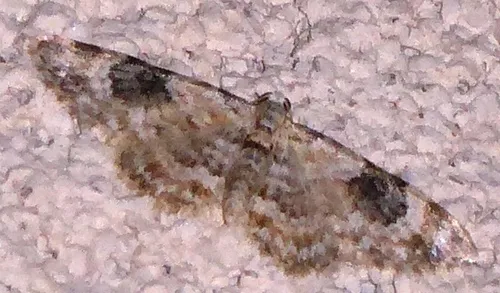
Eupithecia tenuata - Hodges#7559
Eupithecia tenuata
Identification: Hulst original description is available online in the print references. Revised description in PDF.
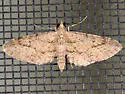
Eupithecia unicolor - Hodges#7472
Eupithecia unicolor
Identification: McDunnough revised description in PDF. Genitalia: ♀ ♂
Eupithecia woodgatata - Hodges#7563
Eupithecia woodgatata
Identification: very similar in maculation to Prorella albida but slightly larger and discal spot scales a darker shade of ochreous color of the bands; whereas discal spot scales in P. albida are dark brown; also maculation in P. albida also appears
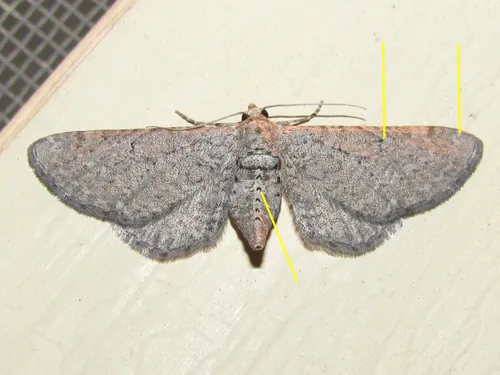
Eupithecia zygadeniata - Hodges#7532
Eupithecia zygadeniata
Identification: Adult - very similar to E. indistincta with longer and more pointed primaries, grayer ground color, smaller discal dot, and numerous, indistinct, oblique cross lines. The increasingly large set of images from Texas on iNaturalist show
Euplexia triplaga - Hodges#9544
Euplexia triplaga
Identification: Distinctive light colored subapical patch.
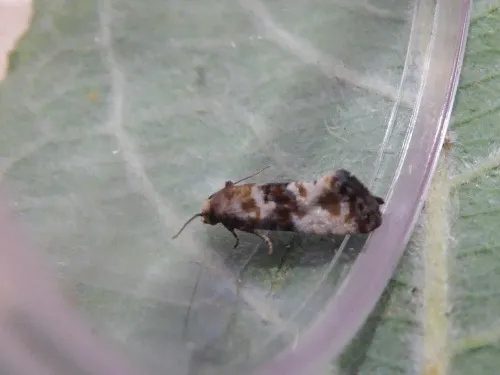
Eupoecilia angustana
Eupoecilia angustana
Wingspan 10 to 15 mm. A small, brightly-coloured species, comprising two forms, with a third in Shetland considered a subspecies. The nominate form angustana occurs in woodland edges, meadows and similar locations, and feeds on a variety of plants in
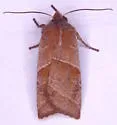
Eupsilia fringata - Hodges#9938
Eupsilia fringata
Identification: Specimen identified by DNA analysis (BOLD).
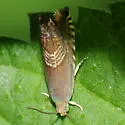
Eurasian Hemp Moth - Hodges#3443.1
Grapholita delineana
Identification: Adult : FW dark brown with two pair of white dorsal strigulae on each forewing. HW are dark brown. Wing pattern is similar to other Grapholita, especially Grapholita tristrigana in eastern North America. The dorsal strigulae in G. del
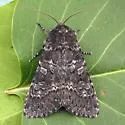
Eurois nigra - Hodges#10931
Eurois nigra
Identification: The very brief Smith (1892) original description is available in the print references.
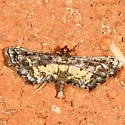
Eurrhyparodes lygdamis - Hodges#5122
Eurrhyparodes lygdamis
Originally described from Mexico; "Obispo", Panama (presumably Bas Obispo, an historical name for a location in the Canal Zone); and the states of Amazonas and Ceará in Brazil.
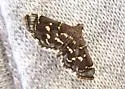
Eurrhyparodes splendens - Hodges#5122.1
Eurrhyparodes splendens
Identification: Druce (1895) original description is available online in the print references.
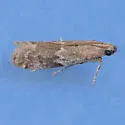
Eurythmia angulella - Hodges#6032
Eurythmia angulella
Identification: Ely original description is available online in the print references. Heinrich description is in PDF. Specimen identified by DNA analysis (BOLD). MONA Fascicle 15-3 raises the question of separate species status for angulella , furnel
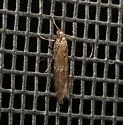
Eurythmia hospitella - Hodges#6031
Eurythmia hospitella
Identification: Heinrich description of the adult, including genitalia, is available online in PDF. Specimen determined by Terry Harrison. MONA Fascicle 15-3 raises the question of separate species status for angulella , furnella and hospitella .
Eurythmia spaldingella - Hodges#6031.1
Eurythmia spaldingella
Identification: Description available in MONA Fascicle 15-3 at link in citations below.
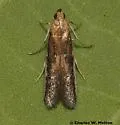
Eurythmidia ignidorsella - Hodges#5927
Eurythmidia ignidorsella
Previously misidentified online as Honora montinatatella . Eastern images here may be a different species, but I'm leaving them here for now until I have more information.
Eusarca detractaria - Hodges#6931
Eusarca detractaria
Identification: Barnes & McDunnough original description is available online from print references below.
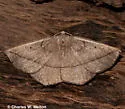
Eusarca venosaria - Hodges#6937
Eusarca venosaria
Identification: Specimen identified by DNA analysis:
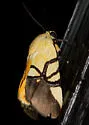
Eusceptis flavifrimbriata - Hodges#9166
Eusceptis flavifrimbriata
1 male paratype, Brownsville, Texas, May 26, 1956, P. A. Glick
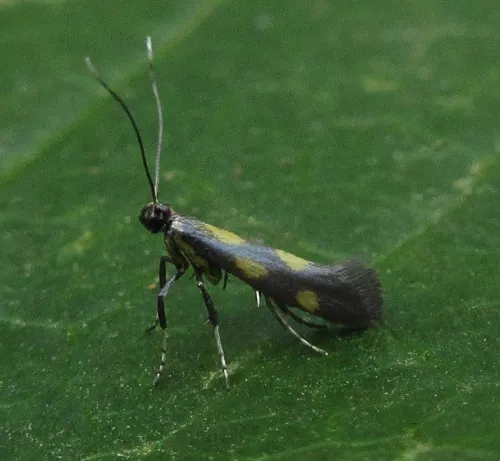
Euspilapteryx auroguttella
Euspilapteryx auroguttella
Wingspan 9 to 10 mm. The attractive adult has orange or yellow markings against a metallic grey ground colour, and white tips to the dark antennae. The larva mines the leaves of Hypericum species, often St John's Wort, initially in a lower surface ga
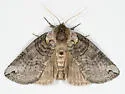
Euthyatira semicircularis - Hodges#6241
Euthyatira semicircularis
Identification: Adult: forewing silvery gray in male, dark gray in female; 3 or 4 arc-shaped black lines cross wing in basal area, but are often faint or indistinct; semicircular whitish or pale yellow patch at base, bordered by black; pale gray apic
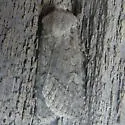
Euxoa aequalis - Hodges#10776
Euxoa aequalis
Identification: Descriptions of four subspecies can be found in MONA Fascicle 27-2 at link in citations below. Genitalia:
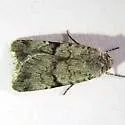
Euxoa annulipes - Hodges#10747
Euxoa annulipes
Identification: Forewing pale gray with powdery look due to dusting of black and white; AM and PM lines range from obscure to prominent; median line is dark gray and prominent; dark shading typically on each side of ST line; reniform and orbicular sp
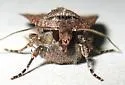
Euxoa atomaris - Hodges#10726
Euxoa atomaris
Identification: Smith original description as Agrotis atomaris in PDF. Essig described the larva "The caterpillars are light gray in color, smooth, and, when full grown, measure about 1 1/2 inches in length." Specimen determined by DNA analysis (BOLD
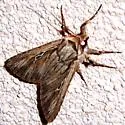
Euxoa atristrigata - Hodges#10768
Euxoa atristrigata
Identification: Description can be found in MONA Fascicle 27-2 at link in citations below.
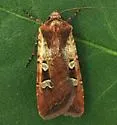
Euxoa basalis - Hodges#10798
Euxoa basalis
Identification: Forewing is red with a white basal patch instead of the white costal margin as seen in Euxoa costata. See Northern Prairie Wildlife Research Center .
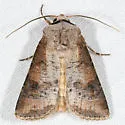
Euxoa bochus - Hodges#10913
Euxoa bochus
Identification: The wings often look like they are not quite in focus due to the overall diffuse gray to brownish to reddish-brown color with dark speckling on the forewings and with heavier amounts along the costa and between the reniform and orbicu
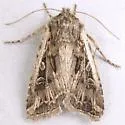
Euxoa brevipennis - Hodges#10824
Euxoa brevipennis
Identification: Original description online as Agrotis brevipennis Smith: The subterminal line has two teeth extending below the reniform spot and they appear as a jagged extension of the pale area. Sexually-dimorphic: The males have a pale area alon
Euxoa castanea - Hodges#10825.1
Euxoa castanea
Identification: Described as similar to Euxoa costata but with chestnut brown forewings as opposed to orange-red; forewings dusted with black scales; cubital vein pale lined.
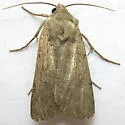
Euxoa choris - Hodges#10819
Euxoa choris
Identification: forewing has black basal dash and single postmedial line
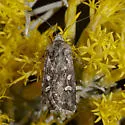
Euxoa cinereopallidus - Hodges#10770
Euxoa cinereopallidus
Identification: Smith (1903) original description in the print references. Photo determined by Lars Crabo.
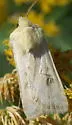
Euxoa citricolor - Hodges#10841
Euxoa citricolor
Identification: The yellow forewing with gray terminal area is distinctive.
Euxoa conjuncta - Hodges#10778
Euxoa conjuncta
Identification: Description can be found in MONA Fascicle 27-2 at link in citations below. very uncommon in collections
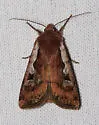
Euxoa costata - Hodges#10825
Euxoa costata
Identification: Forewing reddish-brown with contrasting silver-gray costa, reniform spot and orbicular spot; cubital vein not pale.
Euxoa dissona - Hodges#10706
Euxoa dissona
Identification: Specimen determined by DNA analysis (BOLD).
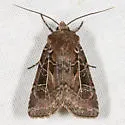
Euxoa divergens - Hodges#10702
Euxoa divergens
Identification: The combination of dark or gray-brown forewing color, black basal dash, and a pale cubital vein helps separate this species from most other Euxoa species.
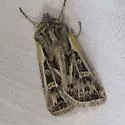
Euxoa flavidens - Hodges#10758
Euxoa flavidens
Identification: The original description as Agrotis flavidens Smith, is available at the link in the print references below. -
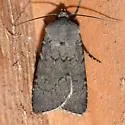
Euxoa fumalis - Hodges#10781
Euxoa fumalis
Identification: Detailed description is available in MONA Fascicle 27-2 which is available as a free PDF download at the link below in citations. From the key to species in the fascicle - Forewing an even brown color with all markings obscure except
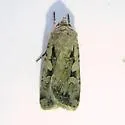
Euxoa furtivus - Hodges#10826.1
Euxoa furtivus
Identification: Determination confirmed by Chuck Harp.
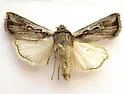
Euxoa hollemani - Hodges#10820
Euxoa hollemani
Identification: The original description as Agrotis hollemani is available in the print references. Orbicular and reniform are fused together to form a hour glass shape. ( 3 ) Specimen identified by DNA analysis (BOLD). ( 4 ) Genitalia:
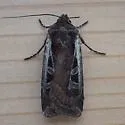
Euxoa idahoensis - Hodges#10826
Euxoa idahoensis
Euxoa idahoensis - Hodges#10826 (Euxoa idahoensis) is a species in the family Noctuidae, commonly known as owlet moths, belonging to the order Lepidoptera (Butterflies and Moths). It is classified within the subfamily Noctuinae, tribe Noctuini, super
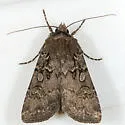
Euxoa infausta - Hodges#10785
Euxoa infausta
Identification: The form that is most widespread and occurs in the drier more open habitats has a more even buffy to pale grayish brown background color of the forewing. In more forested habitats in Alberta, British Columbia, and western Washington a
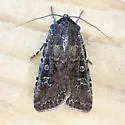
Euxoa intermontana - Hodges#10737
Euxoa intermontana
Identification: Forewing black or dark brown with maroon suffusion Genitalia:
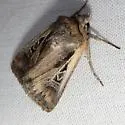
Euxoa laetificans - Hodges#10829
Euxoa laetificans
Identification: Smith (1894) original description as Carneades laetificans is in the print references. Determined by Chuck Harp, Denver Museum of Nature & Science.
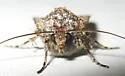
Euxoa latro - Hodges#10848
Euxoa latro
Identification: Specimen determined by DNA analysis (BOLD). ( 3 ) Genitalia:
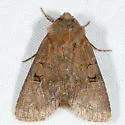
Euxoa lewisi - Hodges#10718
Euxoa lewisi
Identification: Forewing color varies from light gray to dark red-brown with a small dark patch between the reniform and orbicular spots. There is usually an incomplete buffy line inside the black of the reniform and orbicul spots. The transverse lin
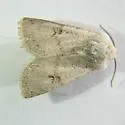
Euxoa lineifrons - Hodges#10784
Euxoa lineifrons
Identification: Smith (1890) original description is available online in the print references.
Euxoa lucida - Hodges#10782
Euxoa lucida
Identification: Description can be found in MONA Fascicle 27-2 at link in citations below.
Euxoa maimes - Hodges#10864.1
Euxoa maimes
Identification: Description can be found in MONA Fascicle 27-2 at link in citations below.
Euxoa manitobana - Hodges#10863
Euxoa manitobana
Identification: Description can be found in MONA Fascicle 27-2 at link in citations below.
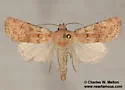
Euxoa misturata - Hodges#10766
Euxoa misturata
Identification: Extremely variable; forewing color may be white, gray, orange or brown (varying to certain extent upon geographic location); white hindwing. Forewing variable in darkness from powdery cream, tan, gray-brown to dark gray; some specimen
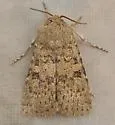
Euxoa mitis - Hodges#10774
Euxoa mitis
Identification: detailed description can be found in MONA Fascicle 27-2 at link in citations below.
Euxoa mojave - Hodges#10794.2
Euxoa mojave
Identification: Description can be found in MONA Fascicle 27-2 at link in citations below.
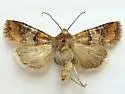
Euxoa murdocki - Hodges#10846
Euxoa murdocki
Identification: Revised description by Lafontaine in PDF. The original description as Agrotis murdocki Smith, and the revised description by Hampson are both available in the print references below. The orange basal and subterminal areas of the forew
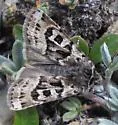
Euxoa nomas - Hodges#10866
Euxoa nomas
Euxoa (Orosagrotis) nomas incognita (Smith) is the North American subspecies. The nominate occurs in mountains from Iran to Turkmenistan.
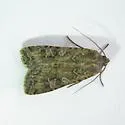
Euxoa nostra - Hodges#10800
Euxoa nostra
Euxoa nostra - Hodges#10800 (Euxoa nostra) is a species in the family Noctuidae, commonly known as owlet moths, belonging to the order Lepidoptera (Butterflies and Moths). It is classified within the subfamily Noctuinae, tribe Noctuini, superfamily N
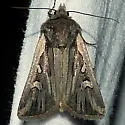
Euxoa oblongistigma - Hodges#10834
Euxoa oblongistigma
Identification: Forewing - pale, evenly colored costa, reniform spot and orbicular spot orbicular spot elongate, barlike PNW Moths also mentions that the thick black basal dash appears to fuse with the long claviform creating a what appears to be one
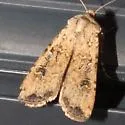
Euxoa ochrogaster - Hodges#10801
Euxoa ochrogaster
Identification: Specimens identified by DNA analysis (BOLD). Google search to find many papers concerning the pest status.
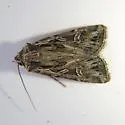
Euxoa olivalis - Hodges#10833
Euxoa olivalis
Identification: The light grey or white cubital vein will distinguish most specimens of Euxoa olivalis from E. plagigera . Dissection may be required on some specimens for positive identification.
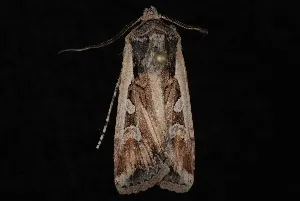
Euxoa olivia - Hodges#10741
Euxoa olivia
Identification: This species can be so variable that has been 'originally' described no less than eight times, and many times by the same author. The form that is most recognizable has the forewing streaked longitudinally with costal, subterminal and
Euxoa oncocnemoides - Hodges#10748
Euxoa oncocnemoides
Identification: Forewing is creamy white; median line dark and sharply defined; orbicular and reniform spots are white filled; orbicular spot is round in most specimens. Previously considered a subspecies of Euxoa annulipes .
Euxoa pallidimacula - Hodges#10794.1
Euxoa pallidimacula
Identification: Description can be found in MONA Fascicle 27-2 at link in citations below.
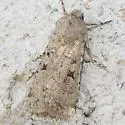
Euxoa pallipennis - Hodges#10765
Euxoa pallipennis
Identification: The original description as Agrotis pallipennis Smith, is available online in the print references below.
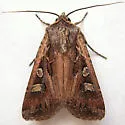
Euxoa perexcellens - Hodges#10816
Euxoa perexcellens
Identification: The forewings are streaked lengthwise, have a fairly large claviform spot, and yellow/buff shading in the reniform and orbicular spots. Forewings of males are usually more reddish brown while the females are more silver/gray. Specimen
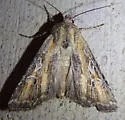
Euxoa pluralis - Hodges#10795
Euxoa pluralis
Identification: "The orange and gray forewing color and pattern of this species are diagnostic". ( 3 )
Euxoa ridingsiana - Hodges#10861
Euxoa ridingsiana
Identification: Description can be found in MONA Fascicle 27-2 at link in citations below.
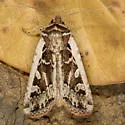
Euxoa riversii - Hodges#10868
Euxoa riversii
Identification: This species is the southern counterpart of E. wilsoni and can be distinguished from that species by its paler coloration and genital characteristics. It has similar forms to wilsoni . Essentially, most riversii specimens look like bl
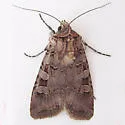
Euxoa rockburnei - Hodges#10757
Euxoa rockburnei
Identification: Specimen determined by DNA analysis (BOLD).
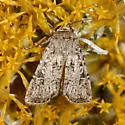
Euxoa satiens - Hodges#10792
Euxoa satiens
Identification: The elliptical orbicular spot is close to the reniform. ( 3 ) Photo identified by Lars Crabo.
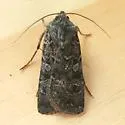
Euxoa satis - Hodges#10786
Euxoa satis
Identification: Forewing is dark brown to black, hindwing is dark brown/gray. A form with a lighter ground color occurs in Washington, Oregon, and California with paler shading adjacent to the transverse lines on the forewing and pale shading in the
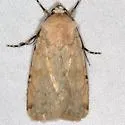
Euxoa scotogrammoides - Hodges#10746
Euxoa scotogrammoides
Identification: Description can be found in MONA Fascicle 27-2 at link in citations below. The barely traceable maculation of this species resembles a number of other Euxoa species but flies earlier.
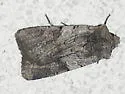
Euxoa sculptilis - Hodges#10815
Euxoa sculptilis
Identification: Adult - Forewing with the basal half grey irrorated with brown; the terminal half black-brown; a double black subbasal line from costa angled inwards; a double sinuous antemedial line, strongly angled outwards below costa and above in
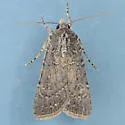
Euxoa selenis - Hodges#10790
Euxoa selenis
Euxoa selenis - Hodges#10790 (Euxoa selenis) is a species in the family Noctuidae, commonly known as owlet moths, belonging to the order Lepidoptera (Butterflies and Moths). It is classified within the subfamily Noctuinae, tribe Noctuini, superfamily
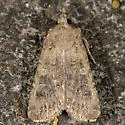
Euxoa septentrionalis - Hodges#10739
Euxoa septentrionalis
Identification: Specimens identified by DNA analysis:
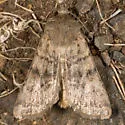
Euxoa setonia - Hodges#10794
Euxoa setonia
Identification: Description can be found in MONA Fascicle 27-2 at link in citations below. Forewing pale yellow brown or buff brown to the north; orange brown in southern Rocky Mountain region.
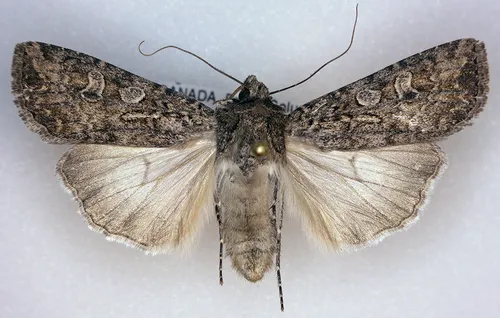
Euxoa simona - Hodges#10729
Euxoa simona
Identification: Adult: forewing grayish-brown with black double basal, AM and PM lines, usually indistinct; ground color of wing slightly paler in basal half; orbicular spot circular, with prominent pale perimeter and dark interior; reniform spot wit
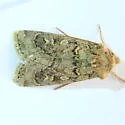
Euxoa simulata - Hodges#10754
Euxoa simulata
Identification: Pacific Northwest Moths has a detailed description. Uncommon.
Euxoa sinelinea - Hodges#10703
Euxoa sinelinea
Identification: Description can be found in MONA Fascicle 27-2 at link in citations below.
Euxoa spumata - Hodges#10763
Euxoa spumata
Identification: Description can be found in MONA Fascicle 27-2 at link in citations below.
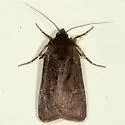
Euxoa stygialis - Hodges#10761
Euxoa stygialis
Identification: Adult - dark basal dash on the forewings. See description by Barnes & McDunnough in Print References.
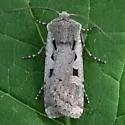
Euxoa tristicula - Hodges#10723
Euxoa tristicula
Identification: Head and body grey, with a contrasting black thoracic collar. The forewings are light grey, with the costa even paler, especially near the base. The normal lines are obsolete or nearly so, indicated by a few dark scales at best. There
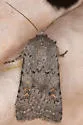
Euxoa vallus - Hodges#10709
Euxoa vallus
Identification: Description as three disjunct populations is available in MONA Fascicle 27-2 is available at link in citations below.
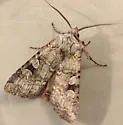
Euxoa vetusta - Hodges#10724
Euxoa vetusta
Identification: One of the easier species of Euxoa to identify. The whitish to grayish forwings with the large discal spots help separate it from most other species. The space between the orbicular and reniform spots is usually shaded from gray to bl
Euxoa westermanni - Hodges#10707
Euxoa westermanni
Identification: Specimen determined by DNA analysis (BOLD).
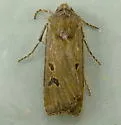
Euxoa wilsoni - Hodges#10867
Euxoa wilsoni
Identification: This group is best determined by genitalia. Specimens identified by DNA analysis (BOLD). ( 4 )
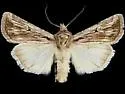
Euxoa xasta - Hodges#10821
Euxoa xasta
Identification: Pacific Northwest Moths description is linked below. Barnes & McDunnough description is online. The forewing has a narrow black basal dash.
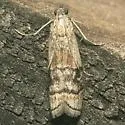
Euzophera aglaeella - Hodges#5995.1
Euzophera aglaeella
Identification: Adult - see original description in Print References. Under Euzophera semifuneralis Heinrich states " E. aglaeela represents a color form, with paler red-brown areas and more strongly contrasted blackish median dustings and markings.
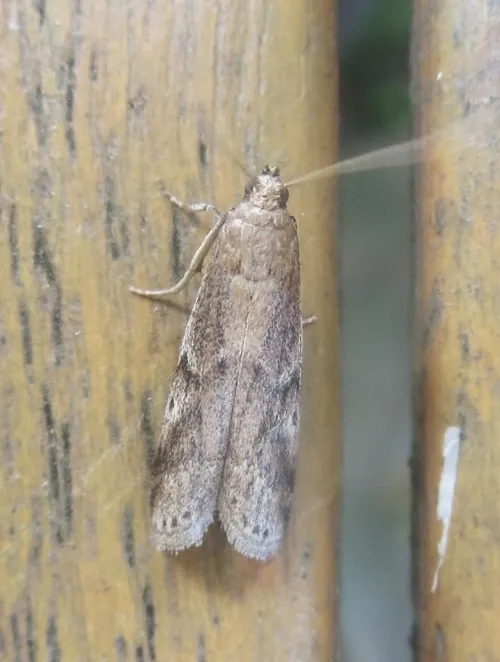
Euzophera cinerosella
Euzophera cinerosella
The moths are on the wing from May to August, and can be attracted to light. The larval foodplant is wormwood, the larvae feeding internally in the roots. A species which until fairly recently was found only scarcely in the southern half of England a
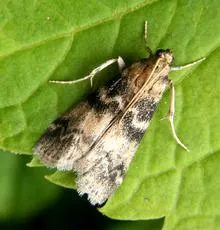
Euzophera pinguis
Euzophera pinguis
Wingspan 23-28 mm. The diagnostic zigzag lines and bands of dark and pale colour make this species easy to identify. The adults are on the wing in July and August and are attracted to light after dark. The larvae burrow into the bark of Ash trees and
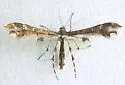
Evans' Plume Moth - Hodges#6095
Capperia evansi
Identification: See the identification key for Oxyptilini . See the identification section for Capperia . See the species accounts in Landry and McDunnough as Pterophorus evansi .
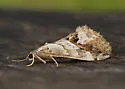
Evergestis dischematalis - Hodges#4913
Evergestis dischematalis
Identification: Description as Evergestis dimorphalis can be found in MONA Fascicle 13-1C at link in citations below.
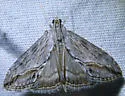
Evergestis eurekalis - Hodges#4911
Evergestis eurekalis
Identification: Description can be found in MONA Fascicle 13-1C at link in citations below. AM line obsolete or nearly so; narrow zone of light brown shading distad of middle of PM line; dark streaks only in apical and tornal areas.
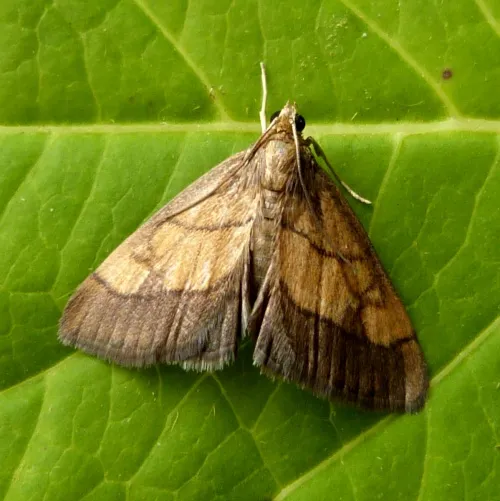
Evergestis limbata
Evergestis limbata
Wingspan 20 to 23 mm. It is unlike any other British species and quite distinctive. A rare migrant. - Abroad, the species occurs in southern Europe, where it flies in July and August. The larvae feed, like other Evergestis species, on Brassicaceae, e
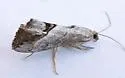
Evergestis obliqualis - Hodges#4912
Evergestis obliqualis
Identification: Large photo of pinned adult at University of California, Berkeley . - Determined by Bob Patterson.