
Fall Cankerworm - Hodges#6258
Alsophila pometaria
This record describes Alsophila pometaria (species). Recorded family: Geometridae. Recorded order: Lepidoptera.
Identification and Appearance
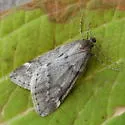
Males have an even brownish grey forewing with jagged white and dark PM and AM lines, occasionally with a visible dark discal spot. The hindwings are light grey, with a dark discal spot and a faint pale PM line (AEC): The females are wingless and stout-bodied, with the body banded dark and pale gray : Larvae have 3 pairs of abdominal prolegs : Two wasps in the Scelionidae family are parasites on these eggs: Telenomus geometriae and T. alsophilae .
Classification
- Kingdom
- Animalia
- Phylum
- Arthropoda
- Class
- Insecta
- Order
- Lepidoptera (Butterflies and Moths)
- Superfamily
- Geometroidea
- Family
- Geometridae (Geometrid Moths)
- Subfamily
- Ennominae
- Tribe
- Alsophilini
- Genus
- Alsophila
Imported taxonomy record. Source availability varies; see the source references and editorial policy below.
Habitat and Range
Habitat
Wooded areas including city parks, ornamental plantations and shelter belts. (AEC)
Seasonal Activity
Fall through early winter
Diet and Behavior
Diet: Larvae feed on a large variety of deciduous trees and shrubs, especially elm (Ulmus spp.), ash (Fraxinus spp.), and maple (Acer spp.). (AEC) Other hosts include hackberry, oak, various members of the rose family, walnut, and willow. Also Triosteum aurantiacum .
Life History
The larvae are often a serious pest of many tree species elsewhere, although it rarely reaches densities high enough to do damage in Alberta. The eggs are laid in clusters on tree branches and trunks by the wingless females and hatch the following spring, synchronized with the flush of leaves. There are four larval stages, which are described in detail by McGuffin (1988). Larvae pupate in the soil and delay their emergence until fall, spending about four summer months as a pupa. Females in at least some populations are able to reproduce parthenogenetically (without mating). (McGuffin 1988). (AEC) Adult pairs: Eggs; female with eggs; larva; pupa; adult male; adult female
About Butterflies and Moths: the wider group
Order-level background for Lepidoptera, the group containing Alsophila pometaria. Species-specific details appear above.
Group overview
Lepidoptera includes approximately 180,000 described species of butterflies and moths. Moths outnumber butterflies roughly 10:1. The monarch butterfly's eastern population has declined by more than 80% since the mid-1990s, and the western population by over 95% since the 1980s. The IUCN lists the migratory monarch as Vulnerable.
Ecological role of the group
Butterflies and moths are essential indicators of ecosystem health. As caterpillars, they are a primary food source for birds - a single nest of blue tit chicks requires ~10,000 caterpillars. Adult moths pollinate many night-blooming plants.
Economic and practical significance of the group
Lepidoptera are critical pollinators. In Europe, grassland butterfly species have declined by almost 50% since the early 1990s. In the UK, three-quarters of butterflies are in decline. In the U.S., five butterfly species have gone extinct since 1950, with 29 listed as endangered.
Recorded sources for this group: IUCN Red List, Xerces Society, USFWS, PNAS, WWF. Imported estimates may describe particular regions or reporting periods.
Photos of Fall Cankerworm - Hodges#6258 (5)
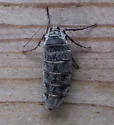
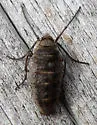
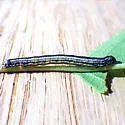
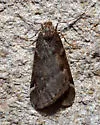
Photo credits: Contributed by Tony; Additional contributions by cotinis , Jason D. Roberts , ceiseman , marcie oconnor , Marci Hess , Fyn Kynd , Robert H. Biagi
Frequently Asked Questions About Fall Cankerworm - Hodges#6258
What is Fall Cankerworm - Hodges#6258?
Fall Cankerworm - Hodges#6258 (Alsophila pometaria) is a species in the family Geometridae, within the order Lepidoptera.
How big is Fall Cankerworm - Hodges#6258?
wingspan of males 26-32 mm ; females about 9-10 mm long (CBIF)
How do you identify Fall Cankerworm - Hodges#6258?
Males have an even brownish grey forewing with jagged white and dark PM and AM lines, occasionally with a visible dark discal spot. The hindwings are light grey, with a dark discal spot and a faint pale PM line (AEC): The females are wingless and stout-bodied, with the body banded dark and pale gray : Larvae have 3 pairs of abdominal prolegs :
Where is Fall Cankerworm - Hodges#6258 found?
Habitat: Wooded areas including city parks, ornamental plantations and shelter belts. (AEC)
What does Fall Cankerworm - Hodges#6258 eat?
The diet of the Fall Cankerworm - Hodges#6258 includes Larvae feed on a large variety of deciduous trees and shrubs, especially elm (Ulmus spp.), ash (Fraxinus spp.), and maple (Acer spp.). (AEC) Other hosts include hackberry, oak, various members of the rose family, walnut, and willow. Also Triosteum aurantiacum ..
When is Fall Cankerworm - Hodges#6258 active?
Fall Cankerworm - Hodges#6258: seasonal activity - Fall through early winter.
What is the life cycle of a Fall Cankerworm - Hodges#6258?
The larvae are often a serious pest of many tree species elsewhere, although it rarely reaches densities high enough to do damage in Alberta. The eggs are laid in clusters on tree branches and trunks by the wingless females and hatch the following spring, synchronized with the flush of leaves. There are four larval stages, which are described in detail by McGuffin (1988). Larvae pupate in the soil and delay their emergence until fall, spending about four summer months as a pupa. Females in at least some populations are able to reproduce parthenogenetically (without mating). (McGuffin 1988). (AEC) Adult pairs: Eggs; female with eggs; larva; pupa; adult male; adult female