
Flies
Order Diptera
The Flies (Order Diptera) includes 6,350 species across 141 families and 1,800 genera in our directory.
About Flies
Diptera includes over 150,000 described species of flies, mosquitoes, and midges. Mosquitoes are the deadliest animal on Earth (CDC). Malaria alone causes ~249 million cases and over 608,000 deaths annually, mostly children under 5 (WHO). Vector-borne diseases account for over 17% of all infectious diseases, causing 700,000+ deaths per year.
Economic Impact
In the U.S., vector-borne disease cases tripled between 2004-2016, with over 640,000 cases reported in that period (CDC). Tickborne diseases doubled from 22,000 to 48,000 annual reports. Globally, mosquito-borne diseases cost billions in healthcare and lost productivity.
Ecological Role
Despite their disease impact, flies are critical decomposers and pollinators. Hoverflies alone pollinate hundreds of crop and wildflower species. Flies are also the primary food source for many birds, bats, and fish. Forensic entomology relies heavily on fly species for crime scene analysis.
Families in Diptera (141)
Species in Diptera (6,350)
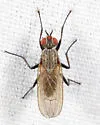
Botanophila latifrontalis
Botanophila latifrontalis
Identification: Proepisternum bare, palpi not expanded, face not narrowed, anepimeron bare, male frons width similar to female, 3 pairs of presutural acrostichal setae developed, tergites 3-5 with discal rows of setae, tibiae yellowish, hypopygium sl
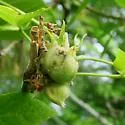
Boxelder Gall Midge
Contarinia negundinis
Causes folded or swollen leaflets or swollen leaf buds in boxelder ( Acer negundo ), in early spring when the leaves are still expanding. Larvae are white and gregarious (many in each gall). They develop very quickly, then drop to the ground and spin
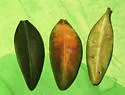
Boxwood Leafminer
Monarthropalpus flavus
Larve form 5 mm blisters on the upper sides of boxwood leaves. This is the only gall midge on boxwood in North America. The genus Buxus is not native and has no native gall makers.
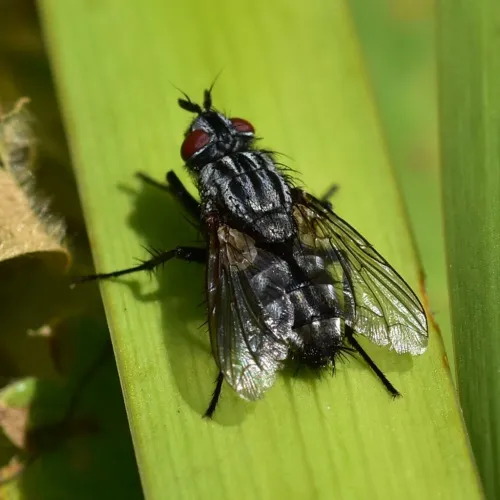
Brachicoma devia
Brachicoma devia
Sarcophagidae are very difficult to determine to species level without microscopic examination, so will need to be checked in detail unless confirmed by a recognised expert. Unless identified by a recognised expert, a photo is required and the specim
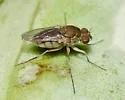
Brachydeutera longipes
Brachydeutera longipes
Identification: Lacks a sharp demarcation between the brownish dorsal area and the grayish ventral area comes to light
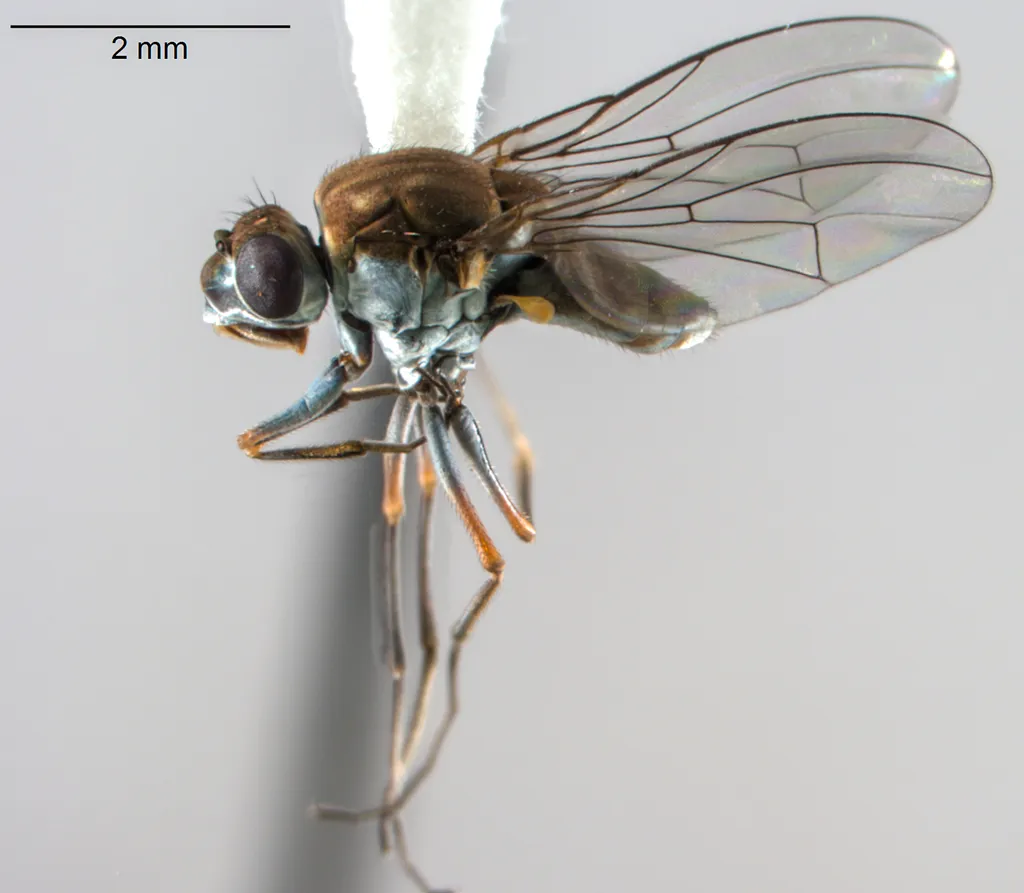
Brachydeutera sturtevanti
Brachydeutera sturtevanti
Identification: "The long, rounded facial carina, the very long third costal section, and stout, distally pointed male genital processes will readily distinguish this species from argentata and neotropica , which border its range on the east and sout
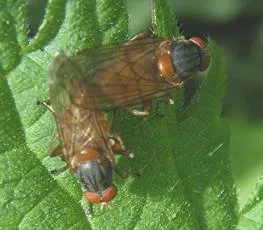
Brachyopa scutellaris
Brachyopa scutellaris
All four British Brachyopa species have an orange/brown abdomen and grey thorax (note that the thorax has no bristly hairs as some flies do). Brachyopa scutellaris and Brachyopa pilosa can be separated from the other two Brachyopa species as the scut
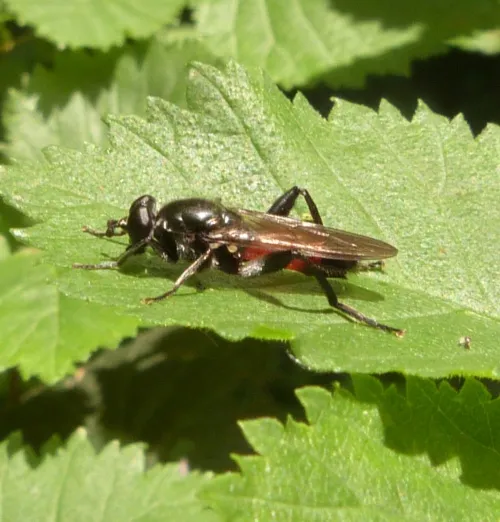
Brachypalpoides lentus
Brachypalpoides lentus
A very attractive hoverfly with a deep crimson band occupying most of the abdomen Xylota segnis is superficially similar but is somewhat smaller with a less striking orange band on the abdomen and partially pale legs. Favouring old woodland and is qu
Brachypalpus femorata
Brachypalpus femorata
Identification: Note yellowish pile on the thorax combined with black pile on the pleurae; yellowish pile rather than reddish as in B. alopex . Males always shortly holoptic. Likely a complex of several species.
Bradysia giraudii
Bradysia giraudii
From Kai Heller (11/8/2018): "Apparently this is a complex of at least three different species, which [can] be distinguished by DNA barcoding. One of them is distributed in North America and Europe, the others are currently known only from either Ger
Brillia retifinis
Brillia retifinis
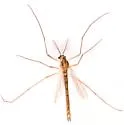
Identification: A western species with subapical lobe of gonostylus slightly shorter than or equal in length to apical lobe. The eastern Brillia parva is nearly identical. The other western species have shorter subapical lobe.
Broad Centurion
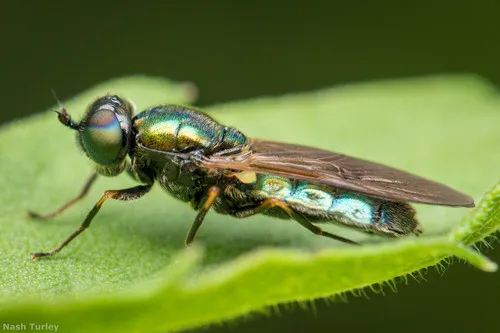
Chloromyia formosa
9 mm. This is attractive soldier fly has sexes that are very different in appearance. Both have a shiny green thorax but the female has a blue-green abdomen, sometimes with a violet sheen, and the male has a bronze abdomen. The eyes are covered in de
Brontaea humilis
Brontaea humilis
Identification: Males wholly dark, while females have a pattern of grey dusting.
Brown Heath Robberfly
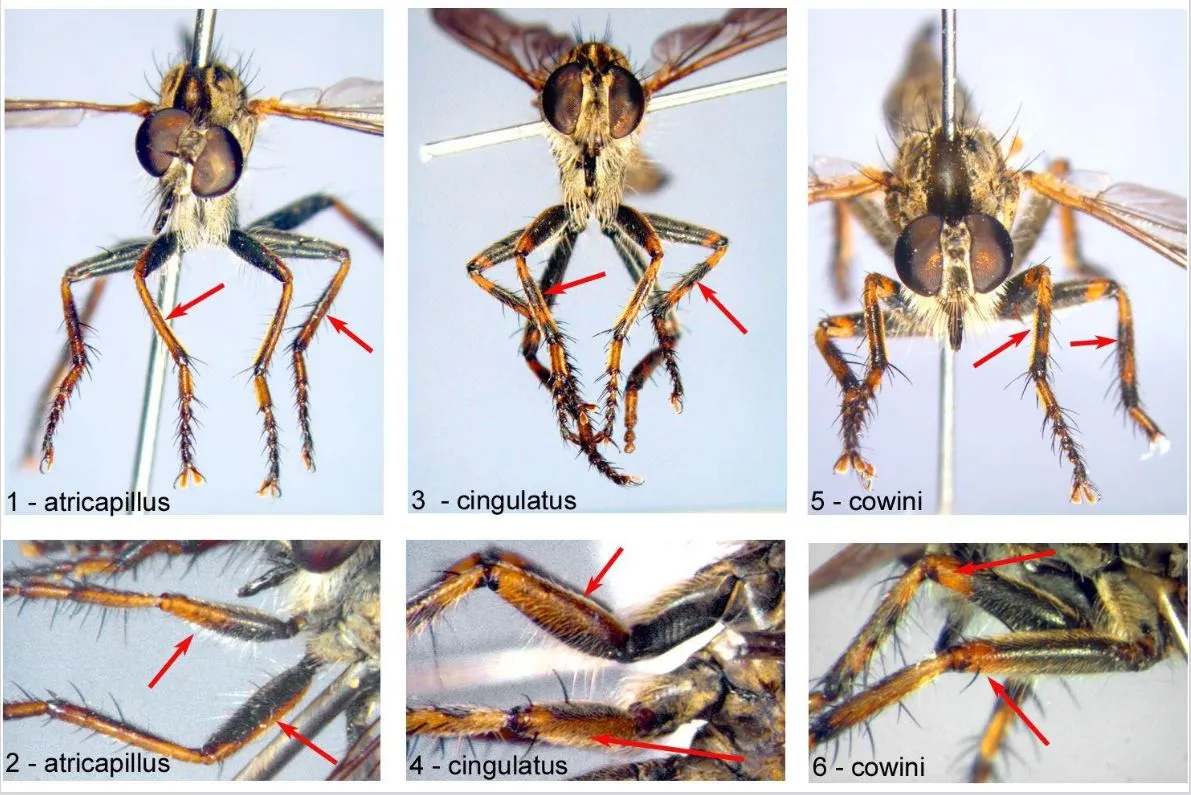
Machimus cingulatus
Size 10 to 15mm. A smallish robberfly with black and red legs. The femora are black on the anterior surface and orange of the posterior surface, with an orange ring near the tip. The top of the thorax has a thick black central line. Machimus atricapi
Brown Saltmarsh Mosquito
Ochlerotatus cantator
Identification: Adult Female: - Dark scaled proboscis - Scutum is pretty plain with golden brown scales - Usually the last two tergites of the abdomen are pale scaled - Hind tarsomeres have narrow pale basal bands Adults don't travel far from salt wa
Brown-banded Hanging Thief
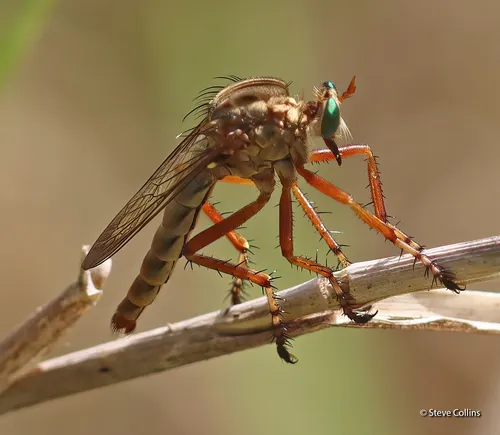
Diogmites salutans
Identification: medium-sized, brownish red; mesonotum with three dark brown stripes (the median one divided for its entire length)
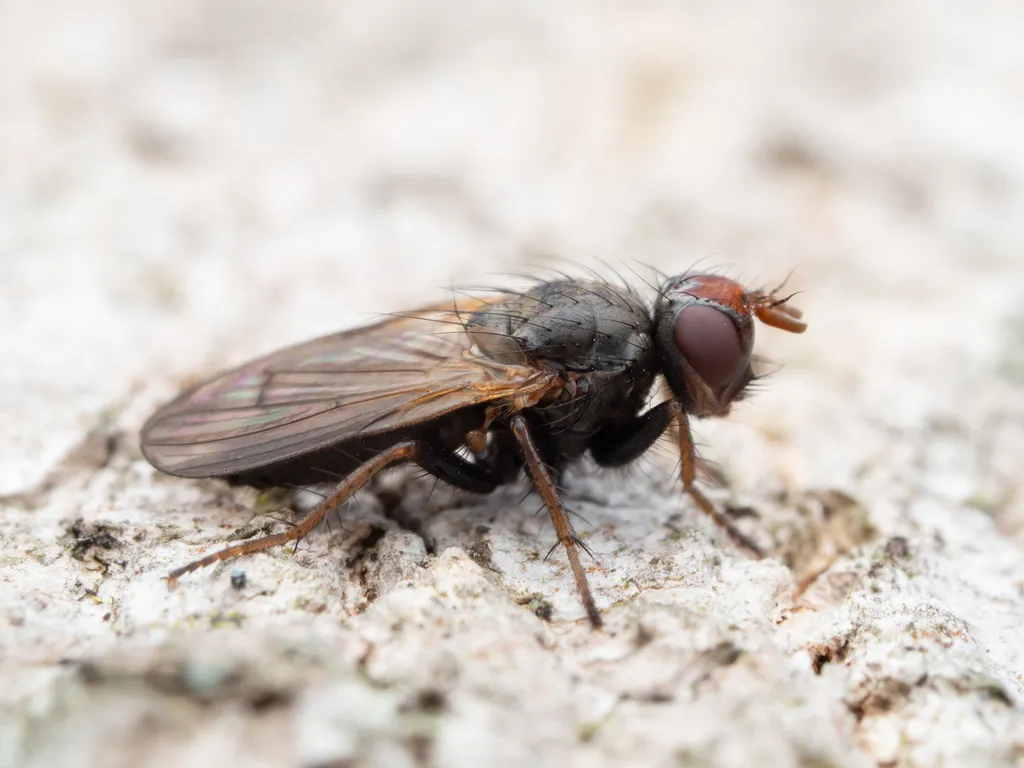
Bucephalina megacephala
Bucephalina megacephala
Identification: Dark body+femora and orange tibiae+tarsi are unique
Bucephalina setipes
Bucephalina setipes
Identification: Differs from B. megacephala by the mostly orange head, completely yellow legs, and orange markings (sometimes extensive) on the thorax.
Bumblerobber
Dasylechia atrox
Identification: From couplet 2 of Key to the Genera of the Laphriini in , p. 118: Antennae with a distinct terminal style; palpi enlarged, head thickly set with long hairs, genitalia very small, large robust hairy species, bumble bee - like in appear
Callicera erratica
Callicera erratica
Identification: pile color variable; extreme color forms used to be treated as distinct taxa ( auripila , johnsoni )
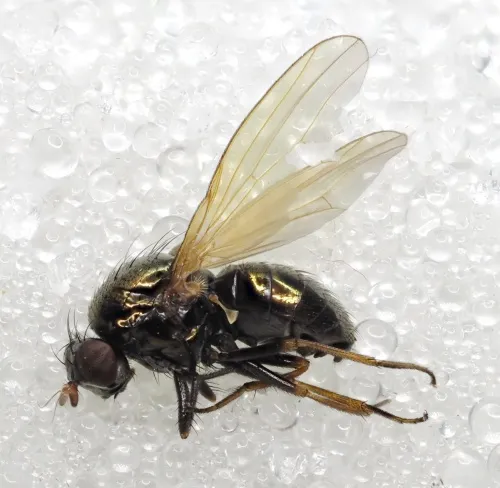
Calliopum aeneum
Calliopum aeneum
Unless identified by a recognised expert, a photo is required and the specimen should be examined with a microscope. In the comments box, state the key or ID method used and describe the size and identifying characters. Some sources suggest that the
Calliphora alaskensis
Calliphora alaskensis
Identification: Closely related to C. aldrichia, C. montana, C. loewi . Rare in collections, but locally abundant in some areas (Vancouver, southwestern Alberta, ~3,000m in northcentral Colorado) .
Calliphora latifrons
Calliphora latifrons
Identification: The male has a broad frons, about 1/4 head width, with two strong pairs of ocellar setae (one pair in males of other species of Calliphora ).
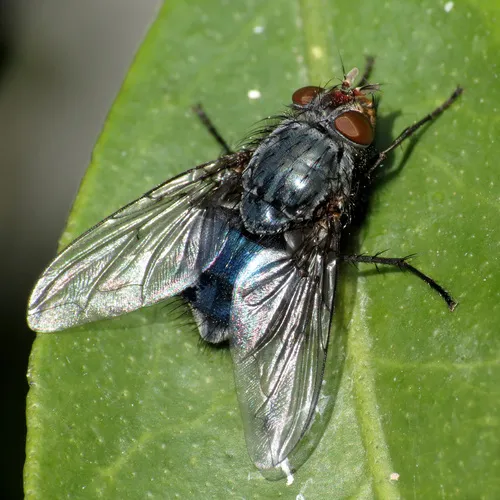
Calliphora vicina
Calliphora vicina
In Britain this is the most common bluebottle and it is often associated with humans. It is 10-14 mm. The head and thorax are dull grey and the abdomen is bright metallic blue with black markings. Its body and legs are covered with black bristle-like
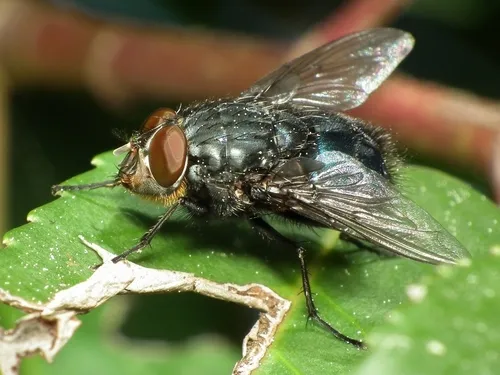
Calliphora vomitoria
Calliphora vomitoria
This large 'bluebottle' fly has a characteristic shiny blue abdomen and a dark thorax. The orange hairs on the gena and post gena, looking like a ginger beard, help to distinguish this species. Although common and widespread, this species is not usua
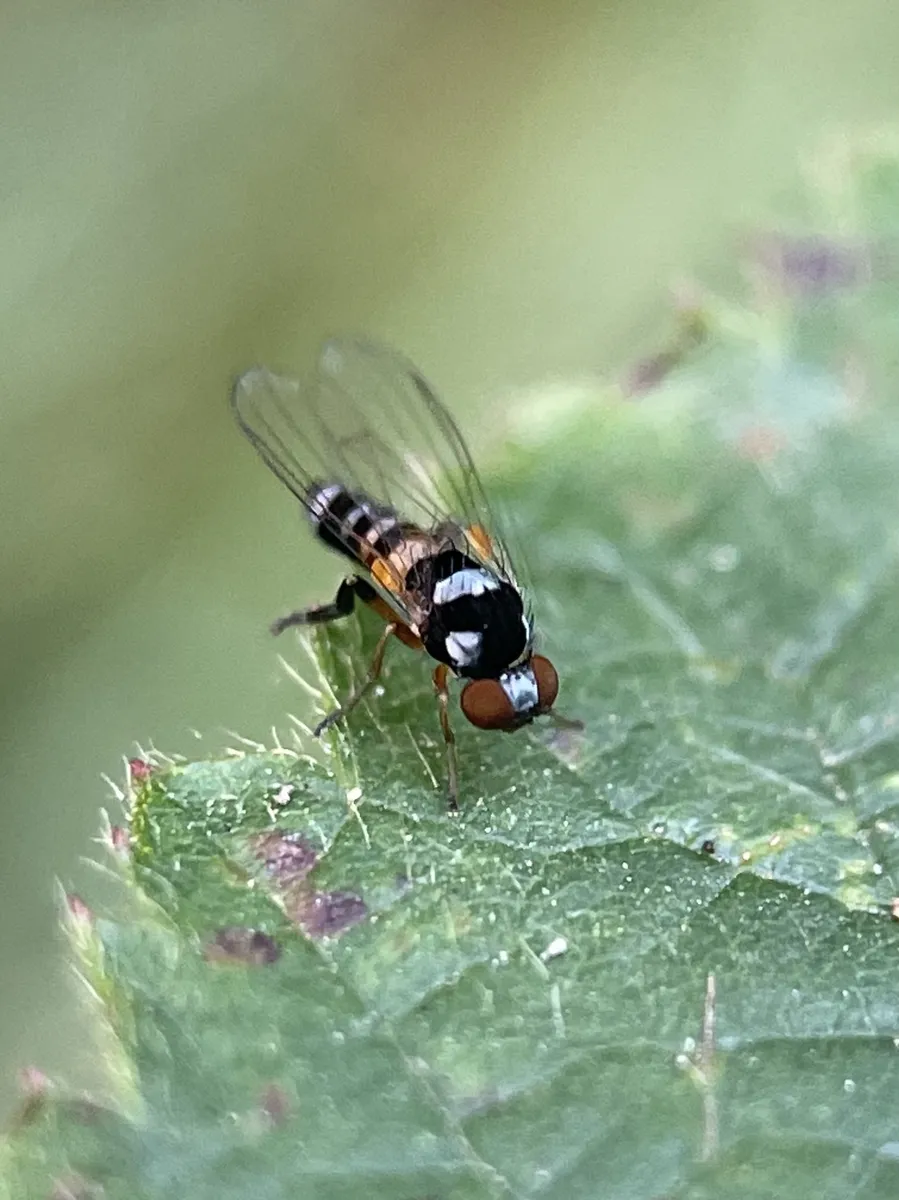
Callomyia speciosa
Callomyia speciosa
The long thin abdomen is somewhat variable but consists of amber and black with silvery white bands. The thorax is also usually black with silvery markings. Various habitats, especially woodland and around decaying wood. The flat bodied larvae are fu
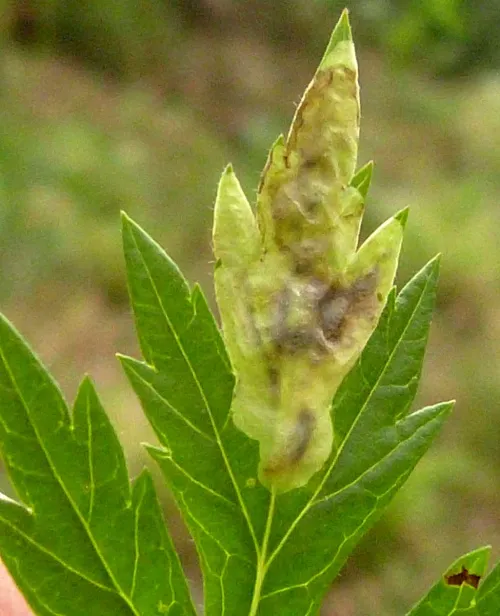
Calycomyza artemisiae
Calycomyza artemisiae
The larvae of the fly Calycomyza artemisiae mine the leaves of Mugwort and some related plant species. The mine is an opaque, pale upper-surface blotch. See the National Agromyzidae Recording Scheme webpage for this species for further details of pup
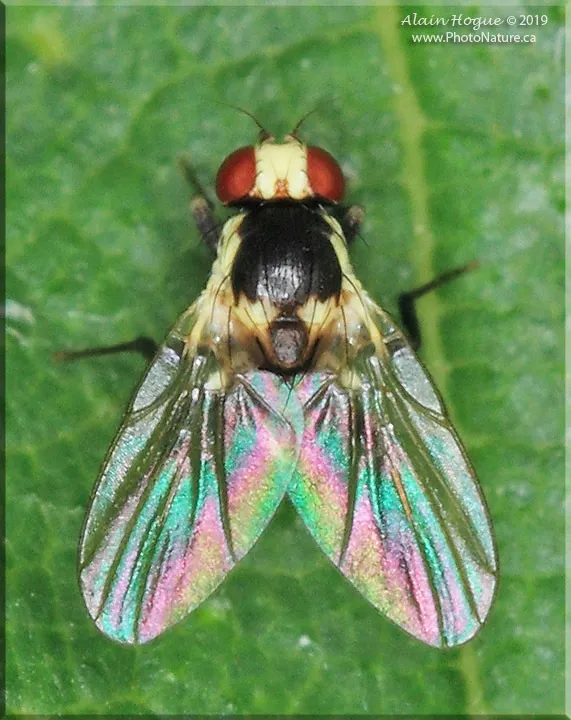
Calycomyza flavinotum
Calycomyza flavinotum
In leaves of Ageratina, Arctium, and Eupatorium , larvae form whitish blotch mines, with several larvae in the same leaf. The mines frequently merge and give the appearance of a single very large mine.
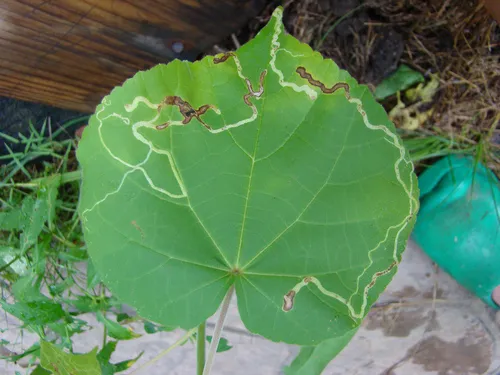
Calycomyza malvae
Calycomyza malvae
Larvae mine leaves of Malveae (mallows) and some legumes, starting on the bottom side and moving to the top.
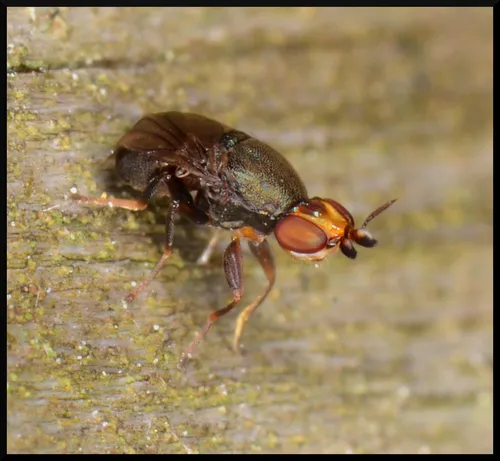
Camarota curvipennis
Camarota curvipennis
A small dark-coloured fly that wraps its wings close to its abdomen giving it the appearance of a small red-headed beetle. Unless identified by a recognised expert, a photo is required showing the identifying characters. Various habitats including po
Camilla atrimana
Camilla atrimana
Identification: Wings slender and slightly pointed at tip, legs dark, mesonotum not shining (see key by Beuk and de Jong, 1994)
Campiglossa albiceps
Campiglossa albiceps
Identification: Many rounded black and translucent spots on wings. Yellowish head and legs, gray with black spots thorax and abdomen.
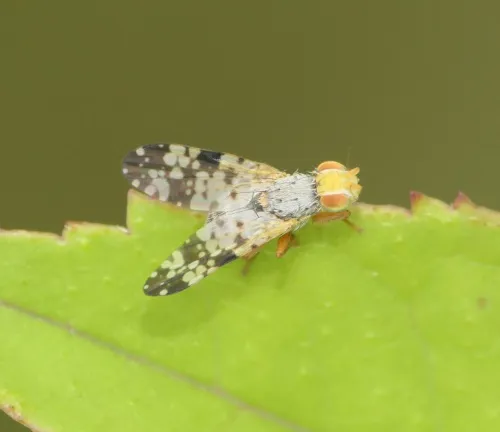
Campiglossa malaris
Campiglossa malaris
Campiglossa malaris is a small fruit fly with brown and white mottled wings. Unless identified by a recognised expert, a photo is required and examination of the specimen may be necessary. It is associated with Ragworts, mainly Senecio erucifolius, b
Campsicnemus oregonensis
Campsicnemus oregonensis
Identification: Apparently keys to C. thersites in Harmston & Knowlton (1942), but most notably, it has a dark spot on the vein M1+2 that the other species lacks. Original description: https://www.biodiversitylibrary.org/page/26388950#page/396/mode/1
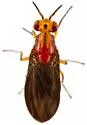
Camptoprosopella dolorosa
Camptoprosopella dolorosa
Identification: A large species with long antennae, dark wings and abdomen, and thorax brown with a darker stripe.
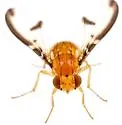
Camptoprosopella maculipennis
Camptoprosopella maculipennis
Identification: The only Camptoprosopella with patterned wings. Most species have clear wings. Dolorosa has dark wings.
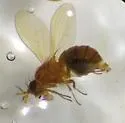
Camptoprosopella verticalis
Camptoprosopella verticalis
Identification: 3 pairs dorsocentrals, front pair nearly as long as others; palpi black and very wide at tip; ocellar spot large
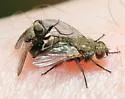
Campylocheta semiothisae
Campylocheta semiothisae
Identification: Antennae blackish in ground color. Tibiae yellowish, contrasting with black femora. Tegula orangish, basically concolorous with basicosta. Frons gray to silvery gray.
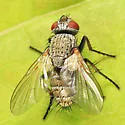
Campylocheta teliosis
Campylocheta teliosis
Identification: Antennae red, contrasting sharply with dark body and dark base of arista.
Carnus floridensis
Carnus floridensis
Identification: Female with much longer setae on tergites than other species.
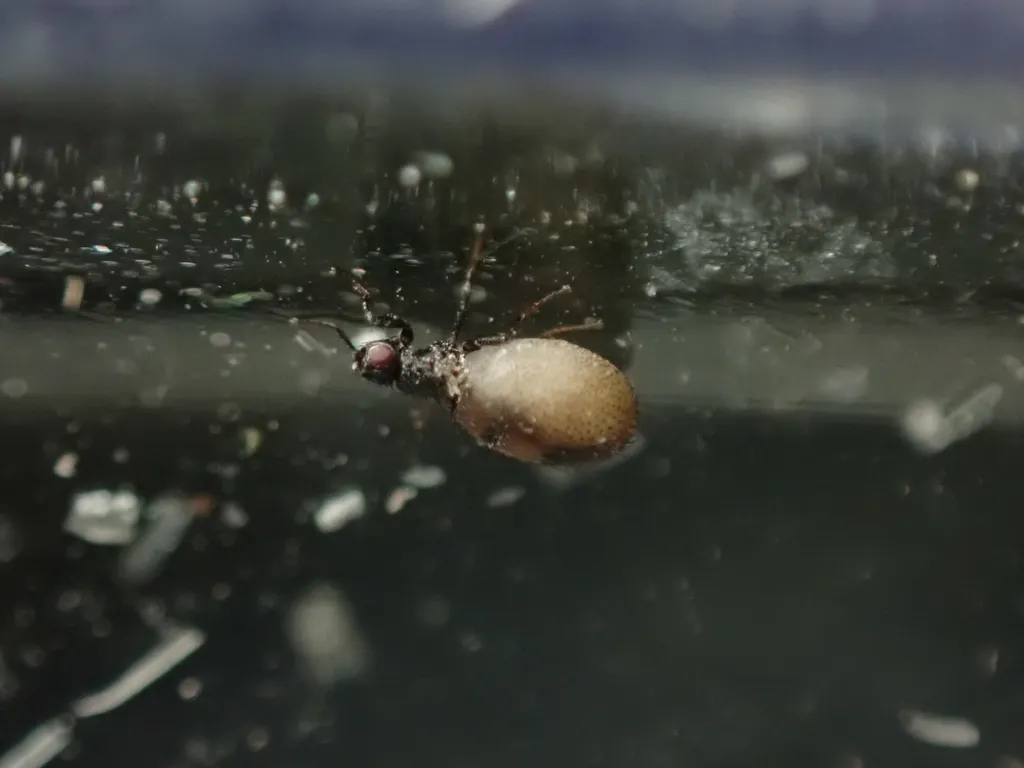
Carnus hemapterus
Carnus hemapterus
Adults are on birds, likely feeding on blood, often hiding in the axilla. The overwintering stage is the pupa.
Cartodiplosis nyssaecola
Cartodiplosis nyssaecola
This species was thought by Beutenmuller 1907 and Felt 1917 to be the species that causes the galls it is an inquiline in, but according to Gagne 1989 it was determined to be only an inquiline.
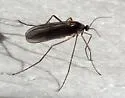
Catotricha americana
Catotricha americana
The BugGuide photo shows the only known female of the species, which was described based on a male from New Hampshire and is also known as a larva.
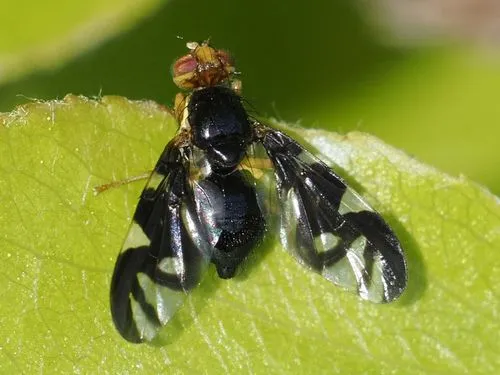
Celery fly
Euleia heraclei
This is a small picture wing fruit fly which has very heavily marked with brown patterning. It has green eyes. Unless identified by a recognised expert, a photo is required. If the photo doesn't show the key ID features then in the comments box descr
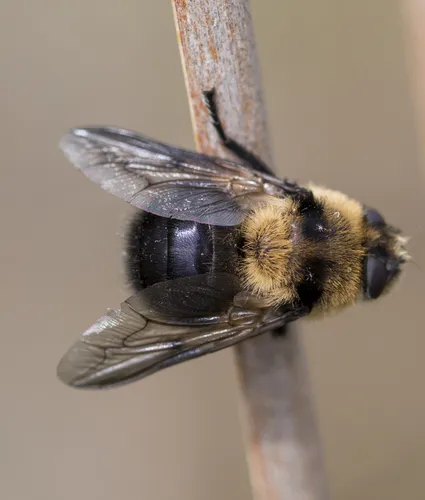
Cephenemyia phobifer
Cephenemyia phobifer
Identification: "Probably C. phobifera , based on the eastern distribution, yellow-haired mesonotum lacking a black crossband and entirely black-haired abdomen." -- Ray Fisher's comment
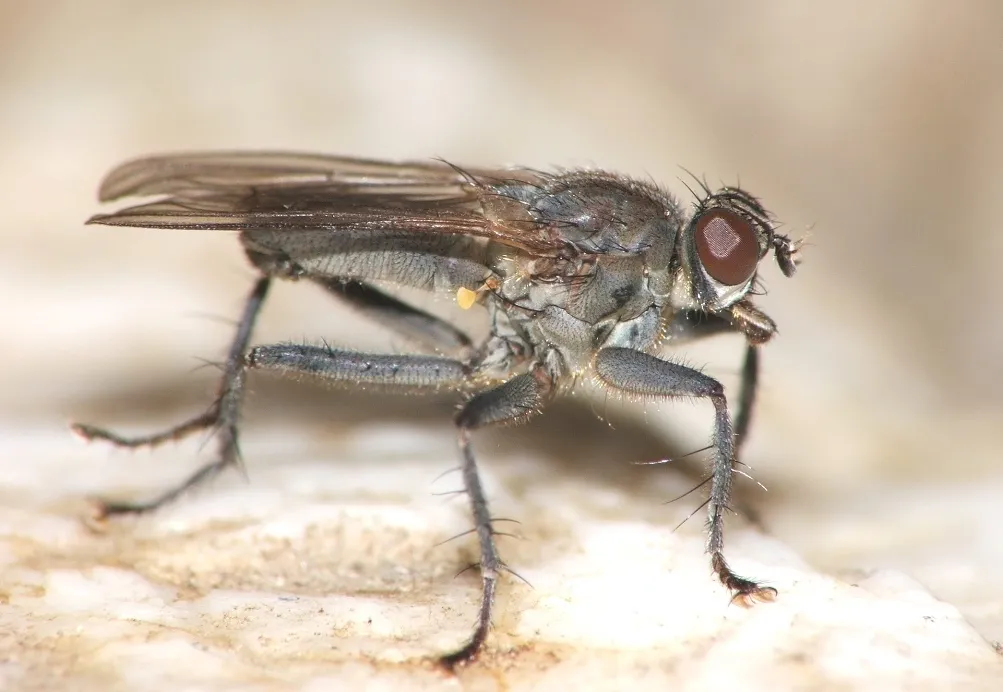
Ceratinostoma ostiorum
Ceratinostoma ostiorum
Identification: Body dark grey, with very long palpi and long anteroventral bristles on the fore tibia.
Ceriana tridens
Ceriana tridens
Identification: Some resources for aid in ID of C. tridens :
Cerocatus hardyi
Cerocatus hardyi
Identification: Male : Head: Black with silvery-white pile. Antenna: Yellowish; last segment slightly more brownish. Thorax: Segment 1 (scutum) dull grayish-black thinly covered with yellowish-white hair and with 2 gray pile longitudinal stripes, one
Cerocatus pictipennis
Cerocatus pictipennis
Identification: Head: Black with silvery-white pile. Antenna: Yellowish-brown. Thorax: Segment 1 (scutum) black with 2 gray pile longitudinal stripes, one each side of center. Segment 2 (scutellum) black with wide white line across base. Thorax side
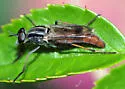
Cerocatus rufiventris
Cerocatus rufiventris
Identification: Head: Black with silvery-white pile. Antenna: Yellowish-brown, last segment brown. 1st segment quite short, unusual for Cerocatus. Thorax: Segment 1 (scutum) black with 2 gray pile longitudinal stripes, one each side of center. Segmen
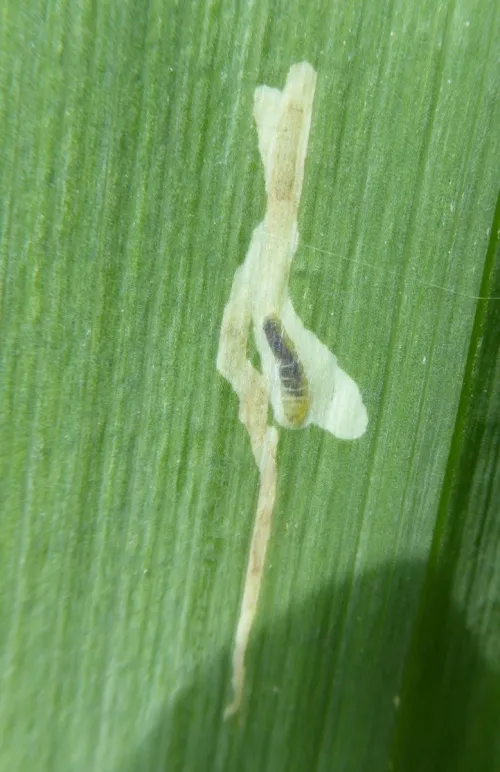
Cerodontha (Dizygomyza) iraeos
Cerodontha iraeos
The larvae mine the leaves of Yellow Iris ( I ris pseudacorus ) and other related plants. The mine takes the form of a short, white, irregular corridor, parallel to the leaf blade. See the National Agromyzidae Recording Scheme webpage for this specie
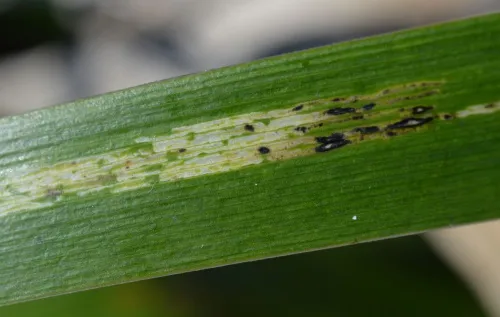
Cerodontha (Dizygomyza) iridis
Cerodontha iridis
The larva form a blotch mine on the leaves on Stinking Iris ( I ris foetidissima ). The affected area may be large as several mines may coalesce. The mine has a mottled greenish appearance. See the National Agromyzidae Recording Scheme webpage for th
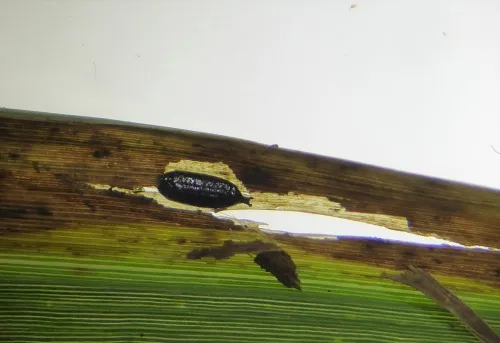
Cerodontha (Poemyza) phragmitidis
Cerodontha phragmitidis
The larvae mine the leaves of Common Reed ( Phragmites australis ). The mine takes the form of a large linear blotch in the leaf and the larva usually pupates in the leaf. The puparium is a metallic black, with an elongated posterior section. See the
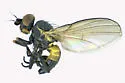
Cerodontha bicolorata
Cerodontha bicolorata
Identification: Tergites 1-3, but not 4, contrasting yellow, first flagellomere of male not enlarged, last two sections of vein Cu approximately equal.
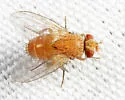
Ceromya flava
Ceromya flava
Identification: R1 setulose over its length, CuA1 setulose, body completely yellow, male with large flagellomere, female unknown. Rare, known from 4 male specimens
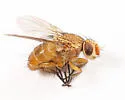
Ceromya palloris
Ceromya palloris
Identification: R1 setulose only distally, CuA1 bare. Body entirely yellow. (Ceromya flava has similar coloration, but has CuA1 setulose and R1 setulose along its length).
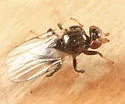
Chaetochlorops inquilinus
Chaetochlorops inquilinus
Identification: Very strongly bristled for Chloropidae Inquiline in midge galls, especially on asters.
Chaetogaedia analis
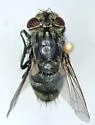
Chaetogaedia analis
Identification: Parafrontals shining black; abdomen with discals on tergites 3 and 4.
Chaetogaedia monticola
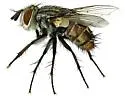
Chaetogaedia monticola
Identification: Cell r5 open; parafrontals densely white pollinose; no parafacial bristles especially strong, the strongest closer to facial ridge than eye; abdomen with some yellow.
Chaetopsis aenea
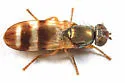
Chaetopsis aenea
Identification: This species has red legs, three complete wing bands, and about five pairs of fronto-orbital bristles plus two small frontal bristles. It is one of two species found in salt marshes.
Chaetopsis apicalis
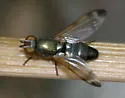
Chaetopsis apicalis
Identification: In most of its range the only member of the genus with only a single dark band, at the apex of the wing (hence the species name). In the northern part of its range, Massachusetts to Maine, the preapical band found in most other speci
Chaetopsis debilis
Chaetopsis debilis
Identification: Wing with 3 bands, legs pale, base of abdomen orange. This species may end up being a synonym of C. massyla (based on unpublished work by Steyskal).
Chaetopsis massyla
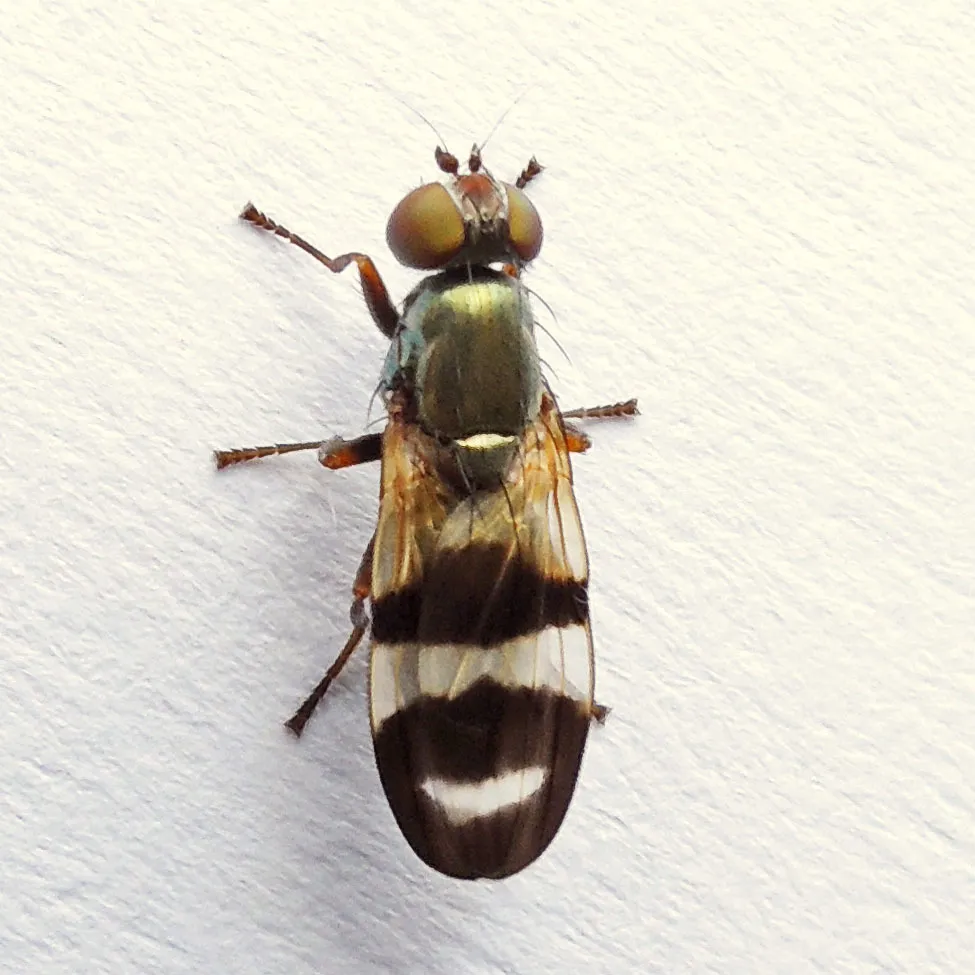
Chaetopsis massyla
Identification: Two apical wing bands broadly joined along wing margin, first band nearly complete, legs dark, inhabitant of fresh water wetlands.
Chaetorellia jaceae
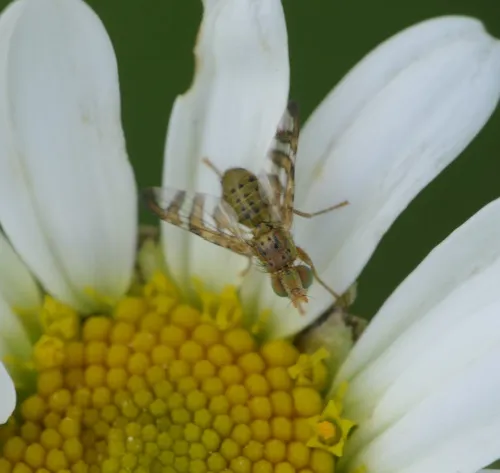
Chaetorellia jaceae
Length about 4 mm. Strongly patterned wings with three brownish strips. Please provide supporting images with your records for this species. Meadows, verges and other grassy places, especially where Knapweed is present. Larvae live within the seed he
Chaetostomella cylindrica
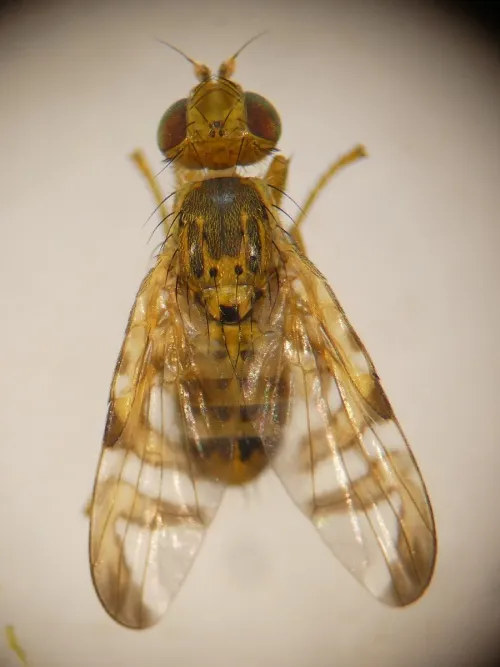
Chaetostomella cylindrica
A well-marked member of the Tephritidae family. However there are similar species and good images are needed. Please provide supporting images with your records for this species. Meadows and verges where Knapweed and thistles are present. Larvae feed
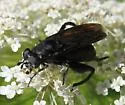
Chalcosyrphus chalybeus
Chalcosyrphus chalybeus
Identification: Small syrphid, steely blue, probably a mimic of various steely-blue wasps.
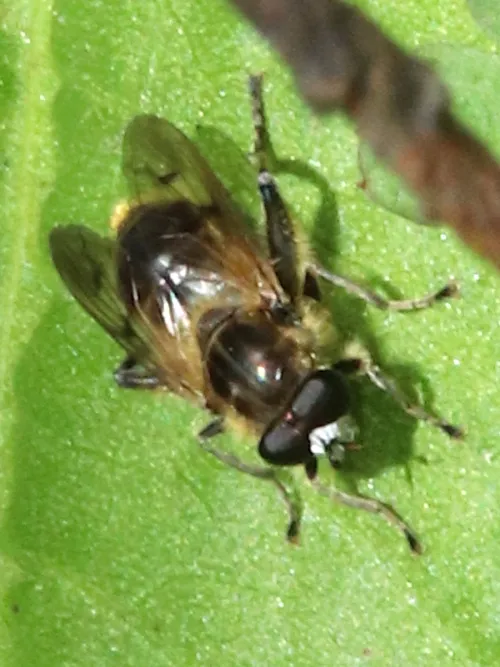
Chalcosyrphus eunotus
Chalcosyrphus eunotus
A medium-sized, brownish hoverfly superficially resembling Brachypalpus laphriformis , but the thorax is dull with faint stripes and the abdomen is broader with pairs of narrowly separated squarish grey patches on tergite 2 (male) and tergites 2 and
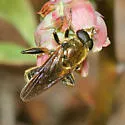
Chalcosyrphus inarmatus
Chalcosyrphus inarmatus
Identification: Black fly with yellow hair and shiny face. Can be mistaken for Brachypalpus oarus , but note hind tibiae broadly orange at the base and at least two basal tarsomeres orange on hind legs. In front view, Brachypalpus has a triangular he
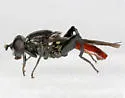
Chalcosyrphus piger
Chalcosyrphus piger
Identification: Medium-sized; metafemora enlarged. Dark thorax, wings. Abdomen bright red. Tarsi usually (or always?) dark. Note short appressed (not erect) hairs on thorax . This, and related members of the genus with a similar pattern are likely mi
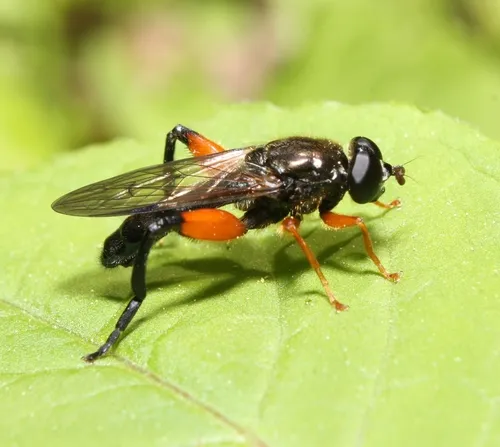
Chalcosyrphus plesia
Chalcosyrphus plesia
Identification: Head: Shiny black. Face projecting outward at antenna base. Antenna: Base black, last segment large, rounded, brownish. Thorax: Dull brownish-black, flattened at end as in all Chalcosyrphus. Wings: Slightly tinted brownish. Wings exte
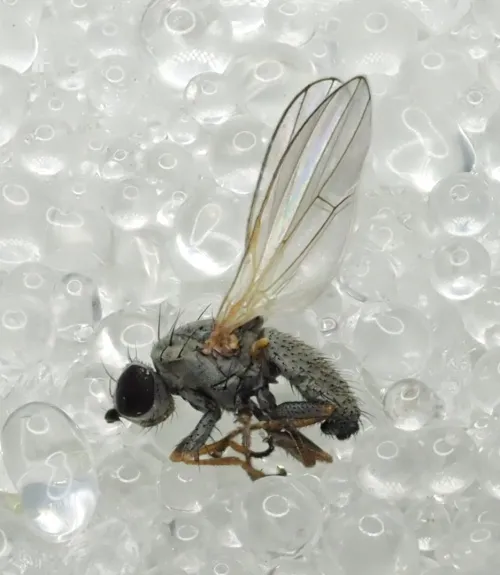
Chamaemyia aridella
Chamaemyia aridella
2-3mm. Chamaemyiidae are nearly all small and grey flies. Chamaemyia aridella is all grey but with yellow tibia. The abdomen usually lacks spots or stripes. See the ID checklist below for a list of the key identifying features. There are 12 species i
Champlain Laphria
Laphria champlainii
Identification: According to Walton's original 1910 description (at BHL, here , figures of plate IX here ), champlainii has dense yellow pile on the first through the fourth abdominal tergites (fifth on male), with 'anvil-shaped' black patches on the
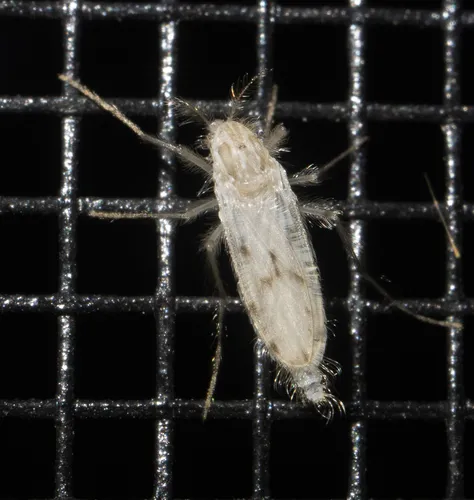
Chaoborus albatus
Chaoborus albatus
Identification: A small species with spotted wings and legs unmarked except for faint brownish bands at joints. Original description (Johnson 1921): Male - Head white; around the base of the antennae, the tips of the palpi and proboscis brown; the pl
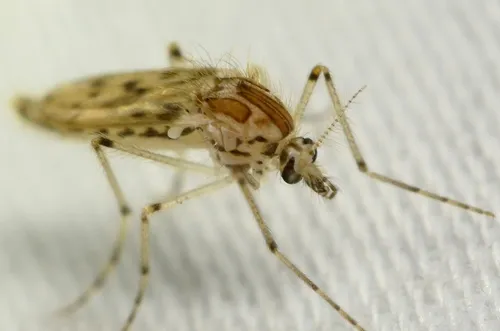
Chaoborus astictopus
Chaoborus astictopus
Sæther (1970) wrote " Chaoborus punctipennis is very similar to C. astictopus in all stages and it may well be that C. astictopus is merely a subspecies or even a form."
Chaoborus cooki
Chaoborus cooki
Identification: Wings spotted. Wing fringe narrow. Large, relatively dark species. Normally found in small, fishless ponds or temporary water bodies.
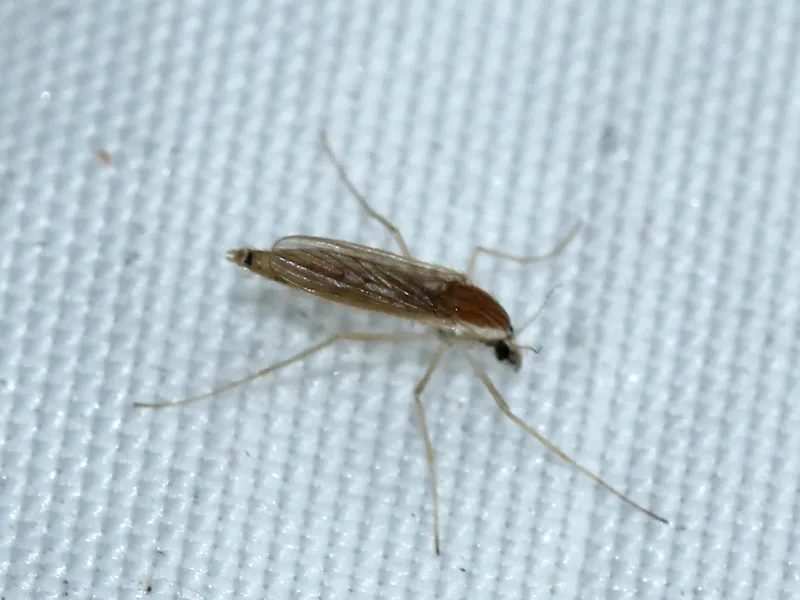
Chaoborus flavicans
Chaoborus flavicans
Not easily distinguished from Chaoborus albipes (Johannsen, 1903). Flavicans is usually found in lakes and albipes in shallow, fishless ponds.
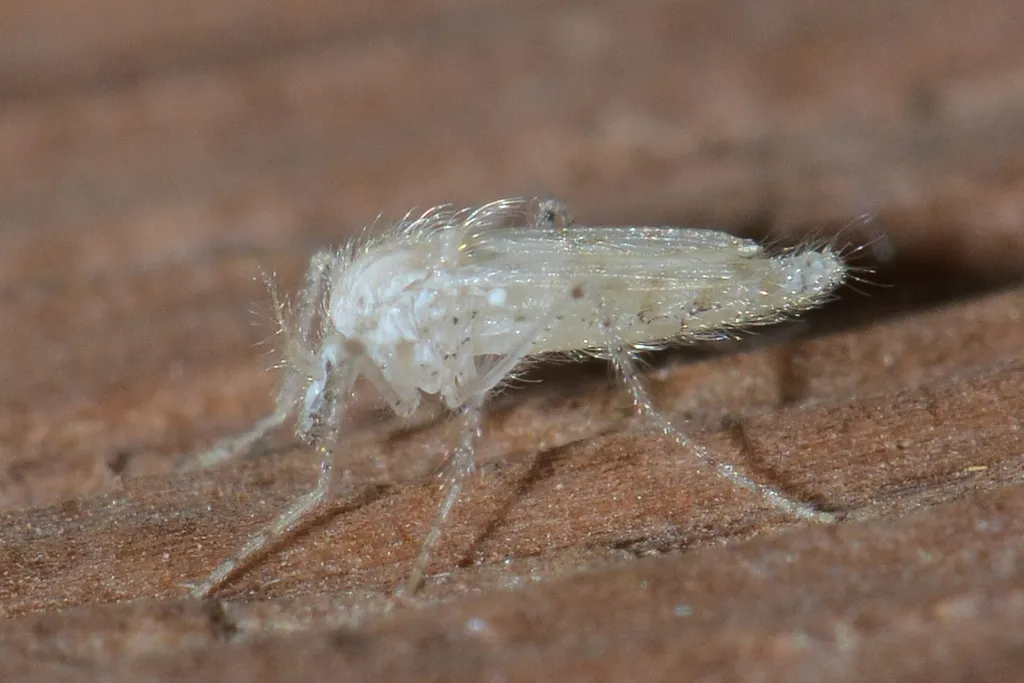
Chaoborus maculipes
Chaoborus maculipes
"This species resembles C. punctipennis (Say) in wing pattern and spotting of legs although the spots are few and smaller; it resembles C. albatus Johnson in lacking dark spots between the scutal stripes, but albatus also lacks the leg spots and usua
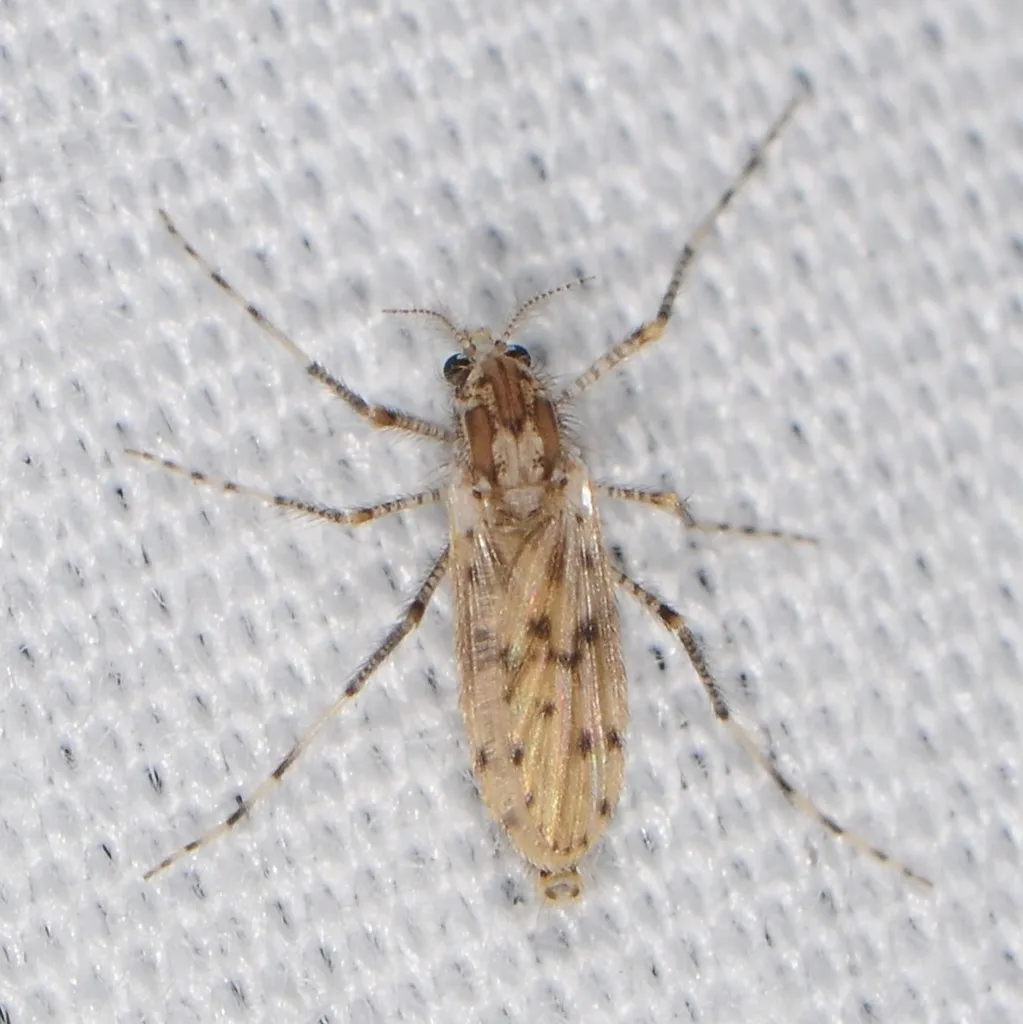
Chaoborus punctipennis
Chaoborus punctipennis
This is the common eastern species. It is distinguished from similar eastern species by having spots on wings, legs, and between stripes on top of thorax. Other Sayomyia lack leg spots, thorax spots, or have a band instead of spots on the wings.
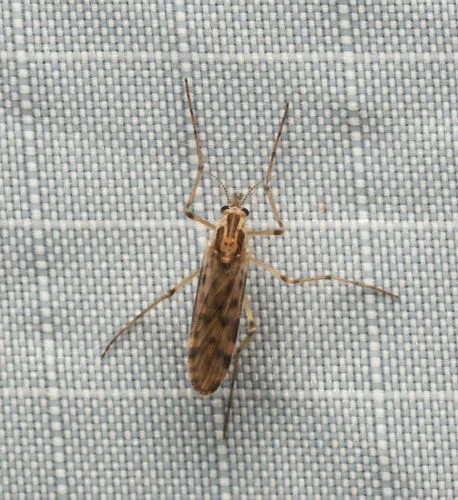
Chaoborus trivittatus
Chaoborus trivittatus
"Individuals overwinter as fourth instar larvae and are mostly restricted to permanent lentic habitats ranging from small shaded ponds to large deep lakes in woodland. Although some larvae live in temporary waters, they can not successfully overwint
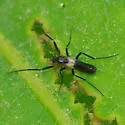
Chasmatonotus bicolor
Chasmatonotus bicolor
Identification: Basal 2/5 of wing and base of abdomen pale.
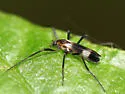
Chasmatonotus maculipennis
Chasmatonotus maculipennis
Identification: Wing with white spot (in addition to white base) extending from R1 nearly to, but not reaching Cu2; narrow unpigmented strip at wing tip.
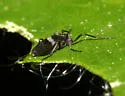
Chasmatonotus unimaculatus
Chasmatonotus unimaculatus
Identification: In the eastern United States, nearly all Chasmatonotus midges with a single white spot near the middle of the wing are C. unimaculatus . There is an uncommon, undescribed species from the southern Appalachian Mountains with a nearly
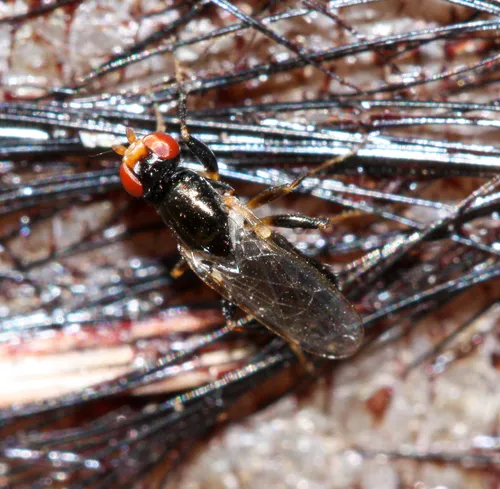
Cheese Skipper
Piophila casei
Identification: Black fly with yellow on front of head. No bristles on postpronotum and one pair of dorsocentrals. This is the only species in our area with the fine thoracic setulae confined to three narrow rows.
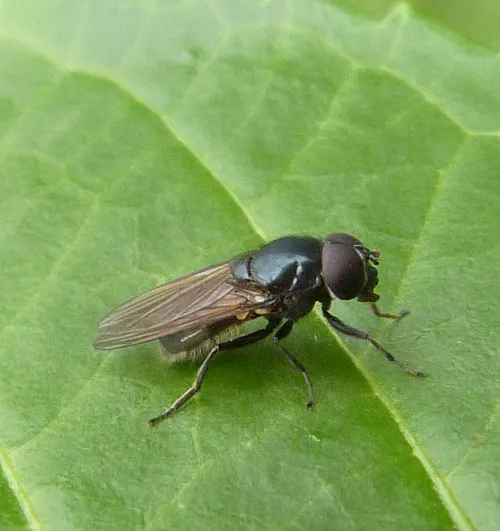
Cheilosia albitarsis sensu stricto
Cheilosia albitarsis sensu stricto
Cheilosia albitarsis and Cheilosia ranunculi are very similar and can often only be safely determined by detailed examination. Any specimen that has not been subjected to detailed examination should be submitted as Cheilosia albitarsis/ranunculi agg.
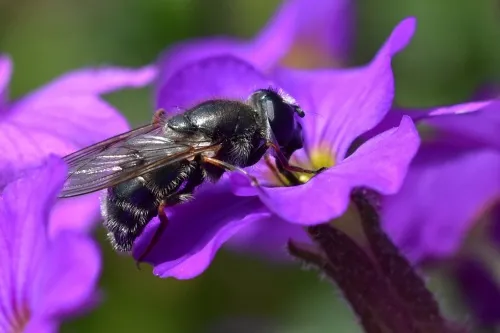
Cheilosia caerulescens
Cheilosia caerulescens
It is a bare-eyed, bluish-grey Cheilosia with pale knees and distinct smudges over the two cross veins of the wings. The lower face is rather strongly protruding, the third antennal segment is brownish-red and the antennal pits are fused. Unless iden
Cheilosia capillata
Cheilosia capillata
Identification: Per Bill Dean, "Eyes bare; face bare; no scutellar bristles; pile on frons pale; tibiae mostly orange; hairs on thoracic dorsum pale yellow and more white on pleurae; wing veins very orange at base."
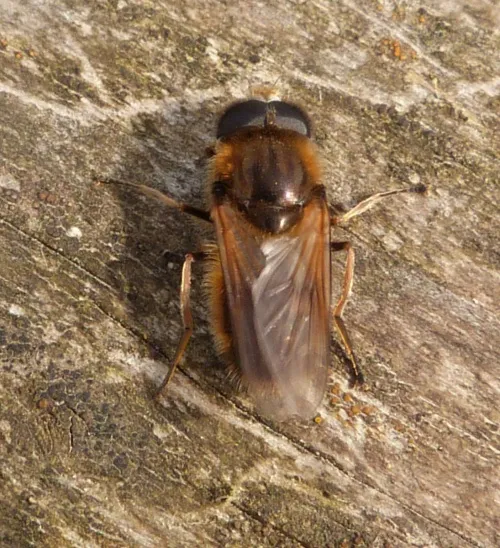
Cheilosia grossa
Cheilosia grossa
A dark bodied hoverfly with red brown hairs. C. grossa is very similar to C. albipila but on close examination C. grossa will be found to have black antennae. Areas where thistles are common, damp meadows woodland rides etc. March to May – peaking la
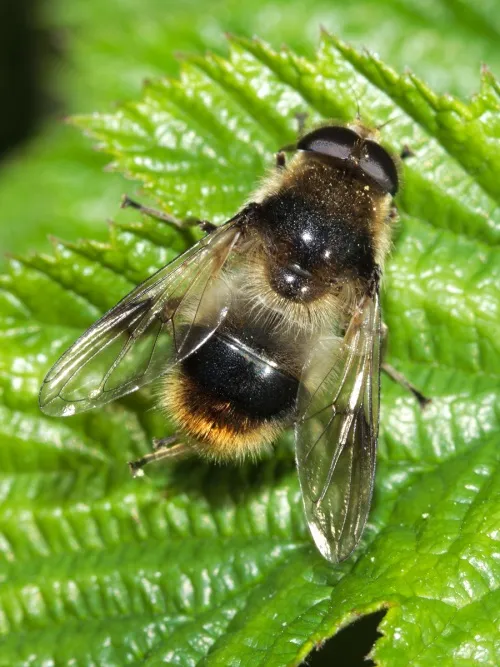
Cheilosia illustrata
Cheilosia illustrata
A furry bumblebee mimic with a dark wing cloud. Body is usually pale haired with a black band across the centre of the thorax, and another across tergite 3. It is typically seen settled with its wings closed tightly over its back. Hedgerows and woodl
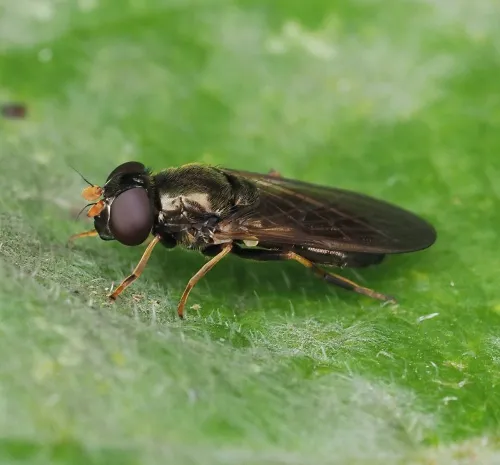
Cheilosia pagana
Cheilosia pagana
One of the smallest Cheilosia . The female has an exceptionally large, orange coloured, third antennal segment. The males often have strong reflective grey triangles on the sides of the abdomen. They have bare arista and the female has an entirely bl
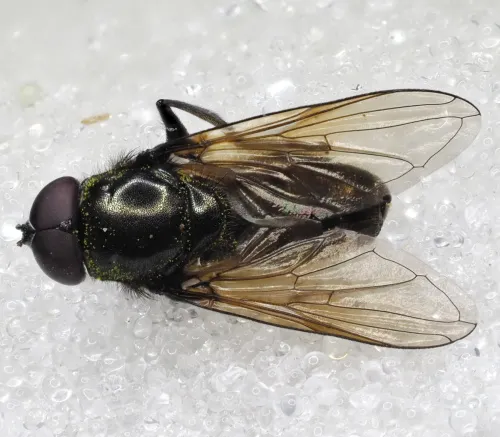
Cheilosia ranunculi
Cheilosia ranunculi
A robust all black, shiny hoverfly and only separated from C. albitarsus recently. Males have yellow front tarsi. Females cannot be separated but males can distinguished by the shape of the apical segments of the front tarsi which in C. ranunculi tap
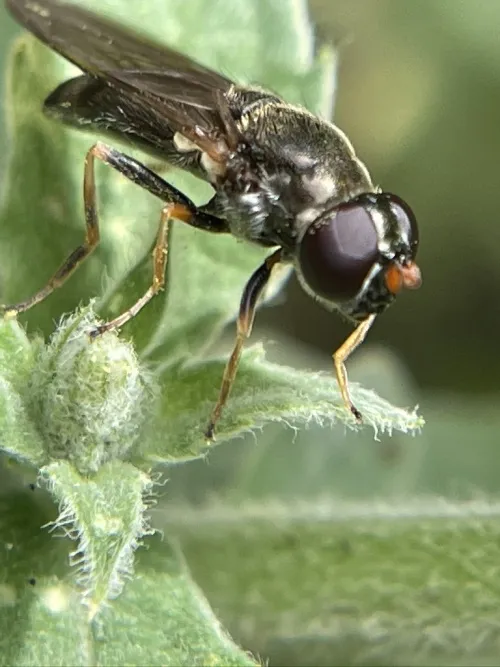
Cheilosia soror
Cheilosia soror
One of our three fungus-feeding Cheilosia (characterised by bare eyes, long wings, partially pale legs and fused antennal pits), and readily separable from the other two by the orange-red 3rd antennal segment. Confusion is more likely with the smalle
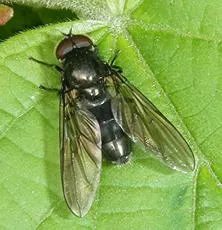
Cheilosia variabilis
Cheilosia variabilis
This species has an elongate, rather parallel sided grey abdomen and black thorax. It is relatively large, and has dark wings. It lives in wooded areas, and lush woodland edges. April to September, peaking in May and early June Breeds on Figwort, whe
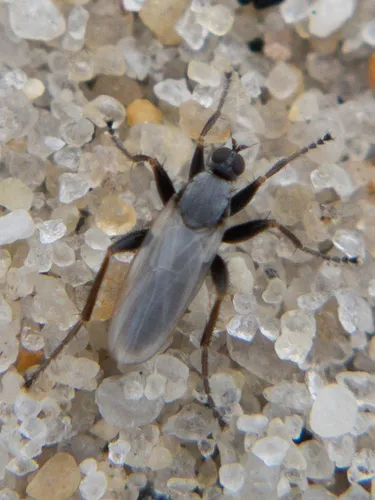
Chersodromia inusitata
Chersodromia inusitata
Identification: The only eastern Chersodromia with dark legs, femora black and remainder dark brown. Thorax dark gray, but with yellow "shoulders" at least in some males.
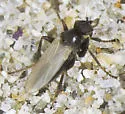
Chersodromia megacetes
Chersodromia megacetes
Identification: Wings longer than abdomen; thorax shiny-black above; wings whitish (no infuscation); halteres white; in males, pygidium about as large as the rest of abdomen ( Melander 1945:80 )
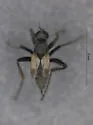
Chersodromia parallela
Chersodromia parallela
Identification: Distinguished from other American Chersodromia by the reduced wings with apical third dark and wing veins running more or less parallel to margin.
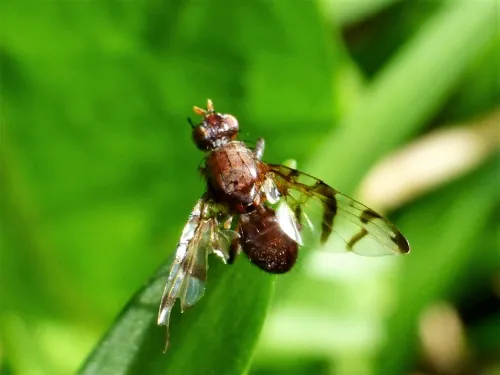
Chetostoma curvinerve
Chetostoma curvinerve
7mm long with a bright-tawny orange body and a dark wing pattern which includes a dark wing-tip and a diagonal line reaching almost entirely across the forewing. In addition, the males have very distinctive dark curved spines guarding the mouthparts.
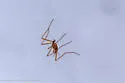
Chionea albertensis
Chionea albertensis
Named after Alberta, where it was discovered, this species is found in "forested, generally mountainous areas" from Banff south to central Oregon and Idaho.
Chionea obtusa
Chionea obtusa
Identification: "Brown to grayish brown in color, with antennae having five to seven flagellomeres"
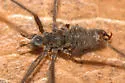
Chionea valga
Chionea valga
Identification: A wingless Crane Fly with external genitalia.
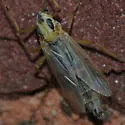
Chironomus dilutus
Chironomus dilutus
Identification: Male genitalia of the subgenus Chironomus (Camptochironomus) are distinctive. Dark abdomen, strongly contrastly dark stripes on light brown or greenish thorax. "Usually the coloration and rather strongly produced middle portion of th