
Butterflies and Moths
Order Lepidoptera
The Butterflies and Moths (Order Lepidoptera) includes 11,813 species across 112 families and 2,787 genera in our directory.
About Butterflies and Moths
Lepidoptera includes approximately 180,000 described species of butterflies and moths. Moths outnumber butterflies roughly 10:1. The monarch butterfly's eastern population has declined by more than 80% since the mid-1990s, and the western population by over 95% since the 1980s. The IUCN lists the migratory monarch as Vulnerable.
Economic Impact
Lepidoptera are critical pollinators. In Europe, grassland butterfly species have declined by almost 50% since the early 1990s. In the UK, three-quarters of butterflies are in decline. In the U.S., five butterfly species have gone extinct since 1950, with 29 listed as endangered.
Ecological Role
Butterflies and moths are essential indicators of ecosystem health. As caterpillars, they are a primary food source for birds - a single nest of blue tit chicks requires ~10,000 caterpillars. Adult moths pollinate many night-blooming plants.
Families in Lepidoptera (112)
Species in Lepidoptera (11,813)
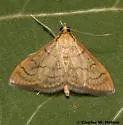
Anania labeculalis - Hodges#4959
Anania labeculalis
Identification: Original description is online as Botis labeculalis (Hulst). (link below) - Determined by Bob Patterson.
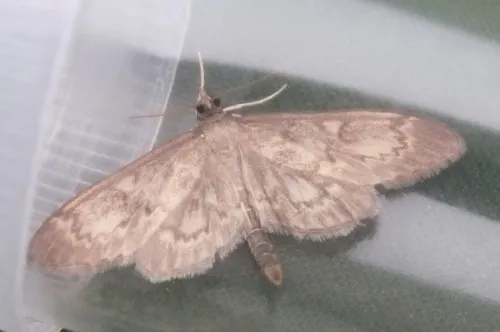
Anania lancealis
Anania lancealis
Wingspan 26 to 34 mm. The males of this species have distinctively long and narrow forewings, the females being more normally proportioned. Can be confused with the much more common Mother of Pearl. Records must be supported by detailed photographs.
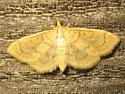
Anania leuschneri - Hodges#4955
Anania leuschneri
Type locality: USA, Florida, Orange County, 15 miles west of Cocoa.
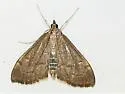
Anania mysippusalis - Hodges#4957
Anania mysippusalis
Identification: Adult: forewing medium brown with dark brown AM and PM lines and dark fringe; PM line irregular, slightly wavy, with large lobe near mid-point; hindwing similar but with pale fringe; abdomen long, slender, brown with whitish band at b
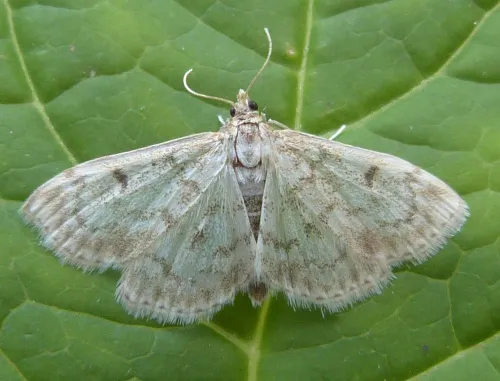
Anania perlucidalis
Anania perlucidalis
Wingspan 21-23mm. A fairly plain browny-white moth with a dark mark on the wings. Grassland and scrub where Thistles are present, also known to enjoy coastal locations. The adults are found on the wing during June and July. The life history is incomp
Anania plectilis - Hodges#4953.1
Anania plectilis
Identification: Adult: wings dull grayish-brown with pale yellow spots and accents along darker lines; forewing and hindwing with large yellowish spots outside PM line; PM line zigzagged and sharply pointed on all wings [adapted from description of A
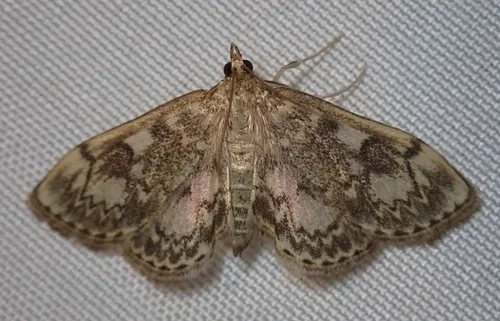
Anania tertialis - Hodges#4953
Anania tertialis
Identification: Adult: wings dull grayish-brown with pale yellow spots and accents along darker lines; forewing and hindwing with large yellowish spots outside PM line; PM line zigzagged and sharply pointed on all wings [adapted from description of A
Anaplectoides brunneomedia - Hodges#11002
Anaplectoides brunneomedia
Identification: Similar to Anaplectoides pressus , replacing it at high elevations in the Appalachian Mountains, distinguished by the dark median area contrasting boldly with the rest of the wing.
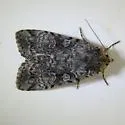
Anaplectoides pressus - Hodges#11001
Anaplectoides pressus
Identification: Specimens identified by DNA analysis: Genitalia:
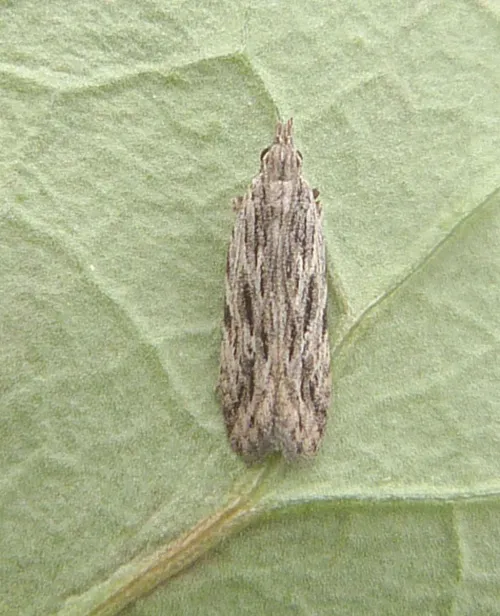
Anarsia innoxiella
Anarsia innoxiella
Wingspan 11 to 14 mm. The long black streak in the centre of the forewing is said to be diagnostic of innoxiella , supported by the more contrasting pattern overall. Anarsia lineatella is similar but has a less-contrasting, duller pattern and the cen
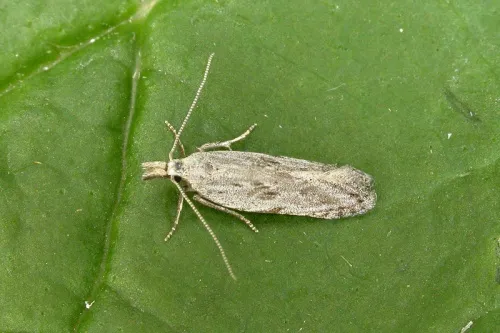
Anarsia spartiella
Anarsia spartiella
Wingspan 12 to 15 mm. The wings may be relatively plain, or have darker and paler mottling. The long, upwardly curved, labial palps of the female protrude from a large tuft of scales, but the shorter palps of the male are concealed in the tuft. In Ma
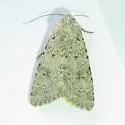
Anarta antica - Hodges#10258
Anarta antica
Anarta antica - Hodges#10258 (Anarta antica) is a species in the family Noctuidae, commonly known as owlet moths, belonging to the order Lepidoptera (Butterflies and Moths). It is classified within the subfamily Noctuinae, tribe Hadenini, superfamily
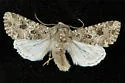
Anarta chartaria - Hodges#10222
Anarta chartaria
Identification: Specimen determined by DNA analysis (BOLD).
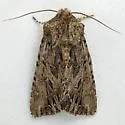
Anarta crotchii - Hodges#10233
Anarta crotchii
Identification: The original description as Mamestra crotchii Grote, and a revised description are available in the print references below. Anarta crotchii and Anarta fusculenta require examination of genitalia to distinguish. ( 4 ) Genitalia:
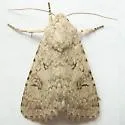
Anarta decepta - Hodges#10259
Anarta decepta
Identification: The original description as Trichoclea decepta Grote, and the revised description by Hampson (1905) are both available online at the links in the print references below. - Specimen identified by DNA analysis (BOLD). ( 3 )
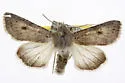
Anarta edwardsii - Hodges#10255
Anarta edwardsii
Listed as Endangered in British Columbia by the Committee on the Status of Endangered Wildlife in Canada (COSEWIC). PDF
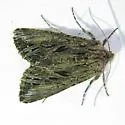
Anarta fusculenta - Hodges#10233.1
Anarta fusculenta
Anarta fusculenta - Hodges#10233.1 (Anarta fusculenta) is a species in the family Noctuidae, commonly known as owlet moths, belonging to the order Lepidoptera (Butterflies and Moths). It is classified within the subfamily Noctuinae, tribe Hadenini, s
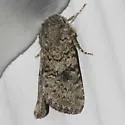
Anarta inconcinna - Hodges#10252
Anarta inconcinna
Identification: See Moths of the Pacific Northwest here This specimen identified by Lars Crabo
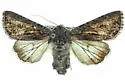
Anarta oaklandiae - Hodges#10234
Anarta oaklandiae
Identification: Specimen determined by DNA analysis (BOLD).
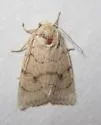
Anathix aggressa - Hodges#9963
Anathix aggressa
Identification: The forewing and hindwing are pale yellow and a large reniform spot.
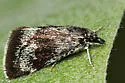
Anatralata versicolor - Hodges#4814
Anatralata versicolor
Identification: The original description as Aporodes versicolor Warren, is available online in the print references below. Adult: Forewing chestnut-brown with some black scales mixed in. Basal third and subterminal area with pale whitish green scales
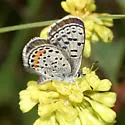
Ancilla Blue - Hodges#4367.4
Euphilotes ancilla
Identification: Adult: male upperside deep blue with wide black borders in United States (lilac blue with narrow black borders in Canada); hindwing orange band usually absent; female brown with variably expressed marginal orange crescent on hindwing;
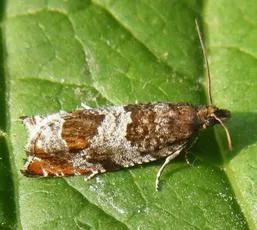
Ancylis achatana
Ancylis achatana
Wingspan 14-18 mm. This is a moth with a rich brown and silvery appearance, sometimes dulled by darker shades of brown. Blackthorn thickets and hedgerows of Blackthorn and Hawthorn, scrub, open woodland, gardens. Larvae feed on the leaves of Hawthorn
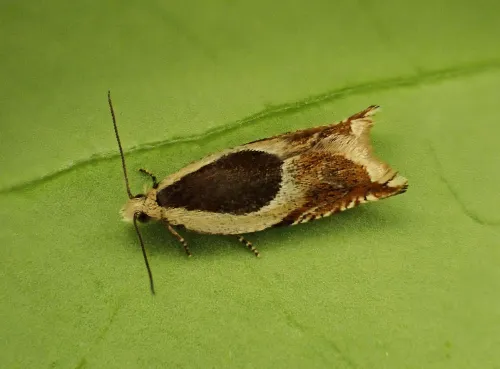
Ancylis badiana
Ancylis badiana
Wingspan 12 to16 mm. A small well marked moth. Inhabits a range of woodland and open ground areas. Two generations of this moth occur during the year, the first in April and May, and later from July to August. It is active in the late afternoon into
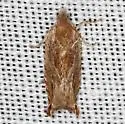
Ancylis cordiae - Hodges#3388
Ancylis cordiae
Identification: Distinguishing feature: Second joint of the labial palpi with strong tuft, concealing terminal joint; white at base, light brown at apex, with a small black spot on outer side. Evident in posted specimen. (Ann Hendrickson)
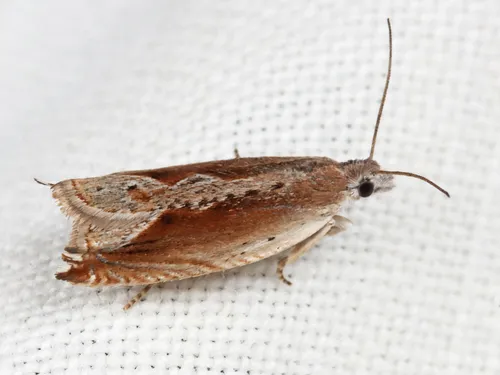
Ancylis diminuatana - Hodges#3379
Ancylis diminuatana
Identification: Adult - Very similar to Ancylis goodelliana . The main difference between A. diminutana and A. goodelliana is how straight or even the border between the dark and light halves of the wing is. A. goodelliana should have a more even lat
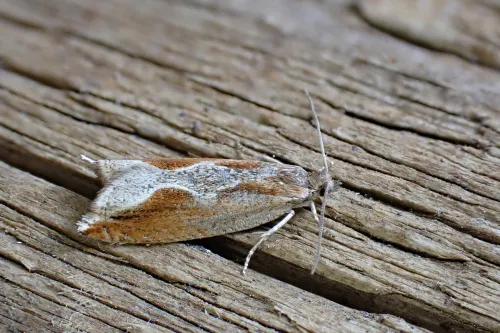
Ancylis diminutana
Ancylis diminutana
Wingspan 12 to 18 mm. This is quite a distinctive species. Formerly treated as a form of Ancylis geminana , this has now been granted specific status. This is a scarce species in our area so please provide a photograph to support your record. Occupie
Ancylis goodelliana - Hodges#3380
Ancylis goodelliana
Identification: Very similar to Ancylis diminutana . The main difference between A. diminutana and A. goodelliana is how straight or even the border between the dark and light halves of the wing is. A. goodelliana should have a more even lateral line
Ancylis laetana
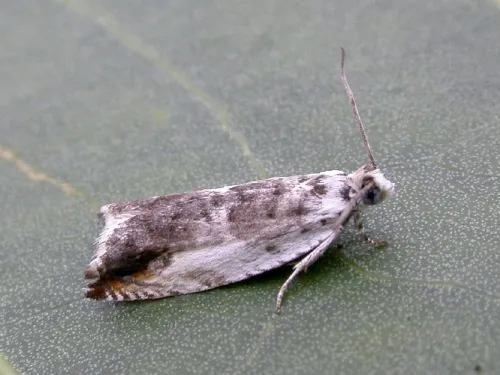
Ancylis laetana
Wingspan about 15 mm. A number of the British Ancylis species are rather similar in appearance, whereas laetana displays an unusually whitish (for the genus) forewing ground colour. Flying in May and June in a single generation, the adults appear fro
Ancylis mitterbacheriana
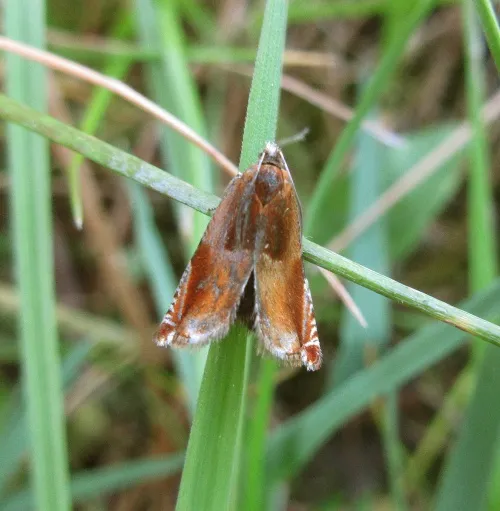
Ancylis mitterbacheriana
Please provide supporting images with your records for this species. The moth flies in May and June in the evening and later into the night. The larvae feed on Oak and Beech, and the adult moth can sometimes be found resting on the upper surface of a
Ancylis myrtillana
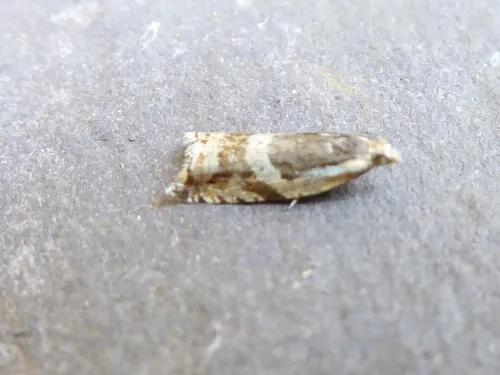
Ancylis myrtillana
Wingspan about14 mm. Care is needed to distinguish this species from the more frequently encountered Ancylis badiana. This species is associated with moorland habitats where the larval foodplants are present. Adult moths fly from May to July, both in
Ancylis pacificana - Hodges#3383
Ancylis pacificana
Identification: The Walsingham original description as Phoxopteryx pacificana and the Heinrich revised description are both available online in the print references. Specimen identified by DNA analysis (BOLD).
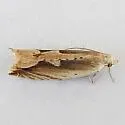
Ancylis saliana - Hodges#3379.1
Ancylis saliana
Identification: Detailed description and images can be found in Gilligan et al at link in citations below.
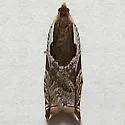
Ancylis simuloides - Hodges#3363
Ancylis simuloides
Identification: Specimen identified by DNA analysis (BOLD). The species was described from very few specimens collected in British Columbia. California specimens were termed Ancylis simuloides ssp. sierrae by McDunnough , but may be a species yet to
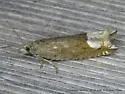
Ancylis tineana - Hodges#3386
Ancylis tineana
Identification: "A striking species easily recognized by its unique genitalia" .
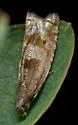
Ancylis uncella - Hodges#3378
Ancylis uncella
Identification: Heinrich (1923) original description available online. ( 3 )
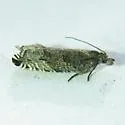
Ancylis unguicella - Hodges#3382
Ancylis unguicella
Identification: Adult - one of few Anyclis with dark fasciate wing markings. ( 3 )
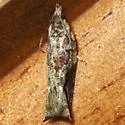
Ancylis virididorsana - Hodges#3388.4
Ancylis virididorsana
Identification: This taxon has a large oval dark brown dorsal patch. The patch and adjacent areas of the forewings often show olive-green overtones (iridescence) when fresh, thus the informal common name of "Olive Ancylis". - Chuck Sexton "A very di
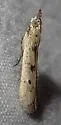
Ancylosis balconiensis - Hodges#5994.3
Ancylosis balconiensis
Identification: Original description by Blanchard & Knudson, is online. - Summary: Forewing white with scattered black scales. Black antemedial line angles outwardly from costa. Black postmedial line parallel to outer margin. Terminal line is 4-5 bla
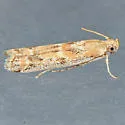
Ancylosis morrisonella - Hodges#5916
Ancylosis morrisonella
Identification: Adult - extremely variable, from mostly clay white with light markings to mostly dark reddish gray. ( 3 )
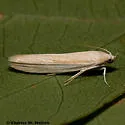
Anderida n. sp. nr. peorinella - Hodges#5933.11
Anderida nr-peorinella
A likely undescribed species similar in maculation to Anderida peorinella , from which the one barcoded specimen ( BOLD:AAH5653 ) diverges in sequence by 3%. Distinguished by location (Huachuca Mts., AZ vs. central and southwest TX), much longer labi
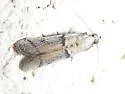
Anderida sonorella - Hodges#5933
Anderida sonorella
Identification: Forewing ground color fuscous with costal area mainly white; AM/PM lines usually represented by dark transvers patches, but some specimens lack this banding.
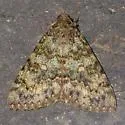
Andromache Underwing - Hodges#8836
Catocala andromache
Identification: Adult - forewing gray with greenish tint in fresh specimens; subreniform spot pale, conspicuous; AM line, double, black, composed of 3 scallops; subterminal line faint or broken near middle; pale yellowish shading may be present along
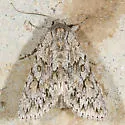
Andropolia aedon - Hodges#9570
Andropolia aedon
Identification: Adult: forewing ground color white but covered with black speckling, giving an overall gray appearance; AM, PM, and subterminal lines black, zigzag, with large sharp teeth; thin black line runs along main vein to lower corner of renif
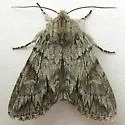
Andropolia diversilineata - Hodges#9563
Andropolia diversilineata
Identification: The Hampson, (1909) revised description of Andropolia diversilineata Grote , is available online at the link in the print references below Gray forewing with a black jagged, dentate submarginal line that creates two dark shaded triang
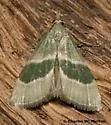
Anemosella viridalis - Hodges#5549
Anemosella viridalis
Identification: Adult - original description available in Print References.
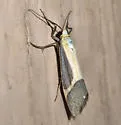
Angel Lichen Moth - Hodges#8070
Cisthene angelus
Identification: Dyar's original description of angelus and Knowlton's revision of the genus both emphasize the solid yellow/orange color of the thorax, lacking any black or gray spot. This is combined with a wide yellow/orange band on the FW inner ma
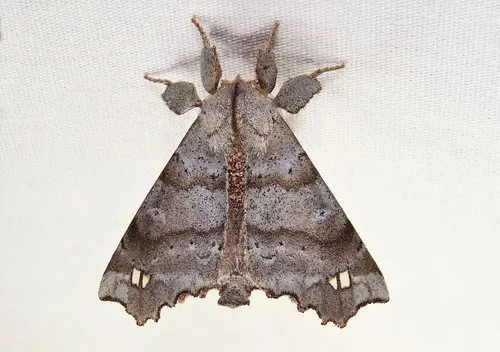
Angel Moth
Olceclostera angelica
Olceclostera angelica, the angel moth, is a moth in the Bombycidae family. It is found in North America, where it has been recorded from Quebec and Maine to Florida, west to Texas and north to Wisconsin and Ontario. The habitat consists of deciduous
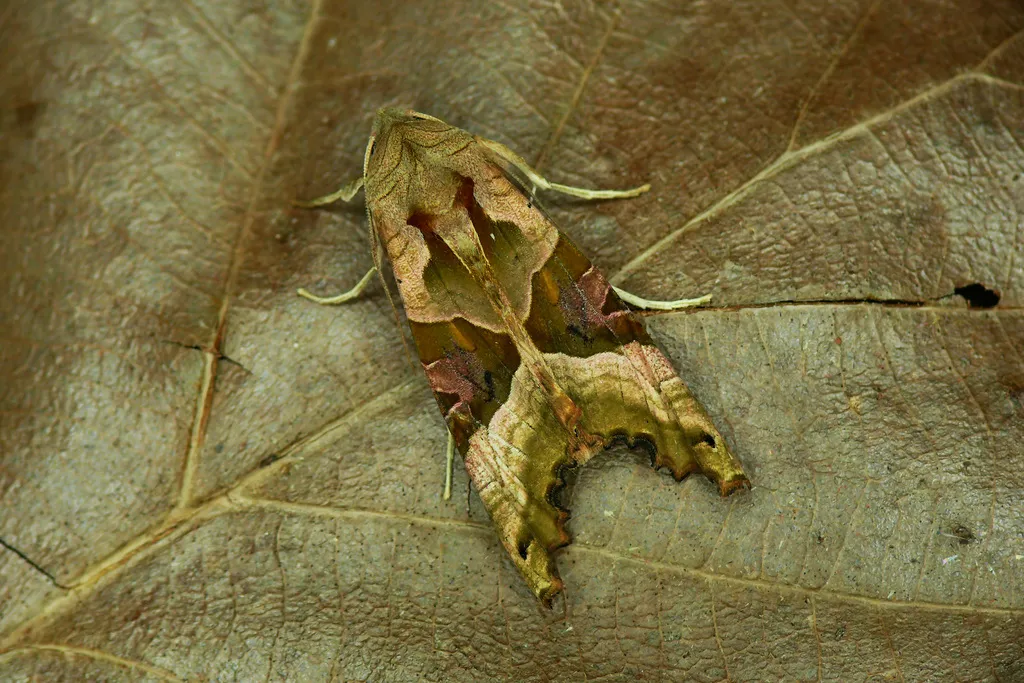
Angle Shades
Phlogophora meticulosa
Wingspan 45-50 mm. A highly distinctive and unusual moth, which rests with the wings folded longitudinally, looking very much like a withered autumn leaf. Usually at least two generations in Britain. The species is also a common migrant and can occur
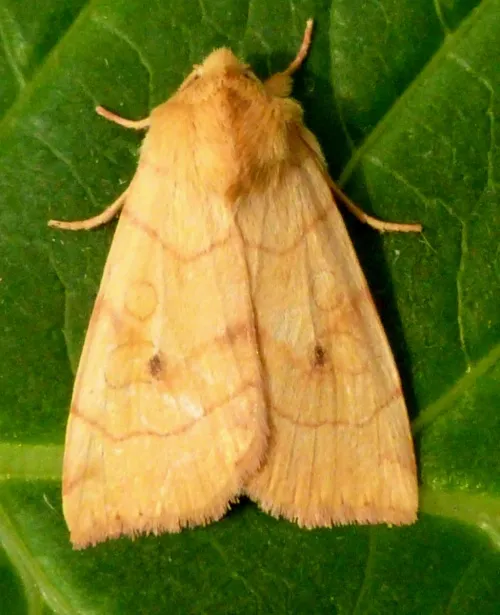
Angle-striped Sallow
Enargia paleacea
Wingspan 40 to 60 mm. Quite distinctive, even though the forewings vary in colour and in strength of markings. The forewing is broad with a slightly hooked tip and usually yellow to orange-yellow. There is also a fine, roughly centrally elbowed inner
Angled Leafwing - Hodges#4555
Fountainea glycerium
Identification: Somewhat similar in color to Tropical and Goatweed Leafwings, but distinctively shaped.
Angoumois Grain Moth - Hodges#2260
Sitotroga cerealella
Larvae drill mines in grain, causing as much as 50% of weight loss. They break the skin of seed creating the opportunity for other infestations.
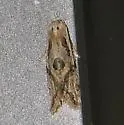
Angular Aethes - Hodges#3807
Aethes angulatana
Identification: Adult - highly variable in size and markings. ( 3 ) Forewing pale yellowish or cream with dark brownish-gray markings; dark strip along costa from base to one-quarter wing length, and thick basal dash runs parallel to costal strip; da
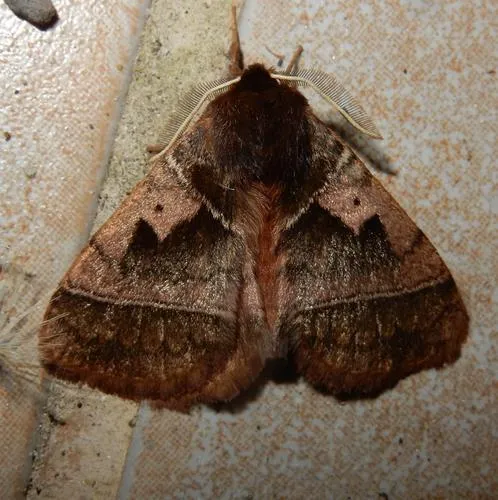
Angular Monkey
Poloma angulata
Poloma angulata is a moth in the family Eupterotidae. It was described by Francis Walker in 1855. It is found in South Africa (KwaZulu-Natal, Western Cape).
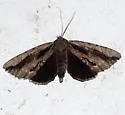
Angus' Underwing - Hodges#8783
Catocala angusi
Identification: Two forms. Form "lucetta" has wide black band from the basal area to the outer margin broken by the reniform spot.
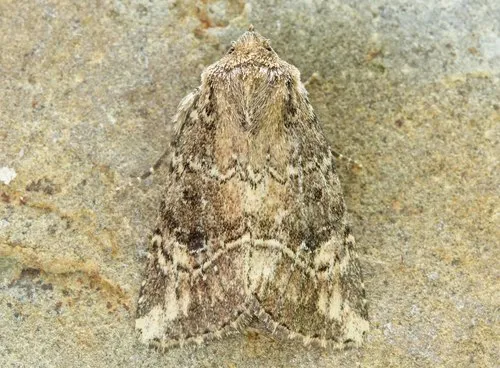
Anhimella contrahens - Hodges#10530
Anhimella contrahens
Identification: "This species can usually be recognized despite the variation in color and degree of mottling by the small size, dull-color, toothed lines with pale filling and smooth courses across the wing, and pale spots with dark filling" .
Anhimella pacifica - Hodges#10531
Anhimella pacifica
Identification: "This species can usually be identified by its small size and gray-brown color, pale filled smooth antemedial and postmedial lines, a light mark below the apex, dark-filled forewing spots, and light hindwing" .
Anicia Checkerspot - Hodges#4519
Euphydryas anicia
Identification: Distinction from E. chalcedona is based mainly on differences in genitalia; however, in most regions they may be told apart by the darker, more prevalently black coloring of E. chalcedona . Distinction from E. editha is sometimes diff
Anicla beata - Hodges#10904
Anicla beata
Identification: Original description online as Agrotis beata Grote. (54) .
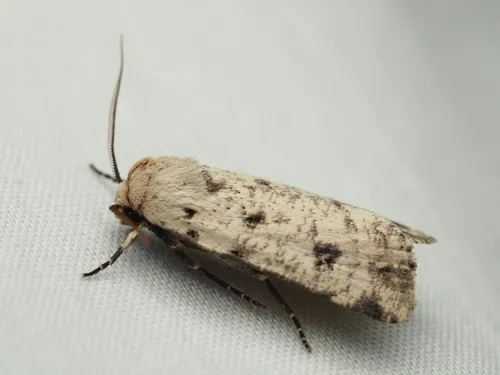
Anicla cemolia - Hodges#10912
Anicla cemolia
Anicla cemolia - Hodges#10912 (Anicla cemolia) is a species in the family Noctuidae, commonly known as owlet moths, belonging to the order Lepidoptera (Butterflies and Moths). It is classified within the subfamily Noctuinae, tribe Noctuini, superfami
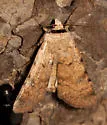
Anicla exuberans - Hodges#10905
Anicla exuberans
Identification: Powell & Opler (2009) stated "The adults are geographically variable in FW color and size." ( 3 ) The black thoracic collar is diagnostic.
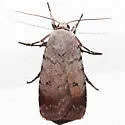
Anicla lubricans - Hodges#10901
Anicla lubricans
Identification: Easily confused with the very similar Anicla illapsa . The safest way to separate the 2 species is by looking at the hindwings. On Anicla illapsa , the hindwings are white but on Anicla lubricans the hindwings are grayish.
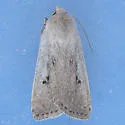
Anicla simplicius - Hodges#10907
Anicla simplicius
Identification: Adult: forewing pale gray or tan-colored with sparse black speckling; three irregular black pieces grouped in area of reniform spot; faint dark streaks in areas where orbicular and claviform spots normally present; terminal line compo
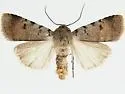
Anicla sullivani - Hodges#10901.1
Anicla sullivani
Identification: Specimen identified by DNA analysis (BOLD).
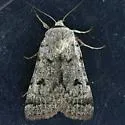
Anicla tepperi - Hodges#10910
Anicla tepperi
Identification: A medium size (3.6 - 4.0 cm wingspan) blue-grey moth with prominent but variable darker grey or black banding and streaking. The normal lines are usually well-marked, in particular the antemedian and postmedian lines. The orbicular sp
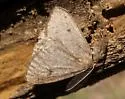
Animomyia smithii - Hodges#6788
Animomyia smithii
Identification: Adults - see Rindge's description. ( 3 )
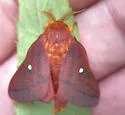
Anisota fuscosa - Hodges#7717.1
Anisota fuscosa
Regardless of the debate surrounding the name fuscosa , the Anisota stigma -like populations from Eastern Texas are noticeably deeper brown, and according to Burke and Peigler, have larvae unlike A. stigma and much more similar to A. consularis .
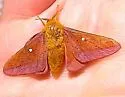
Anisota manitobensis - Hodges#7717
Anisota manitobensis
Identification: Similar to Anisota stigma, but dark speckling is reduced or absent and the wings are generally a bit narrower (males) and with more contrasting pink shading (both sexes). A very rarely reported saturniid, records are very sparse and p
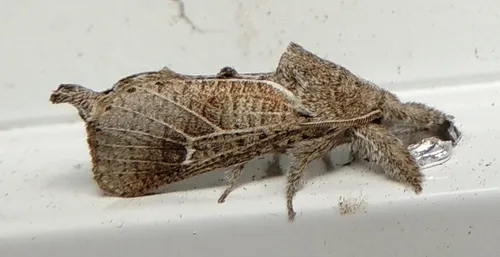
Anna Carpenterworm Moth
Givira anna
Givira anna, the anna carpenterworm moth, is a moth in the Cossidae family. It is found in North America, where it has been recorded from Alabama, Arkansas, Florida, Georgia, Indiana, Kansas, Kentucky, Louisiana, Maryland, Mississippi, North Carolina
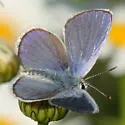
Anna's Blue - Hodges#4374.1
Plebejus anna
Identification: Distinguishable from Northern Blue - Plebejus idas only by more westerly distribution. From other blues by (usually) some marginal orange on ventral hind and front wings. No obvious dark spot on middle of upper front wings. Undersi
Annulata Mosaic
Colobura annulata
Identification: See discussion under Colobura . Very similar to Colobura dirce , differing in ventral wing pattern. With the lighter brown stripes on the apical half of the ventral front wings narrower than in C. dirce , and not narrowing distinctly
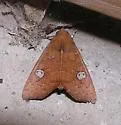
Anomis luridula - Hodges#8549
Anomis luridula
"Thesaurus of Agricultural Organisms: Pests, Weeds, and Diseases" suggests that A. texana and A. luridula are synonyms (and gives the common name "small cotton leafworm"). But MPG lists the two species separately. Very little background information i
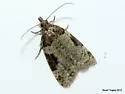
Anopina ednana - Hodges#3584
Anopina ednana
Identification: Adult - see original description in Print References.
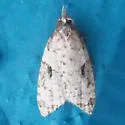
Anopina eleonora - Hodges#3585
Anopina eleonora
Identification: Adult - grey with well-defined, dark basal and costal patches. Powell & Opler collected none at lights, all diurnally, flushed from Arctostaphylis and Ceanothus .
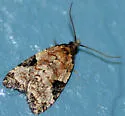
Anopina triangulana - Hodges#3583
Anopina triangulana
Identification: Adult - pale gray mottled with dark gray and well defined dark triangle beyond midcosta. Females with distal half mostly fuscus clouded, obscuring the triangle, and the basal area is pale ocherous or tan. Also see Obraztsov.
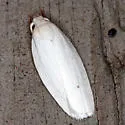
Antaeotricha albulella - Hodges#1024
Antaeotricha albulella
Identification: Adults are white with a minute, indistinct ochreous spot at the end of the disc. There are also some scattered dark brown scales.
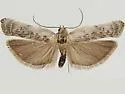
Antaeotricha furcata - Hodges#1017
Antaeotricha furcata
Identification: Walsingham stated the forewing of Antaeotricha furcata lacks the gray cloudy patches on Antaeotricha schlaegeri . The forewings are also narrower and more elongated than A. schlaegeri . The Duckworth description is available in PDF.
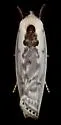
Antaeotricha lindseyi - Hodges#1012
Antaeotricha lindseyi
Identification: See Barnes & Busck original description here .
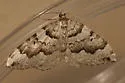
Antepirrhoe fasciata - Hodges#7211
Antepirrhoe fasciata
Identification: The original description as Eustroma fasciata Barnes & McDunnough, is available online at the link in the print references below. - Specimen identified by DNA analysis (BOLD).
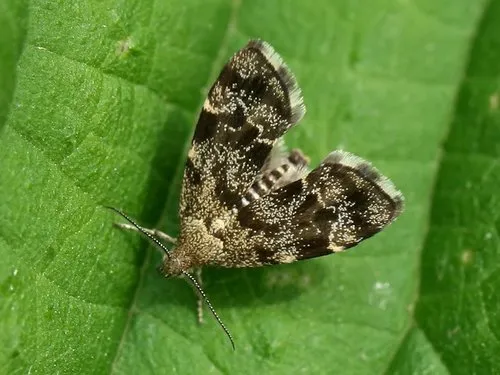
Anthophila fabriciana
Anthophila fabriciana
Wingspan 10-15 mm. Wing colour a patchwork of browns and greys sometimes with a frosted appearance. The edge of the forewing is often chequered. Waste ground and in hedgerows and gardens where Common Nettle grows. It flies in the daytime from May thr
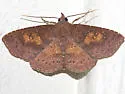
Antiblemma filaria - Hodges#8578
Antiblemma filaria
Identification: Determined by Don Lafontaine (Canadian National Collection)
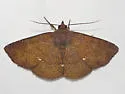
Antiblemma rufinans - Hodges#8577
Antiblemma rufinans
Antiblemma rufinans - Hodges#8577 (Antiblemma rufinans) is a species in the family Erebidae, belonging to the order Lepidoptera (Butterflies and Moths). It is classified within the subfamily Eulepidotinae, superfamily Noctuoidea. This species belongs
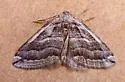
Anticlea pectinata - Hodges#7332
Anticlea pectinata
Identification: Unlike some of the other North American species in this genus, this species has males with pectinate antennae and females without pectines.
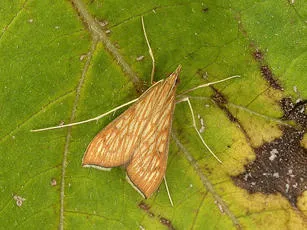
Antigastra catalaunalis
Antigastra catalaunalis
Wingspan about 20 mm. An orangey-brown and white moth that bears a superficial resemblance to Nascia cilialis, but has generally narrower forewings. Probably best looked for in areas where the larval foodplant is present. Previous records suggest Sep
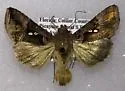
Antillean Looper Moth - Hodges#8886.1
Enigmogramma antillea
Identification: Adult : FW brown with slight purple hue. HW gray, becoming paler towards the base.
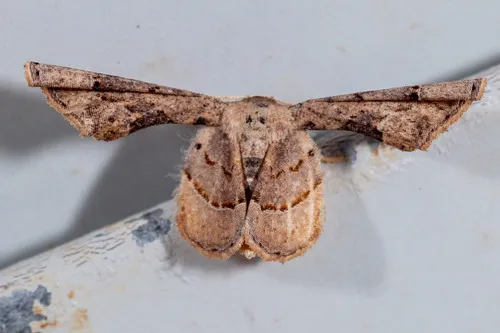
Antiplecta triangularis - Hodges#7652
Antiplecta triangularis
Antiplecta triangularis is a species of scoopwing moth in the family Uraniidae. It is found in the Caribbean Sea, Central America, and North America.
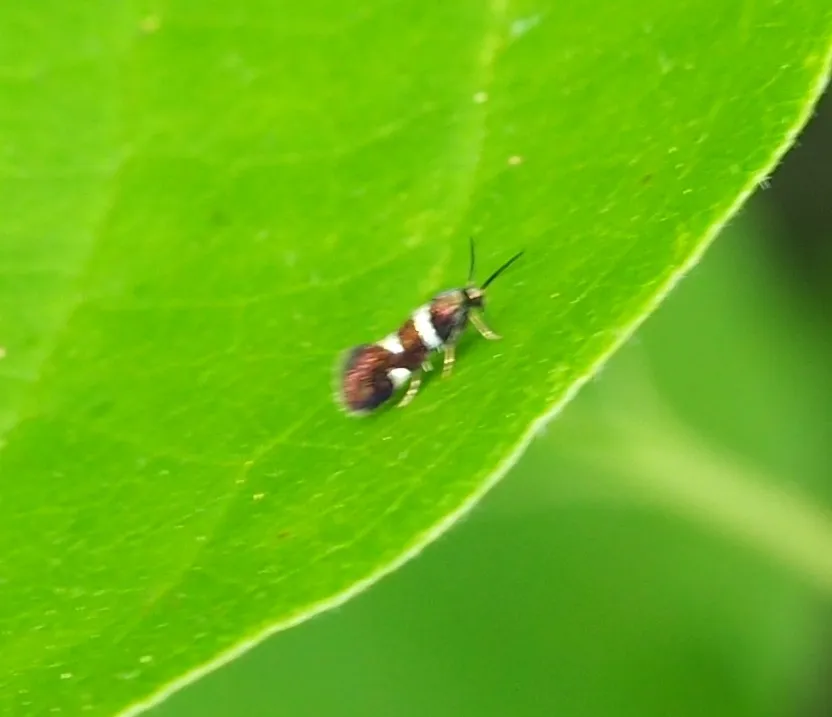
Antispila cornifoliella - Hodges#0232
Antispila cornifoliella
Identification: Pupa - see Mosher, 1916 in Print References below. Adult - blackish-brown with metallic markings.
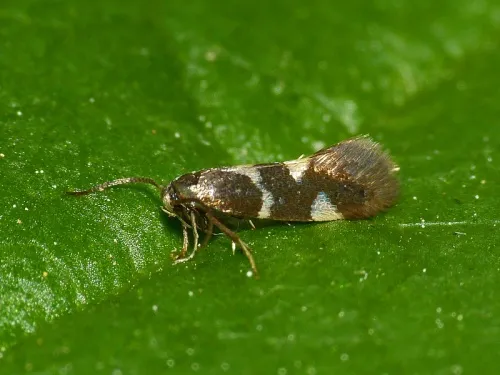
Antispila metallella
Antispila metallella
Wingspan 8 to 9 mm. A small bronzy metallic species with paler metallic markings. The larva mines the leaves of Dogwood. The mine size needs to be measured - length of the long axis of the oval cut out for Antispila metallella should be 5.5 to 7 mm.
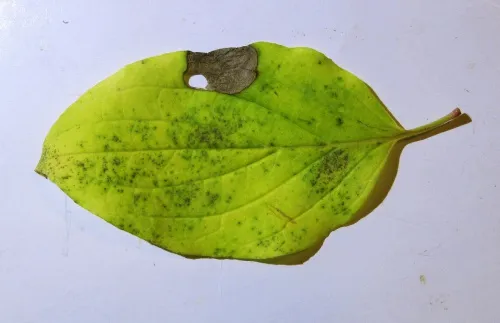
Antispila petryi
Antispila petryi
Wingspan 6 mm. Most likely to be recorded from vacated mines and leaf cut-outs. The mines occur on Dogwood, the larva eating out a short gallery leading to a blotch, then cutting an oval case. Antispila metallella , Antispila treitschkiella . Adult m
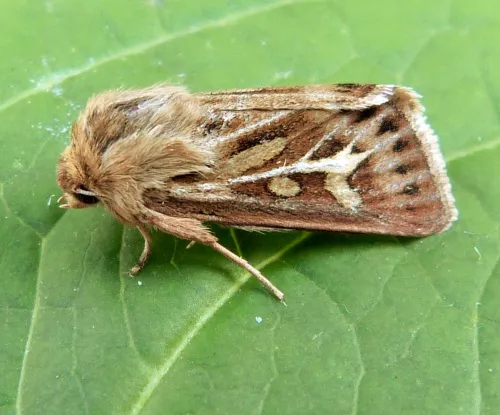
Antler Moth
Cerapteryx graminis
Wingspan 27-39 mm. A very distinctively marked moth. The adults fly from June to September, and fly during the day as well as at night, when they come to light. The larvae feed on various types of grasses, sometimes abundantly, and the species is wel
Anycteola fotelloides - Hodges#9840
Anycteola fotelloides
Identification: Adult : see referenced bulletin for detail description My thanks to Christian Schmidt for identifying the images I sent to him. [A. Hendrickson]
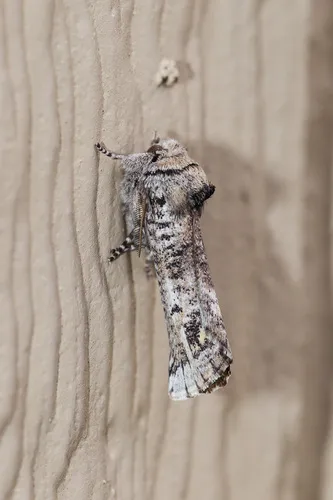
Aon Moth - Hodges#8954
Aon noctuiformis
Identification: Adult: head and thorax dark gray tinged with rufous; thin transverse black line behind collar, rear edge of thorax raised, tufted, often blackish. Forewing mottled: black striations and speckling in basal half and in subterminal area
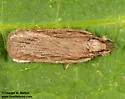
Apachea barberella - Hodges#0947
Apachea barberella
Identification: Busck included a description of the adult. Clarke described the genitalia of both sexes and places in the new genus Apachea .
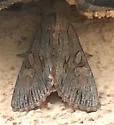
Apamea acera - Hodges#9338
Apamea acera
Identification: "Apamea acera is the only large ash-gray Apamea in North America. Usually, there is some orange shading around the orbicular and reniform spots. The basal dash is sharply defined in black and frequently extends almost to the postmedia
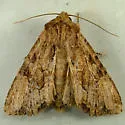
Apamea atriclava - Hodges#9333.1
Apamea atriclava
Identification: Specimen identified by DNA analysis (BOLD). ( 3 )
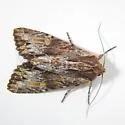
Apamea atrosuffusa - Hodges#9336
Apamea atrosuffusa
Identification: The original description as Parastichtis atrosuffusa Barnes & McDunnough, is available online in the print references below.
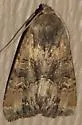
Apamea burgessi - Hodges#9378
Apamea burgessi
Identification: Description can be found in MONA Fascicle 26-9 at link in citations below.
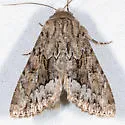
Apamea cinefacta - Hodges#9357
Apamea cinefacta
Identification: Specimens identified by DNA analysis:
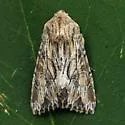
Apamea commoda - Hodges#9359
Apamea commoda
Identification: Two very different forms. A medium-sized very dark chocolate or red-brown moth, dusted and shaded with blackish. FW veins black with a few light scales, pattern normal, black where visible, but often lost. Lines fine, single, scallope
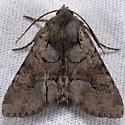
Apamea digitula - Hodges#9364.1
Apamea digitula
Identification: Apamea sordens and A. digitula can only be separated by dissection or DNA. ( 3 ) , ( 4 ) Specimen identified by DNA analysis (BOLD). ( 5 )