
Butterflies and Moths
Order Lepidoptera
The Butterflies and Moths (Order Lepidoptera) includes 11,813 species across 112 families and 2,787 genera in our directory.
About Butterflies and Moths
Lepidoptera includes approximately 180,000 described species of butterflies and moths. Moths outnumber butterflies roughly 10:1. The monarch butterfly's eastern population has declined by more than 80% since the mid-1990s, and the western population by over 95% since the 1980s. The IUCN lists the migratory monarch as Vulnerable.
Economic Impact
Lepidoptera are critical pollinators. In Europe, grassland butterfly species have declined by almost 50% since the early 1990s. In the UK, three-quarters of butterflies are in decline. In the U.S., five butterfly species have gone extinct since 1950, with 29 listed as endangered.
Ecological Role
Butterflies and moths are essential indicators of ecosystem health. As caterpillars, they are a primary food source for birds - a single nest of blue tit chicks requires ~10,000 caterpillars. Adult moths pollinate many night-blooming plants.
Families in Lepidoptera (112)
Species in Lepidoptera (11,813)
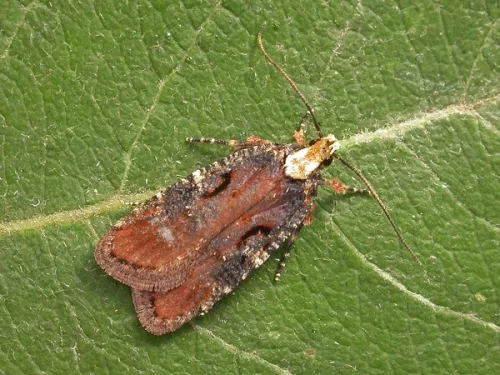
Agonopterix liturosa
Agonopterix liturosa
Wingspan 17 to 20 mm. One of the more distinctive Agonopterix species, with its combination of well-marked purplish-brown forewings and buffish thorax and head. Areas where the larval foodplant is common. The normal flight period for the adults is Ju
Agonopterix lythrella - Hodges#0857
Agonopterix lythrella
Identification: Confusion with Agonopterix walsinghamella on BugGuide has occurred for several years. The two species have several notable differences though: -Agonopterix walsinghamella has mostly gray scaling with some red and black scales on the t
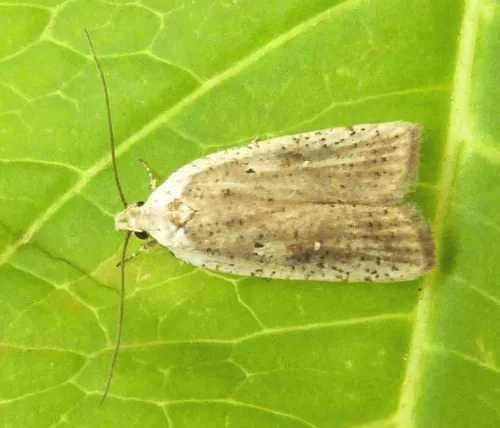
Agonopterix nervosa
Agonopterix nervosa
Wingspan 16 to 22 mm. The adults vary, but the forewing usually has a distinct whitish band curving from the base of the wing along nearly half of the costa. However, other species share this feature. Fresh adults often have noticeably pink or purpli
Agonopterix nigrinotella - Hodges#0868
Agonopterix nigrinotella
Identification: "The combination of bright ochreous scaling on the head, thorax, and base of forewing costa and the plain, medium-brown forewing speckled with many black scales, is diagnostic…" T. Harrison, pers. comm. 18 iv 2022
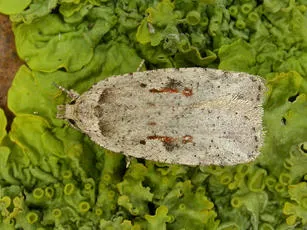
Agonopterix ocellana
Agonopterix ocellana
Wingspan 19 to 22 mm. This fairly distinctive Agonopterix is easily identified by the combination of rufous, black and white in the centre of the forewing. Overwinters as an adult, often being found in early spring as it awakes from hibernation. The
Agonopterix oregonensis - Hodges#0861
Agonopterix oregonensis
Identification: Large photo of pinned adult at University of California, Berkeley Specimen identified by DNA analysis (BOLD). ( 4 )
Agonopterix posticella - Hodges#0896
Agonopterix posticella
Identification: Clarke describes the adult, including genitalia.
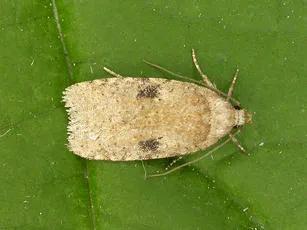
Agonopterix propinquella
Agonopterix propinquella
Areas where the larval foodplants are found. The adults emerge in a single generation in September, and hibernate through the winter, re-emerging in spring. The moth often comes to light. The eggs of this species are laid on a leaf of Creeping Thistl
Agonopterix pteleae - Hodges#0865
Agonopterix pteleae
Identification: Wings: Unmistakable rough, raised hair-like scales over wings (may be absent on over-wintered moths). Forewings light yellowish-brown, with patchy, mottled black and dark brown rough, raised scales. Base more whitish-yellow, outer bor
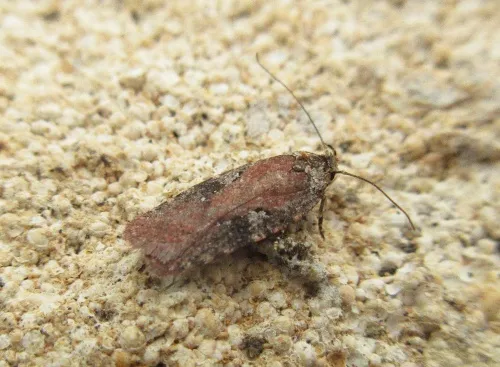
Agonopterix purpurea
Agonopterix purpurea
Wingspan 13 to15 mm. It is one of the smallest of the Agonopterix genus, but also one of the more distinctively coloured and patterned. This is a scarce species in our area – photographs are required to support records. Adults emerge from August, ove
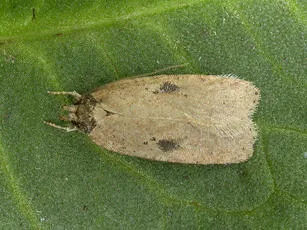
Agonopterix subpropinquella
Agonopterix subpropinquella
Wingspan 16 to 22 mm. It can be confused with other species such as A. propinquella, and is usually best identified by dissection. The form rhodochrella is more distinctive, with darker head and thorax, and more prominent wing markings. Areas where t
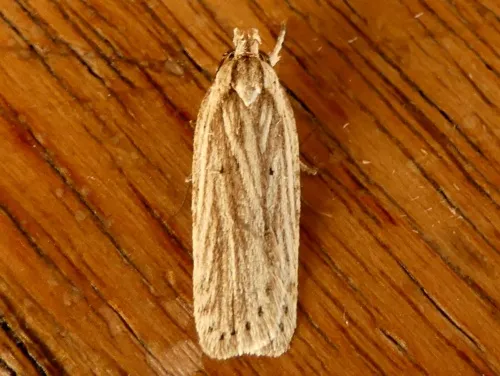
Agonopterix umbellana
Agonopterix umbellana
Wingspan about 21 mm. This species can resemble the more striated forms of A. nervosa, but has a more rounded termen, with a row of black dots and two brownish lines in the cilia. It also has a dark central line on the thorax. Unless identified by a
Agreeable Tiger Moth - Hodges#8134
Spilosoma congrua
Identification: Adult: forewing pure white or marked with transverse rows of black spots; antennal shaft white; inner face of pro-femora yellow-orange; hind tibiae with both pre-apical and apical pair of spurs; abdomen white [adapted from description
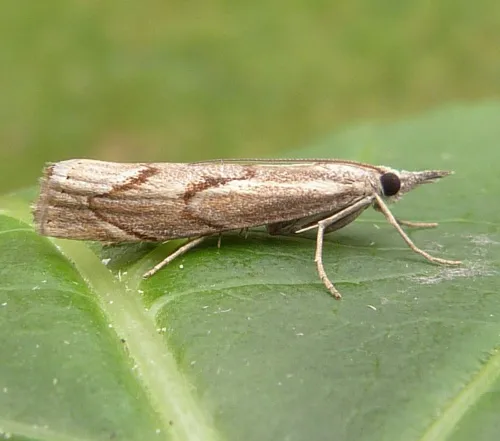
Agriphila geniculea
Agriphila geniculea
Wingspan 20-25 mm. The strongly elbowed cross-lines generally serve to distinguish this moth, but on some specimens the lines are obscure. It is an inhabitant of dry, grassy areas, sand-dunes and similar locations. The larva, found from late Septembe
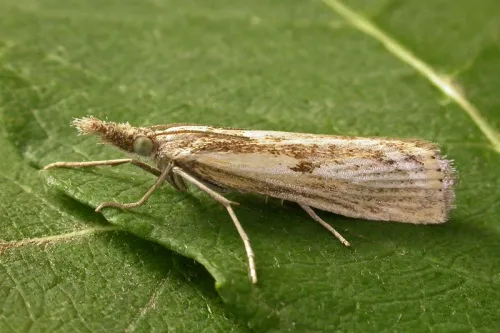
Agriphila inquinatella
Agriphila inquinatella
Wingspan about 22 mm. Quite distinctive, but variable, with its whitish or creamy ground colour suffused with darker markings. This species prefers dryer grassy areas. On the wing from July to September, it can be attracted by light. Present througho
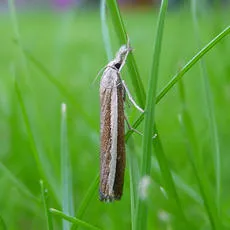
Agriphila latistria
Agriphila latistria
Wingspan 22 to 27 mm. Distinguished by its single, white longitudinal streak against a brownish background. This species is local in dry or sandy areas, being commoner near the coast. It flies in July and August and is nocturnal. Distributed in the s
Agriphila plumbifimbriellus - Hodges#5397
Agriphila plumbifimbriellus
Identification: Adult: forewing whitish to pale yellowish with dark brown speckling between veins, giving the wing a streaked appearance; thin dark ST line angles sharply near costa and extends toward base a considerable distance before touching cos
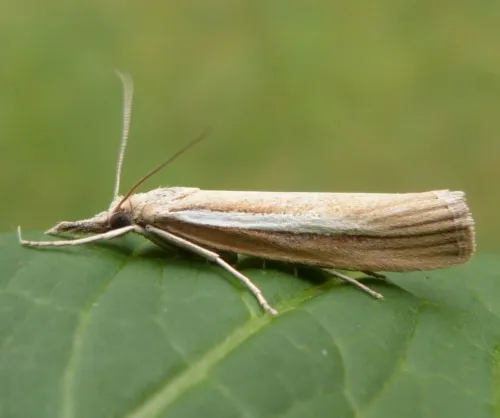
Agriphila selasella
Agriphila selasella
Wingspan around 26 mm. Although superficially resembling Agriphila tristella , this species has the forewing tip more squared, a much reduced facial cone and a whiter longitudinal streak which doesn't have quite such obvious 'fingers' at the rear. Of
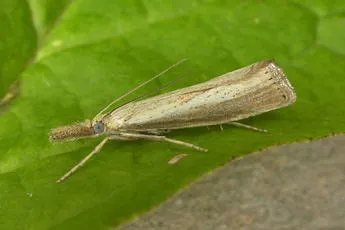
Agriphila straminella
Agriphila straminella
A pale and rather plain looking 'grass moth'. The food plants are various grasses, especially Sheep's-fescue, where the larvae feed internally on the lower part of the stems. Present in good numbers throughout the whole of the British Isles. In the B
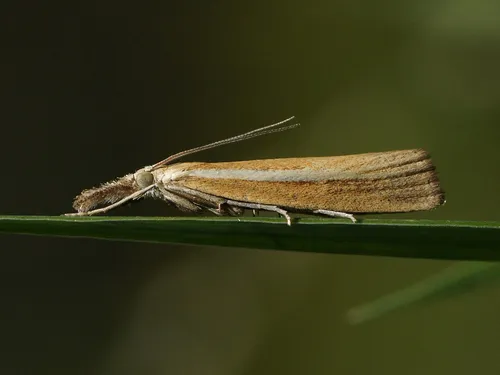
Agriphila tristella
Agriphila tristella
Wingspan around 27 mm. Fairly distinctive with its pale yellowish or creamy longitudinal streak which branches into 'fingers' towards the wing tip. Flying from June to September, it is nocturnal and a regular visitor to the light-trap. The larvae fee
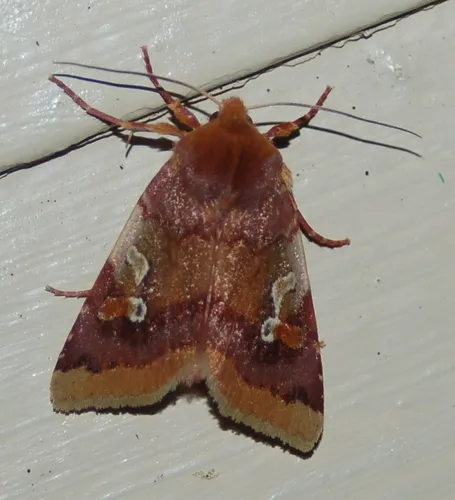
Agrochola pulchella - Hodges#9955
Agrochola pulchella
Identification: Adult: forewing with broad dark orange terminal band; remainder of wing medium to dark brown (median band usually slightly lighter brown); lower half of reniform spot whitish; orbicular spot either not noticeable or rimmed in white; h
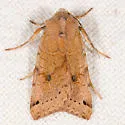
Agrochola purpurea - Hodges#9954
Agrochola purpurea
Identification: Adult: forewing variably light purplish-brown to reddish-orange; lines and markings faint except for dark subapical dash along costa and black lower half of reniform spot; subterminal line a series of black dots; terminal line either
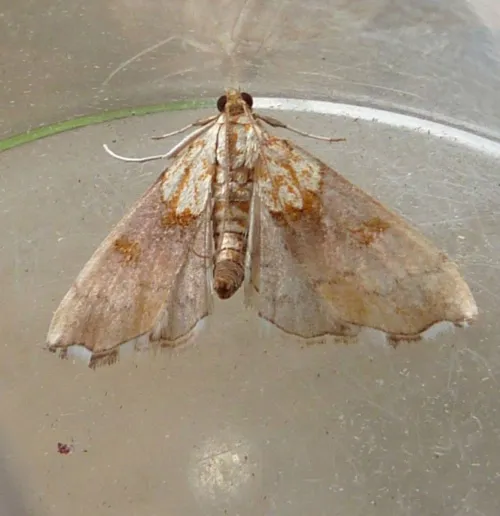
Agrotera nemoralis
Agrotera nemoralis
Wingspan 20 to 24 mm. An attractive and distinctive moth. Associated with Hornbeam (Carpinus betulus) and a few other deciduous trees, but usually encountered as a migrant in Britain. The larvae feed on Hornbeam, Birch, Hazel and Chestnut leaves. Per
Agrotis antica - Hodges#10660.1
Agrotis antica
Agrotis antica - Hodges#10660.1 (Agrotis antica) is a species in the family Noctuidae, commonly known as owlet moths, belonging to the order Lepidoptera (Butterflies and Moths). It is classified within the subfamily Noctuinae, tribe Noctuini, superfa
Agrotis ruta - Hodges#10647
Agrotis ruta
Identification: Specimen determined by DNA analysis (BOLD).
Agrotis vancouverensis - Hodges#10652
Agrotis vancouverensis
Identification: Larvae - gray with diffuse dark oval or diamond-shaped patch on the dorsum of each segment. There is a dark gray subdorsal line with dark gray shading speckled with white along the sides. The spiracles and cervivcal shield are black.
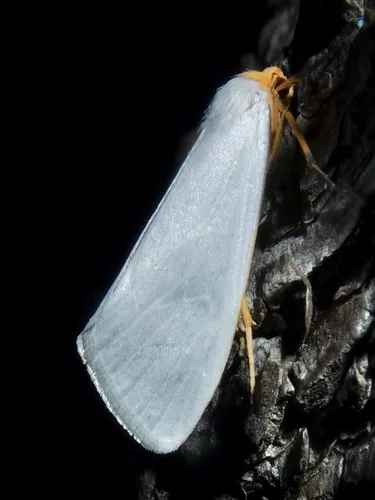
Agylla septentrionalis - Hodges#8054
Agylla septentrionalis
Identification: Antennae and head bright orange, thorax white, abdomen gray dorsally and ventrally orange. Legs orange, tarsi and half of tibia on first two pairs are gray. Forewings are slivery white dorsally with the costal edge blackish at base. U
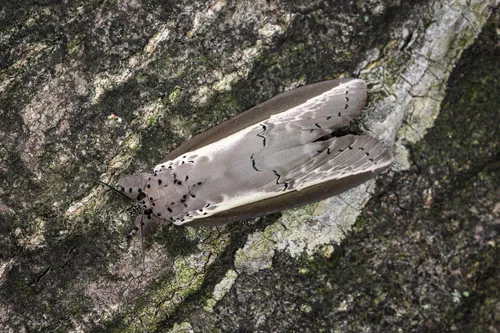
Ailanthus Defoliator
Eligma narcissus
The Ailanthus defoliator, (Eligma narcissus), is a moth in the Nolidae family. It is found in the Oriental tropics and subtropics of China, India, Sri Lanka, Java and Southeast Islands.
Ailanthus Silkmoth - Hodges#7759
Samia cynthia
It is a silk producing moth. It was introduced from China in the late 1800s. There is legitimate debate as to whether there are still wild populations of this species in our area. The images here so far are from captive, hand-raised populations.
Airy Apamea - Hodges#9341
Apamea vultuosa
Identification: Adult: forewing light brown with two dark gray dashes along outer margin, dark shading in upper half of median area, and basal half of reniform spot filled with gray; PM line a series of white-dotted black streaks along veins; hindwin
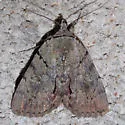
Alabama Underwing - Hodges#8869
Catocala alabamae
Identification: Adult - forewing of nominate subspecies has thick black AM line and dark shading in subterminal area near inner margin; subspecies titania is plainer looking, with less distinct AM line, and faint or absent shading in subterminal area
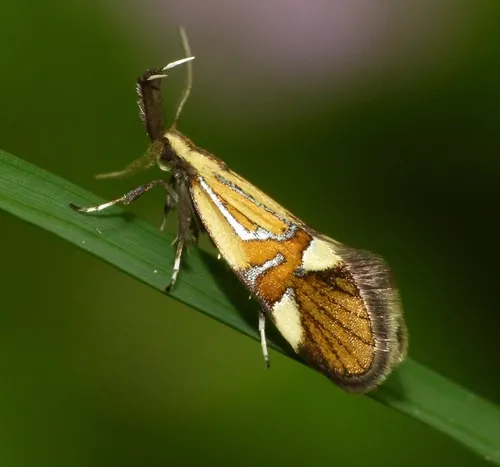
Alabonia geoffrella
Alabonia geoffrella
Wingspan 17-21 mm. A spectacular day-flying species, with its combination of rufous, white and metallic blue markings and remarkably large labial palps. Please provide photograph to support records as this moth is uncommon in our area. It occurs reas
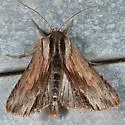
Alastria chico - Hodges#9522.1
Alastria chico
Identification: Detailed description at Pacific Northwest Moths Lafontaine & Troubridge original description.
Alberada bidentalla - Hodges#5975
Alberada bidentella
Identification: considerably small for the genus; AM & PM lines shallowly dentate [
Alberada californiensis - Hodges#5975.1
Alberada californiensis
Identification: Resembles Alberada parabates in size, color and maculation, but is more heavily dusted with white in costal half of forewing and lacks most of the ochre or pale reddish brown in posterior half of wing. The key to species for Alberada
Alberada candida - Hodges#5975.3
Alberada candida
Identification: paler than other species in the genus
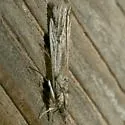
Alberada franclemonti - Hodges#5975.2
Alberada franclemonti
Identification: The medial area of forewing is mostly white on costal half; pale with distinct dark smudge on inner half. The AM/PM lines are shallowly dentate.
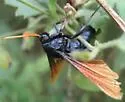
Alcathoe autumnalis - Hodges#2622.1
Alcathoe autumnalis
Adult is a remarkably good mimic of Pompiliid spider wasps.
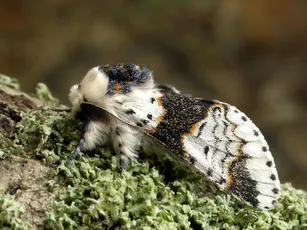
Alder Kitten
Furcula bicuspis
Wingspan 30 to 35 mm. Of the three 'kittens' (Furcula spp.) in Britain, this has the most contrasting appearance, having dark slate-grey, almost black bands on a white background. The single generation flies from May to July. The larvae feed on Birch
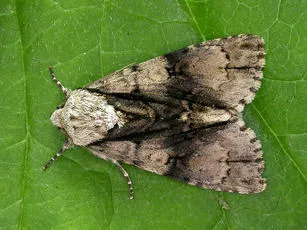
Alder Moth
Acronicta alni
Wingspan 33 to 38 mm. This subtly-marked species varies less than some of its congeners, but melanic forms do occur in places. Damper areas around Alder and wooded areas containing Birch. The adults appear in May and June and are attracted to mercury
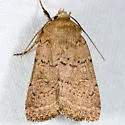
Alder Quaker - Hodges#10533
Homorthodes communis
Identification: Adult: forewing yellowish-brown with fine black irregular AM and PM lines; other markings faint except for dark shading in lower half of reniform spot; ST line usually visible but not prominent; hindwing light gray, paler toward base;
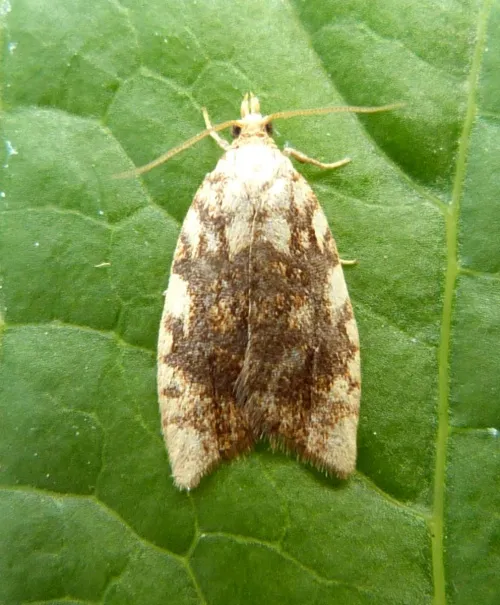
Aleimma loeflingiana
Aleimma loeflingiana
Wingspan 14-19 mm. The darker markings on the forewings can be somewhat variable but are usually fairly diagnostic of the species. Primarily a woodland species but can be found in any area containing Oak It flies during July and August from dusk into
Aleptina aleptivoides - Hodges#9072
Aleptina aleptivoides
Identification: The antennae of both sexes are filiform. ( 4 )
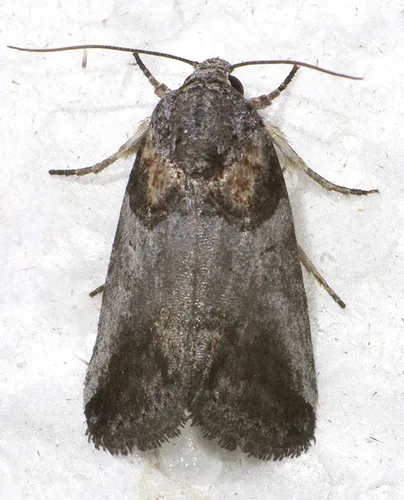
Aleptina clinopetes - Hodges#9072.1
Aleptina clinopetes
Identification: Dyar description in PDF or view online.
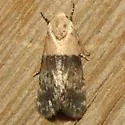
Aleptina semiatra - Hodges#9165
Aleptina semiatra
Identification: Smith original description as Acontia semiatra is online in PDF. Todd et al stated "This species is unmistakable and superficially is totally unlike the rest of the genus. The forewing is dirty white with a dull grey median area. The
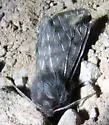
Alexicles aspersa - Hodges#8143
Alexicles aspersa
Endangered and Threatened Wildlife and Plants; Partial 90-Day Finding on a Petition To List 475 Species in the Southwestern United States as Threatened or Endangered With Critical Habitat. federalregister.gov . PDF
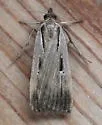
Alfalfa Looper - Hodges#8466
Tathorhynchus exsiccata
Identification: Adult: forewing light brownish-gray with diffuse dark shading beyond subterminal line; dark basal dash and dark strip between pale reniform and orbicular spots; reniform spot contains two dark dots; pale streaking along veins, and som
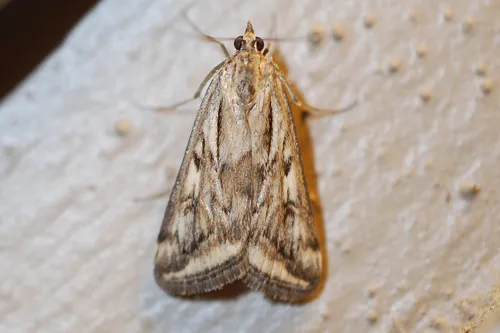
Alfalfa Webworm - Hodges#5017
Loxostege cereralis
Identification: Adult: forewing whitish or pale gray with several longitudinal black and brown streaks; whitish or pale yellow patch in median area near costa; subterminal area yellow, shaped liked an almost-flat triangle; fringe dark brownish-gray;
Alien Probole - Hodges#6837
Probole alienaria
DO NOT ADD IMAGES TO THIS TAXON. For now, all Probole images should be placed under Probole amicaria . See info below and comments in the Moth Forum here . After revision and DNA work (among numerous other approaches) on the genus by Tim Tomon, it wa
Allerastria albiciliatus - Hodges#9020
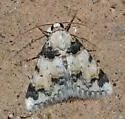
Allerastria albiciliatus
Identification: Notes distinguishing Allerastria albiciliatus from female Forsebia cinis by Jan Metlevski . some of the common forms:
Alligatorweed Stemborer - Hodges#5913
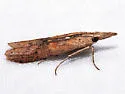
Macrorrhinia endonephele
First introduced to the United States in 1971 as a possible biological control of the accidentally introduced pest alligatorweed, Alternanthera philoxeroides (Amaranthaceae). ( 4 )
Alope Sphinx - Hodges#7832
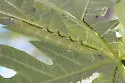
Erinnyis alope
Identification: The caterpillar is brown on the upper side, and pale green on the lower side, the colors being separated by the dark brown interrupted lateral band on either side of the body. On the third segment from the head there is a dark spot re
Alpheias oculiferalis - Hodges#5648
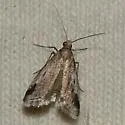
Alpheias oculiferalis
I have moved these images to species after having 3 specimens tested by BOLD and given a 98%+ ,match to Alpheias oculiferalis. Kyhl Austin first noticed that they looked like Alpheias and I asked Ed. Knudson, and he agrees with the species placement
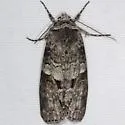
Alternate Woodling - Hodges#10517
Egira alternans
Identification: Adult : FW pale gray, shaded reddish-brown in basal and median areas. Often has thick, black bar in inner median area. Large, whitish orbicular spot is fused to pale band that extends to the inner margin. Reddish-brown reniform spot i
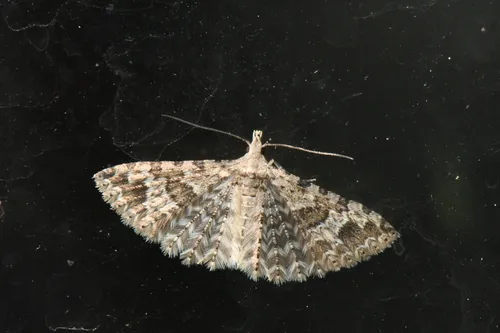
Alucita adriendenisi - Hodges#2313.1
Alucita adriendenisi
Alucita adriendenisi is a moth of the Alucitidae family. It was described by Bernard Landry and Jean-François Landry in 2004. It is found in North America from New York west across Canada (including Alberta and British Columbia) with disjunct populat
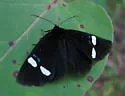
Alypiodes geronimo - Hodges#9313
Alypiodes geronimo
Identification: Charles Melton (News of the Lepidopterists' Society Vol 60 #2) has raised caterpillars of both species and discovered that most online resources have the larvae confused. A. bimaculata feeds on mirabilis and A. geronimo feeds on Boerh
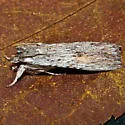
Amanda's pinion - Hodges#9891
Lithophane amanda
Identification: The original description as Xylina amanda Smith, is available in the print references below. Pacific Northwest Moths includes a detailed description of the adult. ( 3 ) Miller & Hammond (2003) describe the larva. ( 4 )
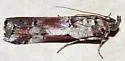
Ambesa laetella - Hodges#5759
Ambesa laetella
Identification: Heinrich (1956) revised description is in PDF. ( 4 )
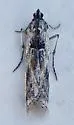
Ambesa lallatalis - Hodges#5761
Ambesa lallatalis
Identification: Heinrich (1956) revised description in PDF. ( 4 )
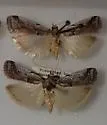
Ambesa mirabella - Hodges#5760.1
Ambesa mirabella
Identification: Very similar to Ambesa walshinghami except upper surface of hindwing and the abdomen ochreous in color.
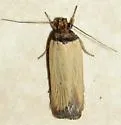
Ambrosia Seed Moth - Hodges#0902
Exaeretia gracilis
Identification: Adult - distinctive, pale yellow tan with base and prothorax dark brown. Larva - dark, almost black.
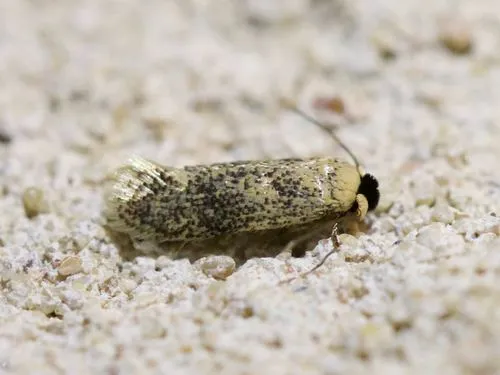
American Chestnut Moth
Zimmermannia bosquella
Zimmermannia bosquella is a moth of the family Nepticulidae. It is found in Virginia, Ohio, and Kentucky in the United States. It is now classified as conspecific with the American chestnut moth, which was formerly considered as extinct.
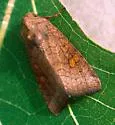
American Ear Moth - Hodges#9457
Amphipoea americana
Identification: forewing bright rusty-orange shaded with orangish-brown; veins, lines, and spots darker brown; the white scales or lack of white scales in the reniform spot is not useful in determining the species. hindwing grayish-brown with orange
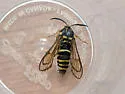
American Hornet Moth - Hodges#2543
Sesia tibiale
In flight they closely resemble wasps, even producing the droning sound. Strongly attracted to (Z,Z)-3,13-ODDA/(E,Z)-3,13-ODDA/(Z,Z)-3,13-ODDOH blended pheromone lures (Meyer & Cranshaw, 1994).
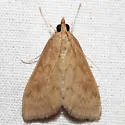
American Lotus Borer - Hodges#4946
Ostrinia penitalis
Identification: Adult: forewing orangish to light brown with zigzag AM line and jagged PM line that includes a large projecting "tooth" near the inner margin; ST line jagged and more diffuse than PM line; outer part of median area with dark diffuse b
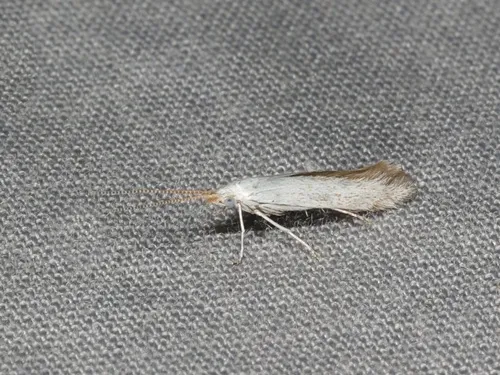
American Pistol Casebearer Moth
Coleophora atromarginata
The American pistol casebearer moth (Coleophora atromarginata) is a moth of the Coleophoridae family. It is found in North America, including Ohio, Maryland, Massachusetts and New Brunswick.
American Plum Borer - Hodges#5995
Euzophera semifuneralis
Identification: Adult: forewing reddish-brown to AM line, which is almost halfway along wing; AM and PM lines white, zigzag, enclosing a large mottled blackish patch that begins at the costa but usually stops short of the inner margin; dark shading i
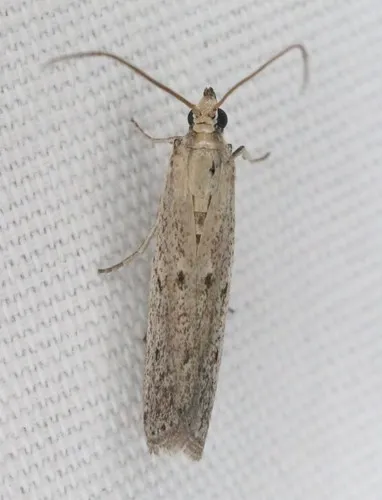
American Sunflower Moth
Homoeosoma electella
Homoeosoma electellum, the American sunflower moth, is a species of moth of the family Pyralidae. It is native to North America but also found in South America.
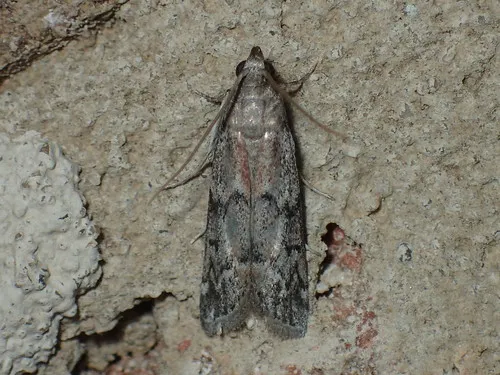
American Wax Moth - Hodges#6007
Vitula edmandsii
Identification: Adult : Distinctive blue-grey FW ground color, with a slight rosy suffusion with blackish markings. "In western North America the driedfruit moth, Vitula serratilineella Ragonot, is a pest of stored raisins, prunes, dried apple and ot
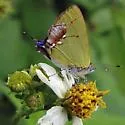
Amethyst Hairstreak - Hodges#4271
Chlorostrymon maesites
Identification: Brilliant Purplish blue above; ventrally brown; hind wing below has an apical patch extending three-fourths the distance to the front margin of the wing; females are dark brown above with base of front wing and most of hind wing dark
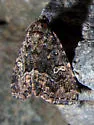
Amiana niama - Hodges#9034
Amiana niama
Dyar, H.G. 1094. Additions to the list of North American Lepidoptera. No. 2. Proceedings of the Entomological Society of Washington 6: 105 .
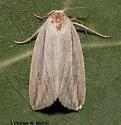
Amolita fratercula - Hodges#9822
Amolita fratercula
Identification: The original description of Amolita fratercula Barnes & McDunnough is available online. (link in the print references below). - Determined by Noel McFarland.
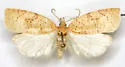
Amorbia knudsoni - Hodges#3749.1
Amorbia knudsoni
Identification: PARATYPE in the TAMUIC (collected by Ed Knudson) Holotype: Big Bend National Park, Green Gulch, Brewster County, Texas, United States.
Amphiphala carolana - Hodges#3783.42
Amphiphala carolana
Identification: Original description available at link in citations below.
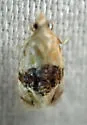
Amphiphala landryana - Hodges#3783.41
Amphiphala landryana
Identification: Original description available at link in citation below.
Amphiphala liatriana - Hodges#3783.4
Amphiphala liatriana
Identification: Original description available at link in citations below.
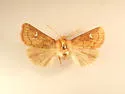
Amphipoea erepta - Hodges#9461
Amphipoea erepta
Identification: Adult: forewing yellowish-orange with brown AM, PM, and terminal lines; reniform spot pale cream with brown outline on basal side only; orbicular spot not noticeable; darker shading along veins in subterminal area; hindwing light yell
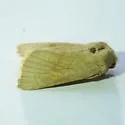
Amphipoea keiferi - Hodges#9460
Amphipoea keiferi
Identification: Straw colored or pinkish-buff forewing with faint transverse lines (sometimes absent) and darkened veins on forewing. Light orange scaling around reniform spot can be diagnostic .
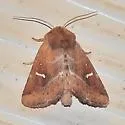
Amphipoea lunata - Hodges#9455
Amphipoea lunata
Identification: Smith original description as Apamea lunata is online.
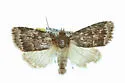
Amphipyra brunneoatra - Hodges#9641
Amphipyra brunneoatra
Identification: Pacific Northwest Moths has a detailed description. Specimen determined by DNA analysis (BOLD).
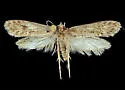
Amydria californica - Hodges#0329.1
Amydria californica
Identification: Specimen identified by DNA analysis: Genitalia:
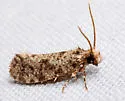
Amydria dyarella - Hodges#0333
Amydria dyarella
Identification: Genitalia: This is likely a species complex containing at least one undescribed species. All placements to this species should be considered tentative at best until further taxonomic investigation.
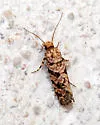
Amydria obliquella - Hodges#0336
Amydria obliquella
Identification: The original description of Amydria obliquella Dietz, is available in PDF or view online in the print references below.
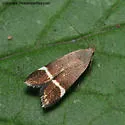
Anacampsis agrimoniella - Hodges#2230
Anacampsis agrimoniella
Identification: Adult - forewing slender with pointed tip, basal half medium gray, apical half dark gray to blackish; thick white band crosses wing about two-thirds from base (inner margin of band straight-edged, outer margin broadens at costa). Larv
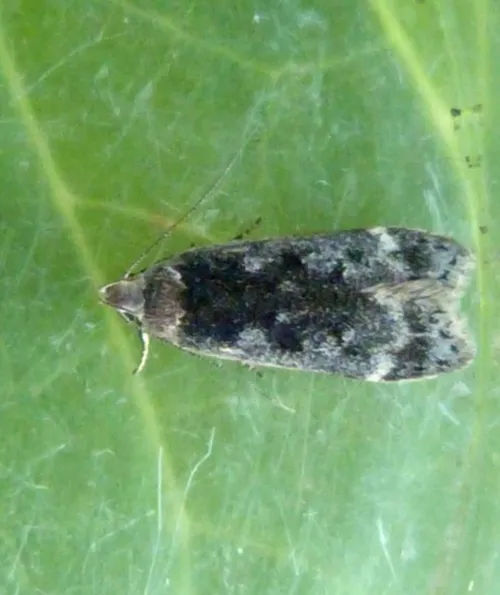
Anacampsis blattariella
Anacampsis blattariella
Wingspan 16 to 19mm. Very similar to the closely related A. populella and examination of the genitalia may be needed to be certain in differentiating between these two species. They rest on large birch trunks during the day. Adults fly at night from
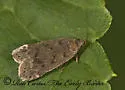
Anacampsis consonella - Hodges#2233.1
Anacampsis consonella
Identification: The adult is externally very similar to A. rhoifructella but can be differentiated from it on basis of phenology, appearance of mature larva, and genital morphology of both genders. Genitalia:
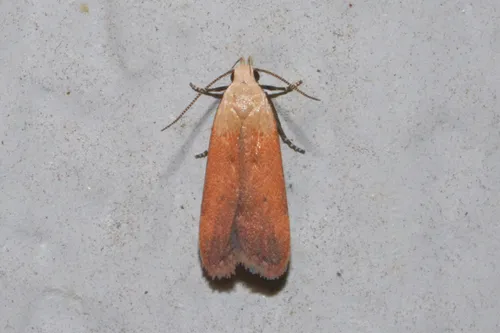
Anacampsis fullonella - Hodges#2236
Anacampsis fullonella
Anacampsis fullonella is a moth of the Gelechiidae family. It was described by Zeller in 1873. It is found in North America, where it has been recorded from Arkansas, Florida, Illinois, Kentucky, Louisiana, Mississippi, New Mexico, Oklahoma and Texas
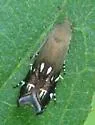
Anacampsis levipedella - Hodges#2241
Anacampsis levipedella
Identification: There is an undescribed species closely resembing levipedella A. levipedella A. nr. levipedella Watch Victor Engel video of "dancing" behavior of Anacampsis levipedella . Kawahara, Nishida & Rubinoff, 2011 ( JoLS 65 ) postulate that d
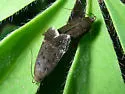
Anacampsis lupinella - Hodges#2242
Anacampsis lupinella
Identification: Larva - Caterpillar dull green; head testaceous with a black spot on each side near eyes, cervical shield of the same color, partly edged below with black; tubercles black; in a slight web between leaves of lupine.
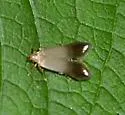
Anacampsis nonstrigella - Hodges#2244
Anacampsis nonstrigella
Identification: Adult - basal two-thirds of fore wings dark olive, apical part deep blackish brown, with a few golden-brown scales just before apex.
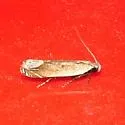
Anacampsis paltodoriella - Hodges#2245
Anacampsis paltodoriella
Identification: See original description in print reference below.
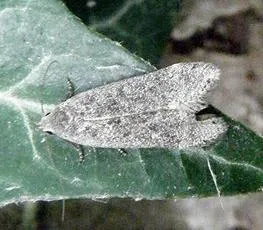
Anacampsis populella
Anacampsis populella
A very plain grey species. It is difficult to tell from A. blattariella but that has a different foodplant. Areas containing Willows, Poplars, Aspen etc. It flies in July and August and can sometimes be found at rest on leaves and trunks of the foodp
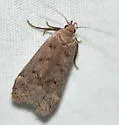
Anacampsis rhoifructella - Hodges#2248
Anacampsis rhoifructella
Identification: The adult is externally very similar to A. consonella but can be differentiated on basis of phenology, appearance of the mature larva, and genital morphology in both genders.
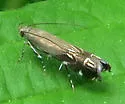
Anacampsis undescribed-nr-levipedella
Anacampsis undescribed-nr-levipedella
This page is for an apparently undescribed species of Anacampsis near levipedella . In my (ASH) opinion, the balance of the evidence based on the description would suggest that the species described by Clemens is that seen on the page for levipedella
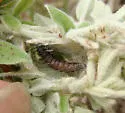
Anacampsis wikeri - Hodges# 2251.1
Anacampsis wikeri
The larva of a tortricid, Hystrichophora taleana , occupies the same feeding mode on leadplant at the same time as A. wikeri ; the tortricid larva is somewhat heavier, and has more prominent setal pinacula, than A. wikeri .
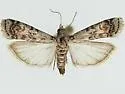
Anadelosemia condigna - Hodges#5729
Anadelosemia condigna
Identification: FW pale brown with blackish-brown AM and PM. Median area is mottled with medium brown. Blackish-brown subterminal line parallel to PM. Terminal line is a series of dark brown dashes. HW semi-hyaline bordered with pale brown. [descript
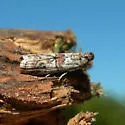
Anadelosemia texanella - Hodges#5728
Anadelosemia texanella
Identification: FW ashy white with black AM and PM. Diffuse brown subterminal line parallel to PM. Terminal line is a series of black dots. Two distinctive black spots in median area and reddish-brown splotch above AM near inner margin. HW semi-hyali
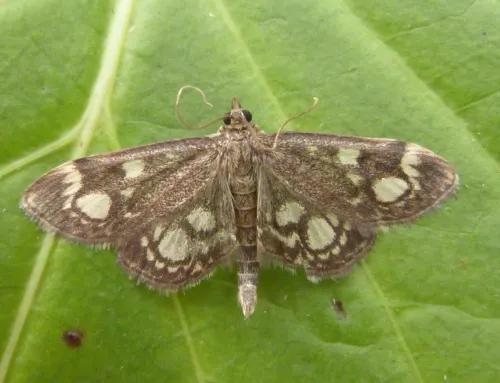
Anania coronata
Anania coronata
Wingspan 22-26 mm. This is an easy species to recognise - its dark brown wings have large pale circular patches and are lightly fringed. Rough ground and in gardens where Elder flourishes. June to July is the main flight period often attracted to lig
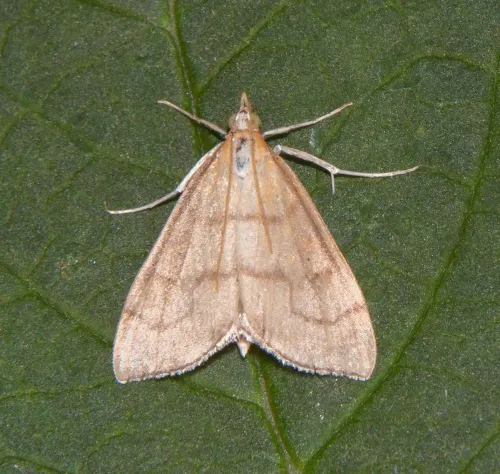
Anania crocealis
Anania crocealis
Marshes, water meadows and similar damp localities. The flight period of the adults is July to August, when it flies at night and can be attracted by light. The larvae feed on common Fleabane (Pulicaria dysenterica) or Ploughman's Spikenard (Inula co
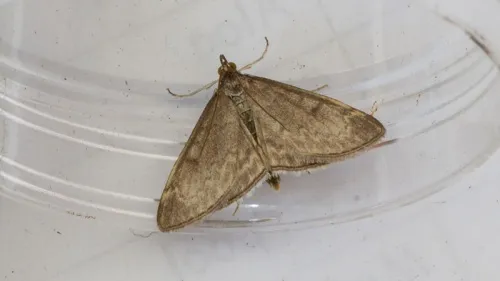
Anania fuscalis
Anania fuscalis
Wingspan 20 to 26 mm. A weakly-coloured brown species with light patterning. Damp pastures, grassland and marshy areas. The single generation of moths are on the wing in late May and June. The foodplants are Yellow-rattle and Common Cow-wheat. It is