
Ancylis diminuatana - Hodges#3379
Ancylis diminuatana
This record describes Ancylis diminuatana (species). Recorded family: Tortricidae. Recorded order: Lepidoptera.
Identification and Appearance
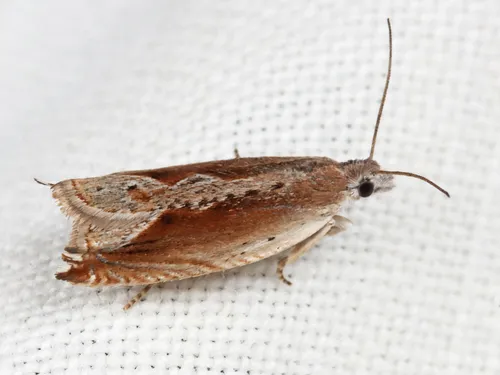
Adult - Very similar to Ancylis goodelliana . The main difference between A. diminutana and A. goodelliana is how straight or even the border between the dark and light halves of the wing is. A. goodelliana should have a more even lateral line separating the dark and light, while A. diminutana has a very sinuous line. The above comment was made prior to Gilligan et al. which also mentions, The light gray to white costal margin and black streaks along the radius and cubitus of the forewing separate A. goodelliana from other Ancylis treated here. The pale area of the costal margin is usually more extensive than it is for A. diminuatana , usually reaching the apex and the black streaks can be heavy but are usually very light making identification for some (most?) individuals difficult without dissection. Genitalia:
Classification
- Kingdom
- Animalia
- Phylum
- Arthropoda
- Class
- Insecta
- Order
- Lepidoptera (Butterflies and Moths)
- Superfamily
- Tortricoidea
- Family
- Tortricidae (Tortricid Moths)
- Subfamily
- Olethreutinae
- Tribe
- Enarmoniini
- Genus
- Ancylis
Imported taxonomy record. Source availability varies; see the source references and editorial policy below.
Habitat and Range
Geographic Range
Types and other specimens: Tryon, NC ( Fiske , May 12); Winchendon, MA (F.A. Merrick , May 26 to June 2); Plummers Island, MD & Washington D.C. (A. Busck , May 19 to June 1); Ramapo, NY Kearfott , May 27); Caldwell, NJ (Kearfott, May 17-22); British Columbia (Doctor Taylor & Bryant , June and July 4); Denver, CO ( Oslar , April 23).
Additional species information
Species notes from the sources
Etymology: Specific epithet for "a specimen of this species labeled ' diminuatana Wlsm.,' but I have not been able to find the name or a description in any of Walsingham's writings." Ancylis diminuatana Kearfott, 1905 was synonymized with Ancylis diminutana (Haworth, 1811) in Heinrich . Hodges et al. erroneously listed A. diminuatana as a misspelling of A. diminutana . Both A. diminuatana and A. diminutana were in turn synonymized Ancylis geminana (Donovan, 1806) in Brown . Gilligan et al. elevated both A. diminutana and A. diminuatana back to full species status. A. diminutana and Ancylis geminana are now considered to be strictly Eurasia species.
About Butterflies and Moths: the wider group
Order-level background for Lepidoptera, the group containing Ancylis diminuatana. Species-specific details appear above.
Group overview
Lepidoptera includes approximately 180,000 described species of butterflies and moths. Moths outnumber butterflies roughly 10:1. The monarch butterfly's eastern population has declined by more than 80% since the mid-1990s, and the western population by over 95% since the 1980s. The IUCN lists the migratory monarch as Vulnerable.
Ecological role of the group
Butterflies and moths are essential indicators of ecosystem health. As caterpillars, they are a primary food source for birds - a single nest of blue tit chicks requires ~10,000 caterpillars. Adult moths pollinate many night-blooming plants.
Economic and practical significance of the group
Lepidoptera are critical pollinators. In Europe, grassland butterfly species have declined by almost 50% since the early 1990s. In the UK, three-quarters of butterflies are in decline. In the U.S., five butterfly species have gone extinct since 1950, with 29 listed as endangered.
Recorded sources for this group: IUCN Red List, Xerces Society, USFWS, PNAS, WWF. Imported estimates may describe particular regions or reporting periods.
Photos of Ancylis diminuatana - Hodges#3379 (2)
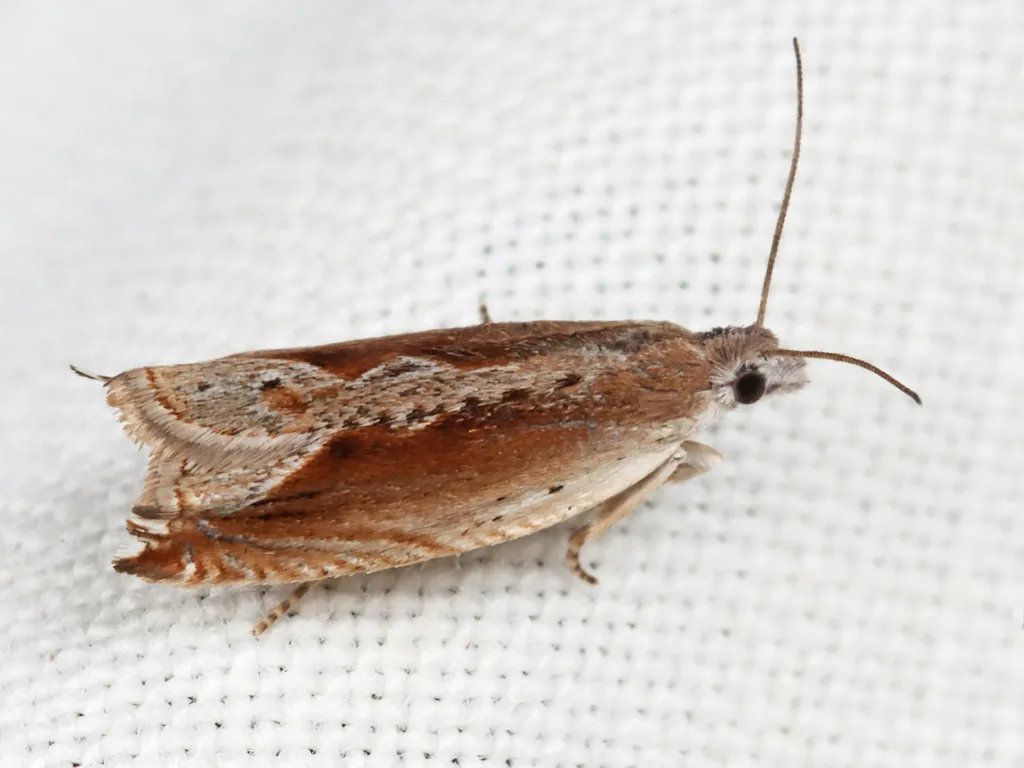
Photo credits: Contributed by Ken Childs; Additional contributions by Steve Nanz , Randy Hardy , Robert H. Biagi
Frequently Asked Questions About Ancylis diminuatana - Hodges#3379
What is Ancylis diminuatana - Hodges#3379?
Ancylis diminuatana - Hodges#3379 (Ancylis diminuatana) is a species in the family Tortricidae, within the order Lepidoptera.
How big is Ancylis diminuatana - Hodges#3379?
Wingspan 13.5-15 mm. FWL ♂ 4.5–7.5 mm, ♀ 5.5–8 mm.
How do you identify Ancylis diminuatana - Hodges#3379?
Adult - Very similar to Ancylis goodelliana . The main difference between A. diminutana and A. goodelliana is how straight or even the border between the dark and light halves of the wing is. A. goodelliana should have a more even lateral line separating the dark and light, while A. diminutana has a very sinuous line. The above comment was made prior to Gilligan et al. which also mentions, The light gray to white costal margin and black streaks along the radius and cubitus of the forewing separate A. goodelliana from other Ancylis treated here. The pale area of the costal margin is usually more extensive than it is for A. diminuatana , usually reaching the apex and the black streaks can be heavy but are usually very light making identification for some (most?) individuals difficult without dissection. Genitalia:
Where is Ancylis diminuatana - Hodges#3379 found?
Range: Types and other specimens: Tryon, NC ( Fiske , May 12); Winchendon, MA (F.A. Merrick , May 26 to June 2); Plummers Island, MD & Washington D.C. (A. Busck , May 19 to June 1); Ramapo, NY Kearfott , May 27); Caldwell, NJ (Kearfott, May 17-22); British Columbia (Doctor Taylor & Bryant , June and July 4); Denver, CO ( Oslar , April 23).