
Petrophila jaliscalis - Hodges#4775
Petrophila jaliscalis
This record describes Petrophila jaliscalis (species). Recorded family: Crambidae. Recorded order: Lepidoptera.
Identification and Appearance
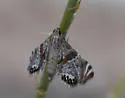
The red-orange or dark pink hue of the color patches on the FW and HW is the single most important character separating (fresh) jaliscalis from all other members of the genus. Faded/worn examples can shift to an orange hue. Typical examples from California (L), Arizona (Center), and Texas (R): Prior to August 2019, there had been a set of specimens and images from OK, AZ, and westward labeled as Petrophila santafealis , purportedly based on barcoded specimens (BIN BOLD:AAF9925). Subsequent research showed that the barcode labeling was in error; all that set of specimens have been reidentified (and moved to) jaliscalis . P. santafealis remains a fairly local Florida endemic. See that species page for identification hints.
Classification
- Kingdom
- Animalia
- Phylum
- Arthropoda
- Class
- Insecta
- Order
- Lepidoptera (Butterflies and Moths)
- Superfamily
- Pyraloidea
- Family
- Crambidae (Crambid Snout Moths)
- Subfamily
- Acentropinae
- Tribe
- Argyractini
- Genus
- Petrophila
Imported taxonomy record. Source availability varies; see the source references and editorial policy below.
Habitat and Range
Habitat
Algae covered rocks - larvae are aquatic, living within a silken web in streams; P. jaliscalis is adapted to slower, warmer, less oxygenated streams than P. confusalis . This allows P. jaliscalis to have a more southern distribution and association with intermittent streams (Merritt & Cummins, p.387; Tuskes, 1981).
Geographic Range
Texas and Oklahoma west to California (BG, BOLD, GBIF, iNaturalist, MPG, SCAN). Powell & Opler and Pohl et al (2010, 2014, 2018) report the species occuring in Alberta, Canada, but the species is decided rare north of the cited range; none of the aforementioned online sources include any Canadian records.
Diet and Behavior
Life History
Adult lays 200-300 eggs in up to 4 meters of water, carrying a layer of air that sustains her from 4 to 12 hours. After ovipositing she dies in the water. Some females only submerge partially and deposit eggs shallowly over several days.
Additional species information
Species notes from the sources
Etymology: Schaus described the moth from Guadalajara, Mexico and named it for the for the state of Jalisco .
About Butterflies and Moths: the wider group
Order-level background for Lepidoptera, the group containing Petrophila jaliscalis. Species-specific details appear above.
Group overview
Lepidoptera includes approximately 180,000 described species of butterflies and moths. Moths outnumber butterflies roughly 10:1. The monarch butterfly's eastern population has declined by more than 80% since the mid-1990s, and the western population by over 95% since the 1980s. The IUCN lists the migratory monarch as Vulnerable.
Ecological role of the group
Butterflies and moths are essential indicators of ecosystem health. As caterpillars, they are a primary food source for birds - a single nest of blue tit chicks requires ~10,000 caterpillars. Adult moths pollinate many night-blooming plants.
Economic and practical significance of the group
Lepidoptera are critical pollinators. In Europe, grassland butterfly species have declined by almost 50% since the early 1990s. In the UK, three-quarters of butterflies are in decline. In the U.S., five butterfly species have gone extinct since 1950, with 29 listed as endangered.
Recorded sources for this group: IUCN Red List, Xerces Society, USFWS, PNAS, WWF. Imported estimates may describe particular regions or reporting periods.
Photos of Petrophila jaliscalis - Hodges#4775 (5)
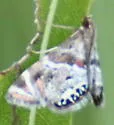
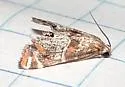
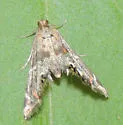
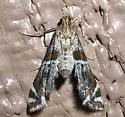
Photo credits: Contributed by Jason D. Roberts; Additional contributions by Maury Heiman , Robert Lord Zimlich , Chuck Sexton , Randy Hardy
Frequently Asked Questions About Petrophila jaliscalis - Hodges#4775
What is Petrophila jaliscalis - Hodges#4775?
Petrophila jaliscalis - Hodges#4775 (Petrophila jaliscalis) is a species in the family Crambidae, within the order Lepidoptera.
How big is Petrophila jaliscalis - Hodges#4775?
Forewing length 7-11 mm.
How do you identify Petrophila jaliscalis - Hodges#4775?
The red-orange or dark pink hue of the color patches on the FW and HW is the single most important character separating (fresh) jaliscalis from all other members of the genus. Faded/worn examples can shift to an orange hue. Typical examples from California (L), Arizona (Center), and Texas (R): Prior to August 2019, there had been a set of specimens and images from OK, AZ, and westward labeled as Petrophila santafealis , purportedly based on barcoded specimens (BIN BOLD:AAF9925). Subsequent research showed that the barcode labeling was in error; all that set of specimens have been reidentified (and moved to) jaliscalis . P. santafealis remains a fairly local Florida endemic. See that species page for identification hints.
Where is Petrophila jaliscalis - Hodges#4775 found?
| Feature | Details |
|---|---|
| Habitat | Algae covered rocks - larvae are aquatic, living within a silken web in streams; P. jaliscalis is adapted to slower, warmer, less oxygenated streams than P. confusalis . This allows P. jaliscalis to have a more southern distribution and association with intermittent streams (Merritt & Cummins, p.387; Tuskes, 1981). |
| Range | Texas and Oklahoma west to California (BG, BOLD, GBIF, iNaturalist, MPG, SCAN). Powell & Opler and Pohl et al (2010, 2014, 2018) report the species occuring in Alberta, Canada, but the species is decided rare north of the cited range; none of the aforementioned online sources include any Canadian records. |
What is the life cycle of a Petrophila jaliscalis - Hodges#4775?
Adult lays 200-300 eggs in up to 4 meters of water, carrying a layer of air that sustains her from 4 to 12 hours. After ovipositing she dies in the water. Some females only submerge partially and deposit eggs shallowly over several days.