
Phycitodes reliquellum - Hodges#5946.2
Phycitodes reliquellum
This record describes Phycitodes reliquellum (species). Recorded family: Pyralidae. Recorded order: Lepidoptera.
Identification and Appearance
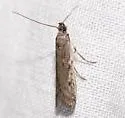
Smooth, obscure cinereous, thickly dusted with white on costal half. Lines obsolete, the inner represented by three black dots, the upper and lower of which are very small, the middle one more outwardly placed; outer line indicated by an outward blackish shade, curved, regular and even. Discal dots black, joined into a large spot in the male, narrowly separated in the female. Hind wings whitish, gray tinted along costa and outer edge. Expanse 15-16 mm... Nearly allied to Homceosoma mucidellum Rag. but smaller, smoother cinereous, the outer line very vague and slightly curved, discal dots approximated or fused... - Dyar, 1904: 112 Genitalia: ♀ ♂ Heinrich (1956: 226 ) treated reliquellum and mucidella as subspecies of Rotruda mucidella (Ragonot, 1887). Neunzig (1997) elevated mucidella and reliquellum to species status. Scholtens & Solis (2015) ( 3 ) follows Neunzig (1997). As of 2016, DNA barcoding at BOLD does not seem to be able to differentiate between reliquellum and mucidella . Neunzig (1997) does not appear to explain why he overturned Heinrich (1956). In separating the two species, he mentions distribution and morphological differences which Heinrich apparently considered superficial. Heinrich noted variation in genitalia but found the variations were not confined to particular populations.
Classification
- Kingdom
- Animalia
- Phylum
- Arthropoda
- Class
- Insecta
- Order
- Lepidoptera (Butterflies and Moths)
- Superfamily
- Pyraloidea
- Family
- Pyralidae (Pyralid Moths)
- Subfamily
- Phycitinae
- Tribe
- Phycitini
- Genus
- Phycitodes
Imported taxonomy record. Source availability varies; see the source references and editorial policy below.
Habitat and Range
Geographic Range
Eastern North America
Diet and Behavior
Diet: Flowers of Packera obovata* (Running Groundsel), Cirsium horridulum (Yellow Thistle), Pyrrhopappus carolinianus (Carolina Desert-chicory), Sonchus asper (Spiny-leaved Sow-thistle), Sonchus oleracea (Common Sow-thistle), Lactuca canadensis (Tall Lettuce) ( Mass Moths )
Additional species information
Species notes from the sources
Etymology: Phycitodes reliquellum , elevated from subspecies Phycitodes albatella (Neunzig 1997), is a synonym of Phycitodes mucidella (Ragonot, 1887) (Scholtens & Hayden in Pohl & Nanz (eds.) 2023).
About Butterflies and Moths: the wider group
Order-level background for Lepidoptera, the group containing Phycitodes reliquellum. Species-specific details appear above.
Group overview
Lepidoptera includes approximately 180,000 described species of butterflies and moths. Moths outnumber butterflies roughly 10:1. The monarch butterfly's eastern population has declined by more than 80% since the mid-1990s, and the western population by over 95% since the 1980s. The IUCN lists the migratory monarch as Vulnerable.
Ecological role of the group
Butterflies and moths are essential indicators of ecosystem health. As caterpillars, they are a primary food source for birds - a single nest of blue tit chicks requires ~10,000 caterpillars. Adult moths pollinate many night-blooming plants.
Economic and practical significance of the group
Lepidoptera are critical pollinators. In Europe, grassland butterfly species have declined by almost 50% since the early 1990s. In the UK, three-quarters of butterflies are in decline. In the U.S., five butterfly species have gone extinct since 1950, with 29 listed as endangered.
Recorded sources for this group: IUCN Red List, Xerces Society, USFWS, PNAS, WWF. Imported estimates may describe particular regions or reporting periods.
Photos of Phycitodes reliquellum - Hodges#5946.2 (5)
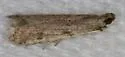
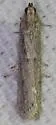
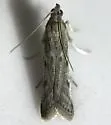
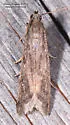
Photo credits: Contributed by v belov; Additional contributions by Steve Nanz , Tony-2 , anitagould , Nick Block , ceiseman , marcie oconnor , Kyhl Austin , Robert H. Biagi , Steve Morris
Frequently Asked Questions About Phycitodes reliquellum - Hodges#5946.2
What is Phycitodes reliquellum - Hodges#5946.2?
Phycitodes reliquellum - Hodges#5946.2 (Phycitodes reliquellum) is a species in the family Pyralidae, within the order Lepidoptera.
How big is Phycitodes reliquellum - Hodges#5946.2?
Expanse 15-16 mm - Dyar, 1904: 112
How do you identify Phycitodes reliquellum - Hodges#5946.2?
Smooth, obscure cinereous, thickly dusted with white on costal half. Lines obsolete, the inner represented by three black dots, the upper and lower of which are very small, the middle one more outwardly placed; outer line indicated by an outward blackish shade, curved, regular and even. Discal dots black, joined into a large spot in the male, narrowly separated in the female. Hind wings whitish, gray tinted along costa and outer edge. Expanse 15-16 mm... Nearly allied to Homceosoma mucidellum Rag. but smaller, smoother cinereous, the outer line very vague and slightly curved, discal dots approximated or fused... - Dyar, 1904: 112 Genitalia: ♀ ♂
Where is Phycitodes reliquellum - Hodges#5946.2 found?
Range: Eastern North America
What does Phycitodes reliquellum - Hodges#5946.2 eat?
The diet of the Phycitodes reliquellum - Hodges#5946.2 includes Flowers of Packera obovata* (Running Groundsel), Cirsium horridulum (Yellow Thistle), Pyrrhopappus carolinianus (Carolina Desert-chicory), Sonchus asper (Spiny-leaved Sow-thistle), Sonchus oleracea (Common Sow-thistle), Lactuca canadensis (Tall Lettuce) ( Mass Moths ).