
Butterflies and Moths
Order Lepidoptera
The Butterflies and Moths (Order Lepidoptera) includes 11,813 species across 112 families and 2,787 genera in our directory.
About Butterflies and Moths
Lepidoptera includes approximately 180,000 described species of butterflies and moths. Moths outnumber butterflies roughly 10:1. The monarch butterfly's eastern population has declined by more than 80% since the mid-1990s, and the western population by over 95% since the 1980s. The IUCN lists the migratory monarch as Vulnerable.
Economic Impact
Lepidoptera are critical pollinators. In Europe, grassland butterfly species have declined by almost 50% since the early 1990s. In the UK, three-quarters of butterflies are in decline. In the U.S., five butterfly species have gone extinct since 1950, with 29 listed as endangered.
Ecological Role
Butterflies and moths are essential indicators of ecosystem health. As caterpillars, they are a primary food source for birds - a single nest of blue tit chicks requires ~10,000 caterpillars. Adult moths pollinate many night-blooming plants.
Families in Lepidoptera (112)
Species in Lepidoptera (11,813)
Panthiades bathildis - Hodges#4293.7
Panthiades bathildis
First US record: Zebra-striped Hairstreak , Panthiades bathildis , first seen by Jaime Villarreal at the National Butterfly Center , Mission, Hidalgo CO., Texas on 12/15/12.
Papaipema aerata - Hodges#9468
Papaipema aerata
No known records of this species for several decades. A specimen of Papaipema nelita online labeled as this species apparently created some confusion as to its status.
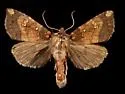
Papaipema polymniae - Hodges#9469
Papaipema polymniae
Identification: The original description is available online.
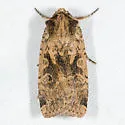
Parabagrotis cupidissima - Hodges#11047.3
Parabagrotis cupidissima
Identification: This species is thought to be rare or uncommon (based on numbers of collections). It somewhat resembles a faded P. formalis or P. insularis , but lacks the prominent black patch on the prothoracic collar. It often looks somewhat pale
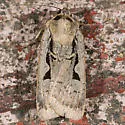
Parabagrotis formalis - Hodges#11047.1
Parabagrotis formalis
Identification: Although this is a variable species with several patterns and colors (pale buff, pale gray, reddish brown to blackish brown), it can usually be identified by the bicolored prothoracic collar (the basal half is black and the apical hal
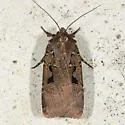
Parabagrotis insularis - Hodges#11048
Parabagrotis insularis
Identification: This is the smallest and darkest of the five species of Parabagrotis . There is a narrow black transverse line near the top of the prothoracic collar, with the rest of the prothoracic collar more or less the same color as the forewing
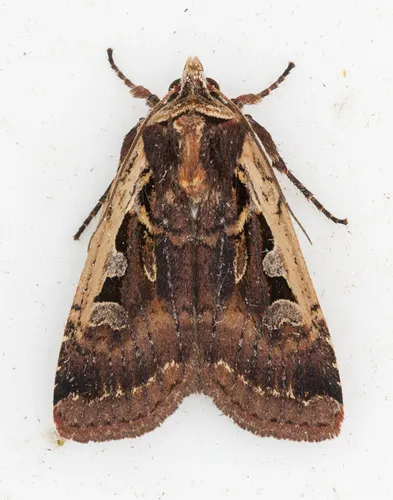
Parabagrotis sulinaris - Hodges#11047.2
Parabagrotis sulinaris
Identification: This is the largest and most boldly patterned of the five species of Parabagrotis. In areas mainly west of the Cascades the overall color is usually reddish brown with a yellow-buff shading on the prothoracic collar. The prothoracic c
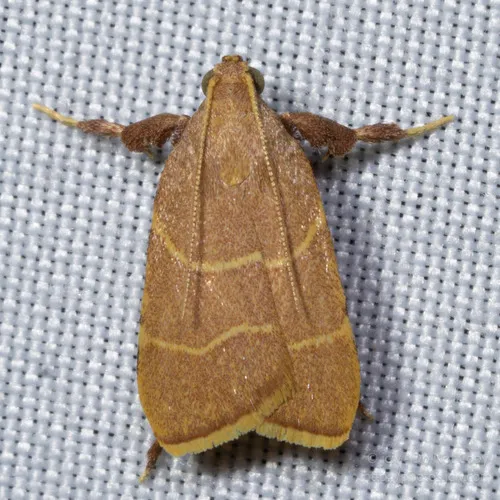
Parachma Moth - Hodges#5538
Parachma ochracealis
Identification: Adult: forewing variably yellowish-brown, reddish-brown, yellowish-gray, or grayish-brown, slightly flared near base, giving "shouldered" appearance; AM and PM lines pale yellow, almost straight; terminal line dark reddish-brown; frin
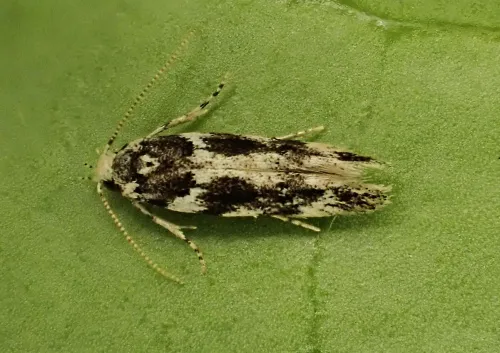
Parachronistis albiceps
Parachronistis albiceps
Wingspan 10 mm. Although this small moth is marked only in black and white it is quite a distinctive species. Where the larval foodplant Hazel is present. The adult moths fly in June and July, and are sometimes attracted to light. The larvae have not
Paracorsia repandalis - Hodges#4992.5
Paracorsia repandalis
Paracorsia repandalis is here reported for the first time in the United States from Indiana by Jim Vargo. Specimens at the FMNH (Florida Museum of Natural History): Mishawaka, 41°37’46.2”N -86°08’13.9”, St. Joseph Co. on 11 Aug 2010 and again on 14 A
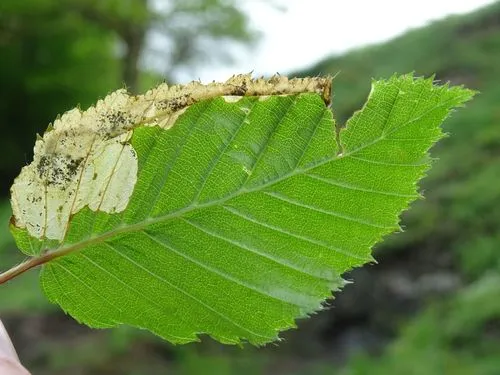
Paracrania chrysolepidella
Paracrania chrysolepidella
Wingspan about 11 mm. A small moth with a mottled purple wing pattern. The larvae feed on Hazel creating fairly large blotch mines. See links below under 'Further Information' Adult very similar to E. cicatricella - they can only be separated by diss
Paradoxical Grass Moth - Hodges#11074
Heliocheilus paradoxus
Identification: Grote (1865) original description is online. 329 . Sexually dimorphic. Males have a costal "bulge" along front of the FW and two elongate oval "windows" on the FW which can appear translucent. ♂ ♀
Paraglaucina hulstinoides - Hodges#6521
Paraglaucina hulstinoides
Identification: females have shortly pectinate antennae
Paralobesia aemulana - Hodges#2722
Paralobesia aemulana
Identification: Specimen identified by DNA analysis (BOLD).
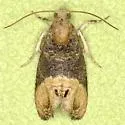
Paralobesia cyclopiana - Hodges#2727
Paralobesia cyclopiana
Identification: The original description as Polychrosis cyclopiana Heinrich, is available in PDF and online at the link in the print references below.
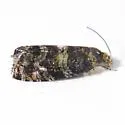
Paralobesia piceana - Hodges#2721
Paralobesia piceana
Identification: Larva - Head yellowish, usually with black lateral bar; pinacula D1 and SD1 on abdominal segment 9 adjacent or merged; thoracic shield and legs usually dark brown (MacKay, 1959).
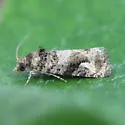
Paralobesia yaracana - Hodges#2717
Paralobesia yaracana
Identification: Adult - see original description in Print References.
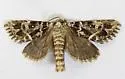
Paramiana canoa - Hodges#9806
Paramiana canoa
" Paramiana " canoa (Barnes, 1907) is found to belong in Noctuinae and be misplaced in the Psaphidini genus Paramiana in Keegan, et al. (2021)
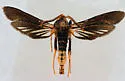
Paranthrene fenestrata - Hodges#2525 - Hodges#2525
Paranthrene fenestrata
Identification: Adult - There are two color forms, one with mostly black wings and a red-orange and black body and another form with red-orange wings and black body. ( 3 ) , ( 4 ) Males respond well to ZZA pheromone baits. ( 3 )
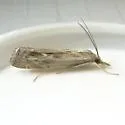
Parapediasia hulstellus - Hodges#5386
Parapediasia hulstellus
Identification: See Fernald, 1885 in Print References below Identified by Jim Vargo:
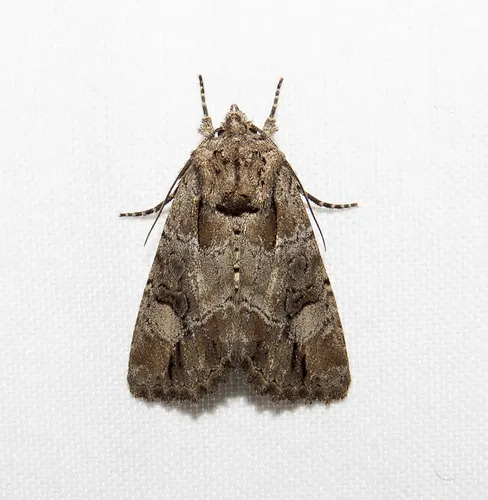
Paraseptis adnixa - Hodges#9533
Paraseptis adnixa
Identification: Three forms/subspecies; Pacific Northwest, coastal CA, and east-central CA. See Mustelin & Crabo for updated descriptions. Adult: forewing mottled medium and pale brown with blackish basal and anal dashes surrounded by dark shading; c
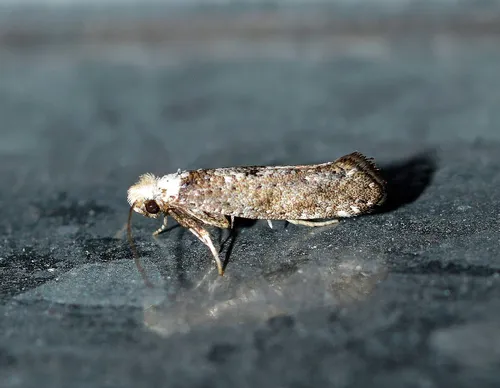
Paraswammerdamia albicapitella
Paraswammerdamia albicapitella
Wingspan 10 to 13 mm. A small greyish moth with white head and thorax. The adults can be found on the wing in July and are attracted to light. The larvae feed on Blackthorn mining the leaves initially, then hibernating in a small silken enclosure. In
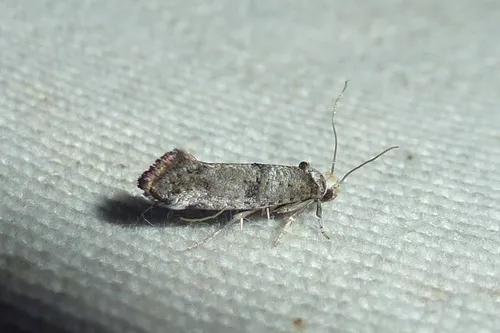
Paraswammerdamia nebulella
Paraswammerdamia nebulella
Wingspan 11-14 mm. Small greyish moth with a white head. It flies at night during July and is frequently taken at light. Larva mines leaves of Hawthorn, Rowan and Dog Rose, subsequently living within a silken web, often several together. The larva ov
Parce Sphinx - Hodges#7844
Callionima parce
Identification: Adult: forewing orangish-brown with paler patches along costa, along inner margin, and at apex; median area with large silvery discal spot having an irregular outline; hindwing reddish-orange with blackish patch at outer margin near a
Parectopa bumeliella - Hodges#0650
Parectopa bumeliella
Identification: Coloration and markings are very subdued, compared with those of most other species that are placed in Parectopa .
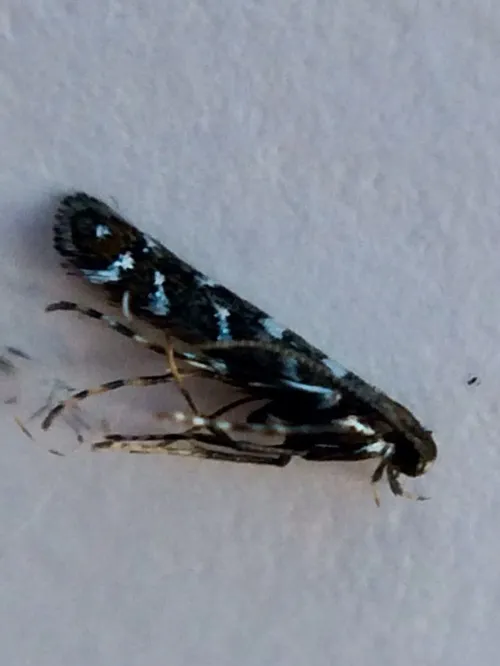
Parectopa ononidis
Parectopa ononidis
Wingspan about 8 mm. The adult moths are quite distinctive, though rarely encountered. Unless identified by a recognised expert, a photo is required. As this is a rare species in our area it would be useful to hold on to the specimen until identifica
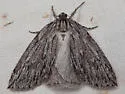
Parexcelsa ultraria - Hodges#6777
Parexcelsa ultraria
Identification: Pearsall original description is available in print references. Sperry included the first description of the female. ♂
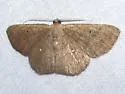
Parilexia proditata - Hodges#6712
Parilexia proditata
Identification: See Ferguson. 2009. Tropical Lepidoptera Research 19:42
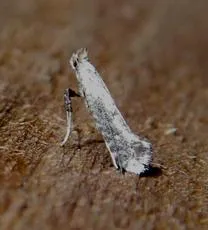
Parornix anglicella
Parornix anglicella
Wingspan 9 to11 mm. Like other members of the genus, this species is very difficult to identify as an adult, and genitalia examination is recommended to be certain. Leafmine occurs on Hawthorn (also on Wild Service Tree) Various habitats, but particu
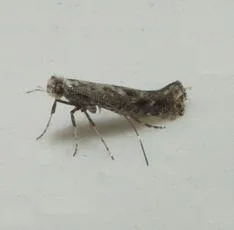
Parornix betulae
Parornix betulae
Wingspan 9 to10 mm. It cannot be separated from other Parornix species without dissection. The larva mines the leaves of Birch, initially creating a narrow inconspicuous gallery leading to small tentiform mine with a brown lower epidermis; later feed
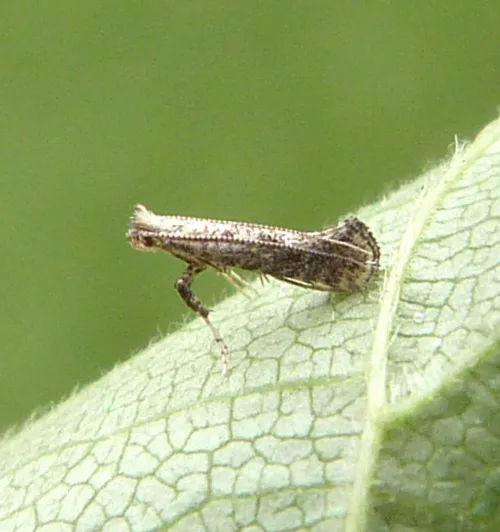
Parornix devoniella
Parornix devoniella
Wingspan 9 to 10 mm. All the Parornix species have a distinctive resting posture with the front part of the body raised on the forelegs, and a slightly upcurved rear. The larva mines the leaves of Hazel, initially creating a squarish or triangular te
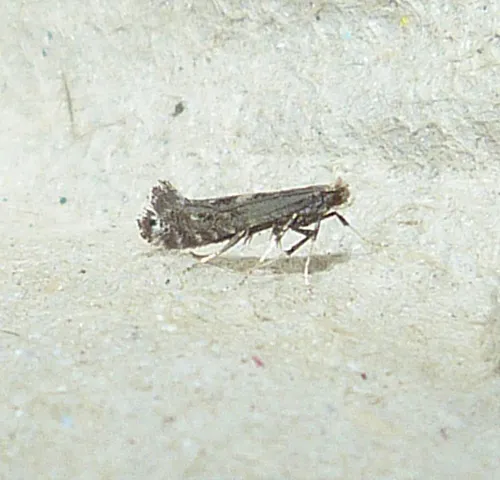
Parornix finitimella
Parornix finitimella
Wingspan around 10 mm. Like other Parornix species, the adults of P. finitimella are difficult to identify and are best determined by the structure of the genitalia. The larval foodplant, Blackthorn is shared with the similar Parornix torquillella an
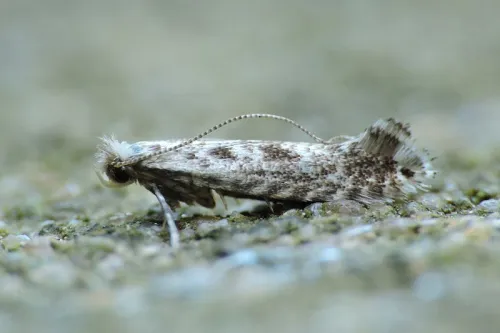
Parornix scoticella
Parornix scoticella
Wingspan around 10mm. They resemble other species of Parornix, but do show distinctive white palps and frons. Parornix larvae have 4 distinctive black dots on the prothoracic plate (behind the head) Frequenting gardens and woodland in the south, and
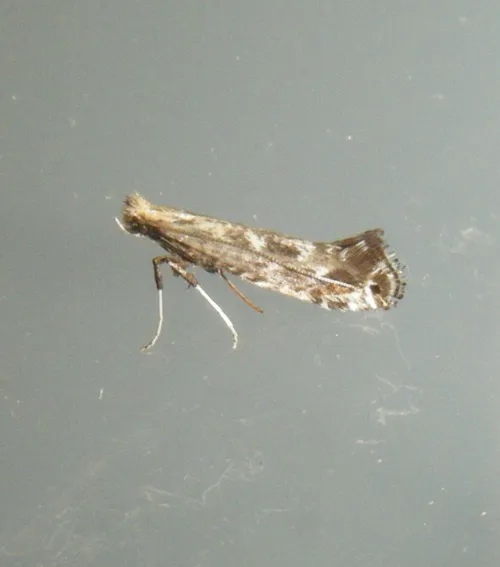
Parornix torquillella
Parornix torquillella
Wingspan 9 to 10 mm. The adults are difficult to separate from some Parornix species, especially Parornix finitimella , and genitalia examination is usually necessary to identify them. The two mines are identical, but the larvae are quite different;
Passadena flavidorsella - Hodges#5899
Passadena flavidorsella
Identification: Detailed description can be found in MONA Fascicle 15-5 at link in citations below.
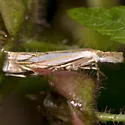
Pasture Grass-veneer - Hodges#5363
Crambus saltuellus
Identification: Adult: very similar to Crambus agitatellus but forewing with broad white stripe bisected by prominent brownish-yellow strip [instead of a faint yellowish strip or no strip at all, as in C. agitatellus ]; several double black lines run
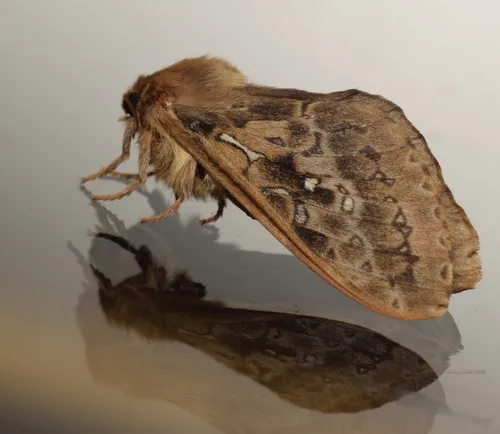
Pasture Porina
Wiseana cervinata
Wiseana cervinata, known commonly as the porina moth, is a species of moth belonging to the family Hepialidae. It was described by Walker in 1865, and is endemic to New Zealand.
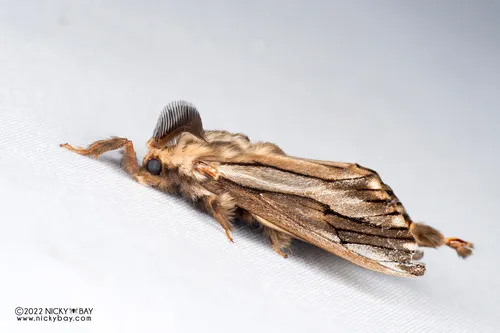
Paulownia Bagworm Moth
Eumeta variegata
Eumeta variegata, the paulownia bagworm, is a moth of the family Psychidae. The species was first described by Snellen in 1879. It is found in Japan, Papua New Guinea, India, the Solomon Islands and Sri Lanka.
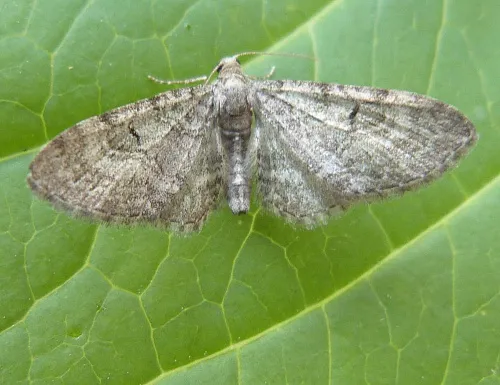
Pauper Pug
Eupithecia egenaria
Any habitat where the larval food plants are present. May to June is the typical flight period for this species. The larvae feed on Large-leaved Lime (Tilia platyphyllos) and Small-leaved Lime (Tilia cordata). This species is a rare and local moth, o
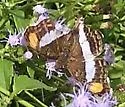
Pavon Emperor - Hodges#4566
Doxocopa pavon
Identification: Females are brown with a diagonal white slash across the upperside of both wings, and a yellow spot near the forewing apex. Males have a similar pattern but with a metallic purplish-blue overlay that ranges from brilliant to subtle. S
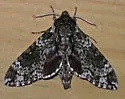
Pawpaw Sphinx - Hodges#7784
Dolba hyloeus
Identification: Looks like a miniature Rustic Sphinx --dark brown to black with white dusting. Rustic Sphinx has orange spots on sides of abdomen, Pawpaw has white spots. These spots are visible only when the wings are spread. Forewing patterns are v
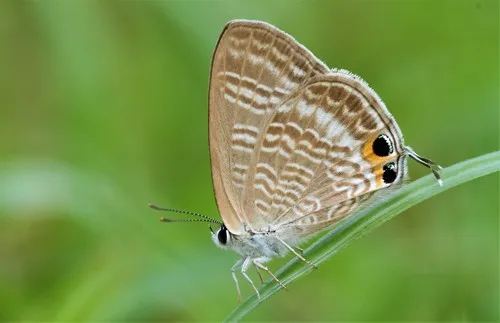
Pea Blue
Lampides boeticus
Lampides boeticus, the pea blue, or long-tailed blue, is a small butterfly that belongs to the lycaenids or gossamer-winged family.
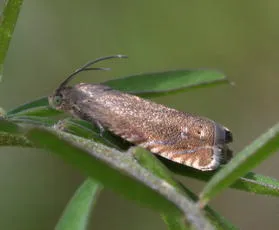
Pea Moth
Cydia nigricana
Wingspan 12 to 16 mm. The adults are rather nondescript in appearance. The mainly brown wings have two or three short black dashes and other russet and white marks below. Around plants of the pea family including Common Vetch where it is plentiful. B
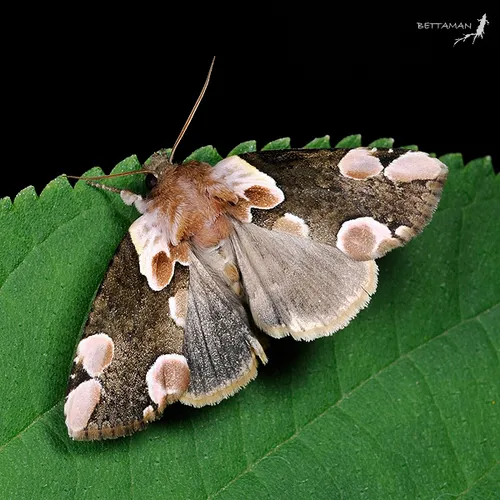
Peach Blossom
Thyatira batis
Wingspan 32-38 mm. A beautifully-marked moth, with its pinkish spots on a brown background. The adults fly at night in June and July and can be attracted by bright lights or a sugar-mixture. The reddish-brown caterpillar feeds on Bramble in late summ
Peach Twig Borer - Hodges#2257
Anarsia lineatella
Identification: Adult steel gray; larva reddish brown Probably introduced in the 1880s. A pest of fruit trees, especially peach.
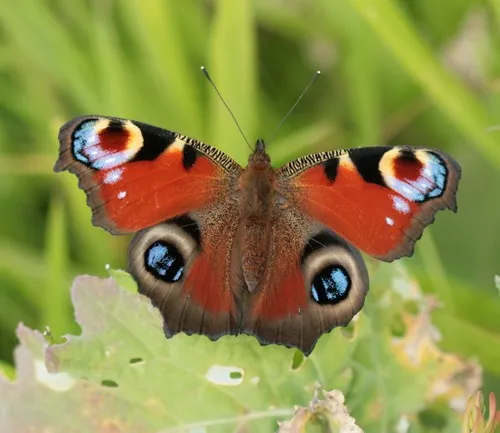
Peacock
Aglais io
The Peacock is a familiar sight in gardens across the British Isles and is unmistakable, with spectacular eyes on the upper side of the hind wings that give this butterfly its name. These eyes must appear very threatening to predators. This butterfly
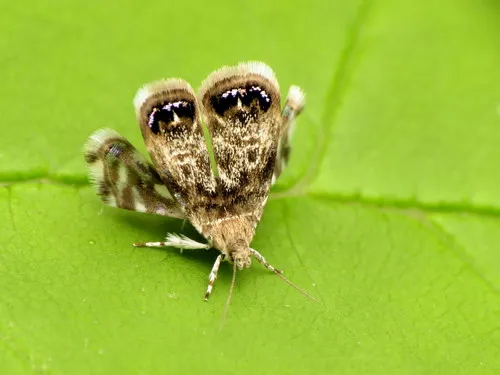
Peacock Brenthia Moth
Brenthia pavonacella
Brenthia pavonacella, the peacock brenthia moth, is a moth of the Choreutidae family. It is found in North America, including Illinois, Maryland, Iowa, Oklahoma and South Carolina. It has also been recorded from Mexico.
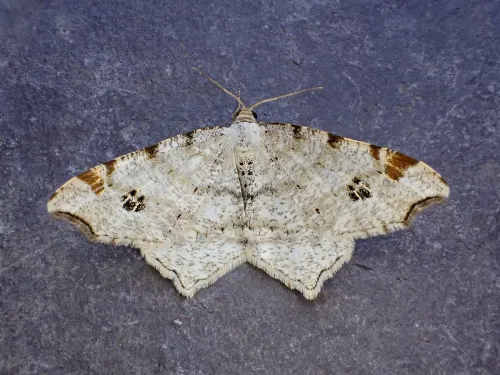
Peacock Moth
Macaria notata
Wingspan 28 to 32 mm. Rather similar to the Sharp-angled Peacock, although usually slightly paler with less grey suffusion. Typically the dark notch near the forewing tip is less concave, and the broken blotch in the centre is more distinct. Peacock
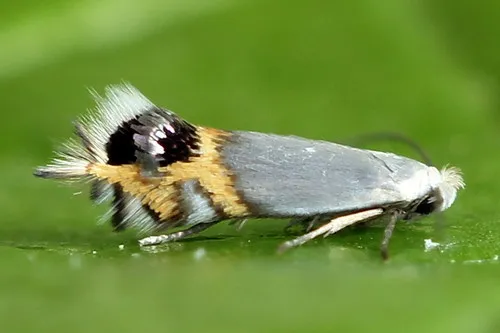
Pear Leaf Blister Moth
Leucoptera malifoliella
Wingspan about 8mm. although well marked, the moth is very similar in appearance to other Leucoptera species. It is probably more easily recorded from the larval leafmines on the leaves of Hawthorn, Apple and Whitebeam. Various habitats, especially w
Pearly-gray Hairstreak - Hodges#4293.5
Strephonota tephraeus
Identification: Underside pale gray with less conspicuous bands than most similar hairstreaks. Upperside iridescent blue with a conspicuous brown spot in the center of the male's forewing. First U.S. Record: Penitas, Hidalgo Co., Texas - 1972
Pearsall's Carpet Moth - Hodges#7429
Venusia pearsalli
Identification: This species is represented at BOLD by either BOLD:AAB1356 or BOLD:AAB5482 , two BINs in Venusia narrowly separated by mtDNA barcode. (As of 2023, specimens in the latter are misidentified as obsoleta .) Until examination of type spec
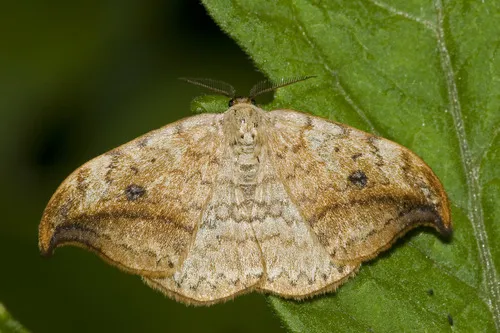
Pebble Hook-tip
Drepana falcataria
Wingspan 27-35 mm. The largest and commonest of the 'Hook-tips'. The adults fly at night from May to June and have a second brood in August. The larvae feed usually on Birch but sometimes on Alder. Fairly frequent and found over most of Britain. In a
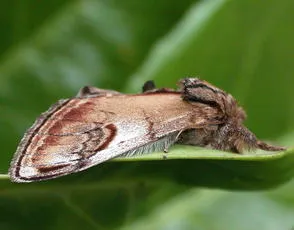
Pebble Prominent
Notodonta ziczac
Wingspan 40-45 mm. Typical of the Prominents in outline but with a fairly pale brown wing that has a ringed 'eye-like' pattern near the tip. It frequents a range of habitats but has a preference for damper localities, where the caterpillars feed on W
Pecan Bark Borer - Hodges#2547
Synanthedon geliformis
Identification: Adult - see Brown & Mizell and/or Engelhardt in Print References. , Larva - white with a darker line on each side of the prothoracic shield, head more wide than long.
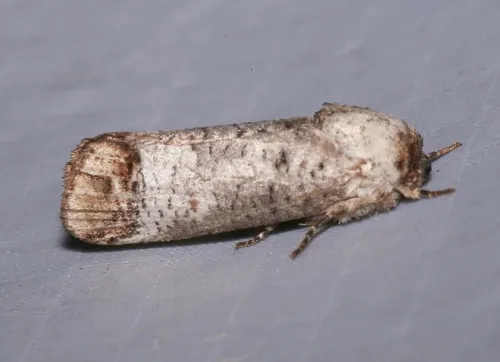
Pecan Carpenterworm Moth
Cossula magnifica
Cossula magnifica, the pecan carpenterworm moth, is a moth of the Cossidae family found in the southeastern parts of United States, from North Carolina south to Florida, and west to Mississippi and Texas.
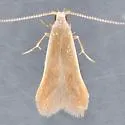
Pecan Cigar Casebearer - Hodges#1291
Coleophora laticornella
Identification: Genitalia: ♀ ♂ Larvae construct spatulate leaf cases. Jean-François Landry, a noted expert on Coleophora, says it is impossible to identify adults of this species without dissection or DNA barcoding.
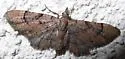
Peck's Pug Moth - Hodges#7453
Eupithecia peckorum
Peck's Pug Moth - Hodges#7453 (Eupithecia peckorum) is a species in the family Geometridae, commonly known as geometrid moths, belonging to the order Lepidoptera (Butterflies and Moths). It is classified within the subfamily Larentiinae, tribe Eupith
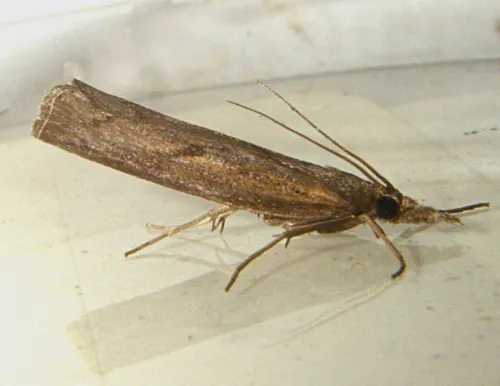
Pediasia contaminella
Pediasia contaminella
It flies during July and August and is attracted to light. The larvae feed in a silken tube amongst grasses such as sheep's fescue (Festuca ovina). Distributed mainly in the southern counties, this is a rather local species. In the Butterfly Conserva
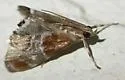
Pegasus Chalcoela Moth - Hodges#4896
Chalcoela pegasalis
Identification: Adult: forewing brown in basal and terminal areas, and densely speckled with gray in median area; AM and PM lines white, thick; AM line either smoothly rounded or slightly wavy; PM line with large V-shaped lobe projecting toward outer
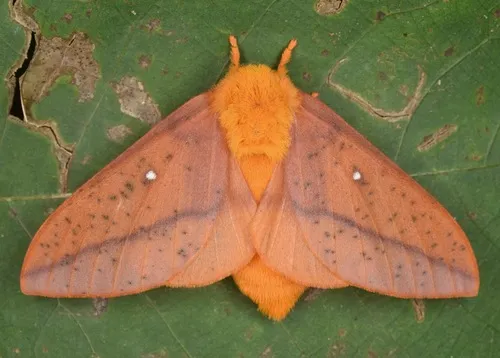
Peigler's Oakworm Moth - Hodges#7720
Anisota peigleri
Identification: Females are reddish-orange in color, have thread-like antennae, and are larger than the males. Male forewings are dark reddish brown with a small white spot and a larger light colored translucent patch. Antennae in males are plumose
Pelecystola nearctica - Hodges#0434.1
Pelecystola nearctica
Identification: Genitalia: Widespread moth, described only in 2009.
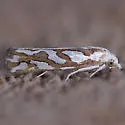
Pelochrista agassizii - Hodges#3026
Pelochrista agassizii
The use of 3026 for the Hodges number is contingent. As of 10/22/2015 MPG seems to erroneously states "Eucosma aemulana (Schlager, 1849) replaces Eucosma agassizii (Robinson, 1869)." The two do not appear to be closely related nor do they look simila
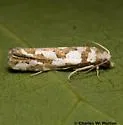
Pelochrista bolanderana - Hodges#3029
Pelochrista bolanderana
Pelochrista agassizii , P. bolanderana , and P. gilletteana are all closely related based on BOLD. As of 2015, the BIN cluster here , containing P. agassizii , also contains samples identified as P. bolanderana , and P. gilletteana . The nearest BIN
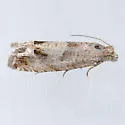
Pelochrista canana - Hodges#3141
Pelochrista canana
Identification: The original description as Eucosma metariana Heinrich, is online. Specimen identified by DNA analysis (BOLD) This page was originally created for Pelochrista metariana , which was synonymized with P. canana in Wright and Gilligan - M
Pelochrista canariana - Hodges#3013
Pelochrista canariana
Identification: Adult - see original description in Print References.
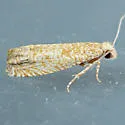
Pelochrista comatulana - Hodges#3041
Pelochrista comatulana
At BOLD there are at least 5 BIN groups for P. derelicta , P. vagana , P. watertonana , P. nandana , and P. comatulana as follows: BOLD:AAA9420 contains 146 P. derelicta , 3 P. vagana , 1 juncticiliana BOLD:AAC2220 contains 24 P. comatulana , 4 P. va
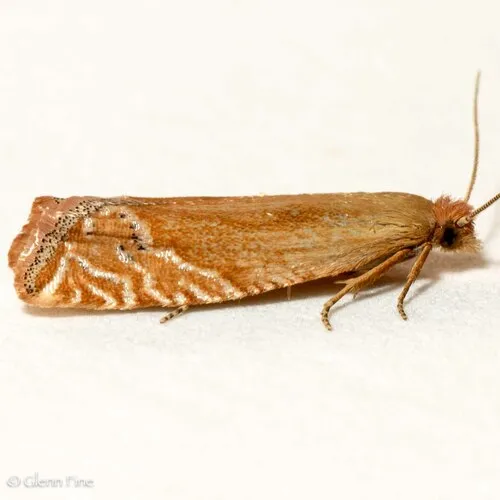
Pelochrista conspiciendana - Hodges#3143
Pelochrista conspiciendana
Pelochrista conspiciendana - Hodges#3143 (Pelochrista conspiciendana) is a species in the family Tortricidae, commonly known as tortricid moths, belonging to the order Lepidoptera (Butterflies and Moths). It is classified within the subfamily Olethre
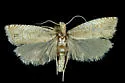
Pelochrista costastrigulana - Hodges#3040
Pelochrista costastrigulana
Identification: Specimen determined by DNA analysis (BOLD). ( 4 )
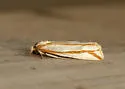
Pelochrista crambitana - Hodges#3011
Pelochrista crambitana
Identification: "Broad costal, medial and dorsal silver stripes, the median one unbroken from base to apex" ( 3 ) .
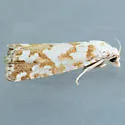
Pelochrista curlewensis - Hodges#3061.1
Pelochrista curlewensis
Identification: The forewing is white with variable orange-brown to blackish-brown markings that can usually be distinguished from the two similar species listed below. The northern population are usually the lighter orange-brown color.
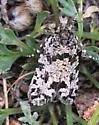
Pelochrista dodana - Hodges#3081
Pelochrista dodana
Identification: Photo of specimen from Colorado: Appears to be mostly diurnal.
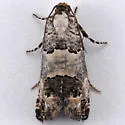
Pelochrista eburata - Hodges#3085
Pelochrista eburata
Identification: The original description of Eucosma williamsi Powell, is available in PDF or view online in the print references below. Specimen identified by DNA analysis (BOLD).
Pelochrista exclusoriana - Hodges#3093
Pelochrista exclusoriana
Valerie Bugh first identified this species at our place in Camp Wood. I sent specimens to Jason Dombroskie after his visit in the spring of 2016 and he has now identified a specimen from the same location as P. exclusoriana. None of them are the sa
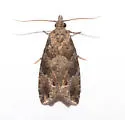
Pelochrista fiskeana - Hodges#3129
Pelochrista fiskeana
Identification: Adult - see original description in Print References. ( 3 )
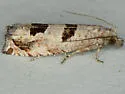
Pelochrista floridensis - Hodges#3132.6
Pelochrista floridensis
Identification: Adult : Distinguished by the wine-red color of the postmedian band, and the pinkish tint to the distal one-half of the FW. Interfascial areas pale gray brown, variably suffused with white and pale reddish brown. Subbasal and pretornal
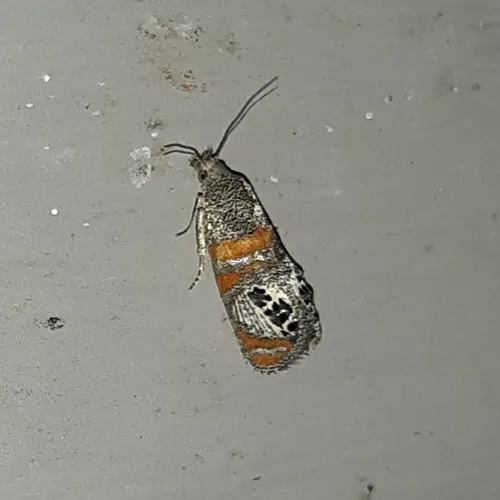
Pelochrista fratruelis - Hodges#3152
Pelochrista fratruelis
Identification: From original description: Superficially like scintillana Clemens (= Pelochrista scintillana - Hodges 3151) except that the wings are much broader in proportion to their length, a little more than half as long as broad; their ground c
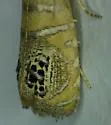
Pelochrista fraudabilis - Hodges#3053
Pelochrista fraudabilis
Identification: Quoting original description : "Like fratruelis Heinrich in size and general appearance, but much paler. Ground color of fore wing buckskin yellow, with straight narrow antimedian and a similar median fascia; fuscous dusting in fore w
Pelochrista galenapunctana - Hodges#3045
Pelochrista galenapunctana
Identification: Kearfott's original description is available in PDF. A more detailed discussion of the complexities of this species and its relatives can be found in the Wright & Gilligan MONA fascicle.[cite:1636722] NOTE (3/11/2022): The majority (a
Pelochrista heathiana - Hodges#3033
Pelochrista heathiana
Identification: The black suffusion along the dorsal margin of an otherwise whitish forewing is diagnostic. ( 5 )
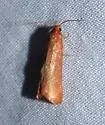
Pelochrista immaculana - Hodges#3063
Pelochrista immaculana
Identification: Adult - Forewing uniformly pinkish-ochraceous.
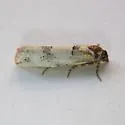
Pelochrista invicta - Hodges#3083
Pelochrista invicta
Identification: Adult - see original description in Print References and footnoted re-description by Wright (2007). ( 3 )
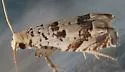
Pelochrista matutina - Hodges#3091
Pelochrista matutina
Identification: Adult - Head and FW whitish with, scattered dark scales. Basal patch incomplete, with scattered dark costal scales. Middle brownish band continued with distinct edges marked by blackish scales. The succeeding whitish underspace is con
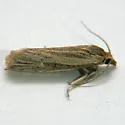
Pelochrista mediostriata - Hodges#3104
Pelochrista mediostriata
Identification: Adult - see original description and Wright redescription in Print References. ,
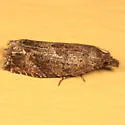
Pelochrista milleri - Hodges#3170.2
Pelochrista milleri
Females much more likely to be attracted to UV light.
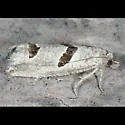
Pelochrista mirosignata - Hodges#3138
Pelochrista mirosignata
Pelochrista mirosignata - Hodges#3138 (Pelochrista mirosignata) is a species in the family Tortricidae, commonly known as tortricid moths, belonging to the order Lepidoptera (Butterflies and Moths). It is classified within the subfamily Olethreutinae
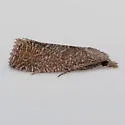
Pelochrista nandana - Hodges#3112
Pelochrista nandana
Identification: Adult - see original description in Print References.
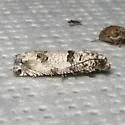
Pelochrista persolita - Hodges#3090
Pelochrista persolita
Identification: Original description is available online in PDF.
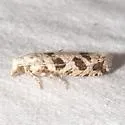
Pelochrista reversana - Hodges#3157
Pelochrista reversana
Pelochrista reversana - Hodges#3157 (Pelochrista reversana) is a species in the family Tortricidae, commonly known as tortricid moths, belonging to the order Lepidoptera (Butterflies and Moths). It is classified within the subfamily Olethreutinae, tr
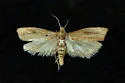
Pelochrista russeola - Hodges#3056
Pelochrista russeola
Identification: Heinrich original description is online in PDF. Heinrich also states "An easily recognized species resembling in color Kearfott's immaculana , but with narrower fore wing, paler hind wing, and quite different genitalia." Specimen dete
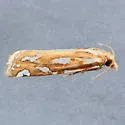
Pelochrista sandiego - Hodges#3023
Pelochrista sandiego
Pelochrista sandiego - Hodges#3023 (Pelochrista sandiego) is a species in the family Tortricidae, commonly known as tortricid moths, belonging to the order Lepidoptera (Butterflies and Moths). It is classified within the subfamily Olethreutinae, trib
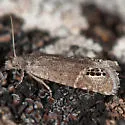
Pelochrista scintillana - Hodges#3151
Pelochrista scintillana
Identification: Wings: Front wings pale yellowish on male, grayish-brown on female. Large black spotted area (ocellic spot) with 3 rows of 5 spots and a few silver lines. Next to ocellic spot is a large area of fine reticulated (net-like) silver and
Pelochrista shastana - Hodges#3095
Pelochrista shastana
Identification: Eucosma shastana has a broader pretornal patch than Eucosma biquadrana . The postmedian band connects to the apical spot. The overall color is reddish-brown compared to the brown of Eucosma biquadrana .
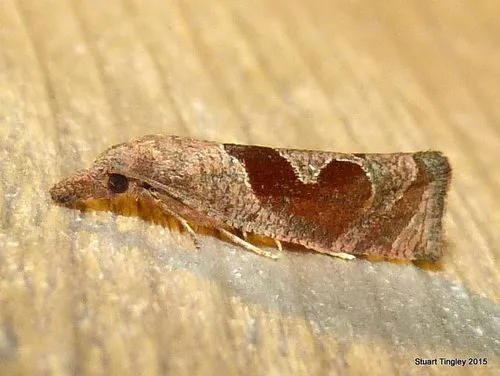
Pelochrista similiana - Hodges#3116.1
Pelochrista similiana
Identification: Adult: forewing brown with dark brown L-shaped marking with curved edges, beginning at inner margin in AM area and becoming paler toward center of wing; large faint "tooth" (sometimes broken) in subterminal area pointing toward anal a
Pelochrista snyderana - Hodges#3087
Pelochrista snyderana
Identification: Adult - see original description in Print Preferences and footnoted re-description by Wright.
Pelochrista subinvicta - Hodges#3086
Pelochrista subinvicta
Identification: Adult - see original description in Print References and footnoted re-description by Wright.
Pelochrista womonana - Hodges#3169
Pelochrista womonana
Identification: Adult - forewing pattern is very similar to that of P. rorana , but the interfascial areas are more suffused with brown and gray, resulting in a darker overall appearance. ( 4 )
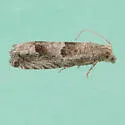
Pelochrista zomonana - Hodges#3168
Pelochrista zomonana
Identification: Adult - see original description in Print References. Specimen identified by DNA analysis (BOLD).
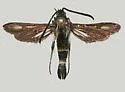
Penstemon Borer - Hodges#2620
Penstemonia edwardsii
Identification: Adult - see Engelhardt in Print References. Adults respond to (Z,Z)-3,13-ODDA pheromone lures (Meyer & Cranshaw, 1994).
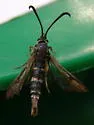
Penstemonia clarkei - Hodges#2618
Penstemonia clarkei
Identification: Adult - see Duckworth & Eichlin description and Engelhardt figures in Print References.
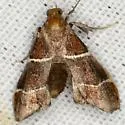
Penthesilea difficilis - Hodges#5554
Penthesilea difficilis
Identification: Original description of Tetraschistis leucogramma Hampson is online at the link in the print references below.