
Butterflies and Moths
Order Lepidoptera
The Butterflies and Moths (Order Lepidoptera) includes 11,813 species across 112 families and 2,787 genera in our directory.
About Butterflies and Moths
Lepidoptera includes approximately 180,000 described species of butterflies and moths. Moths outnumber butterflies roughly 10:1. The monarch butterfly's eastern population has declined by more than 80% since the mid-1990s, and the western population by over 95% since the 1980s. The IUCN lists the migratory monarch as Vulnerable.
Economic Impact
Lepidoptera are critical pollinators. In Europe, grassland butterfly species have declined by almost 50% since the early 1990s. In the UK, three-quarters of butterflies are in decline. In the U.S., five butterfly species have gone extinct since 1950, with 29 listed as endangered.
Ecological Role
Butterflies and moths are essential indicators of ecosystem health. As caterpillars, they are a primary food source for birds - a single nest of blue tit chicks requires ~10,000 caterpillars. Adult moths pollinate many night-blooming plants.
Families in Lepidoptera (112)
Species in Lepidoptera (11,813)
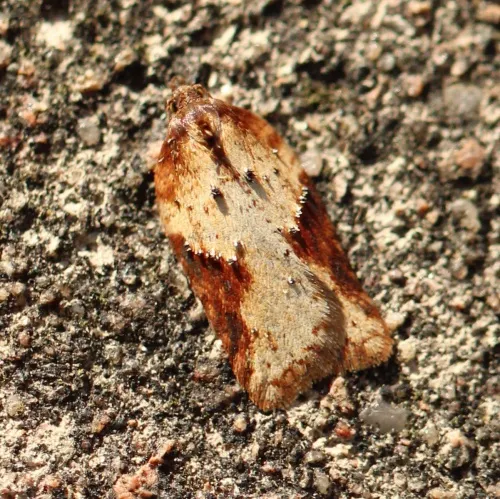
Acleris schalleriana
Acleris schalleriana
Wingspan about 17mm. It is rather similar in appearance to Acleris comariana and Acleris laterana but tends to show a more elongated costal blotch (though this can be obscured in some individuals). In areas where the larval foodplants are found. Adul
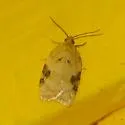
Acleris simpliciana - Hodges#3524
Acleris simpliciana
Identification: Adult - forewing pale yellow with gray patch along costa broken into two unequal blotches; dark spot in AM area near inner margin; hindwing whitish with some yellowish shading near apex.
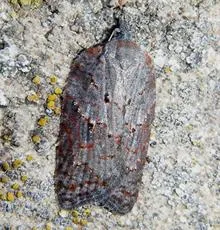
Acleris sparsana
Acleris sparsana
Wingspan 18-22 mm. A variable species, sometimes with a distinctive triangular marking on the upperwing but often with a greyish ground colour, obscurely marked with specks of darker and lighter. Favouring Beech and Sycamore the larval foodplants. Th
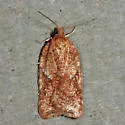
Acleris stadiana - Hodges#3521.1
Acleris stadiana
Identification: ♂ ♀ Often mis-identified as 3521 Acleris semiannula Sabourin, M., R.J. Priest & W.E. Miller, 1997. Nearctic Acleris: resurrection of A. stadiana and a revised identity for A. semiannula (Lepidoptera: Tortricidae). Great Lakes Entomol
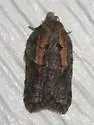
Acleris youngana - Hodges#3550
Acleris youngana
Identification: female genitalia Full grown larva are creamy white and about 10mm long. Female moths are reluctant to fly so populations build up on cone-bearing trees.
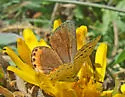
Acmon Blue - Hodges#4380
Plebejus acmon
Identification: Male distinguished from the similar Lupine Blue (called Plebejus lupini by Nearctica.com but Icaricia lupini by CBIF) by the paler blue upperside of wings, and the absence of a dark discal spot on the upperside of the hindwings.
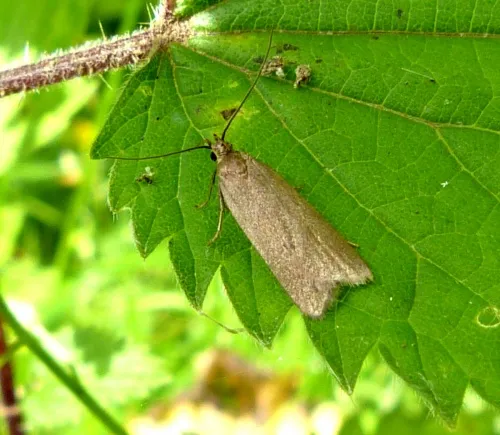
Acompsia cinerella
Acompsia cinerella
Wingspan 16 to19 mm. An unmarked brownish moth with long upwardly-curved labial palps. A variety of habitats, usually areas with rich vegetation or plenty of trees and bushes. Flying in June and July, it can be attracted to light. The larva is unknow
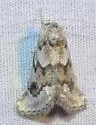
Acopa carina - Hodges#9825
Acopa carina
Identification: Pale creamy-white ground color with jagged dark brown basal, AM, and PM lines, and a dark reniform blotch between the latter two lines. Terminal line of brown dashes. Overscaling of dark brown scales is highly variable; some individ
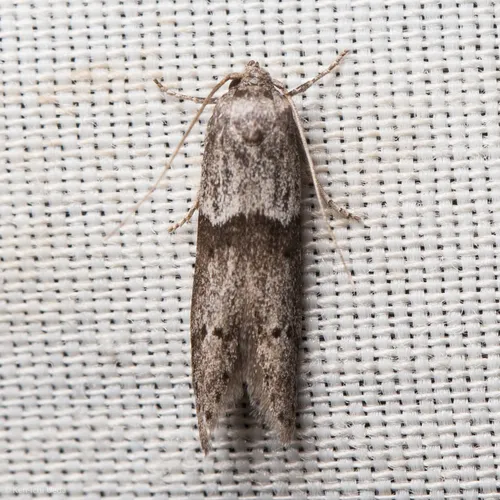
Acorn Moth
Blastobasis glandulella
Blastobasis glandulella is a species of moth of the Blastobasidae family. It is found in the eastern United States and southern Ontario, Canada. It has also been recorded in California. In Europe, it has been recorded from Austria, Germany, the Czech
Acossus undosus - Hodges#2677
Acossus undosus
page creation based on identification provided at Moth Photographers Group
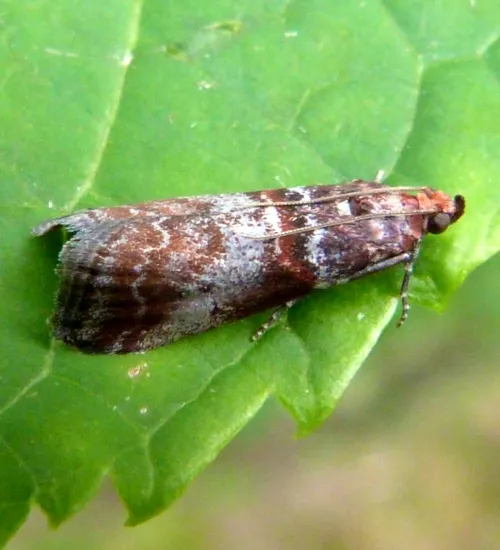
Acrobasis advenella
Acrobasis advenella
Wingspan 18-24 mm. The species has a rather banded pattern of reds and greys. Preferring areas of old uncut Hawthorn hedge. It has one brood, which flies in July and August, when it often is a visitor to the light-trap. The larvae feed mainly on Hawt
Acrobasis caryalbella - Hodges#5660
Acrobasis caryalbella
Identification: Ely (1913) original description available online in the print references. Females are much darker than males.
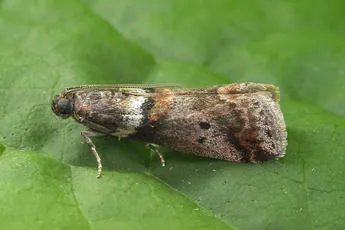
Acrobasis consociella
Acrobasis consociella
Wingspan 19-22 mm. It is similar to other British Acrobasis species but can appear more greyish. The adults are on the wing during July and August, when they can be attracted to light. Oak is the food plant, the larvae feeding gregariously in spun le
Acrobasis juglandis - Hodges#5661
Acrobasis juglandis
Acrobasis juglandis - Hodges#5661 (Acrobasis juglandis) is a species in the family Pyralidae, commonly known as pyralid moths, belonging to the order Lepidoptera (Butterflies and Moths). It is classified within the subfamily Phycitinae, tribe Phyciti
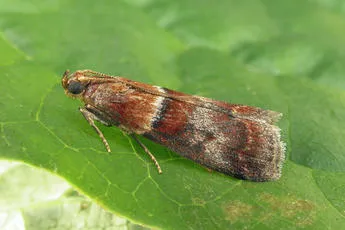
Acrobasis repandana
Acrobasis repandana
Wingspan 20 to 25 mm. One of the more colourful of the Pyralids. Flying in July and August, the adults can be attracted to light, but during the day remain concealed amongst the foliage. The larvae feed on oak, often high up in a tree, spinning toget
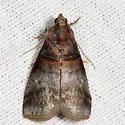
Acrobasis stigmella - Hodges#5669
Acrobasis stigmella
Acrobasis stigmella - Hodges#5669 (Acrobasis stigmella) is a species in the family Pyralidae, commonly known as pyralid moths, belonging to the order Lepidoptera (Butterflies and Moths). It is classified within the subfamily Phycitinae, tribe Phyciti
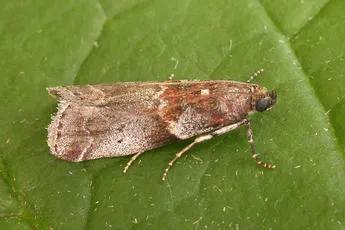
Acrobasis suavella
Acrobasis suavella
Wingspan 22 to 24 mm.This is the largest of the British Trachycera species, and rather dark, being mostly reddish-purple with two indistinct pale cross-lines and a whitish suffusion near the leading edge of the forewing. Blackthorn is the preferred f
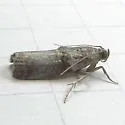
Acrobasis texana - Hodges#5666.1
Acrobasis texana
Identification: Original description is in Fascicle 15.
Acrocercops astericola - Hodges#0692
Acrocercops astericola
Identification: None of the reared specimens uploaded to BugGuide have the basal half of the dorsal margin entirely white/pale, as is the case with Leucospilapteryx venustella . For comparison, here is L. venustella : Another, undescribed moth has si
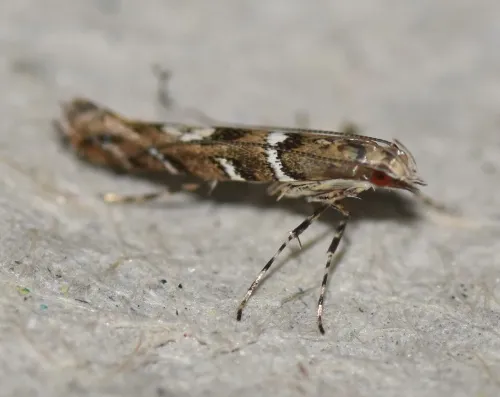
Acrocercops brongniardella
Acrocercops brongniardella
Wingspan 8 to10mm. The larvae of this species mine the leaves of Oak species. They characteristically make twisting initial mines in the upper epidermis, which then join to form a large blotch, with a silvery appearance. In open woodland and other ar
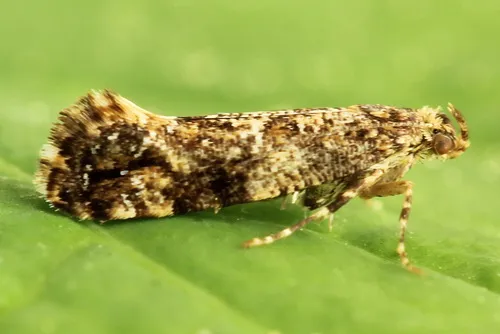
Acrolepia autumnitella
Acrolepia autumnitella
Wingspan 11-13 mm. A small inconspicuous species with brown wings that have a white patterning. The larva mines the leaves of Bittersweet or occasionally Deadly Nightshade. Various habitats especially those supporting the larval foodplant Bittersweet
Acrolepiopsis heppneri - Hodges#2490.1
Acrolepiopsis heppneri
Identification: Genitalia: One of two univoltine species of Acrolepiopsis that feed on Smilax tamnoides in Illinois. Unlike A. incertella , which occurs as a larva in early May (central Illinois), the larva of A. heppneri feeds in late summer and ear
Acrolophus bicornutus - Hodges#0343
Acrolophus bicornutus
Identification: Specimen identified by DNA analysis (BOLD). More information very soon!!
Acrolophus cockerelli - Hodges#0345
Acrolophus cockerelli
Identification: "[The] moths are in the cockerelli species group and may be that species. To be certain I would need to see a slide of the male genitalia." - Don Davis at the USNM, commenting on the following photo.
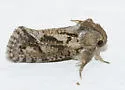
Acrolophus filicicornis - Hodges#0352
Acrolophus filicicornis
Identification: The original description as Felderia filicicornis Walsingham, is available in PDF or view online. Adult: Labial palpi recurved reaching the length of thorax. Hindwing is brown with light purple tinge. Specimen identified by DNA analys
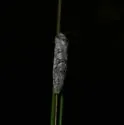
Acrolophus forbesi - Hodges#0353
Acrolophus forbesi
Identification: Similar to Acrolophus piger, but evidently less common. Eyes are not setose like A. piger, but this is only visible under magnification and is usually not apparent in live photos.
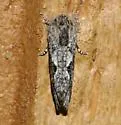
Acrolophus griseus - Hodges#0355
Acrolophus griseus
Identification: Walsingham original description as Hypoclopus griseus is available in PDF. Specimen identified by DNA analysis (BOLD).
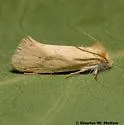
Acrolophus laticapitana - Hodges#0359
Acrolophus laticapitana
Identification: Adult - small, slender, somewhat like tortricids. Pale yellow to tan or whitish gray. ,
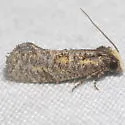
Acrolophus near-simulatus - Hodges#0381.1
Acrolophus near-simulatus
Identification: Numerous photos posted on iNaturalist and BugGuide show what appears to be a paler washed-out entity similar to A. simulatus. These may prove to be a regional variation of A. simulatus, or a distinct, presumably undescribed, species.
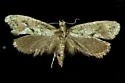
Acrolophus occidens - Hodges#0367.2
Acrolophus occidens
Identification: Specimen determined by DNA analysis (BOLD).
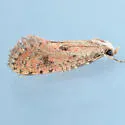
Acrolophus pyramellus - Hodges#0377
Acrolophus pyramellus
Identification: The original description as Eulepiste pyramellus Barnes & McDunnough, and the revised description by Hasbrouck are in the print references below. Photo determined by Peter Jump.
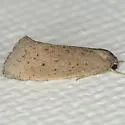
Acrolophus spilotus - Hodges#0382.1
Acrolophus spilotus
Identification: The speckled forewing pattern usually distinguishes this species from all other Acrolophus . The speckling may not be visible in extremely dark or worn specimens ).
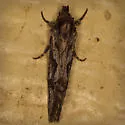
Acrolophus variabilis - Hodges#0385
Acrolophus variabilis
Identification: Adult. Variable color and pattern. Brown hindwing with lavender fringe. ♂ antennae are serrate. Notes from Moth Photographers Group ] "Peter Jump reports that you can't separate Acrolophus variabilis [0385] from A. macrophallus [0363]
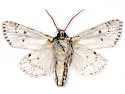
Acronicta atristrigatus - Hodges#9232
Acronicta atristrigatus
Identification: Smith original description as Anytus atristrigatus is available in PDF or view online in the print references. Thanks to Gary Anweiler for correcting the ID of photos formerly placed on the A. beameri page here .
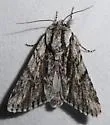
Acronicta barnesii - Hodges#9267
Acronicta barnesii
Identification: Description can be found in MONA Fascicle 25-04.
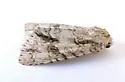
Acronicta beameri - Hodges#9234
Acronicta beameri
Identification: Adult: forewing light gray with heavy black anal dash which almost connects to heavy black basal dash; AM and PM lines thick, scalloped, white, edged with black on both sides; reniform and orbicular spots black in center, surrounded b
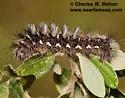
Acronicta edolata - Hodges#9269
Acronicta edolata
Identification: Grote (1881) original description as Apatela edolata is available online and linked in the print references. Larva photo at Cornell University Insect Collection: Franclemont
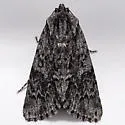
Acronicta nr. othello - Hodges#9270.89
Acronicta nr-othello
Acronicta nr. othello is a parking spot for Gary McDonald's BugGuide photo # 533778 (BOLD Sample ID 2011GM-0627 in BIN group BOLD:AAD5473 ). The barcode tree for BOLD:AAD5473 is constructed with two branches, one with true othello and one with 533778
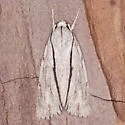
Acronicta perblanda - Hodges#9238.1
Acronicta perblanda
Identification: Ferguson adult description, including genitalia, is available in PDF.
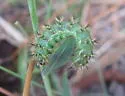
Acronicta sinescripta - Hodges#9272.1
Acronicta sinescripta
Identification: Sam Jaffe reports that the caterpillars have black rings around the tubercles on iNaturalist here
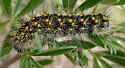
Acronicta spinea - Hodges#9276
Acronicta spinea
The most recent records of this species are from the 1960s, according to a comment by Chris Schmidt.
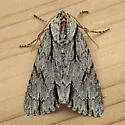
Acronicta strigulata - Hodges#9231
Acronicta strigulata
Identification: See Pacific Northwest Moths here Nocturnal
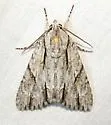
Acronicta thoracica - Hodges#9230
Acronicta thoracica
Identification: One of two western Acronicta with goldish brown middorsal thoracic tuft. Forewing light gray with dark transverse markings; AM line indistinct and usually absent below basal dash; medial line is black diffuse bar from slanting from c
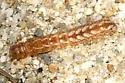
Acronicta tristis - Hodges#9247
Acronicta tristis
Identification: Adult: Larva: Genitalia ♂: " A. tristis is very similar to A. increta, but the ground color is a cold gray or bluish gray, lacking the greenish or brown tints of increta. Dark A. tristis are a flat gray black, with no sheen, whereas d
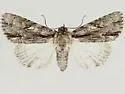
Acronicta valliscola - Hodges#9239
Acronicta valliscola
Acronicta valliscola - Hodges#9239 (Acronicta valliscola) is a species in the family Noctuidae, commonly known as owlet moths, belonging to the order Lepidoptera (Butterflies and Moths). It is classified within the subfamily Acronictinae, superfamily
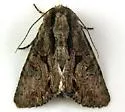
Acroria pulchra - Hodges#9562.1
Acroria pulchra
Separatabdruck aus den Abhandlungen der Senckenbergischen naturforschenden Gesellschaft
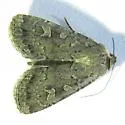
Actebia balanitis - Hodges#10923
Actebia balanitis
Identification: "Basal, antemedian and postmedian lines complete, marked in black and scalloped outward at each vein. Orbicular and reniform spots finely outlined with dark scales and filled with slightly paler ones; the reniform usually has the lowe
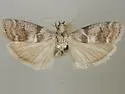
Actrix dissimulatrix - Hodges#5819
Actrix dissimulatrix
Identification: Heinrich stated Actrix dissimulatrix and Actrix nyssaecolella differ mainly by genitalia. Actrix dissimulatrix may have slightly more white dusting in the median area especially over the inner margin below antemedial line.
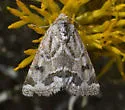
Acute-lined Flower Moth - Hodges#11150.1
Schinia acutilinea
Identification: Adult: dimorphic - common form is pinkish-brown or greenish-brown and white; forewing has large dark diamond-shaped basal patch, a similarly-colored triangular patch along costa near apex, and oblong patch below that between PM and ST
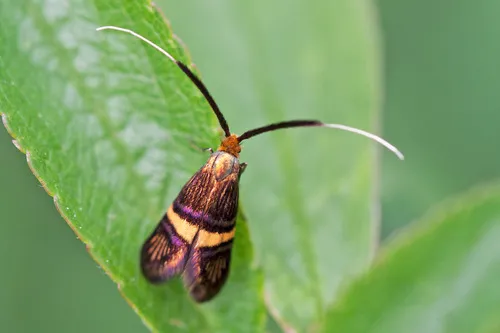
Adela croesella
Adela croesella
Wingspan 11 to 14 mm. The males of this species have very long antennae, the females shorter with a thickened base. The moths are on the wing in late May and June, and fly during the day in sunshine, visiting flowers. The larvae are thought to feed a
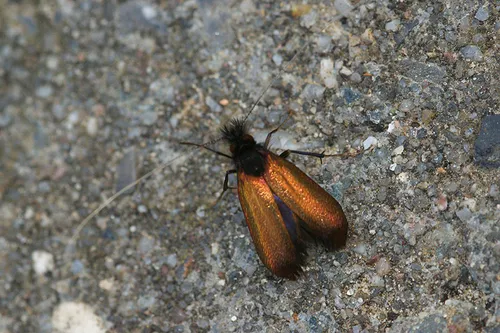
Adela cuprella
Adela cuprella
Wingspan about 15 mm. The male has very white, long antennae, hairy black head and gold forewings with a purple edge. The females have much shorter, black antennae and are orange or yellowish on the head. Around willow. Adults tend to spend a lot of
Adela eldorada - Hodges#0226
Adela eldorada
Identification: Adults - more brightly colored, with broader, cream-colored bands than A. trigraphia . Males have some orange scaling on the head A detailed description of A. eldorada and a comparison with A. trigrapha appears on pg 221 of the synops
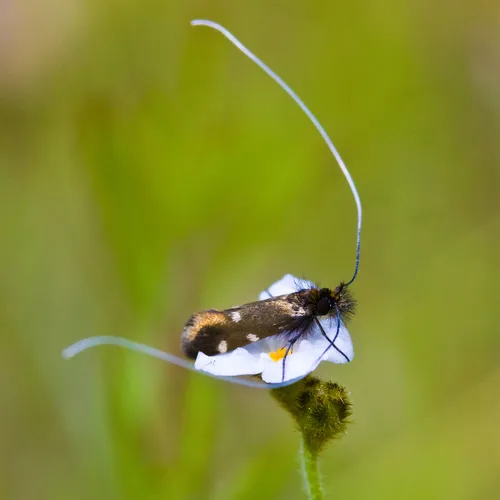
Adela flammeusella - Hodges#0224
Adela flammeusella
Adela flammeusella is a moth of the family Adelidae or fairy longhorn moths. It was described by Chambers in 1876. It is found from southern Washington south to the foothills and interior valleys of most of cismontane California.
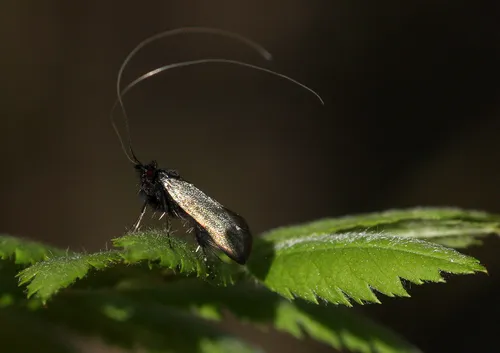
Adela reaumurella
Adela reaumurella
Wingspan 14-18 mm. The males have long, whitish antennae, the females shorter with both sexes having bronzy or metallic greenish forewings. Open areas such as heath, moorland, country gardens, parks and wherever the larval food plants are to be found
Adela singulella - Hodges#0220
Adela singulella
Identification: Antenna more than 3x forewing length; forewing narrow, length about 3.4x width, bronzy with complete white transverse band or white along costa at outer 1/3.
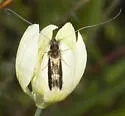
Adela thorpella - Hodges#0223
Adela thorpella
Identification: Large-eyed; antennae 2.5 x FW length in males, 1.4 x FW length in females; wings dull, brassy-bronze with a pale fringe and at most a pale band represented by a tornal spot. A detailed description of A. thorpella appears on pg 226 of
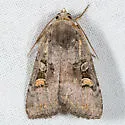
Adelphagrotis stellaris - Hodges#10989
Adelphagrotis stellaris
Identification: Fresh adults have a cream to orange reniform spot, a prothoracic collar that is lighter in color than the darker gray or brown of the thorax and the forewings. From British Columbia to Northern California the forewings are usually mor
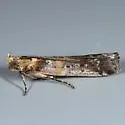
Adelphia Moth - Hodges#5890
Adelphia petrella
Identification: See Heinrich (1956) in "Print References" below. Genitalia: ♀ ♂
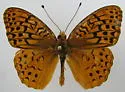
Adiaste Fritillary - Hodges#4458.1
Speyeria adiaste
Identification: Easily identified by where found, broad squarish wings, pale coloring with relatively delicate black patterning above and barely contrasting pattern on a tan ventral. Closely related to S. hydaspe and displacing it to the south. Quit
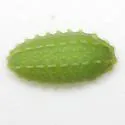
Adoneta gemina - Hodges#4682
Adoneta gemina
Type: One male, two females, Brownsville, Texas (Mr. Doll)
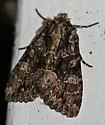
Adorable Brocade - Hodges#9419
Platypolia mactata
Identification: forewing medium to dark brownish-gray with diffuse blackish streak in lower median area but not touching inner margin; AM and PM lines double, pale, outlined in black; PM line sinuous, composed of connected series of small arcs; renif
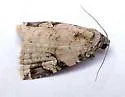
Aerial Brown - Hodges#9030
Ozarba aeria
Identification: Specimen identified by DNA analysis:
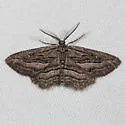
Aethaloida packardaria - Hodges#6774
Aethaloida packardaria
Identification: -- Specimen identified by DNA analysis (BOLD).
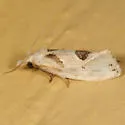
Aethes angustana - Hodges#3754.1
Aethes angustana
Michael Sabourin, Referee for Cochylini at Moth Photographers Group, informs me that " mymara tends to be slightly paler than angustana , but they are not readily separated without disection." This species was number 3808 in the 1983 Hodges Checklist
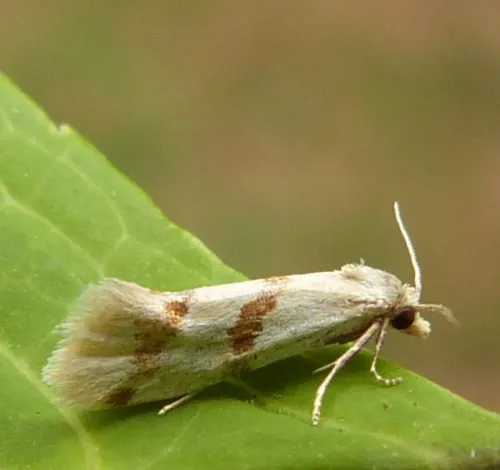
Aethes beatricella
Aethes beatricella
It can be found on waste ground, woodland fringes and hedgerows. It flies during June and July, in the evening and into dusk, and is sometimes attracted to light. This species occurs mainly in the south-east of England. In the Butterfly Conservation'
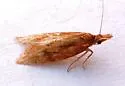
Aethes biscana - Hodges#3755.1
Aethes biscana
Identification: Adult - see original description in Print References.
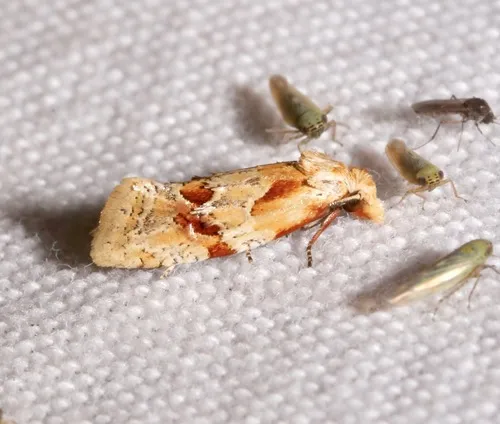
Aethes bomonana - Hodges#3755.2
Aethes bomonana
Aethes bomonana - Hodges#3755.2 (Aethes bomonana) is a species in the family Tortricidae, commonly known as tortricid moths, belonging to the order Lepidoptera (Butterflies and Moths). It is classified within the subfamily Tortricinae, tribe Cochylin
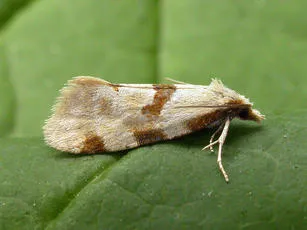
Aethes cnicana
Aethes cnicana
Wingspan 14 to 17 mm. The adults of this species generally have a slightly glossy appearance to the forewings. Around rough grassland areas containing thistle the larval foodplant. The adults are on the wing in June and July and are often attracted t
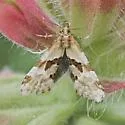
Aethes deutschiana - Hodges#3755.3
Aethes deutschiana
This species was number 3757 in the 1983 Hodges Checklist.
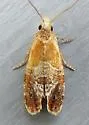
Aethes interruptofasciata - Hodges#3757
Aethes interruptofasciata
Identification: Robinson original description is available online in the print references.
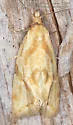
Aethes promptana - Hodges#3759.1
Aethes promptana
This species was number 3844 in the 1983 Hodges Checklist.
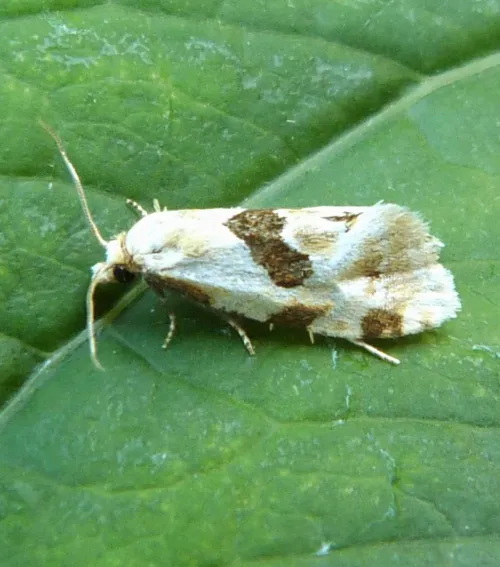
Aethes rubigana
Aethes rubigana
Wingspan 15 to 19 mm. A rather attractive species, with more distinct markings than some of its close relatives. It inhabits waste ground and dry open areas containing burdock. The moths fly from late June to August, from dusk into the night. The lar
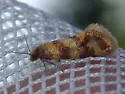
Aethes rutilana - Hodges#3760
Aethes rutilana
Identification: Larva - Dull yellow body with orange-brown head and prothoracic shield. This species was number 3758 in the 1983 Hodges Checklist.
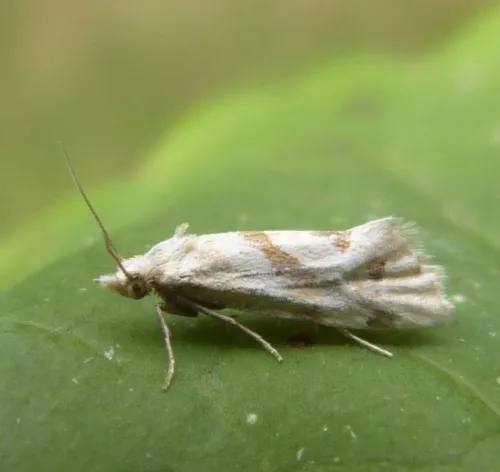
Aethes smeathmanniana
Aethes smeathmanniana
Wingspan 12-19 mm. The ground colour of this moth varies from whitish to yellowish but the species differs from several related species by its narrower forewings. The 'V' shaped markings are of a rust colour. It occurs as an adult from May through to
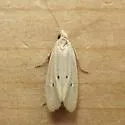
Aethes spartinana - Hodges#3761.1
Aethes spartinana
Aethes spartinana - Hodges#3761.1 (Aethes spartinana) is a species in the family Tortricidae, commonly known as tortricid moths, belonging to the order Lepidoptera (Butterflies and Moths). It is classified within the subfamily Tortricinae, tribe Coch
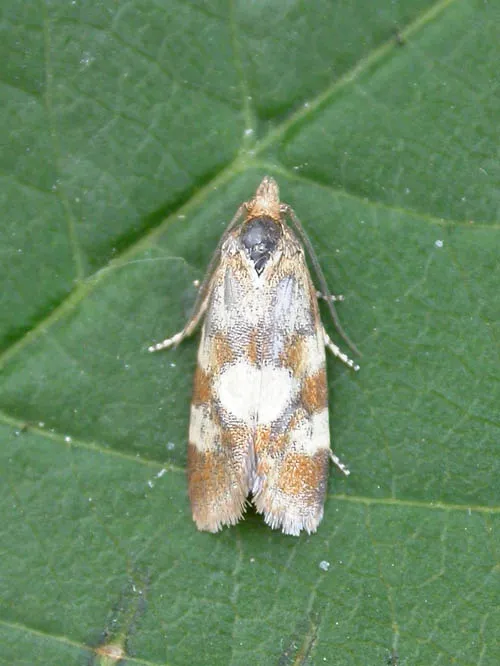
Aethes tesserana
Aethes tesserana
Wingspan 12 to 18 mm. A variable but quite distinctive species, with a chequered pattern to the forewings. Various habitats, especially where the larval foodplants are found. The larvae feed in the roots of Oxtongue (Helminthotheca) and Hawkweed (Hie
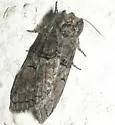
Afilia oslari - Hodges#7962
Afilia oslari
Identification: Specimen identified by DNA analysis:
African Scavenger - Hodges#0423
Praeacedes atomosella
Appears to be represented by BOLD:AAL0559 (locations: Egypt, Madagascar, Bermuda, and Costa Rica), and not BOLD:ACT2459 (AR and FL).
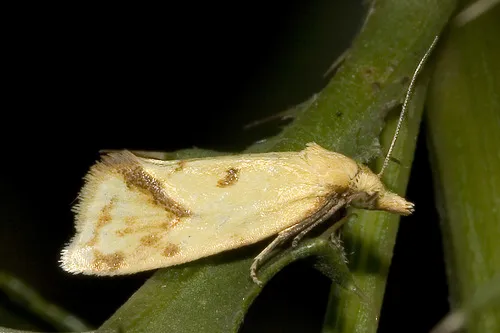
Agapeta hamana
Agapeta hamana
The wingspan is 15-24 mm. A yellowish moth with russet coloured markings on the wings. Found in many habitats including grassland, fens, open woodland, heathland, waste places and gardens where foodplant thistle occurs. Flies mainly at dusk or at nig
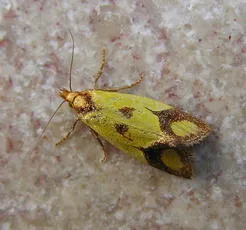
Agapeta zoegana
Agapeta zoegana
Wingspan 15-25 mm. Usual form is yellow with russet wing markings similar to A. hamana . The form ferrugana has orange-brown ground colour instead of the normal yellow. Both have distinctive brown ring at wing-tip. Its main foodplant is Common Knapwe
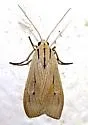
Agaraea semivitrea - Hodges#8256.2
Agaraea semivitrea
Identification: Adult: forewing semitransparent, pale gray with dark veins; diffuse black spot near center of wing; hindwing smaller, paler, and without black spot; abdomen bright yellow/orange with black dorsal spots; top of thorax pale gray/whitish
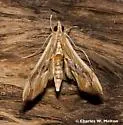
Agathodes monstralis - Hodges#5240
Agathodes monstralis
Identification: Adult: purple-and-green marbled, hindwings are beige, abdomen held in an up-right position, males with pair of hair-pencils that are extended for the release of pheromones. Larva: early instars translucent and orange with six rows of
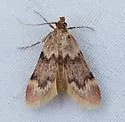
Aglossa acallalis - Hodges#5519
Aglossa acallalis
Identification: Original description is online. (97)
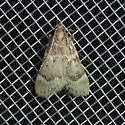
Aglossa baba - Hodges#5520
Aglossa baba
Identification: Original description (from Dyar, 1914): Fore wing densely powdered with blackish; lines broad, pale creamy, the inner dentate inward on submedian fold, the outer narrowing below, slightly produced on submedian fold, reaching the inne
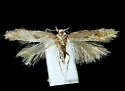
Agnippe laudatella - Hodges#1769
Agnippe laudatella
Identification: Specimen determined by DNA analysis (BOLD). ( 3 ) Genitalia:
Agnippe prunifoliella - Hodges#1771
Agnippe prunifoliella
Identification: Prunifoliella is Latin meaning "plum leaf", where Chambers found the caterpillars feeding. The larvae are known to be parisitized by the Ichneumon wasp Orgilus gelechiae ( 278 ).
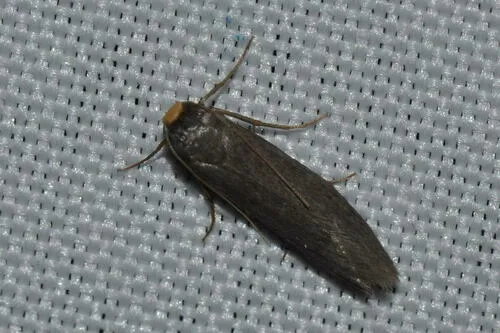
Agnoea flavifrontella
Agnoea flavifrontella
Unless identified by a recognised expert, a photo is required showing all characters. If recorded after mid-June the specimen should be retained for gen det. Larva feeds on leaf litter and various lichens, living and feeding in a movable case. Widesp
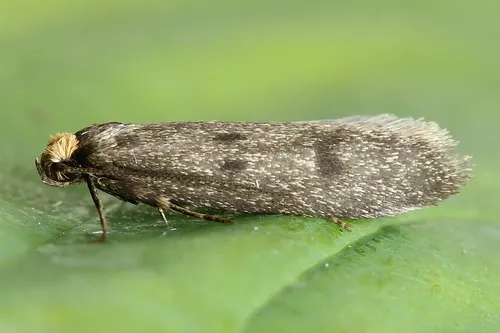
Agnoea josephinae
Agnoea josephinae
It is very similar to Agnoea (Pseudatemelia) flavifrontella and adults are best identified by examination of the genitallia. Best identified by examination of the genitallia. Records in May and early June are likely to be flavifrontella , but from mi
Agnorisma bollii - Hodges#10956
Agnorisma bollii
Identification: Adult: forewing, head, and top of thorax brown with scattered white scales, giving an overall grayish cast; collar dark gray to blackish; rectangular dark gray to blackish shading between reniform and orbicular spots, and between orbi
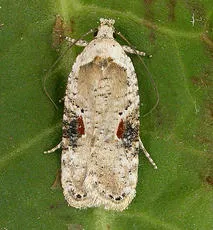
Agonopterix alstromeriana
Agonopterix alstromeriana
Wingspan 17-20 mm. Fairly unmistakable combination of large black costal blotch with adjacent rusty red elongate mark and prominent apical dots. Areas where foodplant (Hemlock) is found including roadsides, waste ground, marshes and river sides. The
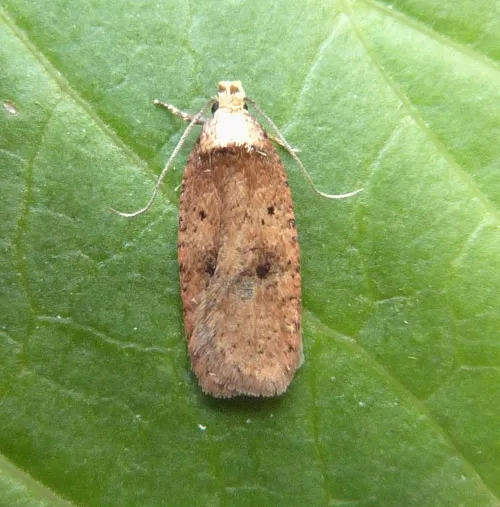
Agonopterix angelicella
Agonopterix angelicella
Wingspan 18 to 19 mm. The adults rest in a distinctive Depressariidae fashion, with one forewing almost completely overlapping the other. In areas where the larval foodplants are plentiful. Adults are found on the wing between August and September. T
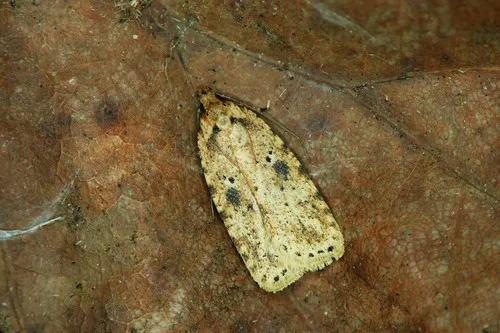
Agonopterix arenella
Agonopterix arenella
Wingspan 19 to 23 mm. The posture of this moth is typical of many of the Depressariinae which rest with flattened, overlapping wings. It is a nocturnal flier and is attracted to light. This species hatches in the autumn and spends the winter as an ad
Agonopterix arnicella - Hodges#0879
Agonopterix arnicella
Agonopterix arnicella - Hodges#0879 (Agonopterix arnicella) is a species in the family Depressariidae, belonging to the order Lepidoptera (Butterflies and Moths). It is classified within the subfamily Depressariinae, superfamily Gelechioidea. This sp
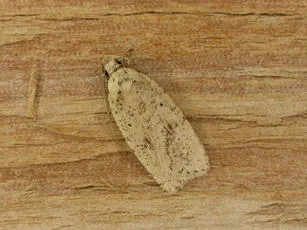
Agonopterix assimilella
Agonopterix assimilella
Wingspan 15 to 21 mm. The adults are rather similar to other Agonopterix species and can be difficult to determine without dissection. Areas where the larval foodplant is found. The adults of this species fly between April and June, and are sometimes

Agonopterix chrautis - Hodges#0871
Agonopterix chrautis
Identification: See key to Agonopterix species in Hodges (1974). Pristine reared individuals are vividly colored, whereas most flown moths appear comparatively faded, apparently because the dark scaling on the forewing is quickly worn off in the fiel
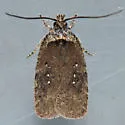
Agonopterix clemensella - Hodges#0862
Agonopterix clemensella
Identification: Chambers (1876) original description as Gelechia clemensella is available in the print references. Specimen identified by DNA analysis (BOLD). ( 3 )
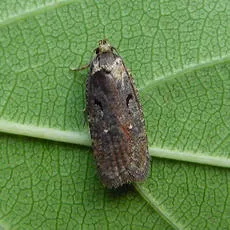
Agonopterix conterminella
Agonopterix conterminella
It is found on the wing in August and September. The larvae, which feed on Willow and eat away the terminal shoots during May and June. This moth occurs sporadically throughout England and southern Scotland. In the Butterfly Conservation's Microlepid
Agonopterix fusciterminella - Hodges#0870
Agonopterix fusciterminella
Identification: Forewing has discal dot and subterminal dots.
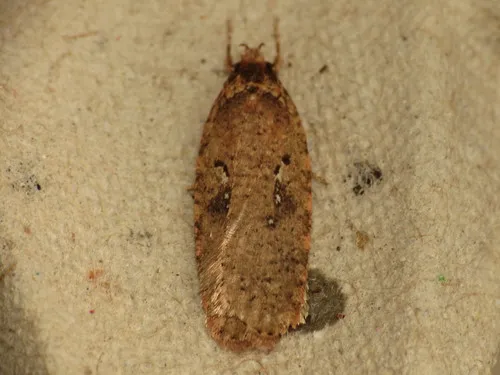
Agonopterix heracliana
Agonopterix heracliana
Wingspan 15 to 21 mm. Identification can be difficult but Agonopterix heracliana can generally be confirmed by checking the hindwing cilia lines, usually showing just one distinct line (with other faint lines possible). However dissection to confirm
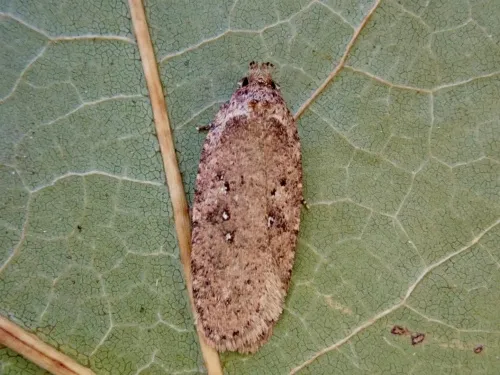
Agonopterix heracliana agg.
Agonopterix heracliana agg.
Agonopterix heracliana is one of a group of very similar looking species. Identification can be difficult. Confusion with Agonopterix ciliella is particularly likely. Separation of these two species is possible based on the hindwing (see individual s