
Butterflies and Moths
Order Lepidoptera
The Butterflies and Moths (Order Lepidoptera) includes 11,813 species across 112 families and 2,787 genera in our directory.
About Butterflies and Moths
Lepidoptera includes approximately 180,000 described species of butterflies and moths. Moths outnumber butterflies roughly 10:1. The monarch butterfly's eastern population has declined by more than 80% since the mid-1990s, and the western population by over 95% since the 1980s. The IUCN lists the migratory monarch as Vulnerable.
Economic Impact
Lepidoptera are critical pollinators. In Europe, grassland butterfly species have declined by almost 50% since the early 1990s. In the UK, three-quarters of butterflies are in decline. In the U.S., five butterfly species have gone extinct since 1950, with 29 listed as endangered.
Ecological Role
Butterflies and moths are essential indicators of ecosystem health. As caterpillars, they are a primary food source for birds - a single nest of blue tit chicks requires ~10,000 caterpillars. Adult moths pollinate many night-blooming plants.
Families in Lepidoptera (112)
Species in Lepidoptera (11,813)
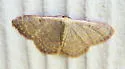
Cross's Wave Moth - Hodges#7174
Leptostales crossii
Identification: Adult: forewing variably orangish-brown to purplish, with yellow strip along costa; 3 wavy yellow lines, sometimes broken or indistinct, in AM, median, and PM areas; note that lines are paler than ground color of wing; terminal line a
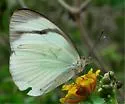
Cross-barred White - Hodges#4189.5
Itaballia demophile
First U.S. Record: National Butterfly Center, Mission, Hidalgo Co., TX, December 7, 2004 (Jeffrey Glassberg, David Hanson, & m. ob.)
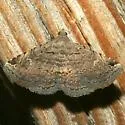
Cruel Toxonprucha - Hodges#8674
Toxonprucha crudelis
Identification: Larva - whitish gray, sometimed with a purple tinge, pale and broken middorsal stripe, purple stripe just above the legs; head white, brown in front and black posteriorly. Adult - forewing light brownish-gray, usually with discernible
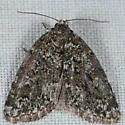
Cryphia Moth - Hodges#9292
Cryphia cuerva
Identification: Adult: thorax and abdomen slender, delicate; forewing mottled with cryptically-colored mix of black, white, bronzy yellow, and gray scales; lines and spots obscure; some specimens have an overall dark forewing, whereas others have ext
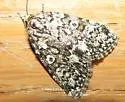
Cryphia olivacea - Hodges#9287
Cryphia olivacea
Identification: The original description as Cerma olivacea Smith, is is available in PDF or view online is available online in the print references below. Forewing is olive green with large orbicular which has a black center spot. Determined by Chuck
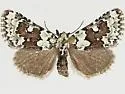
Cryphia sarepta - Hodges#9295
Cryphia sarepta
Identification: Fresh adults have a pale greenish tint.
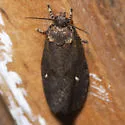
Cryptaspasma bipenicilla - Hodges#2704.1
Cryptaspasma bipenicilla
Identification: Adult : Males are grayish brown with faint black reticulated markings. Females are uniformly darker with less markings. Both males and females have a conspicuous white dot on the distal one-third of the FW. HW are pale grayish brown.
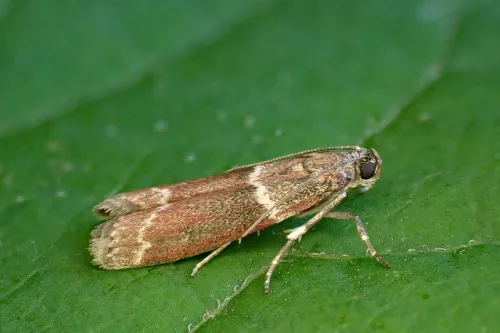
Cryptoblabes bistriga
Cryptoblabes bistriga
Wingspan 18 to 20 mm. This moth has a distinctive broad reddish area in the middle of the forewing. By day it rests in trees and tall bushes in Oak woodland. This moth flies at dusk and at night from late June, into July. The larvae feed on a range o
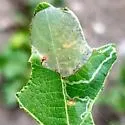
Cryptolectica undescribed-nr-insulariella
Cryptolectica undescribed-nr-insulariella
Another potentially undescribed species observed on iNaturalist feeds on Quercus arizonica/grisea/turbinella.
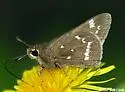
Crystal Skipper - Hodges#4080.1
Atrytonopsis quinteri
Identification: Chocolate to brown ground color. "Masked white face" with bright white spotband on ventral hindwing. Identical in appearance to A. loammi.
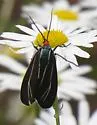
Ctenucha cressonana - Hodges#8261
Ctenucha cressonana
Identification: This species is found in Colorado, C. venosa is not. Both species are found southward. See p.274 in Moths of Western North America . … Bob Patterson, 27 July, 2009 Not easy to determine venosa from cressonana from a photo. Location an
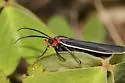
Ctenucha multifaria - Hodges#8263
Ctenucha multifaria
Identification: Distal tip and entire costal edge of forewing narrowly white-marginned. Patagia ** entirely black. ** patagia = pair of small articulated plates, one on each side of the dorsum of the prothorax. The patagia are visible in front of t
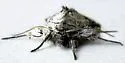
Cucullia antipoda - Hodges#10206
Cucullia antipoda
Identification: Adult: forewing brownish-gray with black shading between distinct reniform and orbicular spots, which are partially filled with black; prominent black anal dash, and heavy black streaking along inner margin; lower part of PM line form
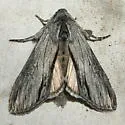
Cucullia astigma - Hodges#10214
Cucullia astigma
Identification: Two disjunct populations. Colorado and New Mexico population have forewings as uniform medium gray with reniform and orbicular spots absent. Southern California population has forewings usually shaded white with reniform and orbicular
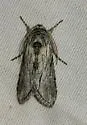
Cucullia cucullioides - Hodges#10210
Cucullia cucullioides
Identification: Detailed description is available in MONA Fascicle 26-1 (free PDF download) and Robert Poole's Nearctica, both of which are linked in citations below.
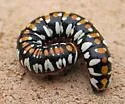
Cucullia dorsalis - Hodges#10190.2
Cucullia dorsalis
Identification: forewing is uniform gray with dark anal dash
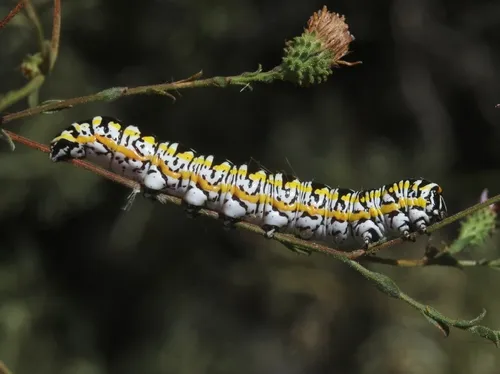
Cucullia eccissica - Hodges#10192.1
Cucullia eccissica
Identification: Detailed description can be found in MONA Fascicle 26-1 (free PDF available) and at Robert Poole's Nearctica, both of which are linked in references and citations below.
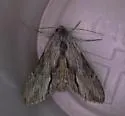
Cucullia eulepis - Hodges#10209
Cucullia eulepis
Identification: Grote (1876) original description as Cleophana eulepis is available online in the print references. Listed as Copicucullia eulepis on the Utah checklist. ( 5 )
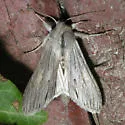
Cucullia laetifica - Hodges#10191
Cucullia laetifica
Identification: Hampson described the larva. description .
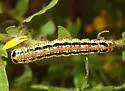
Cucullia lethe - Hodges#10191.1
Cucullia lethe
New species, described by Robert W. Poole in Fascicle 26.1 of "The Moths of North America North of Mexico".
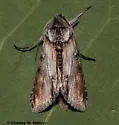
Cucullia lilacina - Hodges#10196
Cucullia lilacina
Identification: The forewing has a bright violet or lilac hue and a distinct brown patch along the costa from the reniform spot to the outer margin. ( 3 )
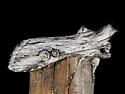
Cucullia mcdunnoughi - Hodges#10208
Cucullia mcdunnoughi
Identification: Henne (1940) original description as Copicucullia mcdunnoughi is available in the print references.
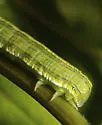
Cucullia omissa - Hodges#10199
Cucullia omissa
Identification: The original description of Cucullia omissa Dod, is available online and in PDF at the link in the print references below. ( 3 ) - Forewing is purplish gray with brown shading from the apex to the orbicular spot. The black dashes near
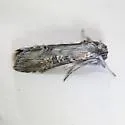
Cucullia postera - Hodges#10198
Cucullia postera
Cucullia postera - Hodges#10198 (Cucullia postera) is a species in the family Noctuidae, commonly known as owlet moths, belonging to the order Lepidoptera (Butterflies and Moths). It is classified within the subfamily Cuculliinae, superfamily Noctuoi
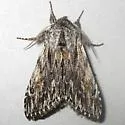
Cucullia pulla - Hodges#10180
Cucullia pulla
Identification: The original description as Lathosea pulla Grote, is available online in the print references below.
Cucumber Moth - Hodges#5207
Diaphania indica
Identification: Adult : Wings are white, with a dark brown band along the fringe. Larva : pale to dark green with a white stripe running along both sides of the body.
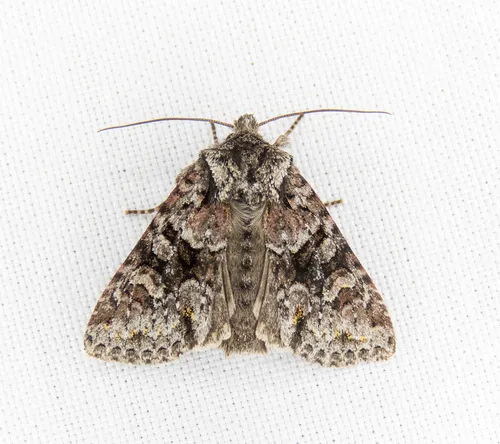
Cuneate Arches - Hodges#10371
Lacinipolia cuneata
Identification: Adult: forewing brownish-gray with large dark brown or blackish patch surrounding reniform and orbicular spots [patch is broad near costa, and narrows toward inner margin, giving overall wedge shape]; short black bar connects AM and P
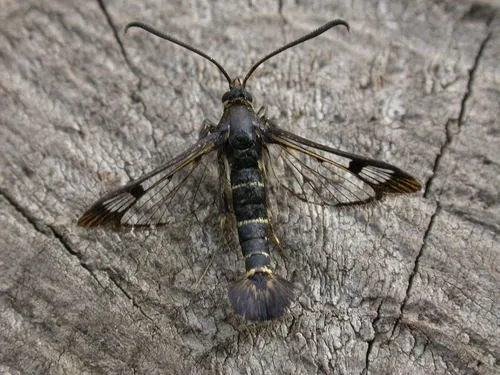
Currant Clearwing
Synanthedon tipuliformis
A rather small species with a wingspan of 17-20 mm. When adding a record please state whether a pheromone lure was used. Tends to be found around allotments, gardens and other similar places where the larval foodplant is present. The larvae of this s
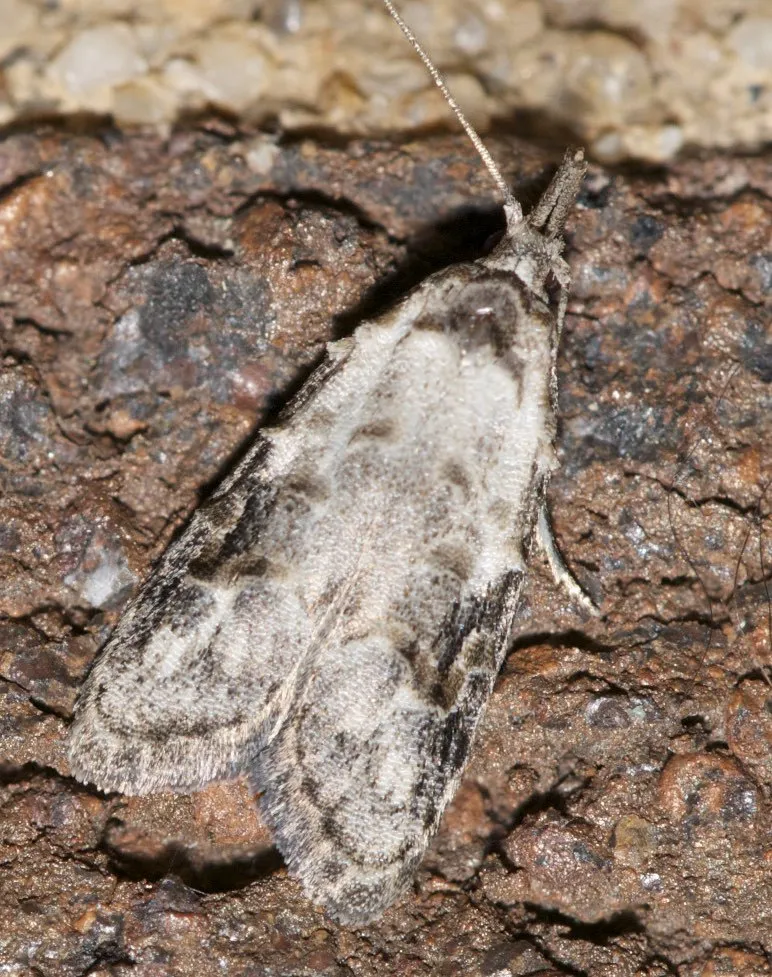
Currant Fruitworm Moth - Hodges#2315
Carposina fernaldana
Identification: Genitalia: ♀ ♂ Aedeagus with three longitudinal rows of dense cornuti; one row, bearing the longest apical spines, usually with a conspicuous median gap devoid of spines; juxta deeply forked.
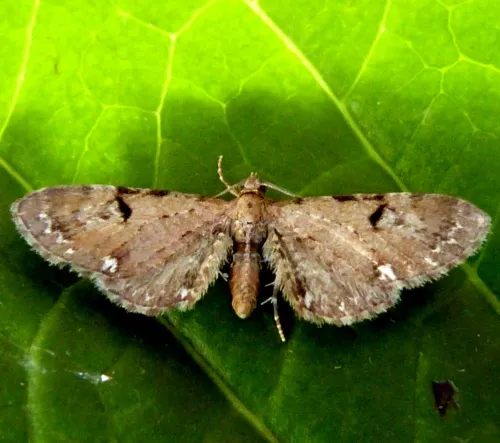
Currant Pug
Eupithecia assimilata
Although superficially similar to several other Eupithecia species, this moth usually has a distinct black mark on the forewing, a broken white subterminal line ending in a 'toothed' white blotch and a general chestnut colour to the forewings. Size c
Curve-lined Angle - Hodges#6362
Digrammia continuata
This species forms a complex with D. excurvata and D. setonana and adults are best identified by dissection .
Curve-lined Bird-dropping Moth - Hodges#9145
Tarache terminimaculata
Identification: The description of Tarache terminimaculata Grote, is available online at the link in the print references below, and at nearctica.com. Sexually dimorphic. ♂ hindwing is yellowish brown ♀ hindwing is dark brown
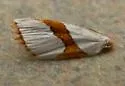
Curve-lined Vaxi - Hodges#5465
Vaxi auratella
Identification: Adult: forewing white with median orange or yellowish band; band widens toward inner margin where it connects with narrow terminal line and fringe of same color hindwing grayish-white.
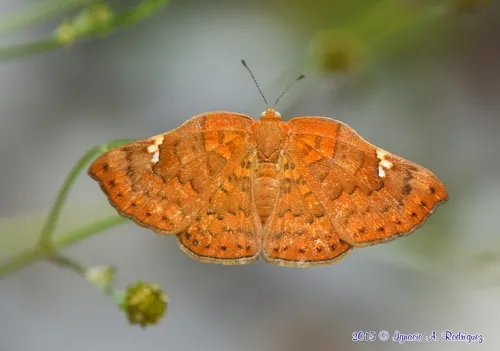
Curve-winged Metalmark
Curvie emesia
Curvie emesia, the curve-winged metalmark, is a species of metalmark in the butterfly family Riodinidae. It is found in North America.
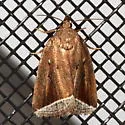
Curved Halter Moth - Hodges#9059
Capis curvata
Identification: Adult: forewing chocolate brown except for a pale whitish tip, separated from the remainder of the wing by a gently curved line A rare species, threatened or endangered in several parts of its range.
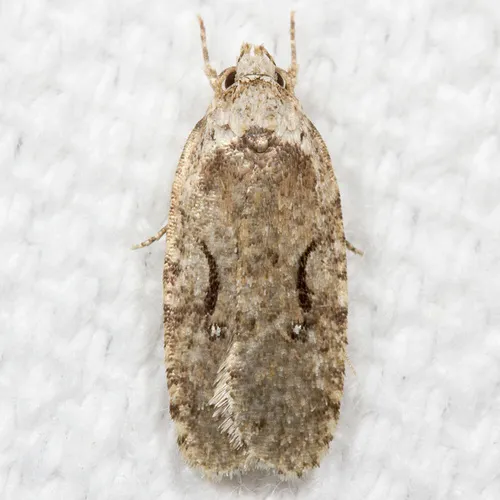
Curved-lined Agonopterix Moth
Agonopterix curvilineella
Agonopterix curvilineella, the curved-line agonopterix moth, is a moth in the Depressariidae family. It was described by William Beutenmüller in 1889. It is found in North America, where it has been recorded from Illinois, Indiana, Kentucky, Maine, M
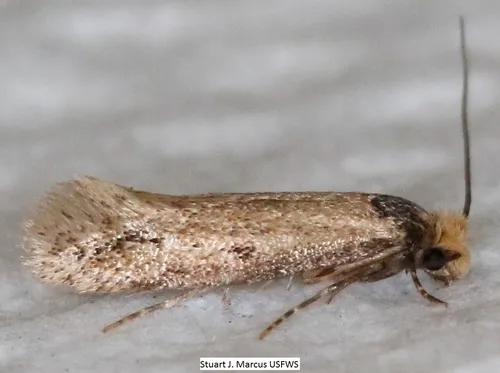
Curved-lined Homostinea Moth
Homostinea curviliniella
Homostinea curviliniella is a moth of the family Tineidae. It is found in Cuba and North America, where it has been recorded from most of the eastern half of the United States and Arizona.
Cutina aluticolor - Hodges#8729.1
Cutina aluticolor
Identification: The original description of Cutina aluticolor Pogue & Ferguson, is available in PDF and online in the print references below.
Cutina arcuata - Hodges#8729.2
Cutina arcuata
Identification: The original description of Cutina arcuata Pogue & Ferguson, is available in PDF.
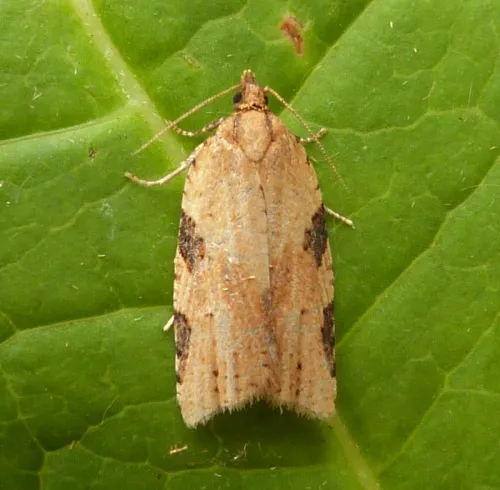
Cyclamen Tortrix
Clepsis spectrana
Wingspan 16-22 mm. This is a very variable species. The ground colour of the forewing ranges from creamy yellow to rich chestnut-brown or dark brown. However, it usually shows a similar pattern of darker markings. The costa of the male's wing is dist
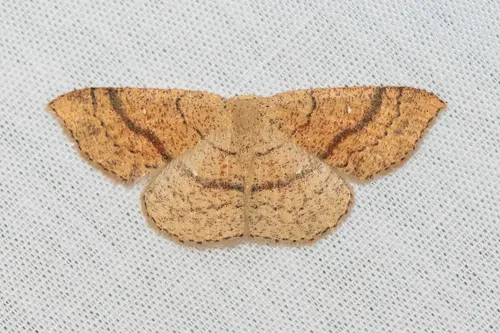
Cyclophora dataria - Hodges#7135
Cyclophora dataria
Identification: Adult: forewing uniformly yellowish to light brown with fine dark speckling and lines; AM line faint, median light dark, diffuse, slightly sinuate; PM line composed of several dark dots, sometimes connected by wavy line; terminal line
Cycloplasis immaculata - Hodges#2493.1
Cycloplasis immaculata
Identification: Lacks the silvery band on the basal third of the forewing found on the common and widespread Cycloplasis panicifoliella .
Cycnia collaris - Hodges#8229
Cycnia collaris
Identification: Moth varies phenotypically with wings from white to gray and patigia from yellow to gray. All images previously placed in C. inopinatus have been moved to C. collaris as a result of synonomy per Lafontaine & Schmidt, 2015 .
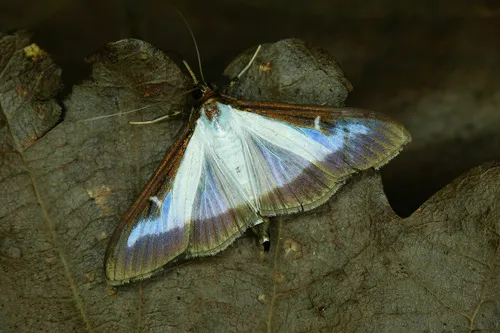
Cydalima perspectalis
Cydalima perspectalis
A distinctive species which should be recognised without difficulty, although there is also a very dark brown form. As an introduced species it may occur at any time. The moth is a pest species of box (Buxus), and is almost certainly an introduction
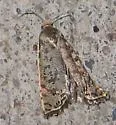
Cydia colorana - Hodges#3484
Cydia colorana
Identification: Adult - see original description in Print References.
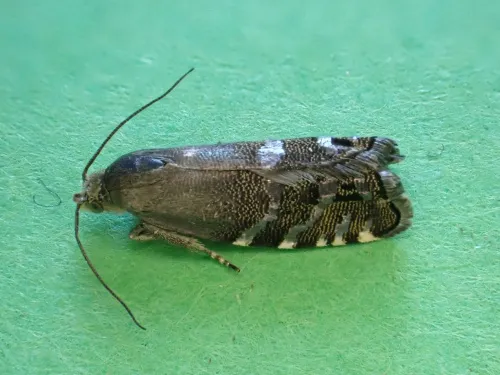
Cydia conicolana
Cydia conicolana
Wingspan about 11mm. Sometimes a small exit hole in a pine cone can be observed and indicates that the larva has overwintered in it and the adult moth has emerged. Very good quality photographs required and if possible the specimen should be retained
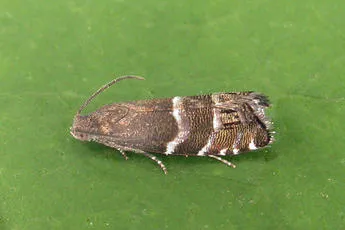
Cydia cosmophorana
Cydia cosmophorana
Wingspan 8 to14 mm. The adults are quite small and they resemble C. coniferana and C. conicolana , both of which are found in similar habitat, but tend to show more distinct white markings than those species. They fly during the day in sunshine throu
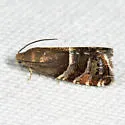
Cydia erotella - Hodges#3485
Cydia erotella
Identification: The distinctive forewing pattern is usually easy to recognize. The revised and original description by Heinrich are available in PDF. ,
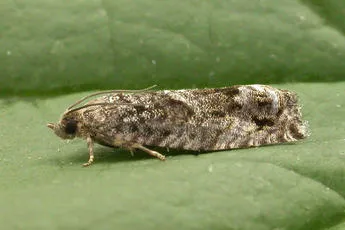
Cydia fagiglandana
Cydia fagiglandana
Wingspan 13 to 19 mm. Similar to C. splendana, but with rather less contrast between light and dark. The preferred habitat is beech woodland. The larvae feed internally on beech nuts. The species is fairly common in much of England and Wales, and als
Cydia fahlbergiana - Hodges#3482
Cydia fahlbergiana
Identification: A small Tortricid with bright yellow scaling on the head. Body and proximal half of forewings smooth gray. Ocellar patch large, white with black transverse barring, and bordered with black. Terminal area of forewing dark rufous. H
Cydia flexiloqua - Hodges#3465
Cydia flexiloqua
Identification: Heinrich described the adult, including genitalia.
Cydia garacana - Hodges#3457
Cydia garacana
Identification: Adult - see original description in Print References.
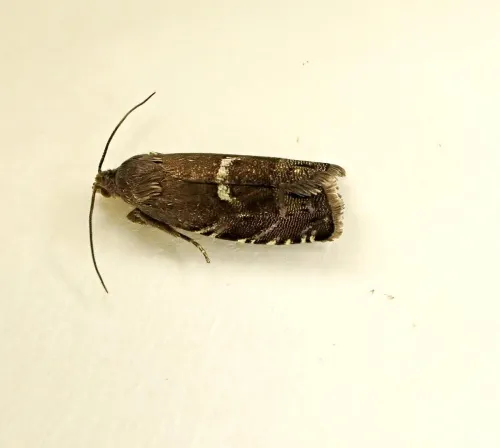
Cydia illutana
Cydia illutana
Unless identified by a recognised expert, a photo is required. If the photo doesn't show the key ID features then in the comments box describe the size and identifying characters you have observed. It may be expected to occur in areas where the larva
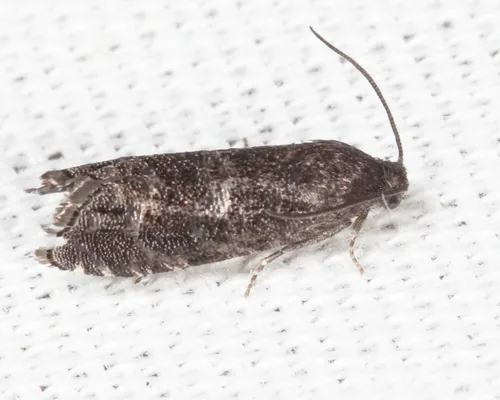
Cydia laricana - Hodges#3449
Cydia laricana
Identification: The original description as Laspeyresia laricana Busck is available online. Genitalia: Possibly more than one species involved. The type locality is Evaro, MT. It's range extends to the Northwest. The host plants are Larix occidentali
Cydia marita - Hodges#3448.2
Cydia marita
Aaron Hunt noticed that most images at MPG and BugGuide that were identified as Satronia tantilla might be misidentified Cydia marita . Upon review, Richard Brown agreed. See his comments below. - Steve Nanz, 3/12/2019.
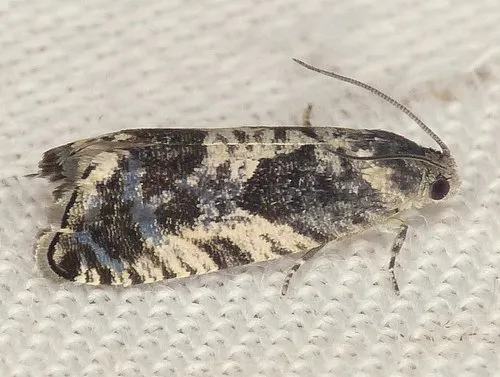
Cydia populana - Hodges#3463
Cydia populana
Cydia populana - Hodges#3463 (Cydia populana) is a species in the family Tortricidae, commonly known as tortricid moths, belonging to the order Lepidoptera (Butterflies and Moths). It is classified within the subfamily Olethreutinae, tribe Grapholiti
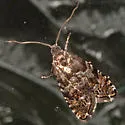
Cydia rana - Hodges#3450
Cydia rana
Identification: Forbes description - Deep brown; a strong double medial, strongly waved but not distinctly broken, silvery band; and a single postmedial band, each of these starting from a pair of white costal dots. Another single white subterminal d
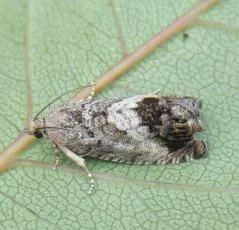
Cydia splendana
Cydia splendana
Wingspan 12-16 mm. The greyish adult has a slight 'speckled' appearance caused by pale tips to many of the scales. Occupying deciduous woodland where Oak or Sweet Chestnut occur. The adults can be found in July and August from evening into the night
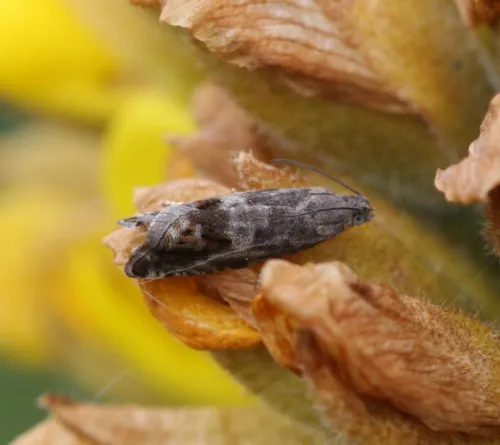
Cydia ulicetana
Cydia ulicetana
Wingspan 12-16 mm. A small greyish brown moth. The main markings are at the rear of the wing. Heathland and moorland, usually around Gorse or Broom. The males fly in sunshine, but the females tend to be more crepuscular. The species is on the wing in
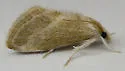
Cymbopteryx fuscimarginalis - Hodges#4804
Cymbopteryx fuscimarginalis
Identification: Specimen determined by DNA analysis (BOLD). Type locality: USA, Arizona, Tucson
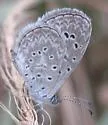
Cyna Blue - Hodges#4355
Zizula cyna
Identification: When alive the eyes of Zizula are gray. They are black in our other Blues (except for Brephidium ), as well as in most other Lycaenidae. Holds antennae with ends curved down (most Blues hold them approximately straight or even slight
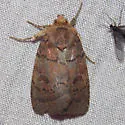
Cynical Quaker - Hodges#10587
Orthodes cynica
Identification: forewing lines are darker (black) than ground color, which is dark red; PM line wavy [Rustic Quaker lacks all of these characters]
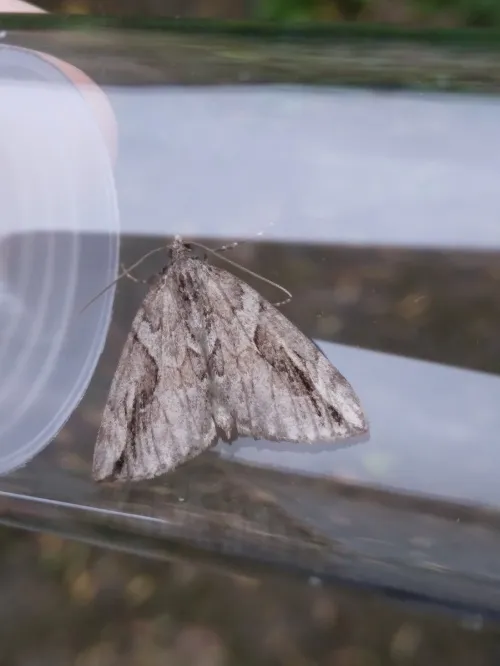
Cypress Carpet
Thera cupressata
Wingspan 26 to 29 mm. Similar to Juniper Carpet but with a series of dark streaks near the apex of the forewing. Unless identified by a recognised expert, a photo is required. If the photo doesn't show the key ID features then in the comments box des
Cypress Emerald Moth - Hodges#7029
Nemoria elfa
Identification: Ferguson first reports the brown forms with red terminal line.
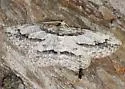
Cypress Looper - Hodges#6580
Iridopsis pergracilis
Identification: Adult: wings whitish or pale tan with black AM and PM lines, often bordered by dark gray shading; dark-outlined oval discal spot on all wings; subterminal line scalloped, whitish or pale tan; terminal line a series of dark dots; femal
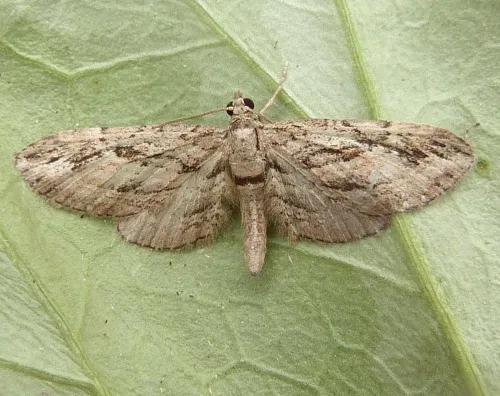
Cypress Pug
Eupithecia phoeniceata
Winspan18 to 22 mm. The ground colour of the forewings is pale greyish buff with conspicuous, blackish, vein-like patterning. Due to the fact that this moth is rarely recorded in our area all records must be accompanied by a photograph please. Associ
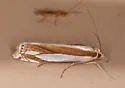
Daecke's Grass-veneer - Hodges#5350
Crambus daeckellus
Identification: The combination of its large size and pattern of silvery streaks should be diagnostic . Heavily dependent on frequent fire, which cuts back on tall shrubs, invasive species, and allows Eastern Turkeybeard ( Xerophyllum asphodeloides )
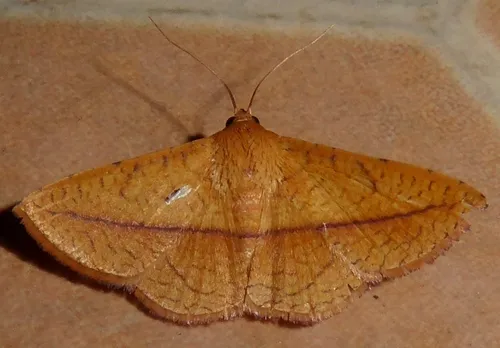
Daincha Leaf Webber
Striglina scitaria
Striglina scitaria, the daincha leaf webber, is a species of moth of the family Thyrididae described by Francis Walker in 1862. It is found in Taiwan, Japan, India, Sri Lanka, Myanmar, the Andamans, Borneo, New Guinea, Fiji and Australia. It is a maj
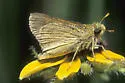
Dakota Skipper - Hodges#4031
Hesperia dacotae
As of October 24th 2014 this species is now listed as threatened
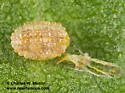
Dalcerides ingenita - Hodges#4702
Dalcerides ingenita
Identification: Edwards original description as Artaxa ingenita is available online in the print references below. Specimen identified by DNA analysis (BOLD).
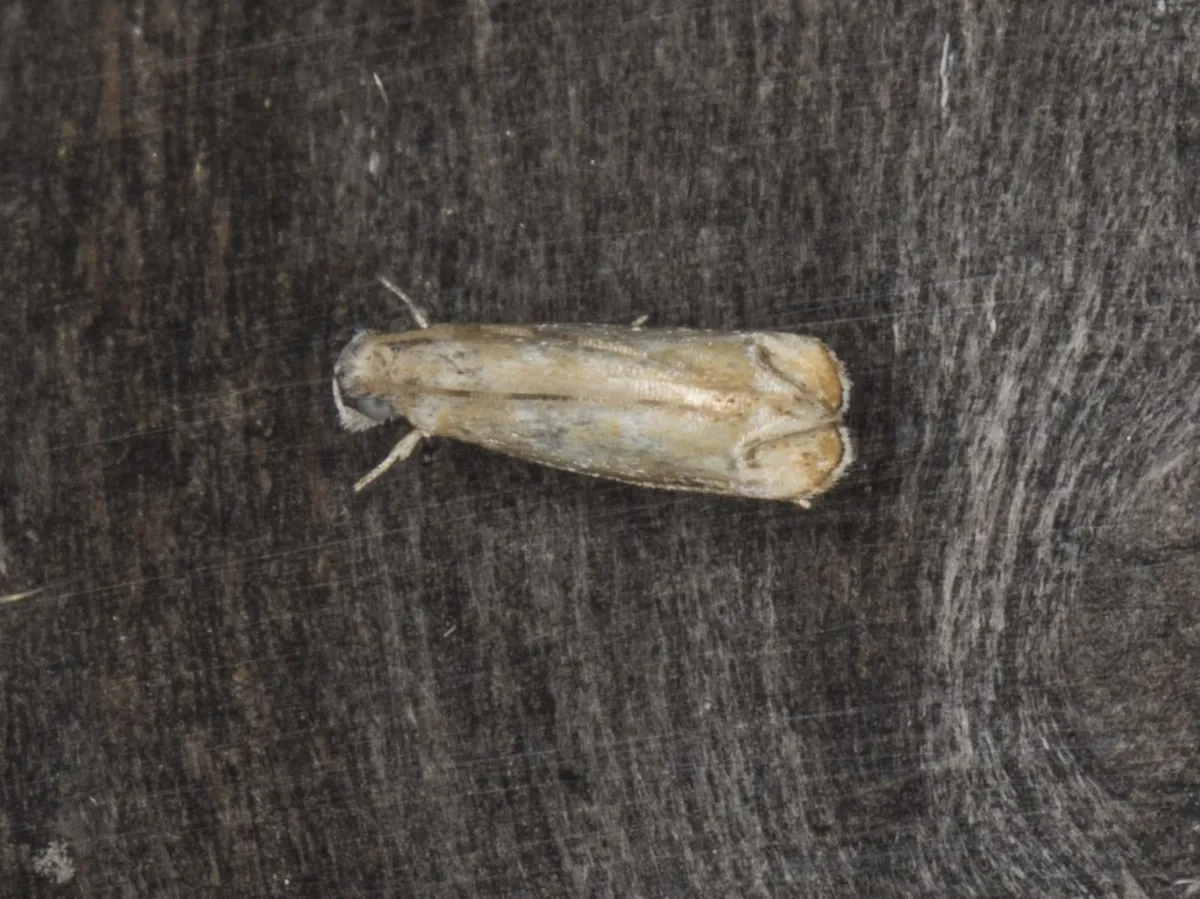
Dancing Moth - Hodges#0307.1
Dryadaula terpsichorella
Identification: Adult : FW mainly creamy white with some delicate brown, the tips of the forewings are margined with a blackish line that is outwardly edged with white . Ground color can vary from buff to dark brown; note the diagonal white bands at
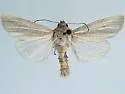
Dargida aleada - Hodges#10435
Dargida aleada
Dargida aleada - Hodges#10435 (Dargida aleada) is a species in the family Noctuidae, commonly known as owlet moths, belonging to the order Lepidoptera (Butterflies and Moths). It is classified within the subfamily Noctuinae, tribe Hadenini, superfami
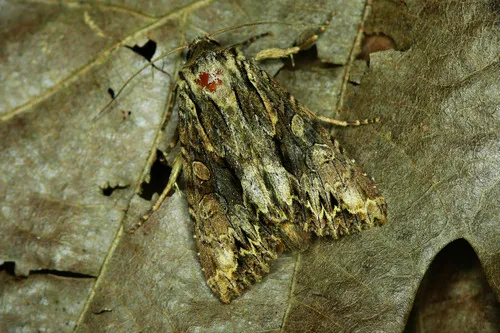
Dark Arches
Apamea monoglypha
Wingspan 45-55 mm. There are frequent melanic specimens, especially in the north. Occurring in a variety of habitats, especially more grassy areas. It is on the wing from July to August, with a later second brood in the south. It is readily attracted
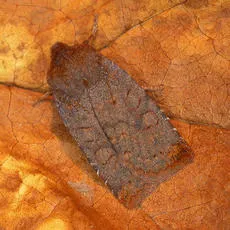
Dark Chestnut
Conistra ligula
Similar to The Chestnut ( C. vaccinii ), but can be told by the S-shaped outer edge to the forewing, which is more rounded in C. vaccinii . Woodland and more open country including farmland. It flies in October and November, and only occasionally lat
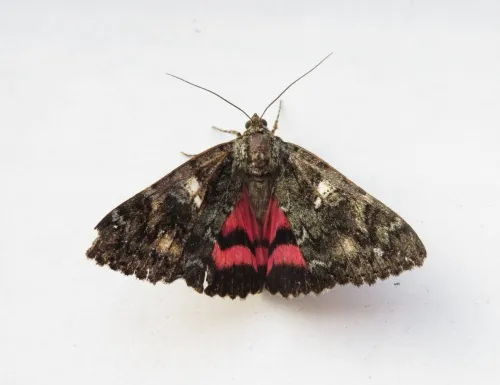
Dark Crimson Underwing
Catocala sponsa
Wingspan 60 to 70 mm. Similar to the more common Red Underwing and should be checked with care (especially the underwing). In view of the rarity of this species any possible records should be reported to the VC55 Recorder for Moths and the specimen s
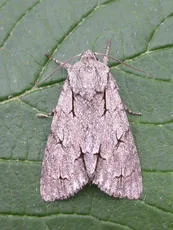
Dark Dagger
Acronicta tridens
Wingspan 35 to 45 mm. The adult moth cannot be readily distinguished from Grey Dagger except by examination of the genitalia, although in the caterpillar stage this is not a problem as the species look quite different. Various habitats, especially wh
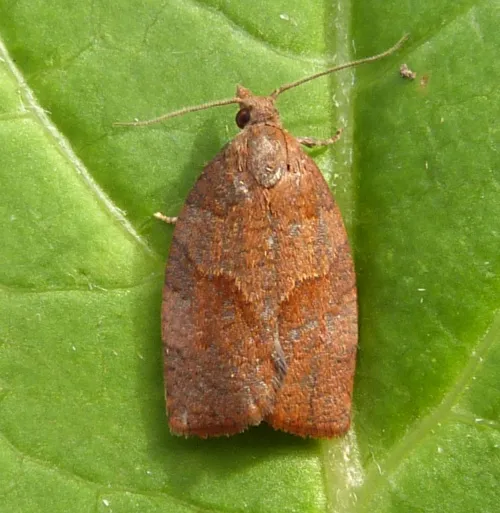
Dark Fruit-tree Tortrix
Pandemis heparana
This species flies between June and August, later in the North. Sometimes called 'leaf-rollers', the larvae of many of this family live in 'spinnings' where a leaf is rolled around and attached together with silk. The larvae feed on various fruit and
Dark Gray Lichen Moth - Hodges#8045
Crambidia lithosioides
Identification: Female has dark brownish-gray forewing with paler veins, pale yellow strip along costa and serrate antennae. Male has pale grayish-brown forewing with paler veins, lacks pale costal strip and has pectinate antennae. ♀
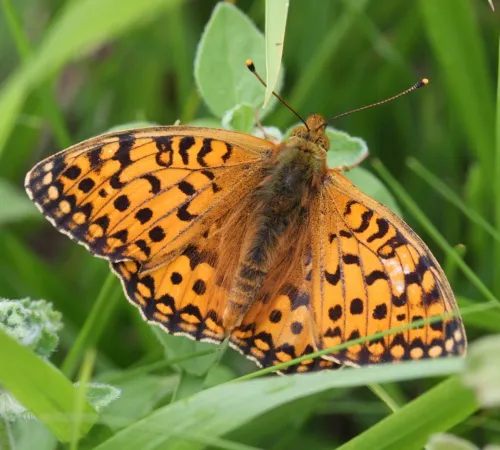
Dark Green Fritillary
Speyeria aglaja
It gets its name from the green hue found on the underside of the hindwings, which are peppered with large silver spots. Calcareous grassland habitats, frequently stopping to nectar on Thistles and Knapweed.
Dark Kite-Swallowtail - Hodges#4185
Eurytides philolaus
Identification: Upper surface of male forewing has broad black bars; female similar or an almost completely black form. Both with long tails First U.S. Record: South Padre Island, Hidalgo Co., TX - 1958 (Kendall & McGuire 1984)
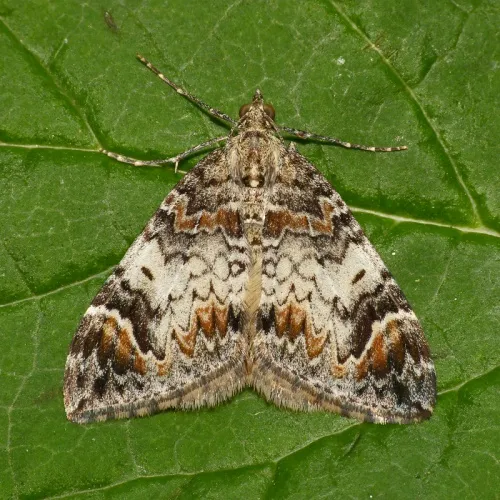
Dark Marbled Carpet
Dysstroma citrata
Wingspan 25 to 30 mm. Variable in markings and colouration, but very similar to Common Marbled Carpet (Dysstroma truncata). There are subtle separation characteristics based on the shape of the postmedian line on the underwings, which is more angular
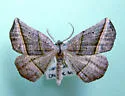
Dark Metanema - Hodges#6820
Metanema determinata
Identification: Similar to pale metanema, but darker gray. Black discal spots are smaller or none.
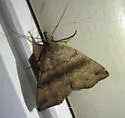
Dark Phalaenostola - Hodges#8363
Phalaenostola eumelusalis
Identification: Adult: forewing brown, crossed by dark brown antemedian (AM), postmedian (PM), and subterminal (ST) lines; AM line composed of three scallops; PM and ST lines thin, irregular, zigzagged; distance between AM and PM lines at least 2x gr
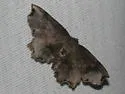
Dark Scallop Moth - Hodges#6834
Cepphis decoloraria
Identification: forewing brownish-gray with wavy margin and dark gray band in median area; AM line thin, dark; black semicircular patch along outer margin near apex hindwing similarly colored but with scalloped outer margin some specimens (southern o
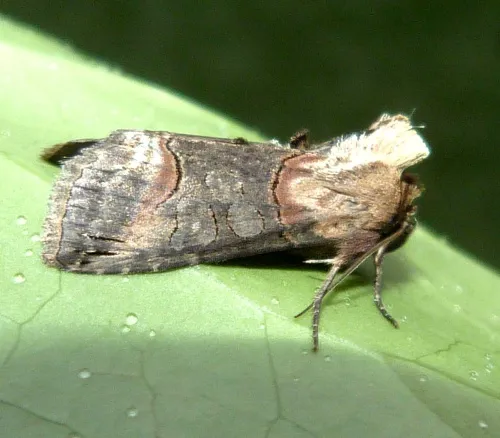
Dark Spectacle
Abrostola triplasia
Wingspan 28 to 32 mm. Similar in pattern to The Spectacle, but differs in several respects. Ground colour is brownish-black, base of forewing and thorax are dull straw or reddish brown and cross lines are edged with reddish brown. Occurring in suburb
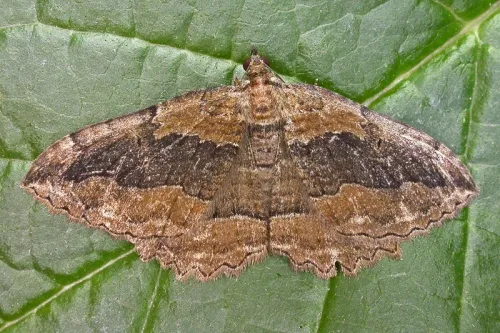
Dark Umber
Philereme transversata
Wingspan 29 to 37 mm. Although varying in degrees of contrast, this is normally a dark brown species, as the English name suggests. The trailing edges of the wings are distinctly scalloped. Usually associated with calcareous soils. The caterpillar ha
Dark Zanclognatha - Hodges#8347
Zanclognatha obscuripennis
Identification: Adult - AM line straight across most of wing from below costa (Forbes' Key). Larvae: See "Preliminary key to Zanclognatha larvae"
Dark-banded Geometer - Hodges#7214
Gandaritis atricolorata
Identification: Brown and white markings on forewings include a large almost square brown patch and a smaller oval.
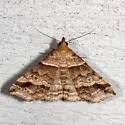
Dark-banded Owlet - Hodges#8338
Phalaenophana pyramusalis
Identification: forewing ground color light gray, yellowish, or brownish; antemedial and postmedial areas each crossed by a broad band of darker color (sometimes with a greenish tint); reniform spot has a dark dot on each side, and orbicular spot has
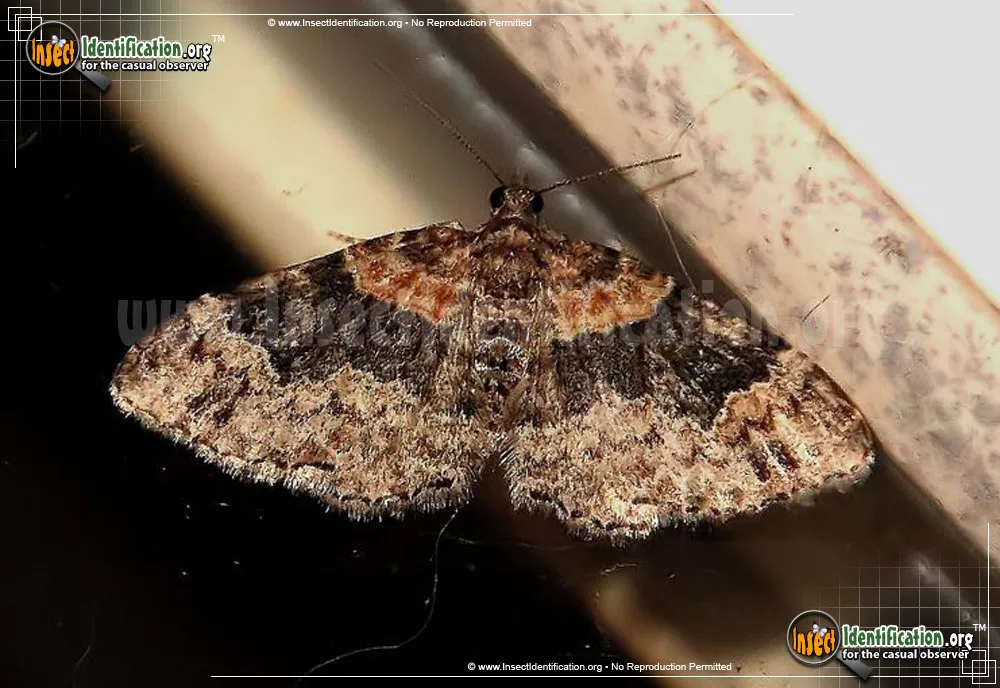
Dark-barred Twin-spot Carpet
Xanthorhoe ferrugata
Wingspan 18 to 22 mm. The character to separate this species from Red Twin-spot Carpet was previously thought to be a notch on the inner edge of the median fascia close to the costa, but this is no longer considered completely reliable although it is
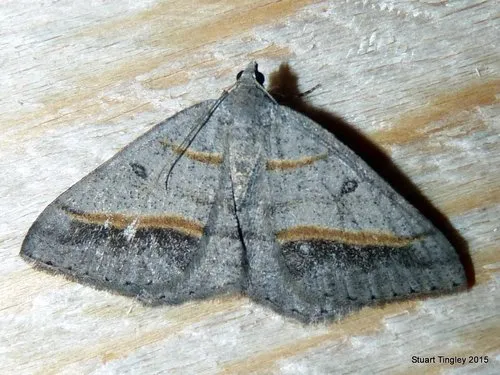
Dark-bordered Granite - Hodges#6396
Digrammia neptaria
Identification: Forewing light grayish-brown with speckling and variably faint or bold markings; AM and PM lines bicolored orangish-yellow for most of length, changing to gray near costa; PM line slightly sinuous, the yellowish part bordered distally
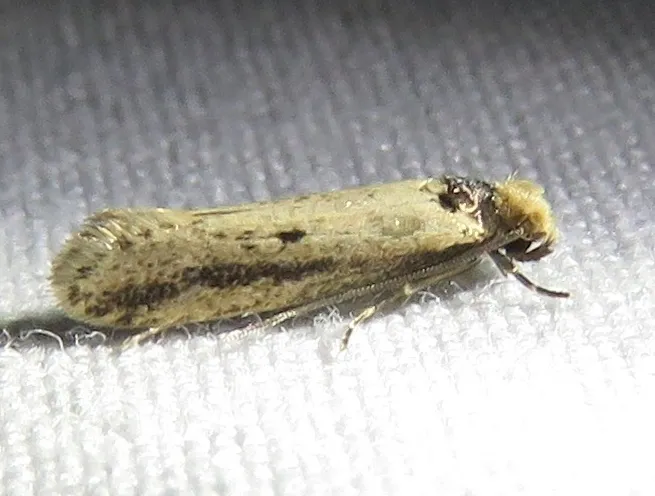
Dark-collared Tinea Moth
Tinea apicimaculella
Tinea apicimaculella is a species of moth of the family Tineidae. It is found in North America (including Alabama, Illinois, Maryland, Massachusetts, Minnesota, North Carolina, Oklahoma, Ontario, Tennessee and Virginia).
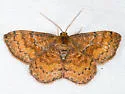
Dark-ribboned Wave - Hodges#7179
Leptostales rubromarginaria
Identification: Adults of L. rubromarginaria and ferruminaria are both variable in color and markings, and resemble each other very closely. Charles Covell's Guide gives a distribution of "southern Quebec to Florida, west across Canada..." but CBIF d
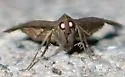
Dark-spotted Palthis - Hodges#8397
Palthis angulalis
Identification: The lack of the dark patch on the outer margin of FW near apex, and the strongly curved dark median band that doesn't touch the AM line excludes asopialis (dark median band often borders AM line in asopialis ). ♂
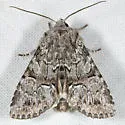
Dark-winged Quaker - Hodges#9396
Eremobina claudens
Identification: Adult: forewing variably pale to dark gray with black and white markings; black basal dash usually extends to touch AM line; orbicular and reniform spots large, pale, with darker scales between the two spots; orbicular spot egg-shaped
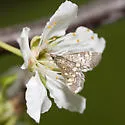
Darker Diacme Moth - Hodges#5143
Diacme adipaloides
Identification: Resembles Paler Diacme, but darker FW is grayish brown with irregular pale orange bands. HW is paler yellow with wide brown border. According to Brian Scholtens and others, the presence of a basal line on the hindwing is diagnostic fo
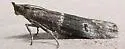
Darker Moodna Moth - Hodges#6005
Moodna ostrinella
Identification: See comments on images--differentiate from other members of this genus.
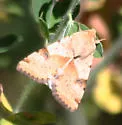
Darker-spotted Straw Moth - Hodges#11072
Heliothis phloxiphaga
Identification: A medium-sized light yellow-brown or tan moth with darker markings. There is a broad darker brown median band crossing the forewing, which angles sharply inward at the lower end of the large blackish reniform, and a dark triangular pa
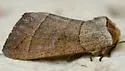
Datana diffidens - Hodges#7912
Datana diffidens
Identification: A very large Datana restricted in range to the Texas coast. Forewings sprinkled with white scales, giving the moth a powdery look. Similar to D. perfusa of Arizona, but easily separated by range.
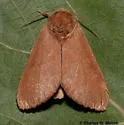
Datana perfusa - Hodges#7914
Datana perfusa
Identification: The original description is available online in the print references below. Specimen identified by DNA analysis (BOLD). ( 3 ) Quite a large Datana species, easily recognized by its size within its limited US range (southern Arizona).