
Butterflies and Moths
Order Lepidoptera
The Butterflies and Moths (Order Lepidoptera) includes 11,813 species across 112 families and 2,787 genera in our directory.
About Butterflies and Moths
Lepidoptera includes approximately 180,000 described species of butterflies and moths. Moths outnumber butterflies roughly 10:1. The monarch butterfly's eastern population has declined by more than 80% since the mid-1990s, and the western population by over 95% since the 1980s. The IUCN lists the migratory monarch as Vulnerable.
Economic Impact
Lepidoptera are critical pollinators. In Europe, grassland butterfly species have declined by almost 50% since the early 1990s. In the UK, three-quarters of butterflies are in decline. In the U.S., five butterfly species have gone extinct since 1950, with 29 listed as endangered.
Ecological Role
Butterflies and moths are essential indicators of ecosystem health. As caterpillars, they are a primary food source for birds - a single nest of blue tit chicks requires ~10,000 caterpillars. Adult moths pollinate many night-blooming plants.
Families in Lepidoptera (112)
Species in Lepidoptera (11,813)
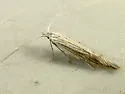
Coleophora asterophagella - Hodges#1266
Coleophora asterophagella
Identification: Specimen identified by DNA analysis (BOLD). ( 4 )
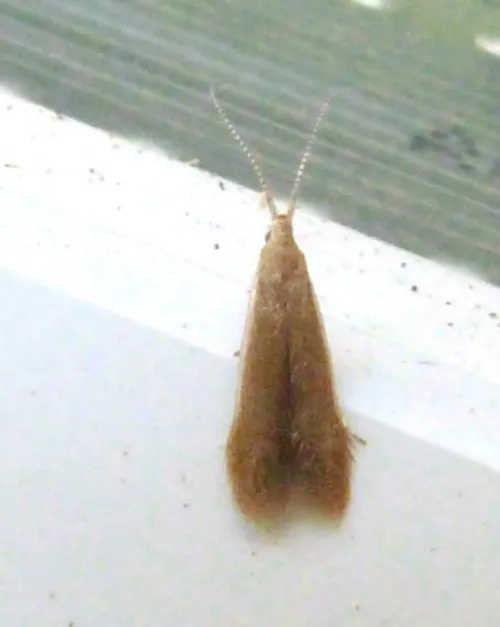
Coleophora badiipennella
Coleophora badiipennella
Wingspan 9 to 11 mm. One of the plain reddish brown Coleophora species. The larva mines Elm leaves, starting with a narrow gallery running from the mid-rib along a side vein. This ends in a roughly oval/rounded rectangular excision (c.6mm long) out o
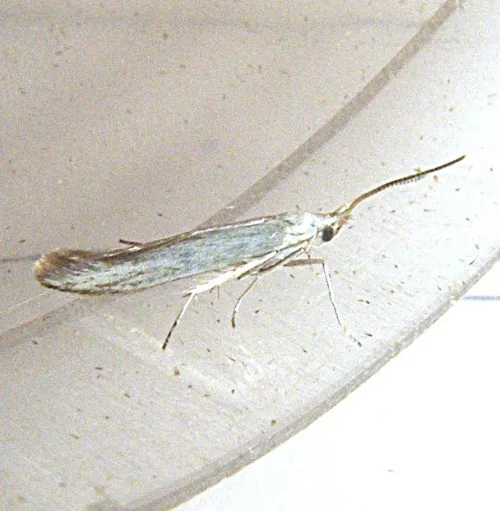
Coleophora betulella
Coleophora betulella
Wingspan 10 to 15 mm. This species has a relatively plain whitish form as well as a yellowish-streaked form. Occupies heathy habitats where the foodplant grows. Feeding on Birch (Betula) leaves, the larvae of this species create a distinctive 'pistol
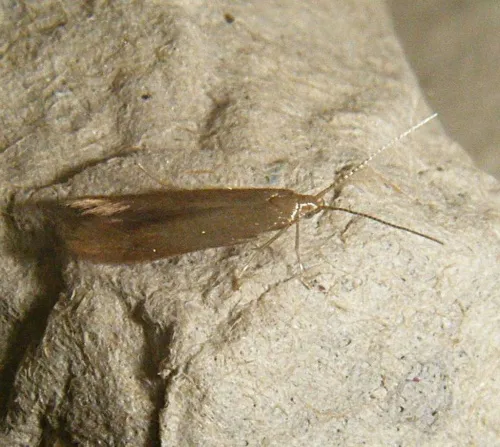
Coleophora binderella
Coleophora binderella
Wingspan 8 to 12 mm. As with most Coleophora species gen det is required for species id. Wooded areas where the foodplants occur. The eggs of this species are laid on the underside of leaves of Alder, Hazel, Birch or Hornbeam. The larva creates its c
Coleophora caespititiella
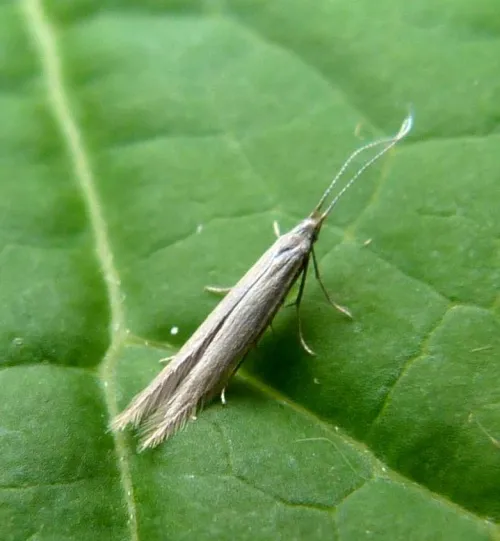
Coleophora caespititiella
Wingspan 8 to10 mm. The adults resemble several other Coleophora species, and are most reliably identified by dissection of the genitalia. It flies mid May to June at dusk and night. At the larval stage it can be distinguished from other Juncus feede
Coleophora conspicuella
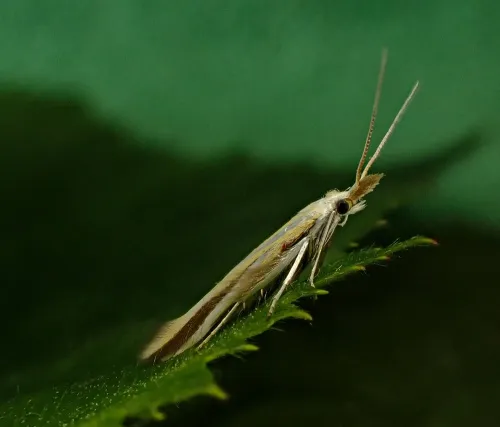
Coleophora conspicuella
Wingspan 13 to 17.5 mm. The adults are yellowish-brown with distinctive white streaks. There are many similar Coleophora species and gen det is necessary to identify them to species. The larva feeds on the leaves of Knapweed species. Adults should be
Coleophora coracipennella
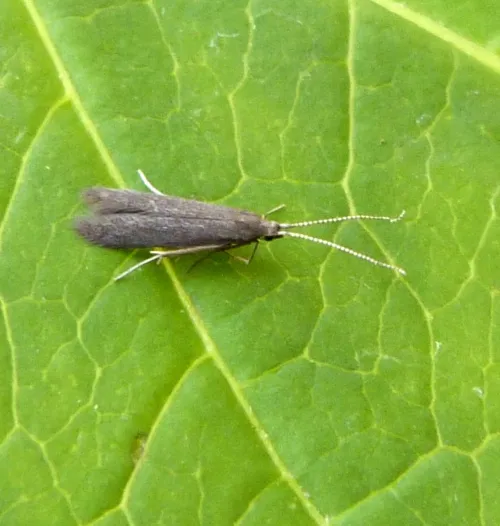
Coleophora coracipennella
Wingspan 8.5 to11.5 mm. This is a dark, fuscous species. Dissection is needed to confirm the identity of this moth as it may be confused with other Coleophora species. Areas where the larval foodplants occur. Adults emerge in a single generation from
Coleophora cornella - Hodges#1297
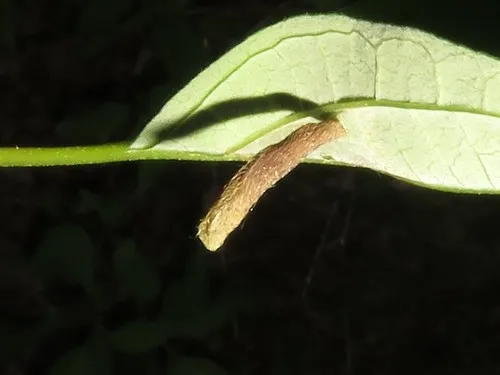
Coleophora cornella
Coleophora cornella is a moth of the Coleophoridae family. It is found in the United States, including New York and California.
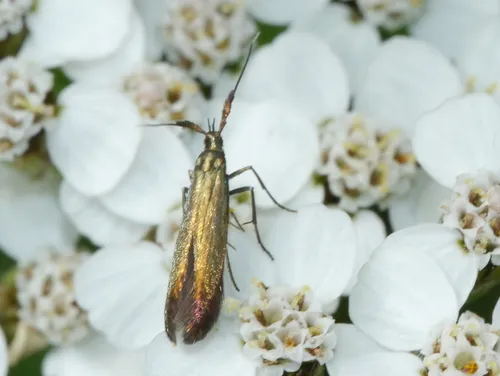
Coleophora deauratella
Coleophora deauratella
Wingspan around 11mm. One of several British species of Coleophora with bronzy metallic forewings and gen det is recommended for id purposes. Grassy areas where Red Clover is present. The adults fly during June and July and can be attracted to light.
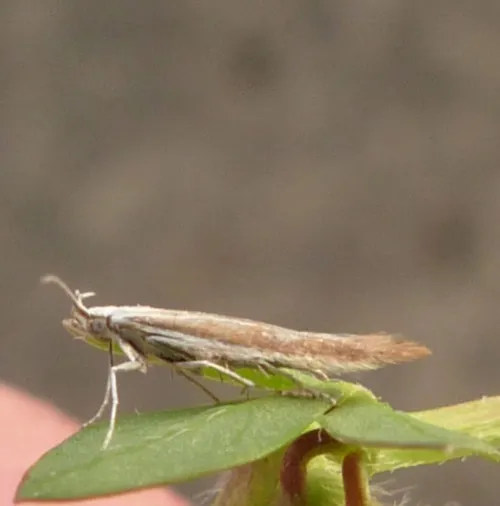
Coleophora discordella
Coleophora discordella
Wingspan 11 to 13 mm. The adult is a buff or brown colour with a white costal streak and some other smaller white streaks. Places where bird's-foot-trefoil species are plentiful. The larva feeds on bird's-foot-trefoil (Lotus spp.), building a pistol-
Coleophora fagicorticella - Hodges#1380
Coleophora fagicorticella
Identification: The original description as Coleophora fagico s ticella Chamber, is available online in the print references below. Specimen identified by DNA analysis (BOLD). ( 3 ) Genitalia:
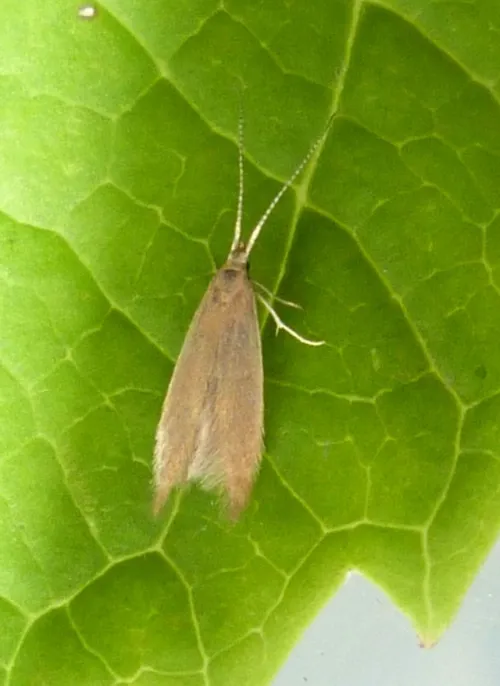
Coleophora flavipennella
Coleophora flavipennella
Wingspan 11 to 13 mm. Another brown, rather nondescript species, which is most easily identified as an adult by reference to the genitalic structure as it is quite similar to some other Coleophora species. The cased larva feed on oak. The young overw
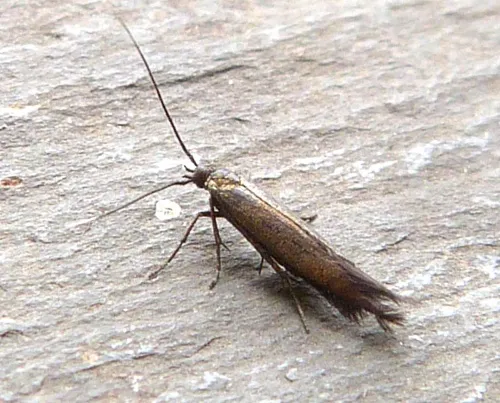
Coleophora frischella
Coleophora frischella
Wingspan 11.5 to 14.5 mm. In certain lights this species shows the same brassy metallic look as other family members. Almost identical to Coleophora alcyonipennella . These two species are not separable with certainty using external features so ident
Coleophora glaucella - Hodges#1305
Coleophora glaucella
Identification: The original description of Coleophora glaucella Walsingham, is available online in the print references below.
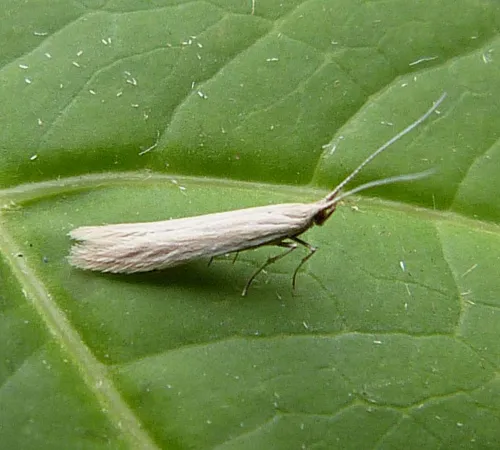
Coleophora glaucicolella
Coleophora glaucicolella
Wingspan 10 to 12 mm. The adults resemble several other Coleophora species, dissection required to confirm ID. To be found close to areas with Juncus species of rush. It is often abundant on salt marshes. Flight period June to August at sunrise, dusk
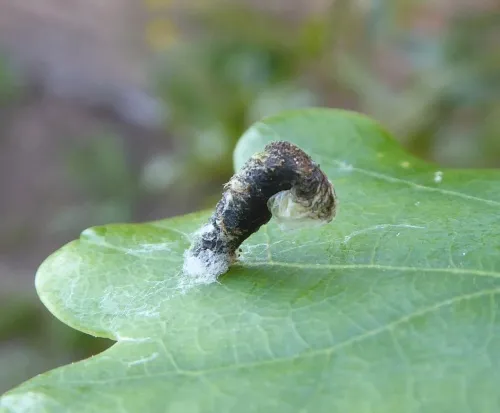
Coleophora ibipennella
Coleophora ibipennella
Wingspan about 12 mm. The adults have white forewings and are similar to a number of other species, with only subtle differences in size and patterning in the forewing cilia to help distinguish them. The larvae of this species, which feed on Oak, cre
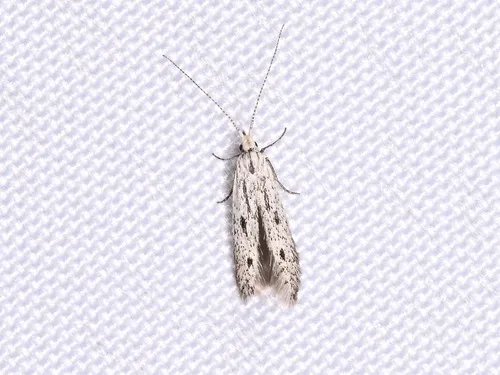
Coleophora irroratella - Hodges#1309
Coleophora irroratella
Identification: Walsingham original description: "Palpi greyish fuscous, whitish on their inner sides, not tufted. Antennae with a slight tuft beneath the basal joint (which with the head is dirty whitish), the stem distinctly annulated with brown an
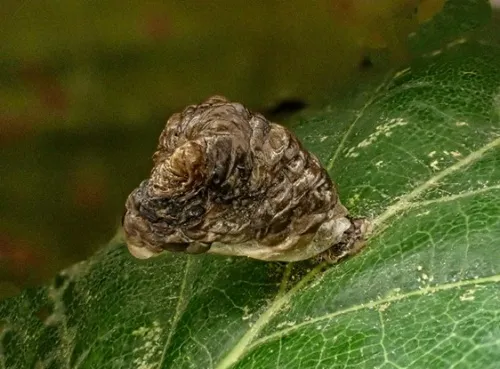
Coleophora kuehnella
Coleophora kuehnella
Wingspan between 14 and 17 mm. Adult moths are white with some indistinct darker markings towards the wing tip. The larva mines the leaves of Oak. Adult: Unless identified by a recognised expert, a photo is required, and the specimen should be examin
Coleophora lineapulvella - Hodges#1349
Coleophora lineapulvella
Identification: Adult : Basal half of antennae thickened with scales ● palpi tuffed ● FW white, faintly tinged with ochreous yellow ● dorsal margin and apex of the primaries more distinctly yellowish ● two rather indistinct ochreous yellow lines begi
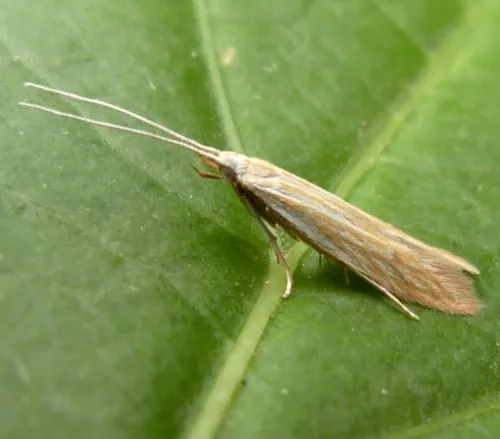
Coleophora lineolea
Coleophora lineolea
Wingspan 11 to 14.5 mm. The adult moth has yellowish ochre veins. Around its preferred food plants, black horehound and hedge woundwort but it is occasionally found on other Labiates. The adult flight period is from late June to August, sometimes com
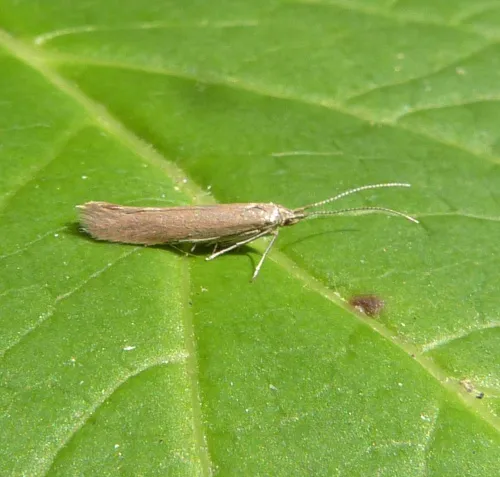
Coleophora lusciniaepennella
Coleophora lusciniaepennella
Wingspan 10 to 13.5mm. The adult moth is rather long and thin in shape and brown in colour. The larvae feed on Sallows (and on Bog Myrtle in other areas of the British Isles). The larva forms a composite case of three leaf fragments sealed together i
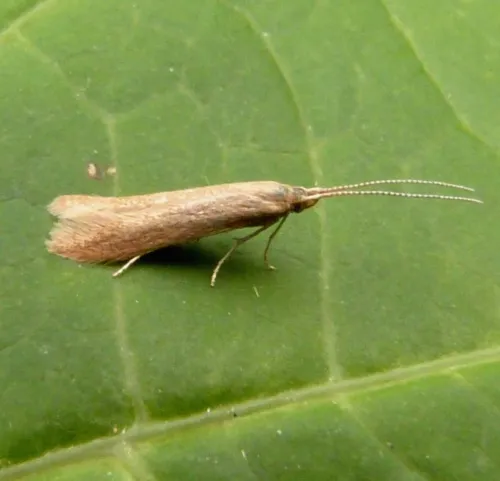
Coleophora lutipennella
Coleophora lutipennella
Wingspan 10 to12mm. This species is reddish brown in colour. Coleophora flavipennellla also feeds on oak; the larval cases are very similar Most common near to well wooded areas containing oak, but may be encountered almost anywhere. The adult moths
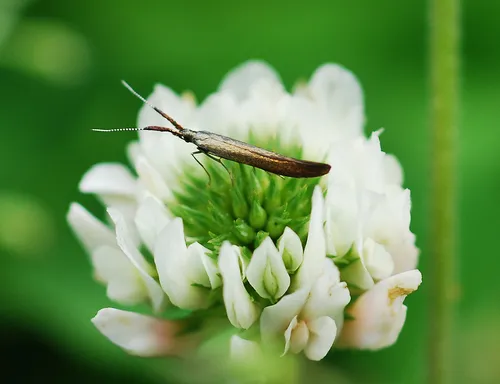
Coleophora mayrella
Coleophora mayrella
Wingspan 10-12 mm. The adults have a bronzy or greenish metallic sheen and the whitish antennae are thickened near the base. It frequents grassy areas and waste ground June and July is the main flight period. Adults fly during the day as well as afte
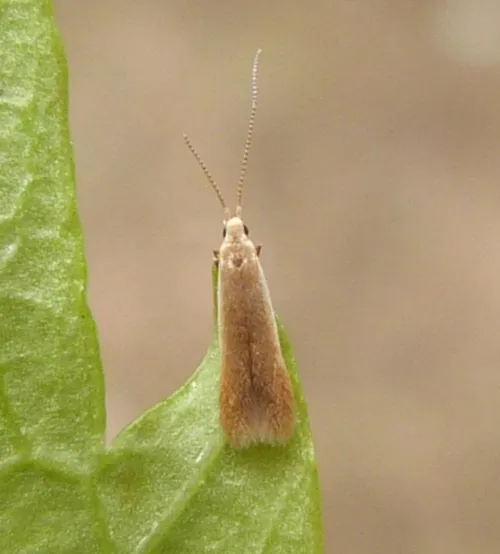
Coleophora milvipennis
Coleophora milvipennis
Wingspan 11 to13mm. The adult moths have buff to ochreous forewings with a whitish streak along the costa. Similar to a number of other Coleophora species, and gen det is necessary for an accurate id. The larves makes a flattened case, often with ser
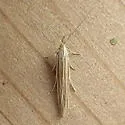
Coleophora nigrostriata - Hodges#1355
Coleophora nigrostriata
Identification: The original description of Coleophora nigrostriata Walsingham, is available online in the print references below.
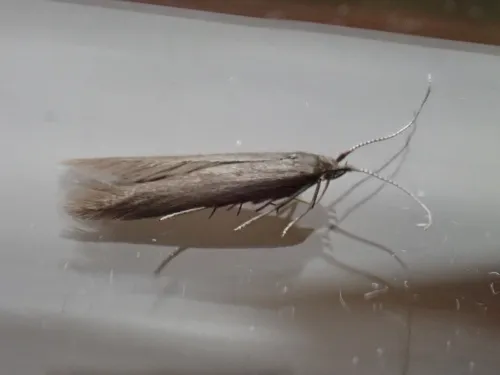
Coleophora orbitella
Coleophora orbitella
Wingspan 10.5 to 14mm. Adults resemble other Coleophora species, so genitalia identification is required. A number of other Coleophora species are similar. Adult: Determination by genitalia examination (gen. det.) required. Cased larva - good quality
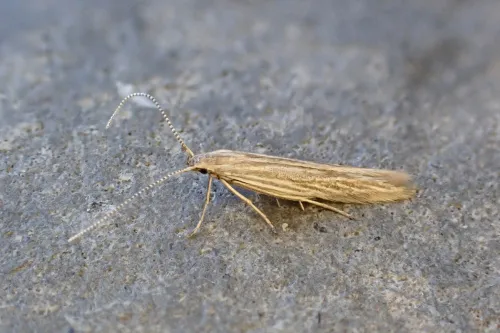
Coleophora otidipennella
Coleophora otidipennella
Wingspan about 12mm. A small Coleophorid, having a greyish appearance streaked with whitish-cream. Adults recorded to light or netted by day will need to be confirmed via dissection. The larva feeds on the seeds of Wood-rush (Luzula) species, forming
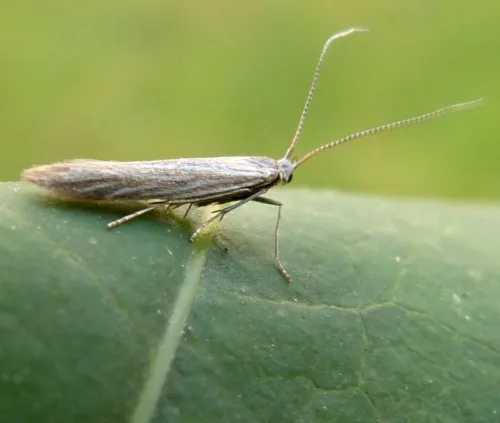
Coleophora peribenanderi
Coleophora peribenanderi
Wingspan 12.5 to 15 mm. The cased larva feeds on the leaves of Thistle species thistle (Carduus or Cirsium). In areas where the larval foodplants are plentiful. The larva of this moth forms a case, approximately 11-12 mm long, beneath a thistle (Card
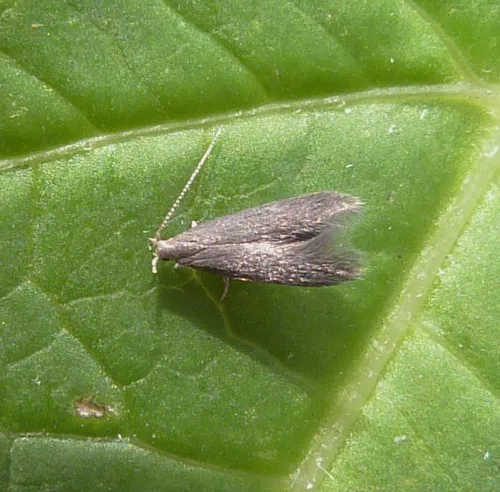
Coleophora prunifoliae
Coleophora prunifoliae
Wingspan 10 to 12 mm. A mid grey coloured moth which is externally very similar to a number of other Coleophorids and is only safely identified by dissection. Areas where the larval foodplants occur. The larval foodplants are blackthorn, apple and dw
Coleophora quadruplex - Hodges#1350
Coleophora quadruplex
Identification: Genitalia: Larvae construct trivalved tubular silk cases.
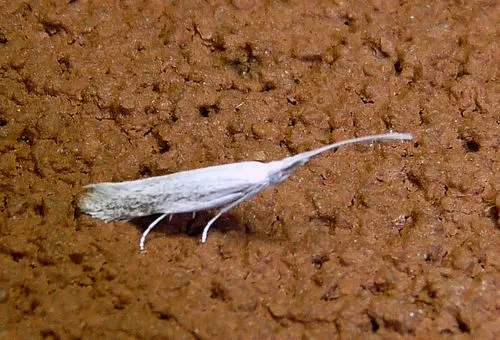
Coleophora querciella - Hodges#1261
Coleophora querciella
Coleophora querciella is a moth of the Coleophoridae family. It is found in North America, including Oklahoma, Pennsylvania and Canada.
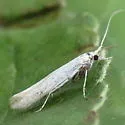
Coleophora sacramenta - Hodges#1255
Coleophora sacramenta
Coleophora sacramenta - Hodges#1255 (Coleophora sacramenta) is a species in the family Coleophoridae, commonly known as casebearer moths, belonging to the order Lepidoptera (Butterflies and Moths). It is classified within the subfamily Coleophorinae,
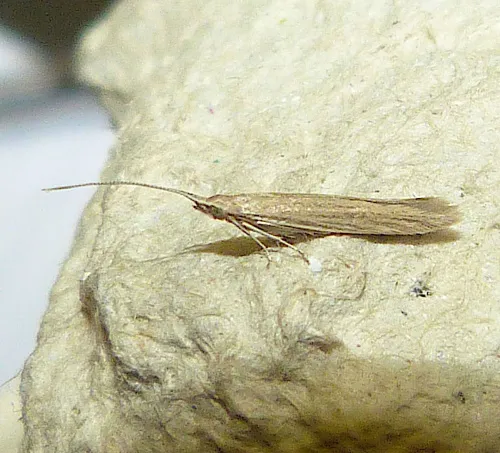
Coleophora saxicolella
Coleophora saxicolella
Most likely to be seen in areas where the larval foodplants occur. The eggs of this species are laid on the florets of goosefoot (Chenopodium) and orache (Atriplex). The larva makes a silken case, 6-7mm long when fully formed. Pupation occurs in the
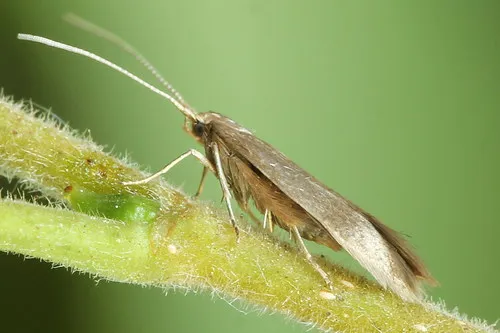
Coleophora serratella
Coleophora serratella
Wingspan 11-14 mm. This is probably the commonest species of British Coleophorids and is found throughout the British Isles wherever its food plants grow. The adult, which appears in June, resembles several other grey-brown Coleophora species. The in
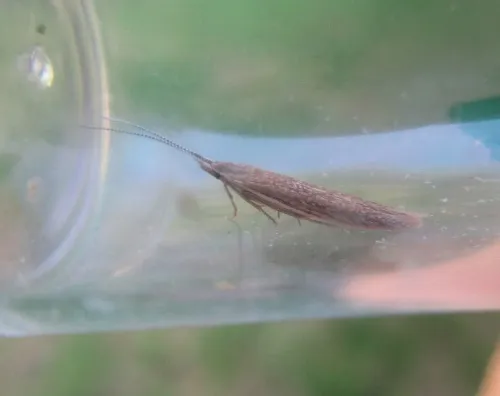
Coleophora sternipennella
Coleophora sternipennella
Wingspan about 13 mm. One of many similar Coleophora species that require dissection to identify to species level. Please provide a photograph. Determination by genitalia examination (gen. det.) required to confirm records to full species. Waste and
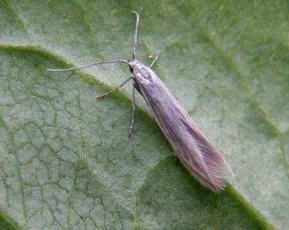
Coleophora striatipennella
Coleophora striatipennella
Wingspan about12 mm. They resemble other striated Coleophora species, so genitalia identification is recommended. Wingspan about12 mm. They resemble other striated Coleophora species, so genitalia identification is recommended. The adults are on the
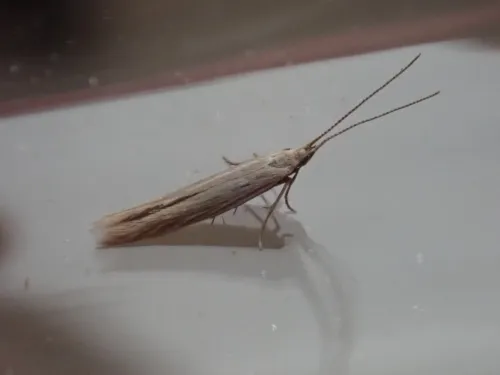
Coleophora taeniipennella
Coleophora taeniipennella
This moth is found in damp habitats and is associated with various Juncus species, most commonly Jointed Rush and Sharp-flowered Rush. The adult moths fly in a single generation in June and July. The larvae feed on the seeds of Juncus species and cre
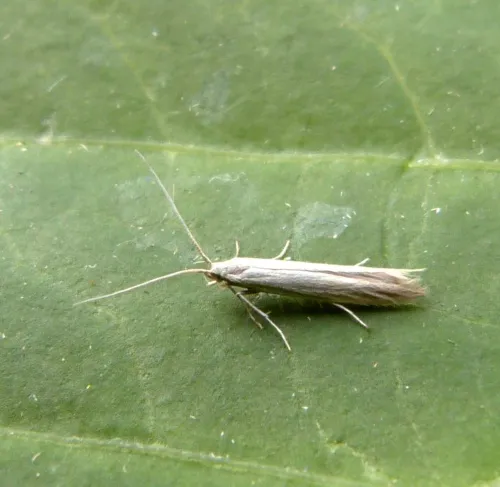
Coleophora tamesis
Coleophora tamesis
Wingspan 11 to 14 mm. As with most Coleophora species gen det is required for species id. Damp places where Jointed Rush is present. The eggs of this species are laid on the florets of Jointed Rush. The larva forms a case from silk and the remains of
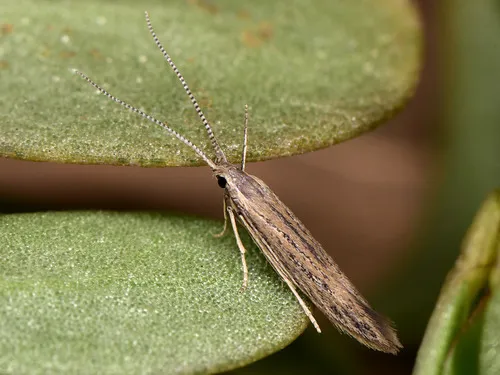
Coleophora texanella - Hodges#1336
Coleophora texanella
Coleophora texanella is a moth of the Coleophoridae family. It is found in the United States, where it has been recorded from Florida to California, north to New York, Michigan and Ohio, west to Kansas and also in Mexico (Baja California Sur). It has
Coleophora tiliaefoliella - Hodges#1256
Coleophora tiliaefoliella
Coleophora tiliaefoliella is a moth of the Coleophoridae family. It is found in North America, including Oklahoma, Pennsylvania and Ontario.
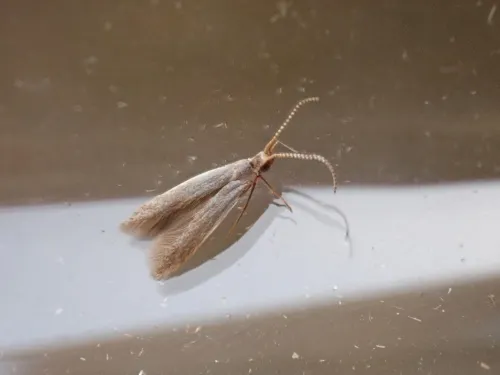
Coleophora trigeminella
Coleophora trigeminella
Size 8 to 20 mm. The adult moths have red-brown or ochreous forewings with a creamy costal streak. Adult: Unless identified by a recognised expert, a photo is required and the specimen should be confirmed by gen det. Larval Case: It recording the lar
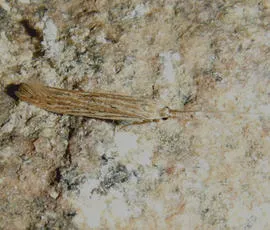
Coleophora versurella
Coleophora versurella
Wingspan 11 to15 mm. The adults are similar to several other species and are best identified by reference to the genitalia. This moth inhabits a variety of open habitats. It is on the wing from June to September and is mainly nocturnal. The larval fo
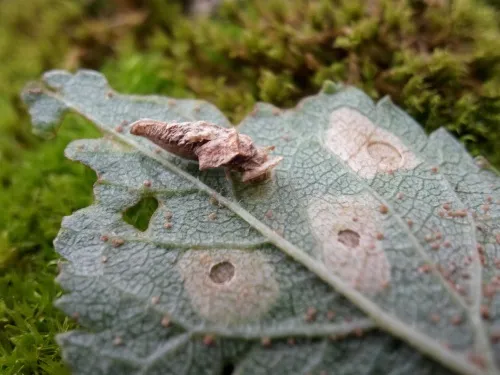
Coleophora violacea
Coleophora violacea
Wingspan 9 to11 mm. The adult resembles several other brownish Coleophora species, and examination of the genitalia is necessary. The larva feeds on a wide range of trees, shrubs and herbs. The larval cases are about 6 mm long. The dorsal surface of
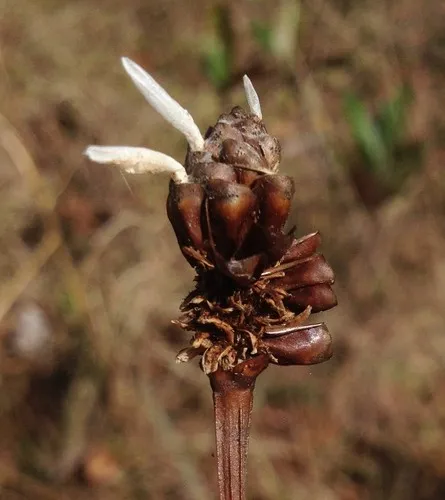
Coleophora xyridella - Hodges#1396.1
Coleophora xyridella
Coleophora xyridella is a moth of the Coleophoridae family. It is found in the United States, including Louisiana, Mississippi, Florida, South Carolina and Georgia.
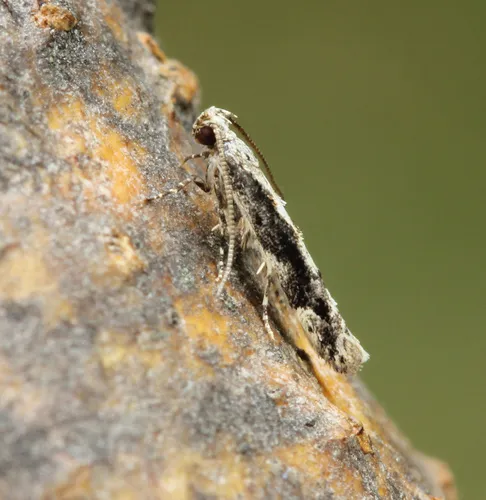
Coleotechnites Flower Moth
Coleotechnites florae
Coleotechnites florae, the coleotechnites flower moth, is a moth of the Gelechiidae family. It is found in North America, where it has been recorded from Alabama, Alberta, Arkansas, British Columbia, Florida, Georgia, Indiana, Louisiana, Maryland, Ma
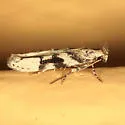
Coleotechnites atrupictella - Hodges#1792
Coleotechnites atrupictella
Identification: Adult: forewing whitish with black trapezoidal patch halfway along costa, partially filled with ground color; AM line black, diffuse, angles backward (distally) from costa to inner margin; legs dark with several white bands Genitalia:
Coleotechnites eryngiella - Hodges#1808
Coleotechnites eryngiella
Identification: See original description for all life stages.
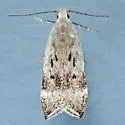
Coleotechnites invictella - Hodges#1814
Coleotechnites invictella
Identification: The original description as Recurvaria invictella Busck, is available in PDF or online at the link in the print references below.
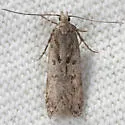
Coleotechnites starki - Hodges#1831
Coleotechnites starki
Identification: Specimen identified by DNA analysis (BOLD). There are many publications available online that discuss the status as a forest pest.
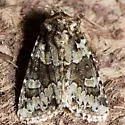
Collared Arches Moth - Hodges#10415
Lacinipolia strigicollis
Identification: Adult - mottled cream or light green and dark gray color with light-filled spots and toothed black and white lines. This is the type species of the genus Lacinipolia . The type specimens (male and female) were collected on Vancouver I
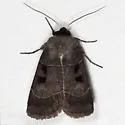
Collared Dart - Hodges#10954
Agnorisma bugrai
Identification: The top of the head and collar are black. The antennae of both sexes are filiform.
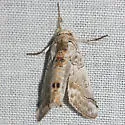
Collomena inflexa - Hodges#8982
Collomena inflexa
"931156 Collomena inflexa – The species that occurs in Florida is Collomena inflexa (Morrison, 1875), stat. rev. (Type-locality: Jacksonville, Florida). It was treated as a synomym of Collomena filifera (Walker, 1857) (Type-locality: Santo Domingo, D
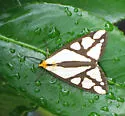
Colona Moth - Hodges#8108
Haploa colona
Identification: Fore wings white with variable number of brown markings. Hind wings and abdomen sulfur yellow. Thorax pure white or with dark brown stripes. Caterpillar is dark brown to black and has large bluish tubercles; it is marked by broken len
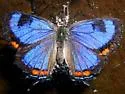
Colorado Hairstreak - Hodges#4266
Hypaurotis crysalus
Identification: Underwing is light gray and it's the only western hairstreak with a white basal stripe on the HW. Dorsal, bright purple and black with orange spots near the tail.
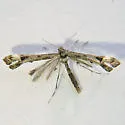
Colorado Plume Moth - Hodges#6149
Stenoptilia coloradensis
Identification: See identification key for Platyptiliini .
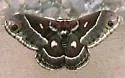
Columbia Silkmoth - Hodges#7768
Hyalophora columbia
Identification: Adult: easily confused with Cecropia Moth [and vice versa ]; wings dark reddish-brown from base to PM line, dark gray in subterminal area, and pale yellowish in terminal area; AM and PM lines thick, white; pale yellow or whitish disca
Columbian Emerald - Hodges#7035
Nemoria darwiniata
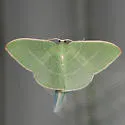
Identification: Adult: forwing green with straight white PM line and fainter oblique AM line; veins faint, whitish; costa and fringe white; orange dot at apex; thorax green; abdomen light green or brown with white dorsal spots surrounded by reddish-b
Columbian Eupithecia - Hodges#7459
Eupithecia columbiata
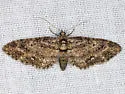
Identification: Specimen identified by DNA analysis (BOLD) female - long striated, sclerotized section of ductus bursae above appendix bursae male - lyre-shaped 8th sternite - unique to North American Eupithecia
Comadia albistriga - Hodges#2690
Comadia albistriga
Identification: Brown revised description is available in PDF.
Comadia dolli - Hodges#2681
Comadia dolli
Identification: Brown revised description is in PDF.
Comadia intrusa - Hodges#2682
Comadia intrusa
Identification: Brown revised description is in PDF.
Comma
Polygonia c-album
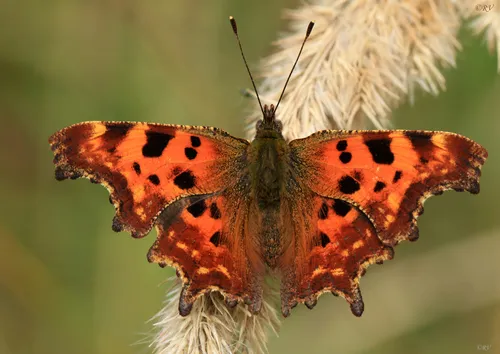
Looking like a tatty Small Tortoiseshell, the Comma is now a familiar sight throughout most of England and Wales and is one of the few species that is bucking the trend by expanding its range. The butterfly gets its name from the white mark on its un
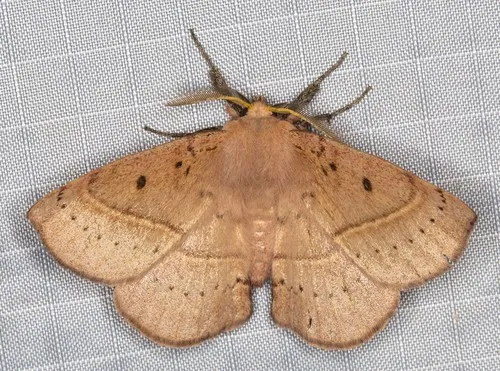
Common Anthelid Moth
Anthela acuta
Anthela acuta, the Common anthelid moth, is a moth of the family Anthelidae. It is found in Australia.
Common Arugisa - Hodges#8509
Arugisa lutea
Identification: Adult : FW light brownish-yellow with irregular, dark brown/gray traverse lines ● labial palps are thick, projecting upward at a steep angle ● dark blotch over middle of AM line ● reniform and orbicular spots represented by black dot
Common Banner - Hodges#4544.7
Epiphile adrasta
Identification: Upperside brilliant orange with broad black bands. Rusty brown under the hindwings with faded eyespots along the hindwing margins and near the forewing apices. Forewing underside has similar pattern to upperside, but usually mostly co
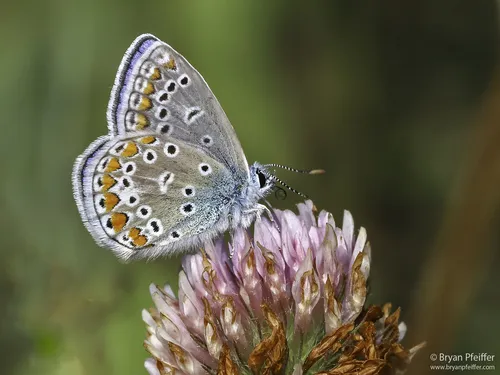
Common Blue
Polyommatus icarus
This is a small, delicate looking butterfly. The male has bright blue upper sides and the female is primarily brown, with a highly variable amount of blue. This species is found in a wide variety of habitats, including unimproved grassland such as ro
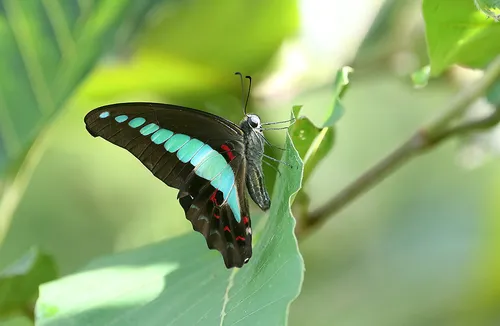
Common Bluebottle
Graphium sarpedon
Graphium sarpedon, the common bluebottle or blue triangle in Australia, is a species of swallowtail butterfly, that is found in South and Southeast Asia, as well as eastern Australia. There are approximately sixteen subspecies with differing geograph
Common Branded Skipper - Hodges#4020
Hesperia comma
Identification: Ventral, orange to brown with bold white spots.
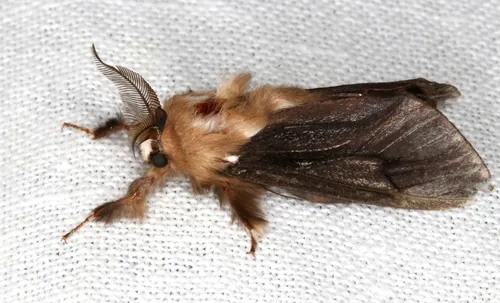
Common Case Moth
Clania ignobilis
The faggot case moth (Clania ignobilis) is a species of moth of the Psychidae family. It is found in New South Wales, Queensland, South Australia, Tasmania and Victoria.
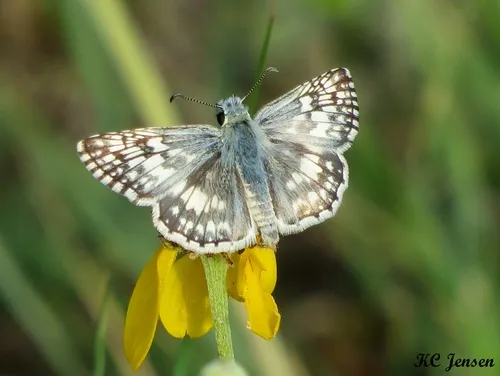
Common Checkered-Skipper
Burnsius communis
Burnsius communis, the common checkered-skipper, formerly known as Pyrgus communis, is a species of butterfly in the family Hesperiidae. It is known as the frequently seen Pyrginae species in the northern United States by collectors and watchers alik
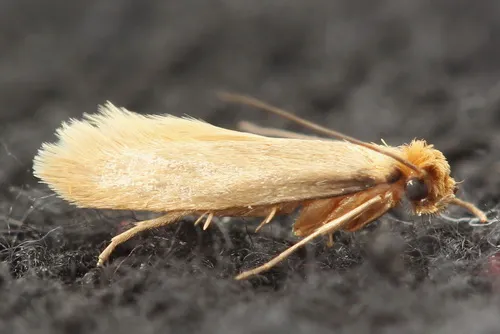
Common Clothes Moth
Tineola bisselliella
Wingspan 9 to 16 mm. Head pale ochreous to reddish ochreous, sometimes brownish at sides. Forewing pale ochreous buff, somewhat glossy, sometimes darker at base; base of costa dark brown. This moth inhabits houses, and was at one time a pest species.
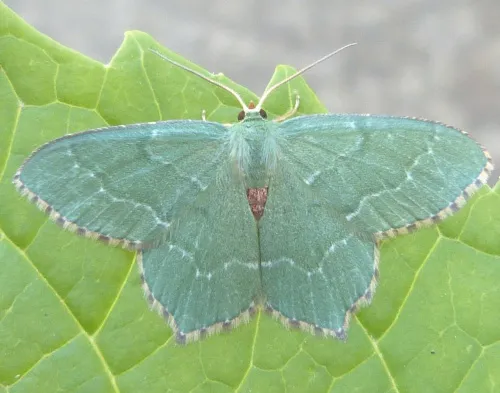
Common Emerald
Hemithea aestivaria
Wingspan 24 to 27 mm. Distinctively shaped and with chequered fringes - this is an easy species to recognise but, like many green moths, its colour tends to fade fairly quickly. It flies from dusk onwards in June and July. The larvae feed on bushes s
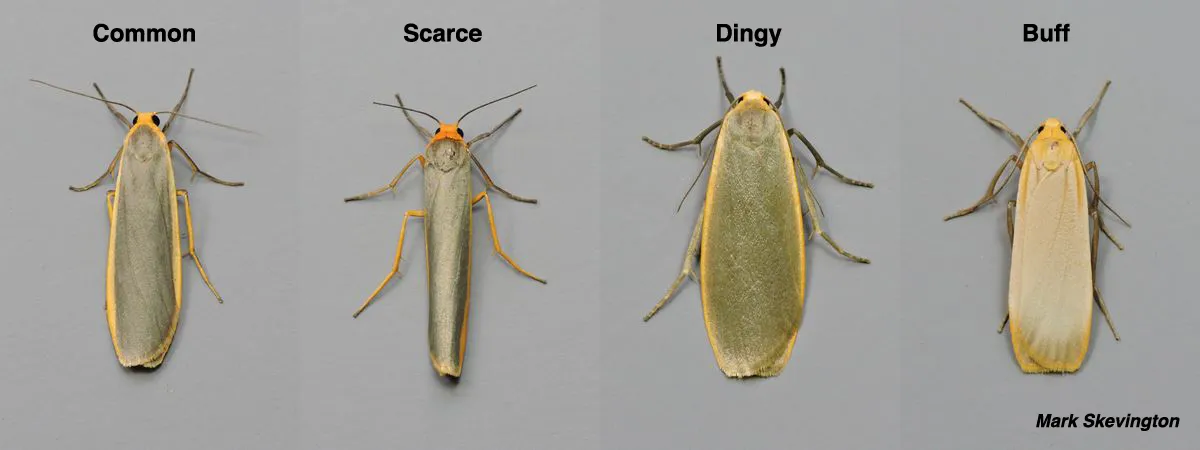
Common Footman
Eilema lurideola
Wingspan 28-35 mm. The forewings are greenish-grey, with a leading yellow stripe, tapering to a point at the tip. The wings are folded flat over the back when at rest. In flight, the yellow hindwings are noticeable, and it looks a much larger moth. C
Common Fungus Moth - Hodges#8499
Metalectra discalis
Identification: Adult: forewing ground color pale yellowish but often obscured by extensive dark brown and black mottling; broad blackish band crosses wing in median area, obscuring black reniform spot; black orbicular dot usually more noticeable aga
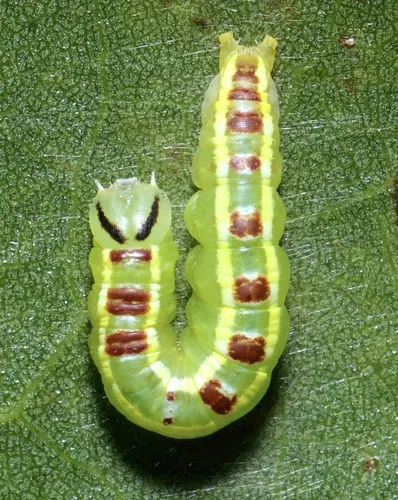
Common Gluphisia - Hodges#7931
Gluphisia septentrionis
Identification: Adult: forewing varies from light to dark gray; yellowish-to-gold-to-brownish patches on wing vary in extent, either crossing the entire wing or being restricted to the medial area; postmedial (PM) line usually bordered by small pale
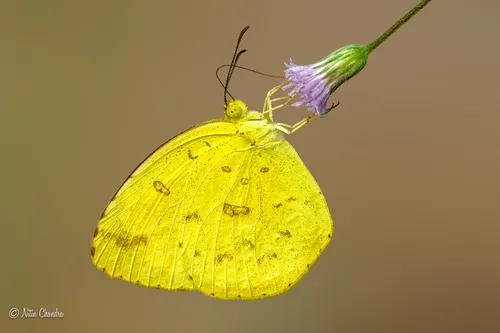
Common Grass Yellow
Eurema hecabe
Eurema hecabe, a.k.a. the large grass yellow or common grass yellow, is a small pierid butterfly species found in Asia and Africa. They are found flying close to the ground and are found in open grass and scrub habitats. It is simply known as "the gr
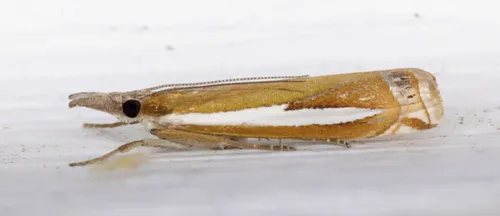
Common Grass-veneer - Hodges#5355
Crambus praefectellus
Identification: Adult - forewing brownish-orange with long white or silvery stripe, tapered at both ends; width of stripe at base less than or equal to distance from stripe to costa; several thin black lines run from white stripe to ST line, which is
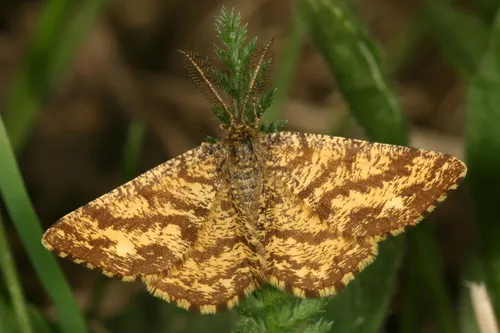
Common Heath
Ematurga atomaria
Wingspan 22 to 30 mm.This is a rather variable species. Inhabiting heaths, moorland and open woodland. It appears in May and June, sometimes again in August in the south and flies during the day, sometimes abundantly in sunshine. The caterpillars, wh
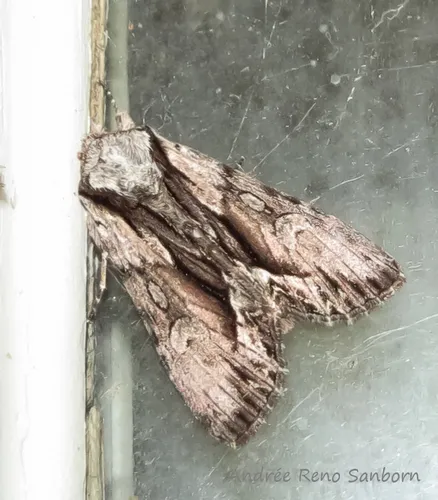
Common Hyppa - Hodges#9578
Hyppa xylinoides
Identification: Adult: antennae bipectinate with broad branches in male, simple in female; forewing gray with black AM and PM lines edged with white toward inner margin; note black basal and median dashes; brown shading just above median dash; hindwi
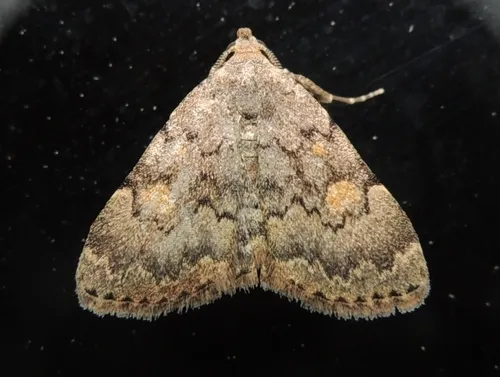
Common Idia Moth
Idia aemula
The Common Idia, Powdered Snout, or Waved Tabby (Idia aemula) is a litter moth of the Erebidae family. It is found from Canada south to Florida and Texas and in most of Eurasia.
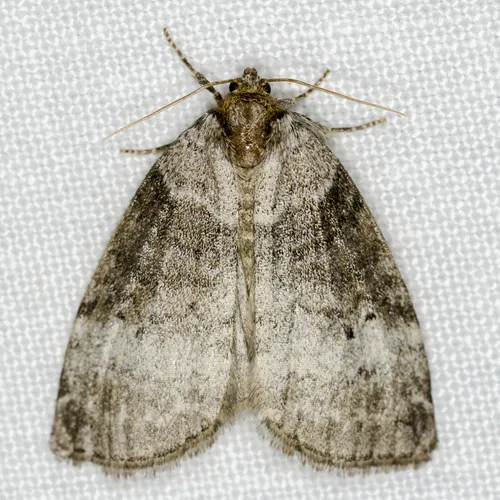
Common Lutestring
Ochropacha duplaris
Wingspan 27 to 32 mm. A relatively poorly-marked species, with a range of variants, some of which tend towards the melanic form obscura. Often it is still possible to see the remnants of a darker spot and pale band across the wing however. A good pho
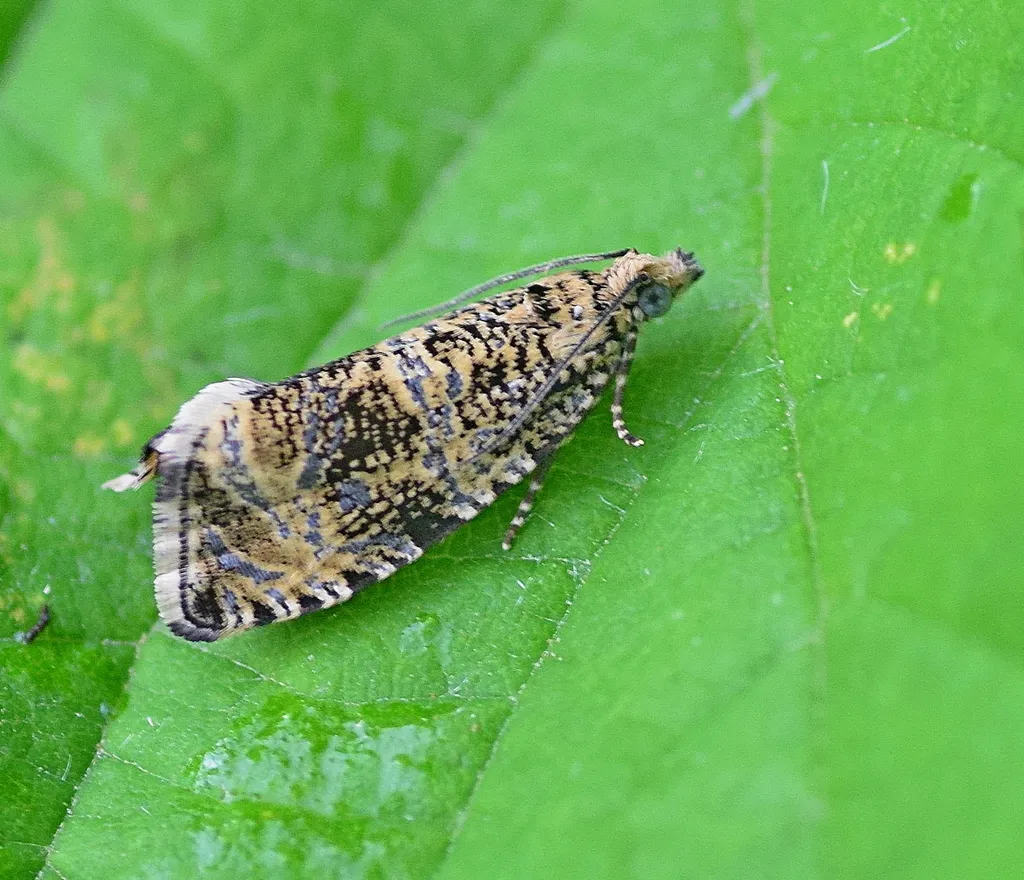
Common Marble
Syricoris lacunana
Syricoris lacunana, the dark strawberry tortrix, is a small moth species of the family Tortricidae. It is found in the Palearctic ecozone.
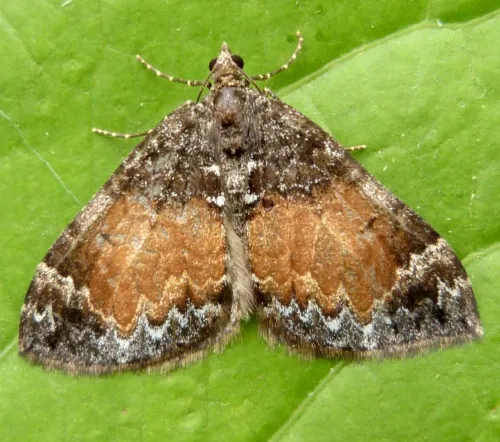
Common Marbled Carpet
Dysstroma truncata
Wingspan 24-30 mm. A common and remarkably variable species. This species has a wide range of habitats. There are two broods, flying in May and June, and again from August to October, sometimes later. The larvae feed on a wide range of low-growing pl
Common Mellana - Hodges#4068
Quasimellana eulogius
Identification: Key character is a band of faint spots forming a crescent under the hindwing, similar to the backwards "3" on the Southern Broken-Dash ( Wallengrenia otho )
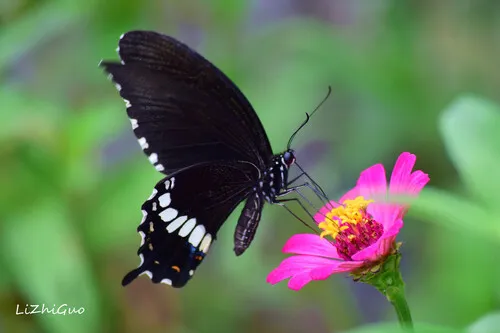
Common Mormon Swallowtail
Papilio polytes
Papilio polytes, the common Mormon, is a common species of swallowtail butterfly widely distributed across Asia.
Common Pinkband - Hodges#9720
Ogdoconta cinereola
Identification: Adult: forewing dark brownish or grayish liberally sprinkled with pale gray flecks, as though dusted with ashes; broad pinkish band in subterminal area; subterminal line wavy; basal two-thirds of wing laced with thin pale meandering l
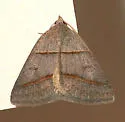
Common Ptichodis - Hodges#8750
Ptichodis herbarum
Identification: "This is a sexually dimorphic species. Females are plainly marked with relatively straight am. and pm. lines. Males have a black spot near the wing base and the am. and pm. lines have a strong curve or abrupt bend and there is a lot o
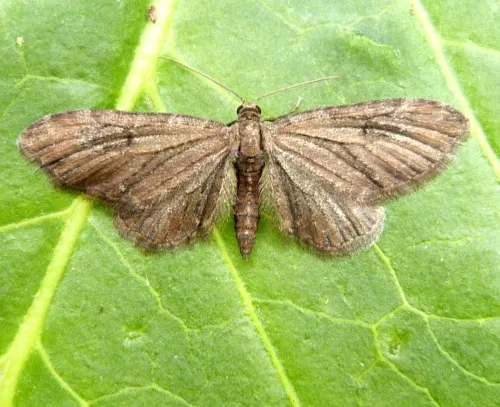
Common Pug
Eupithecia vulgata
Wingspan 15-18 mm. This species is represented by a number of subspecies and forms. Typical forms and the Scottish and Irish subspecies scotica and clarensis have fairly distinct markings, but the fairly common form atropicta is dull and poorly marke
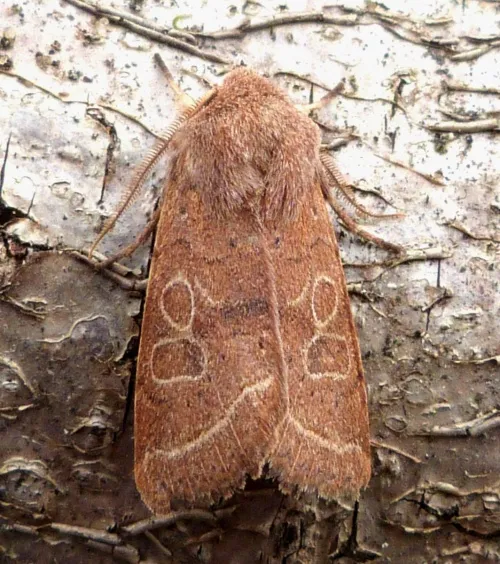
Common Quaker
Orthosia cerasi
Wingspan 34-40 mm. Quite variable, there are forms with a plain ground colour and others with a darker band across the forewing, but all have large, rounded stigmata outlined paler. Has a wide range of lowland habitats, including woodland and gardens
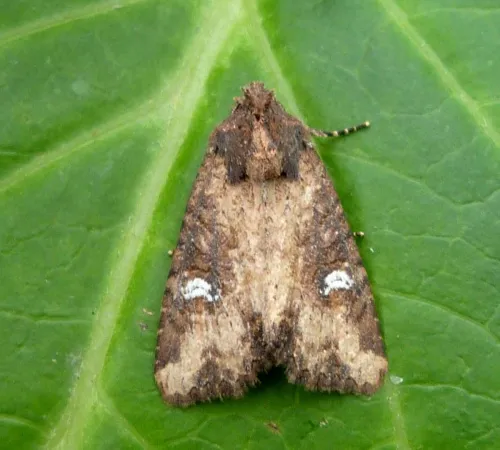
Common Rustic
Mesapamea secalis
Wingspan 27-30 mm. This is one of three very similar species and expert examination is required to identify the species. Various habitats especially grassy areas. July and August. Regularly come to light. The larvae feed inside the stems of various g
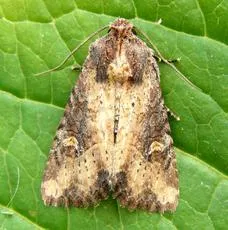
Common Rustic agg.
Mesapamea secalis agg.
Formerly a single species, this has now been split giving Lesser Common Rustic specific status. Generally very variable, the pair cannot be reliably separated without dissection. If selecting individuals for dissection, the very dark forms with almos
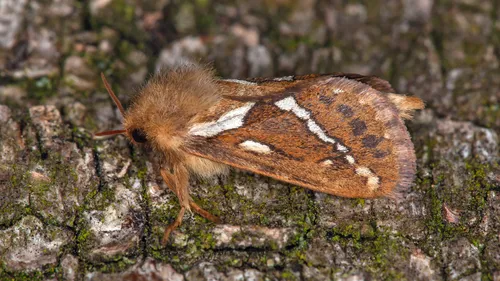
Common Swift
Korscheltellus lupulina
Wingspan 25-40 mm. A variable species, ranging in colour fron gingery brown to pale grey, and with white markings of varying boldness. Various grassland, gardens and roadside verges. Feeding on the roots of grasses and small plants, the larvae live u
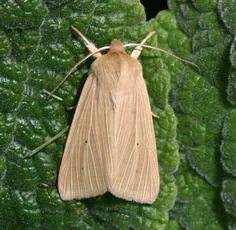
Common Wainscot
Mythimna pallens
Wingspan 30-35 mm. With a similar distribution to the Smoky Wainscot ( M. impura ). The two moths show some variation and can resemble one another, but this species generally has much cleaner whitish hindwings. In the south there are two generations,
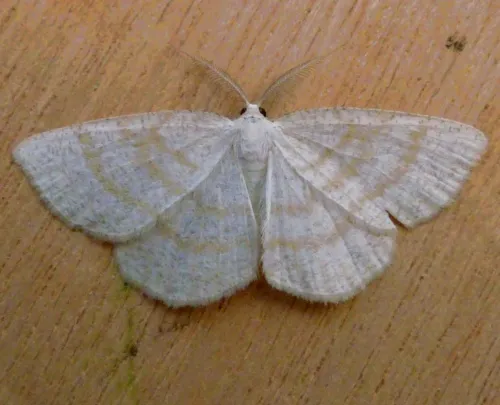
Common Wave
Cabera exanthemata
Wingspan 30 to 35 mm. Superficially similar to the Common White Wave ( C. pusaria ), this species has a dusky sprinkling of brownish scales and the cross-lines are more curved. It prefers damp woodland and marshy areas Between May and August, with tw
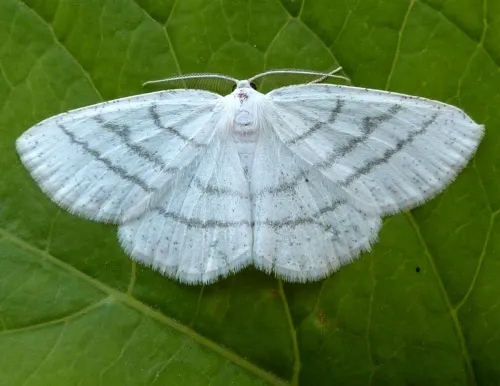
Common White Wave
Cabera pusaria
Wingspan 25-28 mm. This species resembles the Common Wave ( C. exanthemata ) but is generally whiter with more parallel cross-lines on the forewing. It occupies woodland, copses and similar habitats. During the day it rests in low herbage and can eas
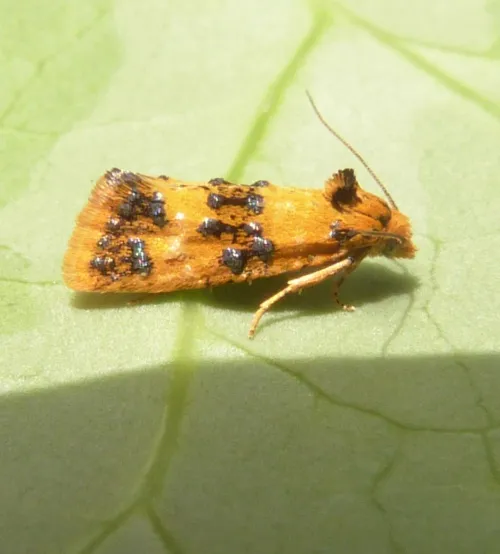
Commophila aeneana
Commophila aeneana
Wingspan 13 to 17 mm. A brightly coloured Tortrix moth, having orange-yellow forewings with metallic blue markings. The larvae live from September throughout the winter, feeding in the roots of Ragwort (Senecio jacobaea). It is rather scarce in Brita
Compacta capitalis - Hodges#5233
Compacta capitalis
Identification: Adult: forewing white, semitransparent, with reddish-brown shading at base and along inner margin; at least 2 main black discal spots, an irregular subterminal line, and dark apical blotch present on both wings Polygrammodes posticata
Comstock's Sallow - Hodges#10008
Feralia comstocki
Identification: Adult: described by Covell as having bright green FW, sometimes fading to yellowish; lines scalloped, broken, black, edged with white; note three squarish black blotches around reniform spot. HW cream; gray discal spot, partial median
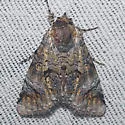
Concana mundissima - Hodges#8562
Concana mundissima
Identification: The original description of Concana mundissima Walker, is available online at the link in the print references below. -
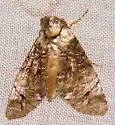
Concana mundissima of authors - Hodges#8562.1
Concana mundissima-of-authors
Concana mundissima of authors, not Walker, [1858] is an undescribed species from Texas, Don Lafontaine (pers. comm., 11/13/2020).