
Clemens' Sphinx - Hodges#7811
Sphinx luscitiosa
This record describes Sphinx luscitiosa (species). Recorded family: Sphingidae. Recorded order: Lepidoptera.
Identification and Appearance
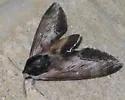
Adult: forewing mostly yellowish-gray in male; pale gray with slight yellow tint in female; black shading beyond PM line widens toward inner margin in both sexes; hindwing deep yellow in male, pale yellow in female; outer border black, broad in both sexes one of the few species of Sphinx that shows significant sexual dimorphism Larva: body bright green with several red and whitish diagonal dashes along side; horn on last abdominal segment; skin grainy/rough in fourth instar, smooth in final (fifth) instar Global Rank: G3 - Very rare or local throughout its range, or found locally in a restricted range (21 to 100 occurrences). Threatened throughout its range. uncommon to rare
Classification
- Kingdom
- Animalia
- Phylum
- Arthropoda
- Class
- Insecta
- Order
- Lepidoptera (Butterflies and Moths)
- Superfamily
- Bombycoidea
- Family
- Sphingidae (Sphinx Moths)
- Subfamily
- Sphinginae
- Tribe
- Sphingini
- Genus
- Sphinx
Imported taxonomy record. Source availability varies; see the source references and editorial policy below.
Habitat and Range
Habitat
clearings, edges and meadows in wooded areas males are mainly diurnal and have been collected while nectaring at flowers; females are active in the evening and at night, and have been collected only at lights
Geographic Range
Yukon and Alberta to Nova Scotia, south to New Jersey, west to Utah and Montana (may have occurred south "to the Carolinas" as stated below by Holland more than 100 years ago, but the species name does not appear on current lists from South Carolina , North Carolina , or Maryland , and probably doesn't occur in these areas today) Holland's The Moth Book says "The insect occurs from Canada to the Carolinas, and westward through the eastern portion of the valley of the Mississippi."
Seasonal Activity
adults fly in June and July
Diet and Behavior
Diet: larvae feed on leaves of apple, ash, northern bayberry, birch, poplar, wax myrtle, willow, and other plants Holland states "The caterpillar feeds upon various species of willow." adults take nectar from flowers such as dandelion, lilac, and Russian-olive, and have been reported on multiple occasions feeding on decaying fish
Life History
one generation per year; overwinters as a pupa in underground cell Larva (new-born); Larva; Larva (pre-pupal); adult
Additional species information
Species notes from the sources
Etymology: described by Clemens in 1859
About Butterflies and Moths: the wider group
Order-level background for Lepidoptera, the group containing Sphinx luscitiosa. Species-specific details appear above.
Group overview
Lepidoptera includes approximately 180,000 described species of butterflies and moths. Moths outnumber butterflies roughly 10:1. The monarch butterfly's eastern population has declined by more than 80% since the mid-1990s, and the western population by over 95% since the 1980s. The IUCN lists the migratory monarch as Vulnerable.
Ecological role of the group
Butterflies and moths are essential indicators of ecosystem health. As caterpillars, they are a primary food source for birds - a single nest of blue tit chicks requires ~10,000 caterpillars. Adult moths pollinate many night-blooming plants.
Economic and practical significance of the group
Lepidoptera are critical pollinators. In Europe, grassland butterfly species have declined by almost 50% since the early 1990s. In the UK, three-quarters of butterflies are in decline. In the U.S., five butterfly species have gone extinct since 1950, with 29 listed as endangered.
Recorded sources for this group: IUCN Red List, Xerces Society, USFWS, PNAS, WWF. Imported estimates may describe particular regions or reporting periods.
Photos of Clemens' Sphinx - Hodges#7811 (5)
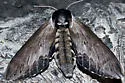
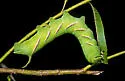
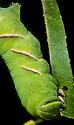
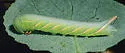
Photo credits: Contributed by Robin McLeod; Additional contributions by Matthew Roth , Maury Heiman , marcie oconnor , Randy Hardy , Robert H. Biagi
Frequently Asked Questions About Clemens' Sphinx - Hodges#7811
What is Clemens' Sphinx - Hodges#7811?
Clemens' Sphinx - Hodges#7811 (Sphinx luscitiosa) is a species in the family Sphingidae, within the order Lepidoptera.
How big is Clemens' Sphinx - Hodges#7811?
wingspan 56-80 mm ( U. of Alberta ); female larger than male
How do you identify Clemens' Sphinx - Hodges#7811?
Adult: forewing mostly yellowish-gray in male; pale gray with slight yellow tint in female; black shading beyond PM line widens toward inner margin in both sexes; hindwing deep yellow in male, pale yellow in female; outer border black, broad in both sexes one of the few species of Sphinx that shows significant sexual dimorphism Larva: body bright green with several red and whitish diagonal dashes along side; horn on last abdominal segment; skin grainy/rough in fourth instar, smooth in final (fifth) instar
Where is Clemens' Sphinx - Hodges#7811 found?
| Feature | Details |
|---|---|
| Habitat | clearings, edges and meadows in wooded areas males are mainly diurnal and have been collected while nectaring at flowers; females are active in the evening and at night, and have been collected only at lights |
| Range | Yukon and Alberta to Nova Scotia, south to New Jersey, west to Utah and Montana (may have occurred south to the Carolinas as stated below by Holland more than 100 years ago, but the species name does not appear on current lists from South Carolina , North Carolina , or Maryland , and probably doesn't occur in these areas today) Holland's The Moth Book says The insect occurs from Canada to the Carolinas, and westward through the eastern portion of the valley of the Mississippi. |
What does Clemens' Sphinx - Hodges#7811 eat?
The diet of the Clemens' Sphinx - Hodges#7811 includes larvae feed on leaves of apple, ash, northern bayberry, birch, poplar, wax myrtle, willow, and other plants Holland states The caterpillar feeds upon various species of willow. adults take nectar from flowers such as dandelion, lilac, and Russian-olive, and have been reported on multiple occasions feeding on decaying fish.
When is Clemens' Sphinx - Hodges#7811 active?
Clemens' Sphinx - Hodges#7811: seasonal activity - adults fly in June and July.
What is the life cycle of a Clemens' Sphinx - Hodges#7811?
one generation per year; overwinters as a pupa in underground cell Larva (new-born); Larva; Larva (pre-pupal); adult