
Clouded Yellow
Colias croceus
This record describes Colias croceus (species). Recorded family: Pieridae. Recorded order: Lepidoptera.
Identification and Appearance
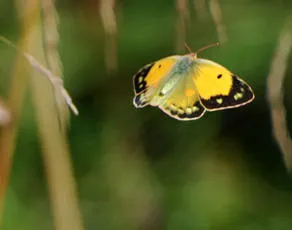
This strong-flying and mainly immigrant butterfly always settles with its wings closed and so the dark borders on the upper sides of the wings are only visible when in flight. This species is sometimes mistaken in flight for one of the commoner 'whites' but the orange-yellow colour is quite distinctive and unlike any other species. Males lack the ring of yellow spots within the black upperwing edges. This butterfly can be found in just about any open habitat in the countryside, including coastal cliffs, open downland and fields containing the larval food plants of Clovers, Lucerne and Common Bird's-foot-trefoil. The first immigrants of this species start to arrive at our shores in late May or early June, with much larger numbers appearing in July and August, as the offspring of the first arrivals mingle with new immigrants. The Clouded Yellow has a distribution befitting a highly migratory species and can be found anywhere in the British Isles. Many immigrants remain near the coast where they feed, mate and lay their eggs. Others disperse inland and this species has been found in both Scotland and Ireland in good years. There is no elaborate courtship and, having mated, the female is subsequently able to lay an extraordinary number of eggs with up to 600 being recorded from a single female. The skittle-shaped eggs are laid singly on the upper side of leaves of the food plant. The main larval foodplants are various Clovers ( Trifolium spp.) and Lucerne ( Medicago sativa ) but Common Bird's-foot-trefoil ( Lotus corniculatus ) is also used. Normally a scarce immigrant to Britain with less than 500 being recorded but in peak years numbers have been as high as 36,000.
Classification
- Kingdom
- Animalia
- Phylum
- Arthropoda
- Class
- Insecta
- Order
- Lepidoptera
- Family
- Pieridae
- Genus
- Colias
Imported taxonomy record. Source availability varies; see the source references and editorial policy below.
Habitat and Range
Habitat
This butterfly can be found in just about any open habitat in the countryside, including coastal cliffs, open downland and fields containing the larval food plants of Clovers, Lucerne and Common Bird's-foot-trefoil.
Seasonal Activity
The first immigrants of this species start to arrive at our shores in late May or early June, with much larger numbers appearing in July and August, as the offspring of the first arrivals mingle with new immigrants.
Additional species information
Recorded status
Normally a scarce immigrant to Britain with less than 500 being recorded but in peak years numbers have been as high as 36,000.
About Butterflies and Moths: the wider group
Order-level background for Lepidoptera, the group containing Colias croceus. Species-specific details appear above.
Group overview
Lepidoptera includes approximately 180,000 described species of butterflies and moths. Moths outnumber butterflies roughly 10:1. The monarch butterfly's eastern population has declined by more than 80% since the mid-1990s, and the western population by over 95% since the 1980s. The IUCN lists the migratory monarch as Vulnerable.
Ecological role of the group
Butterflies and moths are essential indicators of ecosystem health. As caterpillars, they are a primary food source for birds - a single nest of blue tit chicks requires ~10,000 caterpillars. Adult moths pollinate many night-blooming plants.
Economic and practical significance of the group
Lepidoptera are critical pollinators. In Europe, grassland butterfly species have declined by almost 50% since the early 1990s. In the UK, three-quarters of butterflies are in decline. In the U.S., five butterfly species have gone extinct since 1950, with 29 listed as endangered.
Recorded sources for this group: IUCN Red List, Xerces Society, USFWS, PNAS, WWF. Imported estimates may describe particular regions or reporting periods.
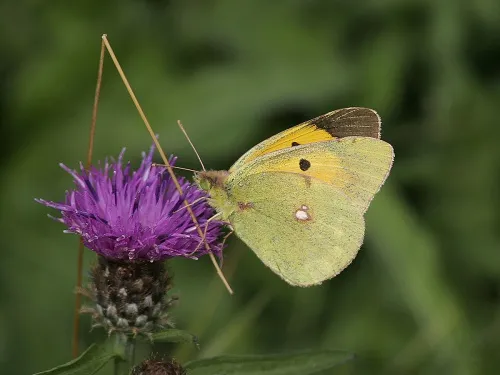
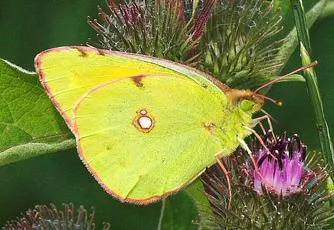
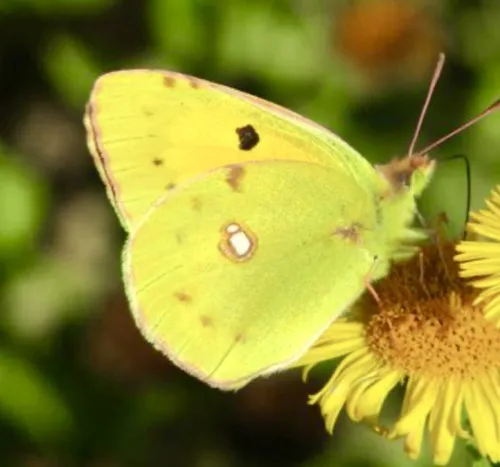
Photos of Clouded Yellow (10)
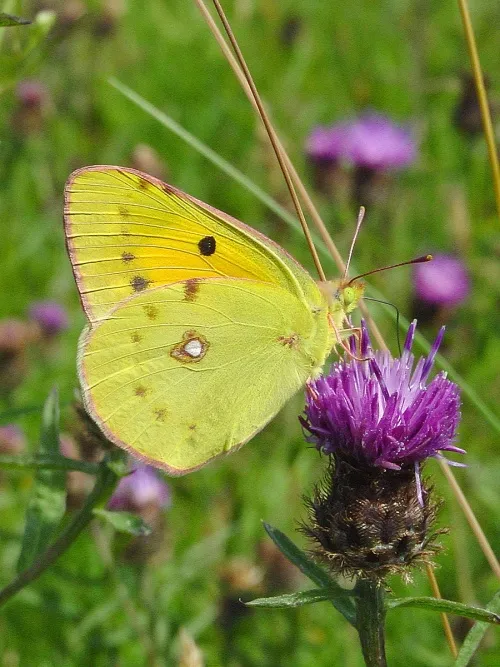
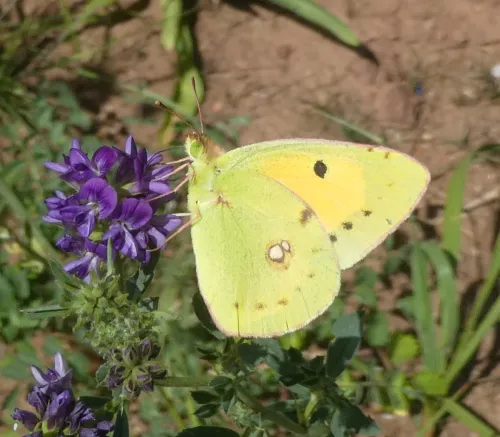
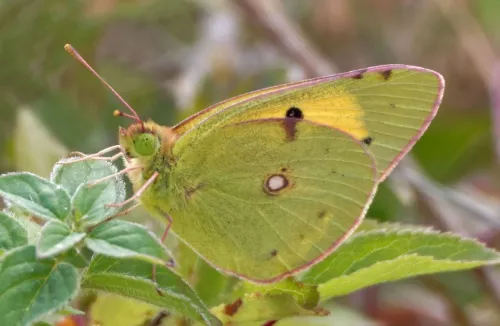
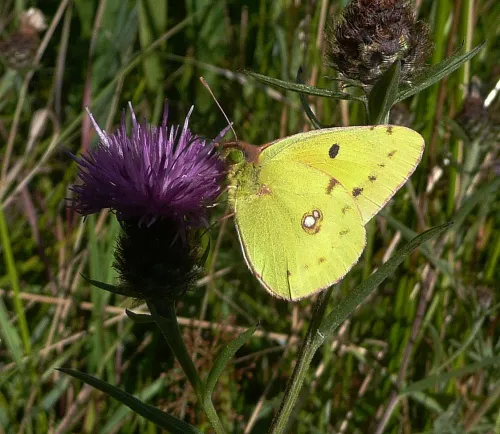
Frequently Asked Questions About Clouded Yellow
What is Clouded Yellow?
Clouded Yellow (Colias croceus) is a species in the family Pieridae, within the order Lepidoptera.
Where is Clouded Yellow found?
Habitat: This butterfly can be found in just about any open habitat in the countryside, including coastal cliffs, open downland and fields containing the larval food plants of Clovers, Lucerne and Common Bird's-foot-trefoil.
When is Clouded Yellow active?
Clouded Yellow: seasonal activity - The first immigrants of this species start to arrive at our shores in late May or early June, with much larger numbers appearing in July and August, as the offspring of the first arrivals mingle with new immigrants..