
Clodius Parnassian - Hodges#4154
Parnassius clodius
This record describes Parnassius clodius (species). Recorded family: Papilionidae. Recorded order: Lepidoptera.
Identification and Appearance
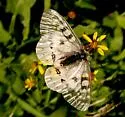
The Clodius Parnassian is the only parnassian whose distribution is restricted to North America [ depending on recognition of American P. smintheus & P. behrii as full species or as part of P. phoebus ] . P. clodius is very similar to P. felderi from Asia, and is closely related to Parnassius eversmanni , which is smaller, yellower, and which is found further north in Canada & Alaska and across Asia. P. clodius is distinguished from the Sierra Nevada / Rocky Mountain / Phoebus Parnassians ( Phoebus smintheus / behrii / phoebus ) in having the dark antennae not ringed in white (sometimes faintly in gray), and in not having red or yellow spots on the front wings. The large dark spots in the discal cell of the front wing are gray to dark gray, not black. In the Sierra Nevada / Rocky Mountain / Phoebus Parnassians the antennae are alternately ringed white and black, there is usually red (or occasionally yellow instead) near the end of the discal cell (sometimes more obvious on the under side than the upper side), and the large dark spots in the discal cell are distinctly black. The shape of the sphragus on the females is also different. The females of Parnassius have a sphragis that is present after mating. It is formed from a hard waxy secretion made by the male during mating and functions to prevent other males from mating with the female afterwards. See:
Classification
- Kingdom
- Animalia
- Phylum
- Arthropoda
- Class
- Insecta
- Order
- Lepidoptera (Butterflies and Moths)
- Superfamily
- Papilionoidea
- Family
- Papilionidae (Swallowtails, Parnassians)
- Subfamily
- Parnassiinae
- Tribe
- Parnassiini
- Genus
- Parnassius
Imported taxonomy record. Source availability varies; see the source references and editorial policy below.
Habitat and Range
Habitat
Forest edges at sea level in Northwest, cool mountains and shaded canyons and ridges in drier parts of range.
Geographic Range
From California and Utah north into British Columbia and Alberta. Absent from Southern Rockies of south-central Wyoming, Colorado, and northern New Mexico.
Seasonal Activity
Overwinters as caterpillar in decaying leaf litter. Pupates in thin silken cocoon in spring.
Diet and Behavior
Diet: Dicentra species serve as main host plants. ; perhaps also Corydalis or other genera of family Fumariaceae
About Butterflies and Moths: the wider group
Order-level background for Lepidoptera, the group containing Parnassius clodius. Species-specific details appear above.
Group overview
Lepidoptera includes approximately 180,000 described species of butterflies and moths. Moths outnumber butterflies roughly 10:1. The monarch butterfly's eastern population has declined by more than 80% since the mid-1990s, and the western population by over 95% since the 1980s. The IUCN lists the migratory monarch as Vulnerable.
Ecological role of the group
Butterflies and moths are essential indicators of ecosystem health. As caterpillars, they are a primary food source for birds - a single nest of blue tit chicks requires ~10,000 caterpillars. Adult moths pollinate many night-blooming plants.
Economic and practical significance of the group
Lepidoptera are critical pollinators. In Europe, grassland butterfly species have declined by almost 50% since the early 1990s. In the UK, three-quarters of butterflies are in decline. In the U.S., five butterfly species have gone extinct since 1950, with 29 listed as endangered.
Recorded sources for this group: IUCN Red List, Xerces Society, USFWS, PNAS, WWF. Imported estimates may describe particular regions or reporting periods.
Photos of Clodius Parnassian - Hodges#4154 (5)
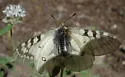
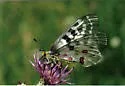
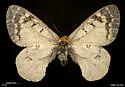
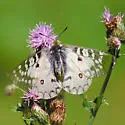
Photo credits: Contributed by tom murray; Additional contributions by Lynette Elliott , Chuck Entz , Aaron Schusteff , David Ferguson , Robert Lord Zimlich
Frequently Asked Questions About Clodius Parnassian - Hodges#4154
What is Clodius Parnassian - Hodges#4154?
Clodius Parnassian - Hodges#4154 (Parnassius clodius) is a species in the family Papilionidae, within the order Lepidoptera.
How do you identify Clodius Parnassian - Hodges#4154?
The Clodius Parnassian is the only parnassian whose distribution is restricted to North America [ depending on recognition of American P. smintheus & P. behrii as full species or as part of P. phoebus ] . P. clodius is very similar to P. felderi from Asia, and is closely related to Parnassius eversmanni , which is smaller, yellower, and which is found further north in Canada & Alaska and across Asia. P. clodius is distinguished from the Sierra Nevada / Rocky Mountain / Phoebus Parnassians ( Phoebus smintheus / behrii / phoebus ) in having the dark antennae not ringed in white (sometimes faintly in gray), and in not having red or yellow spots on the front wings. The large dark spots in the discal cell of the front wing are gray to dark gray, not black. In the Sierra Nevada / Rocky Mountain / Phoebus Parnassians the antennae are alternately ringed white and black, there is usually red (or occasionally yellow instead) near the end of the discal cell (sometimes more obvious on the under side than the upper side), and the large dark spots in the discal cell are distinctly black. The shape of the sphragus on the females is also different.
Where is Clodius Parnassian - Hodges#4154 found?
| Feature | Details |
|---|---|
| Habitat | Forest edges at sea level in Northwest, cool mountains and shaded canyons and ridges in drier parts of range. |
| Range | From California and Utah north into British Columbia and Alberta. Absent from Southern Rockies of south-central Wyoming, Colorado, and northern New Mexico. |
What does Clodius Parnassian - Hodges#4154 eat?
The diet of the Clodius Parnassian - Hodges#4154 includes Dicentra species serve as main host plants. ; perhaps also Corydalis or other genera of family Fumariaceae.
When is Clodius Parnassian - Hodges#4154 active?
Clodius Parnassian - Hodges#4154: seasonal activity - Overwinters as caterpillar in decaying leaf litter. Pupates in thin silken cocoon in spring..