
Uranotaenia sapphirina
This record describes Uranotaenia sapphirina (species). Recorded family: Culicidae. Recorded order: Diptera.
Identification and Appearance
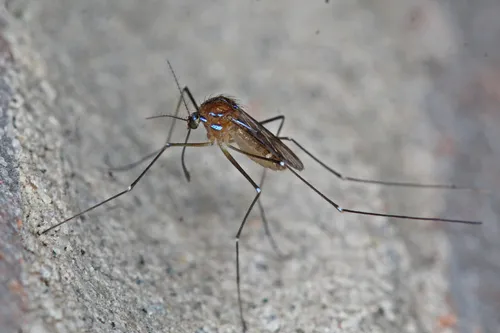
Adult: tiny size; abdomen blunt; proboscis widens distally; scutum and scutellum with median stripe of iridescent blue scales; similar lines of iridescent bluish scales on lateral margin of scutum, anterior pronotal lobe, and mid-part of sternopleuron; wings with long line of iridescent blue scales on basal two-thirds of 5th vein, cell r2 shorter than vein R2+3 Larva: head longer than wide, with 4 stout spines on top; abdominal segment VIII bears large lateral comb plate; seta 5,6 C single, stout, spiniform; seta 3-P less than half length of 1-P, with 8-10 branches; seta 6-I, II triple Thanks to Sean McCann for providing links and information on this species.
Classification
Habitat and Range
Habitat
larvae develop in permanent pools with emergent and floating aquatic vegetation; adults on nearby vegetation, and are attracted to light
Geographic Range
North Dakota to southwestern Quebec, south to Florida, west to Texas and Mexico; also parts of New Mexico and Colorado See distribution map (Walter Reed Biosystematics Unit, Smithsonian Institution, Maryland)
Diet and Behavior
Diet: They feed on worms and freshwater leeches Females are not known to bite humans.
Life History
multivoltine; adult females overwinter in sheltered habitats; eggs laid in rafts on water surface like those of Culex species
Additional species information
Species notes from the sources
Etymology: SAPPHIRINA: refers to the blue precious stone, sapphire - adults have iridescent blue scales on the wings and in several places on the body
About Flies: the wider group
Order-level background for Diptera, the group containing Uranotaenia sapphirina. Species-specific details appear above.
Group overview
Diptera includes over 150,000 described species of flies, mosquitoes, and midges. Mosquitoes are the deadliest animal on Earth (CDC). Malaria alone causes ~249 million cases and over 608,000 deaths annually, mostly children under 5 (WHO). Vector-borne diseases account for over 17% of all infectious diseases, causing 700,000+ deaths per year.
Ecological role of the group
Despite their disease impact, flies are critical decomposers and pollinators. Hoverflies alone pollinate hundreds of crop and wildflower species. Flies are also the primary food source for many birds, bats, and fish. Forensic entomology relies heavily on fly species for crime scene analysis.
Economic and practical significance of the group
In the U.S., vector-borne disease cases tripled between 2004-2016, with over 640,000 cases reported in that period (CDC). Tickborne diseases doubled from 22,000 to 48,000 annual reports. Globally, mosquito-borne diseases cost billions in healthcare and lost productivity.
Recorded sources for this group: WHO, CDC, PNAS. Imported estimates may describe particular regions or reporting periods.
Photos of Uranotaenia sapphirina (2)
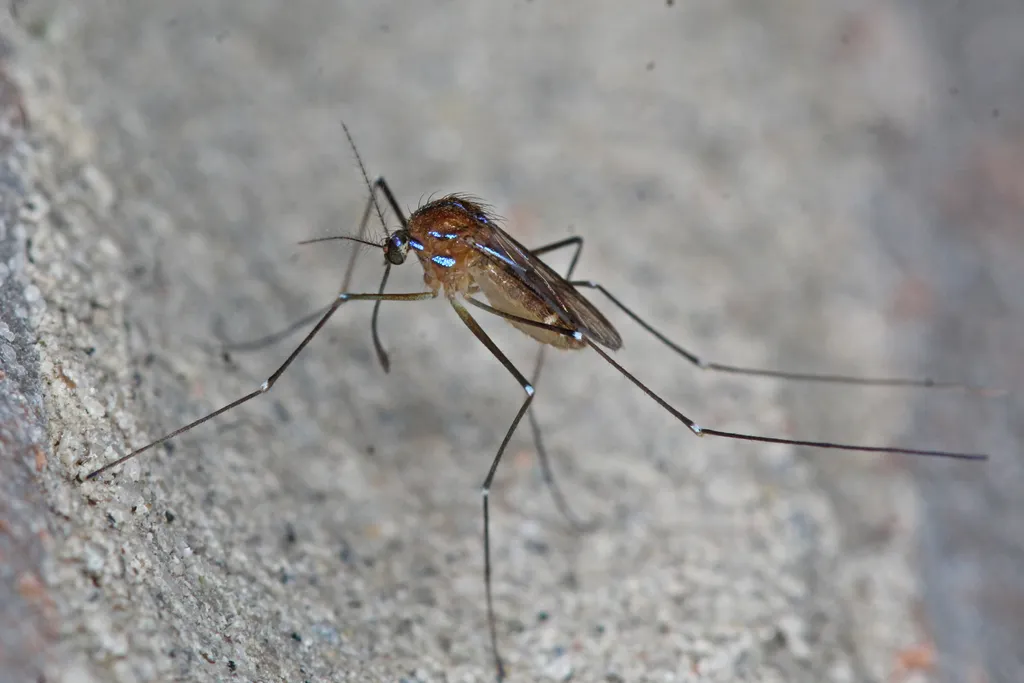
Photo credits: Contributed by Robin McLeod; Additional contributions by Tyler Hedlund
Frequently Asked Questions About Uranotaenia sapphirina
What is Uranotaenia sapphirina?
Uranotaenia sapphirina is a species in the family Culicidae, within the order Diptera.
How big is Uranotaenia sapphirina?
adult body length 2.5 to 2.7 mm
How do you identify Uranotaenia sapphirina?
Adult: tiny size; abdomen blunt; proboscis widens distally; scutum and scutellum with median stripe of iridescent blue scales; similar lines of iridescent bluish scales on lateral margin of scutum, anterior pronotal lobe, and mid-part of sternopleuron; wings with long line of iridescent blue scales on basal two-thirds of 5th vein, cell r2 shorter than vein R2+3 Larva: head longer than wide, with 4 stout spines on top; abdominal segment VIII bears large lateral comb plate; seta 5,6 C single, stout, spiniform; seta 3-P less than half length of 1-P, with 8-10 branches; seta 6-I, II triple
Where is Uranotaenia sapphirina found?
| Feature | Details |
|---|---|
| Habitat | larvae develop in permanent pools with emergent and floating aquatic vegetation; adults on nearby vegetation, and are attracted to light |
| Range | North Dakota to southwestern Quebec, south to Florida, west to Texas and Mexico; also parts of New Mexico and Colorado See distribution map (Walter Reed Biosystematics Unit, Smithsonian Institution, Maryland) |
What does Uranotaenia sapphirina eat?
The diet of the Uranotaenia sapphirina includes They feed on worms and freshwater leeches Females are not known to bite humans..
What is the life cycle of a Uranotaenia sapphirina?
multivoltine; adult females overwinter in sheltered habitats; eggs laid in rafts on water surface like those of Culex species