
Lucilia caesar
This record describes Lucilia caesar (species). Recorded family: Calliphoridae. Recorded order: Diptera.
Identification and Appearance
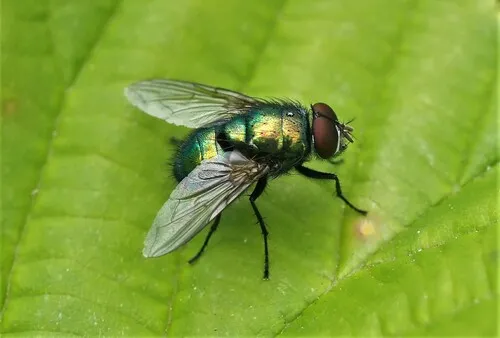
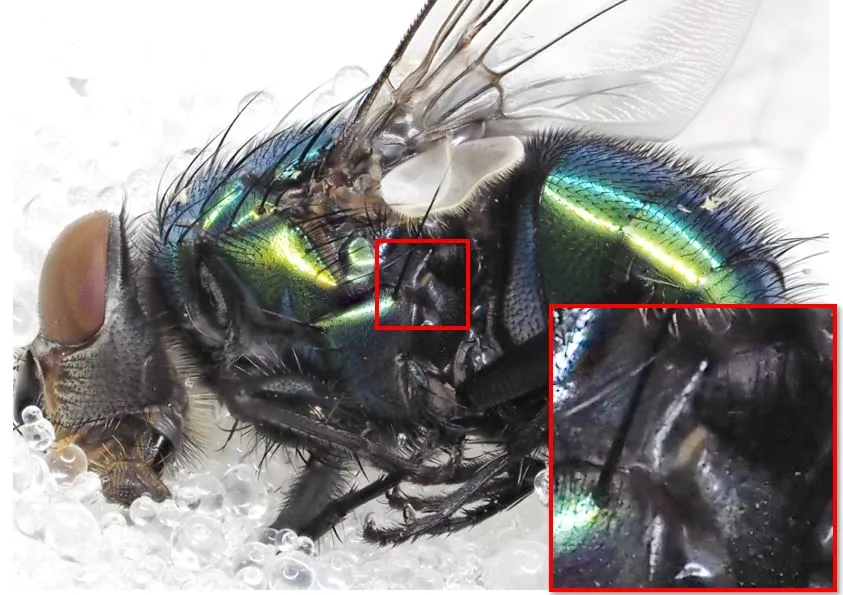
This blow fly is bright iridescent green though like all the 'greenbottles' is becomes more bronze with age. It is very similar to other Lucilia species but has just two pairs of acrostichal bristles behind the suture line on the thorax and a dark basicosta. There are seven very similar Lucilia species that can be found in our region. They can only be separated by close examination of features such as bristles. L. caesar can be distinguished from the more common L. sericata by having only two pairs of post suture acrostichal bristles and a dark basicosta, but there are other Lucilia species with these features. A key feature needed to identify Lucilia caesar is the presence of a coxopleural streak - a small and subtle pale, buff-coloured line on the side of the fly. This can only be separated from other Lucilia species by microscopic examination. Unlike its cousin the bluebottle, this species rarely comes into houses and is usually seen on flowers and vegetation, or sunning in a sheltered spot. The female lays her eggs on carcasses, seeking the soft parts that are shaded from the sun. Larvae live in carrion and also in wounds on living animals, eating away the flesh with alarming rapidity, and so can be a problem in sheep-rearing areas.
Wikipedia reference for Lucilia caesar: http://en.wikipedia.org/wiki/Lucilia_caesar.
Classification
- Kingdom
- Animalia
- Phylum
- Arthropoda
- Class
- Insecta
- Order
- Diptera
- Family
- Calliphoridae
- Genus
- Lucilia
Imported taxonomy record. Source availability varies; see the source references and editorial policy below.
Habitat and Range
Habitat
Unlike its cousin the bluebottle, this species rarely comes into houses and is usually seen on flowers and vegetation, or sunning in a sheltered spot.
Seasonal Activity
April to October peaking in June.
Diet and Behavior
Life History
The female lays her eggs on carcasses, seeking the soft parts that are shaded from the sun. Larvae live in carrion and also in wounds on living animals, eating away the flesh with alarming rapidity, and so can be a problem in sheep-rearing areas.
Additional species information
Recorded status
Common and widespread in Britain.
About Flies: the wider group
Order-level background for Diptera, the group containing Lucilia caesar. Species-specific details appear above.
Group overview
Diptera includes over 150,000 described species of flies, mosquitoes, and midges. Mosquitoes are the deadliest animal on Earth (CDC). Malaria alone causes ~249 million cases and over 608,000 deaths annually, mostly children under 5 (WHO). Vector-borne diseases account for over 17% of all infectious diseases, causing 700,000+ deaths per year.
Ecological role of the group
Despite their disease impact, flies are critical decomposers and pollinators. Hoverflies alone pollinate hundreds of crop and wildflower species. Flies are also the primary food source for many birds, bats, and fish. Forensic entomology relies heavily on fly species for crime scene analysis.
Economic and practical significance of the group
In the U.S., vector-borne disease cases tripled between 2004-2016, with over 640,000 cases reported in that period (CDC). Tickborne diseases doubled from 22,000 to 48,000 annual reports. Globally, mosquito-borne diseases cost billions in healthcare and lost productivity.
Recorded sources for this group: WHO, CDC, PNAS. Imported estimates may describe particular regions or reporting periods.
Photos of Lucilia caesar (4)
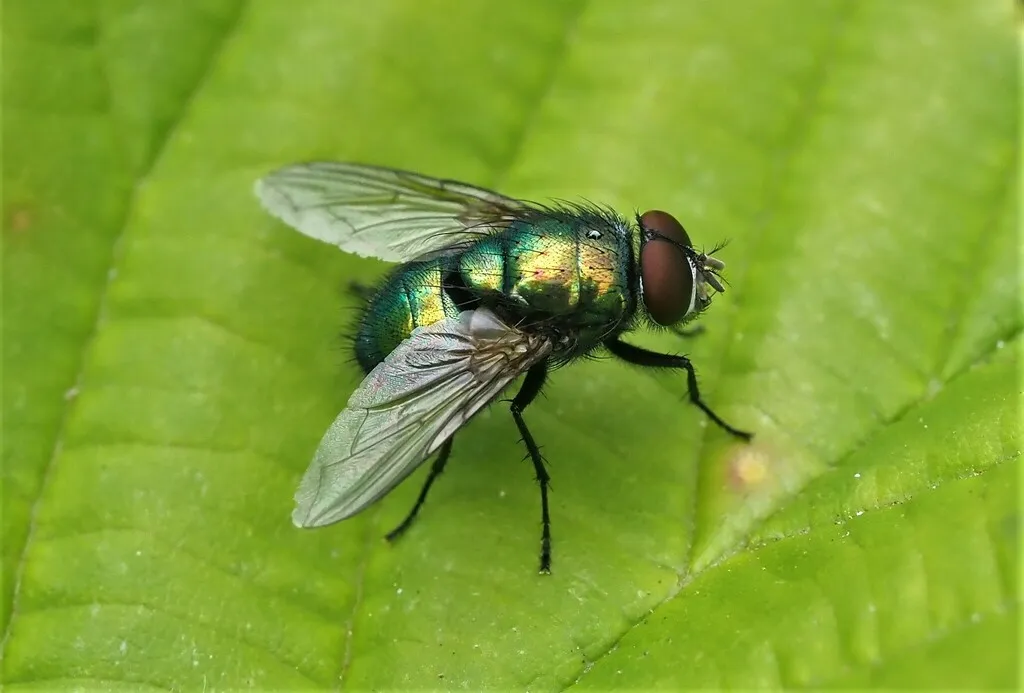
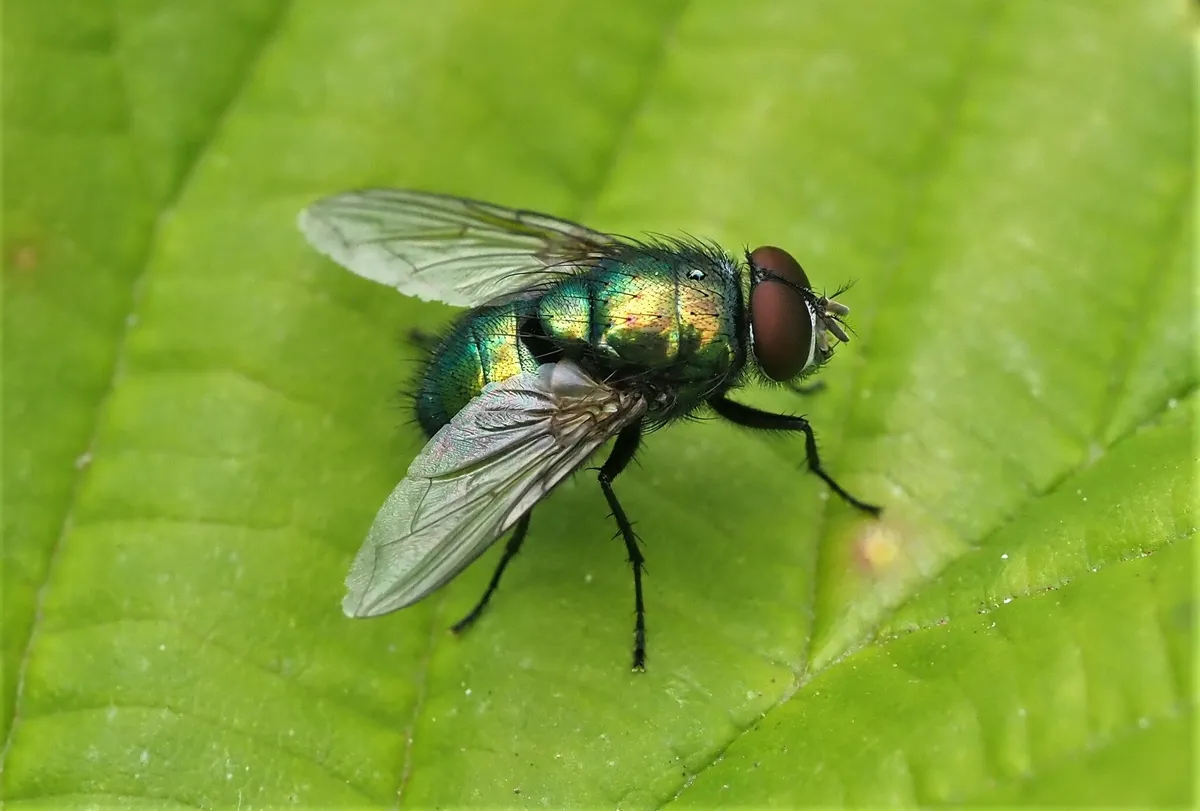
Frequently Asked Questions About Lucilia caesar
What is Lucilia caesar?
Lucilia caesar is a species in the family Calliphoridae, within the order Diptera.
Where is Lucilia caesar found?
Habitat: Unlike its cousin the bluebottle, this species rarely comes into houses and is usually seen on flowers and vegetation, or sunning in a sheltered spot.
When is Lucilia caesar active?
Lucilia caesar: seasonal activity - April to October peaking in June..
What is the life cycle of a Lucilia caesar?
The female lays her eggs on carcasses, seeking the soft parts that are shaded from the sun. Larvae live in carrion and also in wounds on living animals, eating away the flesh with alarming rapidity, and so can be a problem in sheep-rearing areas.